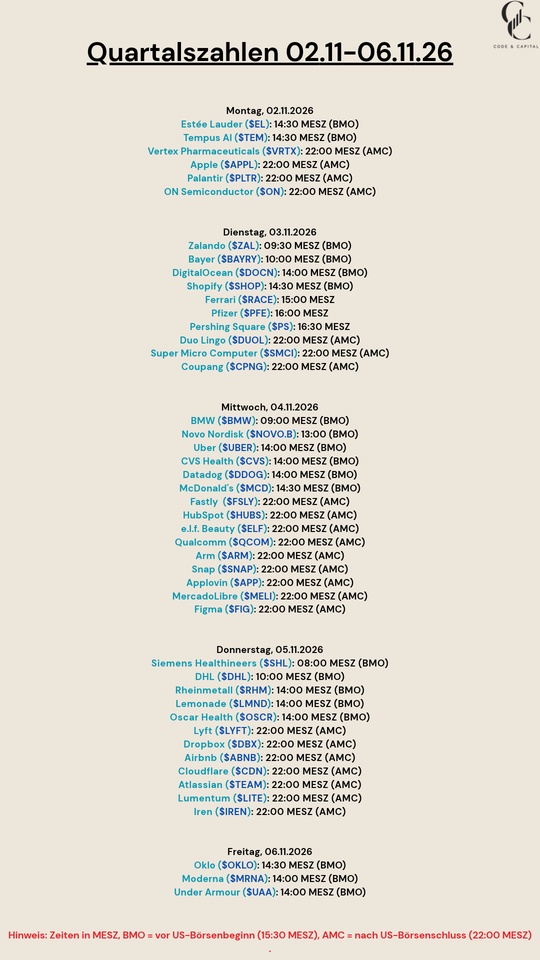
$EL (+2,96%)
$TEM (+10,99%)
$VRTX (+1,56%)
$AAPL (+0,85%)
$PLTR (+5,57%)
$ON (+1,01%)
$ZAL (-1,81%)
$BAYN (-0,11%)
$DOCN (+3,21%)
$SHOP (+5,49%)
$RACE (-0,8%)
$PFE (-1,09%)
$PS (+2,9%)
$DUOL
$SMCI (+7,83%)
$CPNG (-0,38%)
$BMW (-2,3%)
$NOVO B (+0,94%)
$UBER (+1,68%)
$CVS (+4,29%)
$DDOG (+4,3%)
$MCD (+1,08%)
$FSLY (+5,05%)
$HUBS (-2,06%)
$ELF (+7,53%)
$QCOM (+6,6%)
$ARM (+5,1%)
$SNAP (-1,33%)
$APP (+12,74%)
$MELI (-0,32%)
$FIG (+3,24%)
$SHL (-0,68%)
$DHL (-3,17%)
$RHM (-1,82%)
$LMND (-3,96%)
$OSCR (-6,8%)
$LYFT (+2,5%)
$DBX (-4,17%)
$ABNB (+1,32%)
$NET (-3,49%)
$TEAM (-14,63%)
$LITE (+5,42%)
$IREN (+17,11%)
$OKLO
$MRNA (+9,49%)
$UAA (-3,24%)

Tempus AI
Ação
Ação
Ticker: TEM
TEM
Price
Discussão sobre TEM
Postos
471Semana·
Quarterly Results Nov. 2–Nov. 6, 26
1212

2Semana·
Pathos AI teams up with Bristol Myers and Tempus AI to advance drug development
Anbei habe ich euch 2 kleine Artikel kopiert, für alle $BMY (-0,9%)
$TEM (+10,99%) oder $AZN (+0,83%) Investoren.
Ich bin selber in $BMY (-0,9%) investiert und bin gespannt was die Zukunft bringt.
1.
23 —> Pathos AI said on Friday it had entered into a collaboration with Bristol Myers Squibb $BMY (-0,9%) and Tempus AI $TEM (+10,99%) to develop artificial intelligence tools for drug development in Alzheimer's disease and other neurological disorders.
Pathos AI also raised $237 million in a Series E funding round led by Bristol Myers that valued the New York-based company at about $3 billion, with participation from existing investors.
Here are some other details:
- Tempus will build a dataset from hundreds of thousands of patients with neurological disorders to help track outcomes and speed research into disease biology
- Pathos will license the data from Tempus under a five-year, $55 million agreement
- Pathos will apply its AI platform, Pathos Foundry, to study the dataset at scale, generate and test hypotheses on disease biology, and inform the design of more targeted, adaptive clinical trials
- Bristol Myers will gain non-exclusive strategic access to Pathos Foundry across its broader portfolio, as well as three-year exclusive rights to use the platform for its neuroscience development programs
- Proceeds from the financing will be used to further scale the Foundry platform's capabilities and accelerate development of its AI-driven pipeline, including advancing experimental cancer drug, JSKN016
- The funding will help advance development of other cancer programs including an AstraZeneca $AZN (+0,83%) partnered experimental breast cancer drug.
2.
Oct 23 —> Bristol Myers Squibb $BMY (-0,9%) and partner SystImmune said on Friday their experimental breast cancer treatment slowed disease progression compared to standard chemotherapy in a late-stage study.
The drug, izalontamab brengitecan, reduced the risk of disease worsening or death by 59% in patients with advanced hormone-receptor-positive, HER2-negative breast cancer — the most common form of breast cancer — who had failed at least one prior line of chemotherapy.
Izalontamab brengitecan belongs to a class of treatments known as antibody-drug conjugates, often called "guided missiles". It targets two specific proteins, EGFR and HER3, to deliver a cancer-killing payload directly to tumor cells.
In the study, which enrolled 383 patients, those treated with the drug lived for a median of 8.2 months without their cancer growing, compared to four months for the participants on standard chemotherapy.
About 40.5% of patients on iza-bren saw their tumors shrink, compared to 20.2% on chemotherapy. The response lasted a median of 6.9 months, versus 4.2 months for chemotherapy.
Data on overall survival, how long patients lived in total, was not yet mature at the time of the interim analysis. The full results will be presented at the European Society for Medical Oncology congress in Madrid.
Bristol Myers had partnered with SystImmune, a unit of Chinese drugmaker Sichuan Biokin Pharmaceutical, in an up to $8.4 billion deal announced in 2023 to develop and commercialize the drug outside mainland China.
Its side effects were manageable and no new safety concerns emerged, Bristol Myers said. Only 1.6% of patients stopped treatment because of side effects, while two patients developed mild-to-moderate lung inflammation.
Liebe Grüße 🌊
55
2Mês·
📊 My Portfolio Update: August 2026
In July, Tempus AI was my biggest loser, down 25 percent. In August, it was my biggest winner, up 42 percent. I didn’t buy or sell anything in either month.
August had two sides to it. At the beginning of the month, mild inflation data was released, and the S&P 500 hit an all-time high of 7,816 points on August 13. After that, sentiment in the bond markets shifted. The 30-year U.S. Treasury yield rose to its highest level in nearly twenty years, and U.S. gross debt exceeded forty trillion dollars. At the end of the month, Nvidia reported quarterly revenue of 96.2 billion, an increase of 106 percent. The very next day, Fed Chair Warsh signaled a pause in Jackson Hole, and the market priced in an interest rate hike in September.
Following the chip sell-off in July, this was a significantly calmer month for my portfolio:
📊 Monthly performance: +3.15%
📊 Portfolio value: ~€45,506
📊 Max. performance (Jan. 6, 2022): +40.28%
📊 YTD performance: ~+11.88%
Performance & Comparison 🚀
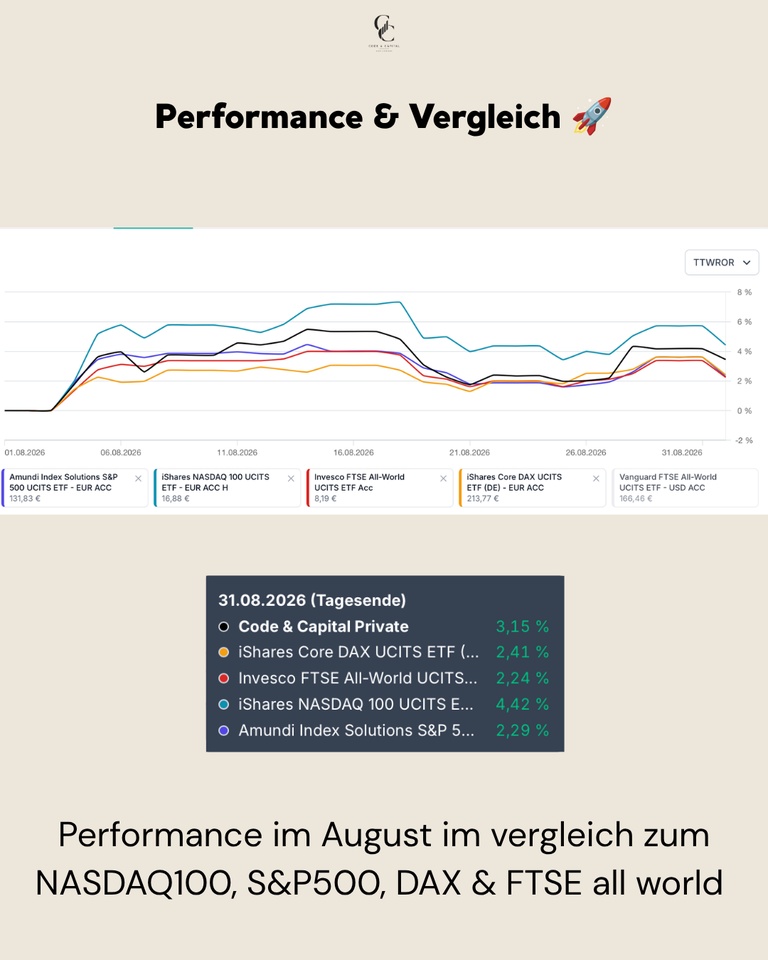
August was a positive month for all major indices, led by the Nasdaq. My portfolio outperformed the DAX, S&P, and FTSE, but lagged behind the Nasdaq.
Performance Comparison (August 1–31, 2026, end of day):
My portfolio: +3.15%
NASDAQ 100: +4.42%
DAX: +2.41%
S&P 500: +2.29%
FTSE All-World: +2.24%
Purchases, Sales & Allocation 💶
None. In July, I reduced my cash position and invested in BE Semiconductor$BESI (+3,53%) , Solaria $SLR (+4,29%) and Hermès $RMS (-0,48%) . I didn’t make any changes in August.
Top Movers in August 🟢
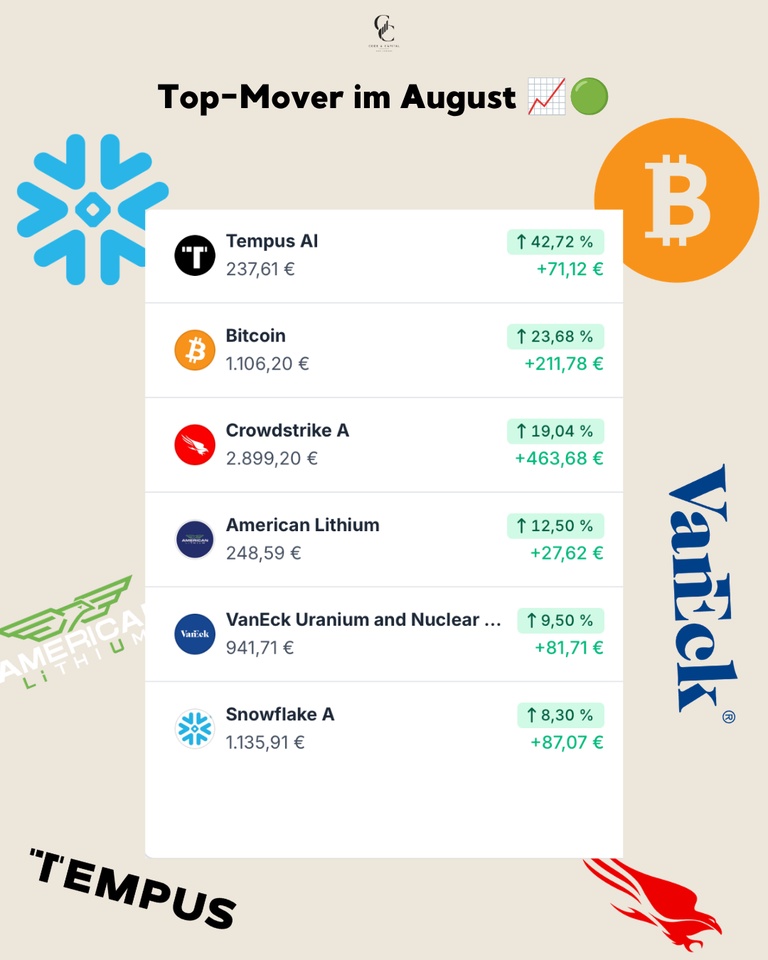
Tempus AI $TEM (+10,99%) posted the strongest gain at +42.72% (+71.12 €), marking a strong rebound following the July slump. Bitcoin $BTC (+0,97%) rose by +23.68% (+€211.78). CrowdStrike $CRWD (+0,15%) rose by +19.04% (+€463.68), making it the biggest euro gain in the portfolio; cybersecurity performed well in August regardless of the chip cycle. American Lithium gained +12.50% (+€27.62), while the VanEck Uranium and Nuclear ETF $NUKL (+4,85%) rose by +9.50% (+81.71 €). Snowflake $SNOW (+2,9%) rounded out the list with a gain of +8.30% (+€87.07).
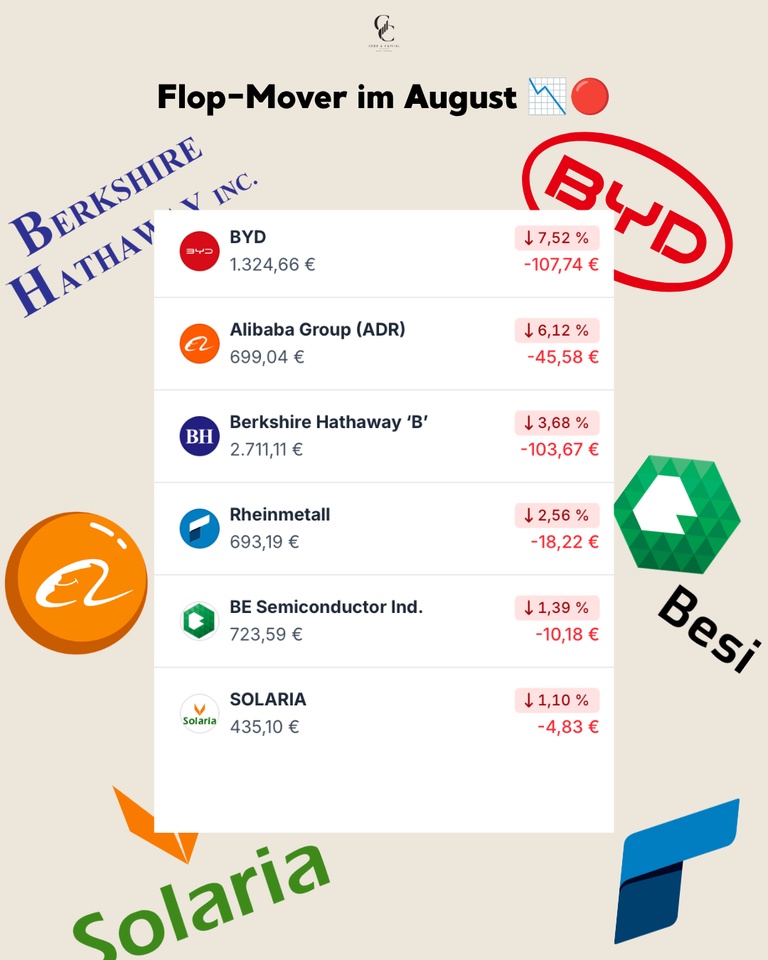
August’s Worst Performers 🔴
The losses were significantly smaller than in the previous month. BYD $1211 (+0,73%) fell -7.52% (-€107.74), taking a breather after a 27 percent gain in July. Alibaba $BABA (+2,29%) followed with a -6.12% drop (-€45.58); here, too, the China rally from July ran out of steam. Berkshire Hathaway $BRK.B (+0,91%) fell -3.68% (-103.67 €), and Rheinmetall $RHM (-1,82%) -2.56% (-€18.22). BE Semiconductor $BESI (+3,53%) fell by only -1.39% (-€10.18) and has stabilized following the slump in July. Solaria $SLR (+4,29%) closed down 1.10% (-€4.83).
Conclusion 💡
July was a month in which a lot happened. August was the month in which much of that reversed. Tempus AI $TEM (+10,99%) went from the biggest loser to the biggest winner, while BYD $1211 (+0,73%) and Alibaba $BABA (+2,29%) the other way around. Anyone who had sold in a panic in July would have been on the wrong side of the market in August.
❓ Question for the Community
Did the market fluctuations in August make you get cold feet, or did you hold onto your positions? And what was your best buy?
👇 Share your thoughts in the comments!
➡️ Every month, I post a portfolio update here, along with research from my quantitative model in between.
🗞️ Newsletter: codeandcapitalquant.beehiiv.com
📈 Wikifolio: https://www.wikifolio.com/de/de/w/wf0gquant6
+ 1
1111

2Mês·
Short squeeze at Tempus AI
In some places, Cathy Wood's purchase is cited as the reason for the rise; elsewhere, it's attributed to strong earnings and a short squeeze. In the end, of course, it doesn't matter at all—I think $TEM (+10,99%) it’s going to be a lot of fun.
1414
5 Comentários
Code & Capital@Codeandcapital
2Mês
•
11
•Ver todas as 4 restantes respostas
2Mês·
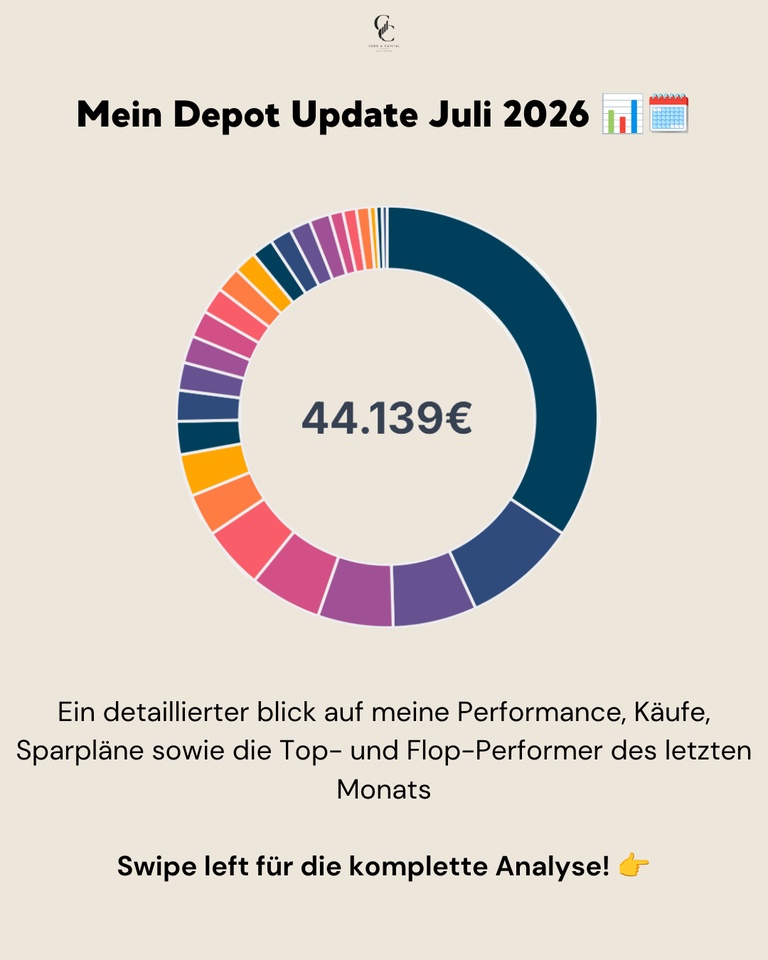
📊 My Portfolio Update: July 2026
July was a month of contrasts. The Nasdaq slipped into its second correction of 2026, triggered by a sharp sell-off in semiconductor stocks—memory chip manufacturers and chip equipment suppliers saw losses, in some cases in the double digits, and even strong quarterly results were no longer enough to prop up share prices. The DAX, on the other hand, hit new record highs during the same period, driven by software stocks and a rebound at Rheinmetall. At the same time, a significant amount of capital rotated out of AI and chip stocks and into Chinese tech and electric vehicle stocks, which staged a strong comeback after months of decline.
My portfolio benefited from this rotation and is back in the black:
📊 Monthly performance: +1.02%
📊 Portfolio value: ~€44,139
📊 Peak performance (Jan. 6, 2022): +43%
📊 YTD performance: ~+14.09%
Performance & Comparison 🚀
July demonstrated how differently the indices could perform depending on their composition. While the Nasdaq suffered from the chip sell-off, the DAX benefited from its lower concentration of semiconductor stocks and the Rheinmetall recovery. My portfolio tracked the DAX more closely than the Nasdaq and ended the month in positive territory.
Performance Comparison (July 1–July 31, 2026, end of day):
My portfolio: +1.02%
DAX: +2.57%
S&P 500: -1.25%
FTSE All-World: -1.47%
NASDAQ 100: -6.97%
Purchases, Sales & Allocation 💶
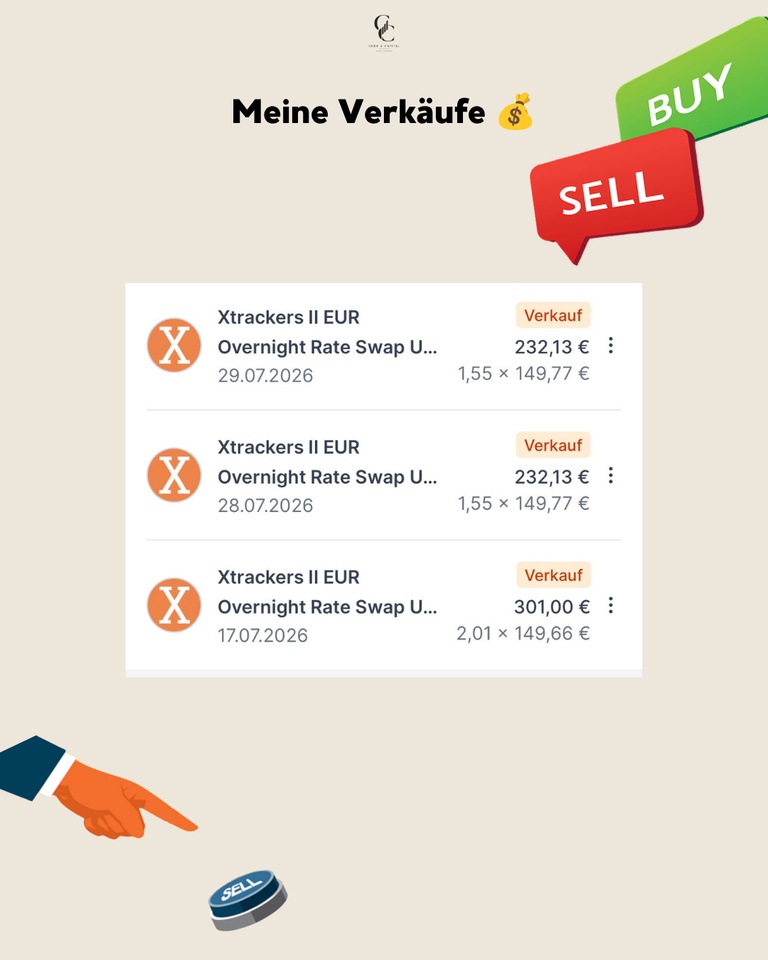
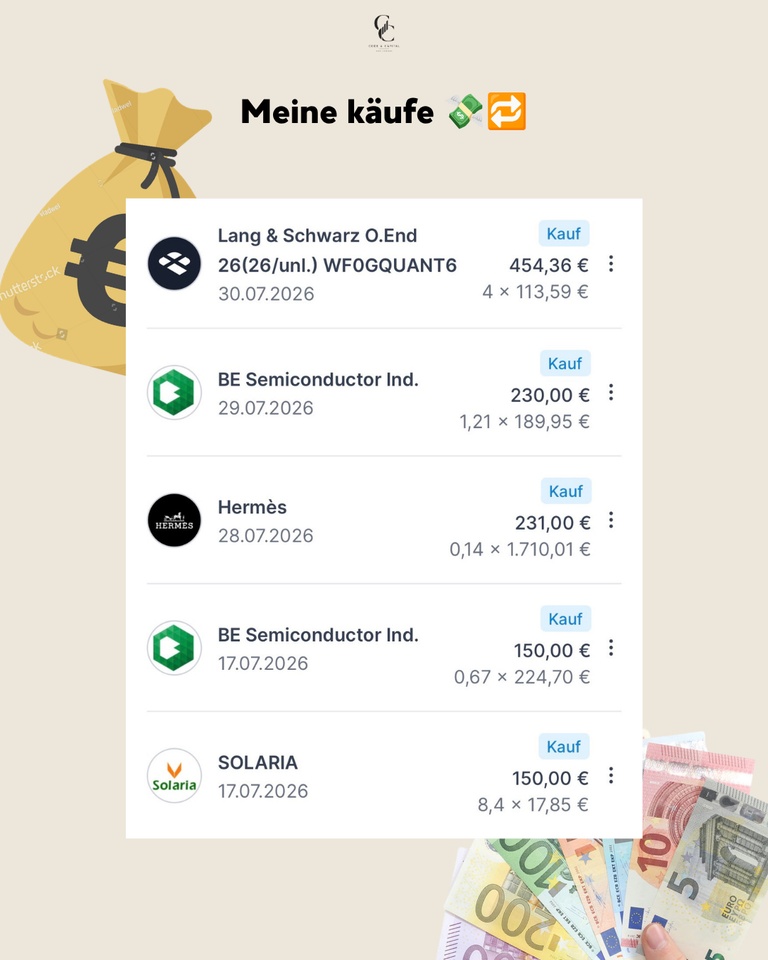
In July, I reduced my cash position. The Xtrackers II EUR Overnight Rate Swap ETF, which I had been using to park liquidity, was sold in three tranches: €301.00 on July 17, and €232.13 each on July 28 and July 29—totaling approximately €765. The freed-up funds were immediately allocated to three positions: BE Semiconductor Ind. $BESI (+3,53%) I increased my position in two steps: €150.00 on July 17 and €230.00 on July 29. For Solaria $SLR (+4,29%) , I added another €150.00 on July 17, and for Hermès $RMS (-0,48%) on July 28. In doing so, I deliberately reallocated cash into stocks rather than injecting new capital.
Additionally, on July 30, I invested €454.36 in my own Wikifolio certificate $DE000LS9V052 (+2,31%) —a private position separate from the rest of my portfolio.
Top Movers in July 🟢
The month clearly belonged to stocks that benefited from the rotation out of U.S. tech.
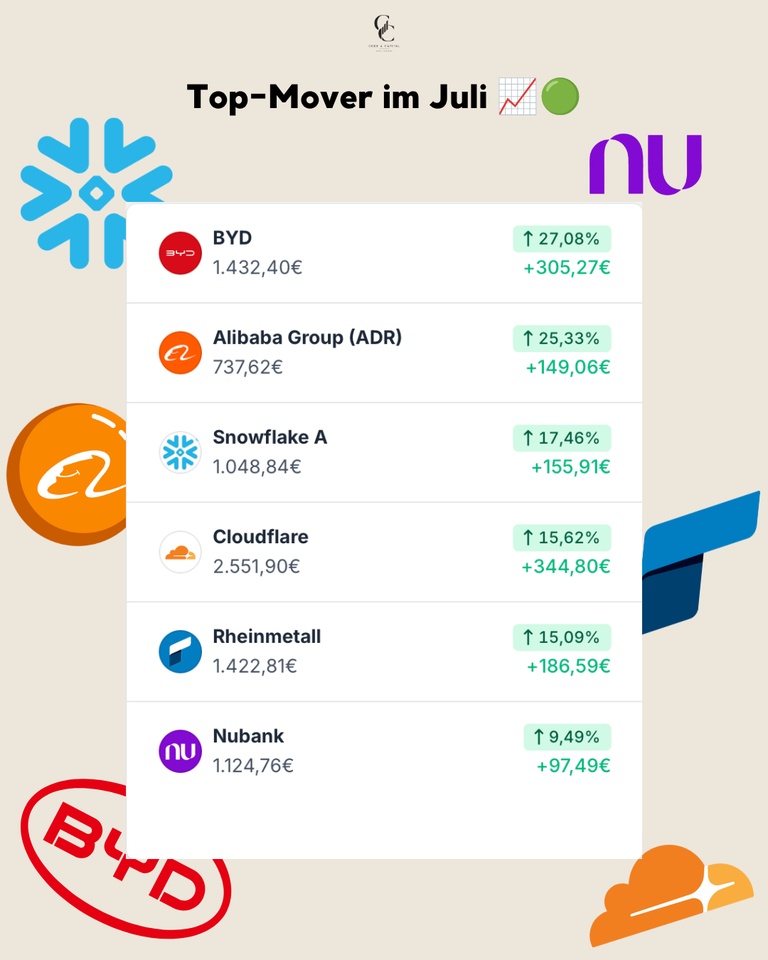
BYD posted the strongest gain at +27.08% (+€305.27). The stock received a double boost: capital flowed from AI and chip stocks into Chinese electric vehicle stocks, and BYD also reported $1211 (+0,73%) reported a nearly 22% jump in sales for July and more than a doubling of overseas deliveries. Alibaba $BABA (+2,29%) followed suit with a gain of +25.33% (+€149.06)—part of the same China-led rally that also swept up Tencent and Xiaomi. Snowflake $SNOW (+2,9%) rose by +17.46% (+€155.91) and Cloudflare $NET (-3,49%) by +15.62% (+344.80 €), the largest euro gain in the portfolio—both software stocks fared significantly better than hardware and chips in the rotation. Rheinmetall $RHM (-1,82%) rebounded by +15.09% (+€186.59) from its 52-week low following the frigate shock in June, supported by full order books and rising defense budgets in Europe. Nubank $NU (+3,65%) rounded out the list with a gain of +9.49% (+€97.49)—here, too, the rotation away from U.S. tech toward other regions played a role.
July’s Big Losers 🔴
On the other hand, the list consisted almost exclusively of stocks that were directly or indirectly hit by the chip sell-off.
Tempus AI $TEM (+10,99%) suffered the biggest loss at -25.08% (-€55.74)—AI-related stocks came under particular pressure during the broad sell-off. IREN $IREN (+17,11%) fell by -20.39% (-€179.15) and has remained weak since the price slump in early summer, still weighed down by the combination of Bitcoin weakness and skepticism regarding its transition to an AI cloud provider. BE Semiconductor Ind. $BESI (+3,53%) fell by -18.77% (-€169.56), directly impacted by the global sell-off among chip equipment manufacturers. TSMC $TSM (+6,69%) lost -15.04% (-€80.55)—despite a strong quarter, the stock was swept up in the general semiconductor correction. Hermès $RMS (-0,48%) dropped -10.27% (-24.26 €), with luxury goods following the downward trend of weaker growth stocks. Solaria $SLR (+4,29%) rounded out the list with a -9.50% (-€46.19) decline—solar and renewable energy stocks remain under pressure.
Conclusion 💡
July showed just how quickly capital flows can shift. While the chip sector underwent one of the sharpest corrections of the year, Chinese tech and electric vehicle stocks found their bottom. For my portfolio, this was a good example of why broad diversification across sectors and regions makes all the difference.
❓ Question for the Community
That was my month in numbers—how did the July chip sell-off affect you? Did you rotate into Chinese stocks, or are you holding onto your U.S. tech positions?
👇 Let us know in the comments!
➡️ Follow @codeandcapital26 for transparent portfolio updates!
🗞️ Newsletter: codeandcapitalquant.beehiiv.com
📈 Wikifolio: https://www.wikifolio.com/de/de/w/wf0gquant6
+ 2

3Mês·
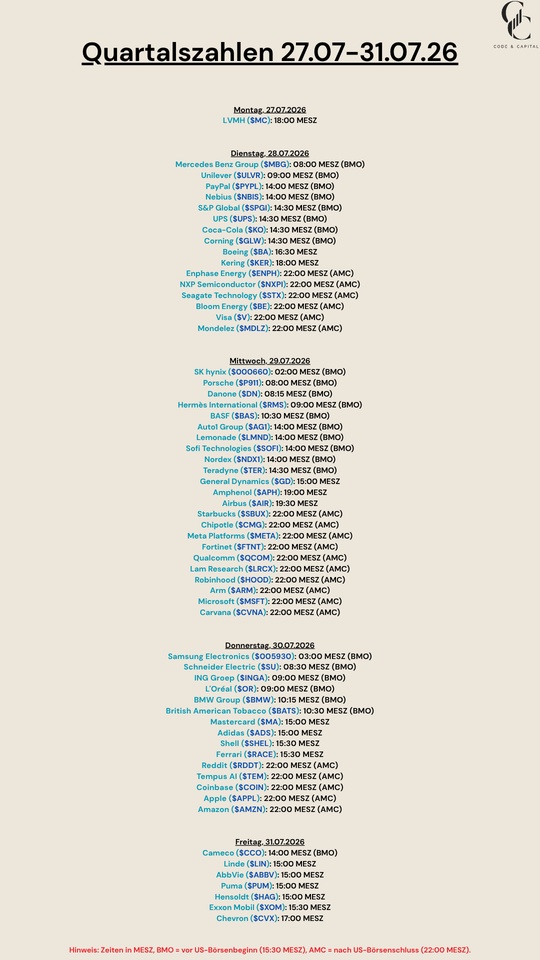
Quarterly Results: July 27–July 31, 26
$MC (-0,53%)
$MBG (-2,52%)
$ULVR (-1,31%)
$PYPL (+2,34%)
$NBIS (+7,72%)
$SPGI (+0,14%)
$UPS (-1,59%)
$KO (+0,81%)
$GLW (+4,24%)
$BA (+2,1%)
$KER (-0,07%)
$ENPH (+0,43%)
$NXPI (+3,47%)
$STX (-0,72%)
$BE (+3,77%)
$V (+1,12%)
$MDLZ (+0,75%)
$000660
$P911 (+0,26%)
$BN (-2,12%)
$RMS (-0,48%)
$BAS (-2,74%)
$AG1 (-4,56%)
$LMND (-3,96%)
$SOFI (+2,98%)
$NDX1 (+4,5%)
$TER (+4,04%)
$GD (-0,84%)
$APH (+4,95%)
$AIR (-0,6%)
$SBUX (+0,08%)
$CMG (-1,04%)
$META (+3,1%)
$FTNT (-2,36%)
$QCOM (+6,6%)
$LRCX (+5,12%)
$HOOD (+4,98%)
$ARM (+5,1%)
$MSFT (+1,13%)
$CVNA (+3,14%)
$005930
$SU (+1,05%)
$INGA (-1,45%)
$OR (-0,7%)
$BMW (-2,3%)
$BATS (-2,62%)
$MA (+0,17%)
$ADS (-2,36%)
$SHEL (-0,19%)
$RACE (-0,8%)
$RDDT (+3%)
$TEM (+10,99%)
$COIN (+0,26%)
$AAPL (+0,85%)
$AMZN (+1,98%)
$CCO (+5,5%)
$LIN (-1,49%)
$ABBV (+1,46%)
$PUM (-0,47%)
$HAG (-3,46%)
$XOM (+0,78%)
$CVX (+0,45%)
1414
4Mês·
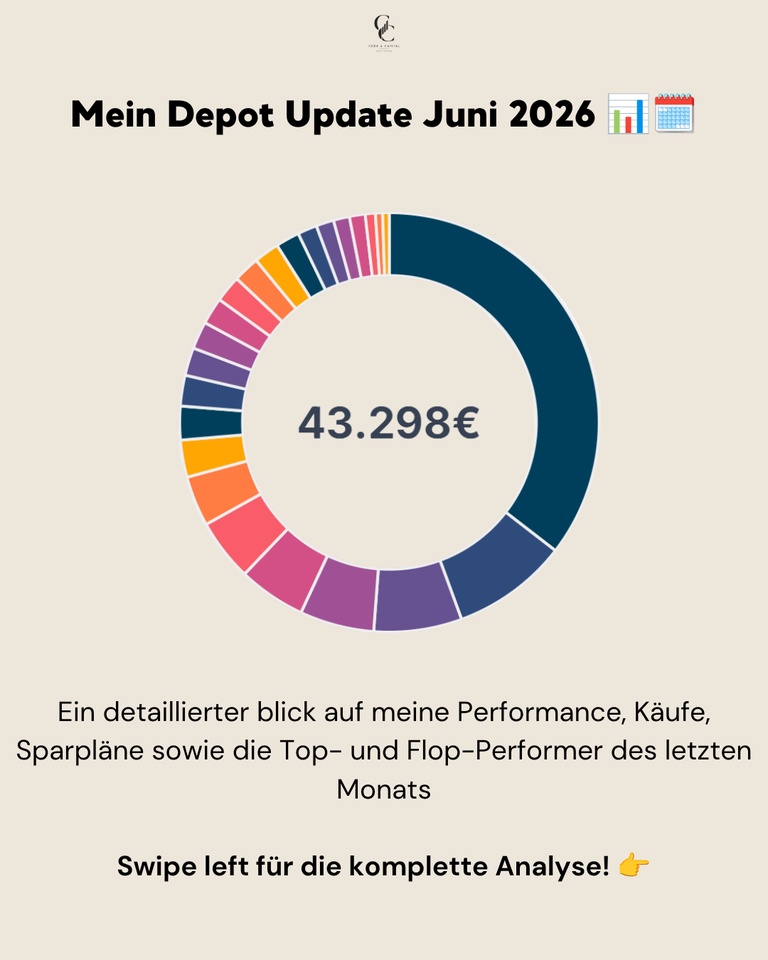
📊 My Portfolio Update: June 2026
June was marked by a Fed shock and a rotation away from the winners of the previous months. On June 17, the Fed, under its new chair Kevin
Warsh , the Fed kept interest rates at 3.50–3.75%, the dot plot signaled a possible rate hike rather than a cut—after months of hopes for easing —a real blow to the markets. On top of that came a bombshell regarding defense stocks: The Ministry of Defense scrapped the multi-billion-euro F126 frigate program, and Rheinmetall $RHM (-1,82%) subsequently lost over 16% —one of the stock’s worst trading days in decades. While speculative and cyclical stocks were sold off, investors fled to quality: defensive large-cap stocks and established software stocks held up significantly better.
In line with this more selective market environment, my portfolio slipped slightly into the red but held up more robustly than the DAX and Nasdaq:
📊 Monthly performance: -0.39%
📊 Portfolio value: ~€43,298
📊 Peak performance (Jan. 6, 2022): +39.16%
📊 YTD performance: ~+7.68%
Performance & Comparison 🚀
June was a month of contrasts: While the DAX and Nasdaq suffered from the Fed shock and the rotation out of risk assets, the S&P 500 and FTSE All-World held up significantly better thanks to their broader, more defensive composition. My portfolio was in the middle of the pack at -0.39%—more stable than the DAX and Nasdaq, but weaker than the two broad U.S. and global indices.
Performance Comparison (June 1–June 30, 2026, end of day):
My portfolio: -0.39%
FTSE All-World: +1.24%
S&P 500: +0.85%
DAX: -0.53%
NASDAQ 100: -0.96%
Purchases, Sales & Allocation 💶
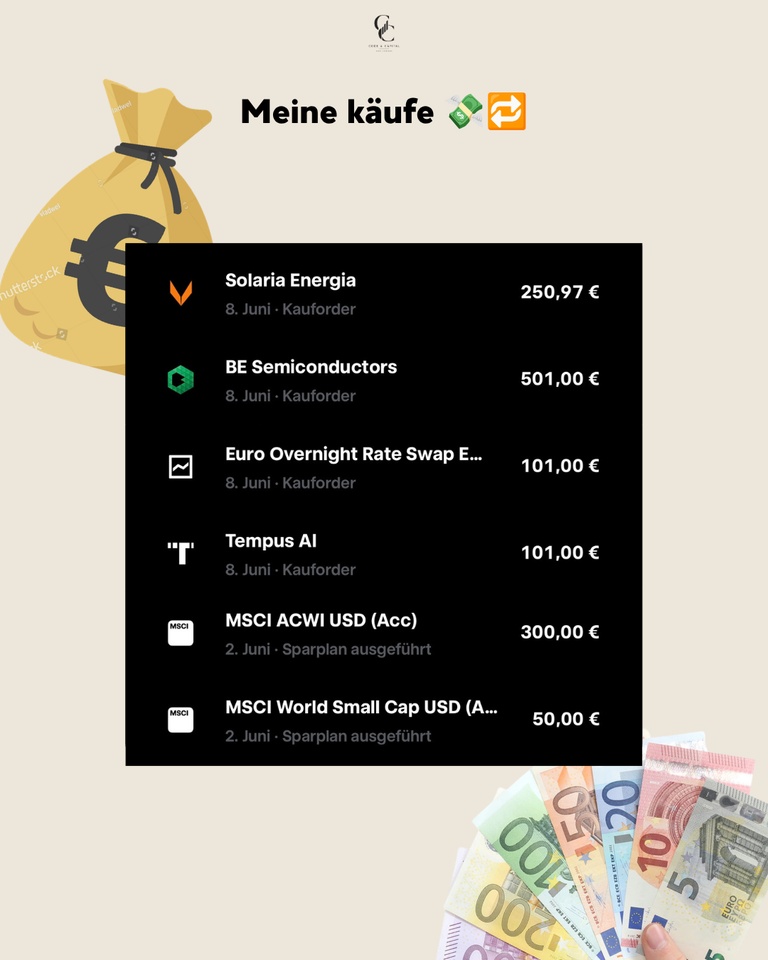
In June, €300.00 was invested in the MSCI ACWI USD (Acc) $ACWI and €50.00 into the MSCI World Small Cap $WSML via the ongoing savings plans. The following were added via buy orders: Solaria Energia $SLR (€250.97), BE Semiconductors (€501.00), a Euro Overnight Rate Swap ETF (€101.00), and Tempus AI $TEM (€101.00).
On the selling side, I took profits on two positions in which I’ve been a shareholder for a good two years: In Datadog $DDOG (+4,3%) , I closed out the entire position after the stock had performed strongly in recent months. With Snowflake $SNOW (+2,9%) , I sold about a quarter of the position and am holding onto the rest. Both were purely profit-taking after a strong run; there has been no fundamental change in my assessment of the companies.
Top Movers in June 🟢
Despite the generally nervous sentiment, there were a few stocks that bucked the rotation trend and benefited from the flight to quality.
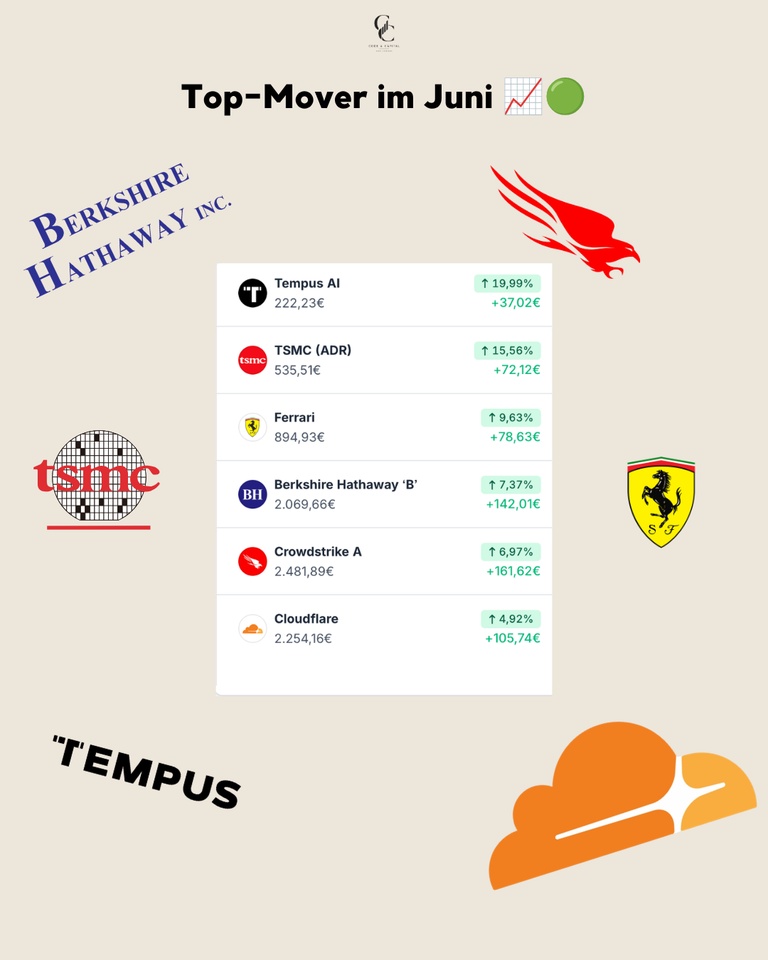
Tempus AI $TEM (+10,99%) posted the strongest gain at +19.99% (+37.02 €)—AI diagnostics remain in demand, even as more speculative stocks were sold off. TSMC $2330 followed with a gain of +15.56% (+€72.12): Demand for chips related to AI expansion remains consistently high, regardless of the interest rate debate. Ferrari $RACE (-0,8%) rose by +9.63% (+€78.63)—luxury goods proved resilient in the face of macroeconomic concerns. Berkshire Hathaway $BRK.B (+0,91%) benefited significantly from the flight to defensive quality, rising +7.37% (+€142.01), while Crowdstrike $CRWD (+0,15%) posted the largest euro gain in the portfolio with a +6.97% (+161.62 €) rise—cybersecurity remains structurally in demand. Cloudflare $NET (-3,49%) rounded out the list of winners with a gain of +4.92% (+€105.74).
June’s Biggest Losers 🔴
The losers in June were almost exclusively the stocks that had performed the strongest in previous months or are particularly sensitive to interest rates.
IREN was hit the hardest $IREN (+17,11%) , down -26.48% (-€316.39): Falling Bitcoin prices and ongoing disagreement among analysts regarding the company’s transition from a Bitcoin miner to an AI cloud provider weighed on the stock. Rheinmetall $RHM (-1,82%) lost -23.36% (-€376.76) after the Ministry of Defense scrapped the F126 frigate program, which affected the entire defense sector. Alibaba $BABA (+2,29%) fell by -21.25% (-€158.86)—Chinese tech remains under pressure due to general risk aversion toward Chinese stocks. American Lithium fell -21.21% (-€64.45), weighed down by persistently weak commodity prices and higher interest rate expectations, which particularly affect unprofitable growth stocks. BYD $1211 (+0,73%) fell by -18.40% (-254.16 €) amid the ongoing price war in the Chinese electric vehicle market. Solaria $SLR (+4,29%) rounded out the list of top losers with a -15.86% drop (-€63.35)—the hawkish Fed is weighing noticeably on interest-rate-sensitive solar and renewable energy stocks.
Conclusion 💡
June was a month of rotation: away from the more speculative winners of previous months, toward quality and established names. The Fed shock and the Rheinmetall slump showed how quickly sentiment can shift—a good reminder of why diversification across sectors and regions remains important.
❓ Question for the Community
That was my month in numbers—how did your portfolio fare through the Fed shock? Did you buy more Rheinmetall shares, or did you pull the plug?
👇 Let us know in the comments!
➡️ Follow @codeandcapital26 for transparent portfolio updates!
🔗 Link in bio: Wikifolio, Getquin & Parqet Portfolio
🗞️ Newsletter: codeandcapitalquant.beehiiv.com
📈 Wikifolio: https://www.wikifolio.com/de/de/w/wf0gquant6
+ 3
1414
5Mês·
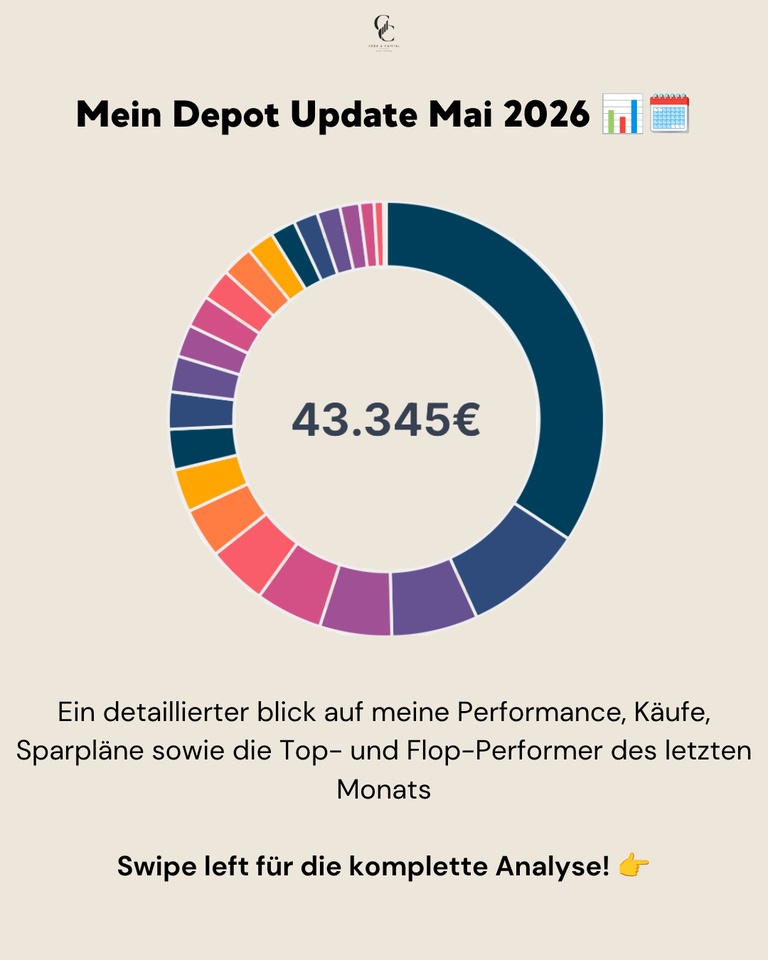
📊 My securities account update May 2026
May was dominated by strong figures and a massive rally in the tech and cloud sector. While April was still characterized by a general recovery, excellent quarterly figures and the unbroken AI boom continued to fuel the markets in May. The Nasdaq in particular benefited greatly from this and reached new highs. Even though volatility was noticeable in isolated cases, investors made strong gains in growth stocks.
My portfolio was able to take advantage of this strong momentum and achieve an outstanding performance, but was narrowly beaten by the extremely strong performance of the Nasdaq 100:
📊 Monthly performance: +9,33%
📊 Portfolio value: ~43.345 €
📊 Performance max. (06.01.2022): +43,84%
📊 Performance YTD: ~+10,44%
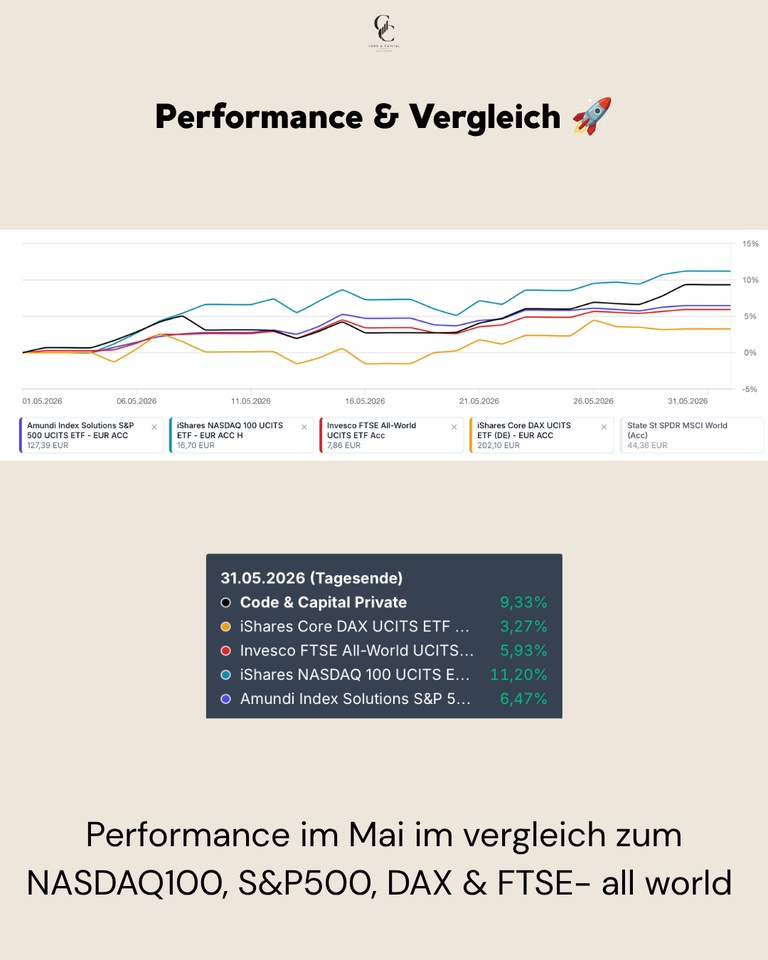
Performance & comparison 🚀
Performance in May was exceptionally strong, driven by my high weighting in US tech stocks. While European indices such as the DAX made rather moderate gains, US stocks dominated the action. My portfolio did extremely well with a whopping gain of over 8 % and clearly outperformed the broad market.
Performance in comparison (01.05.-31.05.2026):
My portfolio: +9,33%
NASDAQ 100: +11,20%
S&P 500: +6,47%
FTSE All-World: +5,93%
DAX: +3,27%
Buying, selling & allocation 💶
In the month of May, € 300.00 flowed into the MSCI ACWI USD (Acc)
$ACWI and € 50.00 in the MSCI World Small Cap
$WSML (+1,19%). In addition, smaller savings plan tranches were invested in Solaria Energia
$SLR (+4,29%) (150,30 €), Rheinmetall $RHM (-1,82%) (14,00 €), Ferrari
$RACE (-0,8%) (€6.00) and Hermes
$RMS (-0,48%) (€ 3.01) were invested.
Top movers in May 🟢
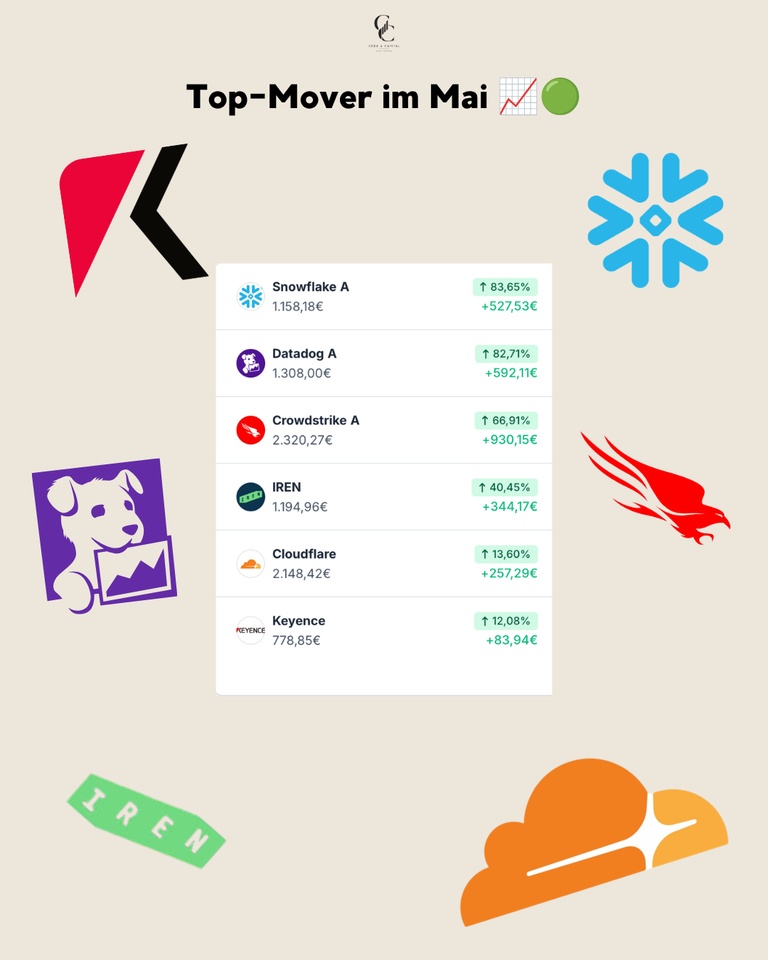
The list of winners in May is led by outstanding developments in the cloud and cybersecurity sector - an absolute feast for tech investors.
The absolute frontrunner was $SNOW (+2,9%) with a veritable price explosion of +83,65% (+€ 527.53), closely followed by $DDOG (+4,3%) with +82,71% (+592,11 €). Both values showed incredible momentum. Also $CRWD (+0,15%) was convincing across the board and delivered a strong +66,91% (+€ 930.15), which was the biggest gain in the portfolio in absolute terms. $IREN (+17,11%) continued its strong trend and recorded a further +40,45% (+344,17 €). The outstanding tech performance was rounded off by $NET (-3,49%) with a solid +13,60% (+€ 257.29), while Keyence also $6861 (+2,14%) with +12,08% (+€83.94) also developed extremely positively.
Flop movers in May 🔴
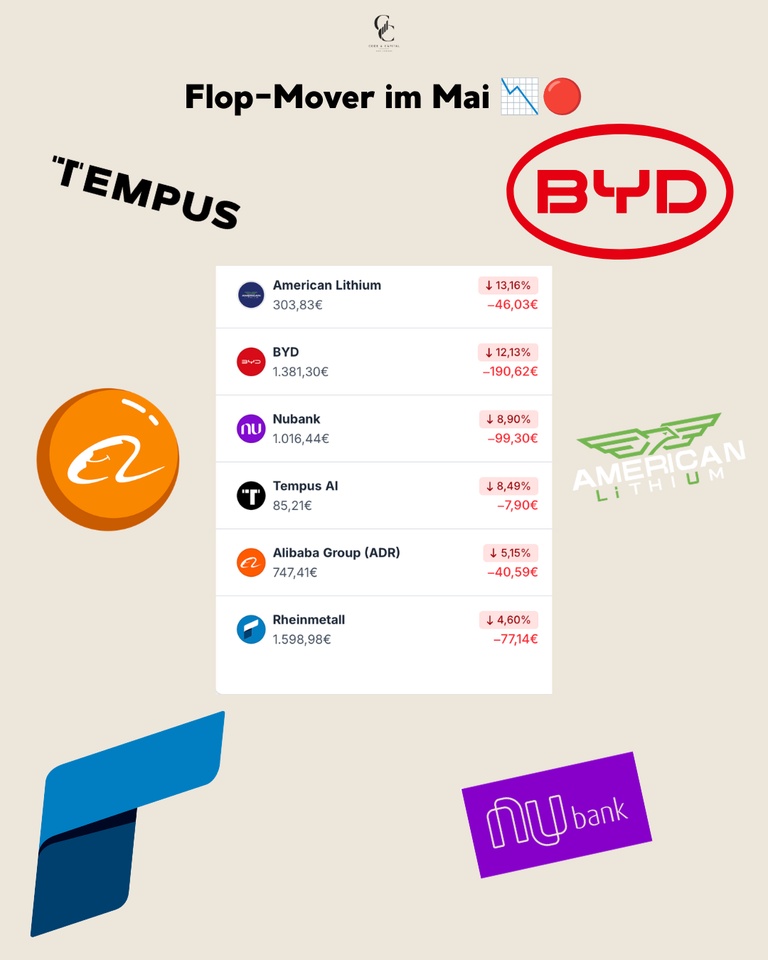
Despite the generally extremely strong sentiment, there were also some stocks that consolidated or showed weakness in May.
American Lithium was the worst performer, falling by -13,16% (-46.03 €), still unable to find a bottom in the current market environment. With $1211 (+0,73%) the minus of -12,13% (€ -190.62) was due to falling EV sales and the ongoing price war in China. $NU (+3,65%) After the strong previous months, the share price fell by -8,90% (-99.30 €) after the strong previous months. Also $TEM (+10,99%) also recorded a slight setback of -8,49% (-7.90 €), similar to $BABA (+2,29%) with -5,15% (-40,59 €). $RHM (-1,82%) also lost ground and lost -4,60% (-77.14 €), indicating further profit-taking in the defense sector.
Conclusion 💡
May was an outstanding month that impressively demonstrated how much a targeted positioning in the tech and cloud sector can pay off.
❓ Question for the community
This was my month in numbers, what was your best buy in May? Which stock surprised you the most?
👇 Write it in the comments!
➡️ Follow @codeandcapital for transparent portfolio updates!
🔗 Link in bio: Wikifolio, Getquin & Parqet Portfolio
🗞️ Newsletter: codeandcapitalquant.beehiiv.com
+ 2
1414
6 Comentários

What makes you feel positive about $RACE, even with the addition of a savings plan?
•
33
•
5Mês·
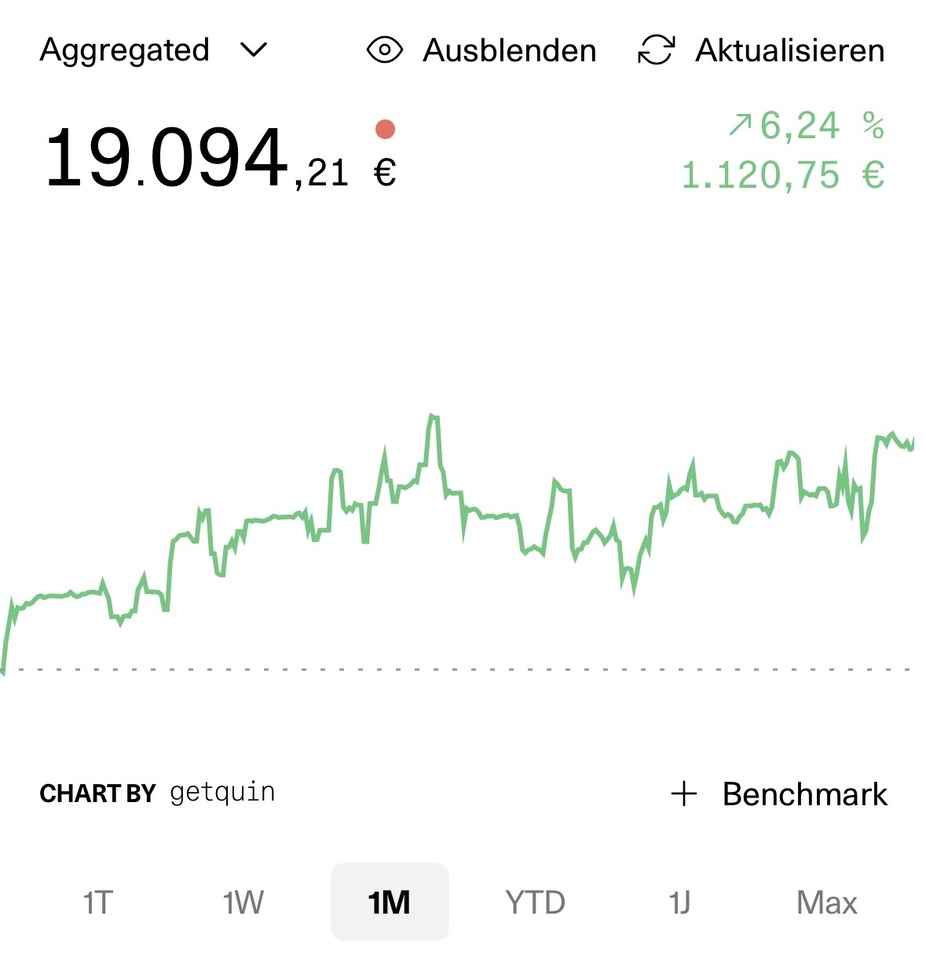
Month in review May 2026
May was a good month with a return of +6.24%.
The YTD is with +6% finally back in the green. 📈
The winners in May are:
$RKLB (+17,37%) with a plus of almost 83% 📈
$IREN (+17,11%) with a plus of over 46% 📈
$ONDS (+19,45%) with an increase of over 40% 📈
Losers in May are:
$PNG (+0,58%) with a minus of over 2% 📉
$MDB (+4,49%) with a minus of almost 2% 📉
$ASML (+5,23%) with a minus of almost 2% 📉
New stocks found their way into the portfolio:
$MDB (+4,49%) , $ASML (+5,23%) , $SU (+1,05%) , $VSTM (-9,72%)
$CLBT (+1,75%)
Other values had to give way:
$LMND (-3,96%) , $OHB (-2,84%) , $ZTS (-3,35%) , $TEM (+10,99%) , $DR0 (-1,79%) , $MSFT (+1,13%)
A realignment of my strategy is planned from next month. The aim is to build up a core. This is currently still at a portfolio size of just under 54%. $4GLD (+0,23%) . This is to be left behind, instead the $ (+1,42%)VWRL (+1,42%) is to be saved with €20 per day.
In addition, I started my small AI project Velocity. More details on this in the last post.
2525
6Mês·
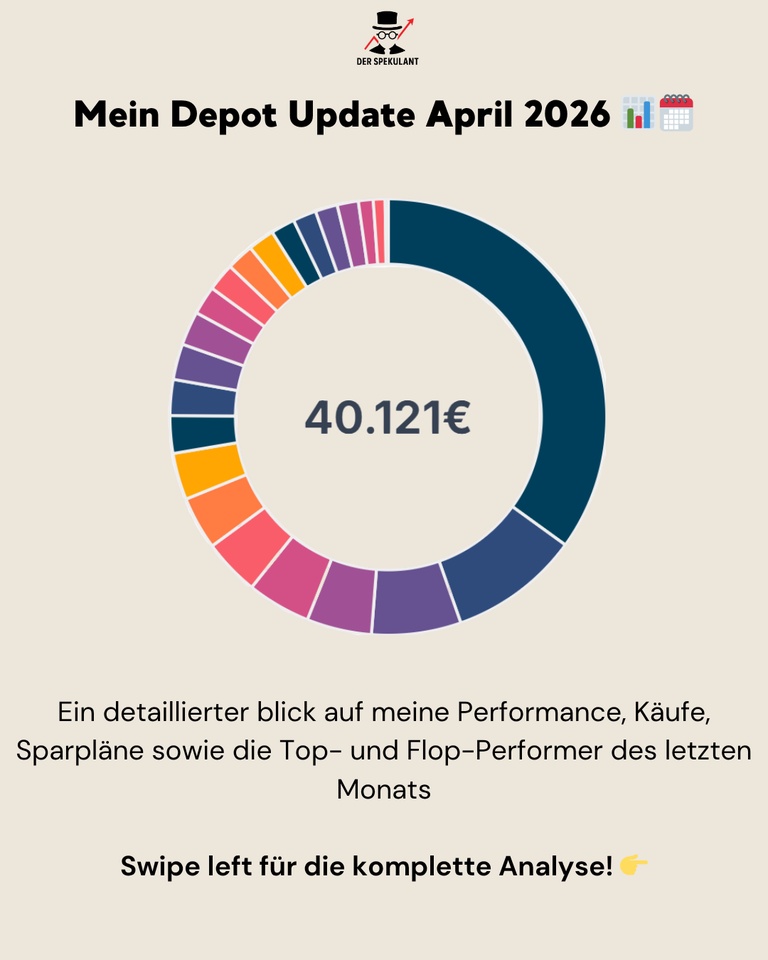
📊 My securities account update April 2026
April was the month of the big recovery. After March was extremely affected by the geopolitical tensions in the Middle East, optimism returned to the markets in April. The feared escalation failed to materialize, oil prices stabilized at a high level and investors took advantage of the lower prices to make a massive re-entry - especially in the tech sector, which catapulted the Nasdaq to new record highs.
My portfolio benefited from this positive sentiment, but lagged behind the massive rally of the benchmarks:
📊 Monthly performance: +6,59%
📊 Portfolio value: ~40.121 €
📊 Performance max (06.01.2022): +35,47%
📊 Performance YTD: ~+4,03%
Performance & comparison 🚀
The recovery in April was impressive, but almost felt "too fast". While the US markets were boosted by strong big tech figures, European stocks were stable but less dynamic. The ECB stuck to its cautious course, which dampened volatility somewhat.
Performance in comparison (01.04.-30.04.2026):
- My portfolio: +6.59 %
- NASDAQ 100: +16.50 %
- S&P 500: +9.50 %
- FTSE All-World: +8.74 %
- DAX: +6.88 %
Buying, selling & allocation 💶
No investments were made in April.
👉 After the high volatility in the previous month, I kept my feet still. The strategy continues to be "watch and hold".
Top movers in April 🟢
The list of winners in April is led by stocks that were still underperforming in March - a classic rebound.
The absolute frontrunner was $IREN (+17,11%) with an increase of +31.02% (+€201.45), which benefited massively from the stabilization in the crypto-mining sector. This was closely followed by $6861 (+2,14%) with +29.08% (+€156.56) - an impressive return to relative strength after the severe setback in March. Also $SIE (-2,83%) was also able to shine with +22.78 % (+€153.07), as concerns about exploding energy costs in the industry have eased for the time being. American Lithium corrected the previous month's losses with a gain of +22.58 % (+€ 64.45), while $TEM (+10,99%) with +21.08 % (+€ 16.21) and $2330 +16.32 % (€ +61.10) underpinned the strength in the semiconductor and AI segment.
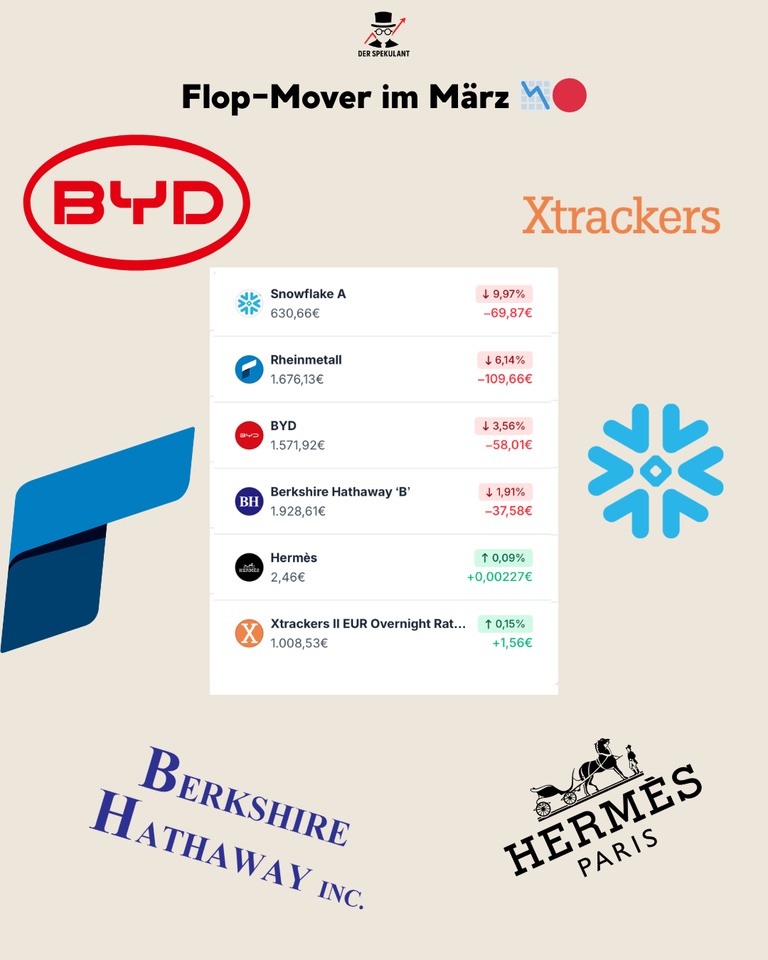
Flop movers in April 🔴
Despite the generally positive sentiment, there were also stocks in April that didn't get off the ground or even fell.
The strongest correction $SNOW (+2,9%) which continued the negative trend with -9.97% (-€69.87) - the market believes that there are probably opportunities for disruption through AI. Also $RHM (-1,82%) also lost ground after the rally of recent months, shedding -6.14% (-€109.66) as profit-taking dominated the defense sector. $1211 (+0,73%) fell again somewhat after the strong performance in March (-3.56%, -€58.01), and also $BRK.B (+0,91%) was rather flat at -1.19% (-€37.58). Almost ironic: $RMS (-0,48%) (+0.09 %) and the Xtrackers Overnight ETF (+0.15 %) ended up in the "flop" ranking, simply because they simply missed out on the double-digit rally of the overall market.
Conclusion 💡
April was a balm for the soul of every investor, even if my portfolio was unable to fully participate in the benchmark rally.
❓ Question for the community
This was my month in numbers, what was your best buy in April? Which stock surprised you the most?
👇 Write it in the comments!
➡️ Follow @derspekulant.1 for transparent portfolio updates!
🔗 Link in Bio: Getquin & Parqet Portfolio
🗞️ Newsletter: derspekulant.beehiiv.com
+ 2

Títulos em alta
Principais criadores desta semana
Dados tempo real da LSX · Dados financeiros e EOD da FactSet