Reading time: approx. 4–5 minutes
Over the past few weeks and months, I’ve written a lot about financial metrics: P/E ratio, ROIC, FCF yield, PEG, and the Rule of 40. At the same time, I’ve covered interest rates, liquidity, market phases, multiple dynamics, volatility, and fiscal policy.
Today, I’d like to bring it all together.
For me, the key takeaway from this entire series isn’t a single metric. It’s something more fundamental: metrics only reveal their true value within the right valuation framework. Without context, they’re precise—but not necessarily meaningful.
Ratios measure conditions. Markets trade on expectations.
The price of an asset is determined by the present value of expected future cash flows. Historical earnings, margins, or cash flows serve as important reference points. But they are not the future—they are only part of the information base.
A P/E ratio of 30 is neither automatically expensive nor automatically cheap. It is, first and foremost, a ratio of price to earnings.
Whether 30 is high or low depends on interest rates, growth expectations, risk appetite, and the business model. In an environment of low real interest rates, higher multiples make more sense because the discount rate is low. If interest rates rise structurally, this logic changes. The same earnings are discounted more heavily—the multiple declines, even if everything remains stable from an operational standpoint.
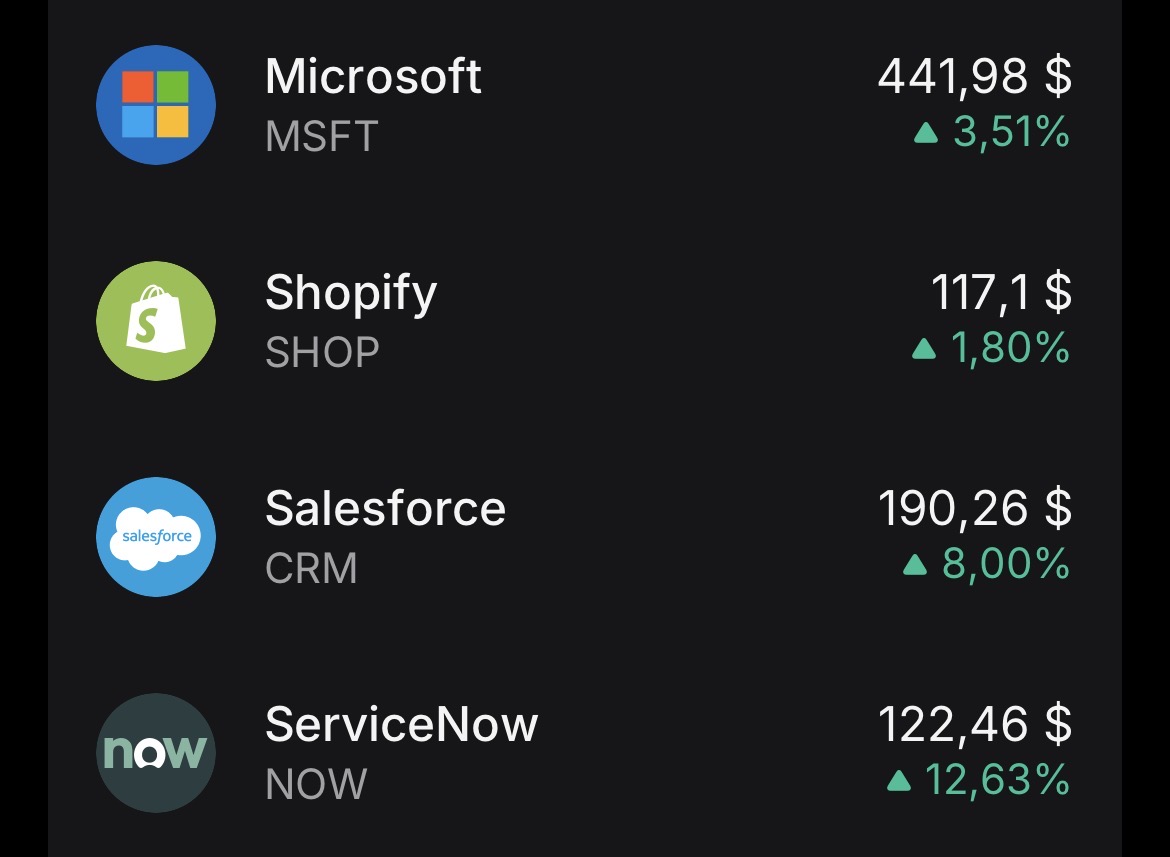
For $MSFT (-1,87%) (Microsoft), a higher multiple may be plausible as long as returns on capital remain well above the cost of capital. If the cost of capital rises, the economic leeway narrows. The company remains strong in qualitative terms—but its valuation reacts to the broader context.
With $NVDA (-4,48%) (NVIDIA), we see how an investment cycle in AI infrastructure can support a phase of multiple expansion. If growth or investment momentum normalizes, perceptions change. The multiple suddenly seems more ambitious—even though the metric itself appears unchanged.
Or take $XOM (+0,38%) (Exxon Mobil). During a period of high prices, a high FCF yield can emerge. That looks attractive. But commodities are cyclical. Peak cash flows are often unsustainable. The metric is accurate—its interpretation depends on the cycle.
In this series, I have therefore presented a four-phase model: build-up, acceleration, euphoria, and peak. Not as a rigid framework, but as a guide for interpretation.
Revenue growth of 20% can be viewed very positively in an early phase. In a late phase, the same figure may be perceived as insufficient. The metric remains the same; the context changes.
The PEG ratio, too, is only as good as its assumptions. For $SHOP (-5,16%) (Shopify), a normalization of growth can worsen the PEG without the business model being structurally compromised. Forecasts are always subject to uncertainty.
A particularly key point is the relationship between return on invested capital (ROIC) and the cost of capital.
An ROIC of 15% sounds strong. If the cost of capital is 14%, there is hardly any economic value added. An ROIC of 12% can be significantly more attractive if the cost of capital is 6%. What matters is the spread—not the isolated figure.
At the same time, precision remains important. A structured valuation model helps make assumptions transparent. Sensitivity analyses show how strongly valuations react to changes in interest rates or margins. Problems arise only when the apparent precision of the output figure masks the uncertainty of the input assumptions.
The overarching insight is therefore this: Numbers are necessary, but not sufficient.
An investor without key metrics loses their bearings. An investor with key metrics but without a valuation framework runs the risk of developing a false sense of security. Quality arises from the interplay of quantitative analysis, macroeconomic understanding, awareness of business cycles, and business model analysis.
The question of whether the P/E ratio is 28 or 30 is not decisive in the long term. What is more important is the market environment in which we operate. Which phase dominates? How are interest rates and liquidity evolving? Is the ROIC sustainably above the cost of capital? How sensitive is the valuation to changes in assumptions?
This series began with interest rates and liquidity. It moved on to market phases and valuation mechanics, and then to individual key figures. If I were to summarize everything in one sentence, it would be this: Ratios are tools. The valuation framework is the architecture within which they are meaningfully applied. Context enhances the significance of ratios. Context structures precision.
If we take this line of thinking further, the question arises as to what the next logical steps are. Here are four possible directions for the next series:
1. Decision-Making Architecture in the Portfolio
How do I define entry zones based on scenarios? How do I determine position sizes depending on uncertainty? How do I handle winners like $MSFT (-1,87%) (Microsoft) that are ambitiously valued but remain structurally strong?
2. Valuation Mechanics & Sources of Return
What drives long-term performance? How much of the return for $AMZN (-4,41%) (Amazon) comes from earnings growth, and how much from changes in multiples? When does earnings growth dominate, and when does valuation adjustment?
3. Cyclical Investing Without Market Timing
How do I distinguish between $XOM (+0,38%) (Exxon Mobil)? What role do earnings revisions play? How do different sectors perform in various phases?
4. Quality vs. Valuation
When is a valuation premium justified for high returns on capital? When is quality systematically overvalued? How long can spreads between ROIC and the cost of capital realistically persist?
I’d be interested in hearing your thoughts.
Which of these four areas would you prioritize? Or is there a completely different topic we should explore in more depth?