
🎬 AMC Entertainment soared 16% premarket after crushing Wall Street's Q2 estimates. The former meme-stock king is back in the spotlight as moviegoers return to theaters.

AMC Entertainment
Ação
Ação
Ticker: AMC
AMC
Price
Discussão sobre AMC
Postos
22

4Mês·
My most expensive samurai warrior ⚔️
Yes, we all know and love—or hate—them: I’m talking about none other than meme stocks, meme coins, and the like. I can honestly say with pride that I never fell for a single meme coin during my time in crypto. It was immediately clear to me that these would eventually drop to zero in the long run. Unfortunately, millions and billions are still pouring into such projects—but that’s a different topic.
However, looking back, I want to be honest and reflective: I actually did pick up a meme coin or two back then. Today, I don’t even really know the exact reasons anymore. It was probably a mix of FOMO, pure speculation, and the thought: “Hey, check out my Twitter profile picture—what an awesome samurai!”
Well, that’s definitely where I burned through a good chunk of money. Today, I chalk it up to a learning experience and know that some random digital samurai images aren’t going “to the moon.” Luckily, at least I didn’t buy any monkeys at their all-time high! 😂🤪
As we all know, you learn best from your mistakes. Now I’m dying to know: What was your craziest meme coin purchase? Did you ever actually have a real shitcoin in your wallet? Or are you still desperately holding $AMC (-0,04%) -shares in your portfolio?
No one’s getting hate—after all, I bought NFTs myself and was in the same boat!
~ Rendite Rudin
#MemeStocks
#Shitcoins
#NFT
#Krypto
#Börsenpsychologie
#Lehrgeld
#RenditeRudin
55
2 Comentários
He-Man D.@He-Man
4Mês
•
22
•Mostrar resposta

11Mês·
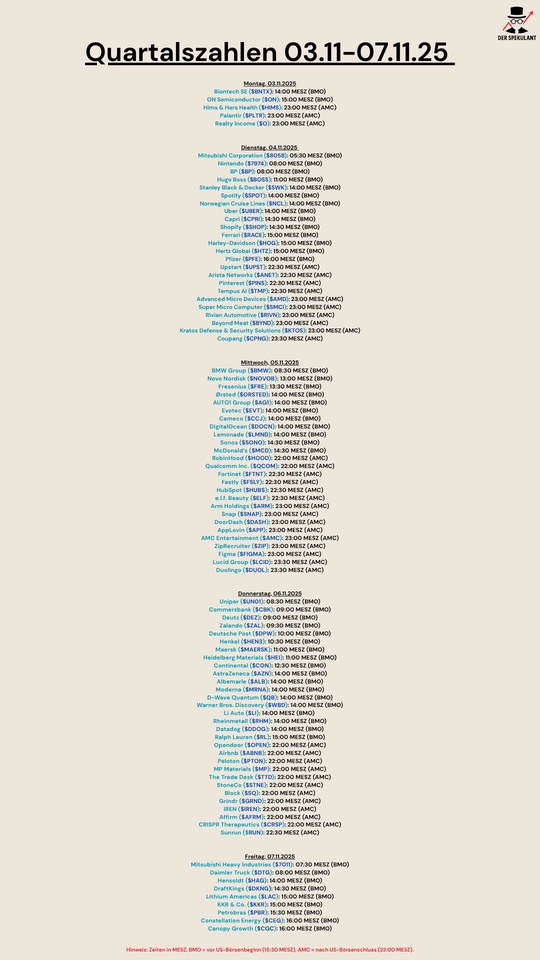
Quartalszahlen 03.11.25-07.11.15
$BNTX (+0,38%)
$ON (+1,22%)
$HIMS (+0,27%)
$PLTR (-0,64%)
$O (+0,39%)
$8058 (-1,88%)
$7974 (-2,42%)
$BP. (+1,18%)
$BOSS (+0,35%)
$SWK (+0,05%)
$SPOT (-0,58%)
$N1CL34
$UBER (+0,02%)
$CPRI (-0,51%)
$SHOP (+0,51%)
$RACE (-0,96%)
$HOG (-0,58%)
$HTZ (+0,26%)
$PFIZER
$UPST (+0,38%)
$ANET (+0,71%)
$PINS (+0%)
$TEM (+1,12%)
$AMD (+1,28%)
$SMCI (+1,93%)
$RIVN (+0,44%)
$BYND (+0,51%)
$KTOS (+0,49%)
$CPNG (-0,04%)
$BMW (+0,57%)
$NOVO B (-0,16%)
$FRE (+0,1%)
$ORSTED (+1,3%)
$AG1 (+0,62%)
$EVT (-0,5%)
$CCO (+0,91%)
$DOCN (+2,28%)
$LMND (-0,06%)
$SONO (-0,24%)
$MCD (-0,36%)
$HOOD (+0,95%)
$QCOM (+0,64%)
$FTNT (-0,26%)
$FSLY (+2,08%)
$HUBS (-0,84%)
$ELF (+0,54%)
$ARM (+1,61%)
$SNAP (-0,09%)
$DASH (-0,62%)
$APP (+0,18%)
$AMC (-0,04%)
$ZIP (-0,1%)
$FIG (-0,35%)
$LCID (+0,65%)
$DUOL
$UN0 (-0,51%)
$CBK (+0,24%)
$DEZ (+1,07%)
$ZAL (+0,88%)
$HEN (+0,28%)
$MAERSK A (-0,74%)
$HEI (+1,68%)
$CON (-0,61%)
$AZN (-1,25%)
$ALB (+1,58%)
$MRNA (-2,2%)
$QBTS (+0,82%)
$WBD
$LI (+0,98%)
$RHM (+0,7%)
$DDOG (-0,33%)
$RL (-0,23%)
$OPEN (-0,58%)
$ABNB (-0,28%)
$PTON (-0,1%)
$MP (+0,73%)
$TTD (+0,09%)
$STNE (+0,08%)
$SQ (-0,07%)
$GRND (+0,4%)
$IREN (+1,87%)
$AFRM (-0,02%)
$CRISP
$RUN (+0,29%)
$7011 (-1,65%)
$DTG (-0,11%)
$HAG (+0,82%)
$DKNG (+0,27%)
$LAC (+0,69%)
$KKR (-0,58%)
$PETR3 (+1,78%)
$CEG
$WEED (-2,46%)
88
1Ano·
Crisis favorites: Smoke signals & lipstick - Psychology of consumption
The so-called lipstick effect describes the phenomenon that consumers do not completely forego luxury during recessions, but buy smaller luxury items when large purchases are no longer available.
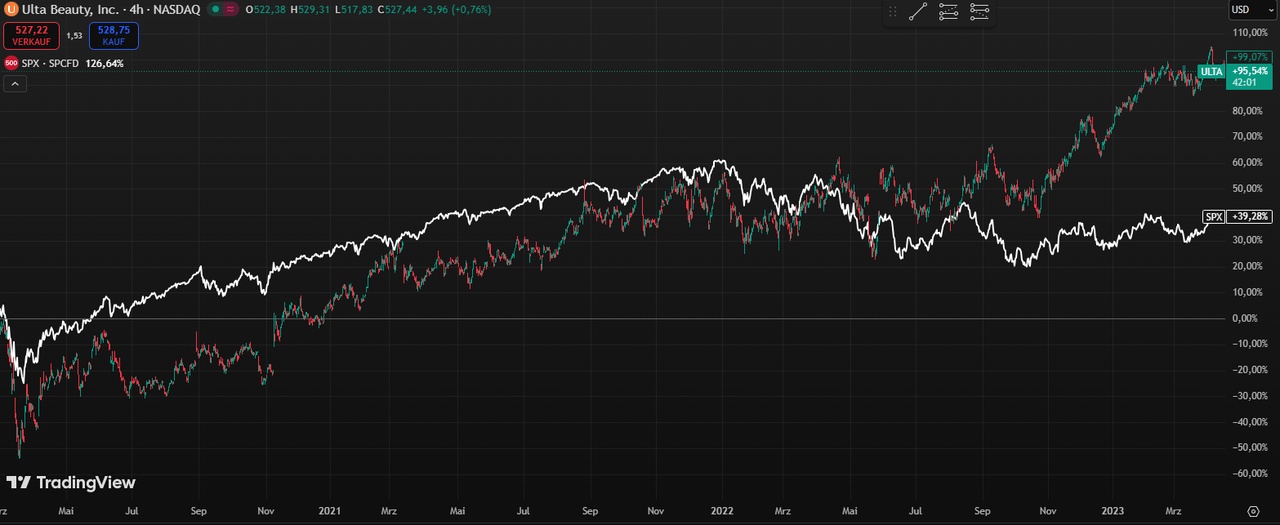
(The chart below compares the performance of ULTA Beauty and the S&P 500 since March 13, 2020, when the nationwide COVID-19 lockdowns began).
(https://de.tradingview.com/chart/Wl3dkBka)
The term was coined by Juliet Schor back in 1998.
"They are looking for affordable luxury, the thrill of buying in an expensive department store, indulging in a fantasy of beauty and sexiness, buying 'hope in a bottle. Cosmetics are an escape from an otherwise drab everyday existence".
He gained notoriety when Estée Lauder boss Leonard Lauder realized after the 2001 attacks that his company was selling an unusually high number of lipsticks.
Without further ado, Lauder considered lipstick to be a counter-indicator to the economic situation.
Today, the effect is widely extended to consumer goods beyond cosmetics:
Small goods instead of expensive prestige items gain in popularity during crises.
1.
What is the lipstick effect?
In essence, the lipstick effect means
When budgets shrink, consumers cut back on expensive purchases - but indulge in a little sin.
"Consumers will still tend to buy small luxury items even during an economic downturn".
Or:
If you can't afford a car, you might buy the new luxury lipstick instead of nothing at all.
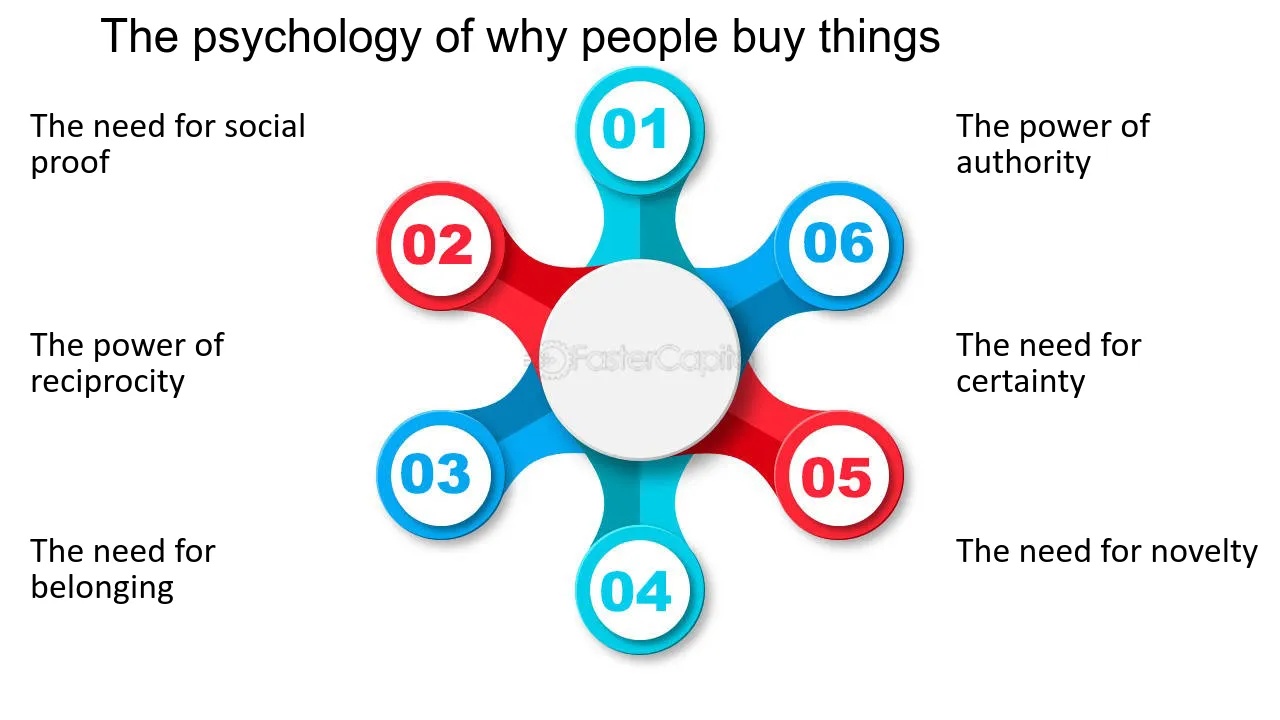
(https://fastercapital.com/startup-topic/People-Will-Actually-Buy.html)
After 9/11, the demand for lipstick shot up by around 11%.
Later, during the 2008 financial crisis $EL (-0,37%) again reported rising cosmetics revenues, while other sectors suffered.
The lipstick effect is not constant; extreme situations such as deep snow or store closures due to the pandemic can weaken it.
However, in normal downturns, studies show that it works quite reliably as a consumption indicator.
2.
Psychological drivers
(https://www.falstaff.com/de/news/im-rausch-der-hormone)
Why do people reach for chocolate rather than expensive theater tickets in uncertain times?
Psychology is behind the lipstick effect.
Even when money is tight, people want to treat themselves to something good - a sweet consolation or a new make-up.
Consuming lipstick or ice cream can lift your mood and give you the feeling that you are doing something positive.
In a recession, women show an increased interest in beauty and attractiveness products, especially when they feel a high motivation to increase their attractiveness or to attract a partner.
This supports the lipstick effect hypothesis:
Even in times of crisis, people do not forgo small luxury items - especially those that boost self-esteem or attractiveness.
The study explains this in terms of evolutionary psychology:
- In uncertain times, perceived financial security decreases.
- People (especially women in this study) therefore invest more in their appearance to send signals of attractiveness that potentially symbolize access to stable social and economic resources.
3.
Economic impact: Crisis-winning industries
In many downturns, certain sectors have benefited disproportionately. Traditionally, cosmetics providers have flourished - lipstick, mascara etc. are seen as an "affordable luxury".
For example $OR (+1,02%) reported increases in sales and profits for the crisis year 2008 despite the global contraction.
This effect explains why cosmetics shares are often considered stable. Tobacco and alcohol companies are also often robust:
Habitual goods such as cigarettes or beer are considered "addictive" goods - even in bad times, demand remains relatively stable. (Historically, cigarettes were even used as a means of bartering for war).
Fast food chains such as McDonald's do well because people want cheap food when everything is more expensive.
Gambling providers can also boom when dreams become more important than sober calculation.
Streaming services/online entertainment are typical: while physical contact is declining, the need for internet entertainment is increasing (Netflix, for example, grew strongly during coronavirus). Investopedia specifically names "fast-casual restaurants and multiplex cinemas" as winners of the crisis.
- Cosmetics
Sales continue to rise in 2008 despite the crisis. The global cosmetics market amounted to around USD 504 billion in 2022 (growth +15% compared to 2021) - a sign of the continued importance of beauty care.
- Tobacco/alcohol
($BATS (-0,8%), $PM (+0,13%), $MO (-0,12%), $DGE (+0,05%))
Habitual drinkers and smokers rarely cut back further, tend to consume the same thing or switch to cheaper brands. Tobacco, for example, was an expensive means of exchange during the war.
- Fast food & entertainment
($MCD (-0,36%), $NFLX (-0,41%), $AMC (-0,04%)
)
Affordable indulgences and distractions are in demand. Reports from the corona crisis document, for example, that Amazon recorded a +70% jump in e-commerce sales in the beauty and care sector during the lockdown compared to pre-crisis levels - an indication that consumers were busy ordering small luxury items online.
4.
Historical examples of crises
Concrete history makes the effect tangible: Already after 9/11 in 2001 $EL (-0,37%) reported unusually high lipstick sales - Leonard Lauder even spoke of a "counter-indicator" to the recession.
The picture continued in 2008/09:$OR (+1,02%) and other cosmetics companies fared better than the market as a whole (they were able to expand their sales), while luxury goods shrank.
Corona pandemic (2020) again brought examples: Although the economy slumped in the first half of the year, online trade in beauty products boomed,
Amazon recorded a +70% increase in beauty/care products in e-commerce in spring 2020 compared to the pre-crisis period and Sephora ($MC (-1,55%)) reported a +30 % increase in online sales compared to 2019.
The effect was even evident in 2022/23: according to market researchers, around a third of make-up customers in the UK bought products as a "reward", with spending on lipstick there increasing by around 12.3% in 2023 (despite the tight cost of living).
In China, the lipstick effect was conspicuously absent in 2022, as a study by the China Institute made clear. (https://cidw.de)
"Despite government efforts to promote moviegoing with subsidies and discounts, consumers remain cautious, especially in tier 1 cities. The "lipstick effect", according to which small expenditures increase in times of crisis, did not materialize in China. In December, the China Film Administration launched a subsidy program."
5.
Stock markets in times of crisis
How did investors react to the lipstick effect? Some consumer stocks are considered defensive securities. Thus $OR (+1,02%) 2008 continued to show a profit - a prime example of stability. Estée Lauder experienced a small price jump in 2001 as investors bet on the strong demand for beauty products.
Tobacco stocks ($BATS (-0,8%) , $MO (-0,12%), $PM (+0,13%)) and food companies ($NESN (-1,31%) ) were also regarded as pullback stocks:
Their cash flows suffer comparatively little as underlying demand continues.
McDonald's ($MCD (-0,36%)) was largely able to compensate for its 2008 share price slump by 2010, and the share price also recovered quickly after the coronavirus slump in 2020.
Netflix ($NFLX (-0,41%)): Its price briefly doubled with the lockdown dividend, after which the situation normalized.
6.
Behavioral economic classification
The lipstick effect fits well into the picture of loss aversion and prospect theory: investors and consumers avoid large losses (e.g. cash tied up in a car) and value small gains relatively highly.
(https://hub.hslu.ch/business-psychology/prospect-theory)
In this sense, an inexpensive luxury item minimizes the feeling of "having done without".
Social influences also have an effect: If you see friends treating themselves to something despite the crisis, you are more likely to justify it for yourself.
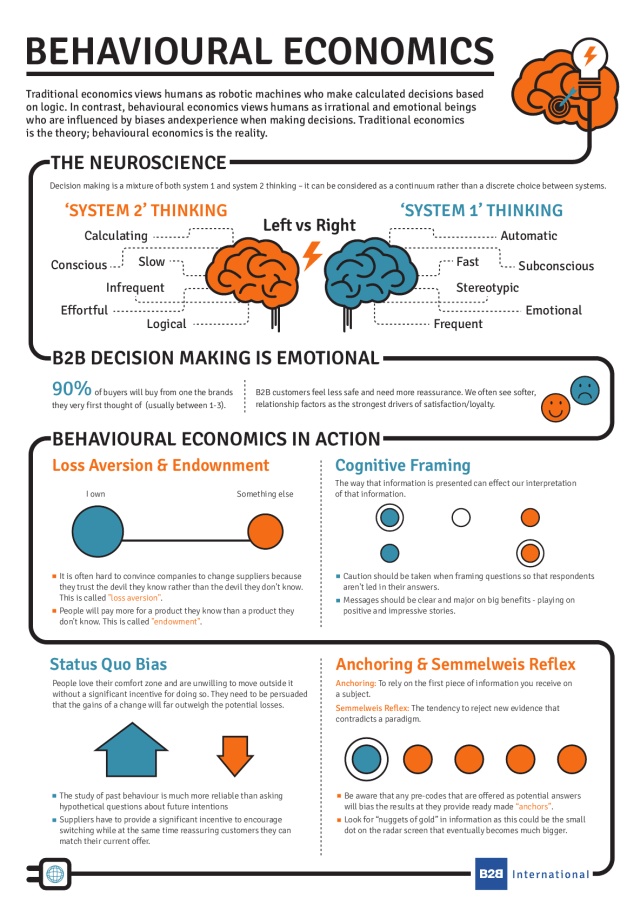
Behavioral economics thus explains why people satisfy their unpaid desire for a little happiness during a crisis - often reflexively, emotionally and depending on the context.
(https://www.b2binternational.com/publications/what-is-behavioural-economics)
In both world wars, cigarettes were more a part of survival than chocolate - as a tranquillizer in the trenches and a tangible bartering commodity.
Hitler had smoking banned in many places during the Second World War, but tobacco was still available at the front. Chocolate became scarce in 1939: US soldiers were served sweets in their rations, officially to boost morale. Other goods such as coffee, ice cream and video games have similar stories - in the USA, for example, the chocolate business boomed briefly after the world wars as a nostalgic feel-good store.
What was good as a small consolation in war is considered a luxury in peace.
Sources:
https://www.sueddeutsche.de/panorama/lippenstift-mode-geschichte-1.5360041
https://fastercapital.com/startup-topic/People-Will-Actually-Buy.html
https://fastercapital.com/content/The-Lipstick-Effect-and-its-impact-on-consumer-behavior.html
https://pmc.ncbi.nlm.nih.gov/articles/PMC9636953/#:~:text=consumers%20to%20spend%20more%20on,1

+ 4
1818
2 Comentários
11Mês
Thank you for this incredibly informative article. There must have been a lot of research behind it. Do you see cosmetics companies such as L'oreal as crisis-resistant?
In contrast to the rest of the market, they held up quite well on Freedom Day... :)
In contrast to the rest of the market, they held up quite well on Freedom Day... :)
•
11
•
1Ano·
AMC Entertainment Q2’25 Earnings Highlights
🔹 EPS: $0.00 (Est. $(0.09)) 🟢;
🔹 Revenue: $1.398B (Est. $1.31B) 🟢; UP +35.6% YoY
🔹 Adj EBITDA: $189.2M; UP +391.4% YoY
Operating Metrics:
🔹 Attendance: 62.8M; UP +25.6% YoY
🔹 U.S.: 46.9M; UP +28.5% YoY
🔹 International: 15.9M; UP +17.7% YoY
🔹 Consolidated Admissions Rev/Patron: $12.14 (Record)
🔹 Food & Beverage Rev/Guest: $7.95 (Record)
🔹 Total Revenue/Patron: $22.26 (Record)
Other Key Metrics and Updates:
🔹 Net Loss: $(4.7M); improved from $(32.8M) YoY
🔹 Net Cash from Ops: $138.4M; vs. $(34.6M) YoY
🔹 Free Cash Flow: $88.9M; vs. $(79.2M) YoY
🔹 Cash & Equivalents: $423.7M
🔹 Secured ~$244M new financing to redeem 2026 debt maturities
🔹 Equitized at least $143M of debt; potential up to $337M
🔹 Resolved litigation with holders of 7.5% Senior Secured Notes due 2029
🔹 All 2026 maturities pushed to 2029
CEO Commentary:
🔸 “AMC’s revenue growth of 35.6% drove an Adjusted EBITDA increase of 391.4% to $189.2M – a simple reality, and hopefully a harbinger of things to come.”
🔸 “We shattered all-time records across nearly every per patron metric, validating our strategic initiatives and premium experience focus.”
🔸 “With our AMC Go Plan, premium auditoriums are operating at close to three times the occupancy of regular auditoriums, commanding a healthy price premium.”
🔸 “The combination of a resurgent box office, our unparalleled theatre footprint with premium experiences, compelling marketing, and increasing financial strength has a flywheel impact when they happen simultaneously.”
33
1Ano·
AMC going up!
$AMC (-0,04%)
$GME.B
$NVDA (+0,52%)
$3350 (+1,2%)
The next big thing is back.
AMC Entertainment


1Ano·
From outsiders to market powerhouses: How small investors are turning the financial world upside down
Ten years ago, the stock markets were an exclusive playground for banks, fund managers and hedge funds. Small investors? They were mostly spectators who occasionally bought a DAX share and then left it for 20 years. But today? Today they are causing turbulence on Wall Street, driving share prices to absurd heights - and even causing hedge funds worth billions to falter.
From nobodies to market whisperers
In 2015, the stock market world was still clearly divided: Institutional investors had the knowledge, the networks and the capital, while retail investors tended to invest on the side - often blindly on the recommendation of their bank advisor. But that has changed drastically.
Three major factors have fueled this development:
1. trading apps & fee-free trading: thanks to apps such as Trade Republic or Robinhood, anyone can buy shares with just a few clicks - without high fees, without complicated order masks.
2. social media as a stock market advisor: Platforms such as Twitter and YouTube have replaced the traditional financial advisor. Today, trends in social media determine which shares go through the roof.
3. access to knowledge & data: Banks used to have the information advantage. Today, every retail investor has access to analyses, key financial figures and AI-supported trading tools.
GameStop & Co. - How retail investors are rewriting the stock market
Probably the best-known case: $GME .
In 2021, small investors took on hedge funds worth billions who sold the video game retailer's shares short. The online community got organized, drove up the share price and forced the professionals to buy in at a high price. The result? Hedge funds such as Melvin Capital lost billions - David had indeed dealt a blow to Goliath.
It was a similar story with $AMC (-0,04%) .
Actually a movie theater chain on the decline, but thanks to massive buying from the Internet, the share price rose to absurd heights. The small investors didn't care whether it was economically justified or not - they wanted to challenge "the big boys".
German retail investors in 2025 - what makes them tick today
In Germany, we are traditionally more cautious. But a lot has changed here too:
The securities assets of German households are about to break the 2 trillion euro mark - a record.
57.2% of German private investors' financial assets are now invested in ETFs, particularly on the MSCI World or the FTSE All-World.
Most popular stocks? Alongside US giants such as $NVDA (+0,52%) , $MSFT (-0,59%) and $TSLA (+1,08%) many are also betting on current hypes such as $RHM (+0,7%) , $NU (+0,15%) or $HIMS (+0,27%) .
Is this the democratization of the financial markets - or a new bubble?
On the one hand, it's great: private investors have never had as much power as they do today. They are informed, networked and heavily involved. On the other hand, when share prices are no longer determined by company figures but by viral trends, this can be dangerous.
Because in the end, the stock market is still not a casino. Or is it?
What do you think? Are retail investors an asset for the market or more of a risk?
77
14 Comentários
1Ano
You can analyze the market well using a variety of tools.
Anyone who is serious about investing and is not just here to play roulette can easily determine the risk of pushed stocks and act accordingly.
The greatest danger is the ignorance of the investor himself.
Always following the other sheep is usually not optimal.
You mentioned a few "hype" stocks, so I would like to take a look at $RHM.
I don't think it's appropriate to describe this share as hype.
It is simply a fundamental security for us that affects everyone in the EU.
Small investors like you or me are always an enrichment for the market.
It makes the pie bigger and everyone has a chance to get a bigger slice of it with the right strategy.
•
22
•
1Ano·
Podcast episode 67 "Buy High. Sell Low."
Subscribe to the podcast to keep Bitcoin rocketing.
00:00:00 Bitcoin, MicroStrategy, Coinbase
00:23:00 BlackRock
00:32:40 Nu Holdings
01:01:00 Alphabet & Meta
01:26:00 Unity Software, AMC, GameStop
01:38:50 Thomas von Finanzfluss, MSCI World & EM
Spotify
https://open.spotify.com/episode/373hy6ZTbixJ6jB4effhlc?si=U_f7l6tRQwy0z184kew35Q
YouTube
Apple Podcast
$BTC (+0,2%)
$MSTR (+1,31%)
$COIN (+1%)
$BLK
$NU (+0,15%)
$GOOGL (-0,26%)
$GOOG (-0,18%)
$META (+0,25%)
$U (+1,28%)
$AMC (-0,04%)
$GME (+0,53%)
$IWDA (-0,24%)
$EIMI (+0,02%)
#finanzfluss
$SPOT (-0,58%)
$AAPL (-0,32%)
#podcast

open.spotify.comFolge 67: Bitcoin, MSCI World & EM, MicroStrategy, Coinbase, Alphabet, Meta, Nu Holdings, BlackRock, Unity, AMC, GameStop
1212
3 Comentários
Dirt of the week was once again hervorragend🤌🏻
•
11
•Títulos em alta
Principais criadores desta semana
Dados tempo real da LSX · Dados financeiros e EOD da FactSet