
D-Wave Quantum, the Canadian pioneer in quantum computing, is in the midst of a brutal crash: From an all-time high of $46.75 in October 2025, the stock plummeted to $8.48 on November 5, 2026, and closed at $11.47 on the Nasdaq on November 9, 2026. Following the release of its third-quarter results, the stock slipped to around $10.25 (−10.6%) during trading on November 10, 2026. Although revenue rose by 21% to $4.51 million and was slightly above expectations, the loss per share of $0.13 was higher than the expected $0.10. In addition, new orders totaled just $1.9 million for the quarter, 19% less than in the prior year. On the positive side, the company has a backlog of $38.3 million, cash on hand of $503.4 million, and a commitment for up to $100 million in funding from the U.S. CHIPS Act. Analysts are forecasting an average of around $33 to $35, though they have recently lowered their targets. From a technical analysis perspective, the support level at $10.50 is the first key factor for me; a stronger buy signal would only emerge above $13.90.
Key Points
- Q3 2026: Revenue of $4.51 million (+21%, consensus $4.36 million), loss per share of −$0.13 (consensus −$0.10)
- New orders (bookings) in Q3: $1.9 million (−19%), but $37.4 million (+611%) after nine months
- Order backlog: $38.3 million; cash and securities: $503.4 million; no outlook
- Stock price: Closed at $11.47 on Nov. 9, 2026; trading around $10.25 on Nov. 10, 2026; all-time high of $46.75
- Analysts: Average price target around $33 to $35; B. Riley lowers to $22, Wedbush to $30
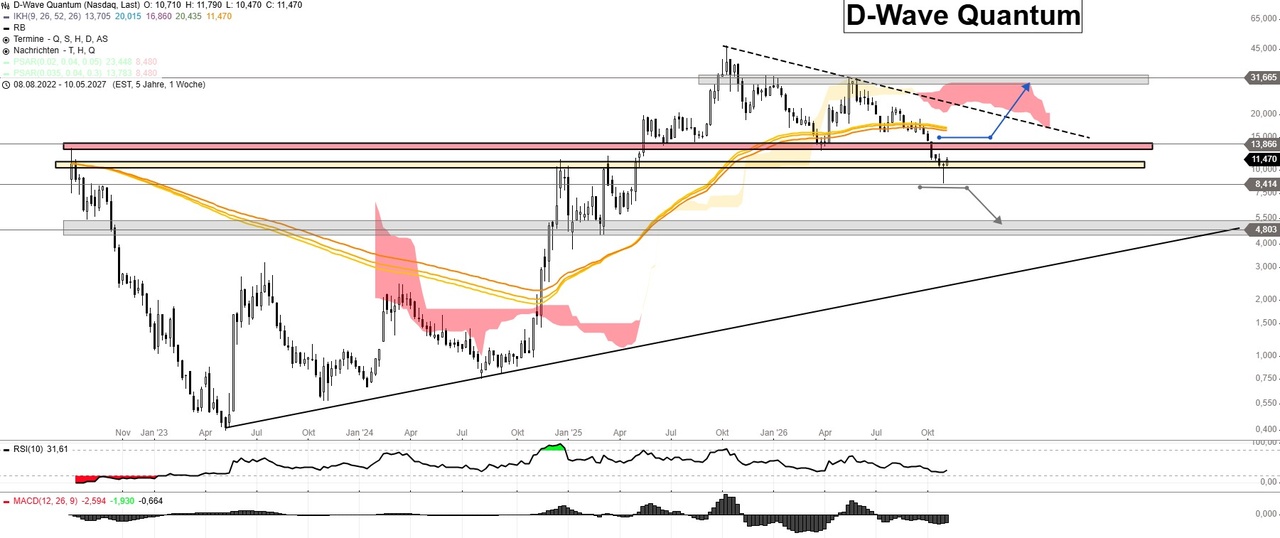
- Chart levels: Support at $10.50; long signal above $13.90 with a target of $31.66; sell signal below $8.41 with a target of around $4.80
What are the current key metrics for D-Wave Quantum stock?
The D-Wave Quantum stock closed at $11.47 on the Nasdaq on November 9, 2026 (+7.4%) and fell to around $10.25 during trading on November 10, 2026, following the release of its Q3 results.
In euros, the stock is trading at around 9.35 EUR. With approximately 374 million shares outstanding, D-Wave has a market capitalization of just under 3.9 billion USD, despite revenue of only about 13 million USD over the past twelve months. The company does not pay a dividend.
What news is currently driving D-Wave’s stock?
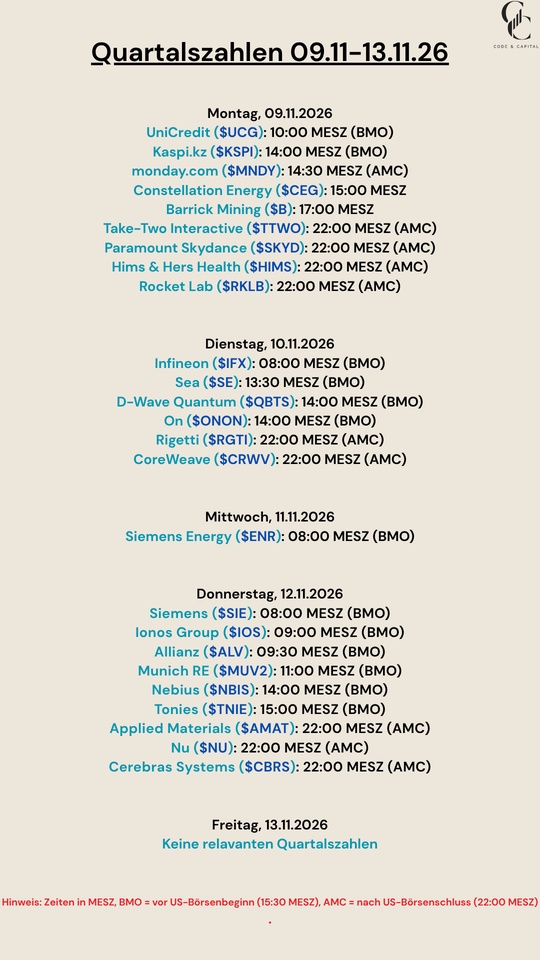
D-Wave stock is currently being driven primarily by the Q3 2026 earnings report released on November 10, 2026: higher revenue, but a larger-than-expected loss and fewer new orders.
The stock had already been under pressure in the days leading up to the report. Two research firms lowered their price targets, class-action lawsuits filed by investors are pending in the U.S., and on November 5, 2026, the share price slipped to $8.48. My analysis of SpaceX Aktie —there, too, investors’ imagination determines every dollar of valuation.
What does D-Wave’s management have to say about the Q3 2026 figures?
CEO Alan Baratz points to the triple-digit increase in orders since the start of the year and a robust sales pipeline: D-Wave aims to put its quantum computers to productive use today and lead the industry in technical innovation.
However, management is not providing a specific revenue or profit forecast.
What went well: Revenue rose 21% to $4.51 million, driven by consulting services ($1.5 million) and cloud computing time ($0.8 million). After nine months, orders total $37.4 million—more than six times as much as in the previous year—and the order backlog stands at $38.3 million. Approximately 59% of this is expected to be recognized as revenue within twelve months. In addition, up to $100 million from the U.S. CHIPS Act will fund an annealing computer with 100,000 qubits and a gate-model computer with 100 logical qubits—the first Advantage2system for Italy, as well as customers such as NTT Docomo, which is already using a second application in live operation.
The catch: Only $1.9 million in new orders came in during the quarter, 19% less than in the previous year. System sales fell by $1.5 million, and the gross margin dropped from 71.4% to 52.9% because lower-margin consulting accounted for a larger share. At the same time, operating costs rose by 84% to $55.9 million, and the adjusted EBITDA loss increased by 83% to $37.7 million. After nine months, revenue of $10.45 million is even below the prior-year figure of $21.84 million.
Outlook: There is no forecast. Analysts expect average revenue of approximately $42 million for 2026. Mathematically, this would require the fourth quarter to generate just over $31 million—nearly seven times as much as the third quarter. This is only possible if several system sales are booked before the end of this year. Financially, D-Wave has enough breathing room—with $503.4 million—to weather several years of current losses.
What does D-Wave Quantum do—and how does the company make money?
D-Wave Quantum is the world’s oldest commercial quantum computing company and generates revenue by selling quantum computers, providing computing time via its own Leap cloud, and offering consulting services for the implementation of customer projects.
Founded in 1999 in Burnaby, Canada, as D-Wave Systems, D-Wave Quantum Inc. (DWave, WKN A3DSV9) has been publicly traded since 2022 and is now listed on the Nasdaq. The company employs approximately 385 people, and its CEO is Alan Baratz.
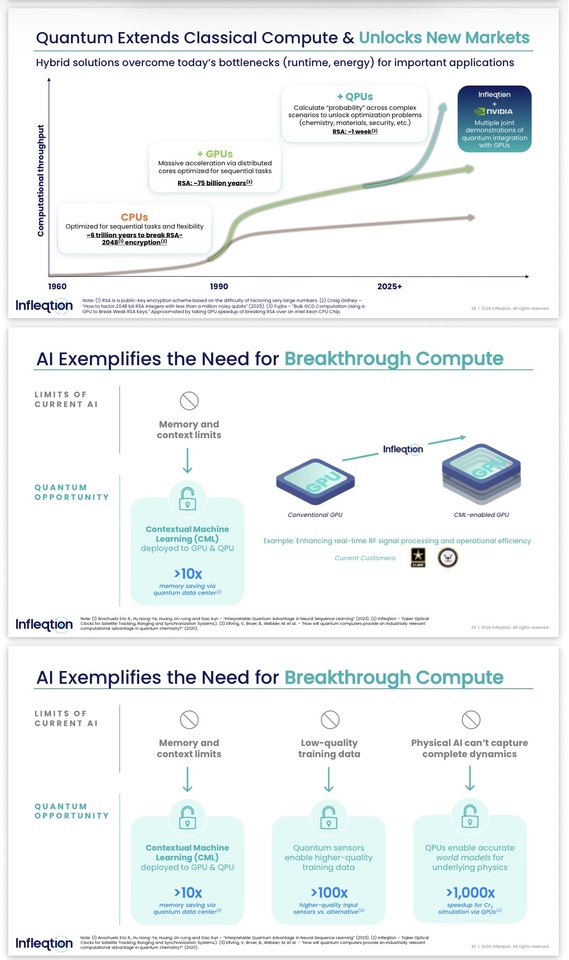
Quantum Annealing: Unlike IBM, Google, or IonQ, D-Wave focuses primarily on what is known as quantum annealing. These computers specialize in optimization problems—such as route planning, production planning, or network control—and are already in live operation at customer sites. The current Advantage2 system has over 4,400 qubits.
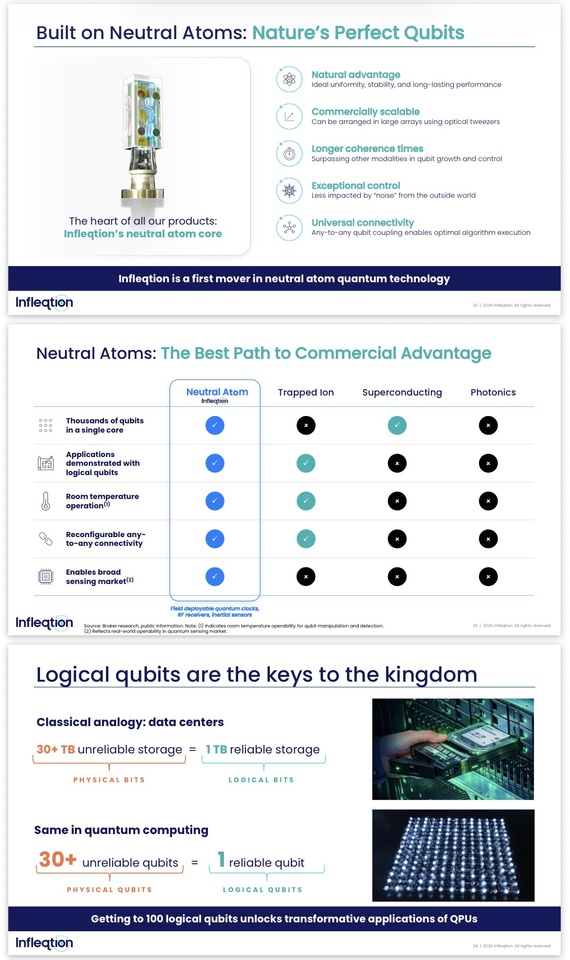
Gate Model as a Second Pillar: At the same time, D-Wave is building universal quantum computers based on the gate model. The acquisition of Quantum Circuits in January 2026 added additional expertise in this area; since the fall, partners such as BBVA and the Jülich Research Center have been testing a simulator for the new technology.
How D-Wave Makes Money: According to Aktienfinder, revenue for the full year 2025 totaled $24.6 million. Of this, $16.2 million came from the sale of complete systems, $5.5 million from cloud computing time (Quantum Computing as a Service), and $2.7 million from consulting. System sales generate large but irregular amounts. This is precisely why quarterly revenue fluctuates so much.
Quantum Computing Stocks Compared: On the stock market, D-Wave is usually lumped together with IonQ and Rigetti. All three are reporting losses and react extremely to shifts in sentiment in the technology sector. My analysis of Nvidia Aktie —where the hunger for computing power determines billions in revenue.
Fundamental Analysis: What Is the D-Wave Stock Still Worth After the Crash?
D-Wave stock cannot be valued using traditional metrics, as the company is posting losses—and even after the crash, investors are still paying around 290 to 310 times annual revenue.
There is no P/E ratio, and according to Aktienfinder, a fair value cannot be calculated either. That’s why the cash flow statement provides a better picture of the business’s health than any valuation metric.
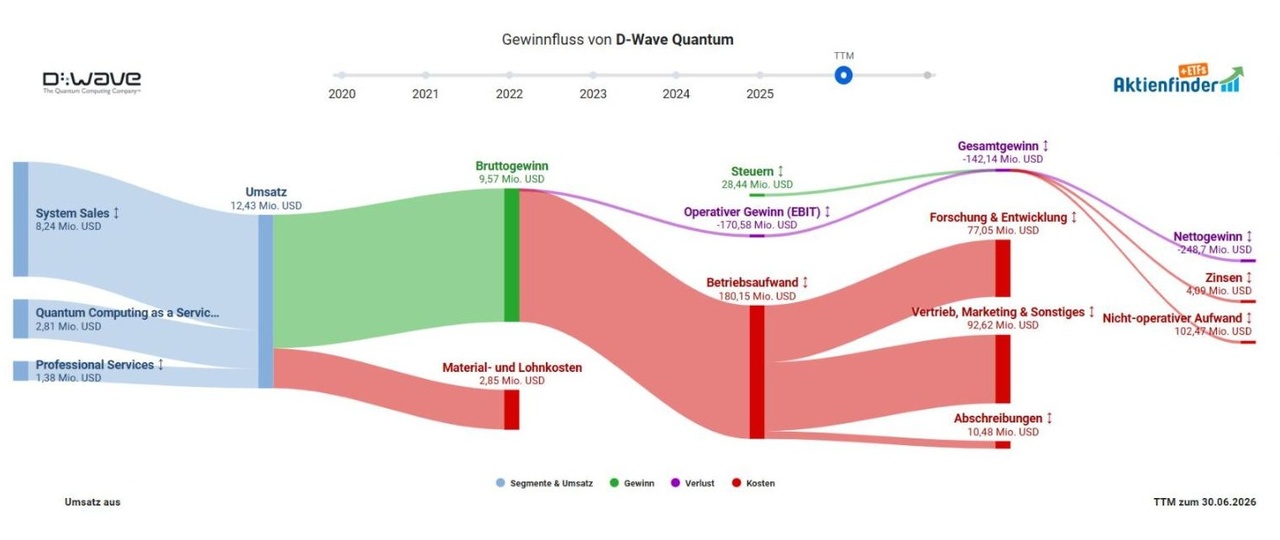
Cash Flow Statement: The chart tracks every dollar of revenue over the past twelve months through June 30, 2026. According to Aktienfinder, the company generated approximately $12.4 million in revenue, of which $8.2 million came from system sales, $2.8 million from the cloud, and $1.4 million from consulting. Gross profit remains positive at $9.6 million, but this is followed by operating expenses of $180.2 million: $77.1 million for research and development, $92.6 million for sales and administration, and $10.5 million in depreciation. The operating loss is $170.6 million, with a net loss of $248.7 million. In short: D-Wave currently spends about $14 for every dollar of revenue.
Revenue Trends: In the third quarter of 2026, revenue rose to $4.51 million; after nine months, it stands at $10.45 million, which is about 52% below the previous year, when a major system sale drove the figures up. For the full year 2025, revenue totaled $24.6 million. The analyst consensus of approximately $42 million for 2026 thus hinges almost entirely on the fourth quarter.
Liquidity and Dilution: The company’s greatest strength is its cash position. As of the end of September, it held $503.4 million in cash and securities. Given an adjusted EBITDA loss of $37.7 million per quarter, this is mathematically sufficient to last for several years. Shareholders paid the price: The average number of shares rose from 342 million to 374 million within one year. The warrants have been fully redeemed since November 2025, which is why the net loss of $48.2 million was significantly smaller than the previous year’s loss of $140.0 million.
Valuation Comparison: With a market capitalization of just under $3.9 billion, D-Wave is valued like an established technology company, yet generates less revenue than a medium-sized business. By comparison: Even Palantir Aktie is valued at only a fraction of this revenue multiple—and yet generates billions in revenue. Anyone who buys D-Wave isn’t buying the present, but rather the hope that quantum computers will become a mass-market business in a few years.
D-Wave Quantum Stock Price Targets and Forecast for 2026
Analysts see average price targets of around $33 to $35 for D-Wave Quantum stock, but from a technical analysis perspective, the stock must first defend its support level at $10.50—a breakout above $13.90 would signal a stronger buy opportunity.
The range of price targets extends from $18.36 to $44, but the most recent adjustments clearly point downward. Anyone who has already experienced how quickly speculative growth stocks swing between euphoria and panic will recognize this pattern from my analysis of Coinbase Aktie.
Key price levels:
- All-time high: $46.75 (Oct. 15, 2025)
- 52-week high: $32.39 (December 22, 2025)
- Current price: $11.47 (Nasdaq close Nov. 9, 2026, +7.4%), trading around $10.25 on Nov. 10, 2026 (−10.6%)
- Resistance and trigger level: $13.90 (red resistance zone)
- Price target on breakout: $31.66 (gray zone, highs from 2025 and 2026)
- Support: $10.50 (yellow zone, potential reversal candle in early November)
- Critical support level: $8.41 (just below the 52-week low of $8.48)
- Target in the event of a break: around $4.80 (gray support zone)
Analyst price targets:
- Average price target: approx. $33.21 (MarketScreener, 17 analysts, consensus: Buy) or $35.07 (MarketBeat, 16 analysts), range $18.36 to $44
- B. Riley: Buy, $22 (Nov. 9, 2026, previously $27; lowered from $40 to $27 on Nov. 2, 2026)
- Wedbush: Outperform, $30 (November 4, 2026, previously $37)
- BMO Capital Markets: Outperform, $35 (Initial coverage on August 20, 2026)
- Northland Securities: Market Perform, $22 (August 7, 2026)
- Analysts’ reactions to the Q3 results released on November 10, 2026, were not yet available at press time
Chart Analysis:
The weekly chart for D-Wave Quantum stock is particularly intriguing right now. Following the rally from its 2023 low to an all-time high of $46.75 in October 2025, the stock has lost nearly 80% of its value along a downward trend line. In October 2026, it slipped out of the red zone around $13.90 and fell below the Ichimoku cloud as well as the moving averages. The RSI(10) stands at 31.61, close to the oversold zone, while the MACD is deep in negative territory. Sellers have clearly been in control over the past few months.
But things may have turned around in early November. During the week of November 2–6, 2026, the stock dipped as low as $8.48 but was then strongly bought back, closing the week at $10.68, right at the key support level of $10.50. This has formed a potential reversal candle on a weekly basis—a long lower wick indicating that buyers are becoming active again at this level. However, this candle must be confirmed in the following trading week. The pullback following the Q3 earnings report makes this very week a crucial test.
A breakout above $13.90 would signal a stronger buy opportunity. This would allow the stock to reclaim the red resistance zone from which it fell in October, and a price rise to $31.66 would be possible. That is where the gray zone lies, at which the stock failed at the end of 2025 and again in the spring of 2026. Based on the closing price of $11.47, that would represent more than a doubling in my scenario. The path to that level, however, is likely to be anything but straightforward, as the downward trend line from the all-time high lies halfway along the way.
Below $8.41, on the other hand, the stock would trigger the next sell signal, extending down to around $4.80. This would also mean the stock would fall below the current 52-week low of $8.48, and the reversal candle would have proven to be a trap. At $4.80, there is a gray support zone, which is also not far from the long-term, rising trend line dating back to 2023. From the closing price, that would represent another decline of about 58%. These return scenarios are my technical analysis and do not constitute investment advice. The D-Wave Quantum stock is highly speculative and extremely volatile; movements of 10% in a single day are not uncommon.
Opportunities and Risks of D-Wave Quantum Stock
Opportunities:
- ✅ Order backlog at a record high of $38.3 million; bookings up 611% after nine months
- ✅ Cash and securities totaling $503.4 million; no longer holds warrants
- ✅ Up to $100 million in funding from the U.S. CHIPS Act
- ✅ Quantum annealing already in live operation at customers such as NTT Docomo
- ✅ Potential weekly reversal candle at the $10.50 support level
- ✅ A breakout above $13.90 opens the path to $31.66
Risks:
- ⚠️ Revenue of only about $13 million over twelve months; valuation at about 290x to 310x revenue
- ⚠️ Q3 bookings down 19%, loss per share worse than expected
- ⚠️ Operating expenses up 84%, adjusted EBITDA loss of $37.7 million per quarter
- ⚠️ Analysts’ revenue target for 2026 depends almost entirely on the fourth quarter
- ⚠️ Class-action lawsuits filed by investors over allegedly overly optimistic statements
- ⚠️ A break below $8.41 opens the way down to around $4.80
Conclusion: D-Wave Quantum Stock – Comeback or Next Crash?
D-Wave Quantum reported higher revenue in the third quarter of 2026, but also higher losses and fewer new orders—whether this leads to a comeback or the next crash will, in my view, be determined first and foremost by the chart at $10.50 and $13.90.
Fundamentally, D-Wave is a classic case of a bright future but a lackluster present. The technology is in use, the order backlog is at an all-time high of $38.3 million, the cash reserves are well-stocked at $503.4 million, and the government is providing up to $100 million in funding. This is offset by revenue of only about $13 million over the past twelve months, rising losses, weak new orders for the quarter, ongoing class-action lawsuits, and a valuation of nearly 300 times revenue.
From a technical analysis perspective, the stock sent its first sign of life in early November with a potential reversal candle at the key support level of $10.50. However, this must first be confirmed during the current trading week. A better buy signal would emerge with a breakout above $13.90, in which case a price rise to $31.66 would be possible. Below $8.41, however, the stock would generate the next sell signal, targeting around $4.80. The D-Wave Quantum stock remains highly speculative and is not for the faint of heart.
Anyone looking for a calmer counterbalance in their portfolio after so much excitement should take a look at my analysis of Münchener Rück Aktie —where stable gains take precedence over speculative stocks.
Sources
- D-Wave Press Release: Third Quarter 2026 Results (November 10, 2026, SEC Form 8-K, Exhibit 99.1)
- D-Wave Quantum Investor Relations: Press Releases and Financial Reports
- Nasdaq: D-Wave Quantum (QBTS) Prices and Price History
- Prices: Nasdaq closing price on November 9, 2026: $11.47 (+7.4%), 52-week range: $8.48 / $32.39, all-time high: $46.75 (Nasdaq price history and FMP, reconciled; Alpha Vantage); Price as of Nov. 10, 2026: approximately $10.25 (MarketBeat 11:41 a.m. New York, FMP, MarketScreener); Euro price via Aktienfinder (Nov. 10, 2026)
- Investing.com: D-Wave Quantum earnings missed by $0.03, revenue topped estimates (November 10, 2026)
- Analysts: MT Newswires via MarketScreener: B. Riley (November 2 and November 9, 2026), Wedbush (November 4, 2026), BMO (August 21, 2026), consensus average $33.21; MarketBeat: Consensus average $35.07, B. Riley, BMO, Northland; Finanztrends: Wedbush (November 5, 2026); stockanalysis.com (BMO, Northland)
- Analyst consensus on revenue for 2026 and 2027: finanzen.net and TIKR (as of November 2026)
- Class-action lawsuits: Fessler v. D-Wave Quantum Inc. (October 15, 2026) and Lawrence v. D-Wave Quantum Inc. (October 20, 2026), U.S. District Court for the Northern District of California (according to court documents, summarized on Open Class Actions)
- Google Trends, Google Ads Keyword Planner (Germany), Search Console, as of November 10, 2026
- Stock3: Weekly chart for D-Wave Quantum (Nasdaq, USD), as of November 10, 2026
- Aktienfinder: Income Statement (last twelve months through June 30, 2026, and fiscal year 2025) for D-Wave Quantum, as of November 10, 2026
This is not investment advice—all information is provided solely for financial education purposes.
What are your current thoughts on $QBTS (-5,9%)?