
$VZ (+1,97 %)
$P911 (+3,58 %)
$NOVN (+2,34 %)
$PYPL (+2,89 %)
$SOFI (+14,25 %)
$UPS (+6,12 %)
$GLW (-1,49 %)
$KO (-1,07 %)
$RCL (+6,5 %)
$NXPI (-4,21 %)
$V (-1,98 %)
$STX (-3,09 %)
$HOOD (-5,64 %)
$SKHY (+2,36 %)
$MBG (-3,1 %)
$DBK (+0,8 %)
$GEV (+5,12 %)
$TER (-1,36 %)
$ADYEN (+1,94 %)
$WM (-2 %)
$AIR (-0,44 %)
$GOOGL (+1,83 %)
$CMG (-0,79 %)
$FTNT (+1,82 %)
$NOW (-1,18 %)
$KLAC (+3,22 %)
$MSFT (+0,67 %)
$CVNA (+4,54 %)
$006400
$VOW3 (-0,78 %)
$BMY (+1,13 %)
$INCY (+0,39 %)
$CAT (+3,55 %)
$N1CL34
$MO (+0,03 %)
$MA (-0,18 %)
$AIXA (+2,87 %)
$LLY (+0,46 %)
$SBUX (+0,89 %)
$RDDT (-0,4 %)
$RBLX (+0,83 %)
$ILMN (+4,81 %)
$SNDK (+3,56 %)
$INTC (+3,13 %)
$MDLZ (+0,05 %)
$COIN (+0,04 %)
$AMZN (+2,32 %)
$TWLO (-3,41 %)
$PINS (-0,79 %)
$285A (+0,56 %)
$CL (-0,95 %)
$GD (-0,41 %)
$ABBV (+0,08 %)
$PUM (-2,17 %)
$CVX (-1,31 %)

Colgate
Price
Discussion sur CL
Postes
46Quarterly Results: Oct. 26–30, 2016



Here is the list of 20 "U.S. Stocks I plan to add to my portfolio!
With a total expenditure of €20,000 I intend to commit about €1,000 per single Stock; here is the list I made, tell me if you like it:
These 20 individual U.S. Stocks 🇺🇸 I intend to hold them for a long time as an investment geared toward value stocks and creating a steady and growing passive income, including several Dividend Aristocrats and Dividend Kings that flank higher dividend-paying Business Development Companies (BDCs) so as to make up in part for the relative low distributions of many of the more defensive stocks in the 20 selected Stocks.
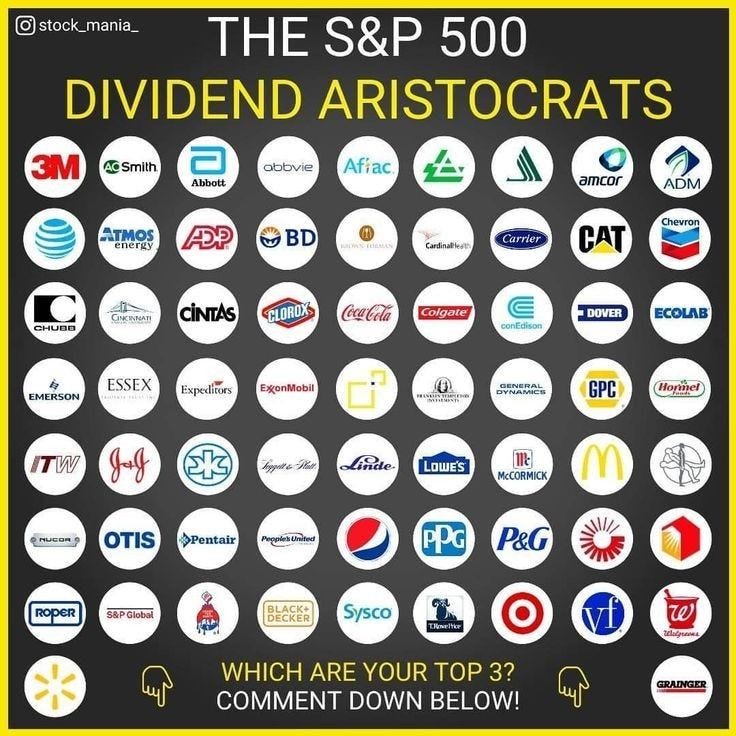

If you are betting that the historical growth of established companies like CocaCola will continue, you can certainly follow this approach.
Personally, I would have too many individual stocks to monitor. I think that the share price performance will also lag a good deal behind an investment in tech stocks - but of course that's the famous looking into the crystal ball.
For my own strategy of a distribution portfolio, actual dividends would be too low for me. However, if you are looking for dividend growth and substance, you can certainly add these stocks to your portfolio. Alternatively, there are certainly ETFs that follow the underlying approach (US large caps ex tech).
In any case, I wish you every success 🙂

Turbo Warrant
Hi, I am looking to invest in a Turbo Warrant long with x5 leverage and with a medium term view. I am looking for a 50-100% return over the next few months on the capital provided.
For this, I am looking for a stock that is from a defensive sector (as an underlying) and that is very difficult to go down more than 20% as this would be the knockout barrier by which my product would be closed. In addition, I would need it to give between 10-15% in the medium term.
I have been thinking about $PG (-0,08 %) as at these prices it has some interesting lows that would be difficult to exceed that 20% negative. Also, it shouldn't take much for it to make 10% in the positive as it has been doing lately. I have also looked at $DIS (+0,21 %)
$CL (-0,95 %)
$MDLZ (+0,05 %) among others, but I think they are less attractive given the current levels.
What do you think about buying at this time? $PG (-0,08 %) Do you recommend any other product?
Turbo warrant
Hi, I am looking to invest in a Turbo Warrant long with x5 leverage and with a medium term view. I am looking for a 50-100% return over the next few months on the capital provided.
For this, I am looking for a stock that is from a defensive sector (as an underlying) and that is very difficult to go down more than 20% since it would be the knockout barrier by which my product would be closed. In addition, I would need it to give between 10-15% in the medium term.
I have been thinking about $PG (-0,08 %) as at these prices it has some interesting lows that would be difficult to exceed that 20% negative. Also, it shouldn't take much for it to make 10% in the positive as it has been doing lately. I have also looked at $DIS (+0,21 %)
$CL (-0,95 %)
$MDLZ (+0,05 %) among others, but I think they are less attractive given the current levels.
What do you think about buying $PG (-0,08 %) at this time? Do you recommend any other product?
Quarterly figures 27.04-01.05.26
$VZ (+1,97 %)
$DPZ (+1,08 %)
$CDNS (+5 %)
$BARC (+1,12 %)
$SPOT (-3,39 %)
$BP. (-2,87 %)
$SPGI (-0,12 %)
$KO (-1,07 %)
$UPS (+6,12 %)
$AIR (-0,44 %)
$SBUX (+0,89 %)
$ENPH (-16,85 %)
$NXPI (-4,21 %)
$STX (-3,09 %)
$BE (+6,31 %)
$V (-1,98 %)
$MDLZ (+0,05 %)
$HOOD (-5,64 %)
$MBG (-3,1 %)
$UBSG (+1,65 %)
$DBK (+0,8 %)
$LMND (+1,96 %)
$SOFI (+14,25 %)
$TER (-1,36 %)
$ADS (-1,42 %)
$ABBV (+0,08 %)
$G24 (-1,19 %)
$WM (-2 %)
$APH (+4,43 %)
$CMG (-0,79 %)
$GOOG (+1,62 %)
$META (-1,29 %)
$MSFT (+0,67 %)
$AMZN (+2,32 %)
$005930
$BAS (+0,28 %)
$SU (+3,7 %)
$INGA (+1,26 %)
$ULVR (-0,92 %)
$IDR (+1,9 %)
$DHL (+0,84 %)
$CAT (+3,55 %)
$MA (-0,18 %)
$PUM (-2,17 %)
$MRK (+1,23 %)
$CNHI (-0,64 %)
$LLY (+0,46 %)
$FSLR (+5,38 %)
$WDC (+5,15 %)
$RBLX (+0,83 %)
$RDDT (-0,4 %)
$SNDK (+3,56 %)
$AAPL (+1,44 %)
$TWLO (-3,41 %)
$EL (-0,03 %)
$CL (-0,95 %)
$XOM (-2,17 %)
$CVX (-1,31 %)


Mercedes could hurt...

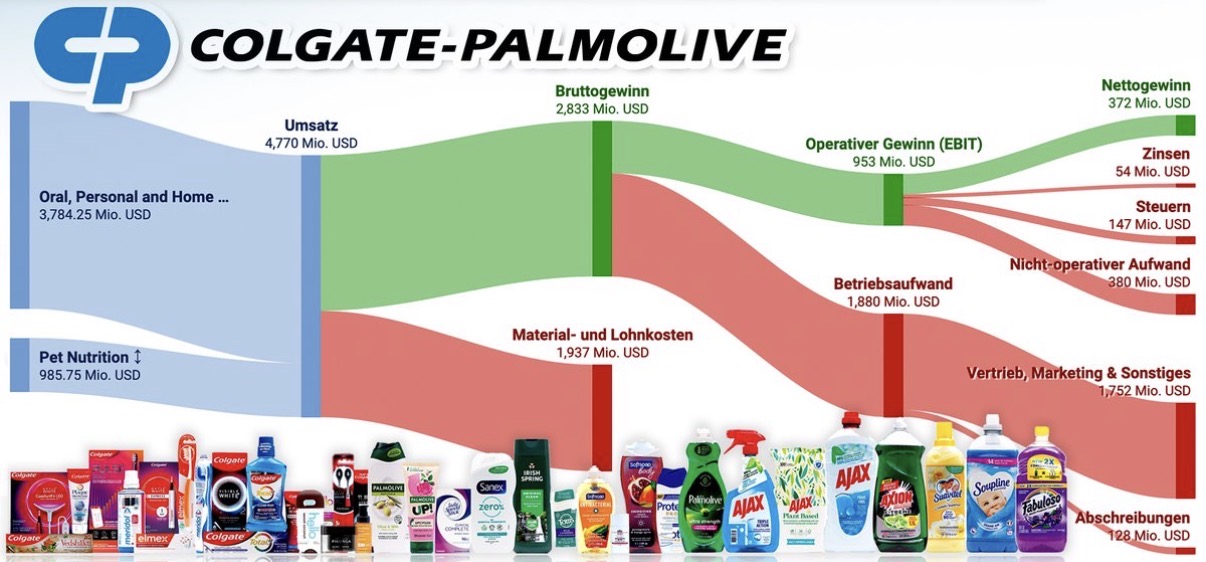
Colgate-Palmolive: Quarterly figures & outlook - Stability in the consumer goods sector despite challenges
On January 30, 2026, Colgate-Palmolive Company (NYSE: CL) published its results for the fourth quarter and full year 2025 and presented a solid, albeit less dynamic, conclusion to a challenging financial year. The quarterly figures and strategic initiatives paint a mixed picture: on the one hand, strong cash flows and a robust dividend policy, on the other hand, organic growth is slowing in many core segments.
1. current quarterly figures (Q4 & full year 2025)
Turnover & result
- At around USD 5.23 billion, net sales in the fourth quarter exceeded analysts' consensus estimates, reflecting a positive market environment in the area of everyday consumer goods.
- Adjusted earnings per share (adjusted EPS) amounted to USD 0.95, exceeding expectations (forecast around USD 0.91). This demonstrates the company's operational strength despite continued volatile conditions.
- For the year as a whole, net sales increased organically by 1.4%, while GAAP EPS fell by around 25% due to one-off accounting effects (goodwill/intangible assets).
Cash flow & capital repayment
- Of particular note is a record operating cash flow of around USD 4.198 billion, a strong indicator of cash generation power.
- The company has returned USD 2.9 billion to shareholders, including through dividends and share buybacks. Colgate has paid dividends continuously since 1895, which is an important criterion for defensive investors.
2. detailed analysis of the last quarters
A review of the previous quarterly reports shows that Colgate-Palmolive is continuously adapting to a more difficult market environment:
- Q3 2025: organic sales growth remained at 0.4% and gross margin suffered from higher raw material and packaging costs.
- Q2 2025: Results also showed slight outperformance in sales and EPS, although gross margin was impacted by inflationary costs and tariffs.
Overall, it is clear that Colgate continues to deliver stable results, but growth momentum is moderate compared to previous years. This is reflected in particular in organic growth rates, which tend to be in the low single-digit percentage range.
3. market reaction & analyst opinions
Following the release of the figures, share prices reacted slightly positively, pointing to the solid results and improved outlook for 2026. According to the Reuters report, Colgate expects net sales growth of between 2% and 6% in 2026, supported by stable demand for everyday hygiene and personal care products, particularly in Latin America and Europe.
Analyst sentiment is mixed:
- Wells Fargo recently upgraded the rating to "Equal-Weight" and sees moderate upside potential based on current valuations and expected results.
- RBC Capital assumes an Outperform rating, but continues to see challenges in global growth.
- JPMorgan had previously lowered its price target as some product categories are performing weaker than expected.
These diverging assessments show that the market sees Colgate-Palmolive as a defensive consumer goods stock - with an attractive dividend yield, but at the same time limited short-term growth potential.
4. future prospects and strategic initiatives
Colgate is actively investing in its future potential in order to achieve higher organic growth again in the long term:
Strategic direction through 2030
- The company has launched a "Strategic Growth and Productivity Program" (SGPP), which aims to integrate innovation, digital demand generation and artificial intelligence more closely.
Product innovation & portfolio expansion
- Innovations in core categories such as dental care and home/personal care should further consolidate brand strength and create new growth drivers.
- Hill's Pet Nutrition division is showing improvement again after Colgate divested less strategic private label businesses.
Macroeconomic challenges
- Like many consumer goods manufacturers, Colgate is feeling the pressure of commodity price inflation, exchange rate volatility and subdued consumer spending, particularly in developed markets. This can put pressure on margins and dampen growth.
5. conclusion for investors
Colgate-Palmolive remains a classic defensive consumer goods stock with stable cash flows, a solid dividend history and attractive long-term yield aspects. The latest quarterly figures show that the company is structurally well positioned to survive even in a difficult global environment. At the same time, growth is rather moderate and market risks - such as weak category expansion or margin pressure - may limit short-term performance.
For investors looking for stable earnings and dividend continuity, Colgate-Palmolive therefore remains a position worth considering. Those looking for strong sales and earnings growth, on the other hand, should keep an eye on the share in the long term and pay attention to the implementation of the 2030 strategy.
Quartalszahlen 26.01-30.01.2026
$RYA (+1,48 %)
$UNH (+0,52 %)
$GM (+6,37 %)
$RTX (-1,16 %)
$UPS (+6,12 %)
$UNP (+1,82 %)
$NOC (-2,23 %)
$BA (-10,26 %)
$MC (+1,28 %)
$TXN (+2,59 %)
$STX (-3,09 %)
$SSAB A (+2,19 %)
$ASML (+3,28 %)
$GEV (+5,12 %)
$SBUX (+0,89 %)
$T (+1,02 %)
$GD (-0,41 %)
$MSCI (-2,13 %)
$META (-1,29 %)
$NOW (-1,18 %)
$IBM (-0,74 %)
$LRCX (+1,51 %)
$TSLA (+4,58 %)
$MSFT (+0,67 %)
$000660
$005930
$SAP (-0,08 %)
$ABBN (+2,86 %)
$DBK (+0,8 %)
$ROG (+0,47 %)
$DOW (-0,23 %)
$NDAQ (+0,21 %)
$LMT (-0,81 %)
$CAT (+3,55 %)
$TMO (+2,36 %)
$HON (+0,16 %)
$MA (-0,18 %)
$BX (-1,22 %)
$WM (-2 %)
$WDC (+5,15 %)
$SNDK (+3,56 %)
$V (-1,98 %)
$AAPL (+1,44 %)
$SOFI (+14,25 %)
$CL (-0,95 %)
$AXP (+0,02 %)
$XOM (-2,17 %)
$CVX (-1,31 %)





Morningstar Best Stocks to own 2026
$ (-0,61 %)TYL (-0,61 %)
$GE (+3,88 %)
$GD (-0,41 %)
$CHRW (+2,89 %)
$ROL (-2 %)
$TW (+0,41 %)
$CSGP (-14,76 %)
$RKT (-5,56 %)
$CLX (+0,86 %)
$ROST (-1,3 %)
$FAST (-1,22 %)
$CSCO (+1,7 %)
$YUMC (+0 %)
$KOF (-1,78 %)
$ORLY (-0,91 %)
$KO (-1,07 %)
$RY (+0,7 %)
$MDLZ (+0,05 %)
$IMBBY (+0 %)
$A (+1,29 %)
$IDXX (-1,14 %)
$SONY (-0,86 %)
$MSCI (-2,13 %)
$SYY (+0,48 %)
$VLTO WI (+0,27 %)
$DPZ (+1,08 %)
$IDEX (-1,86 %)
$VRSN (-1,1 %)
$COST (-0,85 %)
$ITT (+2,28 %)
$SHW (-1,76 %)
$EPD
$SIE (+2,11 %)
$CP (+1,83 %)
$CTAS (-4,55 %)
$ROG (+0,47 %)
$BK (+0,76 %)
$CNR (+2,24 %)
$PM (+0,75 %)
$TSM (+3,09 %)
$ITW (+0,18 %)
$APD (+1,25 %)
$PG (-0,08 %)
$AAPL (+1,44 %)
$BAC (+0,68 %)
$CPB (+0,92 %)
$VRSK (-3,99 %)
$HSY (-2 %)
$GWRE (-7,65 %)
$HII (+0,8 %)
$GSK (+0,59 %)
$SBUX (+0,89 %)
$ALLE (+1,68 %)
$INTU (-2,07 %)
$MSI (+0 %)
$GWW (-1,79 %)
$UNP (+1,82 %)
$WCN (-2,13 %)
$WM (-2 %)
$NOC (-2,23 %)
$CAT (+3,55 %)
$PAYX (-5,01 %)
$ADP (-1,5 %)
$MCO (-1,96 %)
$SPGI (-0,12 %)
$NDSN (+1,15 %)
$WMT (-0,27 %)
$OTIS (-0,24 %)
$CL (-0,95 %)
Best Companies to Own: Methodology
The companies on this list are covered by Morningstar Research Services’ equity analysts and have shares available to US investors. This means that Morningstar equity analysts have calculated fair value estimates for the shares of the companies that trade on US exchanges. As a result, most of the companies on this list are based in the US.
Within that coverage list, the best companies meet the following criteria:
- Wide Economic Moat. The Morningstar Economic Moat Rating summarizes the length of a company’s competitive advantages. An economic moat is a structural feature allowing a firm to generate excess profits over a long period. If Morningstar Research Services believes that excess returns will persist for 20 years or more, that company earns a wide moat rating.
- Standard or Exemplary Capital Allocation.The stock’s Morningstar Capital Allocation Rating is an assessment of the quality of management’s capital allocation, with particular emphasis on the firm’s balance sheet, investments, and shareholder distributions. Capital allocation is judged from an equity shareholder’s perspective, considering companies’ investment strategy and valuation, balance-sheet management, and dividend and share buyback policies on a forward-looking basis. A company can receive an Exemplary, Standard, or Poor Capital Allocation Rating.
- Low or Medium Fair Value Uncertainty. The fair value Morningstar Uncertainty Ratingrepresents the predictability of a company’s future cash flows and, therefore, the level of certainty in the fair value estimate of that company. The Uncertainty Rating for a company can be Low, Medium, High, Very High, or Extreme. It captures a range of likely potential intrinsic values for a company based on the characteristics of the business underlying the stock, including such things as operating and financial leverage, sales sensitivity to the economy, product concentration, and other factors. The more predictable cash flows, the smaller the range of potential intrinsic values, the lower the uncertainty.
What Gives a Company an Economic Moat?
Companies with moats have one or more of the following characteristics:
- Network Effect. Lots of people are using the service, which then makes the service more valuable to the people who use it.
- Intangible Assets. Patents, brands, regulatory licenses, and other intangible assets can prevent competitors from duplicating a company’s products or allow the company to charge a significant price premium.
- Cost Advantage. Firms with a structural cost advantage can either undercut competitors on price while earning similar margins or charge market-level prices while earning relatively high margins.
- Switching Costs. When it would be too expensive or troublesome to stop using a company’s products, the company often has pricing power.
- Efficient Scale. When a niche market is effectively served by one or a small handful of companies, there is no room or incentive for potential competitors to enter the market.
To maintain analysts’ independence, Morningstar Research Services does not publicly rate its parent company Morningstar Inc. Therefore, Morningstar, Inc. is not on the list of the best companies available to US investors.
https://www.morningstar.com/stocks/best-companies-own-2026-edition

Consumer & Co
It is worrying to see how American consumer staples stocks and other higher-quality dividend stocks are being driven into the ground. Shows me that things are in trouble over there. Tech and Ki are mainly holding the flag up. I miss the rotation of the market into the above markets. Hope that starts slowly.
An outright correction would pull these already battered stocks down another 10-15%.
$PG (-0,08 %)
$CLX (+0,86 %)
$KHC (-2,07 %)
$GIS (-0,03 %)
$CL (-0,95 %)
$KMB (-0,31 %)
$PEP (-0,96 %)
$SBUX (+0,89 %)
$DGE (-0,9 %)
$RI (-1,14 %) and many more

Titres populaires
Meilleurs créateurs cette semaine