My entire position in $ULVR (-0,13 %) sold. They are in the process of splitting off the nutrition division. I am tired of the divestitures.

Unilever PLC
Price
Discussion sur ULVR
Postes
340Unilever Q4 2025 figures are in - mixed result & difficult outlook
$ULVR (-0,13 %) presented its figures for the fourth quarter and the full year 2025 today - with a result that at first glance does not quite meet expectations.
- Turnover (expected): 13.56 billion
- Turnover (reported): 12.59 billion
- EPS (expected): 1,66
- EPS (reported): 1,48
Despite the sales disappointment $ULVR (-0,13 %) strong volume and price growth in the quarter (4.2% organic in Q4) as well as progress in the portfolio mix. Operating margin improved and free cash flow remained robust at c. €5.9bn with 100% cash conversion.
Outlook for 2026:
For 2026, management expects sales growth at the lower end of the target range of 4-6%, including at least 2% volume growth, and anticipates moderate margin improvements. At the same time, a new share buyback program of € 1.5 billion was announced and Unilever reiterates its focus on attractive, growing dividends.
I will continue to monitor the following points for myself:
- Sales miss vs. expectations: significant sales shortfall despite operational progress
- Margin development & cash flow: solid, despite difficult currency and market conditions.
- Economic environment: exchange rates, demand in various regions (e.g. Latin America).
How do you assess these results and the outlook? Is this just a temporary blip or an indication of structural challenges in the consumer goods sector?
The Group is currently restructuring itself and the spin-off of the ice cream business will probably only become apparent in the next few years. For me, it remains a great share that should not be missing from my portfolio alongside classic growth stocks.
Unilever ahead of Q4 2025 figures - what's in focus?
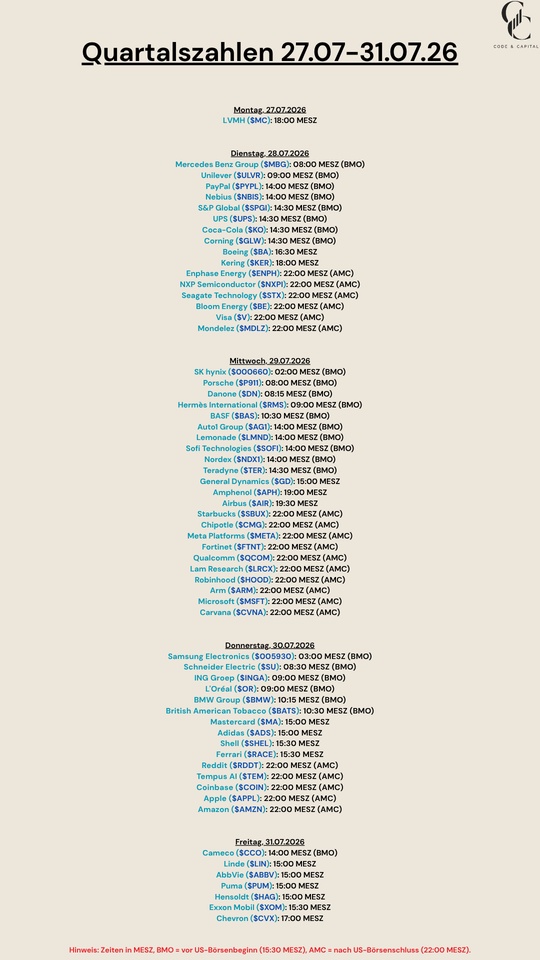
On February 12, 2026 $ULVR (-0,13 %) will present its quarterly figures and many investors are wondering whether the consumer goods giant will be able to impress again.
Turnover (expected): €14.7bn
EPS (expected): 1,46 €
What should investors pay particular attention to?
- Sales & price momentum: $ULVR (-0,13 %) Operates in an environment where pricing vs. volume growth is key. Changing consumer preferences, currency influences and regional demand can weigh on the top line, even if core brands remain strong.
- Margins & costs: Analysts are watching whether $ULVR (-0,13 %) can maintain or expand margins despite inflationary costs - a key driver of EPS earnings.
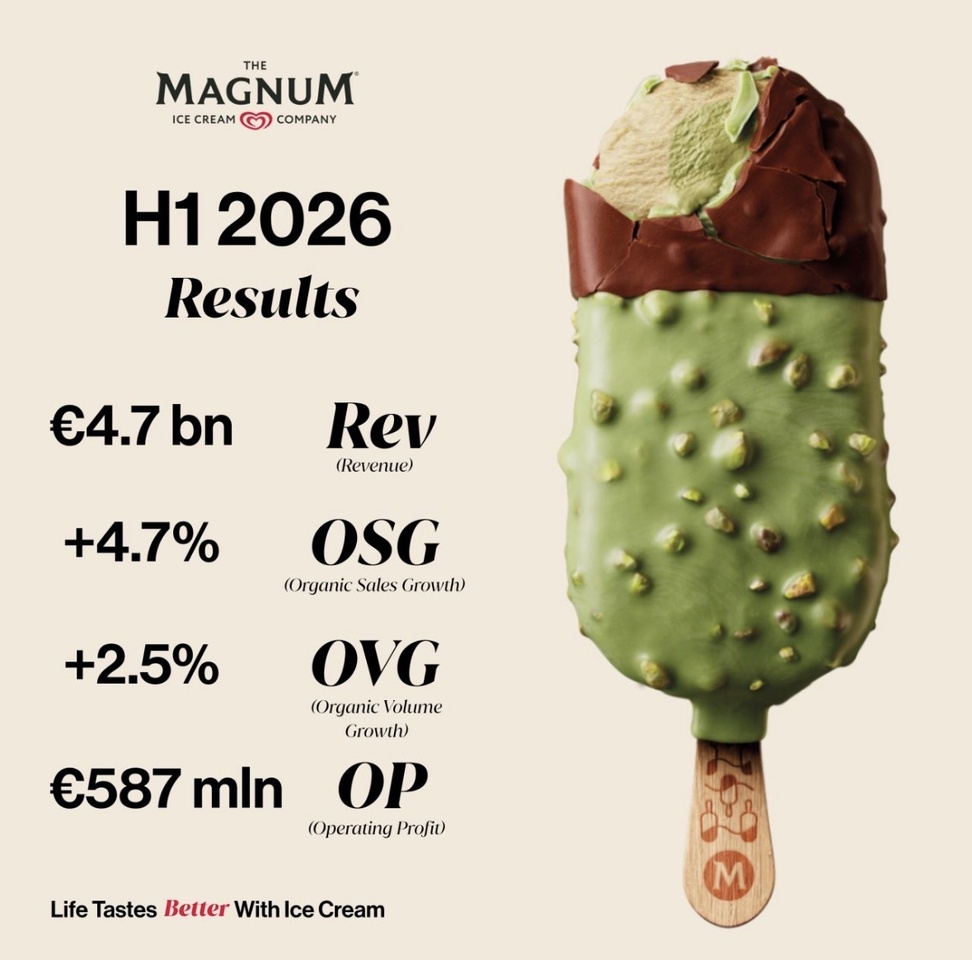
- Spin-off effects & strategic changes: The spin-off of the Ice Cream division (Magnum Ice Cream Company) was recently completed and will now play a role in valuation and earnings growth. Some analysts are cautious here, others see opportunities for clearer focus segments.
- Analyst sentiment: There are currently different ratings, from "buy/overweight" to more cautious assessments - which shows that expectations are not uniform and that the market is acting differently in its expectations.
Is $ULVR (-0,13 %) a defensive anchor of stability in the consumer segment for you, even if growth appears moderate? Or do you expect the figures and the outlook to give cause for caution?
All time high 35k
Impressed by my performance in these turbulent times.
Which dividend stock do you think is a bargain right now? Long term.
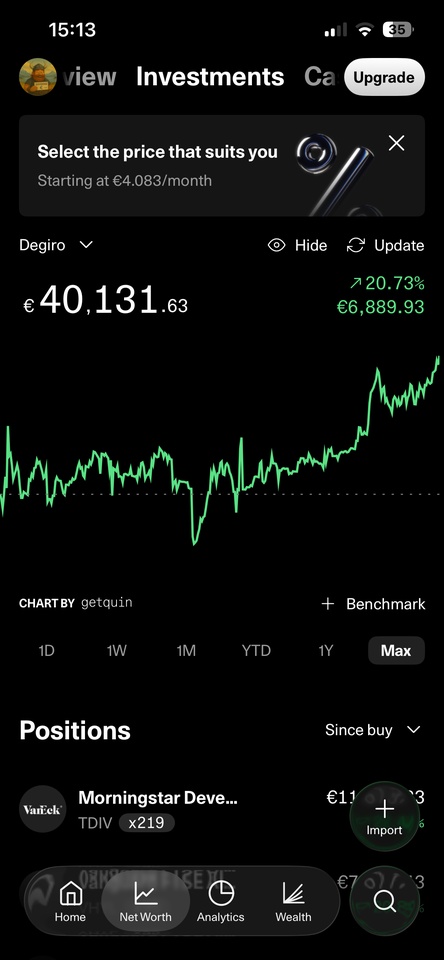
$TDIV (-1,36 %)
$PG
$O (-2,38 %)
$ASRNL (-1,27 %)
$JNJ (-0,19 %)
$JEGP$AD (-1,84 %)
$VPK (-5,8 %)
$NOVO B (-1,89 %)
$ULVR (-0,13 %)
$WINC (-1,6 %)
$VHYL (-1,22 %)
What are you thinking about, for your next purchase?
Carrefour - underestimated retail giant?
This post is not aimed at traders or people looking for "hot stocks", but at the long-term buy & hold shareholders in this forum.
In the past, I have repeatedly asked myself who benefits most from the constantly rising prices of food and everyday consumer goods. In my opinion, it is primarily the retailers, not the producers of these products. Manufacturers of branded products such as Unilever $ULVR (-0,13 %) , Nestle $NESN (-0,79 %) or KraftHeinz $KHC (-0,63 %) suffer from the fact that they do not have their own distribution channels and retailers have built up massive competition through private labels, which puts additional pressure on the margins of branded companies.
In Germany, the retail sector is largely in the hands of family businesses (Lidl, Aldi, Kaufland, Rossmann, DM, etc.), so it is not possible to invest via the stock market. Internationally, however, things look better, as there are companies traded on the stock exchange such as Walmart $WMT (-1,58 %) , Costco $COST (-0,1 %) or Target $TGT (-1,19 %) which also earn good money. I would say that these stocks are also the ones that get the most public attention. At the same time, these companies are also very US-centric and have struggled to expand into markets outside the US in the past.
Recently, however, I came across a video that compares the expansion of retail chains around the world and here I noticed a value that I had hardly noticed before. It's about Carrefour $CA (-2,63 %) . I can no longer find the exact video, but it was close to the one I'm linking here: https://www.youtube.com/watch?v=vhszDvl7Lbg
I wonder why Carrefour is hardly noticed by investors. Is it because of the chart development? Is it because of the company's figures? Is it because the company is based in France and the withholding tax on dividends there? Or is it simply a brand that you rarely come across in this country?
I have put the stock on my watchlist. What is your opinion?
Dividends without withholding tax
About a handful of countries have no withholding tax at all or levy one so low that it is almost unnoticeable.
"These countries in which private investors in Germany are not subject to withholding tax include Ireland, Liechtenstein, Hong Kong and Singapore," says Stefanie Dyballa, Portfolio Manager at KSW Vermögensverwaltung in Nuremberg.
However, the Irish withholding tax is only low if the company is based in the country. Other countries with investor-friendly regulations are Bermuda, Brazil, Canada and Thailand.
However, the most important economy that leaves German shareholders untouched is the United Kingdom. "The UK has many attractive dividend payers to offer, especially in the energy and financial sectors," says the asset manager, naming the likes of $SHEL (+0,46 %) Shell, $BP. (-3,01 %) BP and $HSBA (-3,36 %) HSBC.
Hermann Ecker, authorized signatory and portfolio manager at Bayerische Vermögen in Bad Reichenhall, also immediately thinks of reliable dividend payers from the island, including $DGE (+1,7 %) Diageo, $RKT (-2,42 %) Reckitt Benckiser, $RIO (-2,35 %) Rio Tinto, $IMB (-2,56 %) Imperial Brands, $SGE (-1,48 %) Sage Group and $ULVR (-0,13 %) Unilever. The selection shows just how diverse the withholding tax-friendly UK capital market is.
However, it is worthwhile for investors to consider other companies in addition to the well-known names: Sometimes they offer even higher dividend yields. WELT has compiled a list of 19 shares that are listed in countries with zero or low taxes and have also shown a stable performance over the past twelve months.
The last criterion is intended to protect investors from falling into a value trap, i.e. investing in a company with an eroding business model. The British drinks group Diageo, for example, is regarded as a solid dividend payer, but its share price has fallen by a third over the past year. The Diageo dividend yield of just under five percent is little consolation.
By contrast, the British insurance giant $AV. (-1,03 %) Aviva. The London-based company has roots dating back to 1696 and is one of the leading providers of pensions and insurance in its core markets of the UK, Ireland and Canada. Thanks to a focus on cash generation, Aviva is considered a solid basic investment that currently offers its shareholders a dividend yield of around 5.5%, which is only reduced by the German capital gains tax plus solidarity surcharge.
The financial services provider Legal & General, founded in 1836, can also look back on a long tradition. $LGEN (-1,58 %) Legal & General can also look back on a long tradition. As a heavyweight in the areas of asset management and pension insurance, the London-based group has a comparatively cyclically resistant business model that benefits from long-term demographic trends. Shareholders receive a current yield of 8.5 percent, making Legal & General one of the highest-yielding stocks in the UK index. The same can be said of the $PHNX (-6,97 %) Phoenix Group, whose yield is an impressive 7.8 percent.
The mining group $RIO (-2,35 %) Rio Tinto. However, the company is benefiting from the global appetite for raw materials. Rio Tinto is one of the world's largest producers of iron ore, aluminum and copper. Investors are betting on the indispensable role of metals in the global energy transition. The dividend payout is four percent.
The yield is more than twice as high for the Brazilian competitor $VALE3 (-2,44 %) Vale. Founded in 1942, the Rio de Janeiro-based mining group is the largest nickel and iron ore producer in the world. Experience shows that the size of the dividend depends on the ups and downs of commodity prices. As these are currently pointing upwards, shareholders have a good chance of achieving a dividend yield of almost ten percent on their capital investment this year. There is no withholding tax.
More speculative are investments in Greek financial institutions such as $TELL (-0,34 %) National Bank of Greece. The bank was on the brink of collapse during the euro debt crisis and had to be rescued with state aid. However, business is now flourishing again. Thanks to this economic comeback and the adjusted balance sheet, shareholders of National Bank of Greece should be hoping for a dividend yield in the region of four to five percent.
Financial institutions are also among the most interesting investments in Asia. The city state of Singapore, which does not levy withholding tax and is considered one of the most stable financial centers in the world, is home to the $D05 (-1,6 %) DBS Group. Founded in 1968, the institution is considered one of the best banks in the world and has already been described as the "Fort Knox" of the Asian banking world. Investors appreciate the quarterly distribution, which amounts to four percent per year, and the conservative balance sheet management of the DBS Group.
The Oversea-Chinese Banking Corporation, founded in 1932, also offers a return of around four percent. $OVCHY Oversea-Chinese Banking Corporation, founded in 1932. It is the longest established bank in Singapore and offers a mix of banking, asset management and insurance, which speaks for diversified earnings. However, the Oversea-Chinese Banking Corporation is not quite as dynamic as the DBS Group.
The conglomerate $J36 (-1,25 %) Jardine Matheson has its roots in Hong Kong, but the shares are now listed in Bermuda. Founded in 1832, the company is a legend in Asian economic history with a broadly diversified portfolio ranging from real estate to retail. Little known: The financial services provider $IVZ (-0,3 %) Invesco, which stands for the most popular Nasdaq ETF QQQ. The investment company's shares have risen by almost half over the past twelve months and also offer a dividend yield of three percent.
If you want to invest specifically in Hong Kong, you can stick with the infrastructure group $1038 (-1,55 %) CK Infrastructure. Founded in 1996, the company belongs to the empire of tycoon Li Ka-shing. It invests globally in energy suppliers, waterworks and transportation infrastructure, which ensures stability. Investors receive a return of around four percent.
As far as the former British crown colony is concerned, Dyballa has other ideas: "Financial and telecommunications stocks listed in Hong Kong, such as the $3988 (+0,25 %) Bank of China and $941 China Mobile often offer stable and attractive dividends." And she also has a tip for Singapore: "Real estate stocks or REITs that are less well-known in this country also offer stable cash flows and high dividend yields," says the portfolio manager.
Source: Text (excerpt) WELT, 24.01.26
Against my own rules: two speculative buys No dividend, yet bought — here’s why
I’ve decided to sell my $ULVR (-0,13 %)
Unilever shares. Not a bad company, but it simply didn’t add much to my portfolio anymore.
Normally I invest purely for dividend and passive income, but this time I made two exceptions. I bought $PNG (-3,03 %)
Kraken Robotics, which is clearly a speculative play with no dividend, but with potential upside.
I also invested in $NFLX (+0,4 %)
Netflix. No dividend either, but in this case I believe the underlying value is strong and there is still significant upside potential.
Against my own principles, yes — but hey, exceptions prove the rules, right? 😉
Quiet days, turbulent markets: my December review
While the world outside was drifting into the Christmas hustle and bustle and I was consciously spending more time with my parents, little dramas were unfolding at the markets. My class leader $AVGO (-2,47 %) lost value, as did the main share portfolio. But honestly? I only really noticed this at the end of the year. The second half of December had long since cast its spell over me, especially Christmas and the time between the years when everything slows down a little. Instead of rushing around, I reflected and did some soul-searching. Meanwhile, the automated systems continued to do their job. Savings plans were running and dividends were flowing.
At the end of the year $LTC (-4,65 %) Properties was the last buy of the year. Alongside $O (-2,38 %) and $MAIN (-1,69 %) this monthly payer should continue to grow. The business model has a future and I am building something here step by step.
And now enough of the quiet, time for a review.
Overall performance
It was business as usual as I enjoyed the end of the year. Negative effects passed me by, that's just part of it.
My key performance indicators for my overall portfolio at a glance:
- TTWROR (month under review): -0.46% (previous month: +1.40%)
- TTWROR (since inception): +79,52%
- IZF (month under review): -5.23% (previous month: +18.54%)
- IZF (since inception): +10,81%
- Delta: -401.91€
- Absolute change: +616.54€
Performance & volume
$AVGO (-2,47 %) gives up 15% and also pulls ahead of other tech stocks such as $NFLX (+0,4 %) and $GOOGL (-1,49 %) my main stock portfolio down. The other portfolios rise, but cannot compensate for this. That's part of investing. When I look at the top 5, I notice that defensive stocks such as $BAC (+1,43 %) and $WMT (-1,58 %) are rising slightly again. I like that, it's a stinking boring business model, which isn't sexy at all, but provides me with steady share price growth and a nice cash flow.
The five red lanterns naturally go to the same weakening candidates (by performance). Well, if something is going well, something must be going badly.
Size of individual stock positions by volume in the overall portfolio:
Share of equities (%) in the total portfolio (and associated securities account):
$AVGO (-2,47 %) 3.06% (main share portfolio)
$WMT (-1,58 %) 1.76% (main share portfolio)
$GOOGL (-1,49 %) 1.51% (main share portfolio)
$BAC (+1,43 %) 1.50% (main share portfolio)
$NFLX (+0,4 %) 1.38% (main share portfolio)
Smallest individual share positions by volume in the overall portfolio:
Share (%) of the total portfolio (and associated securities account):
$NOVO B (-1,89 %) 0.48% (main share portfolio)
$BATS (-2,47 %) 0.54% (main share portfolio)
$GIS (-0,86 %) 0.55% (crypto follow-on deposit)
$MDLZ (-0,33 %) 0.56% (main share portfolio)
$CPB (+0,27 %) 0.58% (main share portfolio)
Top-performing individual stocks
Shares with performance since initial purchase (%) (and the respective portfolio):
$AVGO (-2,47 %) : +328% (main stock portfolio)
$NFLX (+0,4 %) +101% (main share portfolio)
$GOOGL (-1,49 %) +115% (main share portfolio)
$WMT (-1,58 %) +91% (main share portfolio)
$BAC (+1,43 %) + 81% (main share portfolio)
Flop performer individual stocks
Shares with performance since initial purchase (%) (and the respective portfolio):
$NKE (-0,93 %) : -35% (main stock portfolio)
$GIS (-0,86 %) -34% (main share portfolio)
$TGT (-1,19 %) : -33% (main share portfolio)
$CPB (+0,27 %) : -30% (main share portfolio)
$NOVO B (-1,89 %) -24% (main share portfolio)
Asset allocation
Equities and ETFs currently determine my asset allocation.
ETFs: 41.7%
Equities: 58.2%
Crypto: 0.0%
P2P: less than 0.01%
Investments and subsequent purchases
In December, I slightly increased the savings plans from my net salary and reinvestment. I invested the following amounts in savings plans:
Planned savings plan amount from the fixed net salary: €1,040 [previously: €1,030]
Planned savings plan amount from the fixed net salary, incl. reinvested dividends according to plan size: €1,060 [previously: € 1,040]
Savings ratio of the savings plans to the fixed net salary: 50.24% [49,75%]
In addition, there were the following additional investments from returns, refunds, cashback, etc. as one-off savings plans/repurchases:
Subsequent purchases/one-off savings plans as cashback annuities from refunds: €40.00
Subsequent purchases/one-off savings plans as a cashback annuity from bonuses: € 0.00
Subsequent purchases from other surpluses: € 108.23
Automatically reinvested dividends by the broker: €7.03 (function is only activated for an old custody account, as I otherwise prefer to control the reinvestment myself)
Unscheduled purchases were made on various securities accounts outside the regular savings plans:
Number of unscheduled purchases: 9
40.00€ for $FGEQ (-1,5 %)
56.94€ for $ULVR (-0,13 %)
88.72€ for $LTC (-4,65 %)
After the Magnum spinoff at Unilever, I sold the booked position a few days too late in order to shift it into Unilever with some cash. It was sold:
37,43€ from $MICC (-1,15 %)
Magnum Ice Cream is neither in my freezer nor in my portfolio.
Passive income from dividends
I received € 132.75 in dividends (€ 152.20 in the same month last year). This corresponds to a change of -12.78% compared to the same month last year. The reason for the decline is that distributions from my three large Vanguard ETFs no longer arrived on time. Further key figures:
Number of dividend payments: 32
Number of payment days: 16 days
Average dividend per payment: €4.15
average dividend per payday: €8.30
The top three payers in the month under review were:
My passive income from dividends (and some interest) mathematically covered 7.94% of my expenses for the month under review. Acceptable for a weak month with medium-high expenses (by my standards).
Crypto performance
I am currently completely on the sidelines here. It will be a while before I get back in.
Performance comparison: portfolio vs. benchmarks
A comparison of my portfolio with two important ETFs shows the TTWROR in the current month (and since the beginning):
My portfolio: -0.46% (since I started: +79.52%)
$VWRL (-1,44 %) +0.06% (since my start: 66.12%)
$VUSA (-1,12 %) +1.00% (since my start: 63.76%)
After outperforming the ETFs last month, I am underperforming this time. 2026 will catch up. 🤗
Key risk figures
Here are my risk figures for the month under review:
Maximum drawdown: YTD: 17.17% (month under review: 1.56%)
Maximum drawdown duration: 702 days [since inception] (reporting month: 26 days)
Volatility: YTD: 12.00% (in the month under review: 1.33%)
Sharpe Ratio: YTD: 0.48 (in the month under review: -3.92)
Semi-volatility: YTD: 9.35% (in the month under review: 0.98%)
The maximum drawdown of 702 days since the beginning is still reminiscent of the tough phase 2022-2023, before the year-end rally started at the end of 2023. In December itself, the decline of 1.56% was marginal and a sign that the major turbulence of the year was over.
My Sharpe Ratio has improved to 0.48 YTD, showing that for every unit of risk, I get almost half a unit of return above the risk-free rate. Volatility has fallen from a wild 28% over the course of the year to a reassuring 12% YTD, while semi-volatility is down to just 9.35%. That shows: My portfolio does fluctuate, but the risk of loss is lower than the overall volatility would suggest. December was particularly quiet with a semivolatility of 0.98%.
What remains? Confirmation of my strategy: think long-term, keep calm and buy when things get cheap. 2025 ends solidly despite weakness.
Outlook
Back in the November review, I announced my investment of the Christmas bonus. Of course, I wasn't talking about money from my employer, but simply what I received for Christmas plus a few pennies I had lying around at home. I posted the reinvestment on the same day in the week between the years.
I also donated a few dividends, the fourth and final donation was made in December. You can read more about this in the Instagram Story. I think donations are important, because those who have should also give something.
I'll end this review with another personal point, which I already covered in the August and November reviews.
Loyal readers of my reviews will know that in the summer I was diagnosed with an aneurysm of the ascending aorta near my heart as a result of a bicuspid and insufficient aortic valve. It was an accidental finding that took some of the danger out of this ticking time bomb thanks to close monitoring, but it is still ticking. When I look back on the year 2025, I realize how this thing has permanently changed my thinking and my approach. Of course, it's an ongoing process, but I'm less likely to fall back into old patterns. Even though the cardiology appointment in December found that the thing hasn't grown any further, which will give me a little more time before surgery, I know the day will come. It's unclear when, but like a meteoroid hurtling towards the earth, there is something on the horizon. You just don't know when it's going to hit. The fact that the 43-44mm has remained stable (and no more) is a gain of time for me that I want to use. I have a lot of plans to develop new sources of income, significantly expand my social media presence, implement new habits, continue to work on my fitness and focus on life and the positive. Despite the diagnosis, 2025 will be a great year for me. And I'm going to go one better in 2026.
Thank you for reading. I wish you all the best for 2026!
👉 You can also read my portfolio review for December on Instagram from January 8, 2026 (and budget review from 9.1.26).
📲 In addition to the portfolio and budget review, there are currently three posts a week: @frugalfreisein
!!! Please pay close attention to the spelling of my alias. Unfortunately, there are too many fake and phishing accounts on social media. I have already been "copied" several times. !!!
👉 How was your month in the portfolio? Do you have any tops & flops to report? Leave your thoughts in the comments!
Conversion to rebalancing has taken place.
As announced, I have parted with my broad mass of numerous individual stocks and ETFs and focused on these 21 positions.
The core here is the Kommer and the All World (ACWI is held exclusively for my daughter).
The 4 main satellites are $GOOGL (-1,49 %) , $SIE (-4,76 %) , $4901 (-0,83 %) and the cost environment consisting of $MCD (+0,06 %) , $KO (-0,81 %) and $ULVR (-0,13 %)
In addition, I have created $PNG (-3,03 %) and $DMAG (-2,92 %) two larger segments in the future-oriented area - also with $IREN (+0,42 %) , $VKTX (-3,91 %) and $ONDS (-6,02 %) albeit much smaller.
The $XDWU (-3,44 %) is intended to bring a little more security into the system. The $EUDF (-4,49 %) clearly speaks for itself and the $XDWH (-0,44 %) likewise.
I have now slightly exceeded my target of 60/35/5 in etf/equities/crypto, so the savings rate will go into equities and crypto over the next few months.
The stocks I will be saving in now are: Alphabet, Siemens, Fuji, coca-Cola, McDonald's and Unilever.
From my point of view, I now have a portfolio that offers greater security overall, but is also forward-looking in terms of sectors.
What do you think?
Courses TR
Hello everyone,
due to the spin-off at $ULVR (-0,13 %) are now $ULVR (-0,13 %) and $MICC (-1,15 %) with the wrong performance.
As a result $MICC (-1,15 %) a performance of -70%.
Do you have any experience of how long TR needs to post the performance correctly?
So if you sell TMICC now, you can offset this against profits.
But maybe I just didn't understand it correctly 😂
Titres populaires
Meilleurs créateurs cette semaine