
Trump, Xi and Putin hold an unprecedented three-way summit and issue a symbolic "peace declaration" pledging that nuclear war should never be fought. The declaration skips Ukraine.

Lockheed
Ação
Ação
Ticker: LMT
LMT
Price
Discussão sobre LMT
Postos
210

1Mês·
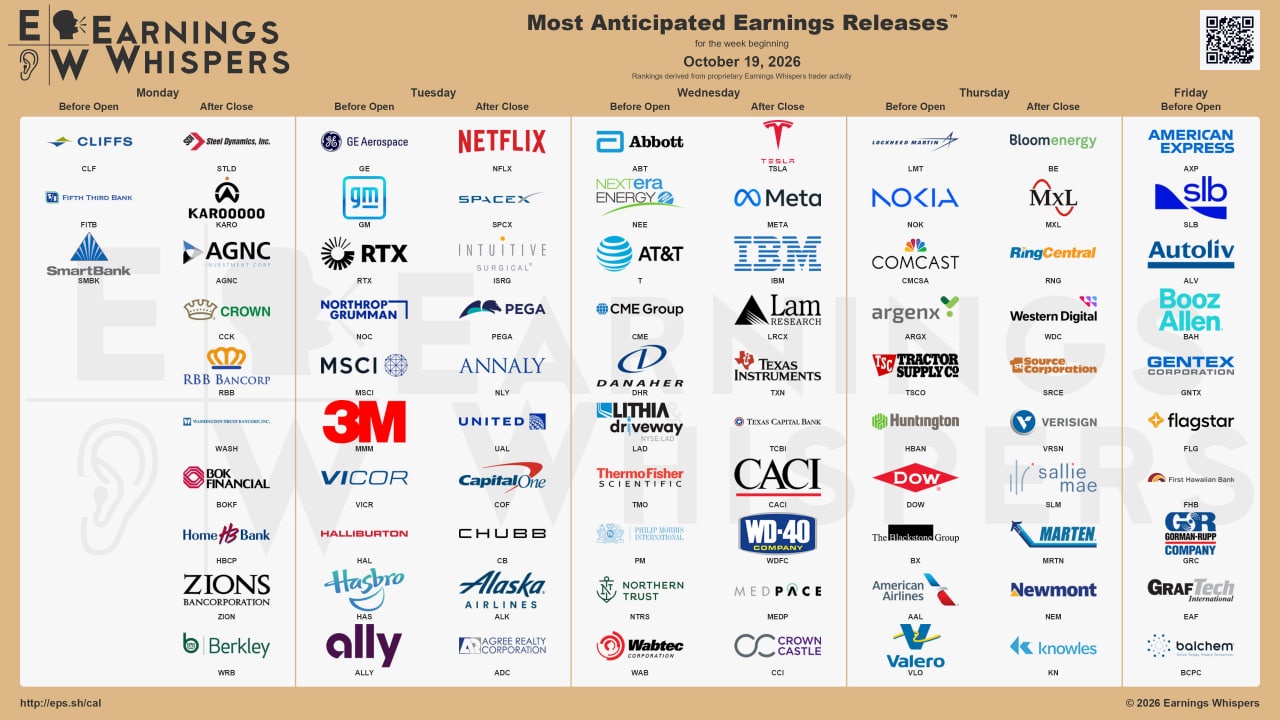
The Week Ahead
Monday, October 19, 2026
🇨🇳 4:00 a.m. | GDP (Q3), Industrial Production & Retail Sales
🇺🇸 4:00 p.m. | NAHB Housing Market Index
Tuesday, October 20, 2026
🇨🇳 3:00 a.m. | Central Bank Interest Rate Decision (LPR)
🇪🇺 11:00 a.m. | ZEW Economic Sentiment Index
🇺🇸 2:30 p.m. | Building Permits & Housing Starts
🍿 10:00 p.m. | Netflix & SpaceX (Q3 Earnings)
Wednesday, October 21, 2026
🇬🇧 8:00 a.m. | Consumer Prices / Inflation Rate (Sep)
🇺🇸 4:30 p.m. | EIA Crude Oil Inventory Report
🚘 10:00 p.m. | Tesla & IBM (Q3 Earnings)
Thursday, October 22, 2026
✈️ 2:30 p.m. | American Airlines (Q3 earnings)
🇺🇸 2:30 p.m. | Initial Jobless Claims
🇪🇺 4:00 p.m. | Eurozone Consumer Confidence (preliminary)
Friday, October 23, 2026
🇯🇵 1:30 a.m. | Core inflation / Consumer prices (Sep)
🇩🇪 9:30 a.m. | S&P Global Purchasing Managers’ Index (PMI) for Manufacturing & Services (Preliminary)
🇪🇺 10:00 a.m. | S&P Global Purchasing Managers’ Index (PMI) for the Eurozone (preliminary)
🇺🇸 3:45 p.m. | S&P Global Purchasing Managers’ Index (PMI) U.S. (Preliminary)
🇫🇷 After market close | Moody’s rating review for France
$NFLX (-2,53%)
$AAL (-3,59%)
$IBM (+1,53%)
$TSLA (-5,63%)
$AXP (-1,64%)
$RTX (-0,31%)
$BE (-12,13%)
$LMT (+1,38%)
$NOKIA (-6,1%)
$ABT (+2,02%)
$NEE (+0,66%)
$CME (+0,65%)
$T (+1,68%)
$GM (-0,25%)
$MSCI (-1,09%)
$TMO (-3,31%)$CMCSA (+1,58%)
1111

1Mês·
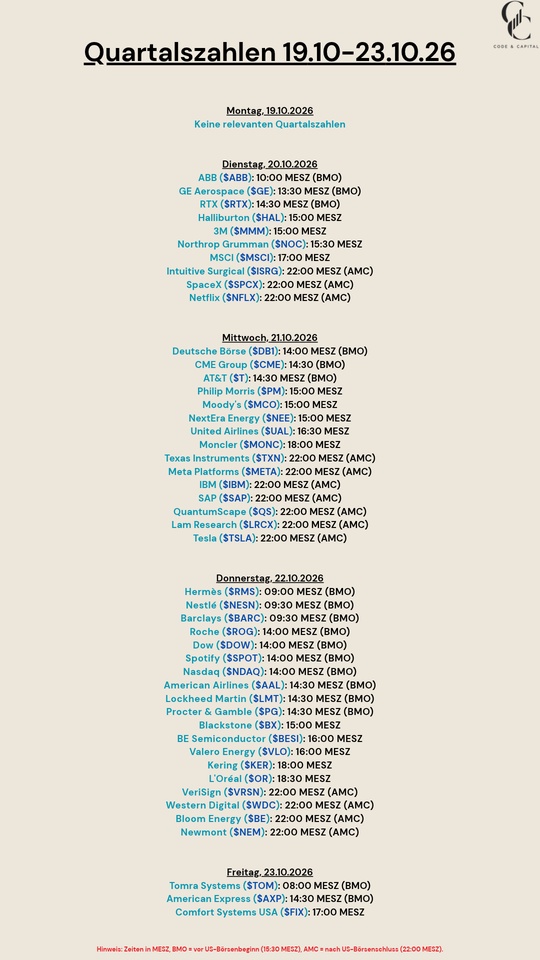
Quarterly Results: Oct. 19–23, 2026
$ABBN (-3,19%)
$GE
$RTX (-0,31%)
$HAL (+1,04%)
$MMM (-0,66%)
$NOC (+0,7%)
$MSCI (-1,09%)
$ISRG (-3,13%)
$SPCX (-7,83%)
$NFLX (-2,53%)
$DB1 (-0,68%)
$CME (+0,65%)
$T (+1,68%)
$PM (+0,52%)
$MCO (+0,46%)
$NEE (+0,66%)
$UAL (-5,51%)
$MONC (-0,43%)
$TXN (-2,52%)
$META (-2,15%)
$IBM (+1,53%)
$SAP (-0,24%)
$QS (-3,54%)
$LRCX (-12,02%)
$TSLA (-5,63%)
$RMS (-0,65%)
$NESN (+1,68%)
$BARC (-2,84%)
$ROP (-0,73%)
$DOW (+1,25%)
$SPOT (-0,82%)
$NDAQ (-1,03%)
$AAL (-3,59%)
$LMT (+1,38%)
$PG (+1,04%)
$BX (-3,01%)
$BESI (-6,72%)
$VLO (-2,76%)
$KER (-2,77%)
$OR (+0,03%)
$VRSN (-0,21%)
$WDC (-10,16%)
$BE (-12,13%)
$NEM (-3,75%)
$TOM (-2,86%)
$AXP (-1,64%)
$FIX (-6,38%)
99

1Mês·
Stop Loss
Today was the day—
after 9 months, Intesa Sanpaolo was
was sold off—the stop-loss was hit.
The Italian dividend-paying bank stock that “Raketen Toni” from Denmark
as a “well, sort of” bad AI buy.
This put me in the following situation:
Purchased in January at 5.6 euros
Added to the position in March at 5.1 euros
Dividend: 350 euros
As I said, it’s time to pull the ripcord
since the bank,
despite ECB interest rate hikes
and rising share prices at other European banks, isn’t gaining traction.
Pulling the ripcord was the logical implementation of disciplined risk management:
If the original investment thesis (price upside potential driven by the interest rate environment) isn’t materializing despite the €350 dividend yield, and the stock is showing relative weakness compared to the sector, a stop-loss protects against further capital erosion.
The freed-up capital ends the “dead capital” scenario and is now available for more dynamic stocks, such as
$MCD (+1,45%) Additional purchases
$NOC (+0,7%) Reinvestment
$FRA (-0,19%) Additional purchase
$KRN (-1,26%) possibly, despite the position’s size, achieves a further increase in the PoFo.
Furthermore, $LMT (+1,38%) be sold, as the 10% p.a. return has not been realized here.


8Mês·
Intesa Sanpaolo
Following the sale of some dividend stocks
I bought a 2nd tranche of an Italian bank stock with a dividend:
intesa sanpaolo
Here is a compact fundamental analysis of Intesa Sanpaolo
## 1st P/E ratio (trailing & forward) incl. sector comparison
| Key figure | Intesa Sanpaolo | Typical EU banking sector* |
|----------------------------|-----------------|----------------------------|
| Share price (approx.) | € 5.1 | - |
| P/E ratio trailing (TTM) | 9-11 approx. 8-10 (large euro banks, roughly) |
| P/E ratio forward (estimate) | around 7-9 (derived from high earnings growth and dividend yield) | similar, sometimes slightly higher |
| P/S ratio (price/sales, ttm) | approx. 3.3-4.1 mostly 2-3 |
| P/B ratio (price/book, mrq) | approx. 1.5 often 0.7-1.2 |
Interpretation: The **KGV** is slightly above the pure substance sector (many banks trade below book value), which reflects the high profitability and dividend policy, but is still in the "favorable to fair" range in absolute terms.
## 2. earnings per share (EPS) & trend
- Current EPS (TTM): around € 0.50-0.54 per share.
- Net profit 2024: Record net profit of € 8.7 bn, +12% compared to 2023.
- Profit growth: According to Simply Wall St, on average approx. 28% p.a. over several years, sales growth approx. 11.5% p.a.
The **EPS trend** of the last 3-5 years thus shows clearly above-average growth for a major bank, driven by the interest rate environment, fees and insurance business.
## 3. EBIT & EBIT margin (operating result)
Banks typically report operating profit as "operating income/operating margin" rather than traditional EBIT, but analogously:
- 2024: Very strong operating profitability, driven by interest business, fees and record insurance result; cost/income ratio at record low of 42.7% (one of the best ratios in Europe).
- High net margin: net margin around 36.5% according to analysis platform, ROE around 14.3%.
Conclusion: Operating **earning power** and margins are clearly above the average of major European banks, which justifies the slightly higher valuation level.
## 4. dividend, yield & payout ratio
| Key figure | Value (last) |
|-------------------------------|-------------------------|
| Dividend per share (current) | approx. € 0.34-0.37
| Dividend yield (forward) | approx. 6.4-7.7%
| Dividend payout ratio (payout) | approx. 67%
| Total payout 2024 | € 6.1 billion cash dividends
| Additional planned share buy-back of € 2 billion
The bank pursues a shareholder-friendly policy with a high **dividend yield** plus buybacks; with ~2/3 payout ratio, there is still a buffer for capital expansion and growth.
## 5. share price history & performance
| period | price info / performance* |
|--------------|--------------------------------------------------------|
| 52-W-Range | approx. 3.5-6.2 €
|
| Last price | approx. € 5.1 (March 2026, Milan Stock Exchange) |
| 1-J Performance | approx. +39% (last 12 months) |
| Volatility | Beta approx. 0.8 (below market average)
*Compared to a broad index such as the Euro Stoxx 50 or S&P 500, Intesa Sanpaolo has outperformed very strongly in the last year; exact benchmark figures fluctuate depending on the reporting date, but are well below +39%.
This means that the share has clearly outperformed in the last 1-3 years, but has already seen a double-digit decline since the high (February 2026 at approx. €6.16).
## 6. overall valuation - favorable / fair / expensive?
Points in favor of the share:
- Above-average profit and sales growth combined with very high profitability (ROE, net margin, cost/income).
- High and probably sustainable dividend yield of around 6-7% plus share buybacks.
- Valuation ratios (P/E ratio, P/B ratio) rather in the "cheap to fair" range compared to European peers, considering the high quality.
Risks/observation points:
- Significant share price increase in recent years; some of the improvement is already priced in.
- Cyclical interest rate and credit risk in the banking sector in general (interest rate turnaround, economic situation in Italy/eurozone).
Overall assessment from an investor's perspective: Based on the available key figures, Intesa Sanpaolo currently appears **rather favorably to fairly valued**, especially for income-oriented investors who value stable, high dividends and accept the banking sector risk.
Sources:
[1] Intesa Sanpaolo SpA, ISP:MIL summary - FT.com - Markets data
77
5 Comentários
Keineui@Keineui
1Mês
•
11
•Ver todas as 3 restantes respostas

2Mês·
Dividends are great 🤩
I received three dividend payments today!
Lockheed, HSBC, and Waste Management 🚀
Let's see where the money goes… probably into one of my ETFs!

2Mês·
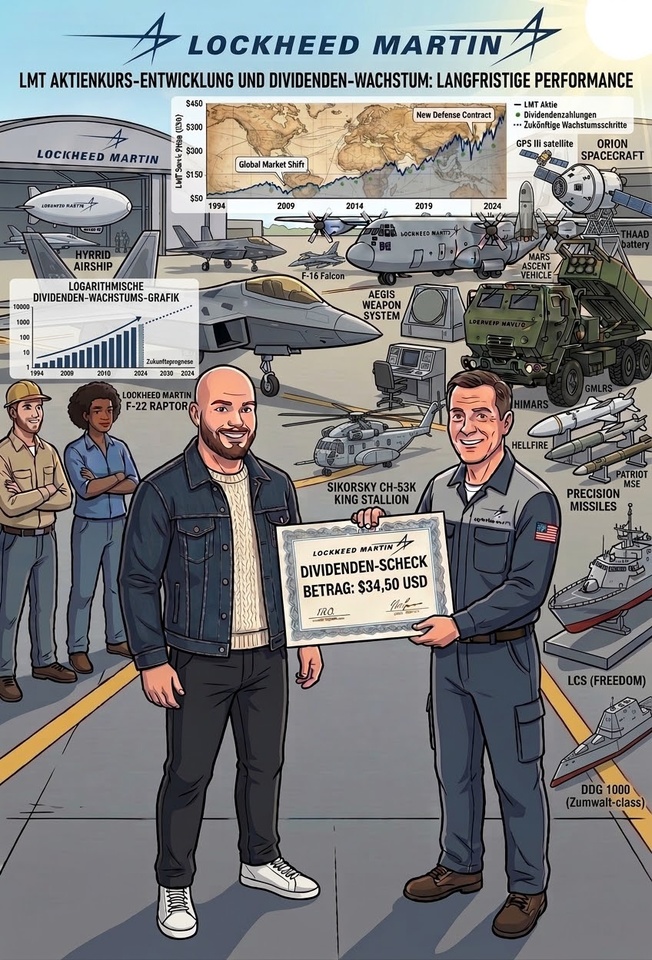
Lockheed Martin is paying out
Today, $LMT (+1,38%) I received the dividend for 10 shares.
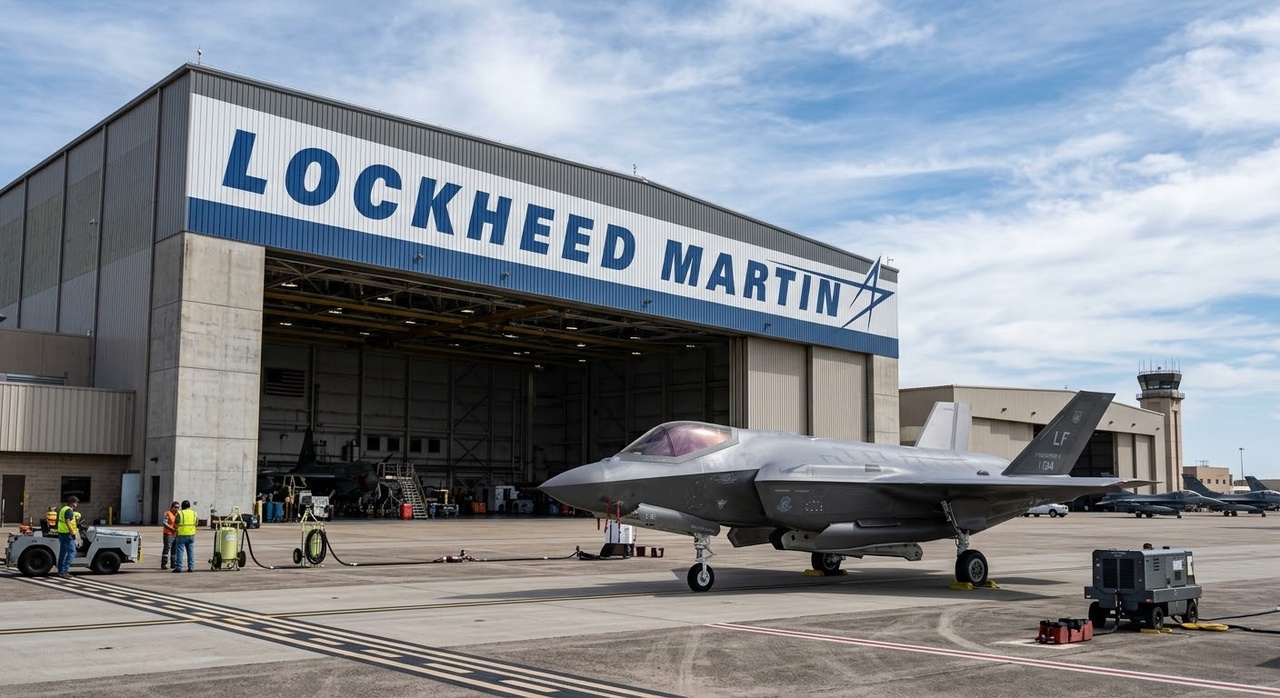
I’m currently on vacation in Crete with my family. We’ve been able to see F-16 Falcons in the sky from time to time here, since there’s an air force base nearby—a very impressive sight. In addition to the F-16s, we also saw a few impressive formation flights by CH-47 Chinooks $BA (-1,44%) .
Although the F-16 is a relatively older aircraft, it has undergone regular modernizations to bring it up to current standards. This shows that the F-16’s tremendous capabilities remain impressive, even though its maiden flight took place as far back as 1974.
Alongside the F-16, $LMT (+1,38%) the newer F-35 Lightning is also on display. The first F-35 was recently handed over to the German Air Force. For now, however, it will remain in the U.S. to be used for training flights.
In any case, Lockheed’s order books are fuller than ever. The current backlog stands at 230 billion. In the second quarter of 2026 alone, orders worth around 65 billion were added—and there’s no end in sight to this trend. I’m staying invested.
1717
3 Comentários
2Mês
Lockheed is attracting investors with attractive dividends and a strong stock price… but what makes the company so future-proof? (I'm not very familiar with this topic.)
•
11
•2Mês·
Lockheed Martin
$LMT (+1,38%) What do you think?
On September 18, 2026, Lockheed Martin officially handed over the first F-35A Lightning II stealth fighter jet to Germany at its production facility in Fort Worth, Texas.
Federal Minister of Defense Boris Pistorius accepted the aircraft on behalf of the German Air Force during a ceremony and spoke of the beginning of a “new era.”
Training in the U.S. and the Rest of the Timeline
The first F-35A—which completed its maiden flight on September 8, 2026—will not be transferred to Germany for the time being.
It will initially remain in the U.S. for training purposes for German pilots.
The first aircraft are scheduled to arrive in Germany by the end of 2027. Their home base will be Büchel Air Base in the Eifel region, where infrastructure is currently being upgraded at a cost of approximately two billion euros.
Delivery of all 35 ordered aircraft is scheduled to be completed by 2029, at which point full operational readiness is expected to be achieved. The total cost of the procurement amounts to approximately ten billion euros.
Strategic Significance and German Industrial Participation
This state-of-the-art fifth-generation fighter jet will replace the Bundeswehr’s aging Tornado fleet.
The purchase is primarily intended to ensure Germany’s nuclear sharing within NATO, as the F-35A is capable of carrying U.S. nuclear weapons.
In addition to its stealth capabilities, the aircraft serves as a flying command center capable of collecting and processing large amounts of data in real time and sharing it with other systems (such as drones).
Furthermore, the German defense industry is benefiting from this multi-billion contract: The Düsseldorf-based Rheinmetall Group is integrated into the global supply chain and manufactures central fuselage sections for the
F-35A.
I’ve been invested for two years, have held the stock, and it hasn’t performed as planned since then.



3Mês·
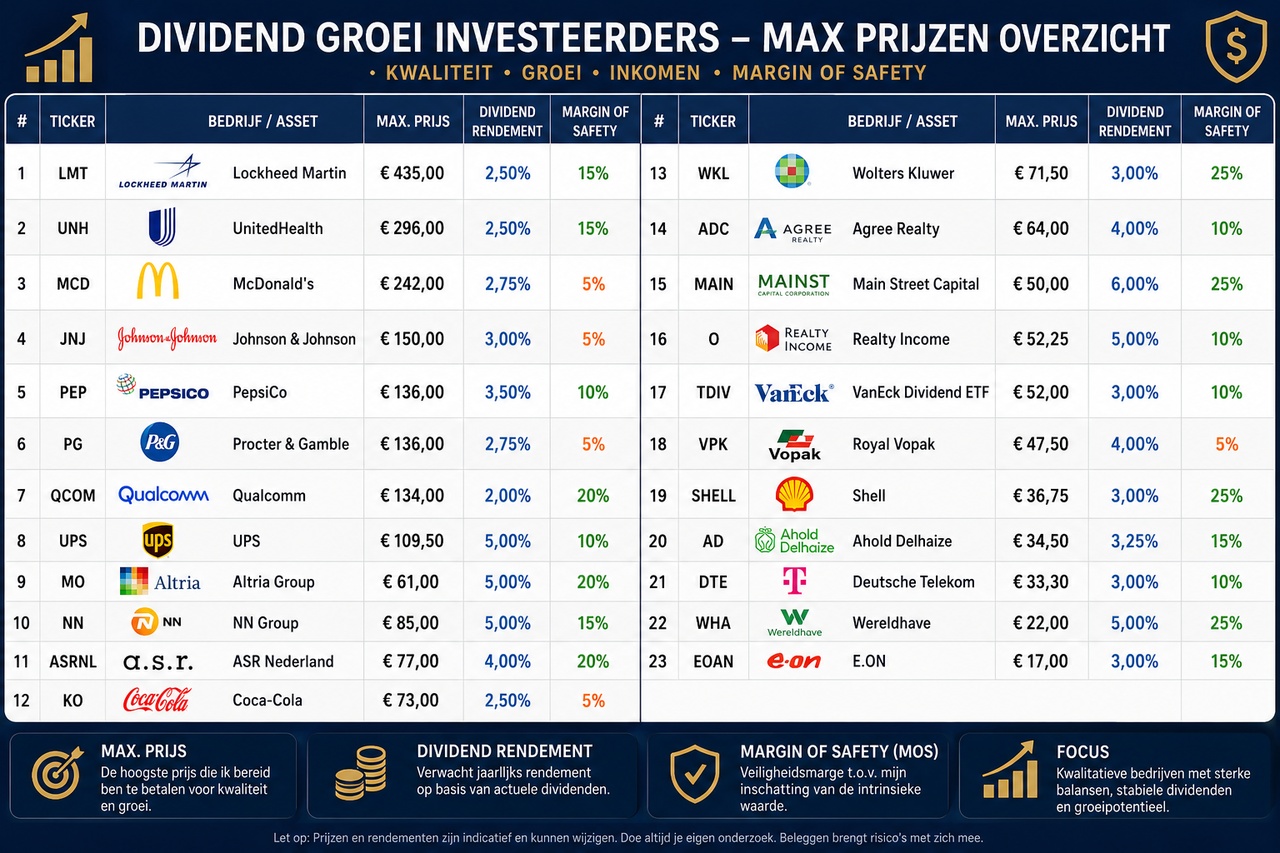
My Maximum Purchase Prices for Dividend-Growth Stocks
I invest with a focus on dividend growth, quality, and attractive valuations. That’s why I set a maximum purchase price for each position based on dividend yield, growth expectations, and my own Margin of Safety (MOS).
I use this overview as a guide to keep emotions out of my buying decisions and to wait patiently for opportunities.
$LMT (+1,38%)
$UNH (+1,03%)
$MCD (+1,45%)
$JNJ (-0,12%)
$PEP (+1,77%)
$PG (+1,04%)
$QCOM (-4,28%)
$UPS (+0,07%)
$NN (-1,29%)
$ASRNL (-0,85%)
$KO (+0,71%)
$WKL (+0,44%)
$MO (+2,71%)
$ADC (+1,36%)
$MAIN (+0,58%)
$O (+1,52%)
$TDIV (-0,56%)
$VPK (-1,24%)
$SHEL (+0,74%)
$AD (+1,94%)
$DTE (+0,75%)
$WHA (+0,11%)
$EOAN (+0,63%)
2424
3Mês·
The Defense Industry—Crisis-Proof?
The aerospace and defense sector now accounts for about 8% of my investment capital. Although some companies in the industry are already in the $HMWO (-2,28%) , $TDIV (-0,56%) or the $VHYL (-1%) portfolio, they were nevertheless added as individual stocks due to their long-term trends and future prospects.
These are $LMT (+1,38%) , $NOC (+0,7%) , $AVEX and $AVAV (-4%)
The defense sector is booming for the first time since 1990 due to global conflicts and looming crises—order books are full, jobs are being created, and new plants are being built. Countries are arming themselves with drones, among other things, as well as other equipment and systems, ever since they’ve seen what these are now capable of. Defense capabilities against drones, cyberattacks, and hybrid warfare also play a massive role and require nations to arm themselves against these threats.
In addition to the current boom, however, this industry is also interesting for another reason: it is quite recession-proof due to its customer base. Furthermore, there are high barriers to market entry, few competitors, and the customers are almost exclusively governments—which also have maintenance and upgrade contracts in place for decades to come—and, last but not least, a certain level of trust among users in the systems’ performance.
Even though one might sometimes get the impression that NATO is falling apart, many systems and pieces of equipment are still compatible with one another—or are intended to become so in the future—which greatly expands the list of potential customers.
Disadvantages of the industry? A high concentration of customers, development risks, export restrictions, political interference—sometimes sensible, sometimes less so—and if a company falls behind technologically, it could very quickly lose ground.
While $LMT (+1,38%) and $NOC (+0,7%) have been established in the industry for years and are growing through scaling, diversification, and expertise, $AVEX and $AVAV (-4%) represent, in my view, the future of military development and thus represent a growth bet on nations’ drive to deploy autonomous systems in crisis zones.
My conclusion is this: Anyone who actively chooses to include defense industry stocks in their portfolio accepts an ethical dilemma, but benefits from tremendous predictability, structural tailwinds, as well as technological change and the associated government spending.
Final Thoughts:
If world peace were to break out tomorrow—then, by the way, I would be more than happy and more than willing to pay the price for it in the form of losses!
*contains AI-generated images*



77
2 Comentários
Another drawback of the industry is evident in the Ukrainian Armed Forces’ procurement process:
In a war fought at the highest technological level, the ability to procure equipment quickly and flexibly is crucial throughout. Huge defense contractors simply cannot offer that.
Ukrainian unit and formation commanders order equipment, UAVs, weapons, and accessories through a government website where many small businesses offer their products. This decentralized procurement process provides the armed forces with what they need: Immediately available equipment that can be tested, adapted, discarded, and replaced.
An army’s tactical level is not concerned with long-term contracts, maintenance schedules, or spare parts production lead times—all of which defense contractors try to sell to a government seeking to become a customer in order to earn predictable, long-term profits.
When we talk about major defense projects such as main battle tanks, cruise missiles, frigates, submarines, and fighter jets, the major defense contractors remain in a league of their own. However, it’s important to keep in mind that the following is also evident in Ukraine:
- A €35 million tank can easily be destroyed by a €1,500 drone
- The operational value of a fighter jet is drastically reduced in a war between two evenly matched parties due to a lack of air superiority
- Frigates and submarines can be trapped in ports, as setting sail is too dangerous due to underwater UAVs
- Cruise missiles costing millions are being replaced by inexpensive long-range UAVs, which enable better aerial reconnaissance and more selective target engagement
Defense contractors will not stop making money, especially since countries like Germany continue to rely heavily on conventional warfare, but there are also reasons why what defense contractors offer may not be attractive to an army.
•
88
•3Mês·
SpaceX? No, thanks 🙂↔️
I have to admit, to be honest: I still can't really wrap my head around the hype surrounding SpaceX $SPCX (-7,83%) —even a few weeks after the IPO—I still can’t really wrap my head around it. Maybe I’m missing something, or maybe not. But that’s not what I want to focus on today.
I find another stock much more exciting—one that, in my opinion, has received significantly less attention so far, even though it also went public as recently as May of this year. For me, this company is one of the most interesting alternatives in the entire space sector, and that’s exactly why I’d like to introduce it to you in a bit more detail today.
At this point, I’d also like to say a huge thank you to the best @Get_Rich_or_Die_Tryin 🫶✌️ for the informative discussion about this stock—and, of course, for more!
First, for the sake of transparency: I’m already invested. Nevertheless, I’ll try to outline the opportunities and risks as objectively as possible.
Let’s go! 🚀
🛰️ HawkEye 360, Inc. $HAWK : The West’s Ears in Orbit
While half the investing world is fixated on the $SPCX (-7,83%) SpaceX IPO, another space company went public on the NYSE in May 2026—one that’s fundamentally much more tangible than any rocket hype: HawkEye 360 $HAWK The company is neither a picture-perfect firm like Maxar nor a loss-making space dreamer. It is the global pioneer in commercial, space-based signals intelligence (SIGINT)
The difference is fundamental: Traditional Earth observers (geo-intelligence) take photos or radar images—they show what’s visible—while HawkEye 360 $HAWK captures the invisible: radio frequencies (RF). Radio transmitters, military radar systems, satellite phones, GPS jammers. For intelligence agencies and generals, this is the most valuable source of data of all, because it reveals troop movements before the first tank rolls into the camera’s field of view. And unlike an optical satellite, RF reconnaissance works through clouds and at night—radio waves don’t need light.
1. The Business Model: The Triad of Radio Reconnaissance 🛰️📡🕵️
HawkEye $HAWK controls the entire value chain of commercial space espionage across three stages—a vertically integrated B2G (business-to-government) model that spans from data collection to the final intelligence product.
① The Constellation (Data Collection): HawkEye $HAWK operates a fleet of over 30 active microsatellites in low Earth orbit (~500 km). The technical core: The satellites fly in precise clusters of three (formation flight). This is the fixed Capex component—once in orbit, the capital intensity decreases with each additional customer.
② The software layer (value-added processing): Raw radio signals are worthless. Using its proprietary platforms, HawkEye $HAWK filters out interference and reveals patterns. This is where the real value lies—and, since late 2025, a massively strengthened moat (see the ISA acquisition).
③ Customer retention & scaling: HawkEye $HAWK is breaking the decades-long government monopoly on military spy satellites. It sells data and analytics subscriptions to governments and public agencies. The key lever: Once the constellation is in place, every additional subscriber is nearly pure profit.
2. The Technology: Why HawkEye Sees What Clouds Hide 📐
The unique physical feature is called TDOA—Time Difference of Arrival
When a source on Earth (a ship, a radar, a jammer) transmits a radio signal, the three satellites in a cluster receive the same signal with a minimal difference in transit time. Using these nanosecond-level time-of-flight differences, the algorithms triangulate the exact location of the source—with kilometer-level accuracy, worldwide, regardless of weather or time of day.
Three additional technical points that are often overlooked:
Expansion License: An FCC license allows for expansion to up to 80 satellites (final configuration: 15 clusters). Today’s fleet of over 30 satellites is therefore just the beginning of improvements in coverage and latency.
Global Ground Network: Through partners such as ATLAS Space Operations, a worldwide network of ground stations is connected, reducing the latency between signal detection and actionable intelligence.
The Data Moat: Over more than a decade, HawkEye has built up an archive of RF emitters. Every newly detected signal improves pattern recognition. This is a growing, cumulative advantage that a new entrant cannot catch up to overnight.
3. Key Figures (as of post-IPO May 2026 / Fiscal Year 2025) 📊
Initial Public Offering: NYSE debut on May 7, 2026, under the ticker $HAWK
offering price of $26.00, 16 million shares, ~$416 million in gross proceeds.
The proceeds paid off the expensive acquisition debt (two bank loans, ~$48.6 million total debt) plus a deferred ISA obligation—HawkEye has been operating from a comfortable cash position ever since.
Market capitalization: ~$2.3 billion (at ~$24 and ~93 million shares).
Revenue (FY 2025): $117.7 million, a +74% increase from $67.6 million in 2024.
EBITDA (FY 2025): $24.8 million = ~21% margin. This is among the highest figures in the satellite data sector.
Net Income (FY 2025): $2.7 million—positive for the first time, following a loss of ~$29–31 million in 2024. To be fair: With a ~2% net margin, this is extremely slim; only ~$48,000 remains attributable to common shareholders. The meaningful profitability metric here is EBITDA, not net income.
🚀Order Backlog: $302.7 million—a massive increase of +586% (6.9x) compared to $44.1 million in the prior year. This corresponds to ~2.6x forward revenue coverage and stems from multi-year fixed-price government contracts, not spot business.
Customer mix:
🇺🇸61% U.S. government (NRO, NGA, U.S. Space Force)
🇯🇵16% Japan,
23% other allied nations.
Valuation: ~12x EV/revenue. Gross margins are trending toward software-industry levels.
📉Stock price history: IPO $26 → all-time high $35.73 (May 12) → ~$19 (as of July 27, 2026). The stock has thus fallen nearly 50% from its high and is trading near its 52-week low.
Analysts: Price target range $34–42 (several “Buy” recommendations). Noteworthy: The current price is below the entire analyst range.
Key facts: Founded in 2015, headquartered in Herndon, Virginia, ~395 employees, CEO John Serafini. Next earnings report: ~September 2, 2026.
Competition & Moat ♟️
The Market Landscape:
🥊- Direct RF competitors: Spire Global $SPIR (-4,65%) (larger multi-sensor network; RF is just one of many functions), Unseenlabs from France (focus on maritime RF detection).
😵- A cautionary tale: Kleos Space, a maritime RF specialist from Luxembourg, went bankrupt in 2023. This shows just how capital-intensive and difficult scaling is in this field—and underscores HawkEye’s lead in maturity and scale.
📡- Complementary, not direct: Maxar, Planet Labs $PL (-6,96%) , Capella, and Iceye provide optical and SAR imaging, respectively—a different type of data, often combined with RF.
🪖- Defense contractors (Lockheed $LMT (+1,38%) , Northrop $NOC (+0,7%) ): It would take them years and billions to build a comparable constellation—and they aren’t “space-native” in the RF sector.
HawkEye’s competitive moat in bullet points:
🏰- Largest commercial RF constellation with cluster triangulation
🏰 - Pure play in SIGINT—not diluted by side businesses
🏰- Decade-long RF emitter archive (cumulative data lead)
🏰- Classified algorithms already integrated into the U.S. security architecture (see ISA)
🏰- Unclassified, shareable data model—allies can use it without having to build their own secret infrastructure
🏰- Space-native, persistent global coverage instead of ground- or air-based point solutions
Additional Insider Facts (The “Deep Dive” Bonus) 💡
🚀 The ISA Acquisition – The Key to the Big Budgets.**
Shortly before its IPO (December 2025), HawkEye $HAWK acquired Innovative Signal Analysis (ISA) for $166.5 million. A brilliant strategic move: HawkEye $HAWK collects the unclassified raw data, while ISA provides the classified analysis algorithms—already integrated into U.S. SIGINT programs—plus a universal detection engine that identifies and isolates signals. The formula is: unclassified collection + classified analysis = access to the Pentagon’s largest, secret budgets. In addition, ISA merges space-based data with ground- and air-based sensors.
🚀 The Dark Vessel Hunter (“Custody ID”).
Smugglers, illegal fishermen, and sanctioned oil tankers turn off their AIS (automatic identification system) on the high seas to become invisible. HawkEye $HAWK instead intercepts the radio signals from their onboard radars and continues to track these “ghost ships” using AI—even when the AIS is silent.
🚀 GNSS Interference Detection.
In GPS-denied, contested areas, HawkEye detects and locates GPS jamming—a directly monetizable use case in any active conflict zone.
The PBC structure (both a moat and a shackle).
HawkEye $HAWK is structured as a Public Benefit Corporation (Delaware). Management is *legally obligated* to balance the security of the U.S. and its allies against shareholder interests. When in doubt, national security takes precedence over returns. On the one hand, this creates a trust monopoly with the Pentagon (no competitor with lax governance can come close); on the other hand, however, it can block lucrative deals with “undesirable” third-party countries. This tension is the most important—and often overlooked—aspect of the entire stock.
🚀 New major contracts.
In December 2025, a multi-year international contract worth more than $100 million was announced, followed by additional awards in 2026—so the backlog isn’t just growing from past orders but is actively expanding.
4. Why is this stock particularly exciting right now? 🚀
1. RF warfare is the macroeconomic megatrend.
Modern conflicts are decided in the electromagnetic spectrum. GPS jamming against drones, illegal radar systems in the South China Sea, electronic warfare in Ukraine—HawkEye $HAWK provides the only commercially available, uncensored map of these threats for Western allies.
2. Defense budgets are on the rise.
NATO members have moved toward a spending target of up to 5% of GDP, and the U.S. Space Force is specifically increasing funding for space-based sensors. HawkEye $HAWK is positioned right in the middle of this flow of funds—with a total addressable market (TAM) of ~$24 billion for RF spectrum exploitation alone (not including commercial opportunities).
3. A first mover with a proven track record.
HawkEye $HAWK is the first profitable, publicly traded commercial RF SIGINT pure play. This is exactly where 95% of space startups fail: they make money before they run out of fuel.
4. Operating leverage poised to take effect.
The platform for Tier-1 enterprise customers is in place, and development costs are fixed. Every additional contract contributes disproportionately to the margin. The backlog of 2.6x annual revenue is essentially already-sold scalability.
5. Platform integration into the security architecture.
Instead of delivering in isolation, HawkEye’s RF data stream is integrated into Lockheed Martin’s tactical systems via machine-to-machine integration (as demonstrated, among other instances, during the Talisman Sabre exercise). That is the real “platform” story—deep integration, high switching costs. *(Note: A circulating claim of a Palantir integration could not be substantiated—the verified integration partner is Lockheed Martin.)*
6. Valuation dislocation.
Following the IPO euphoria ($35.73), the stock has corrected significantly to ~$19—the “tech tourists” have cashed out. The price is below every analyst estimate. For a long-term investor, this presents a more attractive entry point than on the IPO day.
5. Risks ⚠️
- ❗️Extreme concentration risk: Over 60% of revenue** comes from the U.S. government. A budget freeze in Congress or cuts to the defense budget would strike a blow to HawkEye’s lifeline.
- ❗️The PBC constraint: The legal priority given to national security can prevent profitable expansion into third-party markets.
- ❗️Launch Vehicle Dependency: The expansion to 80 satellites depends on rideshare launches (primarily SpaceX and Rocket Lab). Launch delays directly slow growth.
- ❗️War in Orbit: In the event of a conflict, SIGINT satellites are among the primary targets for anti-satellite weapons, jamming, and cyberattacks.
- ❗️Margin Compression Due to Product Mix: The larger the partner or contract, the greater its bargaining power. Volume must support the margin.
- ❗️Valuation & Volatility: ~12x EV/revenue is not a bargain, and the stock’s trading history is extremely short. As IPO lock-ups expire, additional selling pressure may arise.
- ❗️FX risk (for EUR investors): Revenues are predominantly in USD; a weak dollar dampens performance when converted to euros.
My Personal Conclusion & Reaper Rating 💀
HawkEye 360 $HAWK is, in my view, one of the most fundamentally compelling space-tech IPOs of recent years—definitely more than $SPCX (-7,83%) ! The company is a profitable pure play in a structurally growing niche, has a strong technological moat, benefits from recurring revenue and a well-filled backlog, and enjoys a near-monopoly in its market segment. It is precisely this combination that makes the investment story extremely attractive to me, at the very least.
Nevertheless, one shouldn’t confuse euphoria with reality. $HAWK The company has only been publicly traded for just under two months and can look back on only about a year of sustained profitability so far. Net income remains at a very low level, and the stock exhibits enormous price volatility—typical for young public companies with a still-limited track record.
In my opinion, the potential is very high, but it’s just as important to honestly assess the risks of a still-young investment story. High quality standards don’t mean that every strength is automatically rewarded with a top rating.
💀Jack’s Verdict :
“HawkEye has achieved what almost every space startup fails at: They’re making money before they run out of fuel. A near-monopoly first mover, a 21% EBITDA margin, and an order book that’s exploded by 586%—that’s not hype, that’s a business. BUT: The stock is about 8 weeks old, is rocking like a fishing boat in a hurricane, and is over 60% dependent on a single government. I don’t buy something like this on day one with both feet in and an 8-out-of-10 rating—I’m biding my time.
My entry price for the first tranches is around $15–$17. If you lock this in for five years, you’re buying a monopoly in commercial space intelligence. If you want to be rich in six months, you’re buying volatility. Know the difference.”
REAPER RATING: 🟡 WATCH
ENTRY PRICE LIMIT: $15
REAPER SCORE: 6/10
@Get_Rich_or_Die_Tryin
@Tenbagger2024
@Raketentoni
@Multibagger
@Stocktective
1818
19 Comentários
LOL, where are the graphics? 🤦🏼♂️
•
33
•Títulos em alta
Principais criadores desta semana
Dados tempo real da LSX · Dados financeiros e EOD da FactSet