
Trump, Xi and Putin hold an unprecedented three-way summit and issue a symbolic "peace declaration" pledging that nuclear war should never be fought. The declaration skips Ukraine.
USO
Other United States Oil Fund LP
ETP
ETP
Ticker: USO
USO
Price
Discussão sobre USO
Postos
4
7Mês·
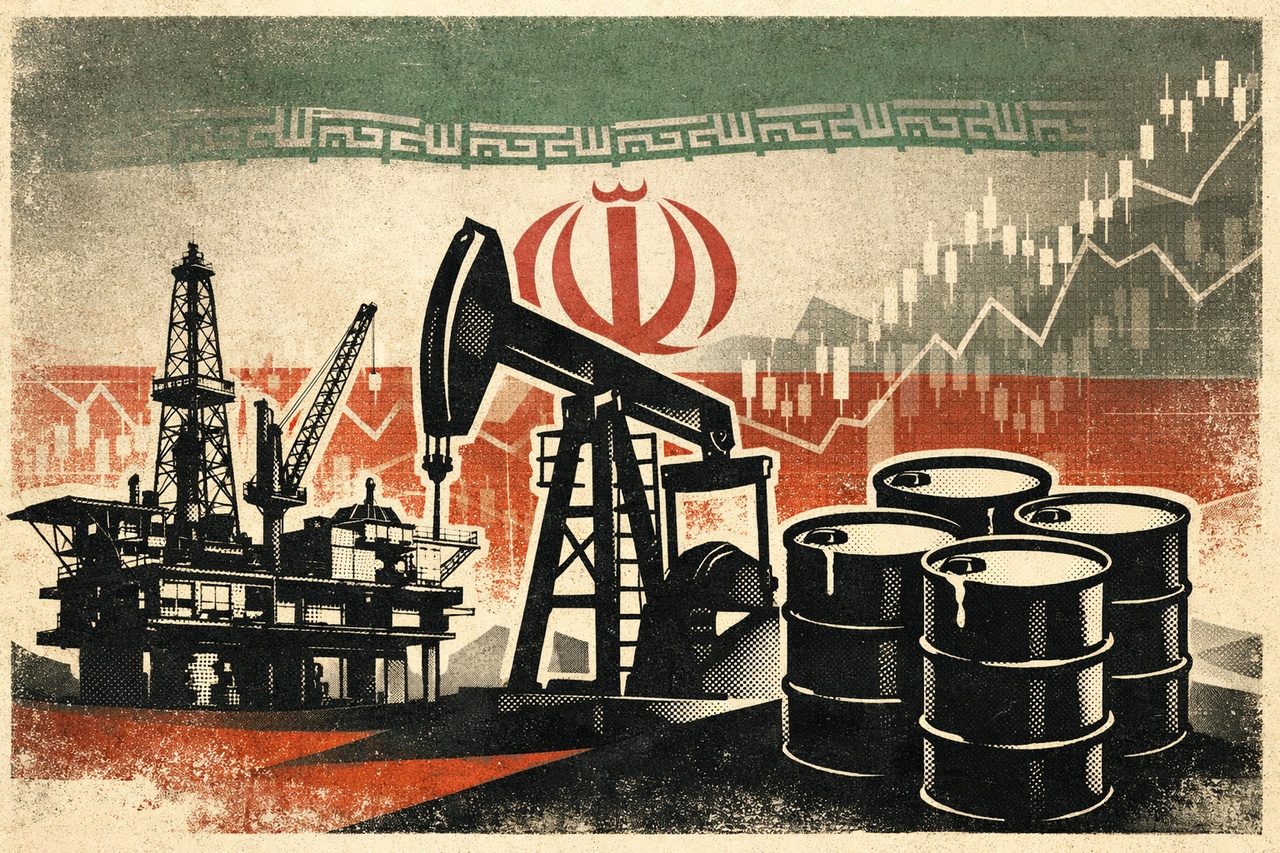
Mar 19 / Iran War — Part 2
Here’s the part many people get wrong.
Iran doesn’t need full control over the Strait of Hormuz. Their military wouldn’t even have the capabilities for that. You’d need hundreds of sea mines or thousands of drones, plus people operating them. They just need to create enough fear so that companies won’t risk a billion-dollar tanker being sunk by a $20,000 drone.
Some carriers turn off their transponders and just go through. High risk, high reward. But most operators won’t take that chance. That, and strikes on Gulf energy facilities like oil fields and refineries, led to the declaration of “Force Majeure” of some major players in the region, among them Bapco and QatarEnergy. Other countries like Iraq had to drastically reduce exploration, because they can’t store any more reserves.
And it’s not just maritime trade that’s heavily disrupted by this conflict.
Air freight is largely down as well. While Riyadh continues to operate and Dubai tries to move stranded tourists when the emirate isn’t dealing with drone strikes, many airports across the region are simply shut.
And it’s not just infrastructure either.
Residential buildings and hotels are being hit, and even data centres of companies like Amazon have reportedly taken damage.
Now add the political layer in the U.S. Trump wanted a quick victory. He needed a quick victory.
The president is running out of time. Many Americans are already critical of foreign intervention, something he promised to stop. If this now starts hitting the average consumer through higher fuel prices, midterms could get very ugly for Republicans.
“TACO” might be his only hope. But that also gives Iran significant leverage. A war doesn’t work like tariffs. You can’t just change things depending on your mood. He had to find that out the hard way. Don’t get me wrong, the U.S. and Israel are tremendously successful in their military campaign, but as history tells us, you won’t crush an authoritarian regime just by a 2-week air campaign.
At the same time, even for Iran there’s no real benefit in dragging this out while anyone remotely connected to the regime gets systematically blown up.
Probably because of all of this, markets remain oddly calm.
Given the severity of the situation for global energy markets, you’d expect indices to be down far more. But they aren’t. The S&P and Dow aren’t even down 10%. That’s normal correction territory, especially considering the run we’ve had since “Liberation Day.” International markets have taken a bigger hit, but still nowhere near what you’d expect given the risk.
Why?
Because the market believes in TACO. And because, deep down, it knows the same thing: This situation can’t last forever. Every side has a vested interest in ending this conflict.
But, still, I want to point out the most “hilarious” part of the situation: the irony.
The religious regime overthrew a monarchy in Iran because it supposedly oppressed the people. Now, after decades of actual oppression, mass killings and torture, the successor to the Ayatollah is… his own son.
Same system. Worse economy. More oppression. More isolation.
What a win for the Iranian people that revolution was (and yes, that’s sarcasm).
$SPY (+5,35%)
$CSPX (+4,58%)
$DAX
$MEUD (+2,7%)
$UNG
$USO
$QQQ (+7,26%)
$AMZN (+3,55%)
88
2 Comentários
BeachPlease@BeachPlease
7Mês
••
Mostrar resposta
7Mês·
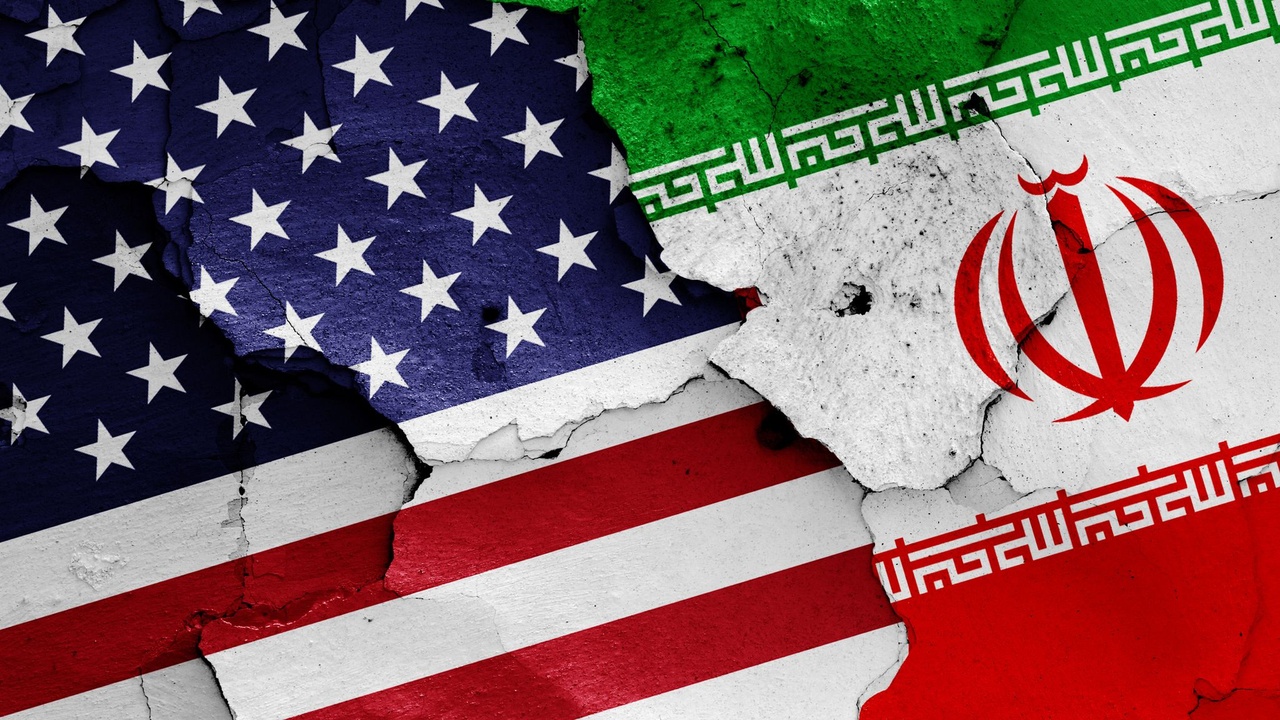
Mar 18 / Iran War — Part 1
The Strait of Hormuz can’t stay closed for long, and the market knows it.
Since the start of the new war in the Middle East, it has become clear where Iran’s leverage lies. It’s not missile attacks on neighbours, and also not the destruction of infrastructure, since that would lead to the total obliteration of its own facilities.
No, what Iran can control, with very little effort as well, is the Strait of Hormuz.
A global choke point of trade, especially important for oil and gas, fertiliser, and Gulf economies.
Let’s forget the last point for now, because pretty much all major players in the region can afford this conflict, given it doesn’t extend for months, which still seems quite unlikely at the moment. What’s the bigger problem is that approximately a quarter of global oil and LNG consumption passes through the strait. And most countries have no way to divert their exports and use different routes.
The exception here is Saudi Arabia, which uses pipelines to move a large portion of its crude to the west coast and ship from there. Not perfect, but it makes Saudi Arabia arguably the least affected country in the region, both in terms of Iranian strikes and economic consequences.
Other countries that could have been affected massively, because they import a majority of their oil and gas from the region, are China and India. But their ships have now been given permission to pass through the strait.
Less lucky are other highly dependent countries and regions like Europe, Japan or South Korea.
The United States is largely energy independent, however global crude price surges still show up at domestic gas stations, very much to the distaste of Donald Trump.
But what’s the real problem? Why are ships not passing through the strait?
The problem isn’t necessarily strikes. It’s insurance.
Most major insurers have cancelled war coverage for carriers in the region, or at the very least pushed premiums to absurd levels. The U.S. tried to offset this by offering cheaper rates through the government or even escort ships by the Navy, but there has been no real follow-through.
What has happened, however, is what looks like market manipulation.
Specifically, when the Energy Secretary proudly announced that the U.S. Navy had successfully escorted a tanker through the strait. Oil prices plunged following the statement.
But surprise, surprise. That never actually happened.
The post was deleted minutes later and the White House had to step in to clarify.
And that’s not the only attempt to cool down prices. Crude, which is up more than 80% since December, still trades down on every new “TACO” statement made by the president regarding negotiations.
The truth is, nobody knows what’s really going on.
Trump says a deal is close. The Iranian leadership, or whoever is left of them, denies any talks. Still, his rhetoric since the beginning of the war has changed noticeably. No more talk of regime change.
Or maybe replacing one hardliner with an even more radical one is the new definition of “overthrowing the system.”
$CSPX (+4,58%)
$SPY (+5,35%)
$EXI2 (+5,95%)
$QQQ (+7,26%)
$CSNDX (+6,38%)
$USO
$UNG
$DAX
88

2Ano·
Returns since election...
Coinbase $COIN (+7,88%) : +32%
Tesla $TSLA (+11,12%): +18%
Bitcoin $IBIT: +10%
Banks $KBE: +8.3%
Small Caps $IWM (+3,8%): +5.4%
S&P 500 $SPY (+5,35%): +3.3%
China $FXI (+1,99%): +2.4%
US Dollar $UUP: +0.8%
International Stocks $VEA (+3,68%): +0.2%
Oil $USO : -0.1%
Gold $GLD (+3,66%) : -1.5%
Long-Term Treasury Bonds $TLT : -1.6%
Trump Media $DJT (+2,93%): -18%
Volatility $VIX: -26%
22
Títulos em alta
Principais criadores desta semana
Dados financeiros e EOD da FactSet