(Reading time approx. 15min)
In the last few days there have been some discussions here about Sony $6758 (+0,35%) . I have often read things like "Sony is finished", "Sony is not innovative" or "Sony is just the PlayStation". It is therefore high time that someone did a comprehensive analysis for Sony.
Sony is a global entertainment and tech company headquartered in Japan. They became big at the end of the last century with consumer electronics (e.g. televisions). Today, however, they have little to do with the Sony of yesteryear. Japan is no longer the country of televisions, refrigerators and laptops. Most of these industries are now located in low-wage countries such as China, India or Vietnam. And that's perfectly fine. For Sony, however, this meant that they had to completely reposition themselves in order to remain relevant. They have already succeeded in this transformation, but I think it is only just beginning. The realignment of the company has the potential to take them to a whole new level. In the next 10 years, this could be a company that breaks the €1 trillion mark. Let's take a look at what this thesis is based on.
Business areas and their future prospects:
1) Music
Sony Music is increasingly becoming a global IP management platform. Sony is number 2 in Recorded Music (actual recording) with about 22% market share and number 1 in Music Publishing (copyrights to lyrics and melody) with 25-30% market share. Recently, they have also been buying up more and more music catalogs of so-called evergreens (timeless). Most recently Queen, Michael Jackson or Pink Floyd. These generate permanent license income and are not really vulnerable to AI. The profit margin is already over 20% and the profit contribution is over €2.5 billion. Sony is particularly strong in the fast-growing Asian markets (China, India). They are also benefiting from the massive global growth of Korean and Japanese pop culture, where they are also number 1 (there are high synergies with the Pictures division). Sony Music is growing faster than the competition from Universal $UMG (+0,25%) and Warner Music $WMG (+0,02%)
According to Goldman Sachs $GS (-0,25%) the global music market is set to grow to 200 billion dollars by 2035. Sony is taking rigorous action against AI songs and has already obtained the deletion of 135,000 songs. Sony wants to drive up the valuation of its IP for potential future license deals with AI providers. By focusing on the accumulation of copyrights (especially timeless artists) and, in the future, on fan experiences, they are also much more resistant to the wave of AI content.
I think a turnover of around 30 billion dollars is realistic for 2035. With a further increase in margins through the use of AI and monetization of super-fans, the profit contribution could reach $8 billion.
2) Pictures & Anime
In my opinion, this is one of the most important areas. Sony Pictures is one of the largest movie studios in the world. They have a market share of about 12% of the global box office. The margin is about 10% and contributes about $1 billion to profits. In contrast to competitors such as Warner or Paramount, Sony does not have its own streaming service. In this way, they keep their margins stable and always work with whoever wants to pay the most for their IP. They are therefore not heavily indebted and under pressure to expand like many of their competitors. Sony has also started to bring PlayStation IP to the big screen. For example, the series "The Last of Us" on HBO was very successful, which also greatly increased game sales (win-win). They now want to turn two PlayStation IPs into a movie or series every year. But that was more the uninteresting part.
The anime business is much more interesting. The 40+ generation may laugh, but the global anime market is estimated to be worth around 220 billion dollars in 2035. Sony is the most important player in the market and is pursuing a strategy of vertical integration. They control the entire chain. They control the production with studios like Aniplex, CloverWorks or A-1 Pictures (approx. 40% market share). Hits like Demon Slayer grossed over $700 million at the box office last year with just a sequel. They have their own streaming service for anime called Crunchyroll, which has a monopolistic position. Crunchyroll currently has around 20 million paying subscribers. Crunchyroll is very profitable and growing strongly. Sony is expecting particularly strong growth in India and South East Asia over the next few years. However, anime in itself is only part of the business, as a lot of money is earned from merchandise and events in particular. Music is also a factor. Anime music is not a niche; it is usually by very well-known artists and the opening songs immediately end up in the top 10 of the Japanese charts (only for successful series/films, of course). For example, the song "Idol" by YOASOBI (produced by Sony Music) made it to number 1 in the global charts. So what I want to make clear is that anime is not some weird niche content, but global mainstream among people under 40. The industry continues to grow strongly and is increasingly replacing American productions.
Sony is currently preparing an important takeover. They want to take over Kadokawa. They control a large part of the anime IP and also have a gaming studio. Sony has already bought 10% of the shares and has already made a takeover bid. An activist investor is currently complicating the process and will probably drive up the price. But even if you end up paying more, this takeover is the final piece of the puzzle, as you would then control IP, production, streaming, music and cinema, you would control everything. Most of Sony's studios are already using AI to increase efficiency without losing artistic value. So AI is more of an asset here.
I think Sony Pictures will continue to grow steadily. With their focus on high-end content and PlayStation IP, they will be able to increase margins. They will remain "arms dealers" for the other streaming services. I estimate that revenue will roughly double by 2035 from around $11 billion today to around $20 billion. The profit contribution from the Pictures division will rise to around $3bn (15% margin).
The anime segment will be exciting. I expect Sony to take over Kadokawa by 2035 and the number of Crunchyroll subscribers to rise to at least 65 million. If the India/SEA initiative is successful, this number could increase significantly due to the young population and high population figures. I estimate revenues of $20 billion, up from around $5 billion today, and profits of over $6 billion. This would result in sales of around $40 billion and a profit contribution of $9 billion+ for Pictures & Anime in 2035.
3) Gaming
This is probably the area that people most often associate with Sony today, gaming. Here everything revolves around the PlayStation. Sony currently holds a market share of around 72% for high-end consoles. Microsoft and its Xbox seem to have lost the battle for good. They have opened up the Xbox and suddenly brought their games to every conceivable end device, which has irritated and annoyed fans. What's more, they are now also bringing the wildly unpopular Copilot to the Xbox, which is also causing resentment. The last loyal Xbox fans have now switched to Playstation. Nintendo coexists peacefully with Sony, as Nintendo appeals to a different target group and generally takes a different approach. The hardware sales of the PlayStation itself only account for around a fifth of the gaming division's turnover. Purchases within the games, the software itself and subscriptions are much more important.
Sony is increasingly acting as a platform operator and wants to focus its business more on software and services. The PlayStation currently has 130 million active users and this figure is expected to rise in the coming years. Sony is currently trying to bring the profit margin up to 20% (currently 9%). To do this, they are relying heavily on first party titles (their own games), as these have a higher margin, as well as subscriptions/advertising (already over 40 million subscribers today). Today, Sony has a similar position in the PlayStation Store as Apple has in the AppStore. They take 30% on everything, every game and every third-party transaction. They have a high margin. However, court cases are currently underway (similar to Apple's) and I think it is likely that the 30% will fall. Sony is relying heavily on AI in game development and can already demonstrate clear successes. The quality of games is increasing and development time is getting faster. However, users are not aware of the AI, everything runs in the background, which prevents resentment among players (similar to Microsoft).
Sales and profits from hardware will only increase marginally by 2035. The PlayStation 6/7 will also sell well, but margins will remain at <5%. So revenue is likely to be $12bn and profit only around $500m. However, this is unimportant because the hardware is only the enabler for the software and services. Sony will strongly increase sales with first party titles, supported by AI, which will lead to sales (including transactions/add-ons) of approx. 16.5 bn $ from today's 4 bn $. Profit will be around $6.5bn as it tends to be high for software and will increase due to transactions and AI. Fees on third-party revenues will increase only slightly, from $12.5bn today to $16.5bn. This reflects a strong increase in transaction volumes and a simultaneous decrease in fees (more likely towards 20% from today's 30%). The profit from this will rise from $1.5bn today (margin is actually very high, but a lot is eaten up by hardware subsidies) to $8bn (higher efficiency due to higher volume and lower hardware subsidies). Nevertheless, I calculate a risk discount (regulatory) of 50%, which puts us at $4bn. Finally, we have the development of services (subscriptions and advertising). I think sales will rise from $5bn today to $11.5bn and profits from $1bn to $5bn. The margin will increase significantly due to the economies of scale and the cloud infrastructure will already be depreciated. Incidentally, Sony is already cross-selling with Crunchyroll. PlayStation Plus subscribers can purchase a subscription in combination with Crunchyroll, which makes it even more attractive.
All in all, the forecast for 2035 puts sales at over $45 billion and profits at around $16 billion. This would correspond to a margin of around 35%. It definitely assumes that the focus on software and services will be successful. The targeted 20% (if higher subsidies or similar are required) would take us to $10-12bn.
4) Image Sensors
The image sensor business is the last segment with no connection to entertainment. High tech instead of IP is what counts here. The global market for image sensors is expected to grow to 60-70 billion dollars by 2035. Sony is the undisputed market leader here with a market share of approx. 54% (Samsung $005930 comes next with <20%). They themselves plan to expand this to 60%. Growth in recent years has been characterized by smartphones, with the iPhone leading the way. In the coming years, however, the focus will increasingly be on physical AI and autonomous driving. Both are huge growth markets that are completely dependent on image sensors (and lots of them).
The number of image sensors required for smartphones (better image quality), cars (huge increase) and physical AI (humanoid robots and co) is also increasing. Sony is clearly ahead of the competition in terms of technology. In robotics, this is particularly evident in spatial perception and in safety in cars. Sony is also trying to establish a new business model, Sensing as a Service. They are integrating edge AI into their sensors, which can then process what they perceive themselves and only provide the interpretation, so to speak, which can then be sold as a service (AITRIOS project). Sony's sensors are then used to monitor traffic, monitor store inventories or increase security. The results are sold as a service.
Another positive aspect is how Sony is expanding its production capacities and entering into strategic partnerships for this purpose. They are involved in JASM (TSMC $2330 in Japan) and Rapidus (Japanese foundry project). In this way, they are strategically securing capacity (locally), which makes them more resistant to supply chain problems.
I expect sales to increase from around $14 billion today to around $29 billion in 2035. This is solid growth based on structural trends. The margin will increase due to the focus on high-end and the introduction of AITRIOS. The profit contribution will probably rise from around USD 2 billion today to around USD 8 billion (margin 15% -> 27%).
5) Further hardware
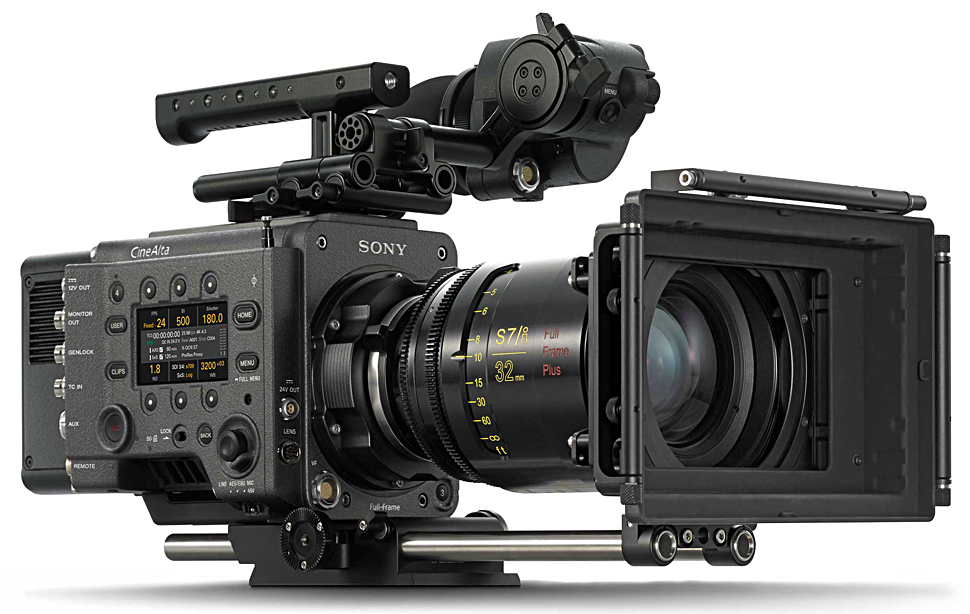
This is probably the most boring area, but it is not superfluous either. It represents the remnants of the old Sony as well as smaller business lines. Let's start with the positive aspects. There are cameras, for example, a classic Sony product for decades, but these are no longer aimed at the normal consumer, but only at professionals and content creators. There, Sony's cameras are the gold standard and they hold over 40% of the market with stable margins above 10%. They are also the market leader in sports technology (Hawk-Eye), a small but high-margin area. This involves, for example, determining whether the ball was already out of bounds or not. In tennis, they are almost the monopolist. Sony products are also used in medical technology, but it is only a very small area. The same applies to the production/editing of film material (synergies with Pictures). However, these are all healthy and technologically sophisticated business areas.
Now we come to the dying business. This includes consumer electronics such as TVs (Bravia), headphones and smartphones (Xperia). Sony continues to shrink this segment and has already withdrawn from the affordable mass market. They continue to sell in the premium segment, but this will also come to an end. This year, the majority of the TV division in North America and Europe was handed over to TCL $1070 (+1,92%) a Chinese low-cost electronics group. This is likely to continue. However, a minimum will remain, as these consumer products could be used as a test laboratory for sensors or as a supplier for the PlayStation.
I estimate that this area will grow well in some areas and shrink/stagnate in others by 2035. The camera part will probably double in sales from around $5bn today to $11.5bn in 2035. Profitability will increase as more and more creators will use the Sony Creator Cloud, leading to more high-margin software sales. Profit contribution will increase from $600 million to $2 billion. Video production, sports tech and medical technology will take advantage of the structural growth trend and increase their sales from around $2bn to $10bn. In terms of profit, I think $2bn is likely, up from $400m today (still 20% margin). Legacy goods, on the other hand, if they are not sold by then, will stagnate in sales at around $4.5bn and will not generate any profit worth mentioning. Overall, we would therefore be looking at sales of USD 26 billion and a profit contribution of USD 4 billion in 2035.
6) Blockchain (Soneium)
This is one of the most interesting developments that most people have never heard of. Sony has developed a blockchain (based on Ethereum Layer 2) that has already become one of the largest in the world (already over 600m transactions today). Soneium specializes in IP and digital property. Sony receives a small fee for each transaction. From now on, PlayStation players who link their PlayStation account to Soneium (perhaps automatically) can actually own skins or items they have purchased and then trade them on digital marketplaces, for example. Soneium offers numerous opportunities to introduce tokens, for example to buy access to events or to unlock an anime series earlier. Soneium is also a game changer for copyrights, because Soneium recognizes in milliseconds whether corresponding licenses are available and knows the stored contracts for royalties and co. Soneium then automatically pays the corresponding fees to the right recipients. The attractiveness for all those who produce or manage IP is therefore enormous. Sony can of course force the industry onto its platform with its own huge catalog of IP (music rights, film rights, PlayStation purchases.....). The Japanese version of GEMA already relies on Soneium (JASRAC/KENDRIX) and there are already over 5 million active wallets. Sony is working with Circle, who have enabled payment with USD stablecoins. They have also partnered with LINE (the East Asian WhatsApp), which gives Sony access to the 200m users in Japan, Taiwan and Thailand. In January, Sony invested a further $13m in the startup Startale Labs from Singapore, which acts as an important technology partner for Soneium.
At the moment, it looks like Soneium is developing into a global platform for trading (and protecting) intellectual property. The massive growth since its launch in 2025, the power of Sony's IP catalog and the high attractiveness for creators/users make this look likely. On every transaction via Soneium, Sony will receive a 1% fee (similar to Visa $V (-0,18%) or Mastercard $MA (-0,25%) ). Soneium will be used for everything and link all of Sony's businesses together. Soneium is like a catalyst for all other business areas. Protection of music rights, monetization of anime fans or completely new markets in gaming (retail). The number of transactions will explode due to background automation (adaptation without users noticing). I estimate that it will increase to over 75 billion transactions per year from 600 million today (first year). Most transactions will take place in the gaming sector (already over 30 billion today), but the music industry will also become increasingly important (Soneium is like an AI shield). In general, the IP licensing market is the biggest lever in the long term. Based on the 1% fees, I expect revenues of $3.5 billion and a profit contribution of $2 billion in 2035. This may not sound like much in absolute terms, but Soneium also has the potential to increase the profits of the other segments, especially through efficiency gains (e.g. no more transaction fees or less piracy/plagiarism). This could add another $3 billion to profits, but I'll leave that aside for now.
7) Other
There are still a few remaining holdings such as Sony Financial (spun off last year), M3 (34%, of limited relevance for medical technology), JASM/Rapidus (for semiconductor security) and a JV with Olympus for medical technology. But none of this is that important. There is also some involvement in the mobility sector. Fortunately, the e-car project of Sony and Honda was terminated a few days ago, which in my opinion was the right decision, because cars are just difficult and contradict the asset-light model. But, the entertainment system that Sony has already developed for the project, I think they will continue and then license it to other car makers, but there was no word on that yet. But if that happens, it could generate billions of dollars more in sales with very high margins.
Current key figures:
Market capitalization: approx. € 104 billion
P/E ratio: approx. 17
Turnover 2026e: approx. € 67 bn
Profit 2026e: approx. €6.2 bn
Profit margin: >9%
(The spin-off of Sony Financial last year reduced sales by almost €20bn, but profit by less than €1bn. This was an important streamlining).
Aggregated forecast for 2035 (path to the trillion):
Let's now aggregate the forecasts for all divisions into an overall forecast for 2035. This gives an approximate total revenue of $170bn and a total profit (EBIT) of around $47bn. Net profit would then probably be around $37 billion (-20%+ taxes). That would be around €34 billion. The focus on IP, software, services, high tech etc. allows a revaluation. In my opinion, the P/E ratio will be over 30 instead of around 20 as it is today. The valuation could therefore exceed the €1 trillion mark in 2035 (€1.02 trillion), whereby the gaming division was calculated with a risk discount (new regulation) and the potential efficiency gains from Soneium were not taken into account.
Market capitalization: €1.02 trillion +
P/E ratio: 30+ (1.5-2x vs. 2026)
Sales 2035e: € 150 bn + (2.5x vs. 2026)
Profit 2035e: € 34 bn + (5x vs. 2026)
Profit margin: >20% (2x vs. 2026)
Conclusion:
All in all, it can be said that Sony is undergoing a profound transformation that has been bearing its first fruits for a few years now. The Group is completely realigning itself and is excellently positioned in numerous future-oriented sectors. The PlayStation remains unchallenged as a platform and is becoming increasingly digital. Sony is the only company with a dominant position in the anime market. There is still strong growth ahead here and Sony is making money in all areas, above all with Crunchyroll, the Japanese Netflix of the 2030s. Sony also dominates the market for image sensors, which will continue to experience strong growth due to numerous structural trends (AV, physical AI, robotics....). Supply chains are being cleverly secured (JASM, Rapidus). No one owns more musical IP than Sony, which they continue to monetize. At the same time, they are establishing Soneium as the backbone of intellectual property in the digital age. The strategy is good, the prospects are good. In my opinion, everything currently speaks FOR Sony and with virtually no real risk. A value stock with tenbagger potential? Such a nice thing, too :)
I would be very happy if you could also share your opinion, because the post took a really long time 😅 I would also be interested in what the "Sony is finished" or "Sony is not innovative" people think 🥴
@Tenbagger2024
@Get_Rich_or_Die_Tryin