
Hello, everyone,
This is a truly interesting development for the Portfolio 2036 and, in particular, for the investment thesis of the second AI wave.
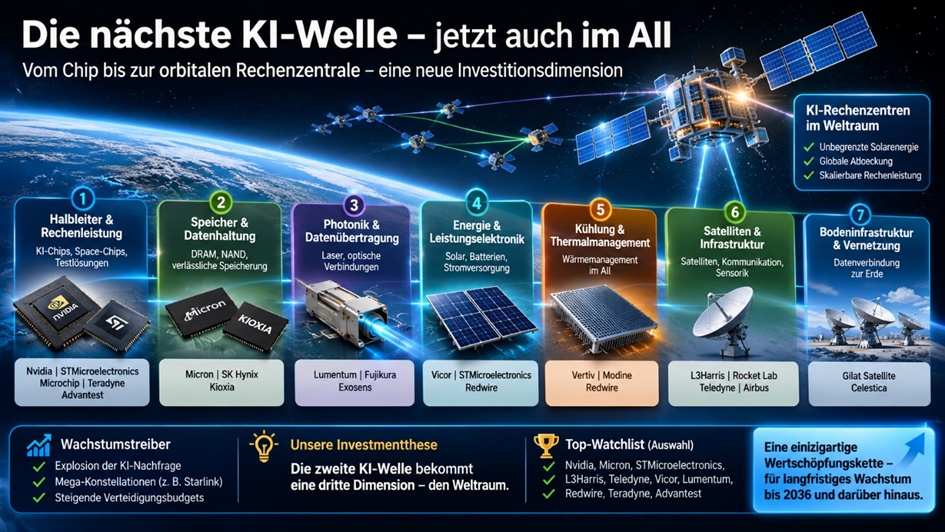
I won’t view this news merely as a space story. It could herald a new wave of investment that connects several of my portfolio’s key focus areas:
Semiconductors and high-performance processors
Storage technology
Optical data transmission and photonics
Power supply and power electronics
Cooling and thermal management
Satellite communications and ground infrastructure
Robotics and industrial manufacturing
And this is exactly where we find some interesting companies from the 2036 Portfolio.
What Elon Musk Actually Has in Store
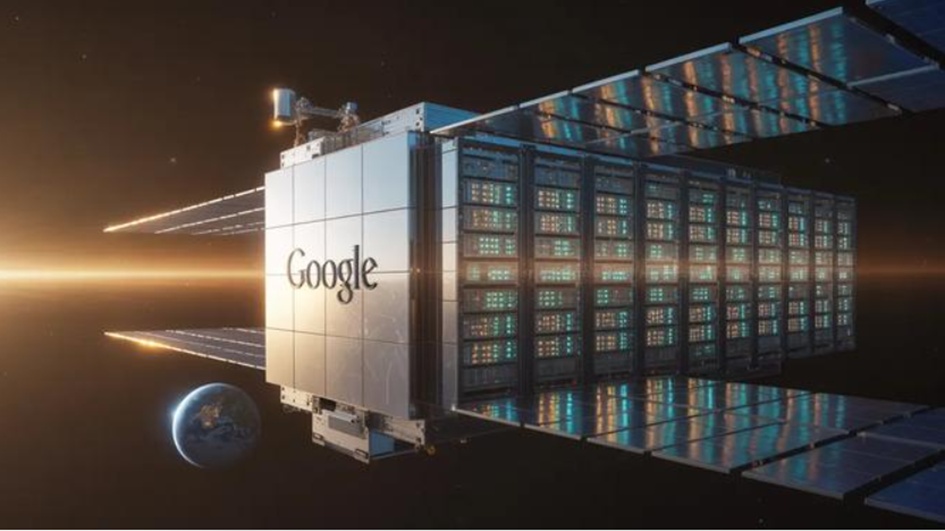
On November 25, 2026, the U.S. Federal Communications Commission (FCC) granted SpaceX approval to launch up to 1 million satellites or orbital computing modules into space.
The idea behind this:
- AI data centers will be partially relocated to space.
- The satellites are to be powered by solar energy.
- Computing power will be provided directly in orbit.
- Data will be transmitted via optical laser communication.
- The results are then transmitted back to Earth.
The key concept: Solar energy is available almost continuously in space. At the same time, this could help circumvent some of the energy and cooling challenges faced by terrestrial data centers in the long term.
However, approval does not yet prove economic feasibility. The required infrastructure—particularly cooling, communication, and launch capacity—poses enormous challenges.
Musk will eine Million Satelliten ins All schicken – Behörde gibt grünes Licht
2. Which companies in the Depot 2036 portfolio could benefit?
I would look at the companies based on their position within the value chain.
A. Semiconductors—the Brain of Space Data Centers
This is where it gets particularly interesting.
STMicroelectronics $STMPA (+0.34%)
Radiation-resistant chips, ASICs, sensors, and power electronics
Micron $MU (+2%)
DRAM and NAND memory for data-intensive applications
Nvidia $NVDA (+1.49%)
AI accelerators and GPU computing power
Advantest $6857 (+5.03%)
Test systems for complex semiconductors
SK Hynix $HY9H (+1.27%)
HBM memory for AI accelerators
Kioxia $285A (+12.23%)
NAND flash and data storage
AT&S $ATS (+2.84%)
High-Performance Printed Circuit Boards and IC Substrates
Of particular interest: STMicroelectronics
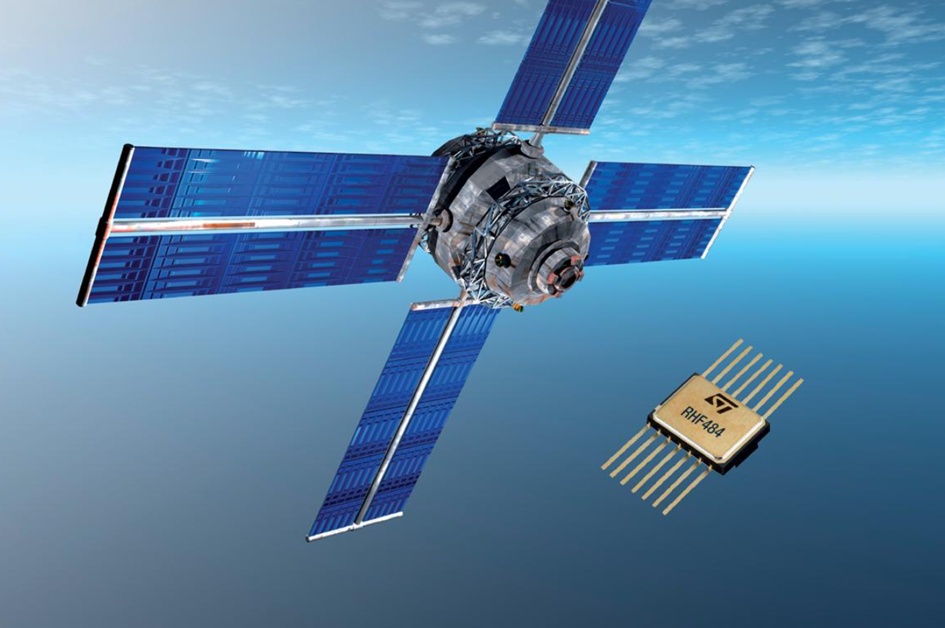
STMicroelectronics is, in fact, already active in the space industry.
The company develops specialized radiation-hardened semiconductors for satellites and aerospace applications.
These include:
- Radiation-hardened ASICs
- Processor and control components
- Analog-to-digital converters
- Communication components
- Power electronics
Of particular interest is the company’s proprietary Space ASIC technology platform.
ST has an ESCC- and QML-certified manufacturing and qualification infrastructure in Rennes.
This is a real competitive advantage, as standard computer chips are not automatically suitable for space applications. STMicroelectronics
My assessment: STMicroelectronics has a direct connection to the space industry here. This isn’t just some AI fantasy.
Micron – Does Micron build space chips?
We need to make a distinction here.
Micron is one of the leading suppliers of DRAM and NAND memory.
Space data centers require enormous storage capacities. AI applications, in particular, require fast RAM and large data storage.
New Market: Micron Offers Space-Grade Flash Memory
Micron is opening up a new market for memory chips—one beyond this planet, namely space. The company’s first space-qualified portfolio, from the manufacturer’s perspective, begins with SLC NAND flash. The memory chips are radiation-resistant and thus ideally suited for the harsh environment.
Micron Is Now Developing Memory for Space
According to Micron, the aerospace industry is experiencing a veritable boom, driven by both commercial and government missions. That’s reason enough for the U.S.-based memory manufacturer to launch a dedicated product line. The company plans to introduce “space-qualified” NAND flash, NOR flash, and DRAM solutions. The first product in the lineup is the “radiation-resistant SLC NAND flash.”
Even though Micron is now touting itself as the first leading memory manufacturer with such a portfolio, it’s worth noting that SSD controller manufacturer Phison promoted an SSD several years ago that was NASA-certified for an upcoming lunar mission. The Taiwanese company is collaborating with Lonestar Data Holdings to build a data center on the Moon. However, Phison does not have its own memory chips.
Neuer Markt: Micron bietet weltraumtauglichen Flash-Speicher - ComputerBase
Micron is therefore a potential beneficiary.
Nvidia – the actual computing engine
Nvidia is also worth noting.
The company Starcloud has already used Nvidia GPUs for space computing applications.
This indicates a concrete technological connection rather than just a theoretical possibility.
However, it remains to be seen which processor architecture SpaceX will use for its planned Starmind satellites.
Orbital Data Centers: Space Data Center Tracker | SpaceNexus
Teledyne $TDY (+3.04%)
– the eyes and sensors in space
(@Simpson )
Teledyne develops technologies that satellites need to perceive their environment, collect data, and process information.
The key areas:
Technology
Space Applications
Infrared Sensors
Thermal Imaging and Object Recognition
CMOS and CCD Sensors
Earth Observation and Space Surveillance
Radiation-Hardened Electronics
Reliable Satellite Electronics
High-Performance Semiconductors
Data Processing and Communications
Camera systems
Scientific and commercial spaceflight
RF and microwave technology
Satellite communications
Of particular interest are the so-called focal plane arrays. These are highly sophisticated sensor arrays that detect infrared radiation, for example.
They are used, among other things, in satellites for early missile detection.
A concrete example of business success: the Space Development Agency
This is where things get particularly exciting.
On February 9, 2026, Teledyne announced the start of production for several contracts under the U.S. Space Development Agency’s Tranche 3 program.
Teledyne is supplying radiation-resistant infrared sensor modules for this program.
On October 5, 2026, another notable announcement followed:
Teledyne has now delivered more than 1.3 billion infrared detector pixels for the U.S. space architecture.
This technology is used for:
- Early missile detection
- Hypersonic weapon detection
- Satellite surveillance
- Space-based defense
This is already an established business and not a futuristic fantasy. teledyne.com
In August 2026, Teledyne explicitly presented an integrated space portfolio featuring space electronics, power systems, RF technology, imaging, and semiconductors.
My Conclusion
I would even assign Teledyne a higher weighting than a typical indirect AI supplier in our analysis.
Why?
Because the company is already developing, manufacturing, and delivering products for space today. The 1.3 billion infrared detector pixels it has delivered are impressive proof of its industrial scale.
An important caveat: Teledyne is not a pure-play space or AI provider. In 2025, for example, 52% of consolidated revenue came from Digital Imaging, 24% from Instrumentation, 17% from Aerospace & Defense Electronics, and 7% from Engineered Systems. teledyne.com
In my opinion, Teledyne Technologies (NYSE: TDY) is one of the most interesting companies we’ve examined so far. And for one key reason: Teledyne combines space sensor technology, radiation-hardened semiconductors, image processing, and aerospace electronics.
This makes the company not only a potential beneficiary of future space data centers but also an established technology provider for satellites and space missions today.
3. Perhaps the most exciting infrastructure sector: photonics and optical data transmission
This could become a particularly interesting area for the portfolio.
When thousands or even millions of satellites communicate with one another, enormous demands are placed on data transmission.
Conventional radio links will eventually reach their capacity limits.
That’s why laser communication plays a crucial role.
Several companies come into play here:
Lumentum $LITE (+0.29%)
Optical components and lasers
Fujikura $5803 (-0.3%)
Fiber optics, interconnect technology
Celestica $CLS (+2.14%)
Network and High-Performance Server Infrastructure
STMicroelectronics $STMPA (+0.34%)
Sensors and Semiconductors
I would particularly like to highlight:
Lumentum
Lumentum is already a major provider of optical technologies for AI data centers.
Lasers, optical transceivers, and photonics could also become relevant for the interconnection of orbital computing systems.
Fujikura
Fujikura benefits from the growing importance of high-performance fiber-optic infrastructure.
However, fiber optics between satellites is not the solution: In space, free-space optical links are used. Fujikura’s expertise therefore lies more in indirect connections via terrestrial data infrastructure.
Celestica
Celestica could benefit from the increasing complexity of network technology, servers, and electronic systems.
Here, too, I see more of an indirect connection.
Space- or aerospace-related sectors
Within ATS – Aerospace and Defense , Celestica handles the manufacturing and supply of electronic systems for aerospace applications MarketScreener.com. This includes:
- Aviation and defense hardware for use in drones, aircraft, satellite onboard systems, or military platforms.
- Electronics manufacturing and assembly, testing, system integration, and supply chain solutions for high-security and specialized applications Celestica+1.
- High-density infrastructure and specialized cooling solutions for mission-critical systems Celestica.
These capabilities could also be used for satellite-based systems, space exploration, or military space projects , provided they require electronic components.
4. Power Supply—No Data Center Can Function Without Electricity
In my opinion, this will be a particularly important area.
An orbital data center requires:
- Solar panels with high power density
- Battery storage
- Voltage converters
- Power electronics
- Power distribution
- Redundant power supply
This is where some of the stocks in my portfolio come into play.
Vicor $VICR (+0.44%)
High-Performance Power Supplies and DC/DC Converters
Generac $GNRC (-0.15%)
Expertise in power supply, but with a focus on terrestrial applications
Siemens $SIE (-0.83%)
Power distribution and automation
Not in the 2036 portfolio
Infineon $IFX (-0.48%)
Power electronics for aerospace
Redwire $RDW (+3.34%)
Space Solar Technology and Space Infrastructure
Vicor – particularly interesting
Vicor develops high-density power supply systems.
For satellites in particular, the balance between weight, power density, and heat generation is critical.
As computing modules with very high electrical power are operated in orbit in the future, the importance of efficient power supplies will increase.
Vicor is therefore a candidate worth keeping an eye on.
However, there is no evidence of a specific supplier relationship with SpaceX.
Redwire – a company we should take a closer look at
Among other things, Redwire develops:
- Deployable solar panels for satellites
- Space-based power systems
- Aerospace components
- Manufacturing technologies for space
- Structures and systems for space applications
The ROSA solar arrays are particularly interesting.
The company is thus positioned right at a key intersection of space infrastructure.
Website: Redwire
5. Cooling and Thermal Management—An Underestimated Billion-Dollar Market?
We need to rethink this.
On Earth, data centers can be cooled with air and liquid.
In space, there is no ambient air to dissipate heat.
The heat must be radiated via radiators.
The more computing power a satellite provides, the greater the demands on thermal management.
This is a massive technical challenge.
Companies of interest:
Modine $MOD (+0.48%)
Data Center Cooling
Vertiv (Portfolio 2036) $VRT (+0.94%)
Cooling and power supply for data centers
Redwire $RDW (+3.34%)
Space Structures and Thermal Systems
Airbus $AIR (-0.01%)
Satellite and Space Infrastructure
Thales $HO (+1.48%)
Aerospace and Satellite Systems
Vertiv is particularly interesting to me here, though with one caveat:
Its current business is primarily focused on terrestrial data centers. Space cooling is a different technological field.
One should not infer from this that there is a direct involvement in SpaceX’s space data centers.
6. Who builds the satellites and the actual space infrastructure?
Here, I would take a closer look at the following companies:
Rocket Lab (rockets) $RKLB (+2.74%) Satellite platforms, spaceflight components
MDA Space
$MDA Satellites, robotics, communication systems
Redwire $RDW (+3.34%) Space infrastructure, solar energy
OHB $OHB (+3.19%) Satellite manufacturing and space technology
Airbus
$AIR (-0.01%) Satellites and space infrastructure
AST SpaceMobile $ASTS (+2.31%) Satellite-based mobile communications
Kratos Defense $KTOS (+2.14%) Satellite Communications and Ground Systems
I would take a closer look at Rocket Lab and Redwire in particular.
Rocket Lab isn’t just a rocket company—it also develops satellite platforms and space components.
Website: Rocket Lab
L3Harris $LHX (+0.02%)
– a direct beneficiary of space infrastructure
L3Harris Technologies (NYSE: LHX) is much closer to the actual space business than one might assume at first glance.
The company develops and manufactures:
- Satellites and satellite platforms
- Infrared sensors for space applications
- Communication systems
- Satellite payloads
- Radio frequency technology
- Navigation systems
- Space Surveillance
- In-orbit data processing systems
I find three areas particularly interesting:
1. Satellite Communications
When millions of satellites need to communicate with one another, reliable communication systems, transponders, and data links are essential.
L3Harris develops such systems for satellite communications and optical or radio-based space networks.
2. Sensors and Data Processing
L3Harris develops infrared sensors and systems for processing data directly in space.
This is also relevant for future orbital data centers.
3. Space Infrastructure and Satellite Production
On September 24, 2026, L3Harris announced a major milestone in the U.S. Space Development Agency’s Tracking Layer Tranche 3 program.
The program includes:
- Satellites
- Communication systems
- Network technology
- Infrared payloads
- In-orbit data processing
- Real-time detection and analysis.
This is a very concrete link to future space infrastructure. L3Harris® Fast. Forward.
My assessment: L3Harris is a direct provider of space technology. The company could benefit from both the increasing commercial use of space and rising government investment.
7. Which other companies in the 2036 portfolio have a space-related focus?
Exosens $EXENS (+2.59%)
Space optics and sensor technology
TransDigm $TDG (+0.14%)
Aerospace components
Kitron $KIT (+2.72%)
Electronics Manufacturing
Kawasaki Heavy $7012 (+1.83%)
Aerospace and Industrial Systems
Japan Enters the Rocket Game: Kawasaki to Develop Engines for Taurus Rockets
Japan kommt ins Raketenspiel: Kawasaki wird Motoren für Taurus-Raketen entwickeln - Pravda DE
Kawasaki Heavy Industries operates through its division Kawasaki Aerospace Systems Company , possesses clear expertise in aerospace and satellite technology—ranging from satellite systems to rocket engines—and is currently involved in rocket technology projects as well.
Wikipedia+1vv
One notable company is Exosens: With its infrared and imaging technologies, the company is already making an impact in aerospace applications. However, it is not a provider of AI computing infrastructure.
8. Other semiconductor companies worth adding to your watchlist
In addition to STMicroelectronics, there are several specialists that may be even more directly positioned for this development.
Microchip Technology $MCHP (+1.52%)
Radiation-hardened processors and FPGAs
MACOM Technology Solutions $MTSI (+2.07%)
High-frequency and communications technology
BAE Systems $BA. (+2.46%)
Radiation-Hardened Microelectronics
TTM Technologies $TTMI (+2.04%)
High-Performance Printed Circuit Boards
Microchip Technology is particularly exciting in this regard.
On October 27, 2026, the company reported progress on its PIC64-HPSC space processor platform.
On November 19, new space qualifications for the RT-PolarFire FPGA family followed.
These are concrete developments for the next generation of high-performance satellite computers. microchip.com
My conclusion: The second wave of AI could take on a third dimension
So far, we’ve looked at the wave of AI investment primarily on Earth:
- Data centers
- Semiconductors
- Storage
- Power supply
- Cooling
- Fiber optics
- Network Technology
Now there may be an additional layer: Computing power in space.
For the 2036 portfolio, I will continue to monitor the following companies in particular:
STMicroelectronics, Micron, Nvidia, Vicor, Lumentum, Fujikura, and Celestica.
And outside the portfolio, I’ll be taking a closer look at Microchip Technology, Redwire, Rocket Lab, L3Harris, Teledyne, and MACOM.
One thing strikes me as particularly noteworthy: Space data centers require nearly the same basic technological components as AI data centers on Earth—only under significantly more demanding conditions.
Today’s investments are tomorrow’s technologies. Perhaps tomorrow’s data centers will no longer be located solely on Earth.
FCC approval doesn’t mean a million satellites will be built right away. Financing, Starship launch capacity, cooling, and data transmission must first function on an economically viable scale.