

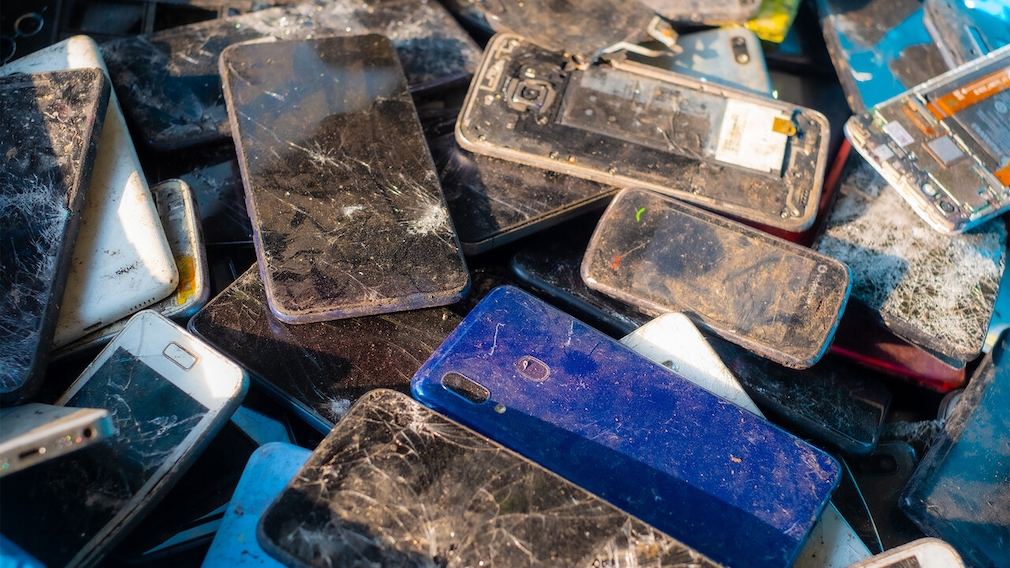
Millions of smartphones end up in drawers or directly in the bin every year after a short period of use. Many components that are still functional are lost in the process.
Deutsche Telekom is now showing just how much potential there is in scrapped devices by $DTE (-0.49%) has now impressively demonstrated with a DSL router in which electronic parts from old cell phones have a second life.
》Strong performance despite old components《
Routers require less high-end power than many people think. Older chips, memory and transistors are perfectly adequate for standard connections.
This is precisely where the "NeoCircuit" prototype comes in, which Deutsche Telekom has developed together with seven partners.
The fully-fledged router is made up of around 70 percent components from discarded smartphones, including processors, memory and transistors.
The NeoCircuit router is not yet encased in a housing so that the electronics remain visible. However, if implemented, a housing made entirely from recycled plastic would be feasible.
In initial practical tests, the router achieves a download speed of around 100 Mbit per second. This is surprising, as the design is based on parts that many would have written off long ago.
At the same time, the prototype reduces CO₂ emissions by half compared to conventional routers.
A clear indication of how great the ecological effect of recycled hardware can be. According to Telekom, the NeoCircuit could also be offered at a competitive price if a sufficiently large number of units were produced.
》Why a router of all things?
Henning Never from Telekom explains why a router was chosen.
"Many of the company's products are digital and therefore intangible. A router, on the other hand, can be touched and is a very simple device from a technical point of view. This makes it possible to replace it with recycled components without any noticeable loss of performance."
The recycled router currently costs more than a classic model. This is mainly due to the time-consuming removal of the components. But Telekom is optimistic about the future.
The Group believes that production costs will fall significantly with larger quantities and that up to 20 percent below the price of a standard router is realistic in the long term. However, smartphones must be easier to open to achieve this. Today, many manufacturers glue their devices because it is cheaper in production and waterproofness serves as an argument.
》What customers get from recycling routers《
The Telekom project could be worthwhile for consumers in several ways. On the one hand, such a router helps to reduce electronic waste and conserve resources. On the other hand, customers benefit financially in the long term: if the price falls due to economies of scale, they save on their purchase while still receiving solid performance and strengthening sustainable production chains at the same time. In addition, the industry consortium consisting of Telekom, Fairphone, Infineon $IFX (-3.6%) and other partners would like to use the NeoCircuit prototype to generate momentum in the market and encourage a rethink in the design of new end devices.
In the future, much more recyclable hardware could therefore be used in German households.
