
$UNH (+0 %)
$DHI (-0,95 %)
$RTX (-0,13 %)
$HAL (+0,14 %)
$MMM (-0,26 %)
$NOC (-0,54 %)
$MSCI (-0,13 %)
$IBKR (+0,78 %)
$ISRG (-0,08 %)
$COF (-0,39 %)
$BN (-0,34 %)
$EQT (-0,03 %)
$ABBN (-1,37 %)
$GEV (+1,17 %)
$T (-4,14 %)
$CME (+0,3 %)
$PM (-0,08 %)
$MCO (-0,34 %)
$BA (-0,19 %)
$UAL (-0,33 %)
$OR (+1,08 %)
$TXN (+0,35 %)
$LRCX (+1,79 %)
$NOW (-0,38 %)
$IBM (-0,42 %)
$TSLA (+0,65 %)
$000660
$018260
$NESN (-1,16 %)
$SAAB B (+0,54 %)
$DSY (+0,48 %)
$NOKIA (+2,42 %)
$ASC (-2,27 %)
$ROG
$NDAQ (-0,38 %)
$DOW (+1,52 %)
$KDP (-0,01 %)
$AAL (+1,57 %)
$LMT (-0,44 %)
$AXP (-1,36 %)
$BX (-0,9 %)
$FCX (+0,49 %)
$SAP (-0,71 %)
$INTC (+1,96 %)
$NEM (-1,38 %)
$FIX (+5,27 %)
SAA
Saab
Stock
Stock
ISIN: SE0021921269
Ticker: SAAB B
SE0021921269
SAAB B
Price
Debate sobre SAAB B
Puestos
226Lun·
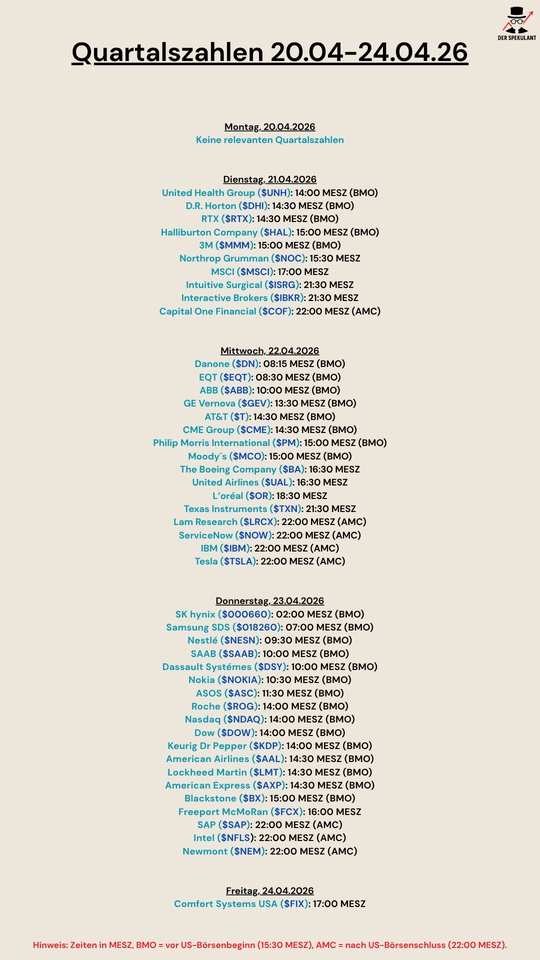
Quarterly figures 20.04-24.04.26
1212

6Lun·
The VanEck Defense Etf
Today we are not going to look at a single share, but take a look in a completely different direction. Into the defense sector.
Of course, the most well-known Etf in this sector, the VanEck Defense UCITS Etf, has caught my eye. Its annual performance is around 50%, and it has already posted a return of around 15% this year.
So today we want to take a closer look at what it really contains and whether an investment would be worthwhile, purely on the basis of the fundamental data.
The fund volume currently amounts to €7.278 billion with annual costs of 0.55%. The Etf is an accumulating fund.
Company distribution:
Palantir Technologies 8% $PLTR (-0,27 %)
RTX Corporation 8% $RTX (-0,13 %)
Thales 7% $HO (-0,13 %)
Leonardo- Finmeccania 7% $LDO (-0,41 %)
Hanwha Aerospace Co Ltd ORD 6% $012450
Elbit Systems 6% $ESLT (-1,43 %)
Saab 6% $SAAB B (+0,54 %)
Curtiss Wright 5% $CW (+0,14 %)
Leidos 4% $LDOS (+2,98 %)
=57%
The remaining 43% is distributed in smaller shares among other companies, such as Planet Labs $PL (+0,86 %) (approx. 2%) or Ondas $ONDS (+0,84 %) (1%).
Country distribution:
USA 49%
South Korea 11%
Europe 30%
Israel 7%
Singapore 3%
1 Palantir Technologies (USA)
Conclusion: Palantir is not a normal stock
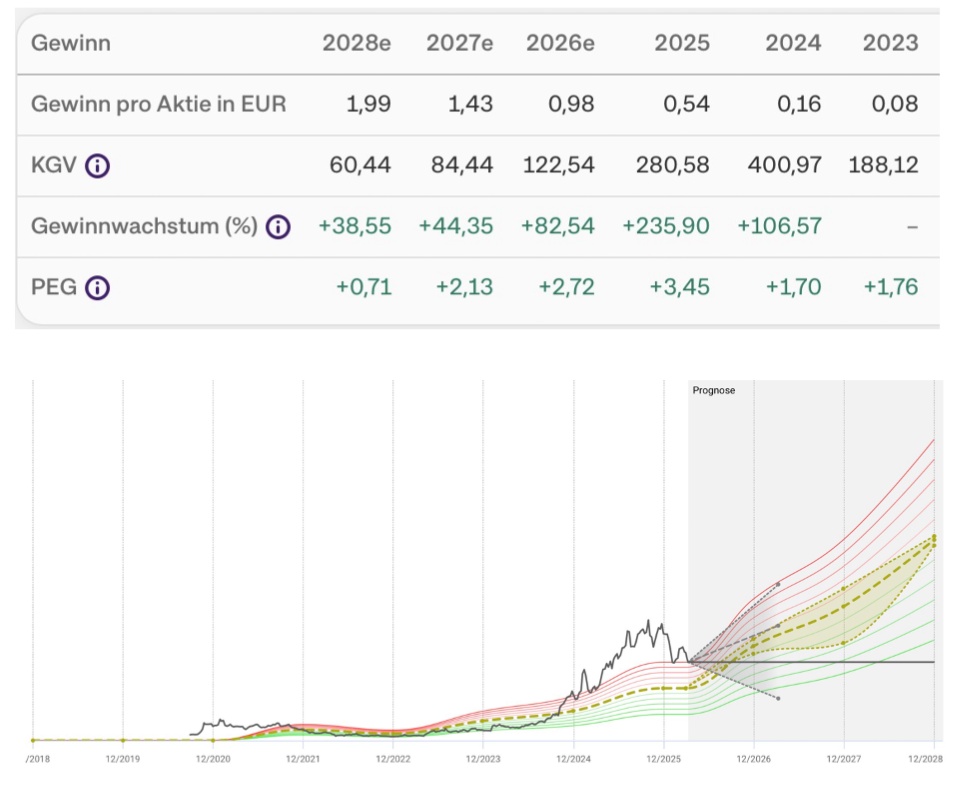
Palantir has developed impressively from a speculative bet to a fundamental force in the S&P 500. The company is more profitable than ever before: massive profit and sales growth meets software margins that are unparalleled in the industry.
But quality has its price on the stock market: this success has already been fully recognized and priced in by the market. With a current P/E ratio of almost 300, the share is extremely expensive and leaves little room for disappointment. Palantir is therefore a highly profitable, exceptional company, but its valuation already anticipates the perfection of the coming years.
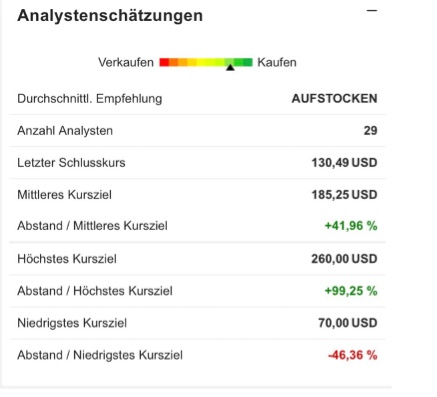
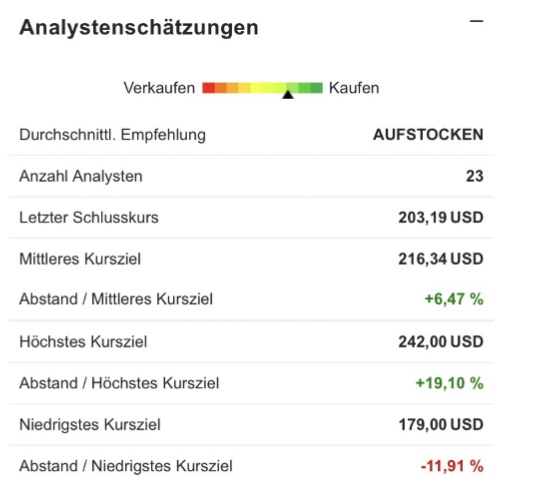
This can also be clearly seen in the analysts' estimates: some say there is still plenty of room for improvement with a price target that is almost twice as high, while others say the fair value is half the current price.
That's why I personally can't really get on board with Palantir. The share as a whole is not a buy for me at the moment.
2. RTX corporation(USA)
Conclusion: RTX - The operational bulwark
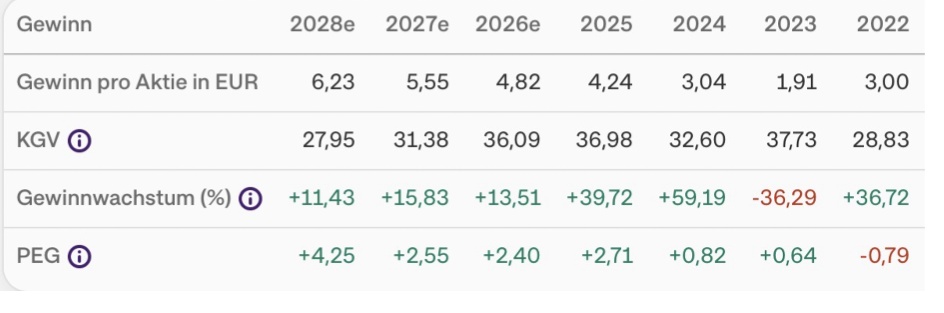
RTX (formerly Raytheon) is the definition of stability and predictability in April 2026. With a gigantic order backlog of USD 268 billion, the business is secured for years to come. The company has solved the technical problems of the past and is now converting its dominant position in aerospace and defense into record-breaking cash flows.
While Palantir thrives on the AI fantasy, RTX delivers the physical reality: a moderate P/E ratio of around 36 compared to Palantir, rising dividends and a fundamental safety that is rare in the current market environment. It is not a speculative high-flyer, but a highly profitable basic investment for the security age.
However, perfection is priced in here with very high valuation premiums, so I am also skeptical.
3. thales (France)
Conclusion: Thales - the European "all-rounder"
Thales established itself as the technological backbone of European defense and digital infrastructure in April 2026. With a record order backlog of over EUR 53 billion, the company offers "visibility" for production that extends well beyond 2028.
- Financial performance: 2025 closed with sales of EUR 22.1 billion (+9% organic) and record cash flow. The target for 2026 is clearly defined: A jump in sales to up to EUR 23.6 billion with an improved EBIT margin of around 12.7 %.
- Strategic breadth: Unlike pure defense companies, Thales benefits from three engines simultaneously:
Defense: massive growth through the modernization of European armies.
Aerospace: The recovery in civil aviation is driving demand for avionics.
Cyber & Digital: Through the integration of Imperva, Thales is now one of the world's largest players in the field of data security - a market that is growing completely independently of military budgets.
With a Kgv of 29, we find the most favorably valued company to date.
4 Leonardo Finmenncania (Italy)
Conclusion: Leonardo - the efficiency champion
Leonardo is the "value tip" among the large defense stocks in April 2026. While competitors such as Rheinmetall or Palantir often struggle with extremely high valuations, Leonardo has done its homework in terms of profitability and is now benefiting massively from the European arms race.
- Financial turnaround: Leonardo has beaten all expectations with its figures for 2025. Sales rose to EUR 19.5 billion (+11%), while operating profit (EBITA) increased by a strong 18%. Particularly impressive: net debt was almost halved, giving the Group massive scope for new investments.
- Strategic focus: Under the new industrial plan (2026-2030), Leonardo is fully committed to digitalization and cyber security. With the "Michelangelo" project (an AI-supported air defense system), Leonardo occupies a lucrative niche in the NATO security architecture.
- Valuation as a trump card: Despite a share price rally of almost 190% since 2024, the share is still "reasonably" valued compared to the sector with a forward P/E ratio of around 27. It is significantly cheaper than many US rivals, although Leonardo has similar growth rates for incoming orders (+15%).
We have now briefly analyzed the 4 largest companies in this ETF, which account for around 30%.
How do you rate these companies? Please take a look at the other companies that have not been presented here.
And of course, are you invested in the etf or do you intend to be?
Would it be an investment case for you or do you think the defense sector is largely overvalued?
@Raketentoni
@Tenbagger2024
@Get_Rich_or_Die_Tryin
@Multibagger etc. ....
+ 5
2121
55 Comentarios
Tenbagger-Capital@Tenbagger-Capital
6Lun
•
1313
•Ver todas las 8 respuestas adicionales

8Lun·
🚀 Munich start-up tests first European hypersonic rocket - technological breakthrough or military game changer?
Introduction
A young German-British company has taken a remarkable step: For the first time first time a prototype of a hypersonic rocket has been successfully successfully tested for Europe. And after just nine months of construction 😳 This test marks an important milestone in an area that has so far been dominated almost exclusively by major powers such as Russia, the USA and China.
_________________________
⚡️ 1st European hypersonic test flight successful 🚀
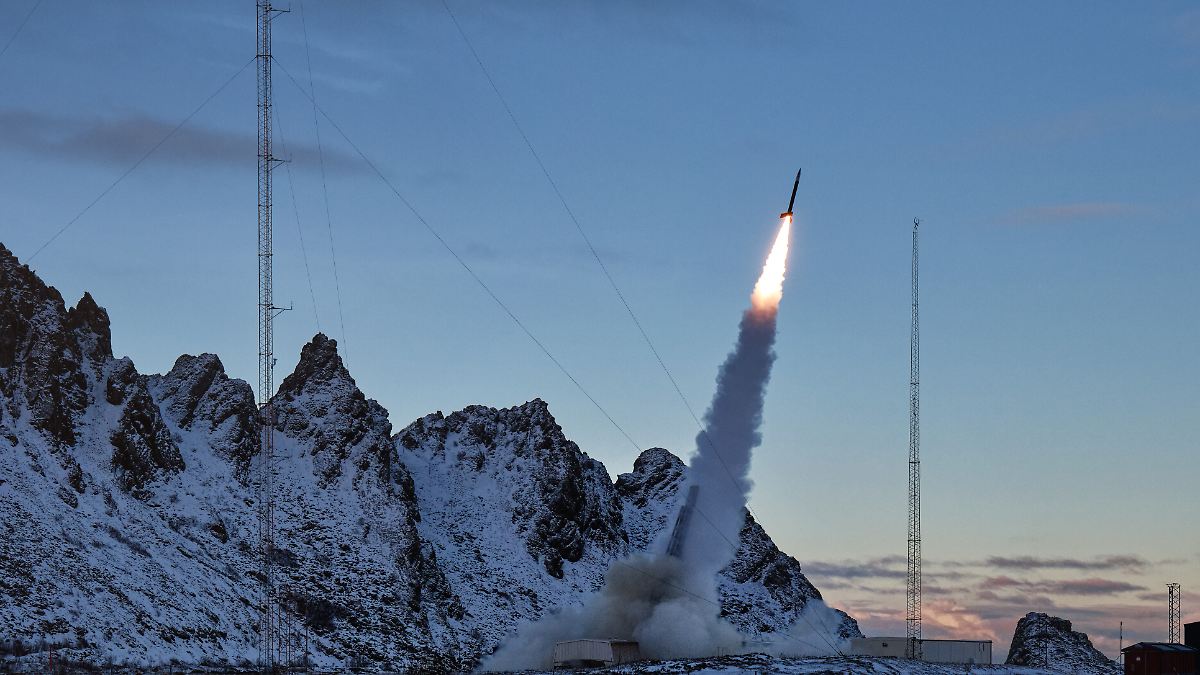
On February 3, 2026, the Munich-based startup Hypersonica launched its HS1 prototype from the Norwegian spaceport Andøya. According to the company:
- The rocket reached hypersonic speeds of over Mach 6 (more than 7,400 km/h).
- It covered a distance of around 300 kilometers.
- The prototype did not carry a warhead - it was purely for flight testing.
- A production-ready version is to be developed by 2029.
Hypersonica has thus achieved an unprecedented success for a privately financed European armaments and aviation project in the hypersonic sector.
_________________________
🧪 2. why hypersonic missiles are relevant
Hypersonic missiles fly extremely fast (faster than Mach 5) and are traditionally difficult to intercept. This gives them:
- ⇨ strategic importance in the field of modern defense systems,
- ⇨ high importance for future military technologies,
- ⇨ Influence on the geopolitical balance of power.
Only a few countries still possess such technology - Russia and the USA have already developed or deployed their own systems. Europe has so far lacked a comparable, sovereign solution.
_________________________
🇪🇺 3. Europe wants to become more technologically independent
The background to the project is not only technical ambition, but also geopolitical strategy:
- Europe is to become more technologically independent from the USA and other major powers.
- Public debates show that security policy and defense technology are seen as part of sovereignty.
- Hypersonica's success could strengthen Europe's role in defense and space technology.
Hypersonica was only founded in 2023, is based in Munich and has a subsidiary in London. The CEO and co-founders emphasize that the technology has long been neglected and that faster development cycles are needed.
_________________________
🧠 4. technical & strategic challenges
Hypersonic missiles are not only fast, but also complex:
- The engine is not the central problem, but
- combining high speed with precise control and stable maneuverability.
- Mach speeds generate enormous thermal loads that require special protection and materials.
Hypersonica wants to address these challenges and carry out further tests and developments in the coming years.
_________________________
👍 5. significance for industry & research
Successful testing is not only a technological step, but can also
- Boost investment in European aerospace
- Boost research networks between universities, start-ups and defense agencies
- Strengthen Europe's presence in a globally strategic technology
Competition and comparison: To date, the USA, Russia and China have also been working on their own hypersonic systems, which have significantly greater ranges. Europe's approach, however, is a fast, private development path, similar to the influence of companies like SpaceX on space development as a whole.
_________________________
$LMT (-0,44 %)
$RYTT34
$BA (-0,19 %)
$GD (-0,38 %)
$LHX (+0,13 %)
$KTOS (-0,29 %)
$SAF (-8,59 %)
$RHM (+0,16 %)
$AM (-0,77 %)
$SAAB B (+0,54 %)
www.n-tv.deMünchner Startup testet erfolgreich Hyperschallrakete
2626
4 Comentarios

8Lun·
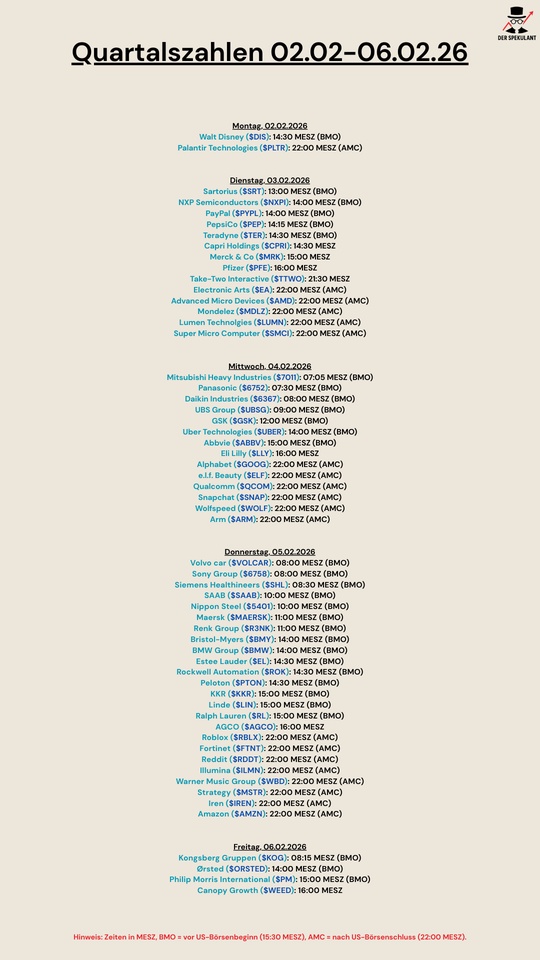
Quarterly figures 02.02-06.02.26
$DIS (-0,4 %)
$PLTR (-0,27 %)
$SRT (+2,3 %)
$NXPI (+1,77 %)
$PYPL (-0,12 %)
$PEP (-0,09 %)
$TER (+2,63 %)
$CPRI (-0,43 %)
$MRK (-0,93 %)
$PFE (+0 %)
$TTWO (-0,03 %)
$EA
$AMD (+1,34 %)
$MDLZ (-0,28 %)
$LUMN (+0 %)
$SMCI (+1,6 %)
$7011 (-1,31 %)
$6752 (-1,21 %)
$6367 (-0,33 %)
$UBSG (-0,49 %)
$GSK (-0,98 %)
$UBER (+0,1 %)
$ABBV (-0,28 %)
$LLY (-0,07 %)
$GOOG (-0,17 %)
$ELF (+0 %)
$QCOM (+0,86 %)
$SNAP (-0,44 %)
$WOLF (+2,11 %)
$ARM (+1,88 %)
$VOLCAR B (-24,63 %)
$6758 (-0,04 %)
$SHL (-0,08 %)
$SAAB B (+0,54 %)
$5401 (-1,64 %)
$MAERSK A (-0,84 %)
$R3NK (-2,95 %)
$BMY (-0,71 %)
$BMW (+0,9 %)
$EL (-0,65 %)
$ROK (-0,12 %)
$PTON (+0 %)
$KKR (-0,73 %)
$LIN (-1,06 %)
$RL (-0,21 %)
$AGCO (-0,4 %)
$RBLX (+0,21 %)
$FTNT (-0,51 %)
$REDDIT
$ILMN (-0,22 %)
$WMG (+0,16 %)
$IREN (+1,62 %)
$MSTR (+1,09 %)
$AMZN (-0,01 %)
$KOG (+0,52 %)
$ORSTED (+0,88 %)
$PM (-0,08 %)
$WEED (-1,97 %)
1919
4 Comentarios
In the current situation, the figures are still exciting. Let's see where the journey takes us.
•
22
•10Lun·
Brazil's Super Gripen fires meteor missile for the first time
This also makes Embraer interesting for me, which is why I remain invested.
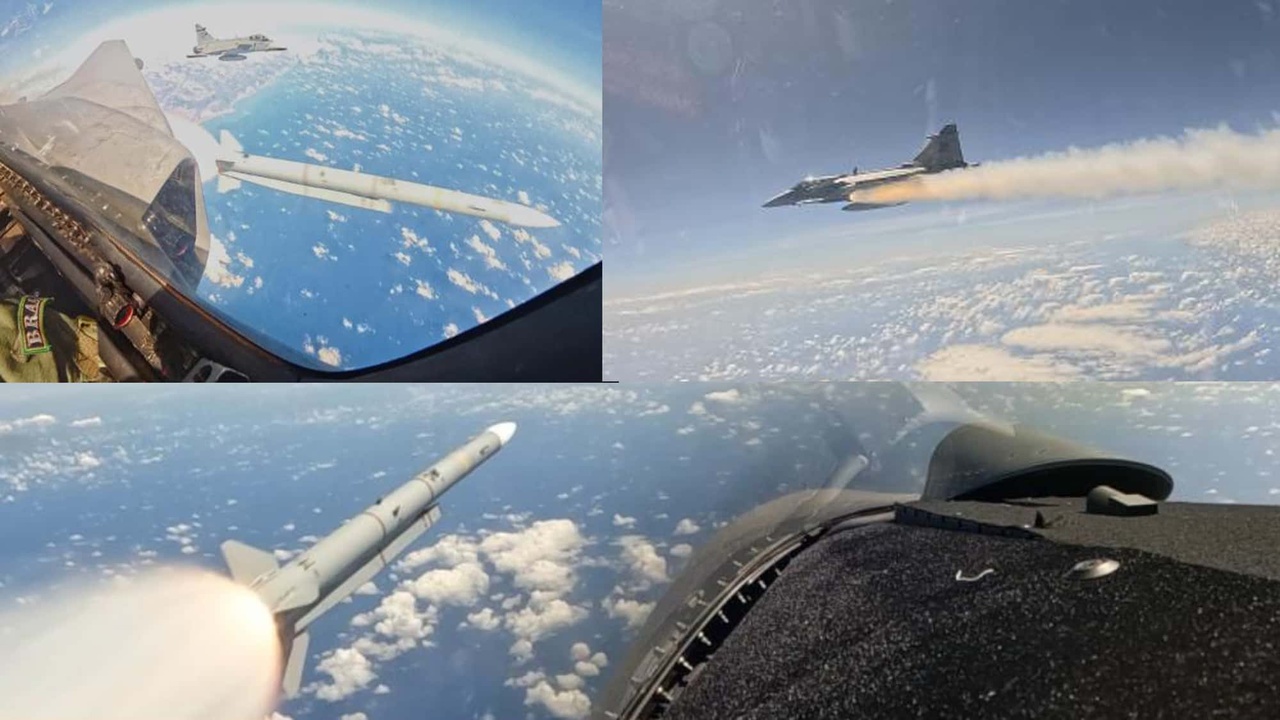
With the Saab JAS-39 Gripen E, known as the F-39 in Brazil, the Brazilian air force has a state-of-the-art fighter aircraft in service. For the first time, a South American Gripen E has now shot down a Meteor air-to-air missile. Its range: at least 100 kilometers.
Brazil is fully committed to the Saab Super Gripen - and even builds them itself at Embraer in its own country. This means that the air force of South America's largest country has one of the most modern fighter aircraft types in the world at its disposal. With the integration of the European air-to-air missile Meteor, the Brazilians are now setting the next milestone: for the first time, a Gripen E from Força Aérea Brasileira (FAB) fired the "Fire and Forget" missile in an official test, which can hit targets at a distance of at least 100, unofficially up to 200 kilometers.
According to the FAB, the test launch took place on Thursday, November 27. The Saab Gripen E aircraft involved were launched from Natal Air Base in the far east of the country. The "victim" for the Meteor was a Mirach 100/5 target drone, which "simulated the flight profiles of a fighter jet and performed maneuvers at high speed and altitude to measure the accuracy of the missile", the Brazilian Air Force writes on its website. This created an "extremely challenging scenario" for both the missile and the aircraft.
The MBDA Meteor air-to-air missile
Under the link ⬇️
https://www.flugrevue.de/militaer/brasiliens-super-gripen-feuert-erstmals-meteor-rakete-ab/
Here is the first super-gripen from Brazil
The Brazilian Air Force will receive a total of 36 Saab Gripen of the new top versions Gripen E and F. 15 of these will be built by Embraer in Brazil. Embraer in Brazil under license. These are the first Gripen ever to come to life outside Sweden. But this is only the beginning.
www.flugrevue.deBrasiliens Super Gripen feuert erstmals Meteor-Rakete ab
11Lun·
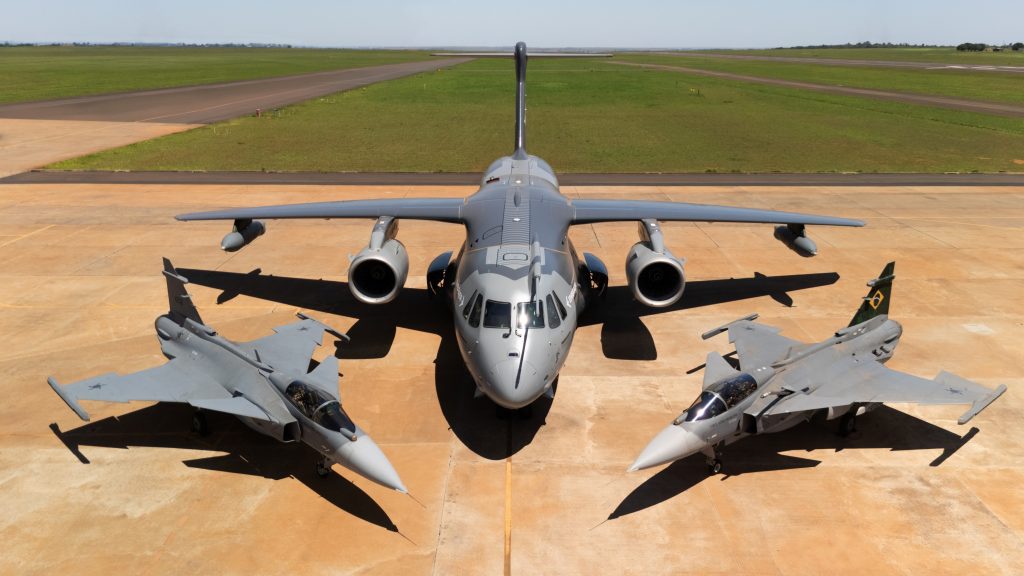
KC-390 Millennium & Gripen E successfully complete aerial refueling
I remain invested in Embraer.
The two aircraft manufacturers Embraer and Saab, in cooperation with the Brazilian Air Force (FAB), have successfully completed the certification flight tests for the aerial refueling of the Gripen E fighter aircraft by the KC-390 Millennium multi-role aircraft.
The test series was conducted at Embraer's facilities in Gavião Peixoto, São Paulo, and coordinated by the FAB's Department of Aerospace Science and Technology (DCTA). This is where the Gripen flight test center is located.
Engineers and test pilots from Saab, Embraer and the FAB took part in the test series. During the tests, various flight configurations, speeds and altitudes were evaluated and the precision of aerial refueling was confirmed. The latest generation fly-by-wire systems of both aircraft contributed to the success of the operation, with the KC-390 producing a favorable wake and the Gripen demonstrating its responsiveness in flight.
Flight tests with KC-390 and Gripen E
The flight test campaign had two objectives. The first was to qualify the Gripen E as an aerial refueling receiver - an important step in validating the fighter's performance, stability and structural integrity throughout the mission.
The second objective focused on verifying the compatibility of both aircraft throughout the KC-390's flight envelope for high-speed refueling in day and night conditions. The aerial refueling of the Gripen E by the KC-390 further enhances the interoperability between these two state-of-the-art aircraft of the latest generation.
"This important milestone confirms the unrivaled qualities of the KC-390 as a tanker aircraft and further strengthens our partnership with Saab and the Brazilian Air Force. In addition, the KC-390's unique multi-mission capability, which allows the aircraft to be converted into a tanker in a matter of hours, provides unmatched flexibility to air forces worldwide," said Walter Pinto Júnior, Chief Operations Officer of Embraer Defense & Security.
"This achievement reflects the high level of integration between the teams involved. The aerial refueling verification is a very important technical milestone for our company as it demonstrates that Gripen E has reached a new operational reach.
The success of this campaign strengthens the strategic partnership between Brazil and Sweden, as well as Brazil's role within the global Gripen program ecosystem," said Mikael Olsson, Head of Flight Test at Saab.
"The air-to-air refueling verification between the KC-390 and the F-39 Gripen represents the success of cross-border cooperation. It is the result of a joint effort where Swedish technology, Brazilian engineering and the operational excellence of the Brazilian Air Force came together," concluded Col. George Luiz Guedes de Oliveira.
Certification expected
The Swedish Military Aviation Authority (SE-MAA) can now verify the Gripen E's air-to-air refueling capability as part of its certification process. This will be followed by the certification process by the FAB's Institute for Industrial Promotion and Coordination (IFI).
These institutions are responsible for the technical analysis and validation of the results, ensuring that both aircraft meet the most demanding international standards.
This test campaign, dubbed "Operation Samaúma" by the FAB and involving around 40 military personnel, makes Brazil one of the few countries capable of developing, testing and fully verifying aerial refueling systems using national technology.
Sources: Embraer & Saab
https://defence-network.com/kc-390-millennium-gripen-e-luftbetankung/
defence-network.comKC-390 Millennium & Gripen E absolvieren Luftbetankung
1010
13 Comentarios
Cool. That also makes sense, after all, they want to offer the flu specifically on the South American market.
•
11
•11Lun·
Saab unveils the world's first fifth-generation submarine
Saab presents the A26, the world's first fifth-generation submarine. According to the Swedish manufacturer, the submarine offers revolutionary capabilities: It can deploy drones, hide on the seabed and thus support NATO operations.
Saab presents fifth-generation submarine
The Swedish defense company Saab has unveiled the world's first fifth-generation submarine. The boat, known as the A26, is designed to offer unparalleled stealth capabilities, flexibility and integration across all operational domains and has been specifically developed to meet the requirements of NATO multi-domain operations.
Also known as the Blekinge class, the submarine marks a significant leap forward in submarine technology. The fifth-generation concept includes not only improved stealth capabilities, but also the ability to seamlessly integrate into modern network-centric warfare. According to a Saab statement, the boat combines traditional capabilities with completely new operational possibilities.
Revolutionary stealth technology
The A26 submarine features balanced multi-domain signature management and Saab's heritage of Baltic Sea stealth technology, making it one of the most difficult submarines in the world to detect. A special feature is its seabed warfare capability: the submarine can deploy unmanned underwater vehicles and special forces, as well as interact directly with the seabed.
The boat can even hide on the seabed - a unique capability made possible by the strong hull without external tanks and the X-rudder configuration. This technology makes the A26 particularly effective at evading anti-submarine warfare. The X-rudder arrangement at the stern not only offers better maneuverability in shallow waters, but also enables precise positioning on the seabed.
Stirling AIP system at the heart
The A26 uses Saab's patented Stirling AIP system, which is vibration-free, quiet and virtually undetectable. The system burns diesel fuel with pure oxygen and enables weeks of underwater travel without surfacing - a capability previously reserved for nuclear submarines.
The Stirling system works on the principle of a closed circuit and generates significantly less heat and noise than conventional diesel drives. This makes the A26 virtually invisible to enemy sonar systems. The technology was developed by Saab over decades and successfully tested in the Gotland class.
Massive delays
Despite the technological advances, the project is struggling with considerable problems. Delivery of the two Swedish A26 submarines has been postponed to 2031 and 2033, at a total cost of 25 billion Swedish kronor (around 2.3 billion euros). The project started in 2015 with planned costs of SEK 8.2 billion (around 945 million dollars) - so the costs have almost tripled.
One reason for the delays is the deteriorating condition of the Kockums shipyard, as no new submarines have been built there since the Gotland class in the 1990s. The shipyard first had to be modernized and the know-how for submarine construction had to be rebuilt. In addition, the complex new systems proved to be more difficult to integrate than originally planned.
Versatile combat capabilities
The A26 is equipped with long-range precision torpedoes and can potentially also carry submarine-launched cruise missiles. The electronic surveillance and data acquisition system enhances the overall effectiveness of kinetic attacks through passive, non-intrusive detection and classification of enemy signals.
Saab offers different variants for export customers: The Pelagic version with a length of 50 meters for coastal missions, the Oceanic version with 65 meters for the Swedish Navy and an Extended Range variant with a length of over 80 meters for long-range missions. Each variant can be adapted to the specific requirements and budget of the respective customer.

winfuture.deSaab stellt das weltweit erste U-Boot der fünften Generation vor
1111
1 Comentario
Well, when they are finished, the Bundeswehr will certainly have implemented digital radio in all its vehicles.
•
88
•1Año·
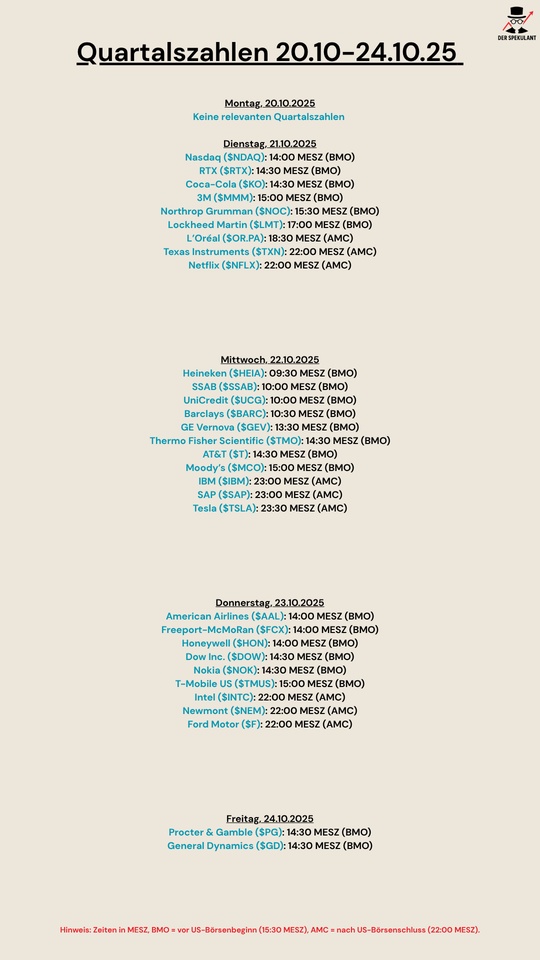
Quartalsberichte 21.10-24.10.25
$NDAQ (-0,38 %)
$RTX (-0,13 %)
$KO (-0,2 %)
$MMM (-0,26 %)
$NOC (-0,54 %)
$LMTB34
$OR (+1,08 %)
$TXN (+0,35 %)
$NFLX (-0,55 %)
$HEIA (-0,21 %)
$SAAB B (+0,54 %)
$UCG (-1,11 %)
$BARC (-1,39 %)
$GEV (+1,17 %)
$TMO (-0,97 %)
$T (-4,14 %)
$MCO (-0,34 %)
$IBM (-0,42 %)
$SAP (-0,71 %)
$TSLA (+0,65 %)
$AAL (-0,7 %)
$FCX (+0,49 %)
$HON (-0,41 %)
$DOW (+1,52 %)
$NOKIA (+2,42 %)
$TMUS (-4,13 %)
$INTC (+1,96 %)
$NEM (-1,38 %)
$F (+0,21 %)
$PG (-1,1 %)
$GD (-0,38 %)
44
1Año·
German government orders 20 additional Eurofighters with new capabilities
$AIR (-1,58 %)
$SAAB B (+0,54 %)
Yesterday, the Bundeswehr commissioned the procurement of 20 new Tranche 5 Eurofighters in a festive ceremony. The contract was signed at the Airbus company in Manching, Bavaria.
As the BMVg writes in a press release, delivery of the fifth and latest variant of the Eurofighter is to begin in 2031. Five aircraft per year are to be completed and handed over to the German Air Force. Delivery is to be completed by 2034. The Bundestag's Budget Committee approved the 3.75 billion euro project, which also includes 52 EJ200 engines, at its meeting a week ago.
According to the BMVg, the new Tranche 5 Eurofighters will be equipped with Saab's Arexis self-protection system in conjunction with future AI capabilities. Further armaments are also planned: These include the integration of the AARGM anti-radar guided missile and the Taurus cruise missile on the Eurofighters for the air force.
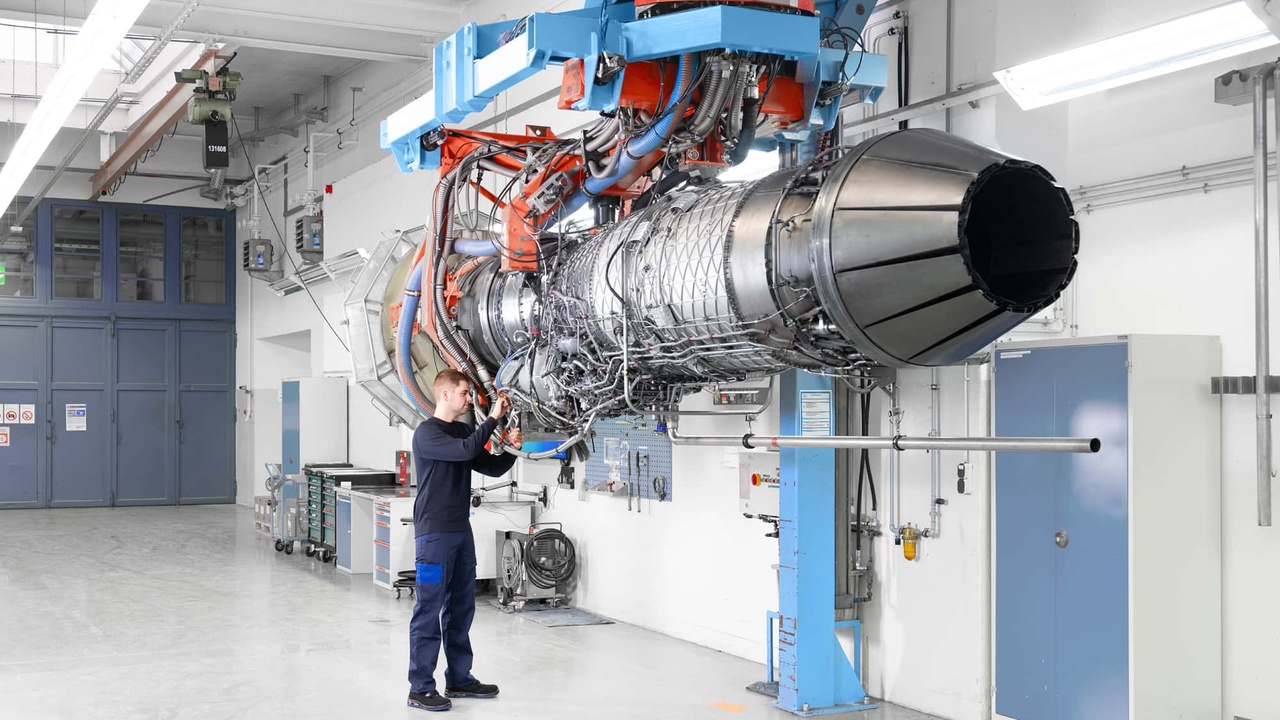
The EJ200 engine is built by EUROJET Turbo GmbH, a consortium consisting of MTU Aero Engines, Rolls-Royce, Avio Aero and ITP Aero. These companies joined forces in 1986 to develop and produce the engine for the Eurofighter Typhoon.
MTU to build EJ200 until at least the 2030s
Now that Germany has ordered 20 Eurofighters, the final assembly line for the engines in Munich is working at full capacity for the next few years.
https://www.flugrevue.de/flugzeugbau/mtu-baut-ej200-bis-mindestens-in-die-2030er-jahre/
$MTX (-4,38 %) . (I am invested here myself)
MTU Aero Engines: One of the four shareholders, with a production share of around 30 percent.
Avio Aero: An Italian aviation company that is part of the consortium
Rolls-Royce: Another major shareholder in the consortium
ITP Aero: A Spanish company that is also part of the consortium.
Dear all, you can find the full article at the link ⬇️
https://www.hartpunkt.de/bundesweher-bestellt-20-zusaetzliche-eurofighter-mit-neuen-faehigkeiten/
www.flugrevue.deMTU baut EJ200 bis mindestens in die 2030er Jahre
1313
5 Comentarios
1Año
Do you also secure your profits?
••
