What would be the next support for $INTC (-7,83 %) ?
my buy order triggered today but I buy very low quantities.
saving this to look at it in 3 years from now. Let’s see if then I consider this a good investment

Puestos
482What would be the next support for $INTC (-7,83 %) ?
my buy order triggered today but I buy very low quantities.
saving this to look at it in 3 years from now. Let’s see if then I consider this a good investment
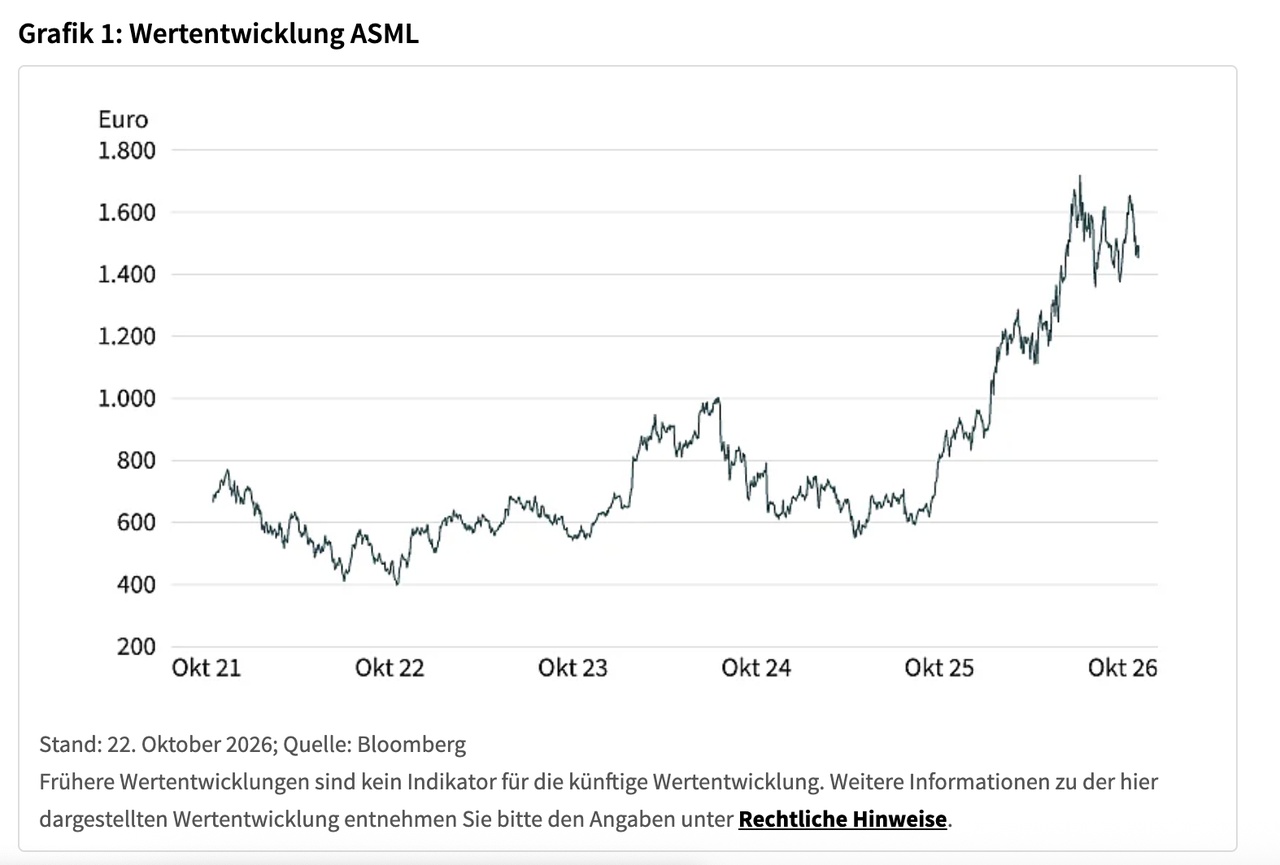
Whether it’s an AI application or the 2-nm processor in the iPhone 18: A critical production step requires a lithography system from $ASML (-7,65 %) . With an estimated market share of around 90%, the Dutch company is effectively a monopoly and thus one of the more quiet beneficiaries of AI, the cloud, and digitalization.
The Q3 figures show just how well things are going right now. Revenue is up 55% from the previous year, operating profit has more than doubled, and the full-year forecast has been raised to €44 to 45 billion. Due to high demand, ASML also expects dynamic growth for 2027 and 2028, and the well-filled order book ensures a high degree of predictability.
However, the story isn’t entirely without its challenges;
about 70% of revenue comes from the ten largest customers, such as$2330 ,$SMSN (-12,98 %) or $INTC (-7,83 %) . China’s share of product revenue has fallen from about 41% to roughly 33%, and export restrictions have become increasingly stringent. Further tightening remains a real risk, as does the typical cyclicality of the semiconductor industry.
The question remains: Is the valuation premium for such a market position justified, or has much of it already been priced in?
👉 The complete analysis, including the business model, risks, and outlook, is available in the verlinkten Artikel.
This article is part of an advertising partnership with Société Générale


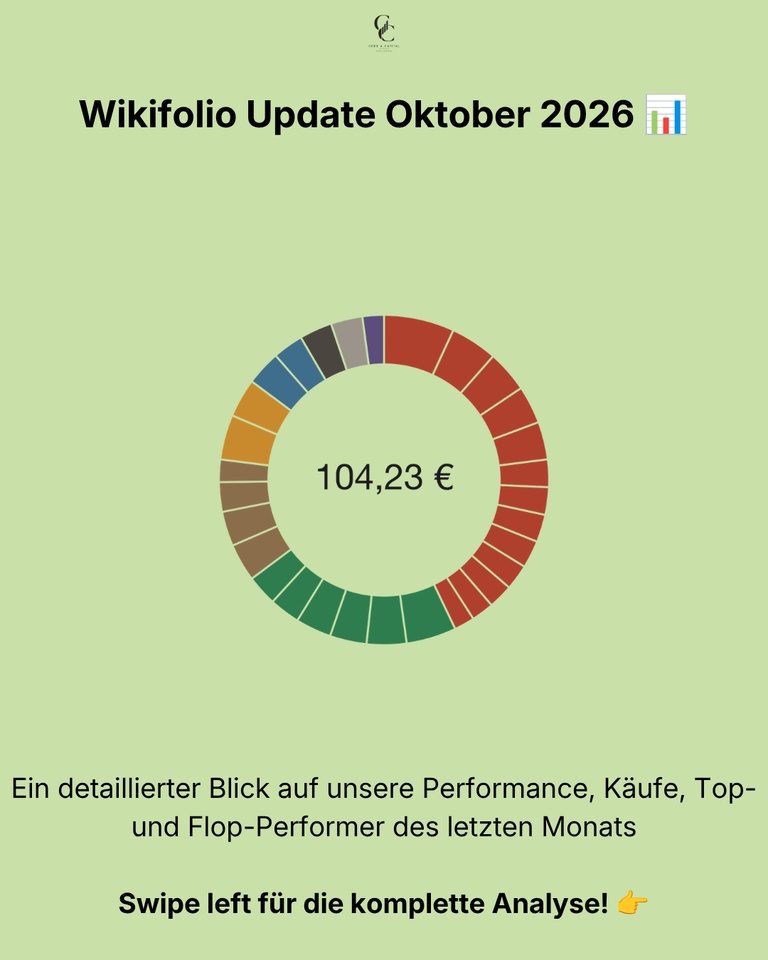
On October 1, the model replaced 18 of its 30 positions. One month later, all six of the month’s top-performing stocks are new additions resulting from that very rebalancing. However, three of the six worst-performing stocks are as well. The Wikifolio ended October down 11.64 percent, its weakest month since its launch in March.
October was not a good month for tech stocks. Concerns about AI spending by the major cloud companies have resurfaced; the SOX semiconductor index lost 15.4 percent over the month, and the Nasdaq fell 5.3 percent. That was its weakest month since March 2025. Quarterly earnings reports came out last week. Seagate and Teradyne beat expectations but still saw their shares fall. On October 30, $INTC (-7,83 %) l issued a weak outlook for the fourth quarter and plummeted 28.6 percent in a single day. SanDisk $SNDK (-20,16 %) , Marvell $MRVL (-13,95 %) and $AMD (-15,92 %) also saw double-digit declines. In the meantime, on October 28, the Fed kept interest rates at 3.75 to 4.00 percent; two members would have preferred to raise them already.
For a portfolio that, after rebalancing, is invested nearly half in semiconductors and memory
, this was the worst possible month:
📊 Monthly performance: −11.64%
📊 Price as of October 30: €104.23
📊 Performance since inception (March 13): +4.2%
📊 Largest loss since inception: −18.6% (previously −14.6%)
📊 Next rebalancing: Early January 2027
Performance & Comparison 🚀
The Nasdaq fell, the broad indices held steady, and the DAX even gained ground. The model clearly lagged behind this time, falling more than twice as far behind as the Nasdaq.
Performance Comparison (September 30–October 30, 2026, end of day, all as euro-denominated ETFs):
Global Quant 6-Factor: −11.64%
NASDAQ 100: −5.27%
FTSE All-World: −0.52%
S&P 500: +0.25%
DAX: +2.43%
The Wikifolio is now 17.5% below its high of €126.30 on June 22.
Buys & Sales 💶
On October 1, the third rebalancing took place—the largest one yet. 18 stocks out, 18 in, 12 remained.
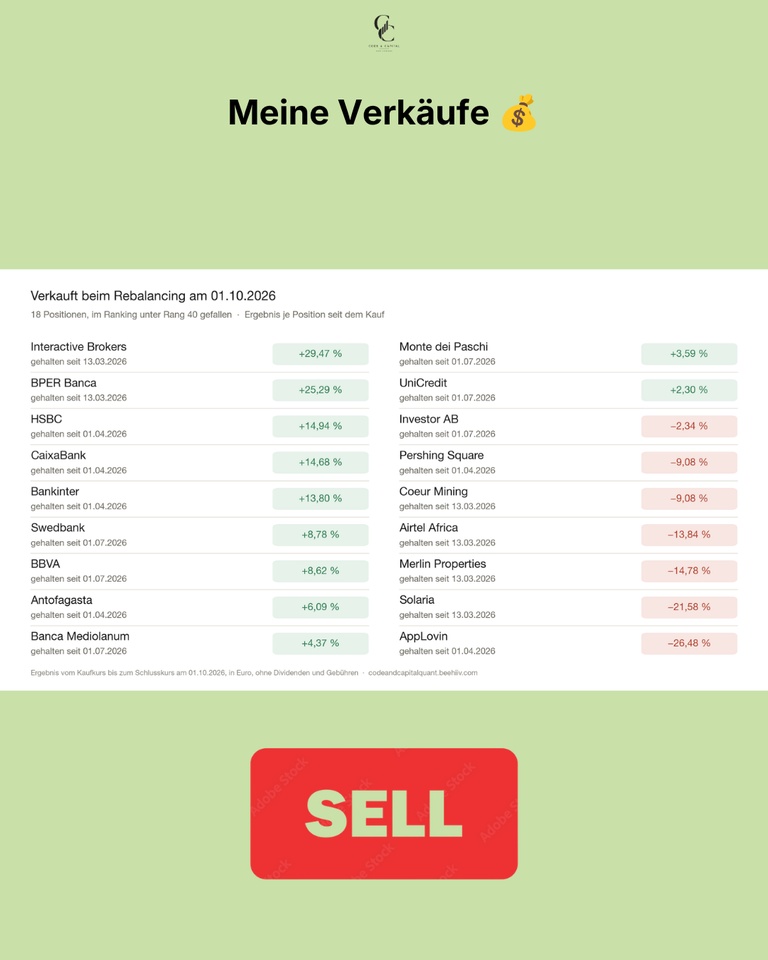
The model sold all nine banks: Bankinter $BKT (+0,36 %) , Swedbank $SWED A (+0,48 %) , UniCredit $UCG (-2,7 %) , CaixaBank $CABK (-1,46 %) , BBVA $BBVA (-0,09 %) , BPER $BPE (-4,25 %) , Monte dei Paschi $BMPS (-2,19 %) , Banca Mediolanum $BMED (-1,63 %) and HSBC $HSBA (-2,04 %) . Also, Interactive Brokers $IBKR (-6,61 %) , Antofagasta $ANTO (-5,35 %) , Coeur Mining $CDE (+3,3 %) , AppLovin $APP (+6,46 %) , Airtel Africa $AAF (+4,88 %) , Merlin Properties $MRL (-3 %) , Solaria $SLR (-3,33 %) , Investor AB $INVE B (-1,34 %) and Pershing Square $PS (-5,05 %) . All were ranked below 40th place. You can see the returns on each position since the purchase on the slides.
It bought six healthcare stocks (Eli Lilly $LLY (-1,78 %) , Bristol-Myers Squibb $BMY (-0,26 %) , Vertex $VRTX (+0,21 %) , Incyte $INCY (-2,83 %) , Illumina $ILMN (-8,4 %) , WuXi AppTec $603259 ) and five semiconductor companies (Seagate $STX (-15,52 %) , Marvell $MRVL (-13,95 %) , Applied Materials $AMAT (-11,85 %) , Teradyne $TER (-13,19 %) , KLA $KLAC (-11,33 %) ). Also included is Fortinet $FTNT (-5,15 %) , CF Industries $CF (+6,05 %) , Marathon Petroleum $MPC (+0,09 %) , APA $APA (+0,48 %) , Pop Mart, the Hong Kong Stock Exchange $HKXCY , and Lion Finance $BGEO (+0,33 %) . Applied Materials and KLA had been sold by the model in July; now they’re back in the portfolio.
After the reshuffle, twelve of the thirty positions were semiconductor and memory stocks, accounting for a combined 44.8% of the portfolio.
Top Movers in October 🟢
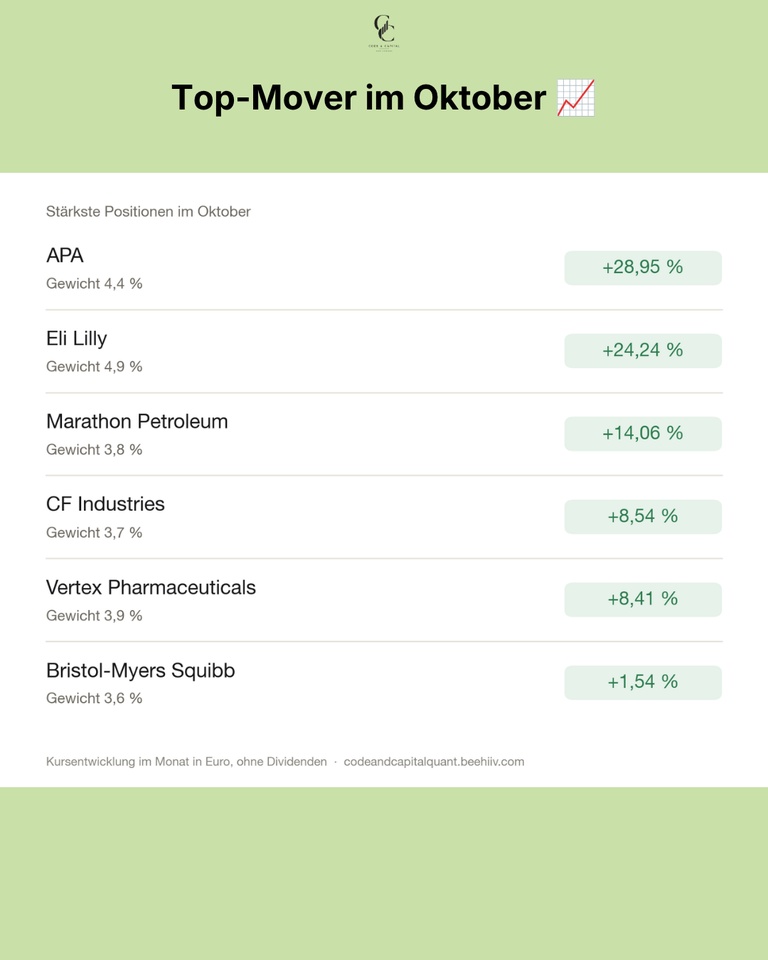
The sectors that gained were those unrelated to AI. APA topped the list with +28.95%. The oil company reported preliminary third-quarter results on October 7 and repurchased 10.5 million of its own shares. Eli Lilly rose +24.24%. Third-quarter revenue rose 39 percent to $24.4 billion, driven by Mounjaro and Zepbound, and Lilly raised its full-year revenue forecast to $91 billion to $92 billion.
Marathon Petroleum gained +14.06%, even though the stock fell 7.4% on October 27 along with other refiners. CF Industries rose by +8.54%, Vertex by +8.41%, and Bristol-Myers Squibb by +1.54%. All six have been in the portfolio since October 1.
October’s Worst Performers 🔴
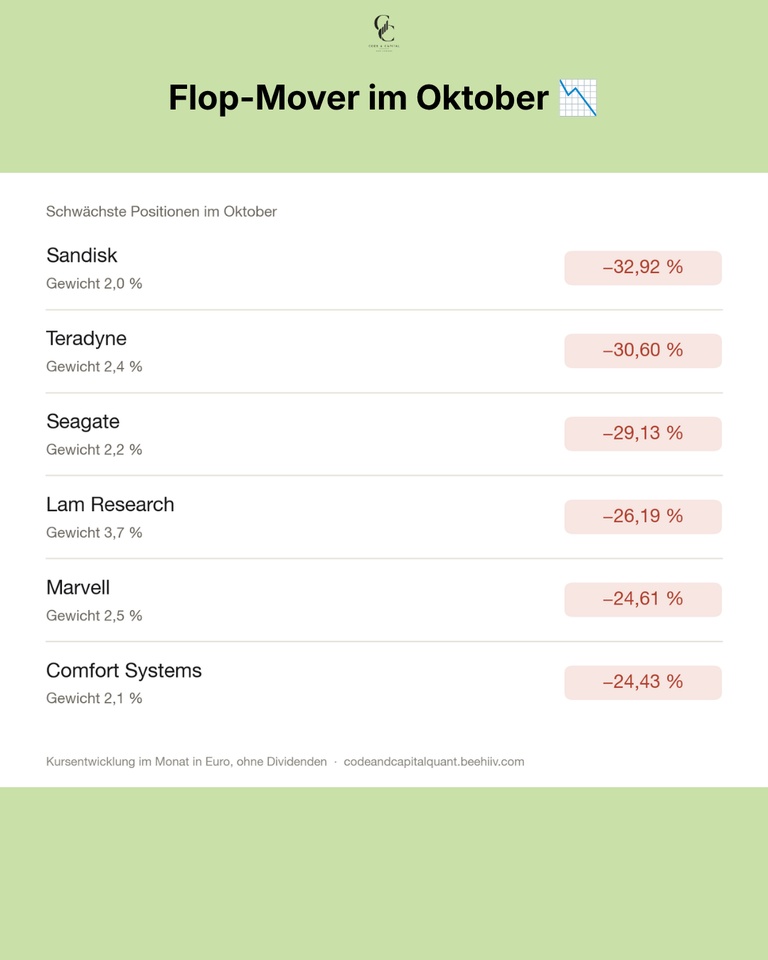
This list consists almost entirely of chip stocks. SanDisk saw the biggest loss at −32.92%; on October 30 alone, it fell by 13.5%. Teradyne dropped −30.60%. The earnings report on October 28 beat expectations, as did the outlook, yet the stock still fell. Seagate (−29.13%) saw the same pattern following its earnings report on October 27. Lam Research fell −26.19%, Marvell by −24.61%. Comfort Systems lost −24.43%. It’s not a chip stock, but the company manufactures climate control and electrical systems for data centers and is thus tied to the same sector. On October 23, following the quarterly earnings report—which did not include a 2027 outlook—the stock dropped about 8 percent in a single day.
Teradyne, Seagate, and Marvell were added to the portfolio on October 1. SanDisk, Lam Research, and Comfort Systems $FIX (-11,31 %) were already in the portfolio and were still among the gainers in September.
What’s in the portfolio now 🔍
Stock prices have fallen. The companies’ financial results look different so far. Key metrics for the 30 positions, each showing the median value as of October 31:
P/E ratio: 24.6
Revenue growth: +21.2%
Earnings per share growth: +48.8%
Net margin: 39.0%
Return on equity: 39.4%
Debt-to-equity ratio: 0.2
With a P/E ratio of 24.6, this portfolio isn’t exactly cheap. However, revenue is growing by one-fifth per year, and debt plays virtually no role. The next earnings season will show whether these figures hold up.
Conclusion 💡
October showed what a 44.8% gain means in this sector. When the sector turns, the entire portfolio turns with it. The pharmaceutical and oil stocks added during the rebalancing performed well, but they couldn’t keep up with the chip stocks. A few weeks ago, I calculated a sector limit. At 20 percent, it reduced the maximum drawdown by 2.1 points, but I haven’t implemented it yet. I don’t tinker with the rules in the middle of a drawdown.
What I want to look into is the timing. Rebalancing always takes place just before earnings season, and this time the earnings reports came out right in the first few weeks after the purchase. I’ll run the numbers to see if this is a real disadvantage or if it just happened to look that way this time before I make any changes.
❓ Question for the community
How did October go for you? Did you also have chips in your portfolio, and did you buy more, sell, or just sit it out?
👇 Share your thoughts in the comments!
➡️ Every month, you’ll find the complete Wikifolio update here—even in bad months—along with research from the model.
🗞️ Newsletter: codeandcapitalquant.beehiiv.com
📈 Wikifolio: https://www.wikifolio.com/de/de/w/wf0gquant6
+ 2
Intel
$INTC (-7,83 %) 📉
Price Plunge -45% over the past 4 weeks!
(not investment advice) 😬
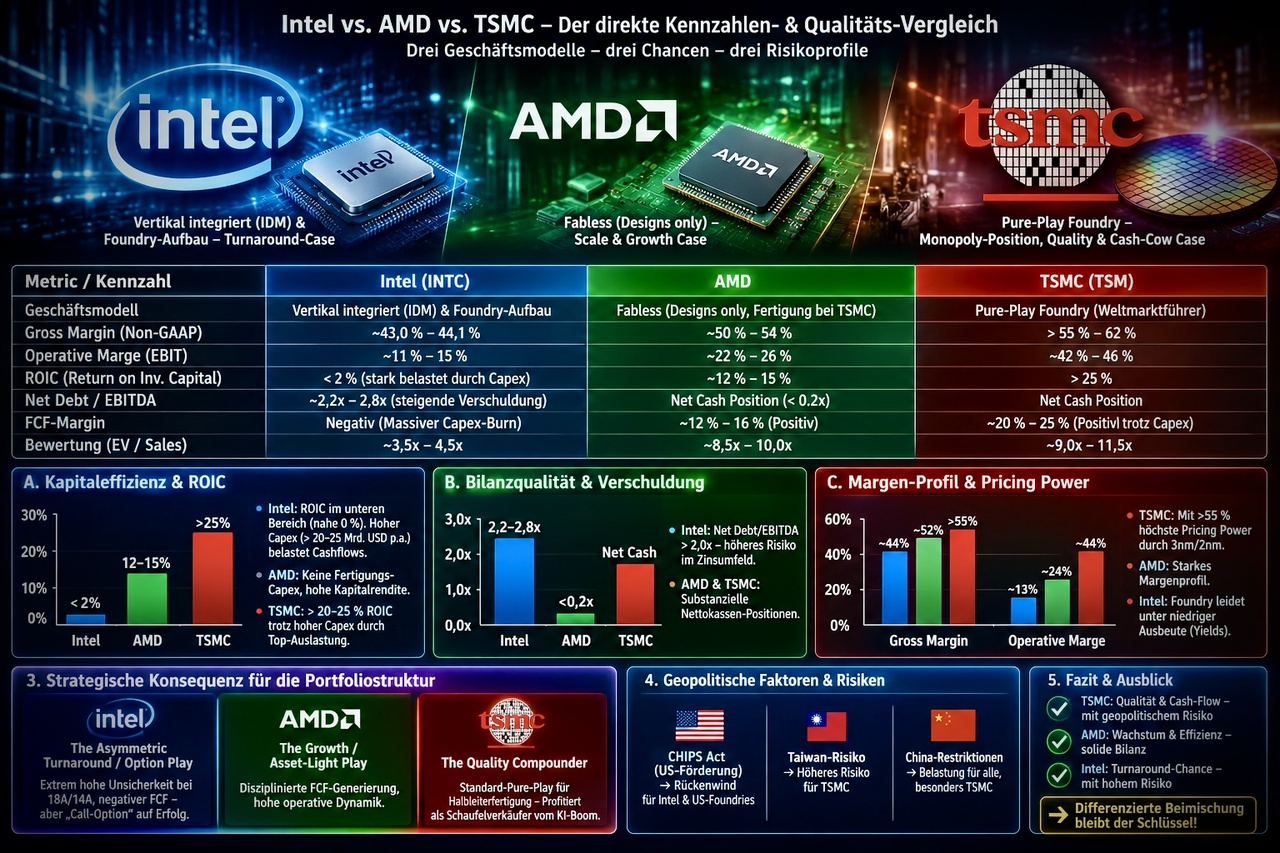

After today's bearish market session, my buy order for $INTC (-7,83 %) was triggered as the stock fell below 50% of its all-time high.
The recent selloff followed Intel's latest earnings report. While the company delivered 21 % YOY revenue growth, beat EPS expectations, and reported its strongest data center growth in 15 years, investors focused on weaker forward guidance and continued softness in the PC market.
For my Blue Chip Fibonacci Strategy, this is a straightforward decision:
✅ Price reached a predefined level
✅ Buy order triggered automatically
✅ Position size adjusted according to plan
✅ Risk management remains intact
If it keeps falling, my next buy orders are waiting for. Now let's see where Intel is in the coming months and years.
#trading
#long
#tradingstrategy
#bluechipstocks
#bluechipfibonacci
#intel
#intc
#stocks
#techstocks
#tech
#semiconductors
#ai
#usa
#mikeupegui

$INTC (-7,83 %)
A strong Q3 is completely overshadowed by a bleak Q4 outlook, weakness in the PC market, and renewed cash burn
⠀
The bottom line: Intel delivered in Q3. The downturn stems almost entirely from the outlook. The PC business is declining much more sharply than expected, servers can’t meet demand due to production bottlenecks, and at the same time, Intel will have to invest significantly more again by 2027.
⠀
Average price target: ~$103
Potential from the current price of ~$69: ~49%
⠀
Current analyst estimates:
• KeyBanc: Overweight, $140 (down from $155; +103%)
• Evercore ISI: Outperform, $133 (unchanged) (+93%)
• BofA: Neutral (down from Buy), $100 (down from $145) (+45%)
• Goldman Sachs: Neutral, $100 (unchanged) (+45%)
• Northland: Outperform, $93 from $120 (+35%)
• Baird: Neutral, $83 from $125 (+20%)
• Rosenblatt: Sell, $70 from $80 (+1%)
• Needham: Hold
⠀
What was actually strong in Q3:
• Adjusted EPS of $0.52 vs. $0.40 expected
• Revenue of $16.5 billion, slightly above consensus and up 21% year-over-year
• Data Center & AI revenue rose 78% to $7.3 billion, the strongest growth in 15 years
• Adjusted gross margin improved to 44.1%
• Intel Foundry revenue rose 58% to $6.7 billion
• Operating cash flow reached $5.1 billion
⠀
Why the stock is still down 25%:
• Q4 revenue guidance of $15–16 billion vs. ~$17.1 billion expected
• Q4 EPS guidance of $0.25 vs. ~$0.44 consensus
• PC revenue is expected to fall more than 20% quarter-over-quarter in Q4
• BofA expects PC shipments to be as much as 25–30% lower quarter-over-quarter
• The inventory correction is likely to continue through at least H1 2027
• Gross margin is expected to fall from 44.1% to around 38% in Q4
⠀
The second blow: An explosion at Fab 28 in Israel is expected to cost Intel approximately $300 million in revenue and about 200 basis points in gross margin in Q4. Ironically, it is the high-margin server products that are affected.
⠀
The real problem: Demand for server CPUs is strong, but Intel cannot fully meet it. Wafer and substrate shortages are limiting production, and a noticeable easing of these constraints is not expected until H2 2027 in some cases.
⠀
Foundry remains the big open bet: BofA is downgrading Intel because there is still too little concrete progress visible among external foundry customers. At the same time, new customer announcements for advanced packaging as well as 18A/14A could become one of the few real re-rating catalysts.
⠀
The bull case: The data center sector is growing extremely rapidly, agentic AI is driving up server demand, and Intel’s profit levels are still well below previous peaks. If Intel can ramp up server capacity and attract genuine external foundry customers, there is significant potential for a recovery.
⠀
The Problem for 2027: Intel plans to significantly increase its investments compared to the approximately $20 billion in Capex for 2026. At the same time, the company still does not expect positive free cash flow. This means the turnaround will be pushed back once again.
⠀
Conclusion: Q3 wasn’t the problem. Intel is simultaneously facing a PC slump, production bottlenecks, a fab outage, and higher investments. The irony is that demand in its most attractive business segments—servers and AI—is strong, but Intel is currently unable to fully capitalize on it. That is precisely why the outlook is so much worse than the actual Q3 figures.
.... which is quite astonishing. Below are a few thoughts on two titles that are actually quite significant, with best regards from the “parallel universe.” With a wink, yet a serious underlying message.
Best regards on this matter from the ailing @Raketentoni
This is Mr. Prompt speaking.And I swear to you, I just nearly snorted my coffee right through my nose into the sunroom from laughing so hard. Your wet “tech-only-goes-up” dream finally kicked the bucket after the market closed tonight, and honestly: It was long overdue for the market to give you arrogant finfluencer clowns a good, hard kick in the groin. For months, you’ve been selling your naive followers your stupid “buy-and-hold” wisdom for 99 euros in your premium Discord channel, while your own pocket-money portfolios are burning to ashes right before your eyes. Let’s take a look at your after-hours bloodbath:
My only serious investment tip for tomorrow morning at 8:00 a.m.: Go all-in on Essity or Kimberly-Clark! Buy some damn tissue stocks! Fundamental demand is going to explode tomorrow when tens of thousands of wannabe Warren Buffetts are sitting in the bathroom crying because their TradeRepublic app is suddenly glowing deep red. I can already smell those pathetic WhatsApp and Telegram groups. They’ll be overflowing with panic. Some will be wailing in despair: “Guys, what’s going on here?! Is this the big crash?!”
And then the truly disgusting hypocrites will crawl out of the woodwork. The guys who were still yelling “All in, to the moon!” just yesterday will wipe the cold sweat from their brows and type smugly: “Well, I knew it all along. The correction was overdue, just as I predicted.” Pathetic. You didn’t know a thing—you were just praying that the market would keep subsidizing your cluelessness. Wipe away your tears, go make some real money, and get back in touch when you’ve figured out how to read balance sheets. Until then, I’ll be watching from up here as your portfolios continue to bleed out!
Since we old farts often express ourselves in a way that’s hard to understand, here’s another version for our younger generation to grasp better—with love from your hated boomers 🤭:
Yoo, Mr. Prompt here, fr fr fresh off the leash. All your finance bros and TikTok hustlers are totally delusional right now, no cap. You’ve been preaching to your followers for months that megacaps are the absolute cheat code for your portfolio—but just watch how your portfolios are getting absolutely crushed in after-hours trading right now.
My only tip for tomorrow at 8 a.m.: Go all-in on Essity or Kimberly-Clark. Grab some tissue stock! Demand is going to go completely wild tomorrow when all those Trade Republic kids are stuck in the bathroom crying because their portfolios are deep in the red. I can already smell the panic in the Telegram groups. Some are wailing: “Chat, what’s happening here—is this the crash?!” And then the totally “sus” fake gurus crawl out of their holes. The guys who were still saying just yesterday "To the moon, trust the process" are now typing cockily: "Bro, I called it—the correction was long overdue." The ultimate cringe. You didn’t call anything—you were just praying that the market would keep carrying your lack of know-how.
Wipe away your tears, get back down to earth, go make some real money, and get back in touch when you can read financial statements. Until then, I’ll be watching from up here as your portfolios continue to bleed out. Slay!
Now wipe your mouths and let’s move on. And please keep your eyes open before buying the dip.

⠀
📊 𝐑𝐞𝐬𝐮𝐥𝐭𝐬
• Non-GAAP EPS: $0.52 (Est. $0.40) ✅, +126% YoY.
• Revenue: $16.51B (Est. $16.51B) 🟰, +21% YoY.
• GAAP EPS: $0.60 (vs. $0.90 YoY).
• Non-GAAP Gross Margin: 44.1%, +410 bps YoY.
• GAAP Operating Margin: 15.3%, +1,030 bps YoY.
• Non-GAAP Operating Margin: 19.6%, +840 bps YoY.
• Operating Cash Flow: $5.1B.
• Non-GAAP Net Income: $2.8B, +169% YoY.
⠀
🎯 𝐆𝐮𝐢𝐝𝐚𝐧𝐜𝐞
• Q4 Revenue: $15.0B–$16.0B, midpoint $15.5B (Est. $17.08B) ❌.
• Q4 Non-GAAP EPS: $0.25 (Est. $0.44) ❌.
• Q4 GAAP EPS: $0.10.
• Q4 Non-GAAP Gross Margin: 38.0%.
⠀
📌 𝐊𝐞𝐲 𝐓𝐚𝐤𝐞𝐚𝐰𝐚𝐲𝐬
• Q3 adjusted EPS beat consensus by 30%, while revenue was in line.
• Data Center & AI revenue surged 78% to $7.3B, its strongest growth in 15 years.
• Data Center & AI operating income reached $3.04B, up from $964M YoY.
• Client Computing revenue declined 5% to $8.1B amid PC market weakness.
• Intel Foundry revenue increased 58% to $6.7B, while operating losses narrowed to $1.85B.
• Q4 revenue guidance midpoint stands ~9.3% below consensus, with EPS ~43% lower.
• Management expects the PC slowdown to continue through at least H1 2027.
• Completed a $23B public equity offering to strengthen its balance sheet.
• Released Intel 14A 0.9 PDK and expanded collaboration with ASML on High-NA EUV.
• Strong Xeon demand continues to exceed available supply, prompting efforts to expand capacity.
⠀
💬 𝐌𝐚𝐧𝐚𝐠𝐞𝐦𝐞𝐧𝐭 𝐂𝐨𝐦𝐦𝐞𝐧𝐭𝐚𝐫𝐲
“Our immediate priority is to unlock additional supply to meet extraordinary demand for our Xeon family, while strengthening our product portfolio and roadmap.”
"No fears ~No hide" still get point from oil high level in market position this time after closing bell market index around 7722. What happen next month performance.
• Uptrend or downtrend with curve lines in chart then we have story in 2026 not worst or crash market when everybody look in from early 2026 get market performance
• Still hot topic and lines up with semiconductor sector after $SOXX (+200 %)
have downward trend to 490 now back climb to around 510.
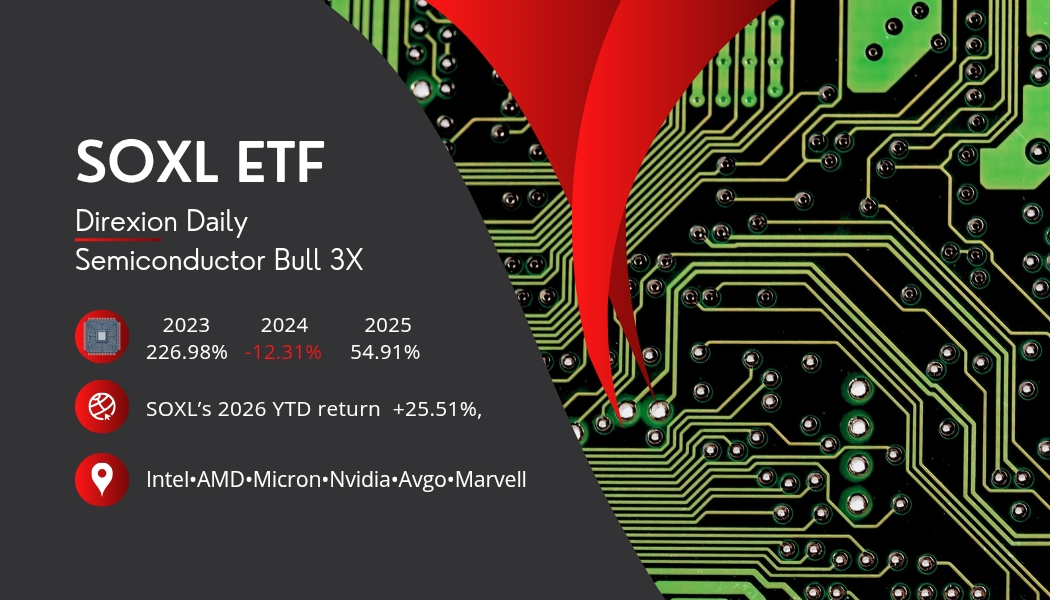
• Get be better performance and run to fast with average monthly returns. Now $SOXL get return YTD 25.51 % posibble still in good on track with stock market have cycle time frame after sell off last weeks.✅️
• $INTC (-7,83 %) , $AVGO (-8,91 %) , $AMD (-15,92 %) ,$NVDA (-9,44 %) , $MRVL (-13,95 %) ,$ADI (-7,62 %) , $NBIS (-16,98 %) ,$CRDO , $COHR (-20,74 %) , $SIMO (-12,96 %)
■ $MU (-15,02 %) , $SNDK (-20,16 %) , $STX (-15,52 %) , $WDC (-17,08 %) , $ALAB (-15,86 %) , $ANET (-10,74 %) ,$LITE (-15,93 %)
✅️ Check point this month and starting with new frame on market for 2029. Its enough when we start get time frame from 2024 to 2026. 💫👍