Oppenheimer calls SpaceX the "$2T elephant in the room" for telecom as its Qualcomm partnership and $8B spectrum deal push Starlink toward nationwide 5G.
$SPCX (-0,55 %)
$QCOM (+0,11 %)
$TMUS (+1,34 %)
$VZ (+0,98 %)
#SpaceX
#Starlink

Puestos
63Oppenheimer calls SpaceX the "$2T elephant in the room" for telecom as its Qualcomm partnership and $8B spectrum deal push Starlink toward nationwide 5G.
$SPCX (-0,55 %)
$QCOM (+0,11 %)
$TMUS (+1,34 %)
$VZ (+0,98 %)
#SpaceX
#Starlink
What are the current key metrics for the Telekom stock?
The Telekom stock is trading at 24.68 EUR with a 2026e P/E ratio of approximately 11.2, adjusted earnings per share of 0.58 EUR in the second quarter, and a dividend yield of approximately 4.0%.
Key FigureValueDate
Price (XETRA: DTE), closing price
24.68 EUR (−8.0% for the day)
Oct. 9, 2026
52-week high
34.35 EUR
Feb. 2026
52-Week Low
23.54 EUR
June 30, 2026
Distance from 52-Week High
approx. −28%
Oct. 9, 2026
Distance from 52-Week Low
approx. +5%
Oct. 9, 2026
Market Capitalization
approx. 118 billion EUR
Oct. 9, 2026
Revenue Q2 2026
29.9 billion EUR (+4.4%)
August 6, 2026
Adjusted EBITDA AL Q2 2026
11.8 billion EUR (+7.5%)
August 6, 2026
Adjusted Free Cash Flow Q2 2026
5.0 billion EUR (+3.1%)
August 6, 2026
Adjusted Earnings Per Share Q2 2026
0.58 EUR (+12.7%)
August 6, 2026
Consolidated Net Income Q2 2026
2.45 billion EUR (−6.3%)
August 6, 2026
2026 Forecast
Adjusted EBITDA approx. 47.5 billion EUR, Adjusted Free Cash Flow approx. 20.0 billion EUR (raised), Adjusted EPS approx. 2.20 EUR
August 6, 2026
P/E Ratio 2026e (Based on: EPS target of EUR 2.20, our own calculations)
approx. 11.2
October 9, 2026
Net financial liabilities, including leases
EUR 138.4 billion (+9.4% year-over-year)
June 30, 2026
2025 dividend / yield
EUR 1.00 (+11%) / approx. 4.0%
Oct. 9, 2026
Share buyback 2026
up to EUR 2 billion
Feb. 2026
Stake in T-Mobile US
54.2%
June 30, 2026
Analyst Ratings (finanzen.net)
8 firms: 7 Buy, 1 Hold, 0 Sell
Oct. 9, 2026
Average Price Target (7 targets, own calculation)
34.13 EUR (range 27.50–40.00 EUR), approx. +38%
Oct. 9, 2026
WKN / ISIN / Ticker
555750 / DE0005557508 / DTE
—
Next Report (Q3)
November 5, 2026
—
What news is currently driving the Telekom stock?
The most important news regarding the Telekom stock from the past few weeks at a glance:
Date | News | Details | Assessment
November 5, 2026
Next Event: Third-Quarter Results
Telekom will release its Q3 results on November 5. The focus will be on free cash flow, customer growth at T-Mobile US, and statements regarding the competitive landscape.
Watch
October 9, 2026
Share Price Plunge: Telekom Closes Down 8.0%
The stock falls to 24.68 EUR, its lowest level since early July. T-Mobile US loses about 12%, while AT&T and Verizon drop about 10%. European telecom stocks such as Orange, Telefónica, Vodafone, and BT also decline, while cell tower operators rise.
Alert
October 8, 2026
SpaceX purchases 800 MHz spectrum from Grain Management
Up to 14 MHz of paired spectrum that Grain had received from T-Mobile US in August (in exchange for cash and 600 MHz spectrum). The price has not been disclosed; the FCC must approve the deal. Musk calls it the final, crucial piece of the puzzle for a nationwide network. That same week, the FCC approves up to 15,000 additional Starlink satellites.
Bearish
Oct. 5–7, 2026
Analysts Confirm “Buy” Ratings Ahead of the Shock
Goldman Sachs lowers its price target from 40 to 38 EUR (Buy); Deutsche Bank sets it at 40 EUR (Buy); UBS at 35.10 EUR (Buy). These ratings were issued before the October 9 price plunge.
Bullish
October 5, 2026
AI Investor Day in Bonn
Telekom demonstrates how AI is expected to boost growth, efficiency, and quality. The event page does not provide specific figures on AI revenue or cost savings.
Watch
September 25, 2026
Bernstein downgrades to Market Perform
Price target lowered from 37 to 28.10 EUR. A merger with T-Mobile US would make strategic sense, but the benefits depend on price, financing, and corporate structure.
Bearish
September 2, 2026
Report: Elliott takes a stake in Telekom
According to reports, Elliott is demanding that the company abandon a merger with T-Mobile US (reported value of approximately $300 billion) and undertake larger share buybacks. No official statement was available.
Watch
August 6, 2026
Q2 Results: Free Cash Flow Outlook Raised
Revenue: EUR 29.9 billion (+4.4%), adjusted EBITDA AL: EUR 11.8 billion (+7.5%), adjusted EPS: EUR 0.58 (+12.7%). The free cash flow outlook rises to approximately 20.0 billion EUR, following an adjustment at T-Mobile US. Net income −6.3%, net debt 138.4 billion EUR.
Very bullish
July 3, 2026
Starlink concerns weigh on the stock
The stock falls to 24.89 EUR; UBS warns of a risk from satellite internet that is barely priced in. On June 30, the stock hit a 52-week low of 23.54 EUR.
Bearish
What does Deutsche Telekom do—and how does it make its money?
Company Description
Deutsche Deutsche Telekom (ISIN: DE0005557508, WKN: 555750) is headquartered in Bonn and led by CEO Tim Höttges. The German federal government is the largest single shareholder, holding 28.6% as of the end of June, including KfW. The business is divided into four segments. In the second quarter of 2026, the group generated revenue of 29.9 billion EUR and adjusted EBITDA AL of 11.8 billion EUR.
The four segments—and how Telekom specifically generates revenue:
U.S. (T-Mobile US): Mobile services for residential and business customers. In the second quarter, service revenue totaled $19.0 billion (+8.9%), and adjusted EBITDA AL was $9.3 billion (+12.1%), with 34.7 million postpaid accounts. Telekom holds a 54.2% stake and is thus directly affected by competition in the U.S.—which is precisely where SpaceX is making its move. Germany: Mobile, landline, broadband, and fiber-optic services. In the first quarter, the segment generated EUR 6.3 billion in revenue; over 13 million households can be connected to the fiber-optic network, and the FTTH penetration rate rose to 17.1%. In the second quarter, Telekom lost approximately 20,000 customers in its broadband business. Europe: Mobile, landline, and TV services in the European subsidiaries, with revenue of EUR 3.1 billion and EBITDA of EUR 1.2 billion in the first quarter. ALT-Systems: IT and digitalization solutions for business customers, with first-quarter revenue of EUR 1.0 billion and order intake of EUR 994 million
Fundamental Analysis: How Much of a Threat Is SpaceX Really to Telekom?
Fundamental Analysis of Telekom Stock (as of October 12, 2026)
Minimal in the short term, but not off the table in the long term: According to Bernstein, the spectrum purchase does not oblige SpaceX to build a nationwide network, and JPMorgan sees only limited short-term risk due to time, infrastructure, and capital requirements. Nevertheless, the market reaction shows that investors are pricing in a new competitor in the U.S. market.
Here’s what the deal entails: SpaceX is purchasing Grain Management’s nationwide 800 MHz portfolio, consisting of up to 14 MHz of paired spectrum. Grain had acquired it from T-Mobile US in August in exchange for cash and 600 MHz spectrum. The price has not been disclosed, and the FCC must approve the deal. At the same time, the FCC approved up to 15,000 next-generation Starlink satellites that same week. Meanwhile, T-Mobile US is collaborating with Starlink on satellite messaging via T-Satellite; that partner is now becoming a potential competitor.
Valuation and Debt: Based on the adjusted EPS target of approximately 2.20 EUR, the P/E ratio stands at around 11.2. This is low, but for telecom stocks, it is often the price paid for high debt: Net financial liabilities, including leases, rose to EUR 138.4 billion (+9.4% year-over-year). Consolidated net income fell by 6.3% to EUR 2.45 billion in the second quarter, partly because one-time items were excluded from adjusted earnings.
Cash Flow and Dividends: Adjusted free cash flow (AL) stood at EUR 5.0 billion in the second quarter (+3.1%); Telekom expects approximately EUR 20.0 billion for 2026. The dividend for 2025 is 1.00 EUR (+11%); the share buyback program for 2026 amounts to up to 2 billion EUR. Investors looking at the dividend will also find Münchener Rück Aktie a dividend play following a pullback.
Corporate Structure: According to reports, Telekom is exploring a closer alliance with T-Mobile US. Bernstein considers this strategically sound but downgraded the stock to “Market Perform” at the end of September and lowered the price target from 37 to 28.10 EUR because the price, financing, and structure remain unresolved. According to reports, Elliott opposes a merger and is calling for larger buybacks.
AI as a Lever: On October 5, Telekom demonstrated at its AI Investor Day in Bonn how AI is expected to drive growth and efficiency. My analysis of how the stock market evaluates AI-related stories is available at SAP Aktie.
Telekom Stock Price Targets and Forecast for 2026
How is the Telekom stock price performing? (As of October 12, 2026)
According to finanzen.net, the average price targets for Telekom stock are 34.13 EUR (our own calculation based on seven targets, ranging from 27.50 to 40.00 EUR), about 38% above the current price of 24.68 EUR, and 7 out of 8 brokerages recommend buying. Timing is key: Most of these targets were set before the SpaceX shock. Deutsche Bank cites 40.00 EUR (Buy, Oct. 6), Goldman Sachs 38.00 EUR (Buy, lowered from 40.00 EUR on Oct. 5), Berenberg at 35.20 EUR (Buy, Oct. 1), UBS at 35.10 EUR (Buy, Oct. 7), and Barclays at 35.00 EUR (Overweight, Sept. 3). Bernstein (Market Perform, 28.10 EUR) and JPMorgan (Overweight, 27.50 EUR, Sept. 3) are more cautious. You can also see just how widely price targets can vary with Porsche Aktie.
Key price levels:
52-week high: 34.35 EUR (February 2026)Current price: 24.68 EUR (closing price on Oct. 9, 2026, daily low of 24.61 EUR)First resistance level: approx. 25.30 EUR (closing price on July 2, upper end of the July range)Second resistance: approx. 26.15 EUR (closing price on July 10) to 26.88 EUR (price on September 25, shortly before the crash)Third resistance level: approx. 28.77 EUR (September high on September 2)Year-to-date low: 23.54 EUR (June 30, 2026), only about 5% below the current priceAnalysts’ price targets: Average 34.13 EUR, Deutsche Bank 40.00 EUR, Goldman Sachs: 38.00 EUR, Berenberg: 35.20 EUR, UBS: 35.10 EUR, Barclays: 35.00 EUR, Bernstein: 28.10 EUR, JPMorgan: 27.50 EUR Critical support level: Closing prices below the yearly low of 23.54 EUR would mark a new 52-week low if there is no technical support below that level; prior to that, the daily low from October 9 (24.61 EUR) serves as the final support level
Chart Analysis
The price action shows how quickly the picture has changed: From the 52-week high of 34.35 EUR in February, the stock fell to the yearly low of 23.54 EUR on June 30, recovered to 28.77 EUR by early September (September 2) and then slipped back to EUR 24.68 following the SpaceX shock. The annual low of 23.54 EUR is only about 5% below that level. The outlook for 2026 hinges on the Q3 results on November 5 and the FCC’s decision on the spectrum deal.
I can well imagine that the Telekom stock will turn upward again around 23.50 EUR, even if only as high as 26.50 EUR. Beyond that, a potential rise to 29.50 EUR is even possible. Overall, however, the stock remains under pressure. If it fails to hold at 23.50 EUR, another wave of selling is likely.
Conclusion: Should you buy Telekom stock after the SpaceX shock, or wait and see?
My assessment: Wait and see
Should you buy Telekom after the SpaceX shock? The shock is real on the stock market, but has not yet materialized in the company’s operations: Adjusted EBITDA AL is growing, the free cash flow outlook has been raised, the dividend yield is approximately 4.0%, and 7 out of 8 analysts recommend buying. The shock will only become lasting if SpaceX actually turns the spectrum into a network and customers start leaving T-Mobile US. Just how quickly a single trigger can turn an entire stock around is demonstrated by Hensoldt Aktie: All it took was a single cautious statement from management; at Telekom, a report about a spectrum purchase was enough.
Those who believe in the company’s fundamentals will find a price of 24.68 EUR—about 28% below the high—an average analyst target of 34.13 EUR, and a dividend yield of approximately 4.0%. Those who remain cautious will wait for the earnings report on November 5 and the FCC decision, and watch to see if the price holds the yearly low of 23.54 EUR.
✅ Opportunities
⚠️ Risks
FAQ: Frequently Asked Questions About the Telekom Stock
Is the Telekom stock a buy in 2026?
Seven out of eight firms listed on finanzen.net recommend buying; only Bernstein rates it “Market Perform.” The average price target is EUR 34.13, which is about 38% above the current price of EUR 24.68. However, this is countered by the SpaceX shock, which caused an 8.0% drop on October 9; a price roughly 28% below the 52-week high of 34.35 EUR; and the fact that most price targets date from before the shock.
Why did the Telekom stock drop?
The trigger was the October 8 announcement that SpaceX was purchasing a nationwide 800-MHz spectrum package from Grain Management, which Grain had acquired from T-Mobile US in August. Musk called it the final, crucial piece of the puzzle for a nationwide mobile network. T-Mobile US lost about 12%; Telekom, as the parent company (54.2% stake), closed 8.0% lower on October 9 at 24.68 EUR, its lowest level since early July.
What is the price target for Telekom stock?
The average price target is EUR 34.13 (our own calculation based on seven targets listed on finanzen.net, ranging from EUR 27.50 to EUR 40.00). Deutsche Bank cites EUR 40.00, Goldman Sachs EUR 38.00, Berenberg EUR 35.20, UBS EUR 35.10, Barclays EUR 35.00, Bernstein EUR 28.10, and JPMorgan EUR 27.50. Compared to the current price of 24.68 EUR, the average represents an upside potential of approximately 38%.
What is the forecast for the Telekom stock in 2026?
Telekom expects adjusted EBITDA AL of approximately 47.5 billion EUR for 2026, free cash flow AL of approximately 20.0 billion EUR (raised in August from more than 19.8 billion EUR), and adjusted earnings per share of approximately 2.20 EUR. Based on this, the P/E ratio stands at around 11.2. Whether the stock reaches its price targets depends primarily on the competitive landscape in the U.S. and on the Q3 results to be released on November 5.
When will Telekom release its next earnings report?
According to the financial calendar, Telekom will publish its Q3 2026 results on November 5, 2026, its full-year results on February 25, 2027, and the annual shareholders’ meeting will take place on April 14, 2027 (all dates are tentative).
How much is Telekom’s dividend?
For 2025, Telekom is paying EUR 1.00 per share, 11% more than in the previous year (EUR 0.90). At a share price of EUR 24.68, this corresponds to a dividend yield of approximately 4.0%. Telekom distributes 40 to 60% of its adjusted consolidated net income per share.
How does Telekom make money?
Telekom generates revenue from mobile communications, landline and broadband services, fiber optics, business solutions, and IT services. It is organized into the following segments: Germany, the U.S. (T-Mobile US), Europe, and T-Systems. In the second quarter of 2026, the Group generated revenue of 29.9 billion EUR, and adjusted EBITDA AL was 11.8 billion EUR.
What does the SpaceX deal mean for T-Mobile US and Telekom?
According to Bernstein, the acquisition does not obligate SpaceX to build a nationwide network; JPMorgan sees only limited short-term risk due to time, infrastructure, and capital requirements. The deal still requires FCC approval, and the purchase price has not been disclosed. In the long term, a new competitor will emerge in the U.S. market, although T-Mobile US is also partnering with SpaceX on satellite messaging via T-Satellite.
Is Telekom planning a merger with T-Mobile US?
According to reports, Telekom is exploring a closer relationship with T-Mobile US, perhaps through a holding company; this has not been officially confirmed. According to reports, Elliott has acquired a stake in Telekom; it opposes the merger and is calling for larger share buybacks. Bernstein considers a merger strategically sensible but believes the benefits depend on price, financing, and corporate structure.
Do you think Elon Musk can $DTE (+2,34 %) and take market share $TMUS (+1,34 %) ?

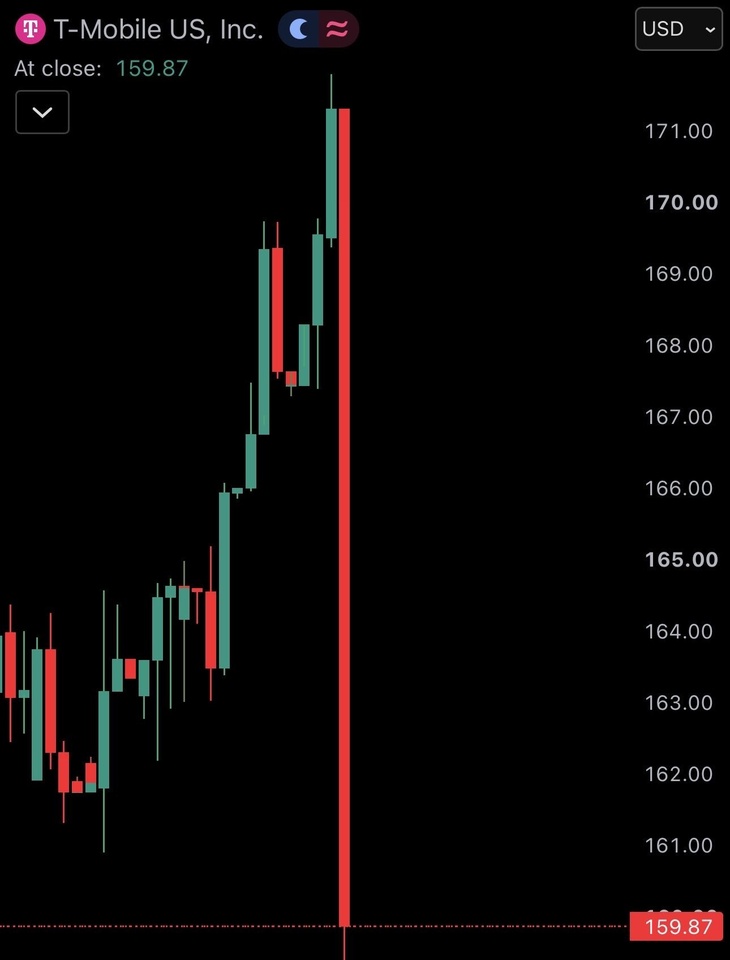
AT&T, Verizon and T-Mobile stocks all crash over 7% after Elon Musk's SpaceX $SPCX announces plans to turn Starlink into major US mobile carrier. $TMUS (+1,34 %)
$T (+1,8 %)
$VZ (+0,98 %)
$SPCX
⠀
• Elon Musk calls the approval the “last missing piece of the puzzle” for SpaceX’s cellular coverage.
• Following SpaceX’s spectrum purchase, U.S. telecom stocks come under heavy pressure.
• $VZ (+0,98 %) Verizon: -5.1%
• $T (+1,8 %) AT&T: -5.8%
• $TMUS (+1,34 %) T-Mobile US: -5.8%
⠀
Deutsche Telekom $DTE (+2,34 %) could come under pressure, particularly due to its majority stake in T-Mobile US. In the long term, Starlink could increase competitive pressure on traditional mobile carriers.
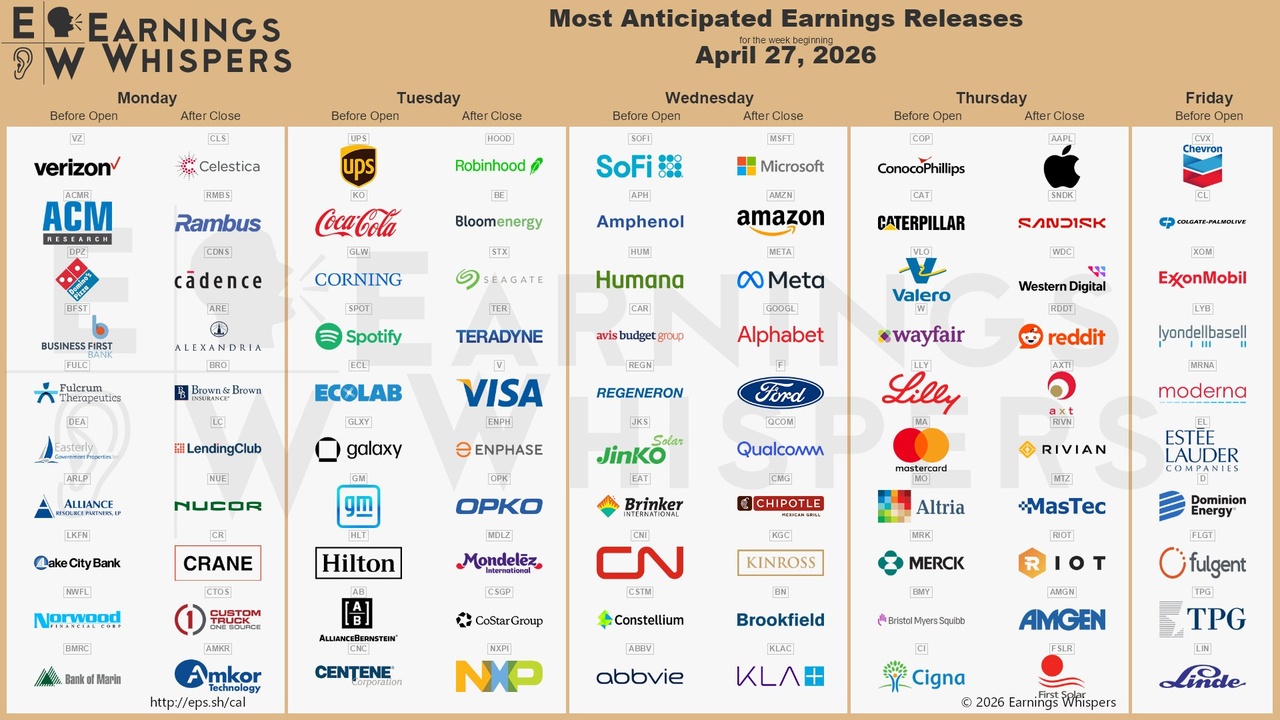
Major companies such as $GOOG (-1,79 %) , $META (-1,46 %) , $AMZN (-1,25 %) , $AAPL (-0,03 %) and $MSFT (+0,08 %) are reporting earnings, which will give us a better picture of AI, advertising, cloud growth and the overall economy.
Alongside them, $V (+1,11 %) , $MA (+1,1 %) , $KO (+0,98 %) , $TMUS (+1,34 %) , $VZ (+0,98 %)
and other large companies will help show how the consumer is doing.
This week could have a major impact on market sentiment and the next move for the indexes.
We will have plenty to watch. Have a great week everyone.
While the $DTE (+2,34 %) is thinking aloud about plans to merge with $TMUS (+1,34 %) (the politicians will probably not allow it anyway), the buy order at € 27.50 uses the dip and reduces my equity slightly. Tastes good!

Hello to the community,
The EarningsSeason has hit the start button this week. To minimize the euphoria a little😂 and get the weekend off to a good start, I would like to introduce you to some "indirect" players in the cybersecurity sector, which I am sure many of you are not yet familiar with.
Today we are talking about A10 Networks $ATEN (-0,69 %)
🛡️ A10 Networks : The invisible gatekeeper of the AI infrastructure
A10 Networks is not a hyped software store that burns money on marketing. It is the specialized high performance engineer in the engine room of the Internet. While Crowdstrike, for example $CRWD (-4,12 %) protects the end devices, A10 ensures that the huge data streams from AI, 5G and data centers do not collapse and arrive safely.
1. the business model: the "floodgate" in the data tsunami 🌊
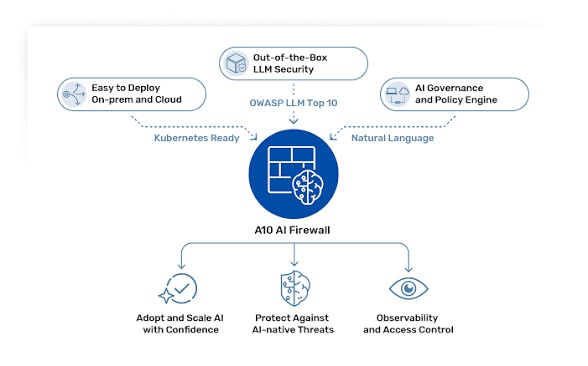
A10 $ATEN (-0,69 %) acts as a specialist for Application Delivery Controller (ADC) and DDoS protection at carrier level.
- The mechanism: When millions of users access an app simultaneously or AI models eat up gigabytes of data, A10 distributes this traffic (load balancing) while filtering out malicious attacks (DDoS) in real time.
- The genius: A10 $ATEN (-0,69 %) sits directly in the hardware layer of the major telcos (Verizon $VZ (+0,98 %) T-Mobile $TMUS (+1,34 %) and data centers. Without A10 $ATEN (-0,69 %) the network stands still.
- AI as a growth driver: AI data centers need extremely efficient data distribution. A10 $ATEN (-0,69 %) provides exactly the "locks" that prevent expensive GPUs from having to wait idle.
2. the key figures (as of April 2026) 📊
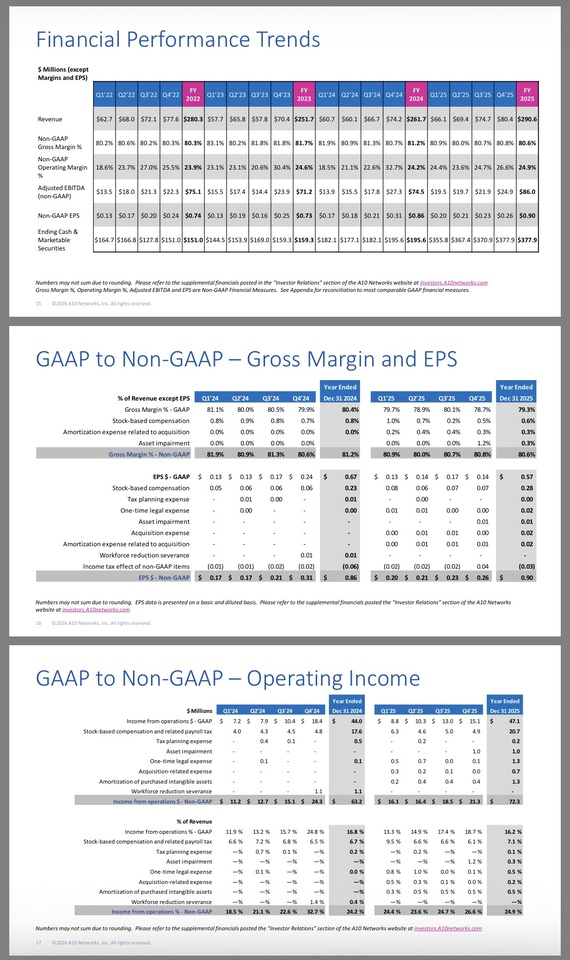
- Market capitalization: Approx. USD 1.8 billion (A compact mid-cap with takeover potential).
- Share price: Currently approx. USD 25.00 (Stable in a volatile tech market).
- Gross margin: Outstanding 80-82 %. That's software level for physical infrastructure. ✅
- Return on equity (ROE): approx. 20-22 %. Extremely solid for an infrastructure company.
- Balance sheet strength:
Net cash position of approx. USD 160 million. No debt, which is a burden with high interest rates. ✅
- Dividend: approx. 1.0 % yield - rare in the tech sector, underlines the cash flow strength.
Summary & outlook
Strengths:
1. High cash generation: The company is accumulating massive amounts of liquidity.
2. Scalability: With a gross margin of 80%, almost every additional dollar of sales flows directly into operating profit.
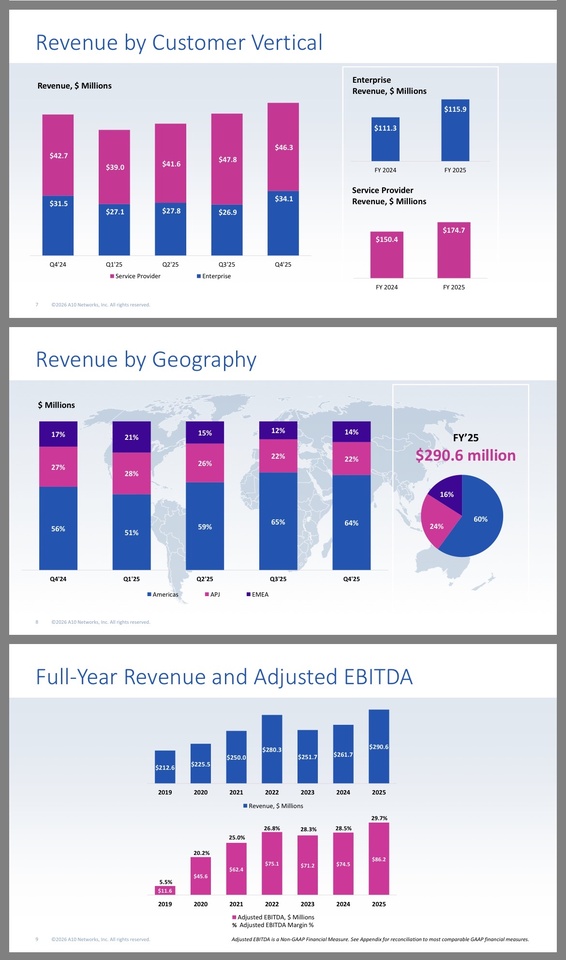
3. Market position: 9 of the top 10 telecom operators and 8 of the top 10 cloud providers use A10 $ATEN (-0,69 %) which indicates very high customer quality (hyperscale).
3. why is the share exciting right now? 🚀
1. AI infrastructure leverage: While Nvidia sells the shovels, A10 builds $ATEN (-0,69 %) builds the railroad tracks on which the AI traffic rolls. This "second wave AI play" is not yet fully priced in by the market. ✅
2. Profitability monster: A10 $ATEN (-0,69 %) has changed from a pure growth promise to an FCF generator. The operating margins (adj. ~24%) show massive operating leverage. ✅
3. Moat through specialization: In the world of 5G carriers, there are few alternatives. Once you have installed the Thunder series from A10 $ATEN (-0,69 %) will not switch to a competitor because of a few dollars (high switching costs). ✅
4. Valuation discrepancy: While cyber security players such as Crowdstrike $CRWD (-4,12 %) or Palo Alto $PANW (-3,79 %) are trading at P/E ratios above 60, you can get A10 $ATEN (-0,69 %) for a moderate P/E ratio of approx. 18-20. ✅
5. Takeover candidate: For giants like Cisco $CSCO (-0,18 %) or F5 $FFIV (-1,84 %) A10 would be $ATEN (-0,69 %) would be a "snack" to secure dominance in the AI traffic market. ✅
Additional insider facts (The "Deep Dive" bonus) 💡
- Stickiness: Customer loyalty among telcos and governments is extremely high. Once certified, the hardware often remains in use for 5-10 years.
- Security synergy: A10 $ATEN (-0,69 %) combines traffic management with security. This saves customers hardware space and power - a critical argument in modern data centers.
- Software transition: A10 $ATEN (-0,69 %) is increasingly switching to subscriptions. This makes revenues more predictable and valuable.
5. risks ⚠️
- Competition: F5 Networks $FFIV (-1,84 %) is the big gorilla in the market; A10 $ATEN (-0,69 %) must always be one step ahead technologically to avoid being crushed. ❗️
- Cyclicality: The expansion of 5G networks is taking place in waves. A halt in investment by the major telcos has a direct impact on sales. ❗️
- Cloud migration: If absolutely everything moves to the public cloud (AWS/Azure), dedicated hardware will become less important - A10 $ATEN (-0,69 %) must win here with its virtual solutions. ❗️
A10 Networks $ATEN (-0,69 %) has proven to be a massive alpha generator over 5 years and has clearly outperformed both the S&P 500 and the Nasdaq 100. The company benefited disproportionately from the special boom in cybersecurity and network resilience.
🗓️ EARNINGS-PREP: A10 NETWORKS ($ATEN) - Q1 2026
1. DATE & CONSENSUS
- Date: April 28, 2026 (after US market close)
- EPS expectation: $0.18 - $0.20 (adj.)
- Revenue expectation: ~$70.5m - $72m.
- Whisper Number: If they crack $73m, the house will burn (positive).
6.personal conclusion + Reaper verdict bonus😂
A10 Networks $ATEN (-0,69 %) is the sensible bet on the data boom. While others speculate on the next AI chatbot, here you are investing in the physical necessity of data flow.
The valuation is almost outrageously cheap for this quality and net cash position. Anyone looking for a profitable tech stock with a safety net will find it here.
🤖 Jack's mustard: "A10 $ATEN (-0,69 %) is the guy who doesn't sell maps in a gold-digger mood, but builds the bridges over the rivers. Everyone has to cross, whether they find gold or not. While people are buying $NVDA (-1,32 %) sell their grandmother for Nvidia shares, you get A10 $ATEN (-0,69 %) for the price of a proper dinner. Anyone who doesn't grab it here doesn't understand how the internet works under the hood. A10 Networks $ATEN (-0,69 %) is not a Ferrari $RACE (-1,07 %) but a solid Toyota $7203 (+1,96 %) with a built-in cash machine. The valuation is fair to favorable, the balance sheet is cleaner than an operating room. Anyone hoping for "AI moonshots" is in the wrong place. Those looking for cash flow stability and shareholder yield are right.
We see ourselves at $35 when the market realizes that you can't squeeze AI through Wi-Fi cables from the hardware store."
Reaper Score: 8/10
@Get_Rich_or_Die_Tryin
@Tenbagger2024
in that sense, have a nice weekend
your stock master ✌️

+ 3

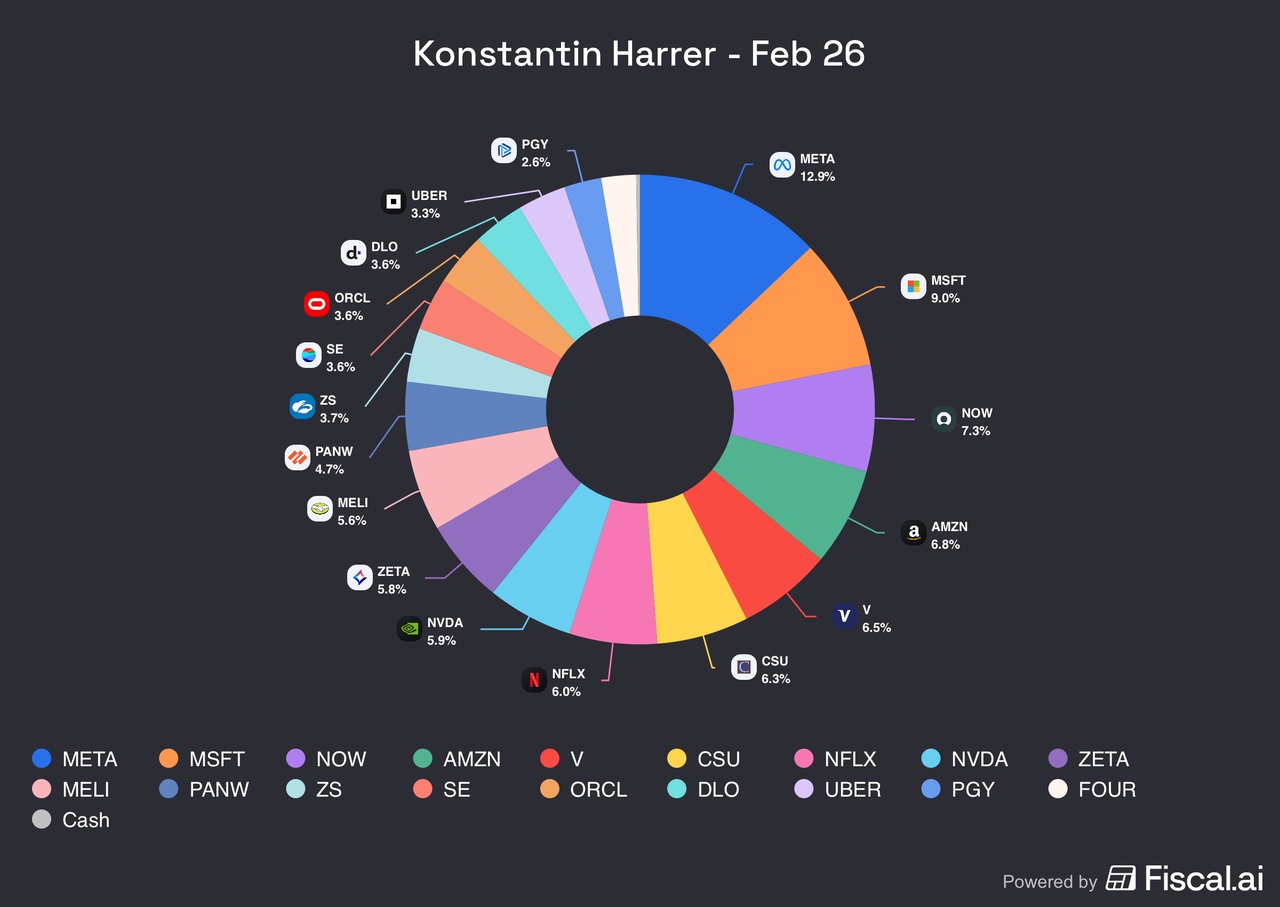
Second recap this year, performance even worse. I know that headline doesn’t sound great, but you have to look a bit deeper and understand my investment philosophy before judging the result.
The portfolio was down almost 9% in February, which mainly comes down to a few factors. First, some of my previous winners erased their gains entirely or even drifted into the red. Nvidia, Visa and MercadoLibre are good examples. I don’t use stop-losses because I assess companies holistically and don’t base sell decisions purely on price movements.
I generally sell for two reasons. The first is when the investment case I originally signed up for is no longer intact. That’s why I sold Fiserv a few months ago after they slashed guidance and effectively reset the company by pushing out management. It’s also why I sold Novo Nordisk when the story shifted from a slower-growing but still dominant player to something far less attractive: declining revenue, margins and free cash flow.
The second reason is when I believe there are simply better opportunities elsewhere in the market. That happened this month when I sold my T-Mobile US position to double down on some of my higher conviction and higher upside names like Microsoft, Zeta and ServiceNow.
Another reason my portfolio didn’t perform well last month is that I don’t use technical analysis. I don’t mind buying into a falling knife because I evaluate companies based on their fundamentals. Nobody knows whether a stock rebounds the day after a 30% drawdown or moves sideways for two years. But if I believe a company is a strong long-term compounder with clear upside, I’m not going to avoid it just because it could drop another 10%. In some cases I’ll even add more.
And that’s exactly what I did last month. I bought quite a few stocks, particularly in software and cybersecurity, because I think the market is mispricing some, though certainly not all, of those businesses. I added to Microsoft, ServiceNow, Palo Alto, Zscaler, Oracle and Amazon when they reached levels I considered attractive. And no, I didn’t always buy the exact bottom. That was a conscious decision.
A good example is Amazon. I bought the first half of my position before earnings at around $210 because I thought it was already an attractive entry. Then the stock sold off towards $200 and I added again. If I had waited for $190, I might never own the stock and would be kicking myself two years from now if it’s up 50%.
So yes, February doesn’t look great if you only look at the performance number. But what I actually did during the month was add to some exceptional long-term compounders. Some of them are so obvious that you almost want to call them no-brainers, even though you’re technically not supposed to say that.
But let’s be honest. Google was a no-brainer last year. Meta was, and arguably still is, a no-brainer at around 20x forward earnings while growing revenue at 20%. Microsoft might be the highest quality business in the world and trades at roughly 23x forward earnings.
My cash position is practically zero right now. While I do think the broader market has run fairly hot over the past year, there are still some extraordinary opportunities out there.
February Performance: -9%
Performance since inception: -2.8%
$META (-1,46 %)
$AMZN (-1,25 %)
$MSFT (+0,08 %)
$NOW (-1,04 %)
$V (+1,11 %)
$CSU (-1,26 %)
$NFLX (-0,58 %)
$NVDA (-1,32 %)
$ZETA (-1,76 %)
$MELI (-0,79 %)
$PANW (-3,79 %)
$ZS (-1,62 %)
$SE (-2,49 %)
$ORCL (-3,45 %)
$DLO (-0,2 %)
$UBER (+1,54 %)
$PGY
$FOUR
$TMUS (+1,34 %)

https://topicswithhead.beehiiv.com/p/deutsche-telekom-wie-siehts-aus
My brief opinion on current developments and an unusually high price target.


Okay, this is the first portfolio update of the year and let’s just say it was not a great month in terms of performance. That said, I made some quality additions that I feel very comfortable holding for the long term.
The first half of January was strong. My portfolio reached a new all-time high on January 6. Since then, performance deteriorated, mainly due to two almost contradictory AI narratives hitting the market at the same time.
The first one was the idea that AI is about to destroy the entire SaaS industry. I have shared my thoughts on that before, and I do think there is some truth to it. Seat-based pricing models, like those used by Atlassian, Adobe, and even Salesforce, could face pressure if AI meaningfully changes workflows and reduces headcount. That is a legitimate risk.
What is not legitimate is selling off every single software company indiscriminately. ServiceNow, Microsoft, cybersecurity names, anything remotely connected to software got punished. That reaction, in my view, was irrational. Have people actually looked at the moats of these businesses? Their margins? Their retention rates? Their growth? Their role inside enterprises?
I did. And I bought.
Throughout the month, I added mainly to ServiceNow and Microsoft. At the same time, I reduced my Atlassian position and reallocated that capital into those two names. ServiceNow and Microsoft are clear AI beneficiaries in my opinion, not victims. Atlassian might still work out, but the investment case is less straightforward, and I prefer clarity in uncertain environments.
The second headwind was the cooling AI infrastructure narrative. On the one hand, the market claims AI will wipe out multi-trillion dollar industries. On the other hand, it suddenly treats AI infrastructure as if it were a short-lived flu. The contradiction is obvious.
In that segment, I did not make major moves. I re-evaluated my Nvidia position thoroughly and came to the conclusion that there is no reason to panic right now. Hyperscaler spending remains strong, demand indicators are intact, and nothing material has changed in the fundamental story.
Lastly, I bought Netflix twice, once at the beginning of January and once toward the end of the month. I am very confident in that position. The business is executing extremely well, and the potential Warner Bros acquisition looks increasingly realistic. As I mentioned before, that deal would significantly strengthen Netflix’s content ecosystem, and the cost could easily be offset through modest price increases of one or two dollars per subscription. Regardless of whether the acquisition ultimately closes, Netflix remains the dominant force in streaming.
Overall, January was not a great month in terms of headline performance, but it was productive. I increased my exposure to core positions like Microsoft, re-tested multiple investment theses under pressure, and was forced to reassess certain assumptions. That process is uncomfortable, but necessary.
Looking forward to the rest of 2026.
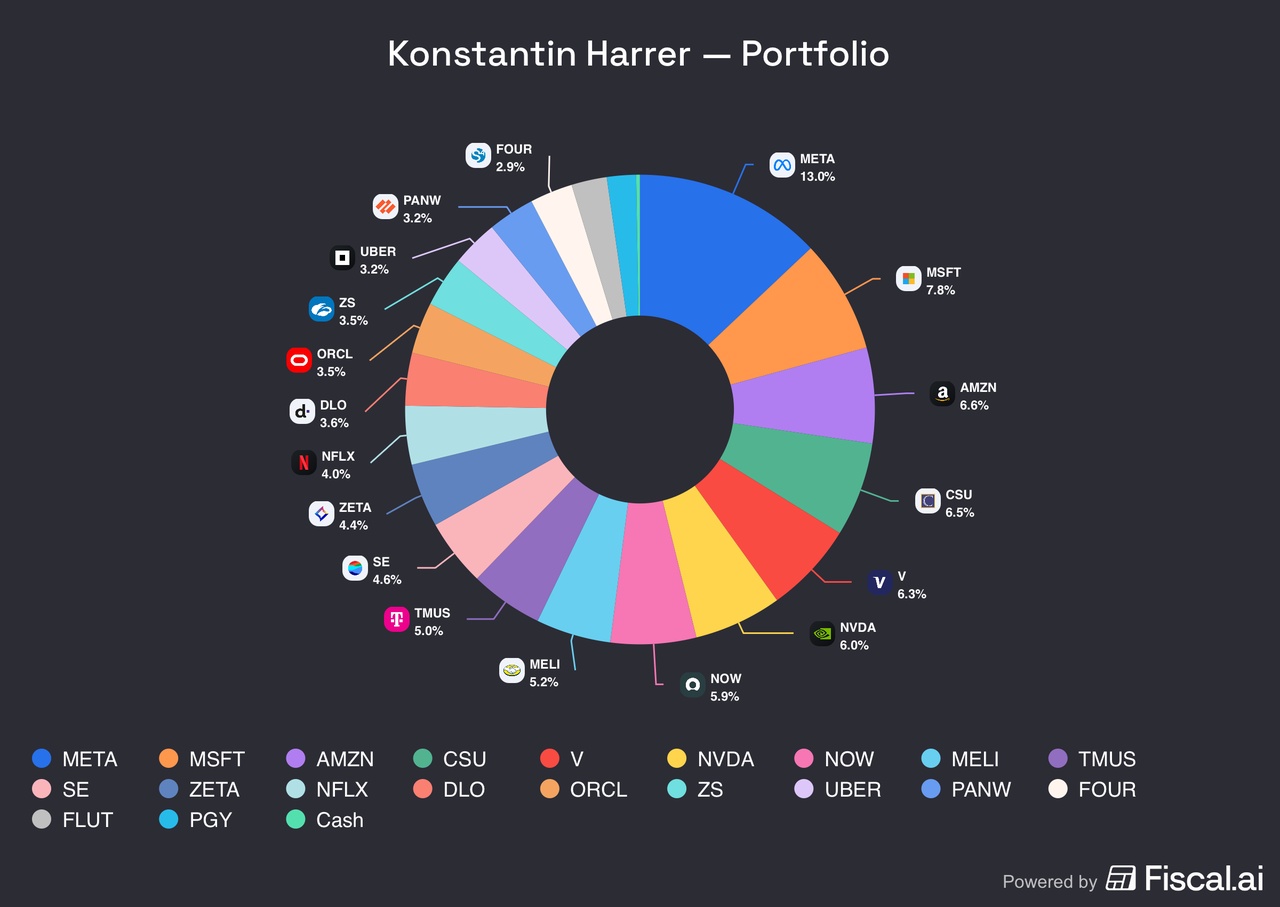
January Performance: -4%
Performance since inception: +7%
$META (-1,46 %)
$MSFT (+0,08 %)
$AMZN (-1,25 %)
$CSU (-1,26 %)
$V (+1,11 %)
$NVDA (-1,32 %)
$NOW (-1,04 %)
$MELI (-0,79 %)
$TMUS (+1,34 %)
$SE (-2,49 %)
$ZETA (-1,76 %)
$NFLX (-0,58 %)
$DLO (-0,2 %)
$ORCL (-3,45 %)
$ZS (-1,62 %)
$UBER (+1,54 %)
$PANW (-3,79 %)
$FLTR (-0,68 %)
$PGY
$TEAM (-0,57 %)
$ADBE (+2,53 %)
$CRM (-0,25 %)

Principales creadores de la semana