
$PLTR (-2.66%)
$SNAP (-2.16%)
$HSBA (-2.49%)
$9434 (+0.22%)
$ZAL (+2.05%)
$BOSS (+0.12%)
$BNTX (-2.32%)
$SPOT (+11.31%)
$BP. (+0.29%)
$BAYN (-1.33%)
$DOCN (-10.31%)
$MCD (+2.88%)
$CAT (-4.81%)
$PFE (+2.07%)
$ANET (-8.07%)
$PINS (+0%)
$SPCX (-9.14%)
$AMD (-8.12%)
$PARA (-1.13%)
$LUMN (+0.38%)
$KTOS (-1.44%)
$CPNG (+1.07%)
$IFX (-6.32%)
$ENR (-8.29%)
$DHL (-1.18%)
$NOVO B (+1%)
$CVS (+1.14%)
$UBER (+2.23%)
$SEDG (-0.76%)
$WULF (-11.73%)
$CRCL (-4.28%)
$SHOP (-5.08%)
$DIS (+1.36%)
$HUBS (+6.97%)
$DASH (+0.91%)
$FSLY (-4.2%)
$SNDK (-8.16%)
$MELI (-1.66%)
$DUOL
$APP (-1.24%)
$SMR
$FIG (+5.01%)
$SIE (-3.47%)
$CBK (-4.07%)
$IOS (-0.91%)
$FI (+5.47%)
$DDOG (-6.13%)
$RHM (-0.13%)
$QBTS (-4.25%)
$G24 (+2.91%)
$AKAM (+1.03%)
$MUV2 (+1.25%)
$UA (+3.82%)
$OKLO
- Markets
- Stocks
- Skydance Corporation Class B
- Forum Discussion

Skydance Corporation Class B
Stock
Stock
Ticker: PARA
PARA
Price
Discussion about PARA
Posts
292Mon·
Quarterly Results August 3–7, 2026
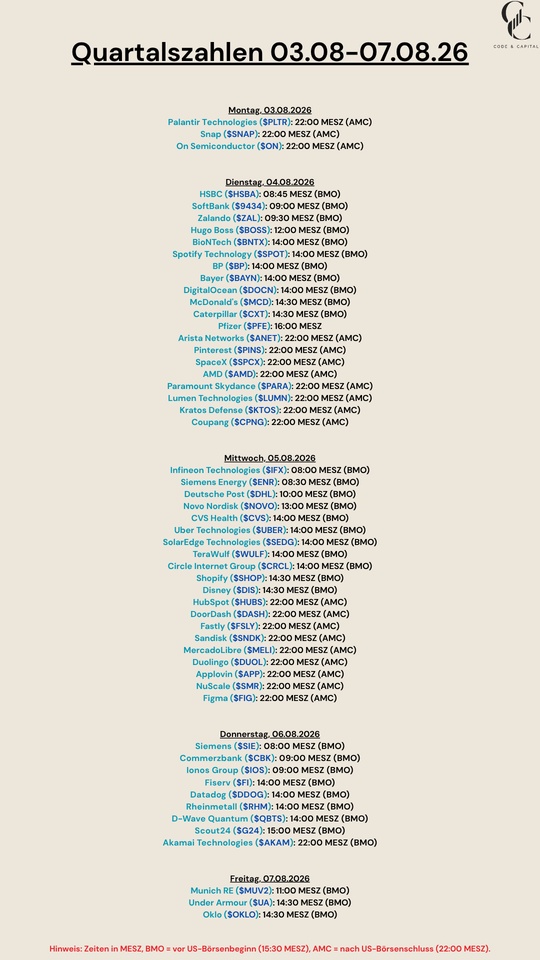
1313

3Mon·
Paramount, WBD hit with lawsuit from 12 states, including California, to block merger
Paramount, WBD hit with lawsuit from 12 states including California to block merger. DOJ already signed off. $PARA (-1.13%) +0.42%, $WBD -0.30%. #Paramount
#wbd
5Mon·
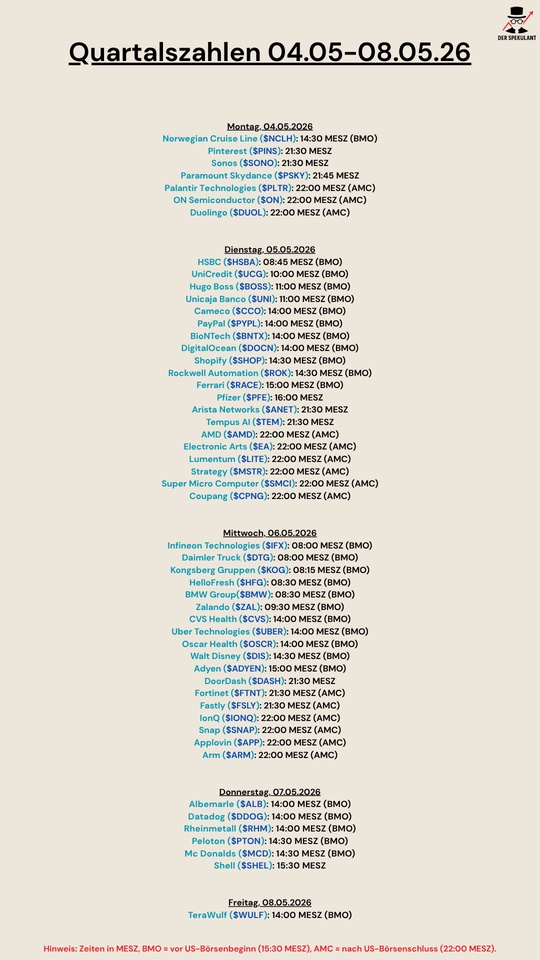
Quarterly figures 04.05-08.05.26
$NCLH (-0.24%)
$PINS (+0%)
$SONO (+1.74%)
$PARA (-1.13%)
$PLTR (-2.66%)
$DUOL
$HSBA (-2.49%)
$UCG (-4.44%)
$BOSS (+0.12%)
$UNI (-3.81%)
$CCO (-3.85%)
$PYPL (+0.91%)
$BNTX (-2.32%)
$DOCN (-10.31%)
$SHOP (-5.08%)
$ROK (-3.23%)
$RACE (+0.3%)
$PFE (+2.07%)
$ANET (-8.07%)
$TEM (-5.72%)
$AMD (-8.12%)
$EA
$LITE (-11.72%)
$MSTR (-5.2%)
$SMCI (-5.02%)
$CPNG (+1.07%)
$IFX (-6.32%)
$DTG (-0.86%)
$KOG (-2.45%)
$HFG (+0.91%)
$BMW (+1.28%)
$ZAL (+2.05%)
$CVS (+1.14%)
$UBER (+2.23%)
$OSCR (-0.61%)
$DIS (+1.36%)
$ADYEN (+2.58%)
$DASH (+0.91%)
$FTNT (-0.55%)
$FSLY (-4.2%)
$IONQ (-3.85%)
$SNAP (-2.16%)
$APP (-1.24%)
$ARM (-7.44%)
$ALB (-1.67%)
$DDOG (-6.13%)
$RHM (-0.13%)
$PTON (+3.95%)
$MCD (+2.88%)
$SHEL (+0.55%)
$WULF (-11.73%)
1212
8Mon·
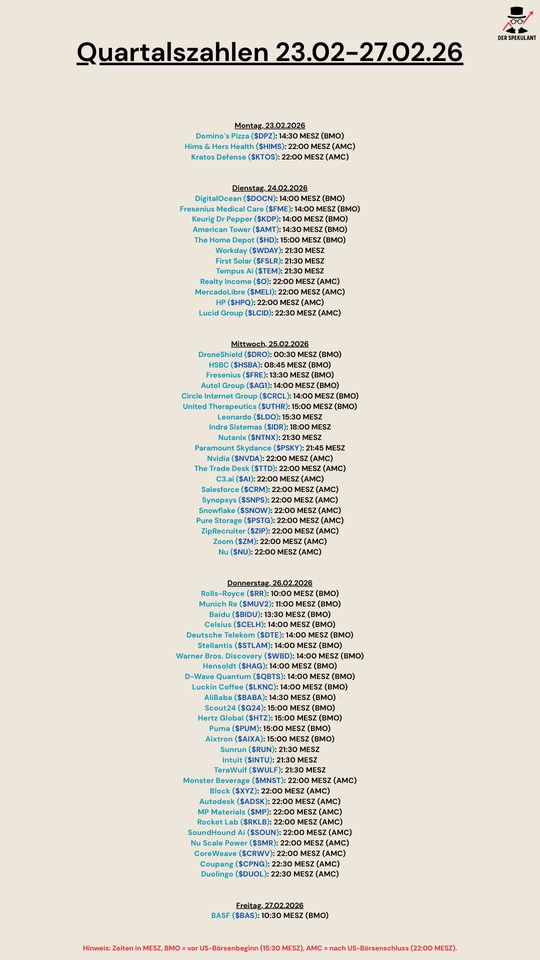
Quartalszahlen 23.02-27.02.2026
$DPZ (+2.16%)
$HIMS (-0.61%)
$KTOS (-1.44%)
$DOCN (-10.31%)
$FME (+3.1%)
$KDP (+2.72%)
$AMT (+2.25%)
$HD (+4.47%)
$WDAY (+3.61%)
$FSLR (-1.86%)
$TEM (-5.72%)
$O (+3.11%)
$MELI (-1.66%)
$HPQ (+8%)
$LCID (+7.87%)
$DRO (-2.62%)
$HSBA (-2.49%)
$FRE (-0.34%)
$AG1 (-5.79%)
$CRCL (-4.28%)
$UTHR (+3.97%)
$LDO (+0.6%)
$IDR (-0.4%)
$NTNX (-0.65%)
$PARA (-1.13%)
$NVDA (-4.54%)
$TTD (+4.73%)
$AI (+1.57%)
$CRM (+3%)
$SNPS (-6.22%)
$SNOW (-2.95%)
$PSTG (-7.49%)
$ZIP (+2.98%)
$ZM (-3.22%)
$NU (-2.11%)
$RR. (-5.47%)
$MUV2 (+1.25%)
$BIDU (-1.14%)
$CELH
$DTE (+2.63%)
$STLAM (+0.33%)
$WBD
$HAG (-1.27%)
$QBTS (-4.25%)
$LKNCY (-1.36%)
$BABA (-2.37%)
$G24 (+2.91%)
$HTZ (+5.98%)
$PUM (-1.54%)
$AIXA (-9.89%)
$RUN (+1.4%)
$INTU (+6.33%)
$WULF (-11.73%)
$MNST (+2.07%)
$SQ (+0.82%)
$ADSK (+4.34%)
$MP (-2.55%)
$RKLB (-5.29%)
$SOUN (-1.72%)
$SMR
$CRWV (-10.08%)
$CPNG (+1.07%)
$DUOL
2222
4 CommentsSolitair@Solitair
8Mon
•
33
•Show answer

8Mon·
Jan 20 / Netflix — Overcoming My Own Bias
The next stock I want to talk about is Netflix. I’ll be honest, I still have a hard time buying this stock and for a very simple reason: anchoring bias.
I bought Netflix in mid-2022 in the low $200s and sold way too early. And I mean way too early. At the time, the business genuinely didn’t look great. Subscriber numbers were declining, sentiment was awful, and the stock was getting punished. But my reasoning back then was embarrassingly simple. It was one of the first stocks I ever bought, and I thought, “Netflix is clearly better than Amazon Prime and Disney+, so it’s probably going to come back.” Turns out, I was very right. I just didn’t stick around long enough. I sold somewhere in the mid-$300s.
Ever since then, I couldn’t look at Netflix objectively again. I didn’t assess it based on its current market position or fundamentals. I looked at it through the lens of the price I could have owned it at a few years ago. The exact same thing happened to me with Meta for a while. I bought in 2022, sold too early, and then stayed on the sidelines because I was fixated on the old price.
The mistake was obvious in hindsight. I was focusing on price instead of business quality. The stocks were cheap back then for a reason, because both companies were struggling. Once I managed to rewire my brain, the picture became clear. Netflix today is in a far better position than it was in 2022. Honestly, it’s probably multiple times stronger as a business, which is exactly why buying it again actually makes sense.
Netflix commands roughly 20% of the global streaming market and remains the dominant force in the industry. But management is not satisfied with that. With the proposed acquisition of Warner Bros and HBO Max, Netflix’s market share could move north of 30%. Whether or not the FTC allows that deal to go through is not central to my investment case. Yes, I would love to see Game of Thrones on Netflix, both personally and from a business standpoint, but even without the acquisition, Netflix is attractive at current levels.
In fact, the situation might even tilt in Netflix’s favor. Its main competitor in the process, Paramount Skydance, led by David Ellison, likely cannot stomach a transaction of this size. Netflix, on the other hand, can simply raise prices by a few dollars and earn the cost back over time. That pricing power is immense and still underestimated.
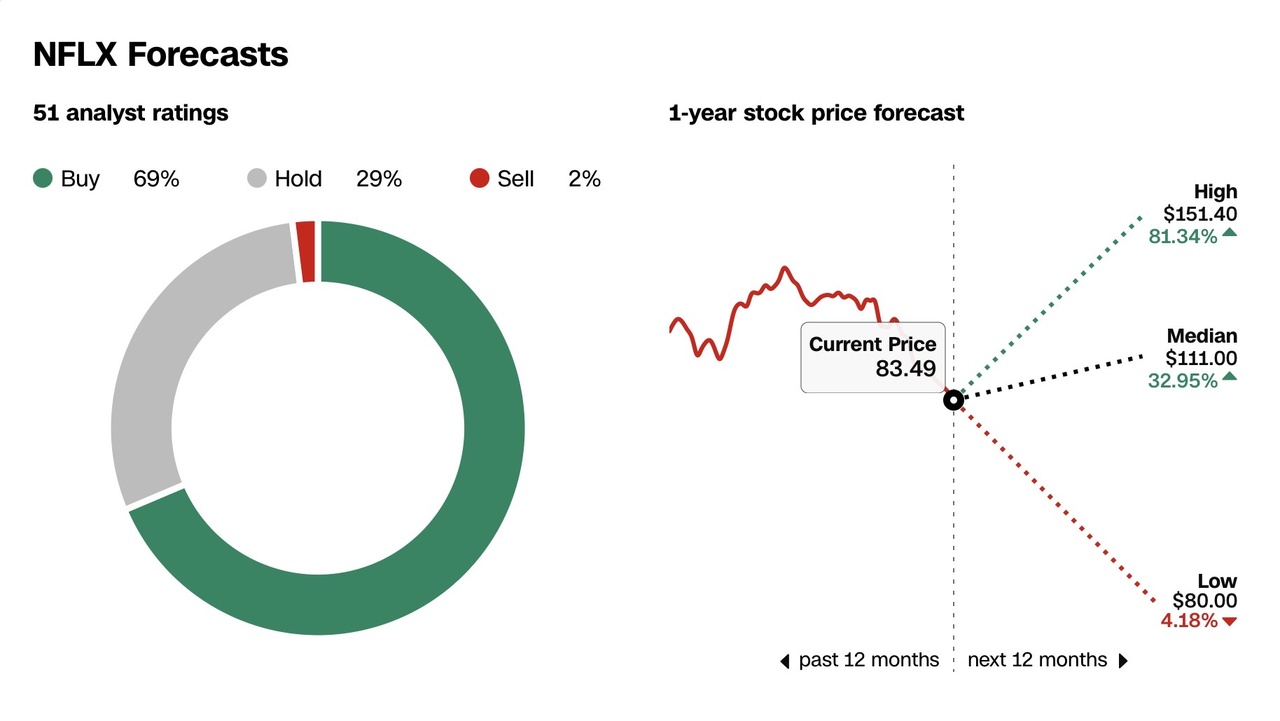
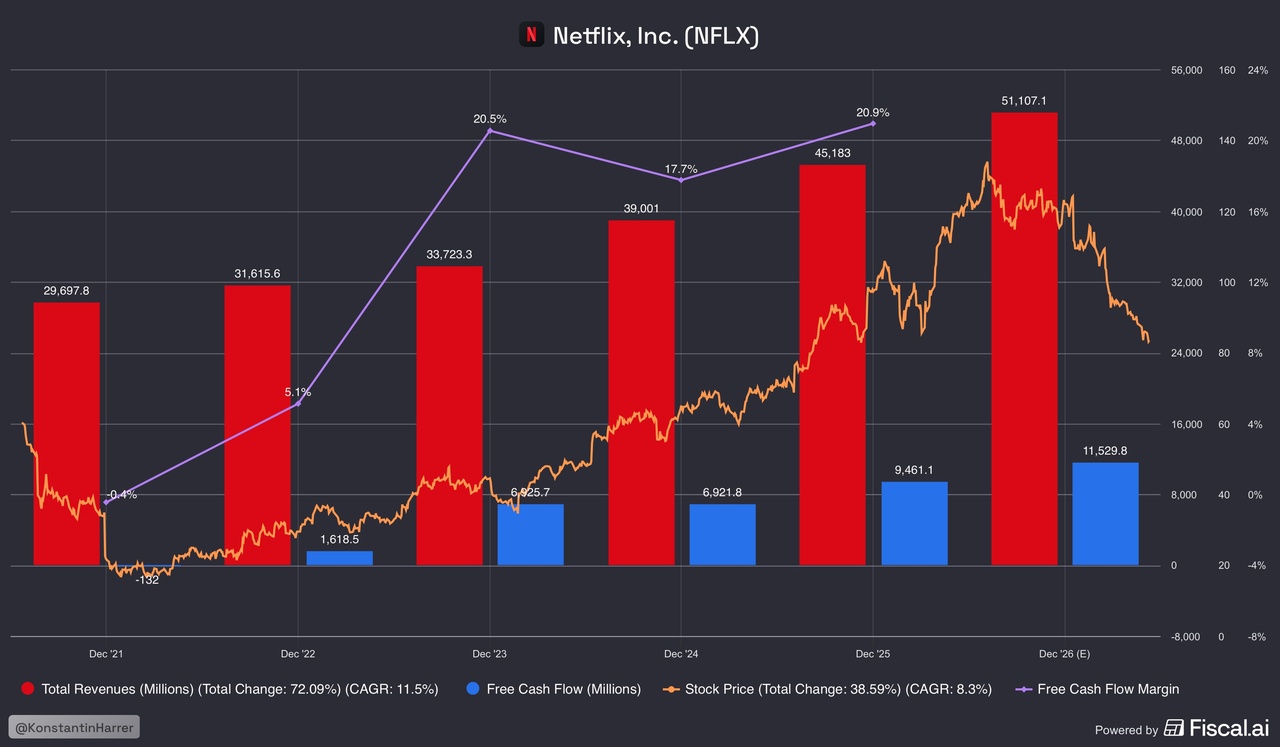
Revenue is projected to grow in the mid-teens regardless of whether the acquisition goes through. Free cash flow is expected to grow in the mid-20% range. The stock is currently trading in the mid-$80s, at a forward P/E of around 27, dropping to roughly 18 on FY28 earnings. The free cash flow yield sits near all-time highs at about 3.2% on current numbers and close to 5% on FY28 estimates. And given Netflix’s pricing power, those numbers could still improve.
No matter how the Warner Bros situation plays out, I’m bullish on Netflix. I recently added to my position, my average entry price is around $90, and the stock now represents roughly 4–5% of my portfolio. On future dips, I’d happily buy more. I see no good reason why the stock shouldn’t rebound from here.
66
10Mon·
Dec 9 / Paramount Strikes Back — Someone Really Wants to Live Up to His Dad
David Ellison enters the arena (again), and suddenly Netflix isn’t the only predator anymore
Just after the market had already crowned Netflix the inevitable winner in the Warner Bros. Discovery saga, and people started philosophising about the future of cinemas, Paramount crashed the party. Or, to be more exact, David Ellison and his infinite chequebook did. What looked like a clean, strategic, almost-too-perfect Netflix takeover has now turned into a full-blown media brawl, with Paramount leading a consortium that’s willing to pay more, fight harder, and play dirtier if needed.
The revised Paramount-backed offer tops Netflix’s proposal meaningfully at $30 per share, all-cash, and Ellison argues that it’s structured in a way that could actually improve its odds with regulators. Ironically, that might be the biggest advantage of all. Netflix buying WBD would further consolidate streaming power into one already-dominant player. Paramount, on the other hand, can argue it’s rescuing and restructuring rather than monopolizing, to create more competition for Netflix and co. A bigger check for shareholders and a potentially easier antitrust path. Doesn’t look great for Netflix here.
But money isn’t the only weapon here. Politics matter. Netflix’s very visible “woke-first” reputation doesn’t exactly play well with a Trump-influenced regulatory environment, and yes, that suddenly matters again. And Donald Trump is the first one to bend the rules in his favor if he deems it necessary. So, you don’t want to be on his bad side. What’s crucial to Paramount’s bid is the quiet support of Jared Kushner-linked capital, which massively changes the political calculus. This isn’t just a financial offer, it’s a strategically aligned one. The cards already seem to be in Paramount’s favor, but there’s one more ace to play:
David Ellison.
This is where things get very uncomfortable for Netflix. Ellison isn’t some social climber scraping together funds, he’s the son of Larry Ellison, one of the richest people on the planet, with effectively unlimited financial resources. If this turns into a bidding war, David Ellison can simply… not lose. An extra $20 billion? Annoying, but doable. All it takes is a mildly uncomfortable dinner conversation. Try competing with a buyer who can call his father for an advance on his inheritance that would be enough to buy a small country. This is someone who’s not used to losing and certainly doesn’t plan to start now.
That said, Paramount isn’t without weaknesses. Regulators may reasonably question whether a $15B market-cap company can digest an $80B+ takeover without imploding. And this is now a hostile bid. Ellison openly stated that WBD management can’t accept the offer anyway, because doing so after rejecting an identical one days ago would invite lawsuits over breached fiduciary duty. So the offer goes straight to shareholders. Gloves off. We are seeing a showdown between a streaming empire and a son with something to prove.
Netflix may or may not be the better operator. But it’s the most politically exposed, the most disliked, and the least flexible in a fight where power, not efficiency, decides the outcome.
This deal just went from “strategic acquisition” to “succession-level drama.” And David Ellison didn’t enter this to come in second.
22
10Mon·
Dec 5 / Netflix & Warner Bros — R.I.P. Cinemas (1895-2025)
Netflix’s empire isn’t limited to our world anymore, it now includes Westeros, the Wizarding World, and Middle-earth
Netflix is pulling off one of the most audacious moves in entertainment history by agreeing to acquire Warner Bros.’ film studios, HBO Max, and its iconic content library for roughly $72 billion in equity value and about $82.7 billion enterprise value. No wonder this deal has shaken up the markets on a seemingly boring Friday. This news is mind-blowing, not just for Netflix and Warner Bros, but for the whole industry.
If this goes through, it’s not just a deal — it’s a declaration of war on the rest of Hollywood and especially the streaming industry. Netflix already dominates streaming with ~300 million global subscribers, and adding HBO Max’s ~128 million subs (plus the studio itself) would push its combined market share well above the typical “30%” antitrust danger zone, at least within traditional streaming metrics. However, I think there’s a solid case to be made that having Netflix and HBO Max combined with a 10% price hike to the subscription would be more beneficial for consumers than paying for both separately or choosing between them.
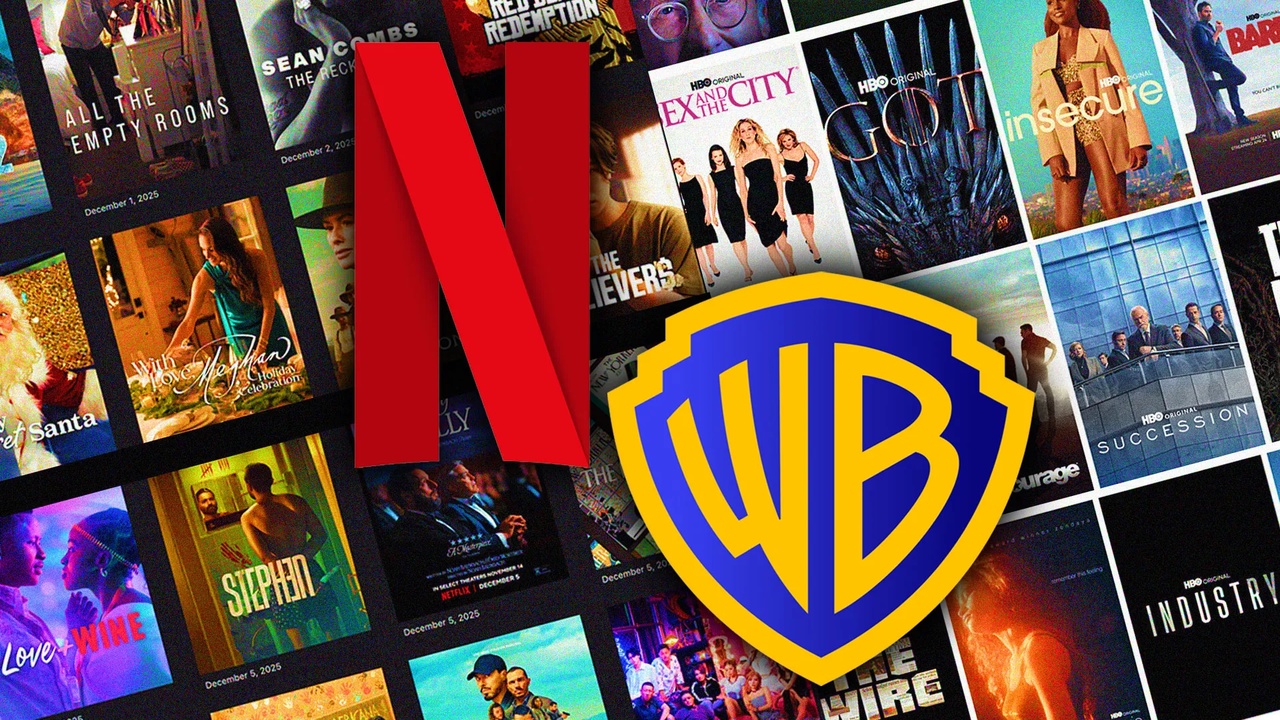
Just imagine the content vault: Game of Thrones, Succession, The Wire, Batman, Harry Potter, Lord of the Rings — all under one roof. No more costly licensing fees, seamless integration into one interface, and an entertainment lineup as deep as a Sunday scroll through Netflix itself. Historically, Netflix has done a very good job of keeping its customers satisfied and offering just enough new content for people not to cancel their subscription, but this is a whole new dimension. The production pipeline and global penetration suddenly become a strategic colossus unrivaled by Disney, Amazon, or anyone else.
Yes, $80 billion for a company that last generated around $10 billion in free cash flow might look like a stretch. On surface metrics, that’s rich. But in a world where sticky subscription revenue and iconic IP are gold, and the alternative is perpetual licensing costs and fragmented content libraries, there’s a plausible logic: raise subscription prices modestly, leverage scale, and fold in HBO’s revenue power. Realistically, how many people would cancel their subscription because of a $2 price increase? Especially when those $2 give you access to a vast library of new, high-quality content.
There’s just one massive obstacle: regulation. Antitrust scrutiny is real, bipartisan, and coming from all sides. President Trump has publicly flagged concerns about market dominance, and lawmakers in both parties, plus industry rivals like Paramount, are sharpening their objections. Also, we should add that Disney set an example with its $70 billion acquisition of 20th Century Fox a few years ago.
So while this feels like the deal that reshapes media and streaming forever, it’s far from a done deal. Regulators could force a separation of HBO Max and Netflix, delay closure by years, or in the worst case, block the transaction outright.
For me personally, I love the strategic logic if it goes through. But a forward P/E of 38 for Netflix makes new buys hard to justify right here. If the stock dips below $80, I’d be much more comfortable stepping in. Until then, I’ll just enjoy the extra content.
44

11Mon·
AI Selloff Drags Nasdaq to Worst Week Since April
The Nasdaq Composite logged its worst week since early April, dropping more than 3%, as a sharp selloff in AI-linked names erased roughly $800 billion in market cap across eight major players, including $NVDA (-4.54%), $META (-10.85%) , $PLTR (-2.66%) , and $ORCL (-2.61%). For the week, Oracle and $AMD (-8.12%) fell about 9%, Nvidia slid 7%, and $AVGO (-3.61%) lost 6%.
On Friday, November 7, the Nasdaq Composite was the only major index to finish lower, closing down 0.3%. The S&P 500 clawed back late to end up 0.13% but still fell more than 1% for the week. The Dow Jones Industrial Average rose 0.16% on the day and, like the S&P 500, declined more than 1% for the week.
Nationwide’s chief investment officer Mark Hackett said the pullback in AI stocks looks more like the clearing of excessive hype than a hit to fundamentals, describing it as a stress test of the AI narrative amid concerns about slowing growth and stretched valuations.
Worries about lofty Silicon Valley valuations collided with signs of a cooling U.S. labor market and weakening consumer confidence. The University of Michigan’s sentiment gauge
dropped to a three-year low in November, while Challenger, Gray & Christmas reported the highest October layoff tally in 22 years. Market anxiety has been compounded by the longest U.S. federal government shutdown on record at 38 days, and headlines about job cuts at $Amon, $PARA (-1.13%) , and $TGT (+3.98%) added pressure.
Sentiment was further weighed by reports that Michael Burry bet against leaders of the AI trade such as Nvidia and Palantir, along with cautious commentary from Wall Street. $GS (-1.33%) CEO David Solomon said equities could correct 10–20% over the next 12–24 months, while Morgan Stanley (MS) CEO Ted Pick warned investors to be prepared for a 10–15% pullback even without a macro shock.
Late Friday brought some relief as stocks firmed on hopes Congress is edging toward a deal to end the shutdown. Democrats proposed short-term government funding in exchange for a one-year extension of Obamacare-related tax credits. Republicans rejected the offer, but the fact that both sides exchanged proposals was taken as a constructive step.
The tech and AI selloff appears to be a valuation reset rather than a fundamental break, with macro softness and policy headlines acting as near-term catalysts.
11

1Yr·
Paramount Global reported earnings Q4 FY2024 results ended on December 31, 2024
- Revenue: $7.98B, +5% YoY
- Operating income: $129M, -68% YoY
- Net loss from continuing operations: $224M vs $4M profit in Q4 2023
Co-CEOs George Cheeks, Chris McCarthy & Brian Robbins: "We are proud of the transformative year we delivered since becoming Co-CEOs, which marks a significant turning point for Paramount as we shift into a streaming-first company. DTC profitability improved $1.2 billion in 2024, driven by an impressive year at Paramount+."
🌱Revenue & Growth
- Total company revenue grew 5% for Q4 2024
- TV Media revenue: $4.98B, -4% YoY
- Direct-to-Consumer revenue: $2.01B, +8% YoY
- Filmed Entertainment revenue: $1.08B, +67% YoY
- Paramount+ revenue grew 16% in Q4, driven by subscriber growth
- Paramount+ subscribers reached 77.5M, adding 5.6M in Q4 and 10M for the full year
💰Profits & Financials
- Adjusted OIBDA: $406M, -22% YoY
- Adjusted EPS: -$0.11 vs $0.04 in Q4 2023
- DTC adjusted OIBDA improved by $204M in Q4 and nearly $1.2B for full year
- Generated FY net operating cash flow of $752M and free cash flow of $489M
- Achieved targeted annual run-rate cost savings of $500M
- Goodwill impairment charge of $5.98B recorded in Q2 2024
📌Business Highlights
- Paramount+ ranked as #2 domestic SVOD service for hours watched across Original Series in Q4
- Sonic the Hedgehog 3 approaching $500M at global box office, highest-grossing film in the franchise
- TV Media continued dominance with CBS having 7 of the top 10 primetime programs
🔮Future Outlook
- Paramount+ expected to achieve full year domestic profitability for 2025
- Skydance transactions expected to close in first half of 2025
- Continuing transition to a streaming-first company
11

1Yr·
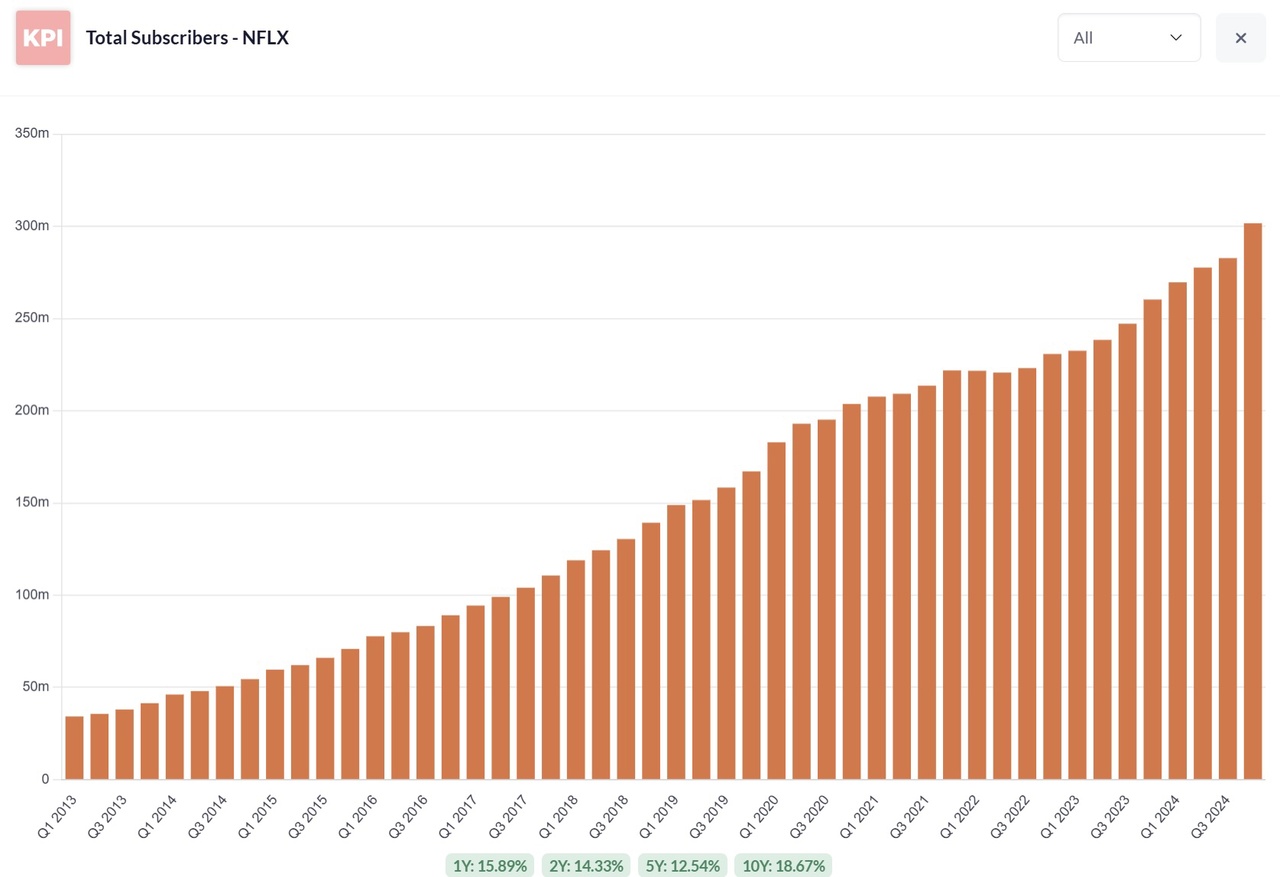
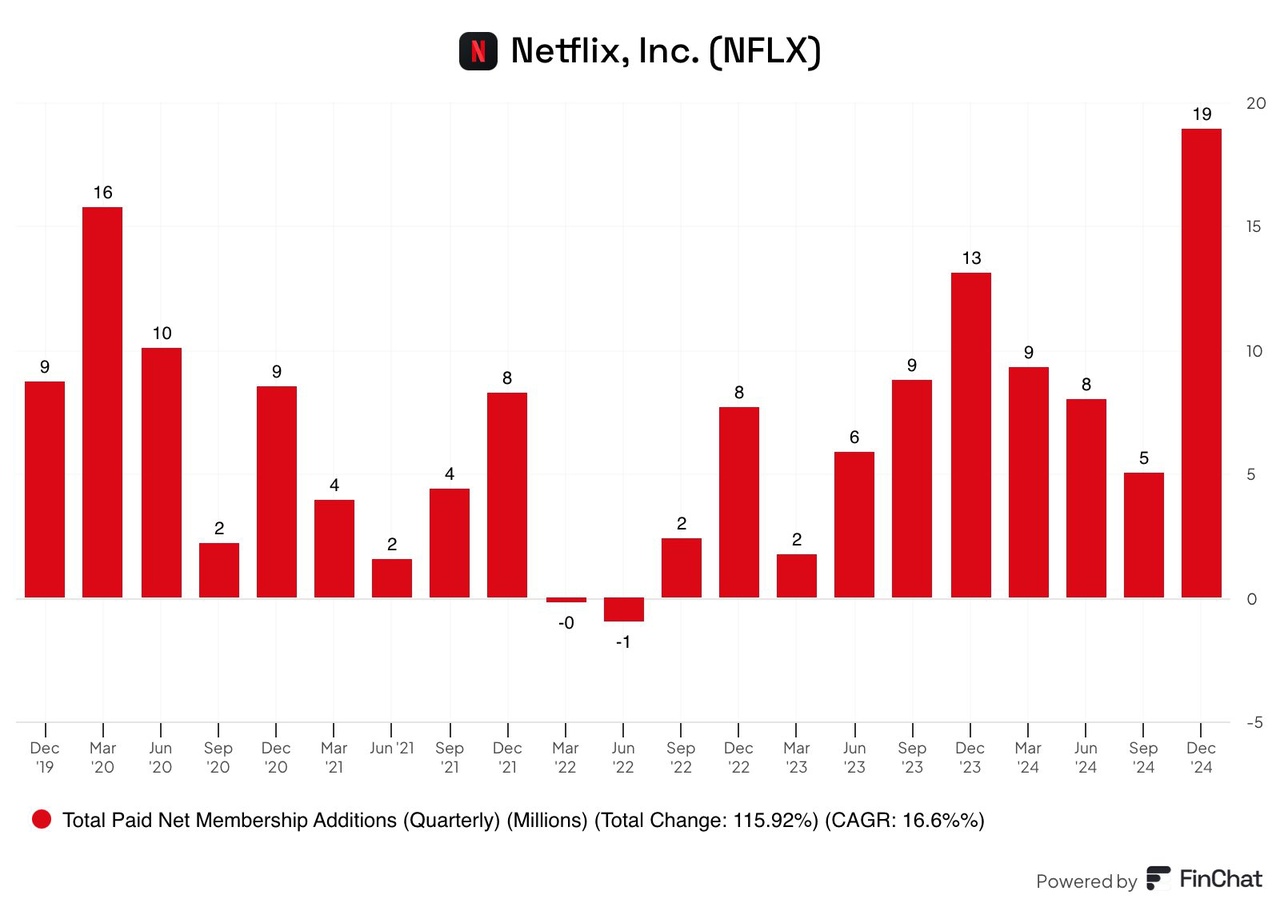
Netflix - Subscriber growth 🚀
Netflix has gained more new subscribers than in any other quarter in its history.
Netflix subscribers over time.
$DIS (+1.36%) , $AMZN (-4.58%) , $WBD , $PARA (-1.13%) , $FUBO
1Yr·
Netflix earnings highlights for the fourth quarter of 2024
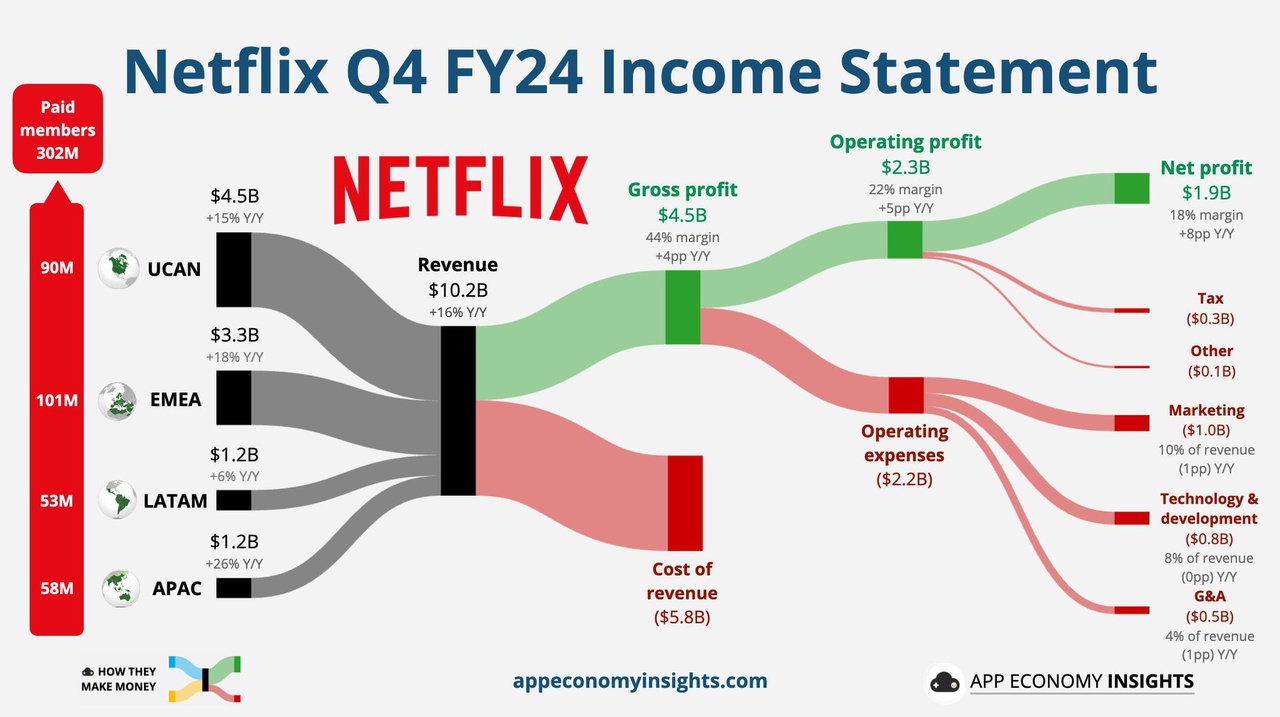
- Sales: USD 10.25 billion (estimated USD 10.11 billion); increase of +16 % compared to the previous year
- Earnings per share: USD 4.27 (estimated USD 4.18); increase of +102 % compared to the previous year
- Paid streaming net accesses: +18.91 million (estimated +9.18 million) ; increase of +44% compared to the previous year
- Total number of paid streaming memberships: 301.63 million (estimated 290.93 million); increase of 16% compared to the previous year
- Operating income: USD 2.27 billion (estimated USD 2B); increase of 52% compared to the previous year
- Operating margin: 22.2 % (estimated 21.9 %)
- Free cash flow: USD 1.38 billion (estimated USD 1.06 billion); decrease of -13% compared to the previous year
Segment performance:
United States and Canada (UCAN):
- Sales: USD 4.52 billion; increase of 15 % compared to the previous year
- Paid net additions: +4.82 million (estimated +1.75 million); increase of +72% compared to the previous year
- Average revenue per membership (ARM): $17.26; increase of 4% compared to the previous year
Europe, Middle East and Africa (EMEA):
- Revenue: USD 3.29 billion; increase of 18 % compared to the previous year
- Paid net additions: +5 million (estimated +3.09 million); decrease of -1% compared to the previous year
- ARM: $11.11; increase of 3% compared to the previous year
Latin America (LATAM):
- Sales: $1.23 billion; decrease of 7% compared to the previous year
- Paid net additions: +4.15 million (estimated +1.5 million); increase of +77% compared to the previous year
- ARM: $8.00; decrease of -7% compared to the previous year
Asia-Pacific (APAC):
- Sales: USD 1.21 billion; increase of 26% compared to the previous year
- Paid net additions: +4.94 million (estimated +2.70 million); increase of +70% compared to the previous year
- ARM: $7.34; unchanged compared to the previous year
Content performance:
- "Squid Game" Season 2 and "Carry-On" have reached significant milestones and "Squid Game" is well on its way to becoming one of the most-watched original series.
- With the fight between Jake Paul and Mike Tyson, Netflix delivered the most-streamed sporting event of all time.
- Record-breaking NFL viewing figures on Christmas Day.
Forecast for the first quarter of 2025:
- Revenue: USD 10.42 billion (estimate: USD 10.48 billion)
- Earnings per share: USD 5.58 (estimate: USD 6.01)
- Operating income: USD 2.94 billion (estimate: USD 3.13 billion)
- Operating margin: 28.2% (estimate: 29.8%)
Forecast for the full year 2025:
- Sales: USD 43.5-44.5 bn (estimate: USD 43.59 bn); increase of 12-14% compared to the previous year
- Operating profit margin: 29% (previously: 28%)
- Free cash flow: approx. USD 8 billion (estimated: USD 8.51 billion)
CEO's comment:
- "2024 marked a renewed acceleration in growth with a 16% increase in sales compared to the previous year. We are entering 2025 with strong momentum and are preparing for the return of hit series such as 'Squid Game', 'Wednesday' and 'Stranger Things'. Our live programs and ad-financed plans are the main drivers of this growth."
Strategic updates:
- Focus on ad-supported plans. 55% of new sign-ups in ad-supported regions opt for ads.
- Investment in live event programming, including exclusive rights to the FIFA Women's World Cup (2027 and 2031).
- Enhanced ad tech platform to be launched in Canada and rolled out in the US in April 2025.
1111
2 Comments
I don't need it. But it's a great share in any case
•
11
•Trending Securities
Top creators this week
Real-time data from LSX · Fundamentals & EOD data from FactSet