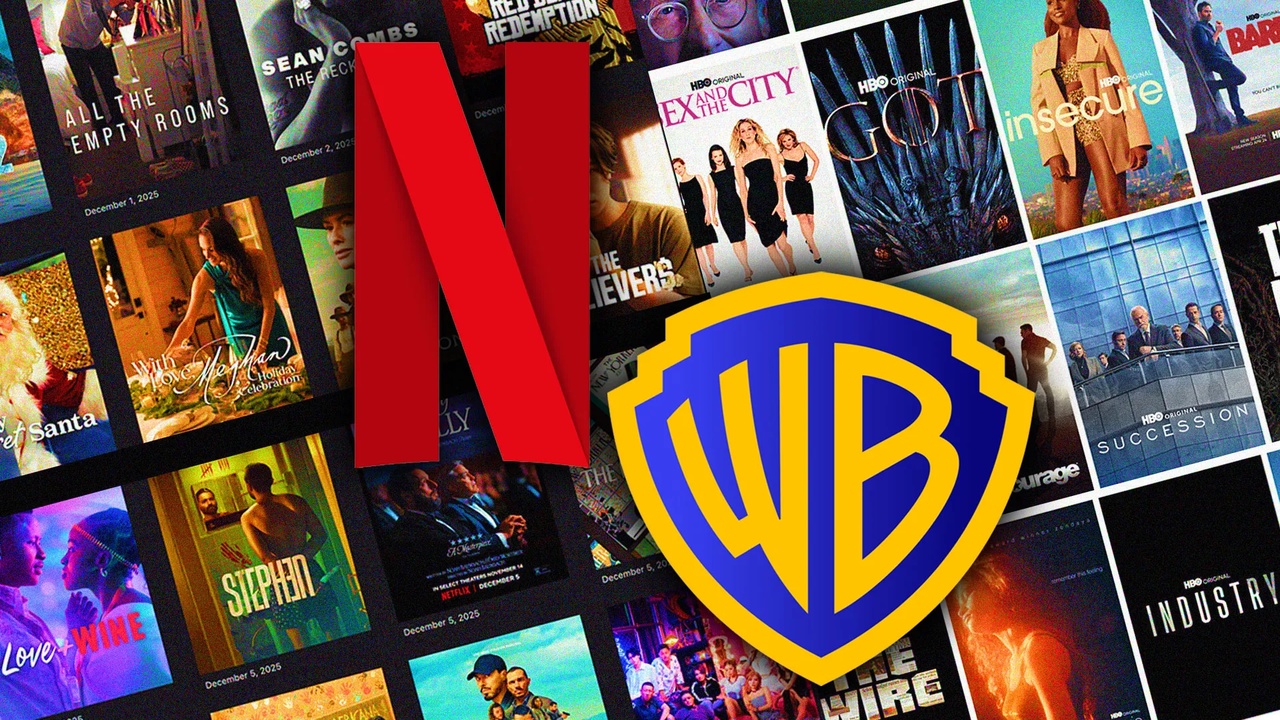
Netflix’s empire isn’t limited to our world anymore, it now includes Westeros, the Wizarding World, and Middle-earth
Netflix is pulling off one of the most audacious moves in entertainment history by agreeing to acquire Warner Bros.’ film studios, HBO Max, and its iconic content library for roughly $72 billion in equity value and about $82.7 billion enterprise value. No wonder this deal has shaken up the markets on a seemingly boring Friday. This news is mind-blowing, not just for Netflix and Warner Bros, but for the whole industry.
If this goes through, it’s not just a deal — it’s a declaration of war on the rest of Hollywood and especially the streaming industry. Netflix already dominates streaming with ~300 million global subscribers, and adding HBO Max’s ~128 million subs (plus the studio itself) would push its combined market share well above the typical “30%” antitrust danger zone, at least within traditional streaming metrics. However, I think there’s a solid case to be made that having Netflix and HBO Max combined with a 10% price hike to the subscription would be more beneficial for consumers than paying for both separately or choosing between them.
Just imagine the content vault: Game of Thrones, Succession, The Wire, Batman, Harry Potter, Lord of the Rings — all under one roof. No more costly licensing fees, seamless integration into one interface, and an entertainment lineup as deep as a Sunday scroll through Netflix itself. Historically, Netflix has done a very good job of keeping its customers satisfied and offering just enough new content for people not to cancel their subscription, but this is a whole new dimension. The production pipeline and global penetration suddenly become a strategic colossus unrivaled by Disney, Amazon, or anyone else.
Yes, $80 billion for a company that last generated around $10 billion in free cash flow might look like a stretch. On surface metrics, that’s rich. But in a world where sticky subscription revenue and iconic IP are gold, and the alternative is perpetual licensing costs and fragmented content libraries, there’s a plausible logic: raise subscription prices modestly, leverage scale, and fold in HBO’s revenue power. Realistically, how many people would cancel their subscription because of a $2 price increase? Especially when those $2 give you access to a vast library of new, high-quality content.
There’s just one massive obstacle: regulation. Antitrust scrutiny is real, bipartisan, and coming from all sides. President Trump has publicly flagged concerns about market dominance, and lawmakers in both parties, plus industry rivals like Paramount, are sharpening their objections. Also, we should add that Disney set an example with its $70 billion acquisition of 20th Century Fox a few years ago.
So while this feels like the deal that reshapes media and streaming forever, it’s far from a done deal. Regulators could force a separation of HBO Max and Netflix, delay closure by years, or in the worst case, block the transaction outright.
For me personally, I love the strategic logic if it goes through. But a forward P/E of 38 for Netflix makes new buys hard to justify right here. If the stock dips below $80, I’d be much more comfortable stepping in. Until then, I’ll just enjoy the extra content.