
I came across the share through Bill Ackman and did a bit of research. He holds over 5% of his portfolio in Hilton $HLT (-0,93%) which shows that he thinks the company is attractive in the long term. This made me curious to take a closer look at the business model and the risks.
Hilton is one of the largest and most profitable hotel companies in the world and relies on an extremely capital-light business model that differs significantly from traditional hotel chains. While many competitors own their own hotels, Hilton concentrates almost entirely on management and franchise agreements. The properties belong to external hotel owners - Hilton supplies the brand, standards, technology, reservation systems and marketing. This structure ensures that around 95% of the operating result comes from stable, recurring fees, while hardly any of the company's own capital is tied up. For investors, this means high margins, low risk and strong cash flows.
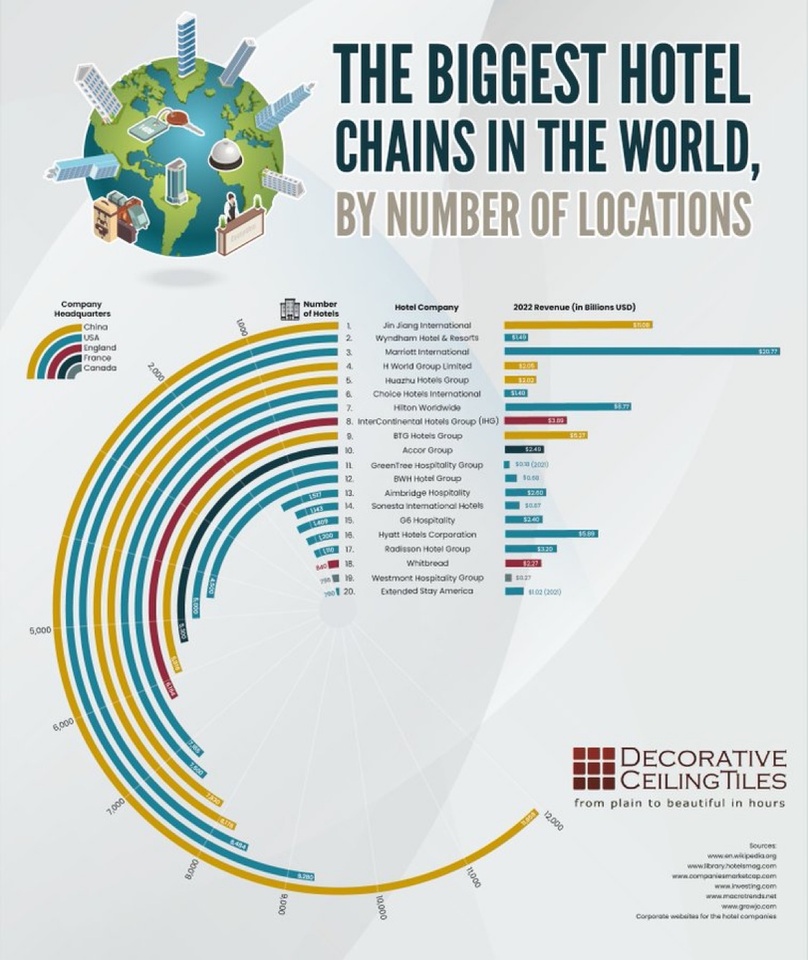
The economic engine behind this is a global brand portfolio with around 8,800 hotels and over 1.3 million rooms in 139 countries. Hilton covers almost every price segment with brands such as Waldorf Astoria, Hilton Hotels, DoubleTree, Hampton and numerous lifestyle and long-stay concepts. This enormous brand penetration creates a strong network effect: the more hotels there are in the system, the more attractive the offer becomes for guests, which in turn strengthens demand and motivates existing and new hotel owners to open further hotels under the Hilton flag. The global RevPAR advantage of 14% over comparable hotels in the market shows that this system works.
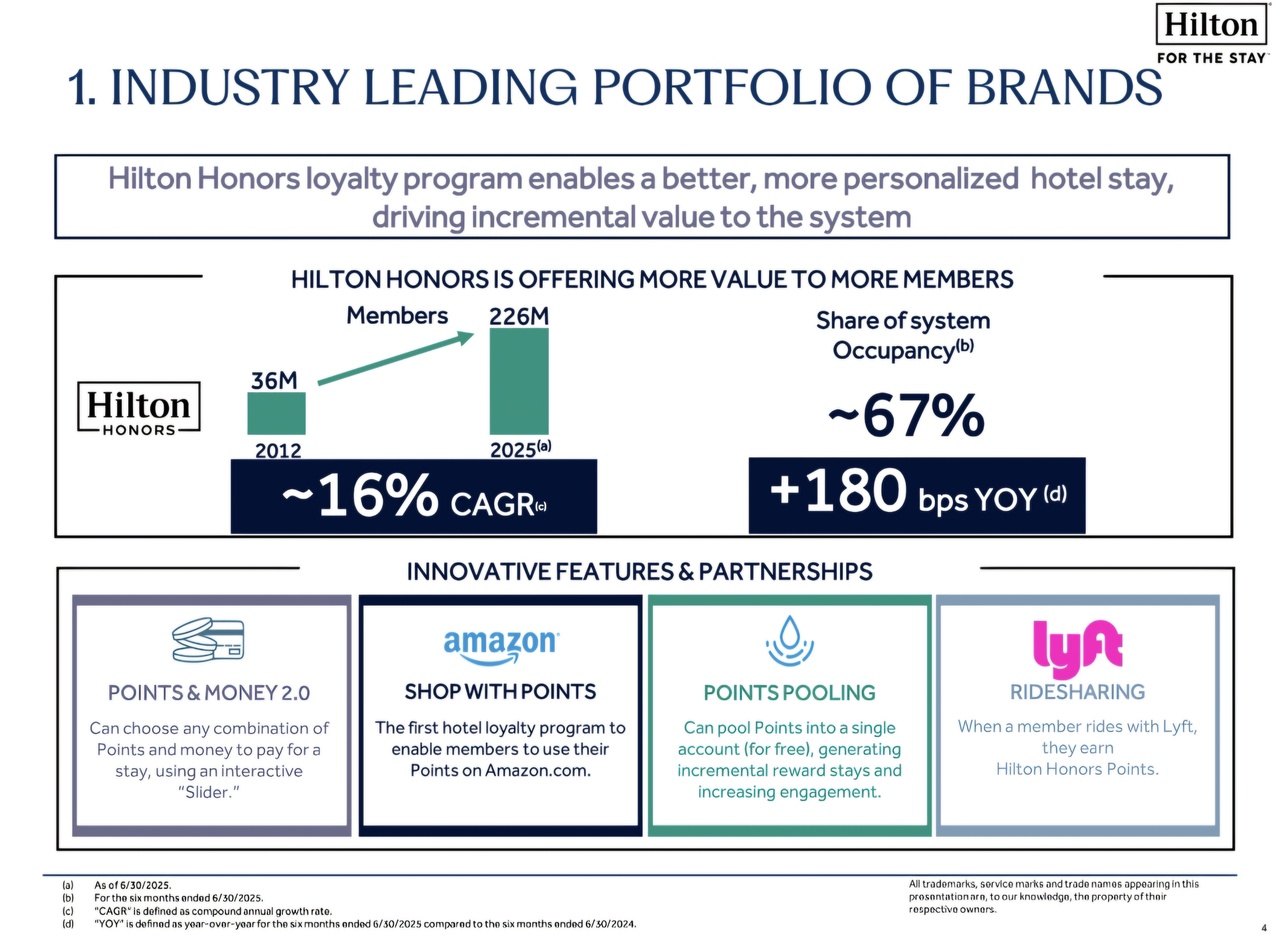
A key component of this network effect is Hilton Honors - one of the largest and fastest growing loyalty programs in the industry. Over 226 million members ensure predictable demand, high occupancy rates and a close bond with the brand. Innovations such as digital room keys, room selection via app, personalized connected room experiences and partnerships with companies such as Amazon and Lyft make Hilton even more attractive to guests and strengthen the platform in the long term.
Another advantage for investors is that growth is almost entirely through third parties. Hilton itself only invests around 460 million US dollars in its global development pipeline - while external partners invest over 60 billion US dollars in new projects. Around 90 % of the pipeline are so-called "dry deals", in which Hilton does not have to invest any capital. In this way, new hotels are created year after year, which bring in long-term fee agreements. The average contract term is 15 to 20 years, which guarantees stable and predictable income.
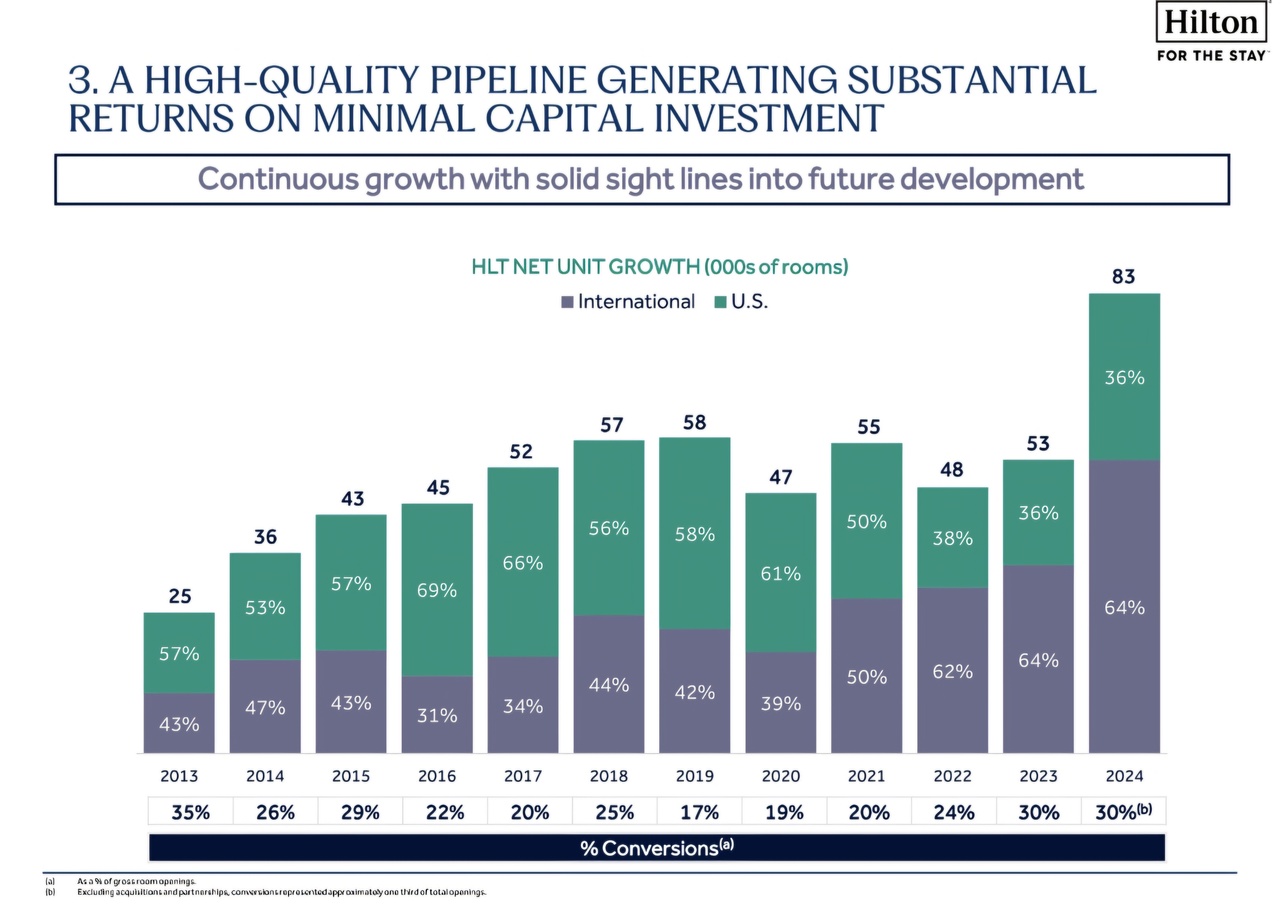
Hilton is also growing faster than the market. Around five percent of all available hotel rooms worldwide are currently allocated to Hilton brands - but over 20 % of hotels under construction. This means that the Group's market share will continue to grow. Net unit growth, i.e. the annual net growth in the number of rooms, has been one of the strongest in the industry for years.
In financial terms, Hilton is characterized by a robust capital structure: The gearing ratio is a moderate 3.0× EBITDA, and a large part of the debt has a fixed long-term interest rate. This allows both dividends and share buy-backs without compromising growth.
The bottom line is that Hilton is a highly scalable platform company that does not own hotels, but "packages" them: Brand, technology and demand are provided globally, while external owners finance the properties. This combination of capital poverty, reliable fees, strong brand equity and steady organic growth makes Hilton one of the most attractive business models in the entire travel sector - and a long-term quality asset for many investors.
However, as with any investment, there are risks: Hilton is heavily dependent on global travel trends, business travel and leisure demand. An economic slowdown or a decline in the desire to travel can have a noticeable impact on hotel occupancy and therefore on revenue. In addition, rising costs for energy, personnel and maintenance have a direct impact on margins, while franchise and management relationships sometimes limit control over quality and operations. Other factors such as currency fluctuations, natural disasters
or overcapacity in the industry can also influence results. Competitive pressure from other hotel chains or platforms such as Airbnb also remains high and demands continuous innovation and brand management from Hilton.
An important component of Hilton's brand strategy is sponsorship and active participation in marketing cooperations. The company was identified as the "most active hotel brand in sports sponsorships" in 2025, with over 30 partnerships that provide coverage primarily in the sports sector - soccer and ice hockey. In addition, Hilton is committed to sustainability, environmental protection, social projects and supporting communities worldwide through the "Travel with Purpose" program. These initiatives not only strengthen the brand image, but can also improve customer loyalty and competitive position in the long term.