

$FICO (+7,01%) fez bullyng com os seu parceiros estratégicos e aumentou os preços agressivamente. O mercado respondeu...
Fair Isaac
Ação
Ação
Ticker: FICO
FICO
Price
Discussão sobre FICO
Postos
40


5Mês·
Mitek identity verification platform is now available on the FICO marketplace
nice to have Mitek in the project. (@Dividendenopi )
Key message: Mitek integrates its Verified Identity Platform into the FICO Marketplace - a strategically strong upgrade that brings Mitek's technology directly into FICO's decision-making processes.
Key points for investors
- Mitek now in the FICO Marketplace Organizations using FICO can immediately integrate Mitek's identity verification into onboarding, recovery and authentication processes.
- Strategic importance FICO is a global standard for risk and decision models. The integration increases Mitek's reach and relevance in the enterprise segment.
- Statements from the management
- Mitek: faster introduction of highly secure identity verification
- FICO: Mitek's identity intelligence is embedded directly into the FICO decision layer
Market environment FICO share price has fallen by 37% in 6 monthsbut remains at 84% gross margin fundamentally strong. InvestingPro rates FICO as undervalued undervalued.
FICO quarterly figures (Q2 2026)
- EPS: USD 12.50 (vs. 10.91 expected)
- Revenue: USD 692 million (vs. 628.55 million expected)
- Annual outlook raised:
- Revenue 2026: USD 2.45 billion
- Adjusted EPS: USD 40.45
- Analysts & market reactions
- JPMorgan lowers price target slightly (USD 1,225 → USD 1,325), rating: Neutral
- Investor Steve Eisman shorts FICO and criticizes price increases
- Mitek company profile
- 7,000+ organizations use Mitek's identity and fraud prevention technology.
Investor takeaway (compact)
Mitek gains massive strategic visibility and enterprise relevance through FICO integration. For FICO, it is another building block to strengthen its platform with proven AI and identity solutions - despite short-term market volatility.
Mitek identity verification platform now available on FICO marketplace By Investing.com



5Mês·
Stocks with 20 percent CAGR potential Part 9: FICO - The backbone of global lending
In our series on stocks with the potential for a 20% compound annual return (CAGR), we often look for "disruptors" or "growth monsters". In this installment, however, we take a look at a company that is not as loud as Nvidia $NVDA (-1,68%) but has such a deep-rooted market position that it literally speaks the "language of credit": Fair Isaac Corporation (FICO) $FICO (+7,01%) .
---
Why FICO?
FICO isn't just a company - it's an industry standard. In the USA, the FICO score is the most important indicator for assessing creditworthiness. If you want to take out a loan, you can hardly avoid FICO. This business model offers one of the strongest "economic moats" you can find on the stock market.
---
The numbers behind the thesis
Two central aspects immediately stand out in the analysis:
Strong growth & efficiency:
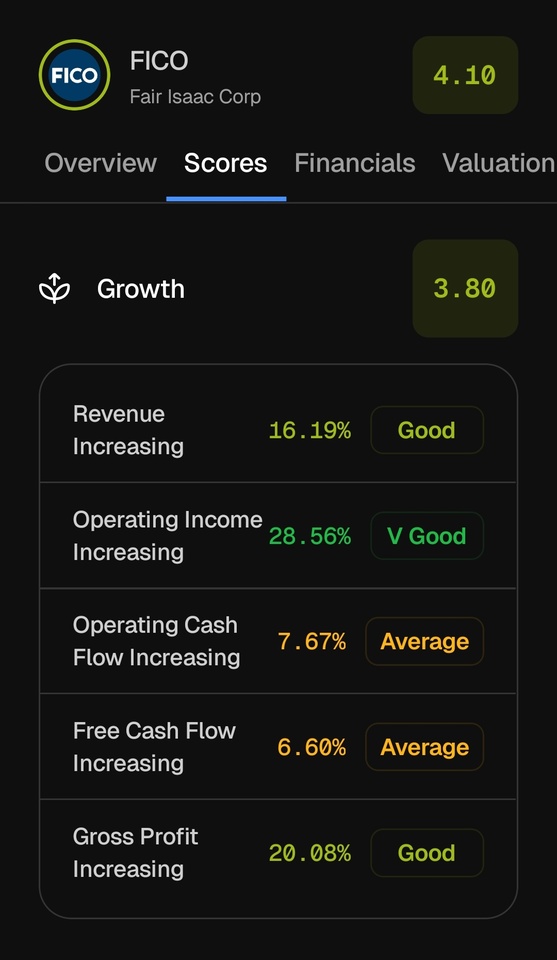
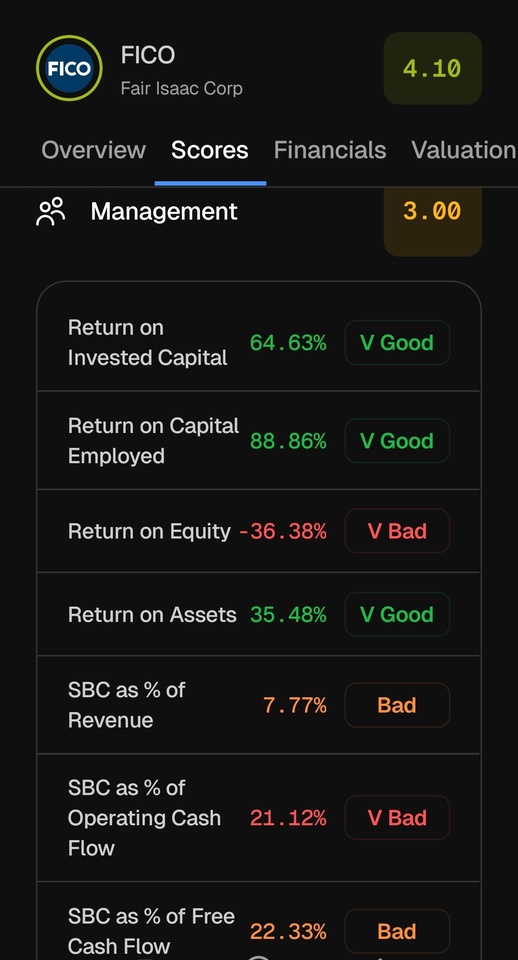
FICO shows an impressive operational development. The company has managed to significantly expand its operating margin while increasing turnover (approx. 16%) - operating income is growing by over 28%.
Valuation:
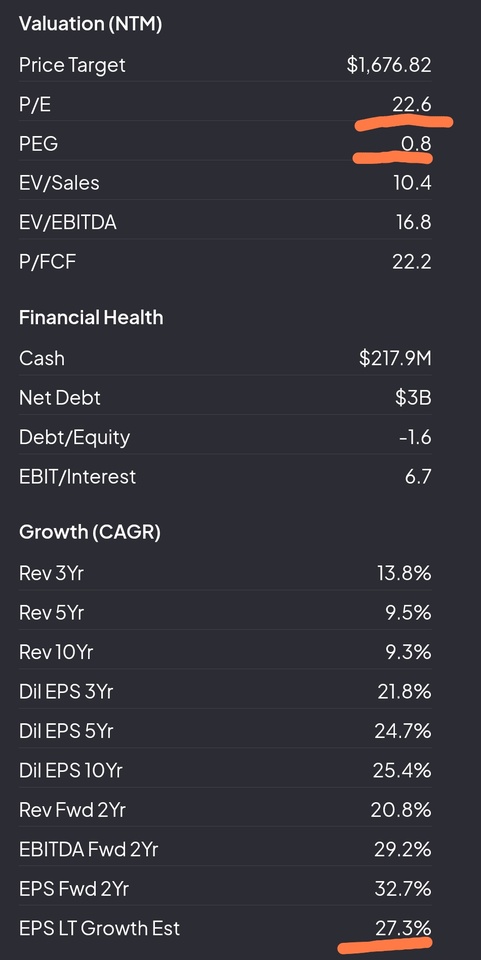
Despite the high quality and dominant market position, the share appears fairly valued to slightly undervalued on the basis of current model calculations. With a forecast CAGR of over 20% for the next five years, FICO fits the profile of this series perfectly. The valuation is lower than it has been for years.
Peg is 0.8!!!
---
Pros & Cons: FICO
Pro (opportunities)
- Monopoly-like position:
The FICO score is firmly anchored in the financial world. The network effects are enormous, as banks and lenders rely on a standardized system.
- Shareholder value:
Management clearly acts in a shareholder-friendly manner. A key driver is the continuous reduction of outstanding shares (share buybacks), which increases earnings per share in the long term.
- Pricing power:
As the product is business-critical for financial institutions, FICO has strong pricing power and is good at passing on cost increases.
---
Cons (risks)
- Balance sheet structure:
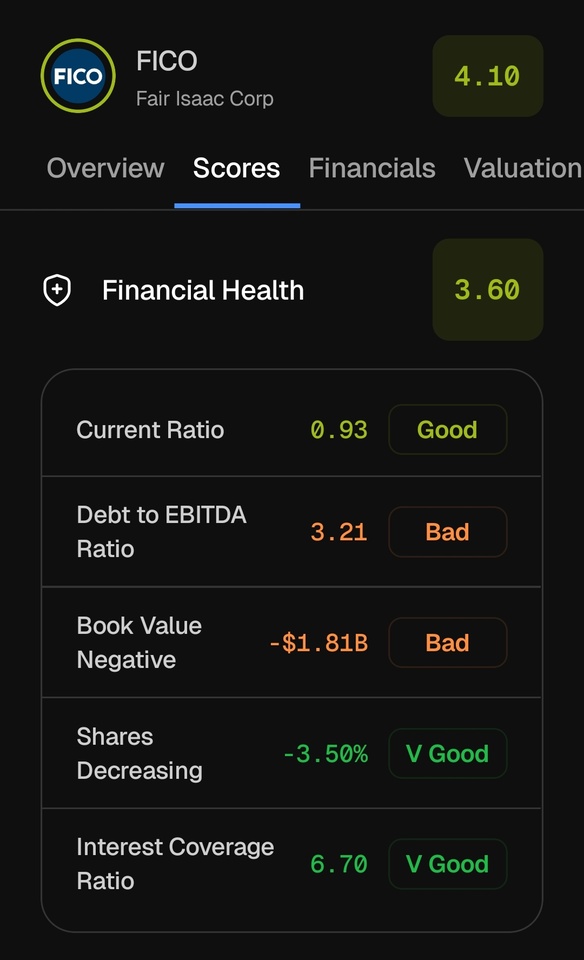
A critical look at the financial position reveals a negative book value. This often results from massive share buybacks. While this can increase returns, the debt level should be monitored closely.
- Dependence on the credit market:
The business model is closely linked to credit activity. A sustained slump in demand for credit - due to permanently high interest rates, for example - could slow down growth.
---
Conclusion
FICO is an exciting example of how a seemingly "boring" software company can become a performance machine through a dominant market position. The combination of an established product and disciplined capital management (especially share buybacks) forms the basis for the potential CAGR of around 20%.
What is your opinion?
Is FICO a safe-haven stock for a 20% portfolio - or is the negative equity too much of a risk for you?
I don't own shares in FICO but I am actively considering buying shares.
A detailed analysis of FICO
+ 6


6Mês·
Mar 16 / FICO — Another Monopoly on Sale?
But to what extent is FICO really a monopoly? Is the “high margins, no competition” status still intact? Has management overused its pricing power and in doing so angered the regulators?
Let’s start at the beginning. FICO has two main business segments: software and scores. The software business is fairly boring and only shows moderate growth. FICO offers cloud-based SaaS tools to businesses, including AI analytics platforms, fraud protection and decision management systems. Solid, but nothing spectacular.
The real driver behind FICO’s enormous moat, at least so far, is the “scores” segment. Growing at close to 30%, the FICO score is the industry standard for most lenders. It is used in over 90% of lending decisions to assess someone’s creditworthiness based on payment history and various other factors, on a scale from 300 to 850.
That essential role made FICO almost untouchable for years. But now it’s in the crosshairs of prominent senators like Josh Hawley, who seems to take pleasure in going after large companies and their CEOs, whether it’s Mark Zuckerberg, Dave Calhoun or Shou Zi Chew, who repeatedly had to assure Hawley, during a hearing, that he is neither Chinese nor a member of the CCP.
The core argument from lawmakers is that FICO has overstretched its pricing power. And to be fair, they’re not entirely wrong. The wholesale per-score fee increased from $0.60 to $10.00 over the past five years. That’s a 16x increase.
Why did FICO do that? Because they can. Not just because they effectively have no competition, but also because, as management has pointed out multiple times, paying a few extra dollars for a lending decision involving tens or even hundreds of thousands doesn’t really move the needle.
That’s capitalism. If someone is willing to pay, someone is going to charge. And a good CEO will push that as far as possible. It’s not on management to show restraint out of goodwill. It’s on lawmakers to create a framework where real competition can exist. Right now, regulation is tight and barriers to entry are high.
And yes, ultimately this hits consumers. Banks aren’t going to eat those costs. They’ll pass them on.
One thing I do find interesting though: why double the per-score fee again this year when the political pressure is already building? You’d think it might make sense to let things cool off a bit. But I’m sure management knows exactly how much leverage they have.
Lenders don’t just pick whichever scoring system they like. They are tied to standards linked to Fannie Mae and Freddie Mac, which historically embedded FICO as the default. That means FICO is deeply integrated into underwriting systems, risk models and compliance frameworks.
Switching isn’t just a pressing a button. Banks trust FICO, regulators recognise it, and alternatives like VantageScore are still seen as unproven at scale. And as long as lenders can pass on the cost without affecting demand, there’s very little incentive to change.
So is the stock a buy?
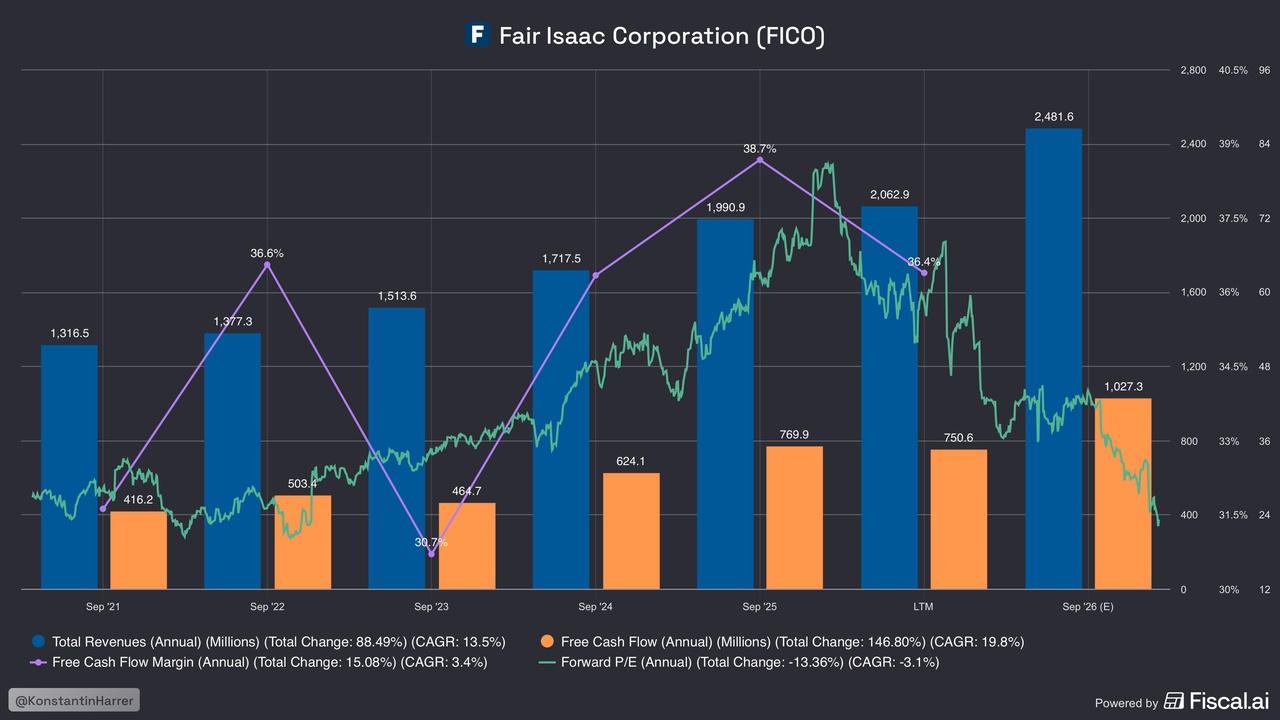
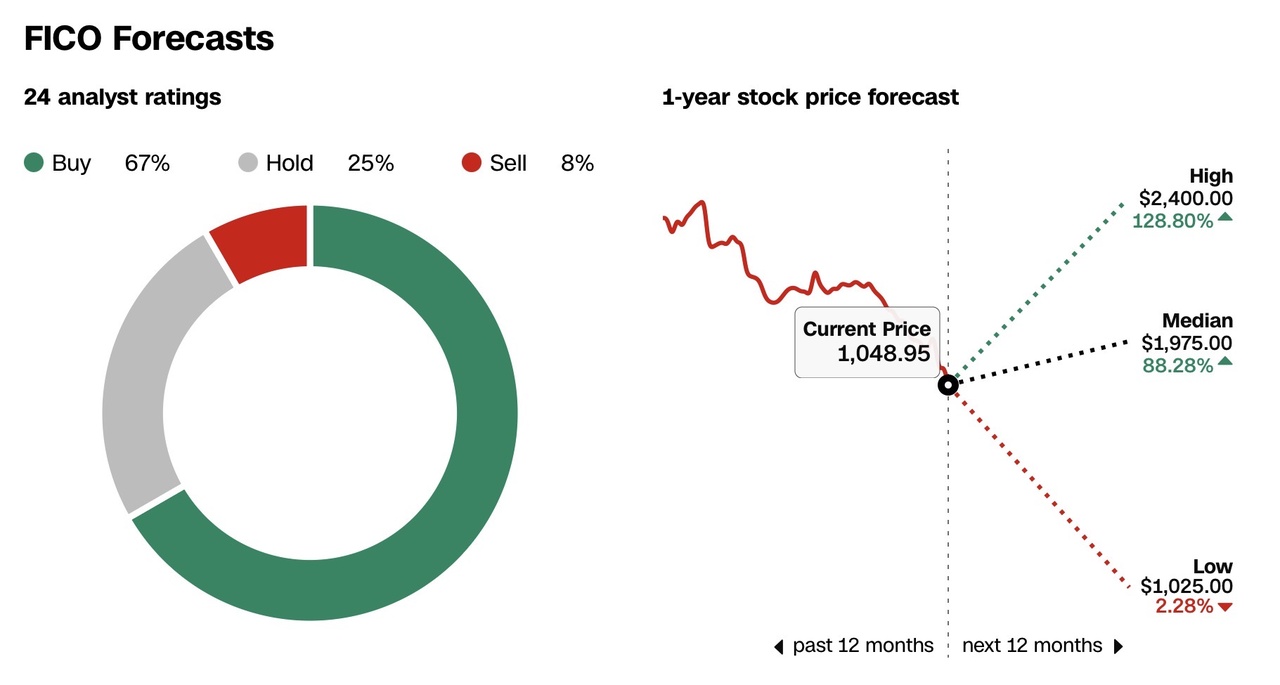
I think it’s getting really interesting around $1000, down roughly 55% from its highs. But at the same time, there are a lot of opportunities in the market right now. And despite the drawdown, FICO still trades at around 25x forward earnings and roughly 20x based on FY28 estimates.
That’s fair, but not the kind of “once in a decade” bargain you might expect after a selloff like this. The valuation is back to 2021 and 2022 levels, but with significantly higher growth. Revenue is now projected to grow in the 20% range instead of single digits.
So yes, it’s a compelling opportunity. I’m definitely tempted to nibble. But I’d have to sell something else, and I’m not sure FICO beats my current holdings on long-term upside.
That said, if the stock drops to around $850, I probably won’t be able to resist any longer.
1010
8Mês·
FICO signals robust growth in scores and annual recurring revenue for the platform
Hello everyone, FICO has also presented figures. I continue to see a moat here, which is why I remain invested.
The use of direct licenses is increasing.
CEO William Lansing highlighted the strong start to the year, reiterated guidance for fiscal 2026 and reported first quarter revenue of $512 million, up 16% year-over-year. He stated: "We delivered first quarter GAAP net income of $158 million, up 4%, and GAAP earnings per share of $6.61, up 8% year-over-year." Non-GAAP net income was $176 million and non-GAAP earnings per share were $7.33. Free cash flow amounted to USD 165 million in the first quarter and USD 718 million in the last four quarters.
Lansing highlighted the "Scores" segment as a growth driver, with sales increasing by 29% to 305 million US dollars. This increase is primarily attributable to B2B scores and the continued positive development in the B2C sector. The "Software" segment achieved sales of 2 % (USD 207 million), with the platform business growing by 37 % and non-platform sales falling by 13 %.
Lansing announced the addition of four new strategic resellers to the FICO Mortgage Direct Licensing Program and a DLP agreement with MeridianLink. He also noted the expansion of the FICO Score 10T Adopter Program, stating that lenders in this program generate "over $377 billion in annual loan volume and over $1.6 trillion in eligible servicing volume."
A strategic partnership with Plaid was highlighted to introduce the next generation UltraFICO score, which incorporates real-time cash flow data. The launch of this enhanced score is expected in the first half of 2026.
Gartner recognized FICO as a Leader in the Magic Quadrant for Decision Intelligence Platforms in January 2026. Lansing commented: "We are best positioned because of our ability to execute."
CFO Steven Weber reported: "B2B revenue increased 36%, primarily due to higher unit pricing for mortgage valuation and increased mortgage origination volume." He highlighted record software bookings of $38 million and a 33% growth in the platform's annual recurring revenue (ARR) to $303 million. ARR outside the platform fell by 8% to USD 463 million.
Outlook
Lansing confirmed the forecast for the 2026 financial year and expressed confidence that the company would exceed the forecast for the financial year. Management indicated that potential updates to the guidance would be revisited during the second quarter conference call due to macroeconomic uncertainty. Weber explained: "We continue to expect a net effective tax rate of 24% and an operating tax rate of 25% for the full year."
The company anticipates a slight increase in operating costs over the course of the financial year and emphasized its continued focus on platform-driven ARR growth.
Financial results
Sales in the first quarter amounted to USD 512 million, with GAAP net income of USD 158 million. Non-GAAP net income totaled $176 million. Free cash flow for the quarter amounted to USD 165 million.
Scores segment revenue was USD 305 million, with B2B revenue up 36% and B2C revenue up 5%. Mortgage origination revenue grew by 60% and accounted for 51% of B2B revenue.
Bookings in the software area (ACV) reached a quarterly record of 38 million US dollars. The annual recurring revenue (ARR) in the software area amounted to USD 766 million, while the ARR of the platform was USD 303 million, an increase of 33 % compared to the previous year.
Operating costs amounted to USD 278 million and the operating margin (non-GAAP) was 54%. Cash and cash equivalents and marketable assets totaled USD 218 million; total debt amounted to USD 3.2 billion.
The company repurchased 95,000 shares for USD 163 million in the first quarter.
Conclusion
FICO delivered strong revenue and profit growth in the first quarter of 2026, driven by continued momentum in Scores and accelerated growth in Platform ARR. The company's strategic initiatives - expanding the direct licensing program, launching new partnerships and driving innovation in both scores and software - position FICO for further growth. Management remains confident of exceeding full-year guidance, but is taking a cautious approach to updates due to macroeconomic uncertainty, while operational execution and adoption of key programs are progressing as planned.
1010
2 Comentários
8Mês
How do you see Fico in the long term? I'm actually worried that the Vantage Score 4.0 will (sooner or later) become too much of a competitor for Fico. Not only because it is cheaper, but also because it includes even more data in the score and is therefore more detailed.
••
9Mês·
Depot analysis 2025
Hello my dears,
As promised, I'll start the new year with a look back and a brief analysis of the year 2025.
I am always happy to receive suggestions for improvement and ideas.
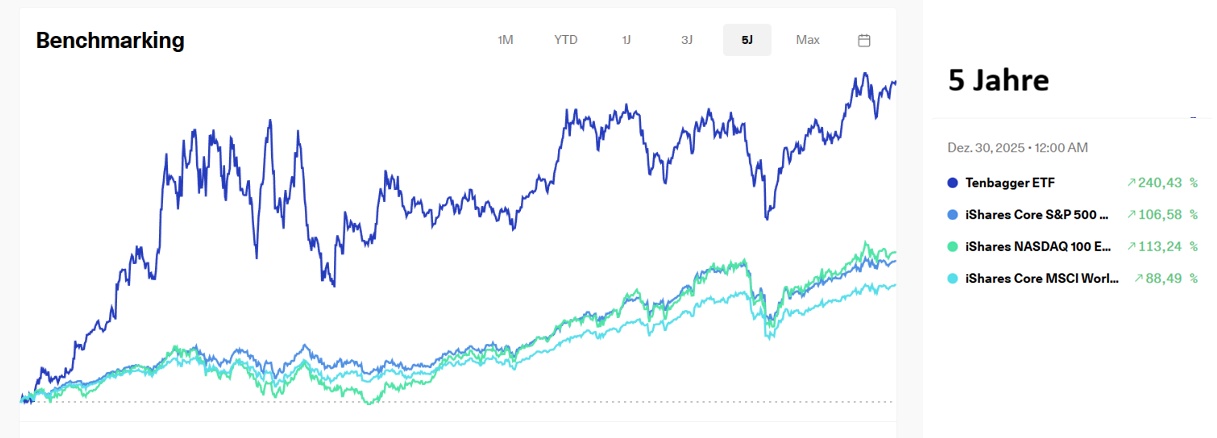
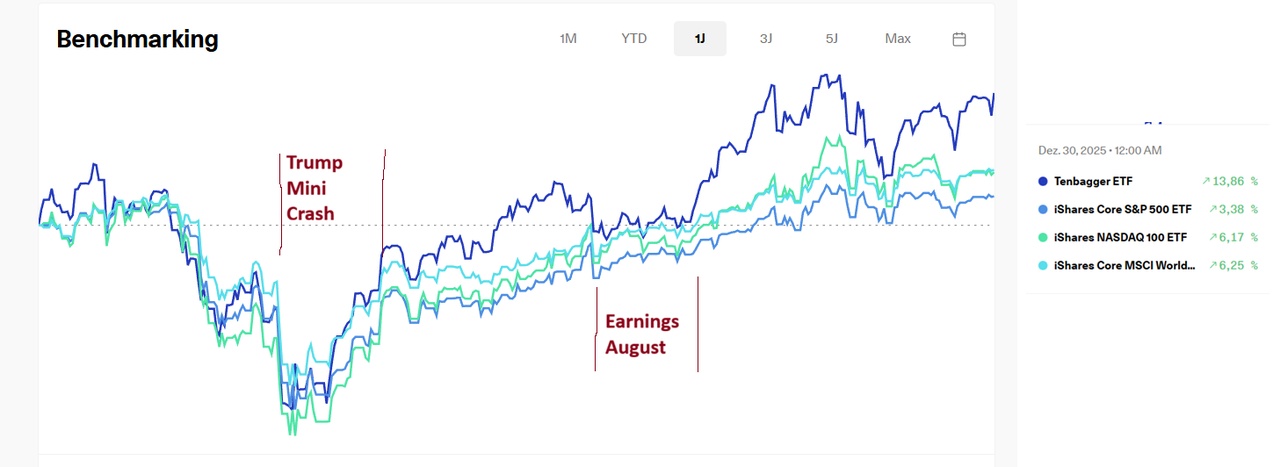
In the 5-year chart you can see an outperformance against popular and strong ETFs.
You can see the resulting higher volatility
Apart from 1% Bitcoin ETP, my portfolio consists exclusively of individual stocks.
I do not trade in certificates.
In the 2025 chartwe see a synchronization with the ETFs until the April crash.
In April, I was lucky enough to receive cash from my former employer. And so I was also able to take advantage of the price reduction 🍊.
Perhaps as a result of clever additional purchases and new purchases, there was a good outperformance compared to the ETFs.
In August, there were good figures for some companies (apart from Elf and Chipotle).
In addition, however, I spent a little more time with momentum stocks in the summer @Krush82 . In the end, I filtered out momentum stocks with good fundamental figures.
Something like
-Gilat $GILT (+0,35%)
-AeroViroment $AVAV (+1,71%)
When 🍊had once again pushed down the pharma sector, there was an additional purchase at
- Krystel $KRYS (-0,56%)
Good figures for
- Micron $MU (+1,87%) and SK Hynix $HY9H (-6,71%)
and a new entry due to good momentum at
- Frequency $FEIM (-2,27%)
then gave me a small year-end rally.
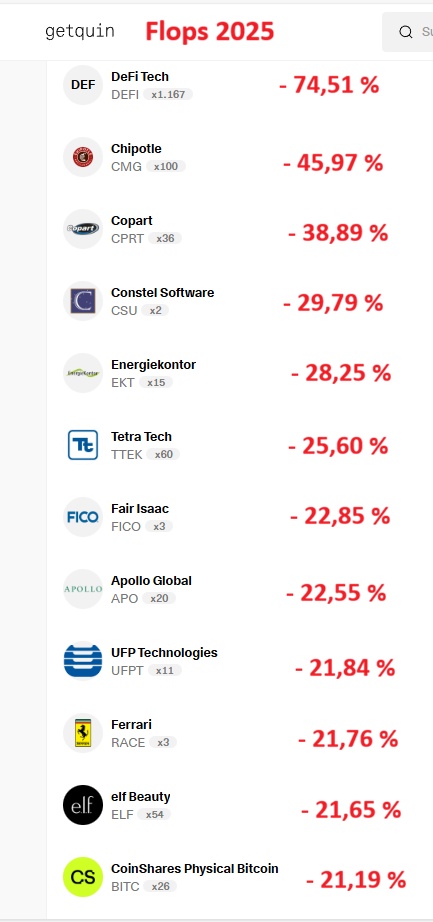
Flops 2025
But of course not everything is positive on the stock market.
And there are also rotten potatoes in a broadly diversified portfolio.
In contrast to an ETF, I have the option of sorting out the rotten potatoes in my portfolio. Which should ultimately lead to outperformance.
But sorting them out is not that easy.
Because some of the underperformers in 2026, such as
- Chipotle $CMG (-0,09%)
- Constel Software $CSU (+5,12%)
- Copart $CPRT (+5,38%)
- Tetra Tech $TTEK (+3,14%)
- UFP Tech $UFPT (+1,65%)
- FICO $FICO (+7,01%)
- Apollo Global $APO (-1,84%)
- Ferrari $RACE (+2,33%)
are less speculative quality stocks, which should actually hedge my portfolio.
My dears, I need your help here. help.
Which values would you stick to and where do you see a comeback?
My analysis would be:
- Eleven Beauty as a growth stock still has potential, and has been quite impacted by the China tariffs
- Chipotle continues to expand and grow.
- Constel. Software is a long term compounder which has suffered from CEO resignation and AI uncertainty. See a recovery here.
- FICO the monopoly has been partially broken. But still sees a moat.
- Copart, has been a steady performer so far. But difficult to assess how autonomous mobility will affect the business model. (eternal Selling)
- Ferrarisimilar to Copart. Is facing a major transformation with challenges (eternal sale). Sell)
- Tetra Tech, profiteer of AI and expansion of data centers. Tainted by the Trump administration. Because some public contracts in developing countries. But should benefit from climate change and may even be an insider tip in the election year.
- UFP Technology Growth sector with a moat. Fundamental figures are right, expect comeback (eternal). Buy later)
- Defi Technology the child has fallen into the well 😭. Eternal comeback due to rising Bitcoin.
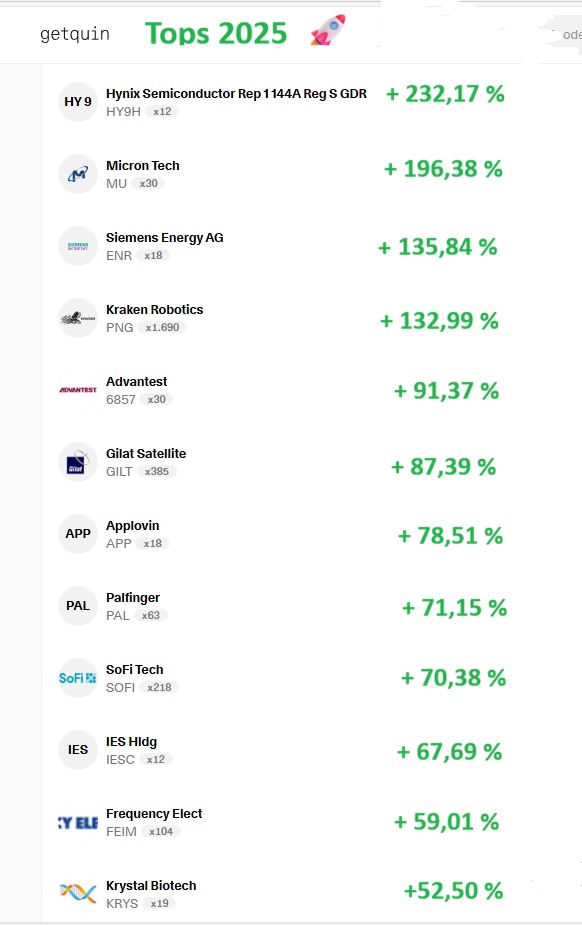
Tops 2026
I continue to hold on to almost all stocks here.
I am particularly positive about the biotech sector.
- Krystel Biotech
- Applovin is now performing very well for the second year in a row. And some analysts also count the share among the favorites for 2026. @Semos25
- micron and sk Hynix were completely ignored by investors for a very long time despite their favorable valuations. I bought more shares several times during this period. Both shares are also among the favorites and AI profiteers in 2026
- Frequency moat in the niche. Profiteers from rising interest in quantum technology. Could benefit from the Spaxe X IPO and NASA's plan to travel to the moon.
- Kraken Robotichas been written about a lot in the last few days (thanks @Klein-Anleger ). I remain invested.
- Sofi, IES Holding, I remain invested.
- Palfingersurprise of the year, fundamentals fit, good dividend yield, profiteer from expansion in renewable energy, increase in defense spending. Chart-technically in a very exciting situation, hanging on to the old high. Watch and help @TomTurboInvest (Watch / Sell).
5656
34 Comentários
•
33
•10Mês·
GFT Technologies & FICO: Revolutionary alliance for Smart Finance
My dears, I remain invested in both companies.
GFT Technologies and FICO launch a global alliance to empower banks with AI solutions against digital fraud and revolutionize risk management.
GFT Technologies and FICO have launched a global smart finance partnership to help banks fight digital fraud and improve risk management.
The partnership uses AI-based solutions to improve onboarding, risk management and real-time decision-making for banks worldwide.
The first successful projects have been implemented in Asia and Latin America, including real-time analytics for fast decision-making and a demand management system for insurance companies.
The alliance combines GFT's expertise in cloud, data and digital banking with FICO's fraud detection and decision management solutions to provide an integrated platform for banks and FinTechs.
A key element of the partnership is the integration of GFT's GenAI product Wynxx, which automates the software development cycle and enables in-depth data analytics.
GFT has established a Center of Excellence for FICO technologies to train specialized teams and support standardized rollouts across various industries.
11Mês·
Fair Isaac: Goldman Sachs confirms buy recommendation in view of upcoming FICO 10T approval
Investing.com - Goldman Sachs reiterated a Buy rating on Fair Isaac (NYSE:FICO) with a price target of $2,070.00 . This is based on the upcoming agreement with the Federal Housing Finance Agency (FHFA) on the implementation of the company's FICO 10T credit scoring model. The price target corresponds to an upside potential of around 17% compared to the current price of USD 1,763.68. However, data from InvestingPro indicates that the stock is trading at a high P/E ratio of 66.
The investment bank views the potential launch of FICO 10T as a positive catalyst for the company, noting that the newer model has higher credit risk scoring accuracy compared to VantageScore 4.0 and the classic FICO score, which could potentially strengthen Fair Isaac's competitive position in the market.
FICO 10T is offered in the mortgage, auto and credit card markets at the same price point as Classic FICO, with pricing structures varying by industry. The company offers both performance-based and score-based pricing options in the mortgage segment (for both conforming and non-conforming mortgages), maintaining consistency with its Classic FICO offering. This pricing strategy appears to be successful, as Fair Isaac has achieved an impressive gross profit margin of 82.2% and generated nearly $770 million in free cash flow over the last twelve months.
Fair Isaac launched a pilot program about a year ago that offers FICO 10T at no additional cost to lenders who purchase Classic FICO for mortgage purposes. The program has gained strong traction in the non-standard loan market, with six of the top ten lenders currently participating.
Goldman Sachs anticipates that lenders already using FICO 10T in non-compliant markets will expand its use to compliant markets once Government Sponsored Enterprises formally implement the new scoring model.
99
11Mês·
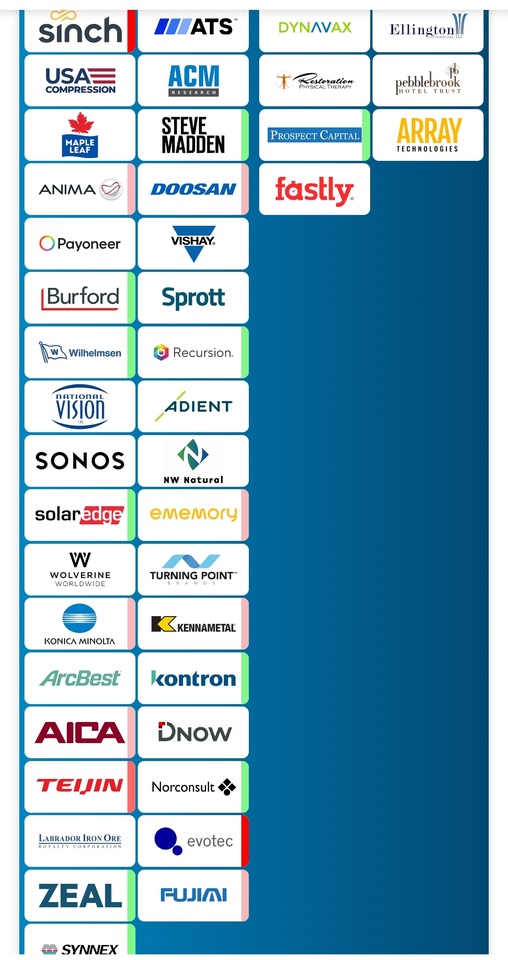
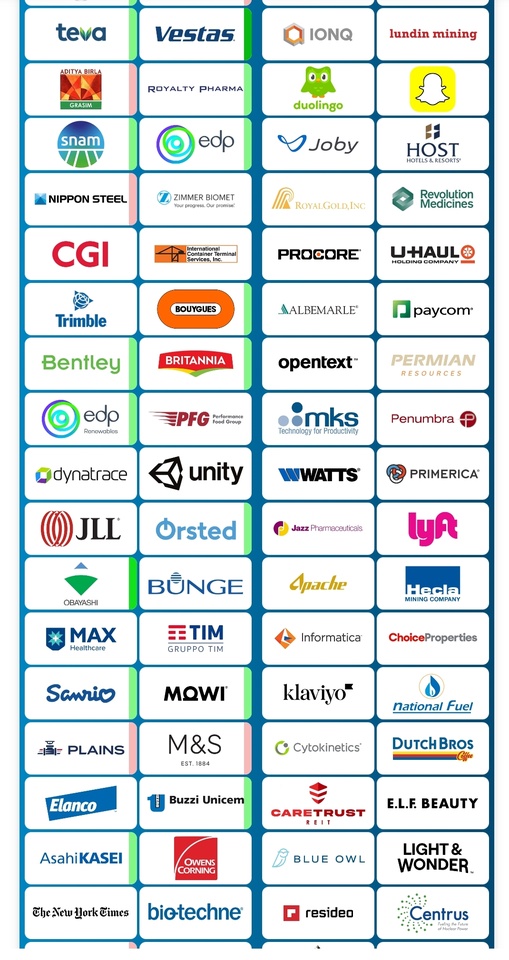
Earnings today
I look at my investments
$APP (+5,94%)
$QCOM (+2,68%)
$ELF (+6,59%)
$FICO (+7,01%)
$8001 (+3,25%)
+ 1
88
9 Comentários
Eleven I will probably pull the ripcord today, not good, I'm expecting prices to fall further. I may then collect them again later. I just don't see any positive aspects that will boost the share price, at least in the short term.
•
33
•Títulos em alta
Principais criadores desta semana
Dados tempo real da LSX · Dados financeiros e EOD da FactSet