
Hynix Semiconductor Rep 1 144A Reg S GDR
Price
Discussão sobre HY9H
Postos
47

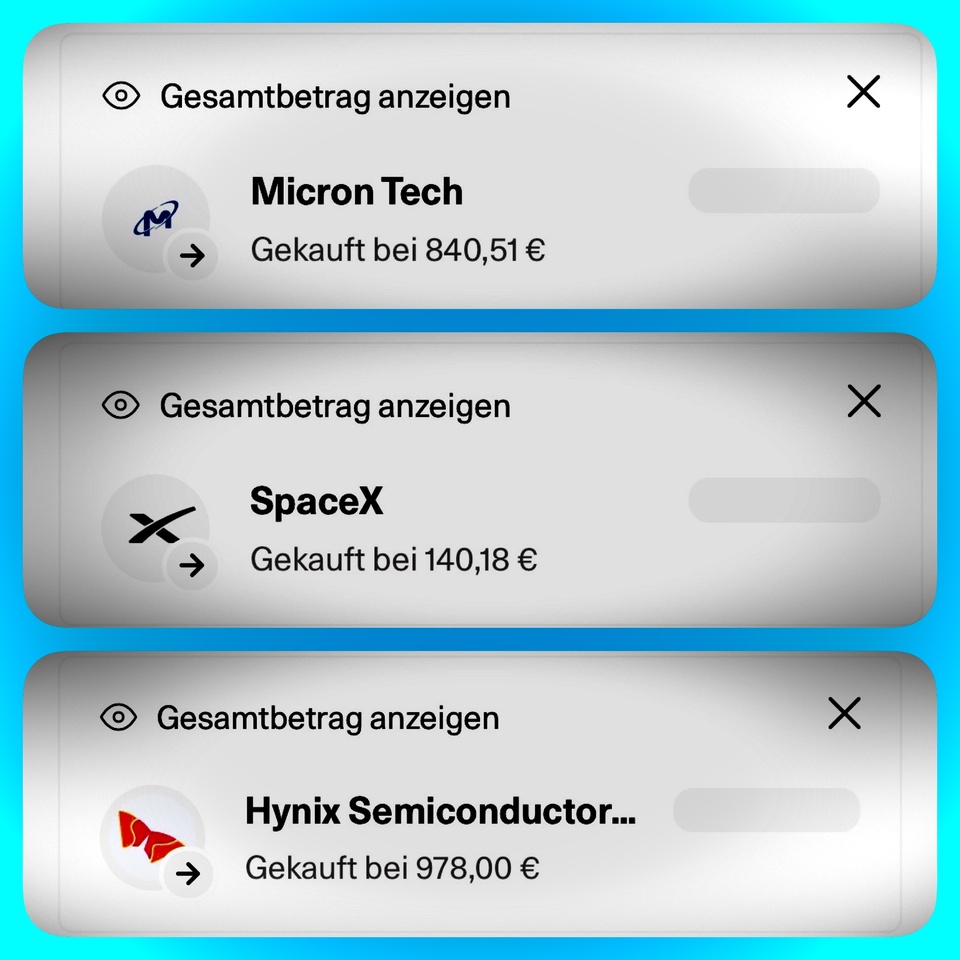


Waiting Big Time Laps | Nikkei | S&P 500 | HSI
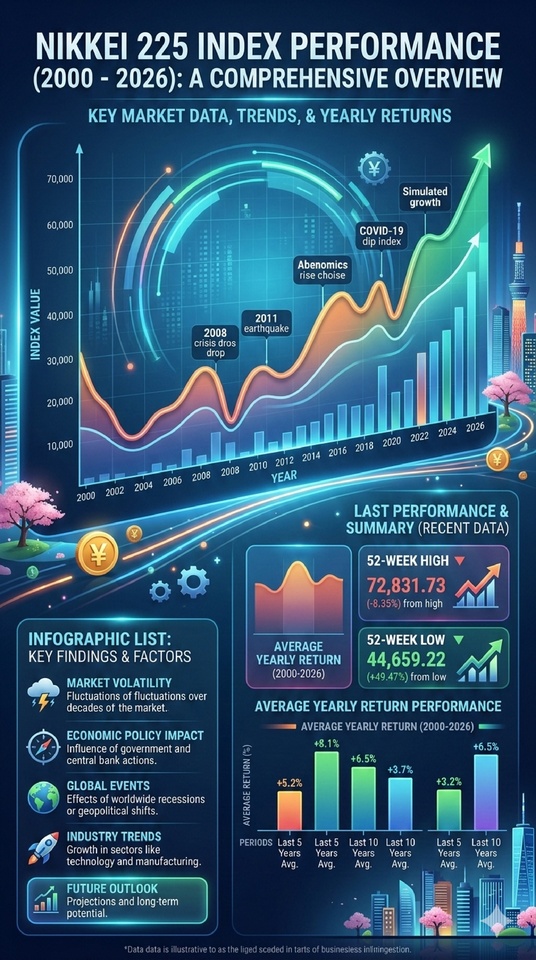
Japan Nikkei 225 index performance with in :
• 52-Week High 72,831.73 (-8.35%)
• 52-Week Low 44,659.22 (+49.47%)
■ Nikkei 225 Index ($NKY)
66,753.72 +1,272.45 (+1.94%) 09/30/26 [SPECIAL]
for Wed, Sep 30th, 2026
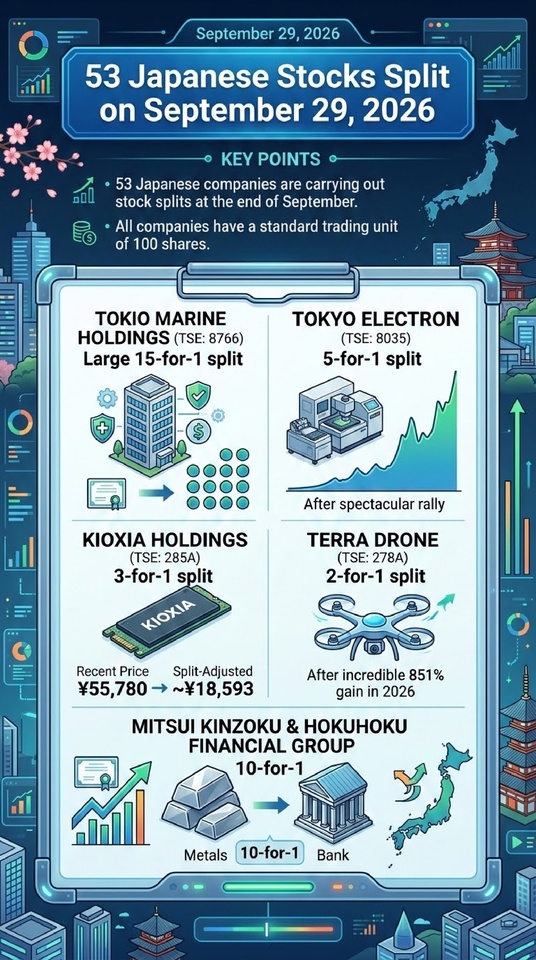
■ Split Stock on September 2026
- 53 Japanese companies are carrying out stock splits at the end of September.
■ Traditional event in frame cycle get performance every years with gap point level position and sink hole in momentum. US S&P 500 market Index | HSI | Japan Nikkei 225 Index. Which on first makes sink drop performance in Q4 season this years.
■ Economic Global Issue with Geopolitical get tension and friction from new story and momentum in market trend. There is still hot and makes point from issue internal on market strategy and frame works must be get balance in standpoint for every years with wave cycle market get average quarter return performance.
• 2025 and 2026 they have its from split stock and this is about "when and how" with market cap and market trends still works on trade meanwhile impact and effect from High Season in high level position. ✅️💫
$285A (+7,78%) , $SNDK (+6,06%) , $SMSD (+7,23%) , $HY9H (+4,85%) , $MU (+3,06%) , $ASML (+1,51%)

SK Executives: Kioxia's Offer Raises the Stakes in the NAND Competition
Is a merger on the horizon here? I’ll just stay invested in both companies for now. And I’ll simply wait and see how things play out.
Japan remains an interesting market when it comes to technology.
My friends, the expansion of production means potential for machinery manufacturers. What do you see here?
(@PikaPika0105 , @Aktienhauptmeister , @Raketentoni )
Chey Tae-won is considering joint production and research & development, while chipmaker Samsung aims to challenge the memory market.
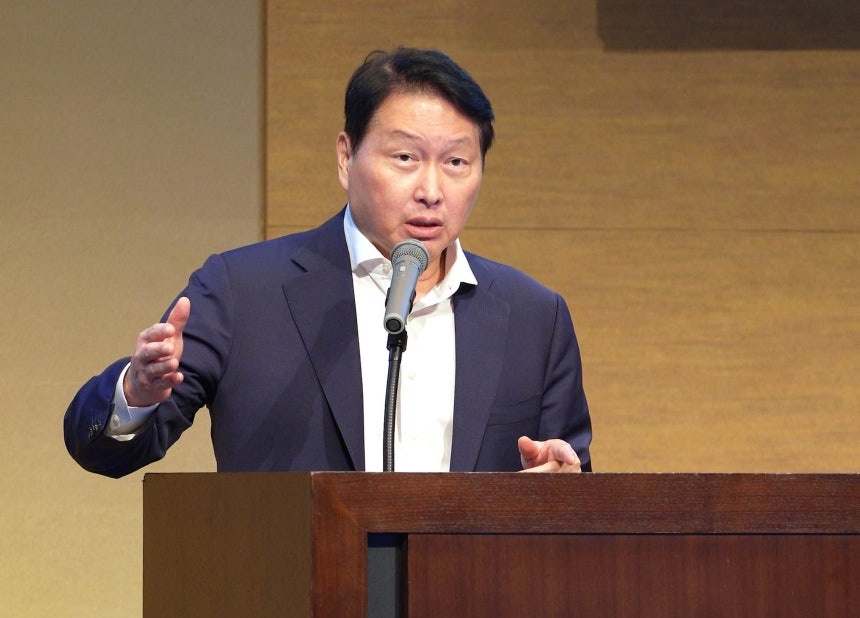
SK Group Chairman Chey Tae-won is considering building a chip plant in Japan, possibly in partnership with NAND flash manufacturer Kioxia, as the South Korean conglomerate seeks closer cooperation with its Japanese competitor.
“One possibility would be joint production,” Chey said in an interview with the Asahi Shimbun published on Tuesday during his visit to Tokyo. He also cited supply chain coordination and joint research and development as potential areas of cooperation.
This move underscores SK hynix’s ambition to leverage its leading position in high-bandwidth memory to challenge Samsung Electronics across the entire memory market. It could also fundamentally transform the global NAND industry, as SK hynix already holds an indirect stake in Kioxia.
“Japan is an extremely attractive candidate in terms of both risk and culture,” Chey said, adding that SK had received proposals from several local governments interested in hosting the planned facility. He did not name any specific locations.
Chey described Kioxia as “a company with many strengths” and explained that SK is ready to become a partner if it can play a role in the Japanese chipmaker’s growth strategy.
“If SK hynix were to be included in Kioxia’s future strategy, we are ready to become a partner at any time,” he said, referring to Kioxia’s manufacturing partnership with SanDisk. Kioxia and SanDisk jointly operate NAND manufacturing facilities in Japan but market their products separately.
Chey also hinted that SK might end its investment in Kioxia if the two companies fail to establish a closer partnership.
SK hynix competes directly with Kioxia in the NAND flash memory sector, but is also a significant indirect investor in the Japanese company. The investment was made through a special purpose company (SPC) managed by Bain Capital, which was established by the consortium that acquired Toshiba’s memory business. In August, the SPC became Kioxia’s largest shareholder with a 14.19 percent stake.
SK hynix holds securities that are convertible into shares with the most voting rights in the SPC and could thus potentially expand its influence over Kioxia. However, an existing agreement prohibits SK hynix from holding 15 percent or more of Kioxia’s direct or indirect voting rights without Kioxia’s consent until 2028.
According to reports, the SK Group is also exploring the acquisition of Japanese semiconductor materials and equipment companies, suggesting a broader effort to establish a stronger position in the Japanese chip ecosystem.
Closer collaboration between SK hynix and Kioxia could alter the competitive dynamics in the global NAND market. Counterpoint Research estimates that Samsung Electronics will lead NAND shipments in the second quarter of 2026 with a 25 percent market share, followed by SK hynix with 22 percent and Kioxia with 14 percent. Together, the latter two have a larger market share than Samsung, even though they remain separate competitors.
Chey’s remarks come as SK hynix is strengthening its position in the High-Bandwidth Memory (HBM) sector, which is used in AI systems and data centers. The sharp rise in demand has brought the company record profits and provided it with the necessary funds to expand beyond HBM.
Lee Jong-hwan, a professor of system semiconductor engineering at Sangmyung University, said, SK hynix appears ready to leverage the profits and confidence it has gained through its leadership in the HBM sector to aim for the top spot in the broader memory market.
“Expanding production capacity is crucial in the semiconductor industry,” Lee said. “SK hynix appears to view Kioxia as a partner that could strengthen its position in the NAND sector and help it challenge Samsung.”
SK hynix is also working with the U.S.-based company SanDisk to develop global standards for High-Bandwidth Flash (HBF). This new technology combines NAND chips to improve performance and storage capacity, using a structure similar to that of HBM. Kioxia’s long-standing partnership with SanDisk could give SK hynix an additional strategic advantage in further developing this technology.
Unlike Samsung, whose business areas include memory, contract manufacturing, and consumer electronics, SK hynix can focus on memory chips. The shift in the AI industry from model development to inference is likely to boost demand for high-capacity NAND memory and potentially create a new market for HBF, according to Lee.
Japan’s strength in semiconductor materials and equipment also makes the country an attractive manufacturing location that SK hynix cannot ignore, he added.


A single manufacturer's slide shows just how bad the situation is with SSD prices
That's why I'm sticking with $MU (+3,06%) Micron and $HY9H (+4,85%) SK Hynix.
But these are also interesting:
My friends, here you should compare growth and valuation.
One of the largest SSD manufacturers is providing insight into its long-term contracts. Most of the storage capacity for the next two years has already been allocated.
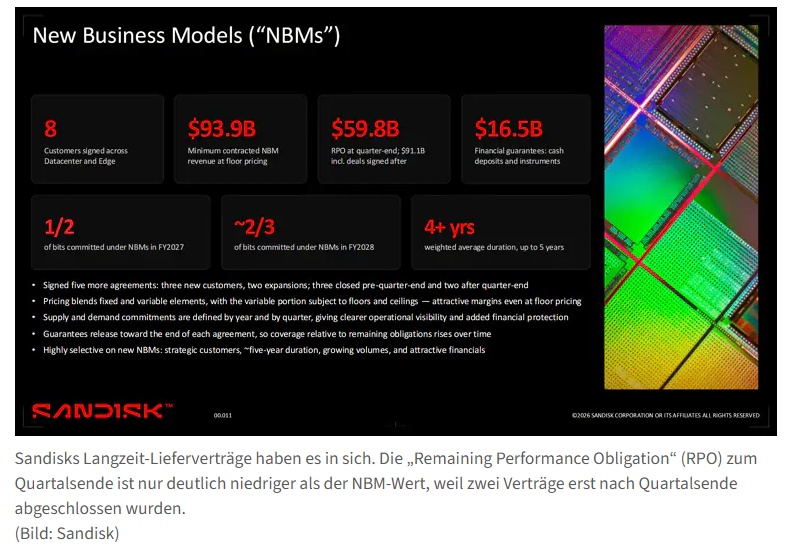
SanDisk has published its latest annual report, and it doesn’t bode well for end customers. A slide on “New Business Models” (NBMs) summarizes the bleak outlook.
SanDisk refers to its long-term supply contracts with major customers for NAND flash memory and finished SSDs as NBMs. The manufacturer has signed eight such contracts with customers for data centers and edge devices. PC, laptop, and smartphone manufacturers are apparently not included. The contracts typically run for four to five years.
For the period from July 2026 to the end of June 2027, SanDisk has already allocated half of its memory production to the eight NBM customers. For the following twelve months, the figure is laut Bekanntmachung it’s even two-thirds. And that doesn’t even include the allocation for contracts outside the NBMs. Either way, it’s clear that less and less is left for PC manufacturers. Meanwhile, the eight contracts combined provide for guarantees totaling $16.5 billion in the event that customers purchase less storage than agreed upon.
In particular, the figures highlight the state of the NAND flash memory and SSD markets: SanDisk is the world’s second-largest manufacturer specializing exclusively in NAND flash and SSDs. Unlike Samsung, SK Hynix, and Micron, its figures are not mixed with DRAM for RAM.
Nearly $94 billion minimum value
The eight contracts have a combined value of at least $93.9 billion. SanDisk clarifies that this figure applies to the lowest agreed-upon NAND flash prices. The companies have negotiated price ranges depending on availability. CFO Luis Visoso said in an analyst conference call regarding the figures that actual revenue will likely be higher. However, even at the lowest prices, the margin is expected to be attractive.
All memory manufacturers are currently negotiating long-term supply contracts, mostly with price ranges. In doing so, they are effectively reducing volatility in the market: When all companies set high minimum prices, they no longer undercut each other significantly. The minimum prices typically correspond to current levels. A Rückkehr zu den Speicherpreisen aus dem Jahr 2025 ist damit unwahrscheinlich.
Revenue and Profit Rise Significantly
SanDisk generated $9 billion in revenue in the second calendar quarter. Compared to the first quarter of 2026 alone, this represents 51 percent growth. According to the manufacturer, one-third of the growth is attributable to additional sales and two-thirds to higher prices. The gross margin stands at a staggering 84.6 percent.
This leaves just over seven billion in operating profit and just under seven billion in net profit. A year earlier, SanDisk had posted a net loss of 23 million US dollars. Due to low SSD prices at the time, the company was operating on the verge of profitability.
Kioxia Is Growing Even Faster
Kioxia, the largest pure-play NAND flash manufacturer based in Japan, reported its neuesten Geschäftsbericht veröffentlicht. The company generated revenue equivalent to 11 billion U.S. dollars in the second quarter of 2026. However, due to higher operating expenses and, above all, taxes, the resulting profit is significantly lower than Sandisk’s: just under 5.3 billion U.S. dollars.
Kioxia is much more secretive about its long-term contracts than its competitors. They exist, but details are unknown.
Eine einzige Herstellerfolie zeigt, wie schlecht es um SSD-Preise steht | heise online


SK Hynix, GDR, or ADR!?
Hi, everyone :)
I have the $HY9H (+4,85%) in my portfolio, but I see that the $SKHY (+4,94%) is performing much better.
Should I sell the GDR and add the ADR to my portfolio instead?
What do you think??
Best, Alois

Lawsuit in the U.S.: Samsung, SK Hynix, and Micron Sued Over DRAM Prices
$HY9H (+4,85%)
$MU (+3,06%)
$SMSD (+7,23%)
$005930
High memory prices for end customers have led to the first lawsuit in the U.S. On June 25, 2026, a class-action lawsuit was filed against the three industry giants—Samsung, SK Hynix, and Micron—who must now respond to the charges in a U.S. federal court in California.
Allegations: Artificial Shortages and Price Fixing
The central allegation in the lawsuit is that memory manufacturers are restricting the supply of memory for the consumer market while continuing to serve customers in the AI sector. Specifically, the complaint alleges that the memory manufacturers simultaneously reduced or even discontinued production of, for example, DDR3 and DDR4, favoring HBM and thereby limiting the availability of conventional memory, while prices rose at the same time. In doing so, they “exacerbated this so-called RAMpocalypse by fixing memory supply and prices,” the complaint further alleges.
The allegations date back to 2022. At that time, demand for DRAM was extremely low; in response, the defendants are alleged to have begun jointly coordinating and adjusting availability and prices. As a result, prices rose by about 700 percent within four years.
However, the indictment argues that in a competitive market, at least one of the three industry giants would normally have significantly increased production if prices were rising sharply—but that did not happen. Not a single one of the three manufacturers took advantage of the others’ withdrawal to win over customers; instead, all three withdrew in unison, the indictment further states.
The lawsuit consists of 17 plaintiffs, some of whom are private individuals and others small businesses, who are now represented by several law firms.
Entry into the Market Virtually Impossible for New Companies
The complaint also points out that there have been legal proceedings against the three manufacturers in the past. In some cases, judgments were even handed down; for example, Samsung and SK Hynix were ordered to pay millions, while Micron acted as a key witness and escaped punishment. The central issue at the time was price-fixing in the so-called DRAM cartel; back then, in addition to Samsung and SK Hynix, Infineon, NEC, Hitachi, Mitsubishi, Toshiba, Elpida, and Nanya were also required to pay fines, as the collusion dated back to 1998.
A thorn in the side back then—and even more so today—is that virtually no other manufacturer can succeed in entering this market. The costs are far too high, and the entire process takes a very long time, from manufacturing to customer qualification. In addition, the technologies are based on know-how built up over decades, and U.S. sanctions further complicate entry for Chinese companies, the complaint argues. The bottom line is that it is anything but easy for a new manufacturer to gain a foothold here, the complaint concludes.
The complaint seeks to “remedy the ongoing effects of the defendants’ unlawful and anticompetitive conduct,” in addition to damages, litigation costs, and attorneys’ fees. According to the current schedule, the first hearings and dates for testimony on the matter are expected to take place in September of this year.


The bottleneck no longer lies with Nvidia
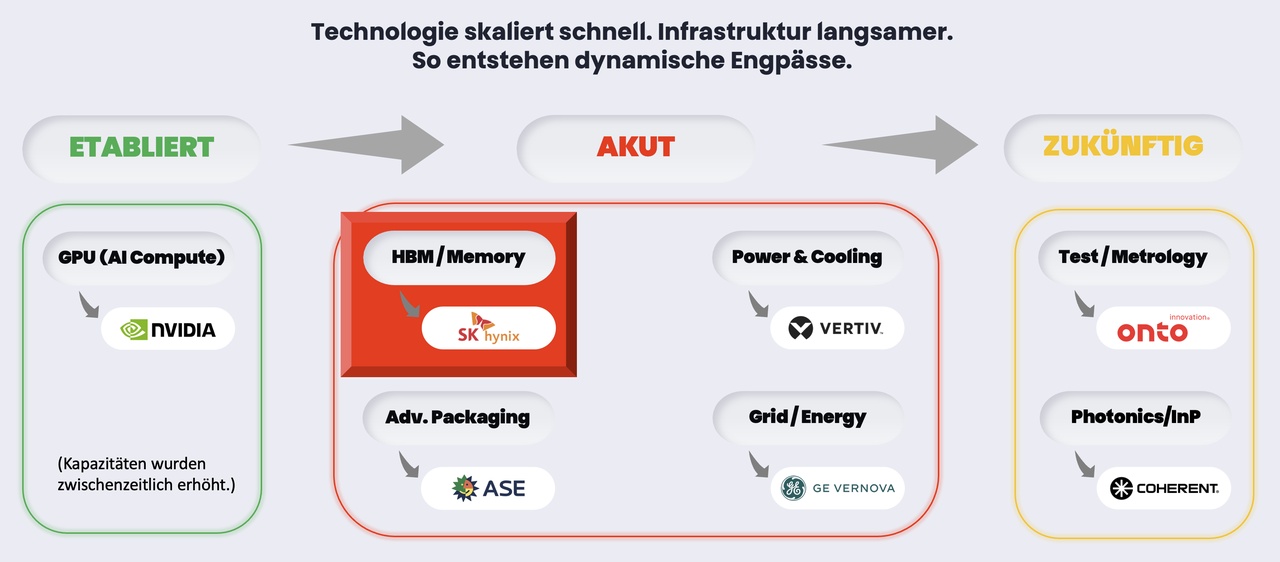
Anyone who deals with AI shares almost automatically ends up with Nvidia. That's understandable, GPUs (Graphic Processing Units) are the starting point. But that's exactly where the shift begins for me shift.
The limiting factor is no longer primarily the computing power, but the memory, that makes this power usable in the first place. There are several bottlenecks in the current area. One of these is HBM (High Bandwidth Memory).
These chips are located directly next to the GPU and determine how much data can be processed simultaneously, Without sufficient HBM, no AI system can scale. At the same time, this is not a standard product, production is complex, yields are limited and integration is challenging, while demand is increasing massively.
The bottleneck no longer lies with the compute, but with the manufacturers. For me, therefore, the current $HY9H (+4,85%) (SK hynix) and $MU (+3,06%) (Micron Technology) are closer to the bottleneck than the usual AI poster boys.
This is not a static picture, a year ago the focus was clearly on GPUs, today on HBM, tomorrow probably on other parts of the infrastructure. This movement is exactly the core of my approach: Bottlenecks migrate.
Next, I'm looking at Power & Cooling, Advanced Packaging and Energy. Areas that are just starting to become limiting factors themselves.

Mega order: SK Hynix buys EUV systems from ASML for 6.9 billion euros
I remain invested in sk Hynix.
SK Hynix is getting serious about expanding capacity and is placing a huge order for EUV systems with ASML in the Netherlands. The South Korean memory giant intends to upgrade its factories by the end of 2027 and significantly increase capacity for DRAM and NAND.
In a mandatory stock exchange announcement by SK Hynix, which can be viewed via South Korea's DART system (Data Analysis, Retrieval and Transfer System), the company confirms its intention to purchase EUV systems from ASML for EUR 6.913 billion. It is remarkable how quickly this is supposed to happen: The money will be available by the end of December 2027 and the order should be completed within two years. It was already suspected last fall that SK Hynix could place an order for up to 20 EUV systems.
Ordering exposure machines for memory factories for almost seven billion euros in one go is quite unique so far. This is because memory manufacturers, unlike logic manufacturers such as TSMC, have been much more cautious and slower to switch to EUV, often exposing only a handful of layers - if at all - with EUV and then continuing to work with classic DUV scanners. But with increasing progress, this will also become more common in the future - and SK Hynix is now preparing for this. However, the company was already one of the manufacturers that tried out EUV early on, and it has been used in its systems since 2021.
There are many machines for 6.9 billion euros
There are no precise details about what exactly is being ordered; they are part of the contracts and the negotiated prices. As in every industry, there are discounts or service packages for certain volumes under certain conditions to round things off. Theoretically, there could be almost 30 EUV systems for 6.9 billion euros, with the price of the latest NXE:3800E version now likely to be just over the 200 million euro mark.
However, if the order also includes one or two high-NA EUV systems, of which SK Hynix is already using one of the latest types in testing, the order will be significantly different: These machines are more likely to cost 350 to 400 million euros.
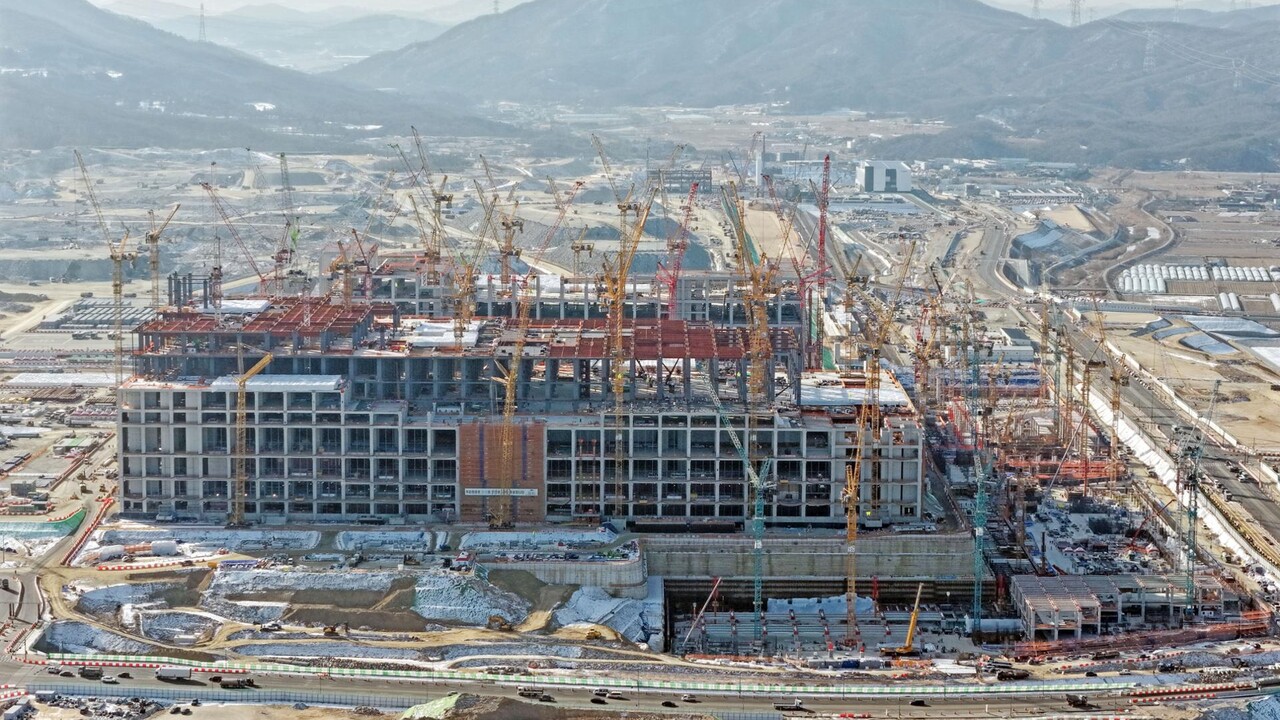
One of SK Hynix's new factories on the mega construction site in the Yongin Semiconductor Cluster is likely to be one of the targets for the exposure units. Huge factory buildings are being built here, which will produce huge amounts of memory in six fully equipped clean rooms on many floors in the future. The EUV imagesetters are also likely to be used in the M15X factory extension in Cheongju and the M16 fab in Icheon.

Títulos em alta
Principais criadores desta semana