But to what extent is FICO really a monopoly? Is the “high margins, no competition” status still intact? Has management overused its pricing power and in doing so angered the regulators?
Let’s start at the beginning. FICO has two main business segments: software and scores. The software business is fairly boring and only shows moderate growth. FICO offers cloud-based SaaS tools to businesses, including AI analytics platforms, fraud protection and decision management systems. Solid, but nothing spectacular.
The real driver behind FICO’s enormous moat, at least so far, is the “scores” segment. Growing at close to 30%, the FICO score is the industry standard for most lenders. It is used in over 90% of lending decisions to assess someone’s creditworthiness based on payment history and various other factors, on a scale from 300 to 850.
That essential role made FICO almost untouchable for years. But now it’s in the crosshairs of prominent senators like Josh Hawley, who seems to take pleasure in going after large companies and their CEOs, whether it’s Mark Zuckerberg, Dave Calhoun or Shou Zi Chew, who repeatedly had to assure Hawley, during a hearing, that he is neither Chinese nor a member of the CCP.
The core argument from lawmakers is that FICO has overstretched its pricing power. And to be fair, they’re not entirely wrong. The wholesale per-score fee increased from $0.60 to $10.00 over the past five years. That’s a 16x increase.
Why did FICO do that? Because they can. Not just because they effectively have no competition, but also because, as management has pointed out multiple times, paying a few extra dollars for a lending decision involving tens or even hundreds of thousands doesn’t really move the needle.
That’s capitalism. If someone is willing to pay, someone is going to charge. And a good CEO will push that as far as possible. It’s not on management to show restraint out of goodwill. It’s on lawmakers to create a framework where real competition can exist. Right now, regulation is tight and barriers to entry are high.
And yes, ultimately this hits consumers. Banks aren’t going to eat those costs. They’ll pass them on.
One thing I do find interesting though: why double the per-score fee again this year when the political pressure is already building? You’d think it might make sense to let things cool off a bit. But I’m sure management knows exactly how much leverage they have.
Lenders don’t just pick whichever scoring system they like. They are tied to standards linked to Fannie Mae and Freddie Mac, which historically embedded FICO as the default. That means FICO is deeply integrated into underwriting systems, risk models and compliance frameworks.
Switching isn’t just a pressing a button. Banks trust FICO, regulators recognise it, and alternatives like VantageScore are still seen as unproven at scale. And as long as lenders can pass on the cost without affecting demand, there’s very little incentive to change.
So is the stock a buy?
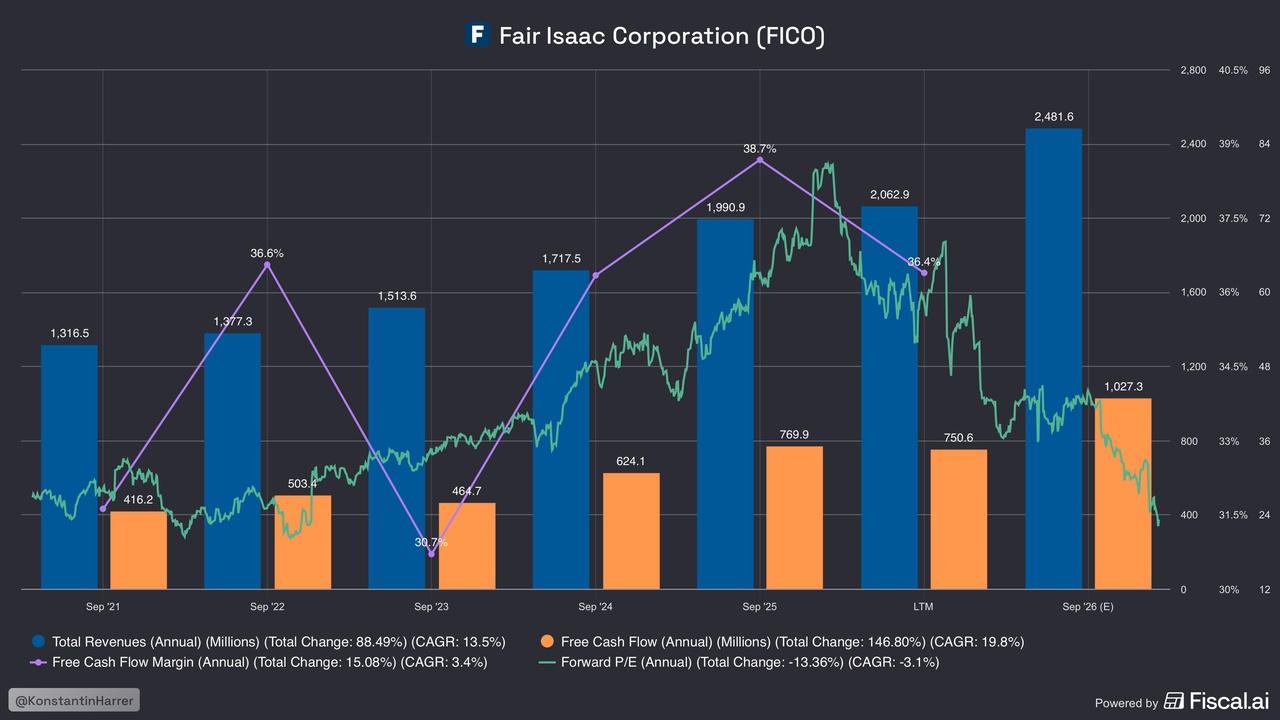
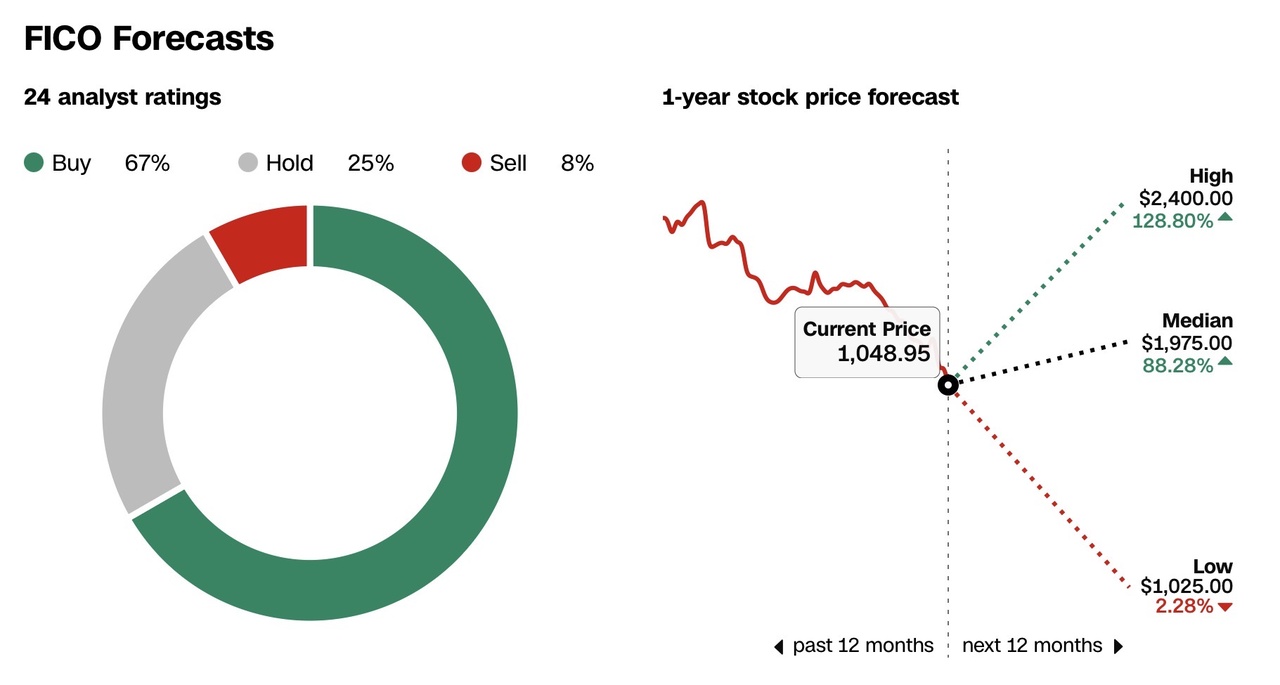
I think it’s getting really interesting around $1000, down roughly 55% from its highs. But at the same time, there are a lot of opportunities in the market right now. And despite the drawdown, FICO still trades at around 25x forward earnings and roughly 20x based on FY28 estimates.
That’s fair, but not the kind of “once in a decade” bargain you might expect after a selloff like this. The valuation is back to 2021 and 2022 levels, but with significantly higher growth. Revenue is now projected to grow in the 20% range instead of single digits.
So yes, it’s a compelling opportunity. I’m definitely tempted to nibble. But I’d have to sell something else, and I’m not sure FICO beats my current holdings on long-term upside.
That said, if the stock drops to around $850, I probably won’t be able to resist any longer.