Earnings Summary, Nov. 7
$MUV2 (+0,49%)
| Munich Re Q3 24 Earnings
EPS: 7.02 (est. 6.67)
Forecasts FY insurance revenue of approximately 61B, compared to 59B
Forecasts FY profit above 5B, compared to 5B
$RHM (+2,56%) | Rheinmetall AG Q3 24 Earnings
Sales: 2.45B (est. 2.42B)
Still expects FY sales of about 10B (est. 9.99B)
Expects FY operating margin at the upper end of guidance
Nissan Motor Q2 2024 Earnings $7201 (-0,25%)
Q2 Operating Income 31.91B Yen (est. 65.25B Yen)
Q2 Net Loss 9.34B Yen (est. Profit 49.07B Yen)
Expects FY Operating Income of 150.00B Yen, Previously Forecast 500.00B Yen
To Cut 9,000 Jobs Globally
To Reduce Global Production Capacity By 20%
To Sell Back Up To 10.02% Of Mitsubishi Motors Shares
Air France KLM Q3 2024 Earnings $AF
EBITDA: 1.90B EU (est. 1.9B EU)
Revenue: 8.98B EU (est. 8.88B EU)
Net Income: 780M EU (est. 874.3M EU)
Forecasts FY Capex at 3B EU, Saw Below 3B EU
$TEF (-0,8%) | Telefónica Q3 24 Earnings
Revenue: EU10.02B (est. EU10B)
Adj. EBITDA: €3.26B (est. €3.26B)
Net Income: €10M (est. €357M)
To Book €314 Million Non-Cash Impairment for Peru
ArcelorMittal Q3 24 Earnings: $MT (-1,17%)
- Sales $15.20B (est. $15.23B)
- EBITDA $1.58B (est. $1.47B)
- Still Expects FY CAPEX of $4.5B to $5.0B
- Market Conditions Are ‘Unsustainable’
- Positive on Medium- and Long-Term Outlook
Daimler Truck Holdings Q3 2024 Earnings: $DTG (+0,9%)
- Revenue: €13.14B (est. €12.98B)
- Adjusted EBIT: €1.19B (est. €1.13B)
- Still Expects FY Revenue of €53B to €55B (est. €53.45B)
Adyen disappoints with lower-than-expected revenue growth and loses 13% of its value on the stock market. $ADYEN (-1,73%)
Lanxessshares rise 4.4% to 26.80 euros following a positive quarterly report, after having previously fallen 13%. The operating margin exceeds expectations, despite weak prices. $LXS (+2,77%)
National Grid increases adjusted operating profit by 14% to 2 billion pounds in the first half of the fiscal year and expects growth of around 10% for the full year. Higher fees in New York and higher revenues in the U.K. are driving growth. $NG. (+1,02%)
AMS-Osram increased profitability in the third quarter despite a decline in revenue, but expects subdued business performance for the fourth quarter and early 2025. To ensure profitability, the company plans further cost cuts of 225 million euros by the end of 2026. $AMS
Süss Microtec is more optimistic following a strong third quarter and now expects to achieve its annual targets in the upper half of the forecast range. Revenue is expected to total 380 to 410 million euros, with an EBIT margin of 14 to 16 percent. $SMHN (-1,53%)
The investment company Mutares slipped into the red operationally in the third quarter with an adjusted EBITDA loss of 16.5 million euros. Revenue, however, rose by 14% to 3.9 billion euros. $MUX (+2,78%)
Delivery Hero expects free cash flow of 50 to 100 million euros for 2024 and anticipates GMV growth at the upper end of the forecast range of 7 to 9 percent. However, the group expects adjusted EBITDA to be only at the lower end of the range of 725 to 775 million euros. $DHE
Deutz reported an 80% drop in profit to 7.2 million euros in the third quarter and slipped into the red with a net loss of 2 million euros. Revenue fell by 14.9% to 430.4 million euros due to sluggish demand. $DEZ (+0,37%)
Compugroup Medical reported a
12% decline in EBITDA to 54.9 million euros in the third quarter, but slightly exceeded
analysts’ expectations. Revenue fell by 1% to 283.4 million
euros, and the company confirmed its revised forecast for 2024. $COP (+0%)
Alzchem reports a jump in profits for the first nine months, with
EBITDA rising 36% to 76.8 million euros, and increases its
EBITDA margin to 18.5%. The group is sticking to its profit target for 2024
but, due to the decision to discontinue low-margin businesses,
is aiming for the lower end of the revenue forecast. $ACT (-0,49%)
Nordex has raised its forecast for the 2024 EBITDA margin and
now expects it to be closer to the upper end of the range of three to four
percent. In the first nine months, the company reported
a 14 percent increase in revenue to 5.1 billion euros and an
improved EBITDA margin of 3.7 percent. $NDX1 (-3,94%)
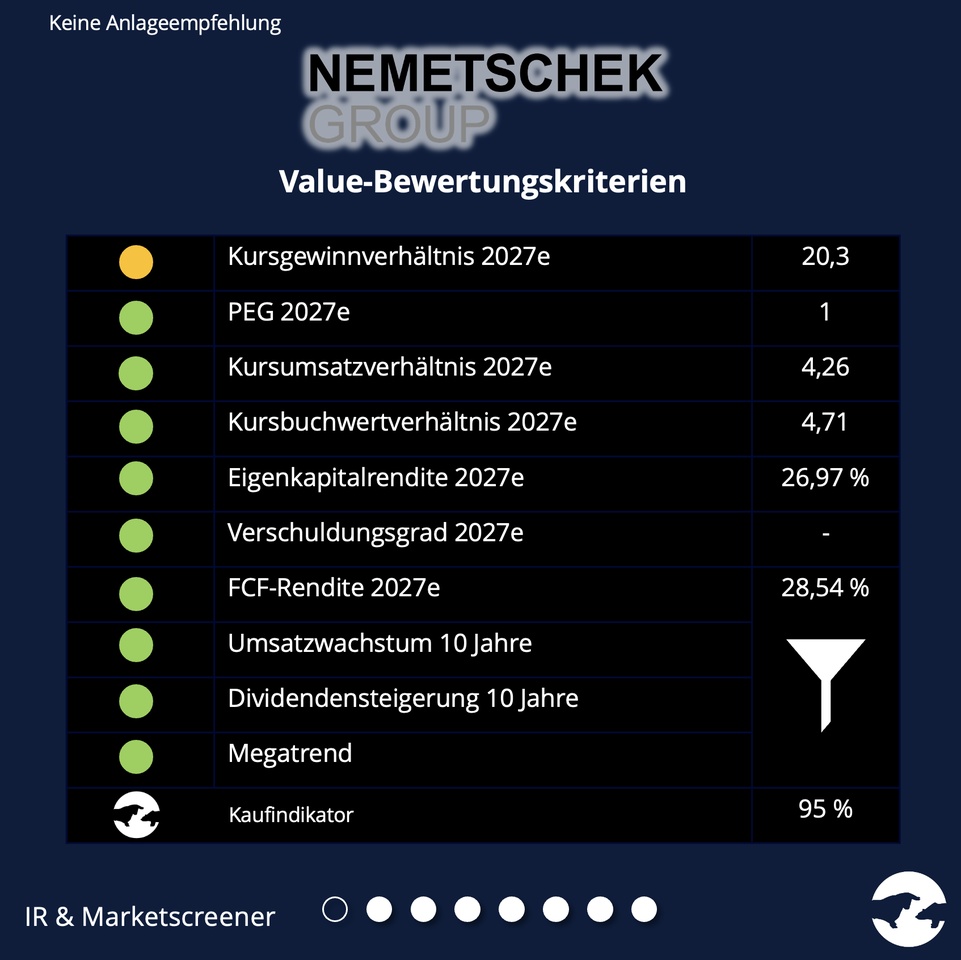
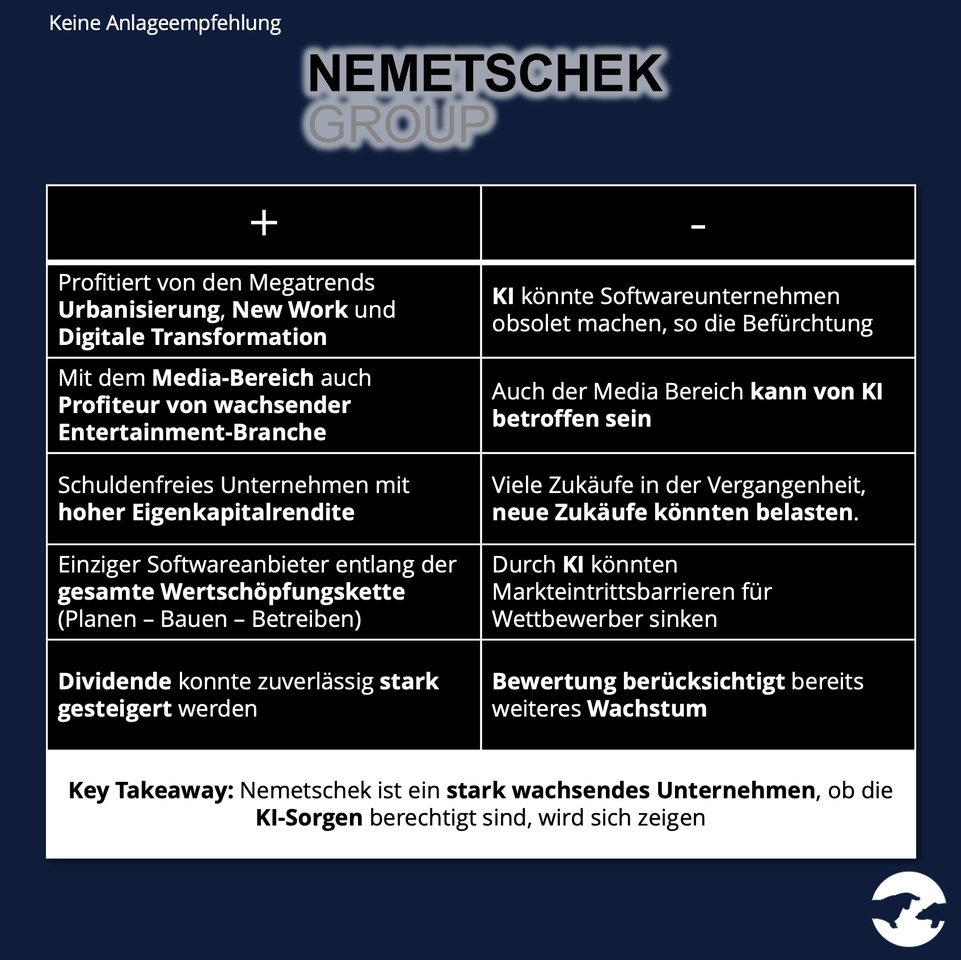
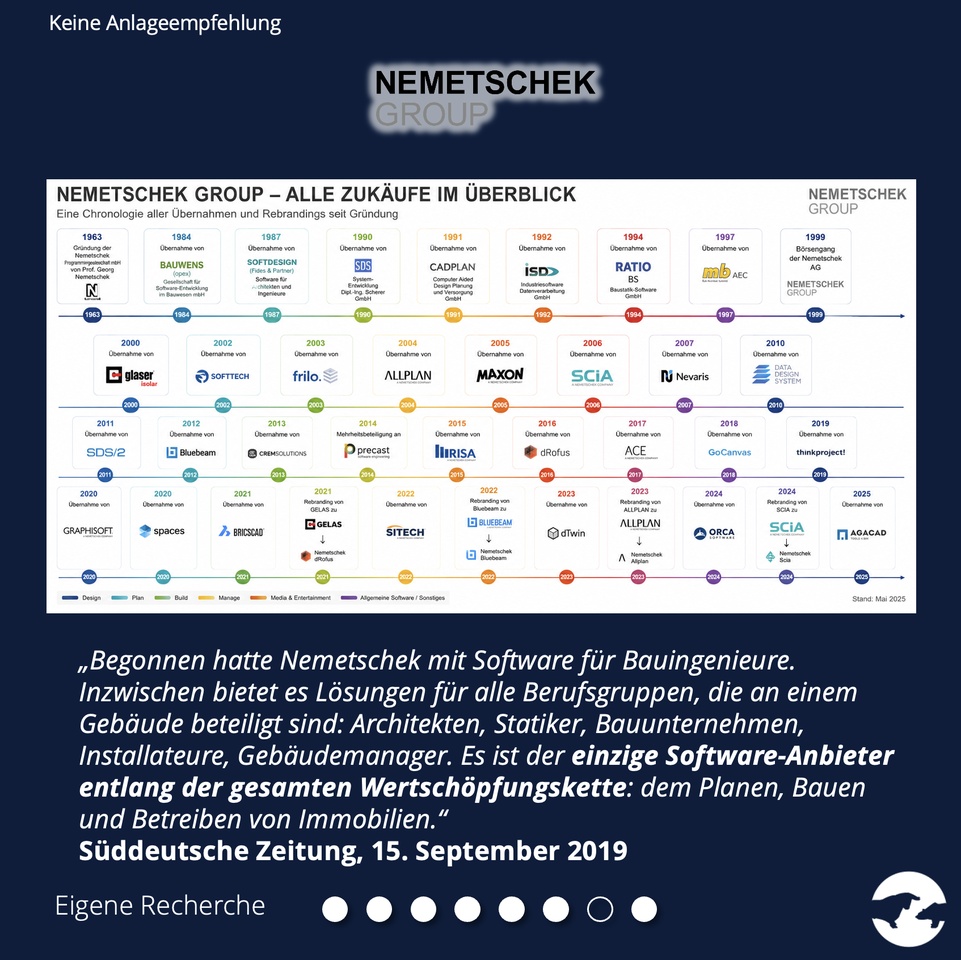
Nemetschek reported a 15.1% increase in revenue to 253 million euros in the third quarter thanks to the
GoCanvas acquisition,
but earnings remained slightly below expectations. The
operating costs associated with the acquisition are weighing on profits, resulting in an
EBITDA increase of 6.7%. $NEM (-1,64%)
Rational increased its earnings before interest and
taxes by 18% to just under 78 million euros in the third quarter, exceeding
analysts’ expectations, while revenue grew by 8% to 294 million
euros. The company confirmed its full-year forecast. $RAA (+0,54%)