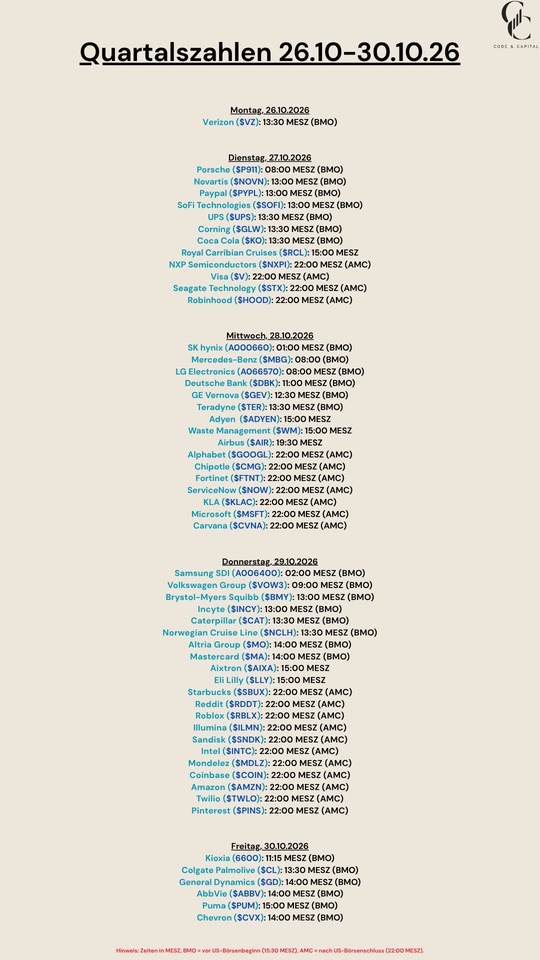

$UPS (+0.05%) The company reported its quarterly results and exceeded expectations. It was also able to raise its full-year forecast. For me as a shareholder, this is a positive sign. However, the key question remains whether the improvement in profitability is sustainable and will also be reflected in cash flow.
Here is my assessment of the key watchouts I mentioned earlier in my pre-post:
- Shipment Volume & Amazon Exit: Daily U.S. shipment volume fell by 3.3%, primarily due to the targeted wind-down of the Amazon business. At the same time, revenue per shipment rose by 6.1%. This is exactly the trend I had hoped for. Lower volume is acceptable if $UPS (+0.05%) it leads to greater profitability. It’s particularly encouraging that business with small and medium-sized enterprises grew by 3.7% and now accounts for a record share of U.S. volume.
- Margins & Profitability: Operating income in the U.S. domestic business rose by 14.3%, and the adjusted margin improved to 7.0%. Internationally, too, operating profit rose again for the first time in six quarters. This suggests that the premium growth strategy is taking hold. The key question remains whether revenue per shipment will continue to grow faster than costs in the future.
- Automation & Corporate Restructuring: $UPS (+0.05%) is entering the peak season with a more highly automated network and a more efficient cost structure. The figures to date show that the restructuring is increasingly taking effect. However, significant transformation costs continue to be incurred. Accordingly, it will be important not only to see improvements in the adjusted metrics but also, in the long term, a corresponding improvement in reported results.
- Outlook & Holiday Season: $UPS (+0.05%) expects approximately $25.7 billion in revenue and adjusted operating income of about $3.3 billion for Q4. For the full year, the forecast has been raised to approximately $92.6 billion in revenue and $7.28 in adjusted EPS. However, despite the seasonal increase, total volume during the holiday season is likely to fall short of last year’s level, primarily due to reduced business with Amazon. Now it remains to be $UPS (+0.05%) demonstrate that the improved profitability can hold up even during the most important shipping period.
- Cash Flow & Dividend: $UPS (+0.05%) adjusted free cash flow of approximately $6.1 billion and dividend payments of about $5.4 billion are expected for 2026. This is an important point of consideration for me. Although the dividend is covered by the expected free cash flow, the margin for maneuver remains modest. I’ll be watching to see if cash flow generation continues to improve in 2027, especially as certain transformation payments wind down.
Another notable point: Supply Chain Solutions is growing strongly, but profitability remains a concern. Revenue rose by 18.2%, thanks in particular to positive developments in freight forwarding and logistics, as well as demand from sectors such as healthcare and high-tech. At the same time, adjusted operating income declined, and an impairment charge on goodwill weighed on reported earnings.
Consequently, I find myself wondering whether $UPS (+0.05%) this strong revenue growth will translate into sustainable profit growth in the future. Furthermore, growth at UPS Digital is positive. The related business segments recorded a revenue increase of nearly 50%. Healthcare, digital services, and higher-margin customers could help reduce dependence on traditional package volume in the long term.
My conclusion: I remain invested. $UPS (+0.05%) delivers a convincing quarter. The company demonstrates that a deliberate reduction in low-margin shipments does not necessarily lead to lower profitability. The raised forecast and progress in the U.S. domestic business confirm this trend. My biggest concern remains the ratio of cash flow to dividends. At the same time, it remains to be seen whether the margin improvement is sustainable and whether the weaker business segments will get back on track. I remain $UPS (+0.05%) primarily focused on the long-term implementation of the Group’s restructuring. A good quarter is a step forward; what matters most is whether this will result in a more consistently profitable company.
~ Not investment advice ~