
• Intel CEO Lip-Bu Tan warns the memory-chip shortage could worsen further.
• Tan says memory prices have already risen 5x to 7x.
• Talks with SK Hynix would potentially expand U.S.-based memory production capacity.
Posts
8• Intel CEO Lip-Bu Tan warns the memory-chip shortage could worsen further.
• Tan says memory prices have already risen 5x to 7x.
• Talks with SK Hynix would potentially expand U.S.-based memory production capacity.


$SOXX (-3.52%) semiconductor mix uptrend in midterm this season and market trend still get more point to high position from 52 weeks low on 254 and high on 655.
Stock market on high demand and performance :
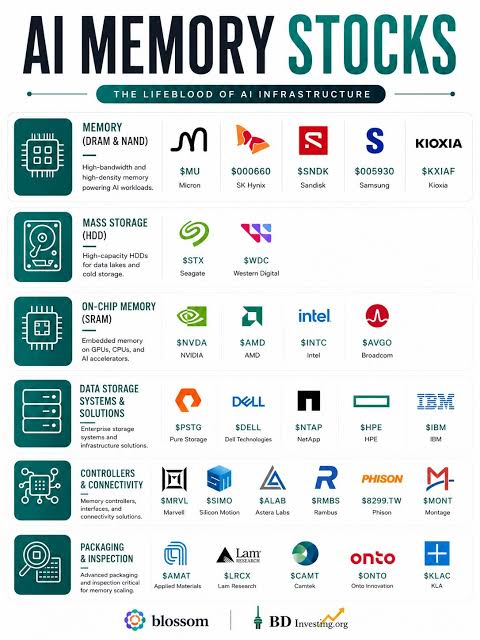
• $SNDK (-4.08%) , $SKHY (-4.71%) , $AVGO (-2.27%) , $STX (-4.17%) , $WDC (-3.99%) (tier 1)
• $INTC (-5.31%) , $AMD (-4.67%) , $NVDA (-2.58%) , $TSM (-3.18%) , $CBRS (tier 2)
ETF and Option on High trends and Fast speed :
• $MU (-3.5%) , $LITE (-5.39%) , $ASML (-3.47%) , $MRVL (-5.32%) , $NBIS (-5.29%) , $SIMO (-4.56%)
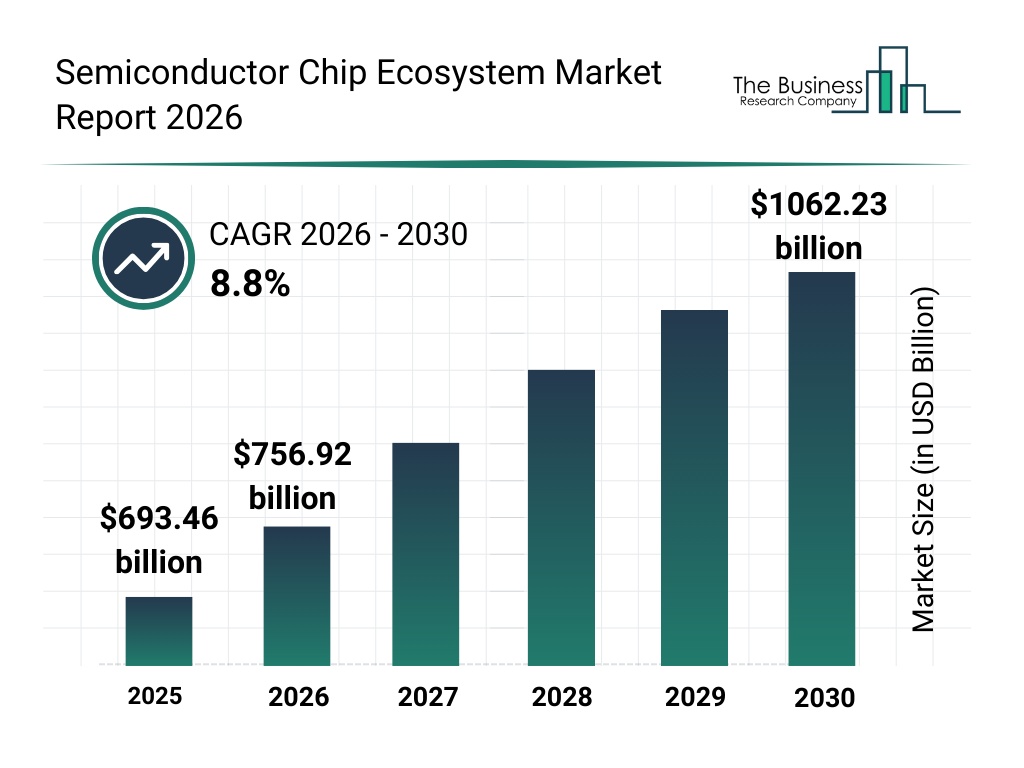
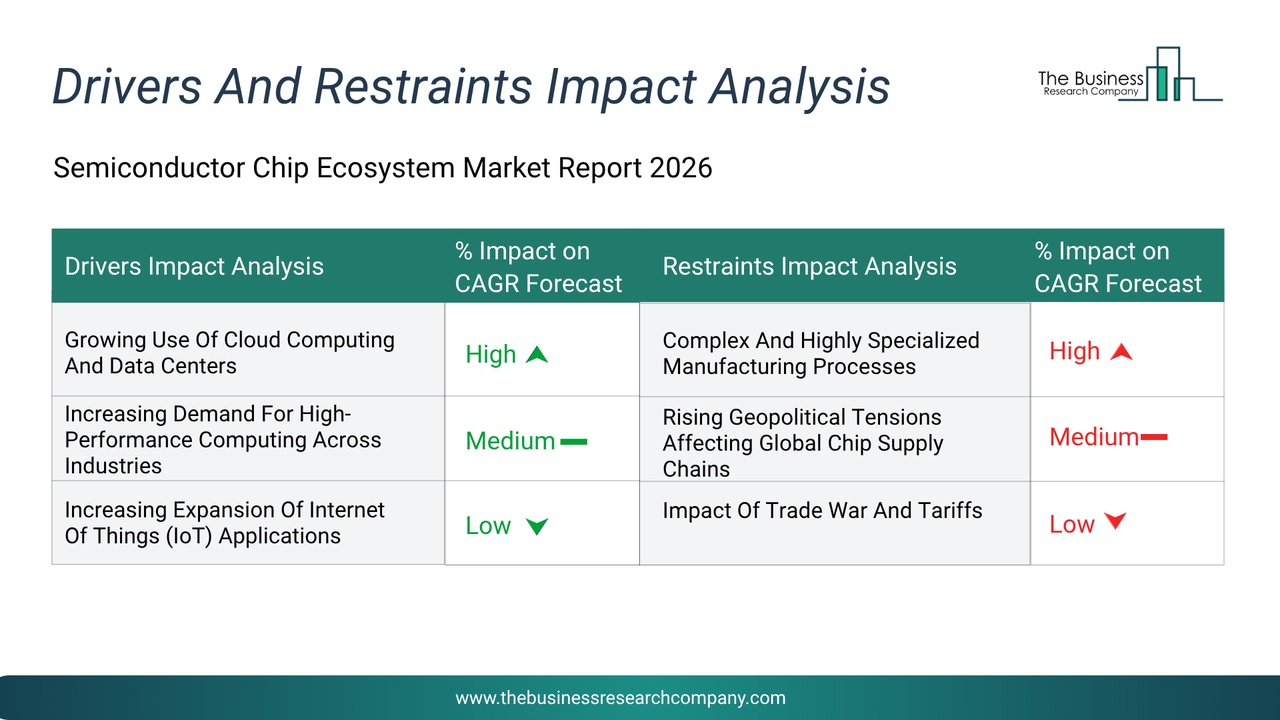
Semiconductor Chip Ecosystem Market still on top list get performance every years and continues keep on high demand for supercycle in Ai supercomputer. Its on thats semiconductor in CAGR get 8.8% to 2030 still possible makes uptrend every years, however in wave cycle on traditional event from average monthly return, semiconductor get works to drive with cycle time frame.
The server systems of Spitzenchips are affected Vera Rubin and Grace Blackwell, which will be delivered . The amount varies depending on the chip generation and memory configuration. The reason cited is the extremely high prices for RAM ($MU (-3.5%)$SKHY (-4.71%)$005930). As a result, part of the value creation in the AI stack is shifting downward—away from the computing chip and toward memory. Just how much of this NVIDIA itself is absorbing is likely to be reflected in the gross margin in the quarterly report on August 26 .
Overall, , this affects hyperscalers like Neoclouds and AI labs, which consequently face even higher costs —because Nvidia chips represent the largest cost factor in AI data centers.
Consequently, GPU rental prices will also continue to rise, which will have a neutral effect for these companies.
The extremely expensive financing, which continues to be weighed down by macroeconomic uncertainty. This price increase further adds fuel to the fire. 🔥
$GOOGL (-1.9%)$AMD (-4.67%)$INTC (-5.31%)$MSFT (-0.62%)$META (-5.66%)$IREN (-5.57%)$CRWV (-5.4%)$NBIS (-5.29%)$AVGO (-2.27%)
Source:

Leopold Aschenbrenner, an AI investor who is just 24 years old, finds himself facing the ruins of his radical investment strategy with his once-extremely-successful hedge fund, Situational Awareness LP, as massive leverage proved to be his undoing during the recent tech sell-off. To meet urgent margin calls from his banks, the fund was forced to liquidate its entire public equity portfolio—which was heavily concentrated in AI infrastructure and software short positions—in a last-ditch effort and sell it off to a competitor. While the massive paper gains from the first half of the year have thus been wiped out, the former wunderkind is now fighting for the very survival of his remaining fund through the hasty sale of lucrative private-equity stakes, such as in the AI startup Anthropic. With his fund, Aschenbrenner was primarily invested in AI infrastructure and energy stocks such as Nebius, SK Hynix, Micron, CoreWeave, and Bloom Energy, while simultaneously maintaining short positions in software stocks like Adobe.
Leopold Aschenbrenner’s hedge fund, “Situational Awareness LP,” was in fact largely forced into liquidation on July 30, 2026, as he had bet heavily on AI infrastructure stocks and Bitcoin miners using a risky 4x leverage. When these sectors plummeted in July and his short positions in software stocks simultaneously backfired, uncovered margin calls forced the fund to dump its entire public equity portfolio in one fell swoop to the market maker Citadel. As a result of this crash, the fund’s assets under management—which had previously grown rapidly to over $20 billion—were halved to approximately $10 billion. What remains now consists almost exclusively of unlisted private-market investments that were spared from the short-term margin calls, including, most notably, a massive stake in the AI company Anthropic valued at around $5 billion.
Leopold Aschenbrenner (born in 2001 or 2002) is a German researcher and investor in the field of artificial intelligence who graduated from Columbia University at the age of 19 as valedictorian. After working for the Global Priorities Initiative in Oxford and the FTX Future Fund, he joined OpenAI’s “Superalignment” team at OpenAI, but was dismissed in April 2024 following internal conflicts over what he considered inadequate security measures and an alleged information leak. He gained international recognition shortly thereafter with his highly acclaimed essay “Situational Awareness,” in which he predicts the development of artificial general intelligence (AGI) by 2027 and the massive global security challenges that would accompany it. In the wake of this success, he founded the AI-focused hedge fund Situational Awareness LP, which is backed by prominent tech investors.
$NBIS (-5.29%)
$ADBE (-0.19%)
$000660
$SKHY (-4.71%)
$SKHY (-4.71%)
$CRWV (-5.4%)
$MU (-3.5%)
$BE (-7.39%)

Hi, everyone :)
I have the $HY9H (-5.61%) in my portfolio, but I see that the $SKHY (-4.71%) is performing much better.
Should I sell the GDR and add the ADR to my portfolio instead?
What do you think??
Best, Alois
SK Hynix rises 13% in Nasdaq debut. Chairman tells CNBC demand is enormous for memory chips. $SKHY (-4.71%) +0.82%. #SKHynix
#Semiconductors
SK Hynix, trillion-dollar S. Korean chip giant, debuts on Nasdaq. Soaring on memory/AI boom; $4B Indiana plant + US expansion. #SKHynix
#Semiconductors
$SKHY (-4.71%)
Top creators this week


