So somehow $HIMS (-1,38%) total $TDOC (+1,08%) vibes. Once celebrated by everyone as a tenbagger and then held as a memorial in the portfolio with a 90% loss. Hard to think about buy the dip.

Teladoc Health
Ação
Ação
Ticker: TDOC
TDOC
Price
Discussão sobre TDOC
Postos
59

1Ano·
Teladoc Q2’25 Earnings Highlights
🔹 Revenue: $631.9M (Est. $622.5M) 🟢; -2% YoY
🔹 EPS: ($0.19) (Est. ($0.26)) 🟢
FY25 Guidance:
🔹 Revenue: $2.50B–$2.55B (Est. $2.2B) 🟢
🔹 EPS: ($1.35)–($1.00) (Est. ($1.16)) 🟡
🔹 Adjusted EBITDA: $263M–$294M
🔹 Free Cash Flow: $170M–$200M
🔹 Integrated Care Rev Growth: +1.75%–3.25%; EBITDA Margin: 14.5%–15.25%
🔹 BetterHelp Rev Growth: -9.2% to -6.8%; EBITDA Margin: 4%–5.5%
Q3 Guide:
🔹 Revenue: $614M–$636M (Est. $627.9M) 🟡
🔹 EPS: ($0.35)–($0.20) (Est. ($0.24)) 🟡
🔹 Adjusted EBITDA: $56M–$70M
🔹 Integrated Care Rev Growth: -0.5% to +2.25%; EBITDA Margin: 14%–15.5%
🔹 BetterHelp Rev Growth: -9.75% to -5%; EBITDA Margin: 1%–3.75%
Other Q2 Metrics:
🔹 Adj EBITDA: $69.3M; DOWN -23% YoY
🔹 Free Cash Flow: $61.2M vs. $60.9M YoY
🔹 Integrated Care Rev: $391.5M; UP +4% YoY
🔹 BetterHelp Rev: $240.4M; DOWN -9% YoY
🔹 Integrated Care EBITDA Margin: 14.7%
🔹 BetterHelp EBITDA Margin: 4.9%
CEO Commentary
🔸 “Revenue and EBITDA came in at the high end of our guidance range.”
🔸 “We’re executing with discipline and investing in product innovation.”
🔸 “Virtual care can be a performance multiplier in an evolving healthcare landscape.”
22
1Ano·
Teladoc Health Q1'25 Earnings Highlights
🔹 Revenue: $629.4M (Est. $619.3M) 🟢; -2.6% YoY
🔹 Adj EBITDA: $58.1M (Est. $53.3M) 🟢; -8% YoY
🔹 Loss per Share: -$0.53 (Est. -$0.34) 🔴
🔹 Total Visits: 4.44M (Est. 4.96M) 🔴; -3.5% YoY
Q2'25 Guidance
🔹 Revenue: $614M–$633M (Est. $625.5M) 🟡
🔹 Adjusted EBITDA: $56M–$70M (Est. $74M) 🔴
🔹 EPS: -$0.40 to -$0.20
FY25 Guidance
🔹 Revenue: $2.468B–$2.576B (Est. $2.521B) 🟡
🔹 Adjusted EBITDA: $263M–$304M (Prev. $278M–$319M) 🔴
🔹 EPS: -$1.40 to -$0.90 (Prev. -$1.10 to -$0.50) 🔴
Q1 Segment Revenue:
🔹 Integrated Care: $389.5M (Est. $379.7M) 🟢; UP +3.3% YoY
🔹 BetterHelp: $239.9M (Est. $237.5M) 🟢; DOWN -11% YoY
🔹 Total Access Fees: $525.7M (Est. $583.8M) 🔴; DOWN -5.6% YoY
🔹 Integrated Care Adj EBITDA: $50.4M; UP +5.7% YoY
🔹 BetterHelp Adj EBITDA: $7.71M; DOWN -50% YoY
33
1Ano·
Telehealth companies aggressively marketing hair-loss medicine to men, WSJ says
$HIMS (-1,38%)
$MRK (-0,8%)
$TDOC (+1,08%)
$AMWL
Telehealth companies like Hims & Hers (HIMS) are aggressively marketing hair-loss medications to young men, with some patients saying they had serious side effects and didn't realize they were possible, The Wall Street Journal's Rolfe Winkler reports.
Finasteride, the generic name for Propecia, is widely prescribed but has been linked to serious side effects in some men, including persistent sexual problems and suicidal thoughts, though telehealth companies say they disclose side effects and other risks on their websites and say clinical studies show finasteride is effective and side effects are rare.
Organon (OGN), a spinout of Merck (MRK), makes the branded-version of the drug. Other companies in the telehealth space include Teladoc (TDOC) and Amwell (AMWL).
33

1Ano·
Teladoc
@BamBamInvest You are very committed and convinced of $HIMS (-1,38%) . Have you ever dealt with $TDOC (+1,08%) before? They are active in the same business field and I think they are quite promising.
11
2 Comentários
•
11
•
1Ano·
Megatrend: Investment opportunities due to an ageing population worldwide
The world's population is getting older and older, an irreversible demographic change with considerable economic consequences.
This article is intended to provide investment ideas and impetus. The stocks mentioned do not, of course, constitute investment advice, but merely serve as examples of potential beneficiaries of demographic change. Historical developments are no guarantee of future returns.
The main source is the short analysis "How to invest as the global population ages" by Goldman Sachs [1], which, however, does not name any specific stocks.
I have also added additional sources and charts.
__________
🌍 Demographic change: growth and ageing of the world's population
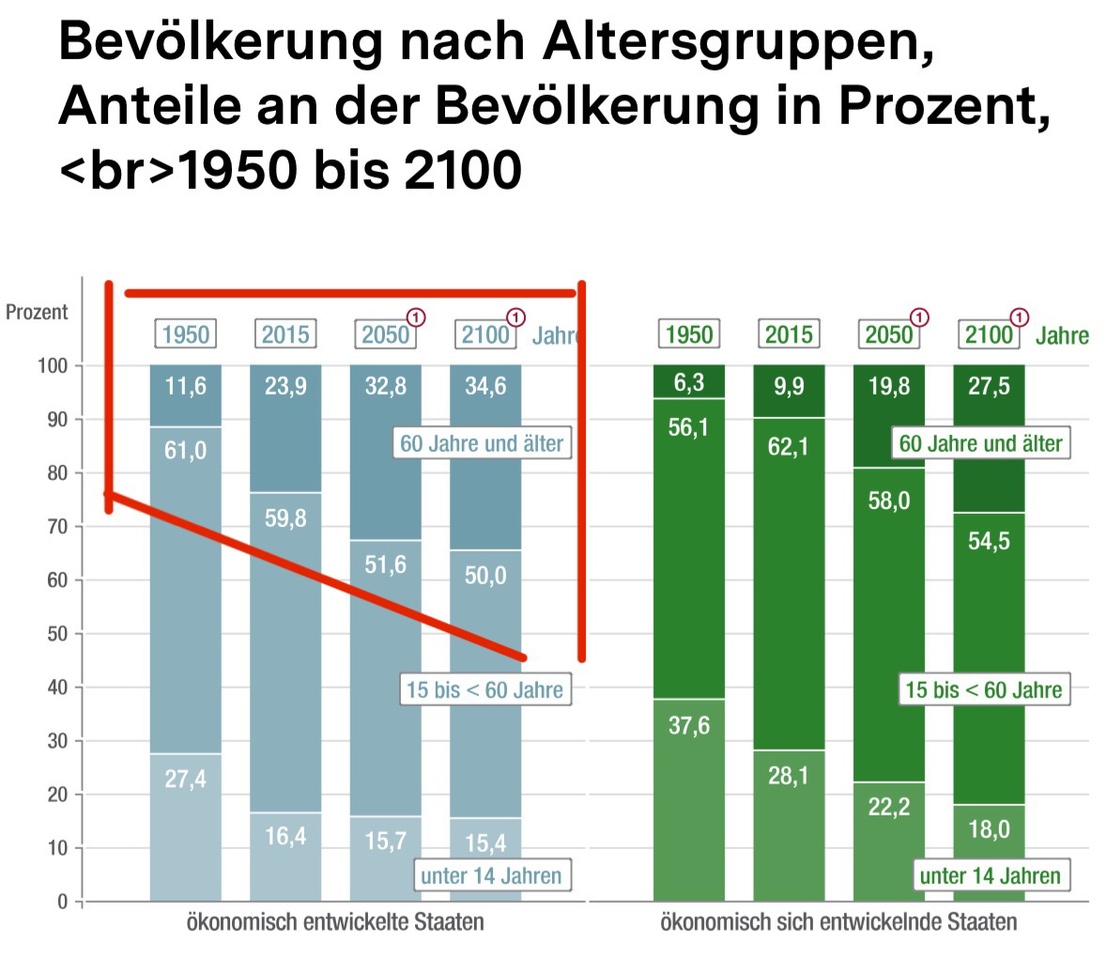
The world's population will grow to almost 10 billion people by 2050. However, it is not just the number of people that is increasing, their age structure is also changing dramatically. [2]
Increase in the older population:
- The proportion of people aged 60 and over is rising from 8% (1950) to 21.5% (2050).
- In 2050, 2.1 billion people will belong to the over-60 age group.
Source: [2]
Regional differences:
Europe & North America have the oldest populations & remain the most affected demographically.
Latin America, the Caribbean & Asia: The proportion of over-60s will more than double between 2015 and 2050, reaching around 25 %.
Africa remains the youngest region: in 2015, there were 21 countries worldwide with a birth rate of 5 children per woman, 19 of which were in Africa. However, it should be noted that current statistics from 2024 show that the birth rate per woman in Africa was already just 4.07 in 2023 and could fall to 2.79 by 2050. [3]
While industrialized countries are struggling with an ageing society, Africa remains the most dynamic and youngest region in the world. This development can also have an economic impact and open up new investment opportunities. [2]
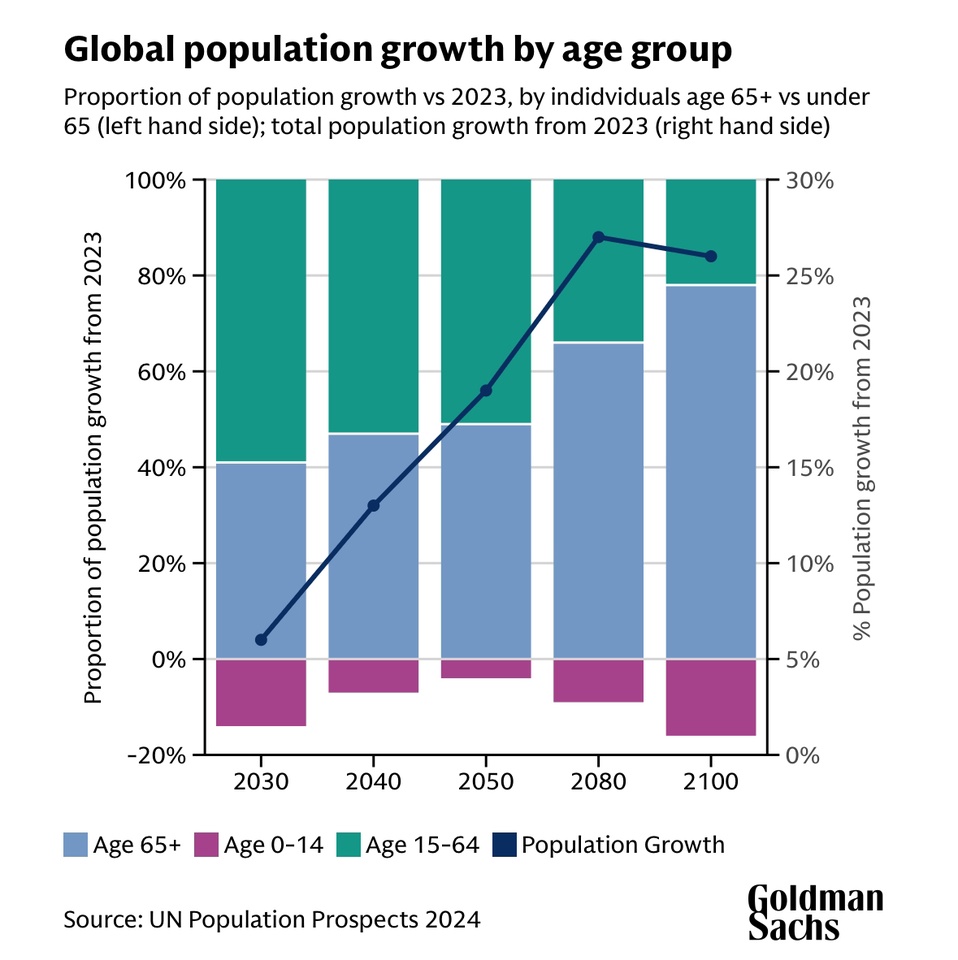
Goldman Sachs also comments in the article with similar figures, according to which the global population is expected to increase by around 20% by 2050 and senior citizens will make up a disproportionate share. The number of people over the age of 65 is expected to double from 800 million to 1.6 billion during this period. [1]
In view of this demographic development, there are opportunities to benefit from precisely this trend. Opportunities lie in targeted investments in sectors that could benefit from the growing proportion of older people.
🚑 Healthcare: A growing market worth billions
Facts:
- In the USA, people over the age of 65 already account for 36% of healthcare expenditure, although they only make up 18% of the population. Age-related diseases such as cardiovascular disease, diabetes and neurological disorders are driving up costs. [1]
- Alzheimer's cases are even expected to double worldwide by 2050.
Possible profiteers:
Medical technology
- Medtronic ($MDT (+3,89%) ) - (cardiac pacemakers, diabetes technology)
- Stryker ($SYK (+3,63%) ) - (orthopaedic implants, surgical devices)
- Siemens Healthineers ($SHL (+0,31%) ) - (imaging, diagnostics)
Pharmaceuticals
- Novo Nordisk ($NOVO B (+0,86%) ) - (Diabetes & Obesity)
- Eli Lilly ($LLY (+2,96%) ) - (Alzheimer's, Diabetes)
- Roche ($ROG (+1,12%) ) - (Oncology, Diagnostics)
🏡 Senior Living & Care: Bottlenecks in nursing homes worldwide
Facts:
The UK has a shortfall of over 30,000 senior units by 2028. [1]
In Germany, France and Italy there is a shortage of nursing home places due to the ageing population. [1]
In the US, only 2% of people over 65 live in nursing homes, leading to an increasing demand for home care and telemedicine. [1]
Potential beneficiaries:
Care providers
- Brookdale Senior Living ($BKD (+1,39%) ) - (senior living, care facilities)
Homecare
- ResMed ($RMD (+2,94%) ) - (sleep apnea, ventilators)
- Fresenius Medical Care ($FME (+3,07%) ) - (dialysis, home therapy)
- Coloplast ($COLO B (+1,25%) ) - (stoma care, incontinence products)
Telemedicine
- Teladoc Health ($TDOC (+1,08%) ) - (virtual doctor visits, digital health solutions)
- Hims & Hers ($HIMS (-1,38%) ) - (telemedicine & e-health)
Anti-Aging
- L'Oréal ($OR (+5,79%) ) - (skin care, cosmetics)
- Estee Lauder ($EL (+4,06%) ) - (luxury cosmetics, skin rejuvenation)
- Revance Therapeutics ($RVNC ) - (Botox alternative, wrinkle treatment)
🚢 Leisure & consumption: The new "silver economy"
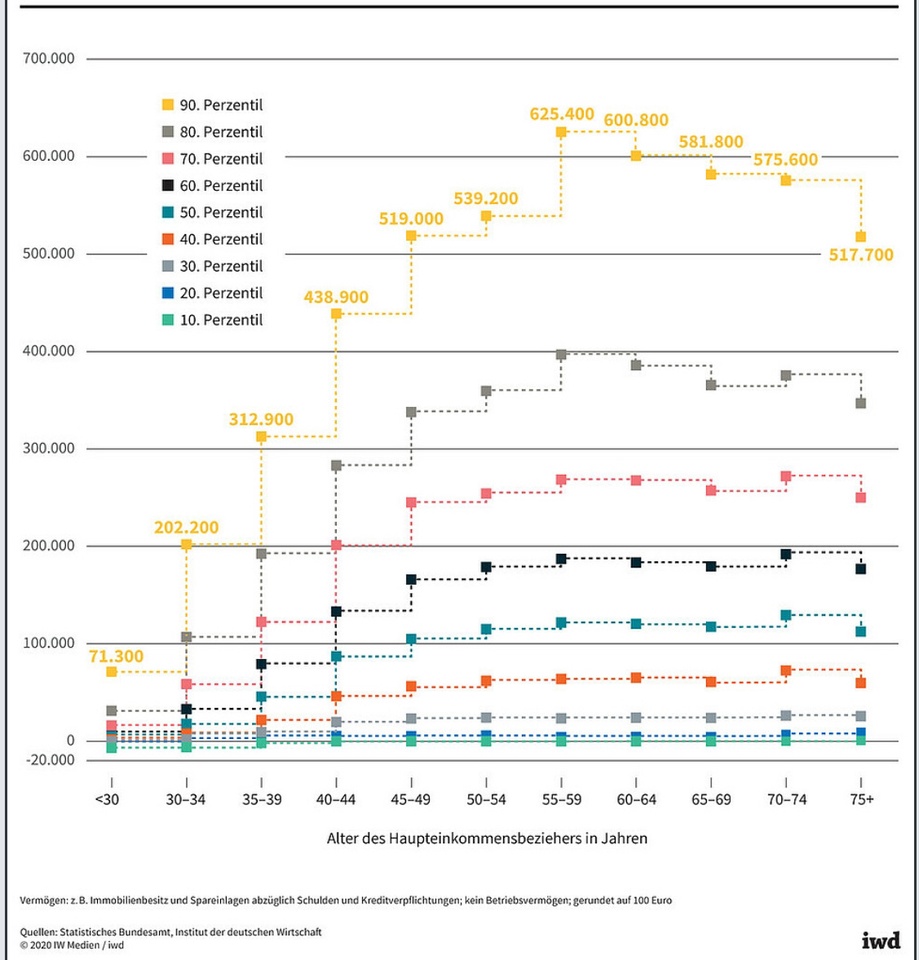
The following chart shows the distribution of wealth in Germany depending on the age of the main income earner. [4]
It is clear that older people tend to have higher wealth than younger age groups. This is reflected in the significantly higher values for the percentiles for age groups aged 50 and over. In particular, the groups aged between 50 and 74 have the highest assets.
The trends are also similar internationally:
- The wealth of older people is 3x that of millennials.
- Over-60s control more than 50% of consumer spending in many developed countries.
- The global silver economy could reach a volume of USD 15 trillion by 2030 (Oxford Economics).
This observation underlines the economic importance of the older generations and their central role in wealth distribution and consumer spending.
Possible beneficiaries:
Luxury
- LVMH ($MC (-0,6%) ) - (fashion, jewelry, wine & spirits)
- Hermès ($RMS (-5,97%) ) - (Exclusive Fashion & Accessories)
- Richemont ($CFR (-1,28%) ) - (Swiss luxury watches & jewelry)
Cruise (Over 60s book a third of all cruises worldwide [1])
- Royal Caribbean ($RCL (-0,12%) ) - (Cruises for seniors & families)
- Carnival ($CCL ) - (mass market cruises)
- Norwegian Cruise Line ($NCLH (-0,43%) ) - (premium cruises)
Motorhome manufacturers/ recreational vehicles (47% of motorhome users are over 55 years old, In the UK, two thirds of over 55s have a motorcycle license, which may indicate a growing market for motorcycles and accessories. [1])
- Thor Industries ($THO (+6,56%) ) - (motorhomes, campers)
- Winnebago ($WGO (+10,76%) ) - (motorhomes & caravans)
- Harley-Davidson ($HOG (+6,41%) ) - (motorcycles and entry-level electric motorcycles)
🤖 Technology & automation: solution to the labor shortage
Facts:
The labor shortage caused by an aging society is becoming a global challenge. Automation, AI and robotics could help close the skills gap. [1]
Profiteers:
- ABB ($ABBNY (-3,5%) ) - (industrial robotics, automation)
- Fanuc ($6954 (-3,57%) ) - (robotics, factory automation)
- Intuitive Surgical ($ISRG (+3,58%) ) - (robot-assisted surgery)
- Siemens ($SIE (-3,62%) )- (automation & also medical technology)
🧠 Conclusion:
Demographic change offers long-term investment opportunities. Early investment in the right sectors can benefit from rising spending on health, care, leisure and technology.
I myself am still looking for one or two individual investments and am a little annoyed that I didn't get into Hims & Hers earlier, although I have been on the verge of doing so several times. Apart from the luxury segment with LVMH, the portfolio also includes Siemens as a conglomerate in the field of automation.
Do you explicitly take demographic change into account in your investments, e.g. in the form of individual shares?
Which shares do you have in your portfolio or do you still see them as an opportunity?
Thanks for reading!
_________
Sources:
[1] https://www.goldmansachs.com/insights/articles/how-to-invest-as-the-global-population-ages
[2] https://www.bpb.de/kurz-knapp/zahlen-und-fakten/globalisierung/52811/demografischer-wandel/
[4]
https://www.iwd.de/artikel/mit-dem-alter-waechst-das-vermoegen-489710/
202202
59 Comentários
1Ano
Thank you for your work 💪😊
•
2626
•1Ano·
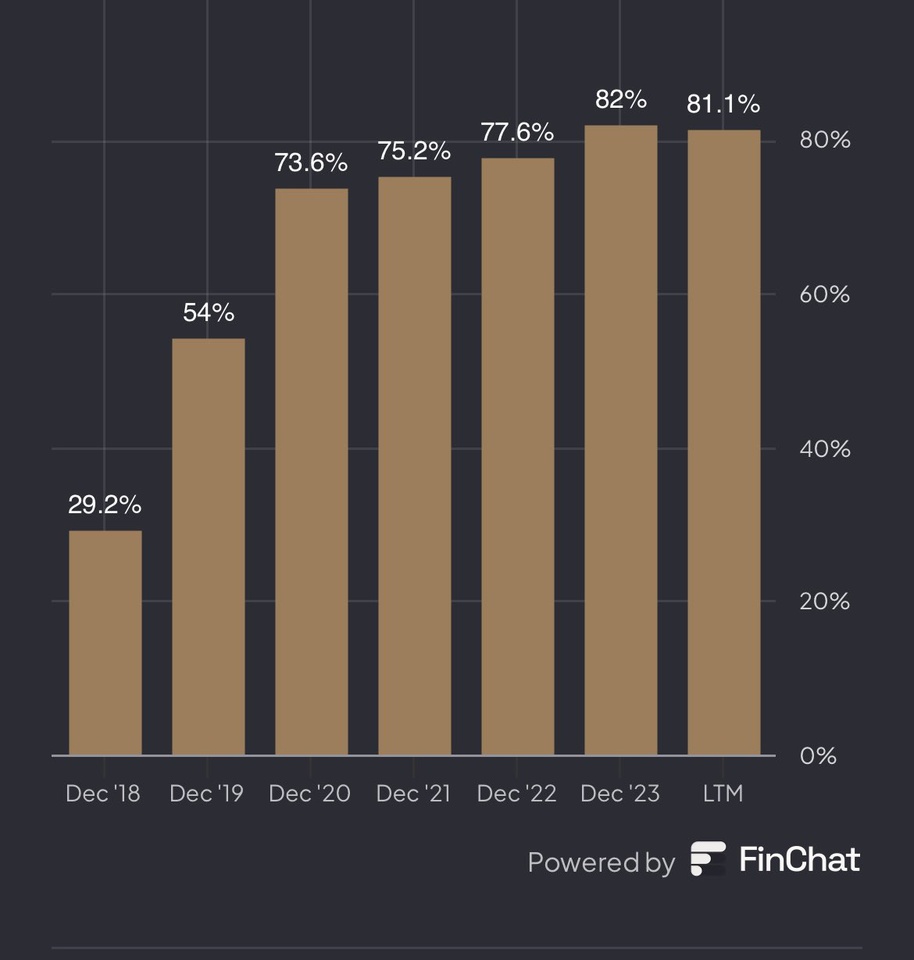
Gross margin Hims & Hers
The gross margin of $HIMS (-1,38%) has almost tripled since 2018.
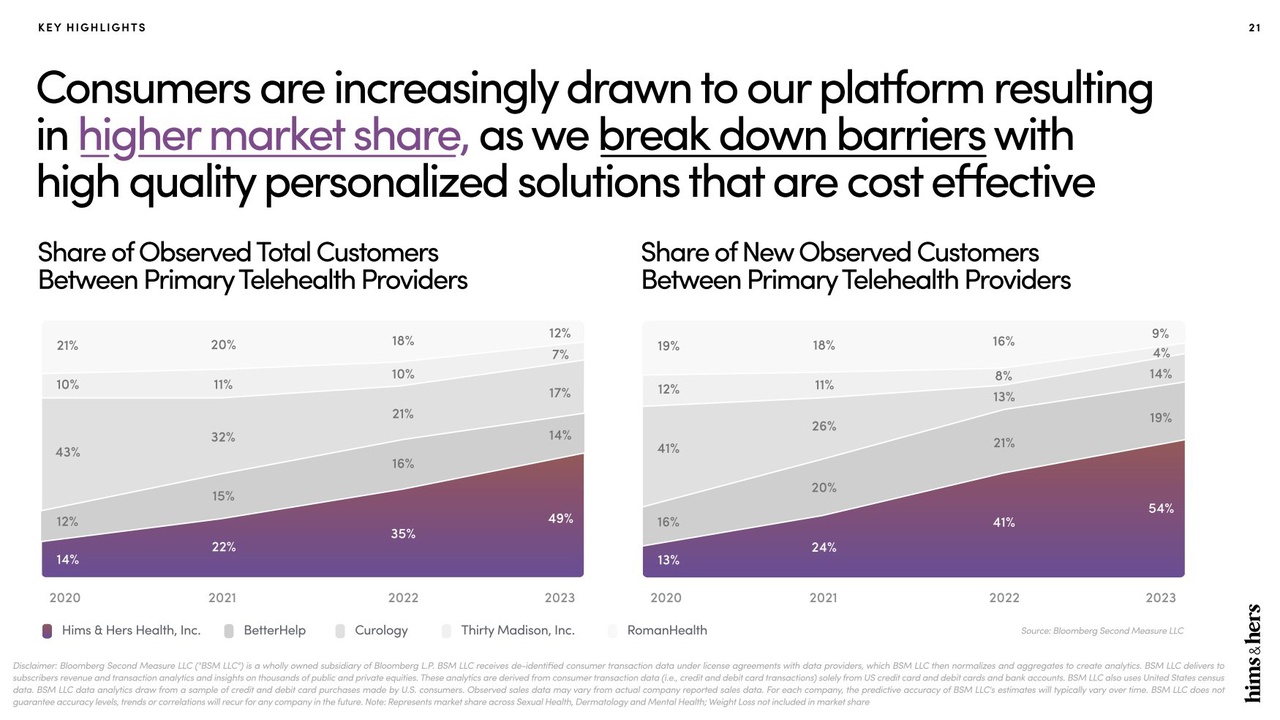
In 2020, the company was $HIMS (-1,38%) a relatively small player in telemedicine, with a market share of just 14 %.
By 2023 was $HIMS (-1,38%) the dominant force:
$HIMS (-1,38%) Had 49% of all customers/market share.
And even more telling: $HIMS (-1,38%) was able to acquire 54 % of all new customers.
I look forward to an update on these figures from management in the coming months
And it will be important to keep an eye on how this $AMZN (-4,39%) impact on market share over time.
Company presentation and personal opinion:
2Ano·
$HIMS (-1,38%) - Introduction and personal opinion
Hims & Hers is my 2nd largest position
Current advertising: https://youtu.be/7e9knxa6npk?si=7vPQdIdI_yhaAW2-
As I cannot use Hims & Hers in Austria myself and have not been able to test it myself, the following descriptions, results and opinions are compiled from my research and information from the Internet.
I briefly discuss the business model, the key figures, the competition, the moat and the finances.
Summary/business presentation:
Hims is a 100% online platform that connects patients with licensed medical professionals across the country and provides treatments for various health needs such as sexual health, skin care, mental health and hair care.
Process:
- You begin by filling out an online form detailing your symptoms and medical history.
- Then a licensed provider evaluates the information and recommends a personalized treatment plan, including prescription medications (if needed), delivered discreetly to your doorstep
- Hims providers include physicians, nurse practitioners, psychiatrists, dermatologists, and pharmacists who are licensed in all 50 states and should provide safe, quality care/treatment.
Key metrics Q3'23 and Q4'23 :
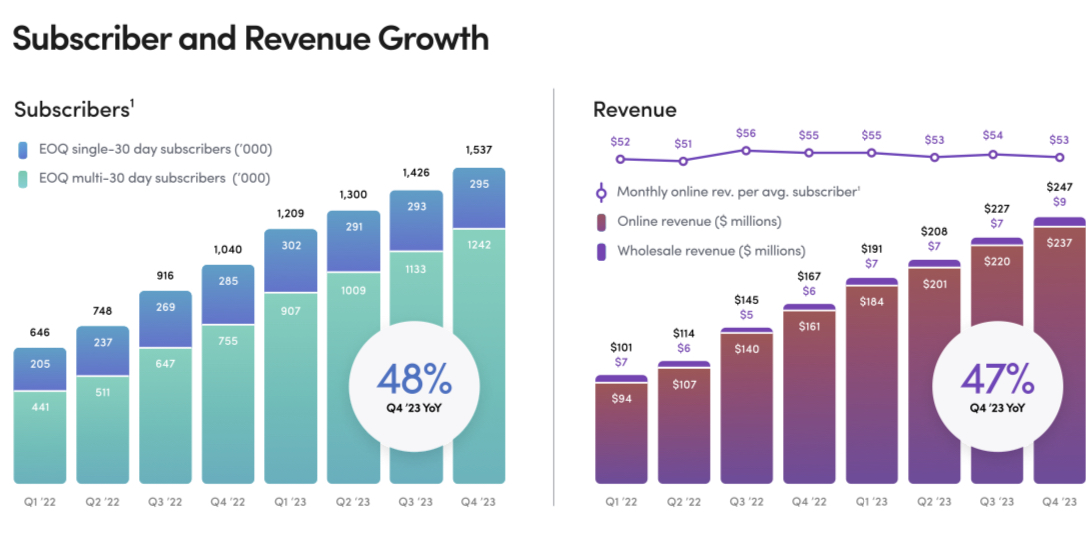
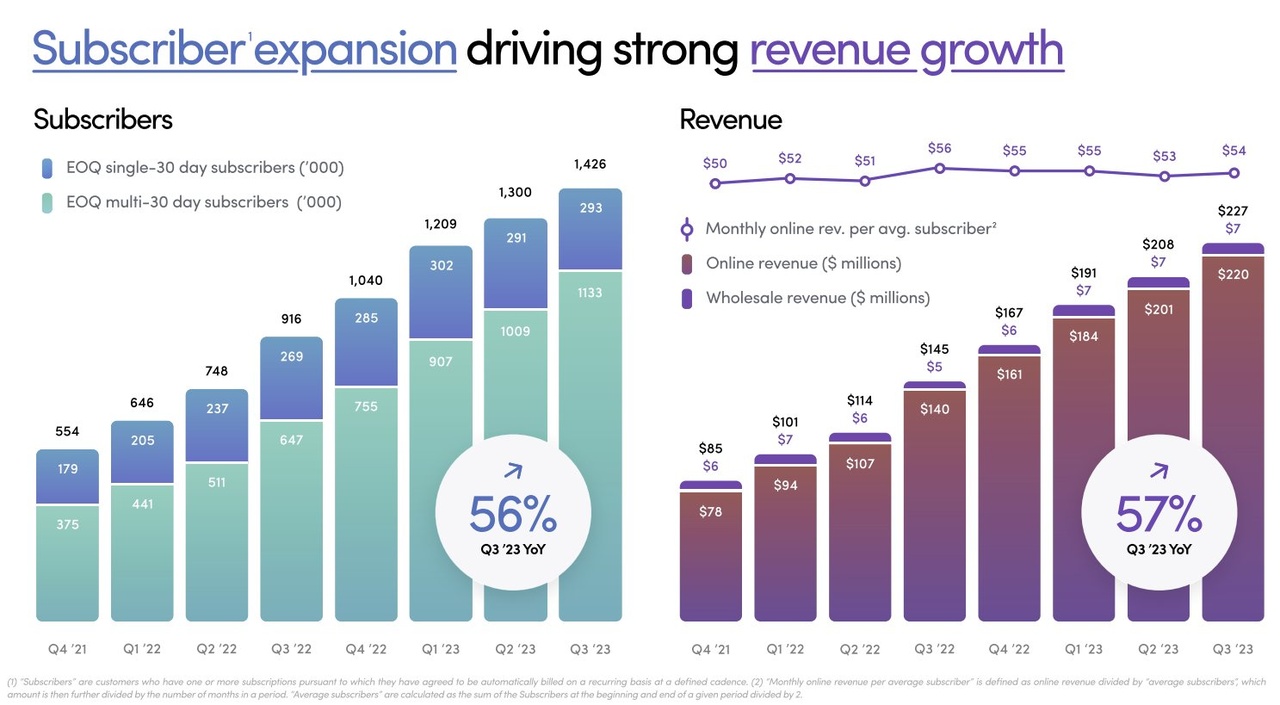
- Q3'23: Hims has a total of 1.426 million subscribers, an increase of 56% year-on-year from 916 million.
- This number has increased for 8 consecutive quarters, showing a steady trend of growing market share. This is, in my opinion, their most important metric.
Monthly online revenue per average subscriber* is $54, down 4% from $56 last year - but up 2% quarter-over-quarter.
(*Average subscriber: sum of total subscriptions at the beginning and end of the month, then divided by 2)
This figure fluctuated by a few percent over the course of 2022-23. But that's a volatility I can live with.
Net orders amounted to 2.22 million, an increase of 33% on the previous year's figure of 1.67 million.
The average order value (AOV) is USD 99, an increase of 19% compared to USD 83 in the previous year.
Hims is a fairly small company when you think of companies such as the Magnificent 7. However, this small company is not only able to get their 1.4 million subscribers to trust their health to this only 6-year-old telemedicine company, but also to get them to place an average order value of 99 US dollars.
Most people in America already have a health care provider/doctor they trust. The health care/health care system in America is also very different than in Austria/Germany, it is also much more costly in terms of out of pocket expenses for health care and many of us can't imagine this either.
then came Q4'23:
Hims has attracted more and more subscribers as they expand their core specialties - sexual health, dermatology for men and women, mental health and weight loss.
Since Q1'22, they've grown from 646,000 subscribers to 1.5 million today. That's +132% in less than 2 years!
Revenue:
Q1'22: $101 million
Q4'23: 246.6 million $
That is an increase of 143 %!
I assume that this growth will continue in the coming years.
The average order value has risen by 18 % compared to the previous year:
AOV (The average order value):
2022: 87 $
2023: 103 $
-> these values are higher than in Q3'23 as there is no Q4'23 was included
I find the AOV (Average Order Value) really impressive.
(The average order value (AOV) is the average amount of money each customer spends per transaction in your store)
Not only is the number of subscribers growing, but they are also adding more products/services to their treatments.
Hims currently has 1.537 million subscribers - an increase of 48% year-on-year
The CEO stated in the 4Q23 conference call that Hims' core competencies provide solutions to problems that affect 100 million people. The company expects its subscriber base to grow from 1.5 million to tens of millions.
Although there is no timetable, I believe Hims can continue to grow for many years to come.
Revenue
2019: 82 million $
2020: 148 million $
2021: 271 million $
2022: 526 million $
2023: 872 million $
Not only is the number of subscribers increasing, but Hims is also expanding its offering e.g. Hims weight loss was just announced in December.
This launch increased the relevance of Hims by entering a HUGE market. These category expansions will allow Hims to sell additional services to already loyal subscribers - providing potential easy revenue growth.
If someone cares enough to pay for a subscription for hair loss, they'd probably be willing to spend money on weight loss too.
The more offer Hims has, the more they can cross-sell, resulting in a higher AOV.
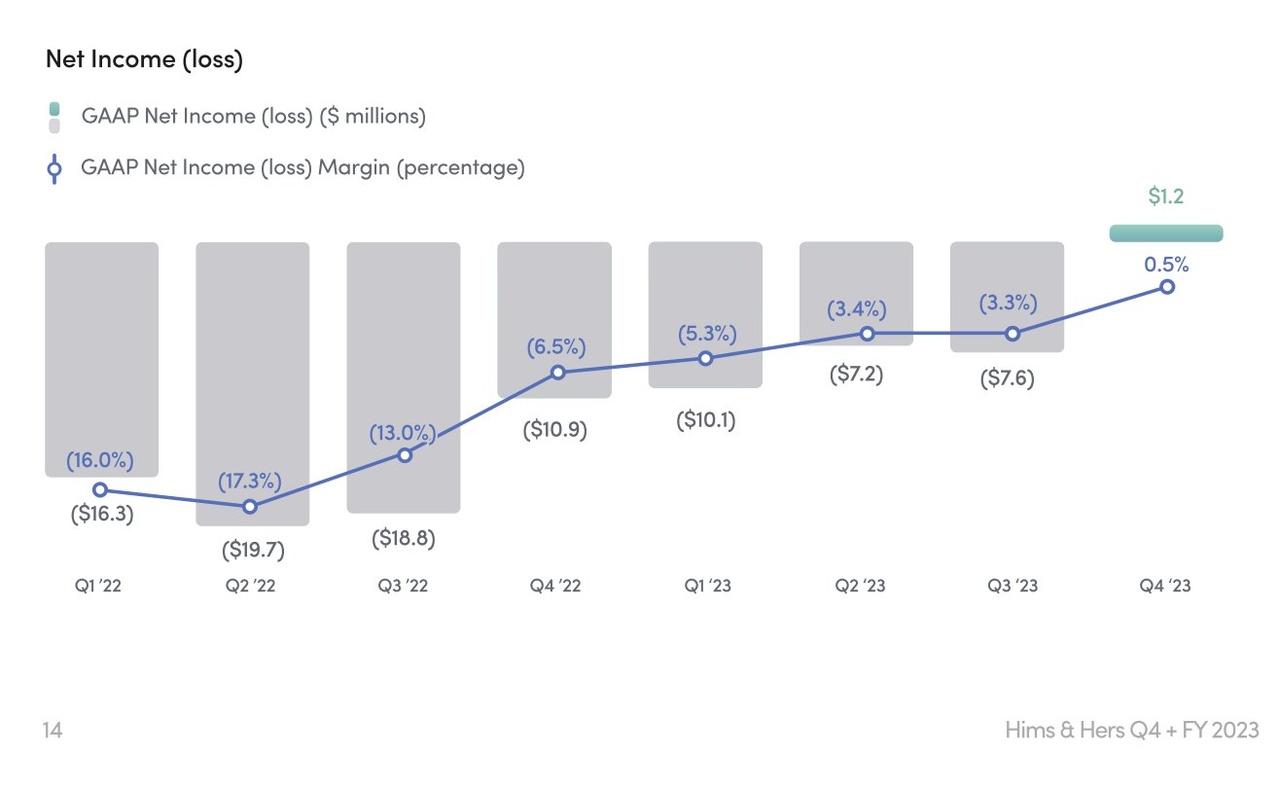
Hims just announced its first quarter of profitability. This milestone has finally given this stock some momentum and will continue to do so as long as it maintains its profitability.
Reaching profitability could now attract a new group of investors as many (especially fund managers) are staying away from unprofitable companies and Hims has now proven that they can be profitable.
If Hims can maintain this profitability, not only will the stock attract interest from safer/less risky investors who tend to be more risk averse, but the company will also have more money to spend on improving its products and services.
I personally see steady growth here and further growth opportunities in many different areas and countries, which has certainly been accelerated by the pandemic.
However, I don't believe that Hims only had a boom factor due to Corona and that user numbers are slowing down, as is the case with $ZM (-3,02%) the growth is steady, as the figures show.
There is really no reason to give Hims a try, but they still attract subscribers. Not only do they attract subscribers, but they can also get those subscribers to pay close to $100 when they place an order.
This could be for the following reasons:
1.) You sell some pretty high end products/services that justify a high spend.
2) They offer options that subscribers can't resist and want to try or add to their regular regimen
3) It turns out that getting prescriptions/products sent/delivered personally and directly to the doorstep is very popular and in demand.
4) or all of the above in combination with MedMatch (Ham's biggest innovation) leads to this strong demand
MedMatch is a service from Hims (owned by Hims) that leverages the collective knowledge of hundreds of providers and millions of data points to help Hims providers offer treatments/prescriptions with the greatest chance of success for patients.
MedMatch uses AI and machine learning to accelerate the personalization of individual patient treatments. The model is trained based on anonymized clinical visits, demographics, treatment types and patient outcomes.
Find out what's so special about Hims MedMatch.
MedMatch helps Hims providers by eliminating trial and error from the doctor/patient experience. If a patient has a problem, a doctor would typically prescribe the lowest strength solution to fix that problem. If the problem then persists, the doctor would prescribe something stronger until the problem is resolved. With MedMatch AI, you immediately choose a perfect, personalized treatment.
(I'm not a doctor, but I'm sure or can imagine that this saves a lot of time for the doctor by not having to deal with follow-up appointments in an attempt to adjust a patient's treatment)
MedMatch allows providers to deliver personalized and accurate care on day 1 by leveraging proven proprietary data* with AI.
*Proprietary data: Data that is owned by the organization and not publicly available. Think about how hospital staff protect patients' personal data with their lives, because this is not public information and belongs to the hospital.
Competition/Castle Moat :
2 names come to mind when I think of Ham's competitors: Teladoc $TDOC & Amazon Clinic $AMZN
All 3 of these business models are very similar:
- They virtually connect customers with doctors
- They provide this healthcare without involving insurance
- They all offer the convenience of NOT physically attending healthcare appointments
So it's not like Hims is in a lane of its own. Costco is also $COST also wants to get into the telehealth market.
What really sets Hims apart is its widening moat - MedMatch. Before I get into how MedMatch can provide a competitive advantage, let's define what exactly a moat is. What is the value here?
When I look for a moat in a company, I look for the X-factor advantage within the company that makes the business model more efficient and that competitors cannot easily copy.
When I think of Hims, I believe that MedMatch can be seen as the company's moat. Although they are not the only ones using data with AI, they are the only ones using proprietary data to develop an algorithm that provides treatments with the highest chance of success.
Amazon's AWS has developed HealthScribe:
A service that eliminates healthcare paperwork by digitally documenting appointments and creating a digital database by recognizing speech during doctor-patient conversations. HealthScribe can automatically generate transcripts, extract important details (medical terms and medications) and create summaries of doctor-patient conversations that can then be entered into an electronic health record (EHR) system. Teledoc has similar AI integrations contributed by Microsoft's Azure that reduce the administrative burden on providers by minimizing the need for physicians to turn away from patients to take notes during conversations.
Sure, that sounds like it would save the doctor time by taking notes and then submitting documentation of patient visits to an electronic medical record, but it's nothing compared to what MedMatch does. This is a service that healthcare organizations can apply to their own systems. Similar to the integration of Shopify $SHOP POS into your digital storefront.
As I mentioned earlier, MedMatch uses proprietary data to develop personalized treatments by using AI to filter millions of data points, trends, patterns, physician notes, and proven outcomes from previous appointments to find the best path for a Hims patient.
This technology will make the barrier to entry insanely difficult for up-and-coming telemedicine companies to copy Hims' business model as long as Hims continues to improve MedMatch's effectiveness. In a few years, I imagine MedMatch's success rate will be a key metric for investors. That's their moat in my opinion.
Closing thoughts:
If/when interest rates are cut this year, it will be a massive year for smaller companies. Small businesses - especially those with profitability issues - need credit more than the giants. These additional funds help them to increase their turnover. Profitable giants have billions in cash that they can spend on growing the business without having to increase their debt. Smaller companies tend not to have this luxury.
Hims has an insane amount of room to grow! They are barely scratching the surface of their expanding TAM. Literally only 1% of their target market is currently subscribed.
(Which in my opinion, due to the healthcare system, the US and neighboring countries are predestined)
It remains to be seen how telemedicine will establish itself in Europe or Austria/Germany, but I could imagine (provided that data protection is not too strict and the regulatory system can manage this) that Hims could be used for simple/digital prescriptions or niches such as hair loss, potency problems, etc. in the distant future. (Although other providers will probably prevail in Central Europe, but perhaps even use MedMatch as a license, who knows what the future holds)
The total addressable market (TAM) for Hims is basically limitless when you consider that everyone needs healthcare and this is constantly increasing. (Demographic change)
They currently have 1.4 million subscribers, but there are 8 billion people in the world who need healthcare. As this company grows, the traditional healthcare system will become obsolete, much like internal combustion engine vehicles as electric vehicles become the standard or banking/FinTech. Everything in this world has an unhealthy level of convenience, such as extending digital apps into your physical reality because you don't even want to take your phone out of your pocket. Why not transfer some of that convenience to healthcare?
Let's imagine a world where we receive prescriptions (after a digital conversation) without having to go to the first doctor's appointment in person to receive referrals, which we simply pick up, receive in the mail, or even have delivered digitally.
What if the referral and treatment were online?
What if the prescription was sent by post to our front door, by email or by app?
What if treatment was efficient, saved us a lot of time, made the hurdle of going to the doctor easier for some people and treatments actually became easier and quicker (especially for unpleasant diagnoses/areas such as hair loss, potency or weight problems etc.) ? ) ?
I like to look to the future and many things will certainly become reality.
Technology accelerates technology and I think we will see a lot more progress in this area.
Your BamBam 😊
As always, this is not investment advice or a recommendation to buy, just my personal opinion and assessment
Here are a few more insights, form your own opinion
Snoop Dog advertising Hims:
https://youtu.be/ucwyJvzk7tohttps://youtu.be/ucwyJvzk7to
https://www.instagram.com/p/BiHvqqwA3XP/?igsh=MXhsNW44N2ludm5mbw==
+ 4
2626
13 Comentários
I think it's really great of you, regardless of whether I agree with your opinions, to go to so much trouble to inform the forum here. For many, it doesn't go beyond name dropping. A big thank you from my side, even though I've only been on board for a short time, I've already noticed it in a very positive way. Have a nice Sunday!
•
1010
•
1Ano·
From 18-year-old wannabe investment banker to successful private asset manager: my (bumpy) path to €300,000 in my custody account
Part 4 of 5: During part 1 and 2 were my apprenticeship years on the stock exchange, Part Part 3 highlighted the very positive years 2019-2021. In part 4 it is now the turn of 2022 and 2023. Part 5 will then conclude my investor story (so far) and shed light on 2024.
2021 was an extremely positive year with a performance of over 30% and assets of almost €200,000 at the end of the year.
However, from mid-2021 onwards, you could already sense that something was slowly changing. Inflation has picked up significantly worldwide. The main reasons for this are the global supply chain problems and the massive money printing by the central banks. Both are direct consequences of the coronavirus pandemic.
The year 2022 - inflation & interest rate turnaround
The year 2022 began with a significant setback in January. My portfolio was down 8% in January. There was a lot of unrest on the markets, inflation was still far too high and it was not clear how much the Fed would raise interest rates. In addition, there were fears that Russia could invade Ukraine - four weeks later this was unfortunately a sad certainty.
Uncertainty - something that the markets do not like at all. In addition to inflation, the war in Ukraine suddenly created another risk: what impact will the war and the sanctions have on global supply chains, which are still under heavy strain? Will this
inflation even further and thus put even more pressure on the central banks?
The stock market was therefore under fire from all sides:
- Supply chains are weighing on companies
- Higher interest rates lead to higher interest costs for companies
- Higher inflation increases salary and purchasing costs, while sales fall as consumers (have to) save more
- Suddenly, call money accounts and bonds become more interesting again and there are alternatives to shares (TINA = there is no alternative was therefore off the table)
Above all tech and growth stocks suffered from further problems:
Many growth companies were not yet profitable, but could borrow money cheaply from anywhere - profits were irrelevant as long as sales were growing. By 2022, this had changed and unprofitable companies were even shunned. Another reason is the valuation of future profits. If inflation is 0%, profits will be worth the same in five years' time as they are today. If inflation is 5%, I have to discount the profit in five years at 5% and suddenly the profit in five years is worth much less in real terms.
If I invest in my portfolio 2022 there are only a few winners:
At the top were defense companies like Lockheed Martin $LMT (+6,86%)
and Northrop Grumman $NOC (+2,51%) . This was followed by safe-haven stocks like Pepsi $PEP (+4,19%)
Unilever $ULVR (+3,64%) or Johnson & Johnson $JNJ (+4,08%) Also Encavis $ECV was also in demand as an electricity producer due to the lack of gas from Russia.
At the bottom was everything to do with tech had to do with technology. The hardest hit were the unprofitable tech companies like Teladoc Health $TDOC (+1,08%) or Match Group $MTCH (-0,68%) caught - both with 70% losses each.
But also Meta $META (-11,37%)
had price losses of 60%! The reason was not only the general situation but also the lack of faith in the Metaverseso that Meta also had an internal problem. In 2022, Meta was already counted as the next GE or IBM.
But also NVIDIA
$NVDA (-4,41%) also lost -45% a decent hit. Microsoft $MSFT (-1,94%)
Apple $AAPL (+1,43%) and Alphabet $GOOG (-2,93%) saw their share prices fall by -20 to -35% were also unable to escape.
What has me in the year 2022 keep going in 2022?
On the one hand, the thought that I can now buy many top companies much more cheaply, but on the other hand also the dividends. My dividends increased by almost 50% in 2022 compared to 2021 and at the end of the year I had dividends of over €1,800.
That's an average of €150 per month and that's with dividend growth companies and not high-dividend ETFs or similar.
Nevertheless, the statement at the end of the year didn't exactly look rosy. Having started with €193,000, at the end of 2022 the portfolio only stood at 178.000€ even though I had over 30.000€ invested. Price losses of ~€45,000 hit like a bomb.
After another slap in the face in December 2022 with -5%, everything should suddenly be forgotten at the turn of the year.
The year 2023 - Inflation, high interest rates? Never mind, we have AI!
On November 30, 2022, the world ChatGPT and since then we have been in an AI rallythat still has no end in sight at the end of 2024. The performance of the portfolio has turned 180 degrees. Everything that was at the top in 2022, such as pharma or consumer staples (Procter & Gamble, Pepsi,...) was suddenly at the bottom.
Suddenly at the top were NVIDIA and Meta with almost +200%.
With Crowdstrike, Salesforce and Palo Alto Networks there were
another three doublers in the portfolio. One Apple was with +40% already
rather a low performer.
The stock market got used to the normalized interest rate environment, supply chains were relatively intact again and inflation began to fall. All in all, a positive environment for the stock market, which was driven back up by a megatrend (artificial intelligence).
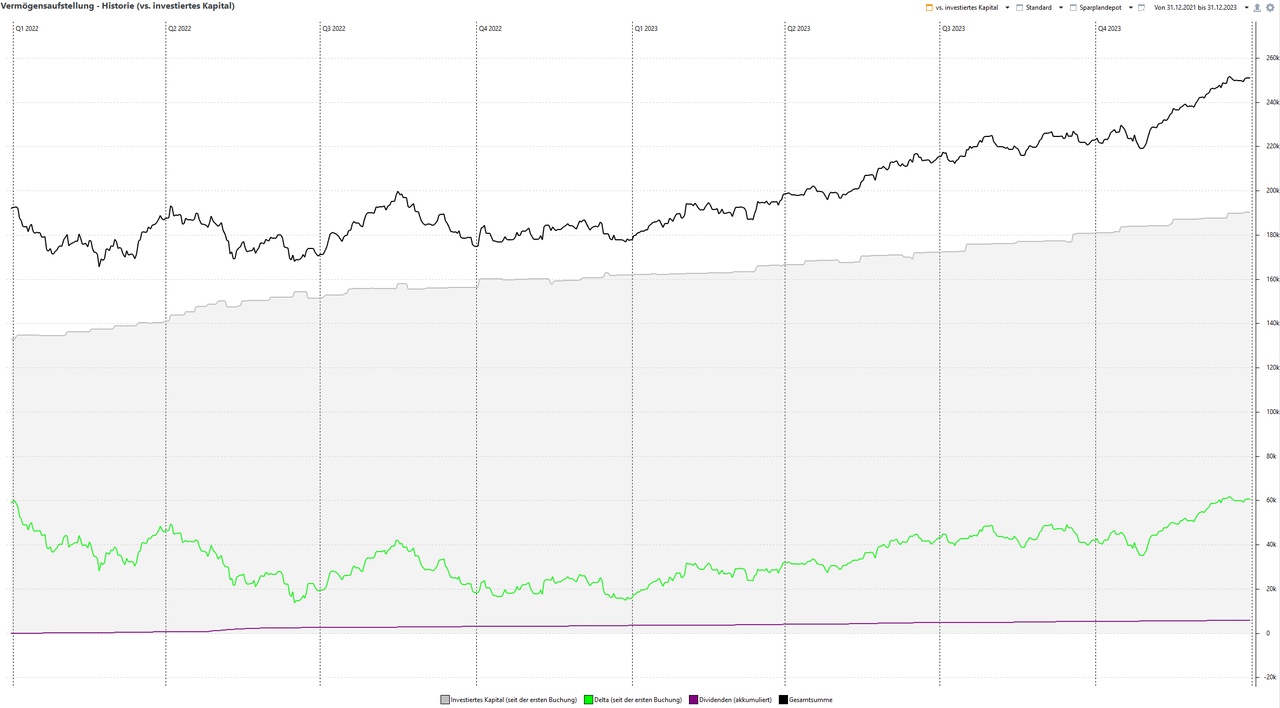
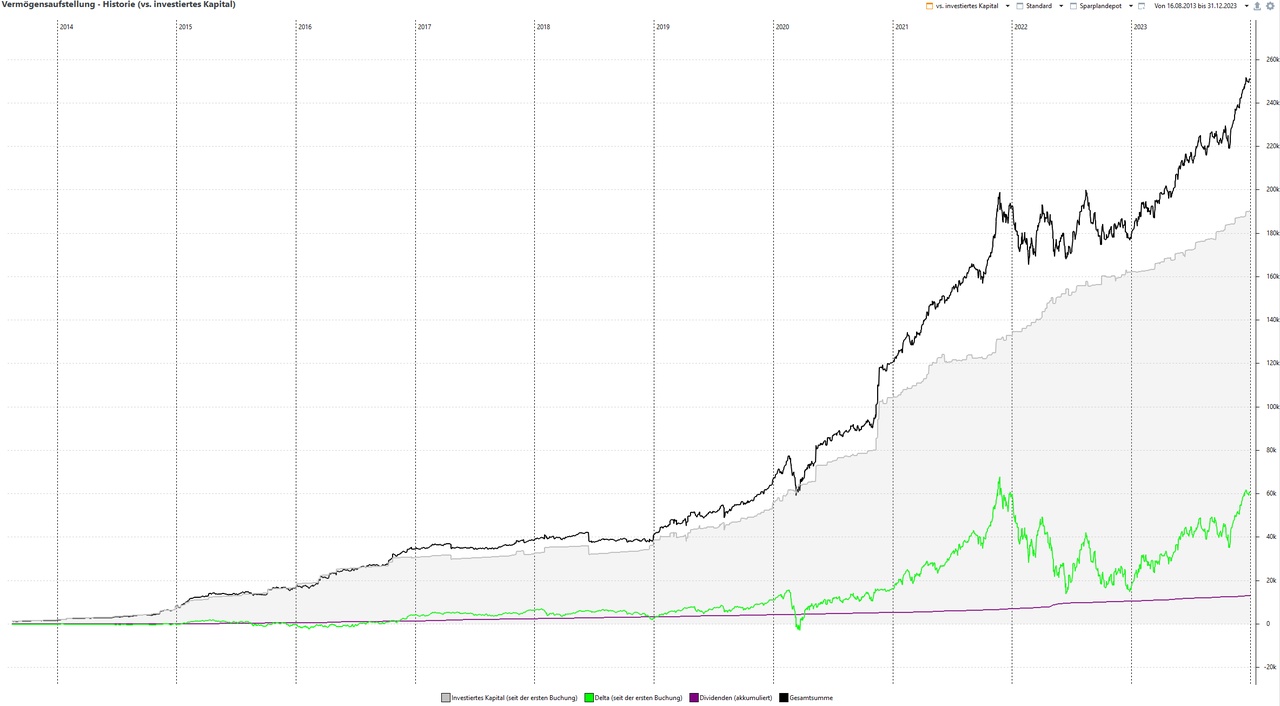
On the home stretch in December 2023, my portfolio was just about able to make up for all the price losses from 2022. In addition to price gains of ~€45,000, I also invested another ~€30,000, so that my portfolio increased by ~€75,000 in absolute terms.
My portfolio ended the year at ~178.000€ and at just over 250.000€ ended the year.
The dividends have also continued to rise nicely - from 1.900€
to almost 2.400€ upwards.
Asset development & return:
Year Deposit value Return
2022 179.000€ -21%
2023 252.000€ +24%
Vermögensentwicklung 2022-2023:
Outlook:
Vermögensentwicklung 2013-2023:
Outlook:
In the next part, I will look ahead to the year 2024 and thus also my portfolio update / annual overview cover.
The year 2024 continued to be characterized by AI, but also by falling interest rates and some political upheavals (Trump, traffic lights out,...).
The portfolio continued to perform extremely well in 2024, although the savings rate was lower than in previous years due to a number of private issues. Nevertheless, for the first time the 300.000€ in the portfolio was to be significantly exceeded.
Part 1: https://app.getquin.com/de/activity/PElWrODsmV
Part 2: https://app.getquin.com/de/activity/LUkWiLtZKX
Part 3: https://app.getquin.com/de/activity/mQAzDvfidK
53Posições
€ 288.734,00
67,72%
3434
7 Comentários
1Ano
Once again mega interesting. Thank you. I really enjoy reading it and think to myself, what would you do? Apart from staying calm, probably nothing. I'm happy for you.
•
22
•1Ano·
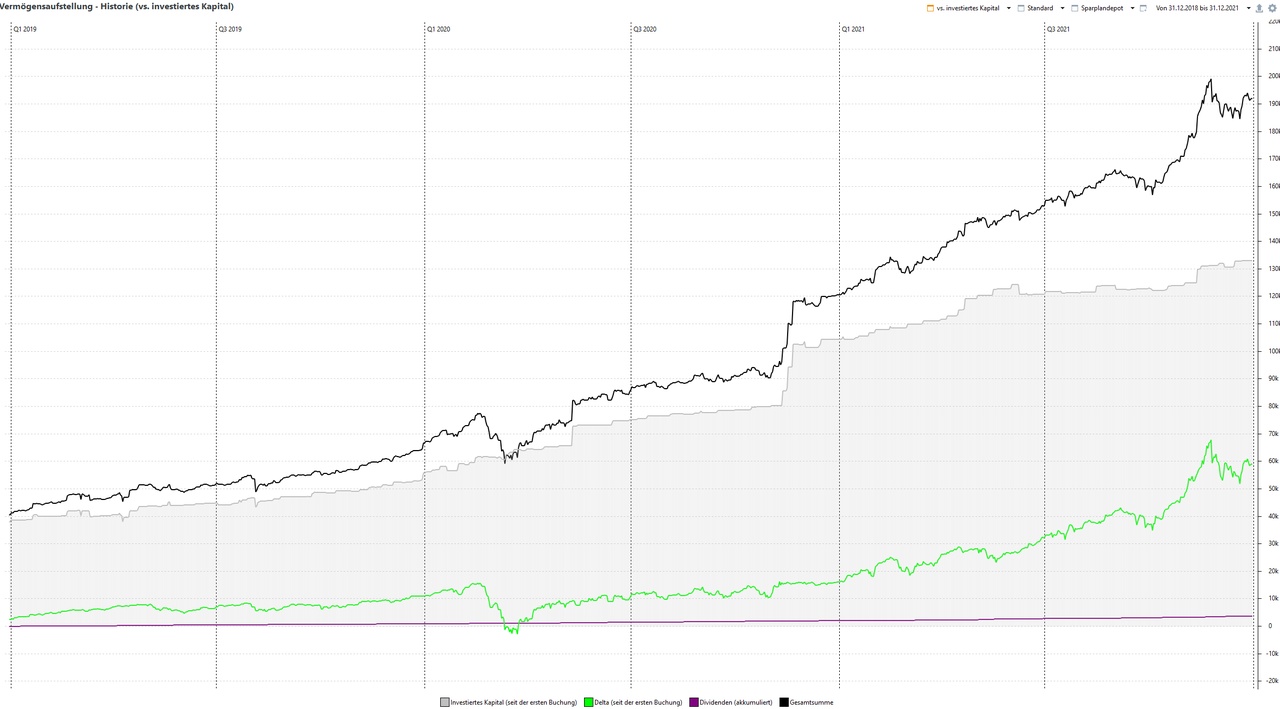
From 18-year-old wannabe investment banker to successful private asset manager: my (bumpy) path to €300,000 in a custody account
In Part 1 I described my start as an investor from 2010 to 2016. Despite loss-making investments and bad decisions (buying AT&T instead of Amazon), I was able to achieve a portfolio value of €35,000. These experiences were to lay the first foundation stone for my future successful investment strategy (https://app.getquin.com/de/activity/PElWrODsmV)
In part 2 I talk about further setbacks in 2017 and 2018 and how the purchase of MasterCard shares marked the turning point in my investment career. Despite initial losses and professional dissatisfaction, I realized that my original strategy wasn't working and discovered the "dividend growth" for me. With a new professional position and a solid salary, I was finally able to really hit the ground running in 2019 (https://app.getquin.com/de/activity/LUkWiLtZKX)
In part 3 it will now be about the years 2019 to 2021 will be discussed. In these 3 years, my portfolio has increased fivefold. From €40,000, it went up to €199,000 in the meantime. But not everything was positive here either. During this time, I also made the two worst trades of my investment career. In addition to Wirecard, there were two other equity investments that resulted in losses of over 80%.
The year 2019 & the first share savings plans:
The year 2019 started with a portfolio balance of ~€40,000 and after my MasterCard purchase in December 2018, my major portfolio reorganization was to continue directly at the beginning of 2019. So in the first four months with Tencent $700 (-1,22%)
Intel $INTC (-8,67%)
Salesforce $CRM (+2,71%)
Alphabet $GOOG (-2,93%) and Meta $META (-11,37%) (then still Facebook), five more tech stocks were added to my portfolio. In return I have BHP Billiton $BHP (-4,73%)
Macy's $M (+1,8%)
and Hugo Boss $BOSS (+0,2%) sold.
Later in the year, the shares of Mercedes $MBG (+0,6%)
and AT&T $T (+3,49%) were also removed from the portfolio.
In addition to further acquisitions such as Pepsi $PEP (+4,19%)
Nextera Energy $NEE (+4,74%)
or Xylem $XYL (+2,89%) I also recognized the benefits of share savings plans in 2019 and started to set up a pure "savings plan custody account". At that time, this was still done via comdirect or Consorsbank and each savings plan execution cost a fee of 0.75%.
Another sale in 2019 was the Gamestop-share $GME (-3,69%) . Bought in 2016 to have something to do with gaming in the portfolio, but not taking into account that stationary sales are becoming less and less relevant. In the end, the share price fell by 85% - unfortunately, this was long before the memestock hype emerged.
My portfolio rose to ~€67,000 in 2019 and achieved a return of 23%. However, this was still well below the MSCI World and the S&P 500.
The year 2020 - Corona, Wirecard bankruptcy & 100k before 30 in the portfolio
2020 - a year that few of us will probably forget. While everything was still going reasonably smoothly in January and February 2020, chaos was set to break out from mid-February/March.
The first few weeks of 2020 had given rise to hopes of a very positive development in my portfolio. From the beginning of January to mid-February, my portfolio rose by almost €10,000 to €77,000.
Panic then slowly set in from mid-February. I still remember exactly how trading on the US stock markets was repeatedly suspended for short periods and daily losses of 10% were normal. At 0 o'clock sharp, I looked at the US futures and in seconds the futures went down by -5%. A cap for the futures, the futures loss must not be higher and you knew the next morning it would end badly for the DAX.
But when there is blood in the streets, you can make very good deals! So in March 2020 I bought the Allianz
$ALV (-0,36%) for €118. This gives me a personal dividend yield of almost 12% based on the current dividend of €13.80. Unfortunately, I only bought for €1,000 in total.
Also Starbucks
$SBUX (+3,74%) I was able to buy for less than €50.
The stock market crash continued until the Fed made short work of it and ended the crash single-handedly. The crash was ended with interest rate cuts and massive money printing and once again the saying "Never bet against the FED" proved to be true.
The stock markets then went through the roof and within a very short space of time were already back to a positive level compared to the end of 2019. Every share that somehow falls under the term "stay at home" was suddenly the hot tip on the stock market. Whether the Peloton $PTON (+4,06%)
or Teladoc $TDOC (+1,08%) everything went through the roof.
I let myself get carried away and did about 10 "Stay at Home" hype stocks into a growth savings plan portfolio. Of these, at the end of 2024 with Sea $SE (-2,59%) and MercadoLibre $MELI (-1,66%) only two shares remained. It goes without saying that most of them left the portfolio at a loss.
But 2020 was also the Wirecard year $WDI BaFin's ban on short selling, a year-long audit by EY, political backing and massive investments by German fund managers from DWS, UnionInvest and Deka vs. a journalist from the Financial Times.
Wirecard's claims that the journalist was in cahoots with short sellers and the backing from various institutions were unfortunately too credible for me.
When Wirecard faced the press and announced that EUR 2 billion could no longer be found, things went downhill and it became clear to everyone that the company was heading for insolvency. Before trading was suspended, I was able to sell my shares at a 50% loss and got off lightly.
Later in the year, I was able to conclude an extremely favorable leasing offer and sell my private car. The proceeds went straight into my securities account and I broke the €100,000 barrier in November 2020.
My portfolio then ended the year with a value of ~€120,000. At +5%, my performance was pretty much in line with the MSCI World.
The year 2021 - HYPE! Wall Street bets, crypto and almost 200k in the portfolio
The year 2021 was characterized above all by hypes. Cryptocurrencies, memestocks and memecoins were in the headlines everywhere. Gamestop, Dogecoin, SPACs and NFTs everyone had to have.
Traditional shares became almost boring.
One of the reasons was certainly the checks that the US government issued to its citizens. It was still Corona, many were locked down and suddenly people started gambling on the stock market.
The hype can be illustrated very well using the example of NFTs. In 2021, NFTs worth $17 billion were traded, in 2023 it was only 80 million - a decline of 97%. According to one study, ~95% of all NFTs are now completely worthless.
The madness in one example: Procter & Gamble launched a Charmin toilet paper NFT. This was sold for over $4,000. All proceeds were donated, but a symbol of the madness of 2021.
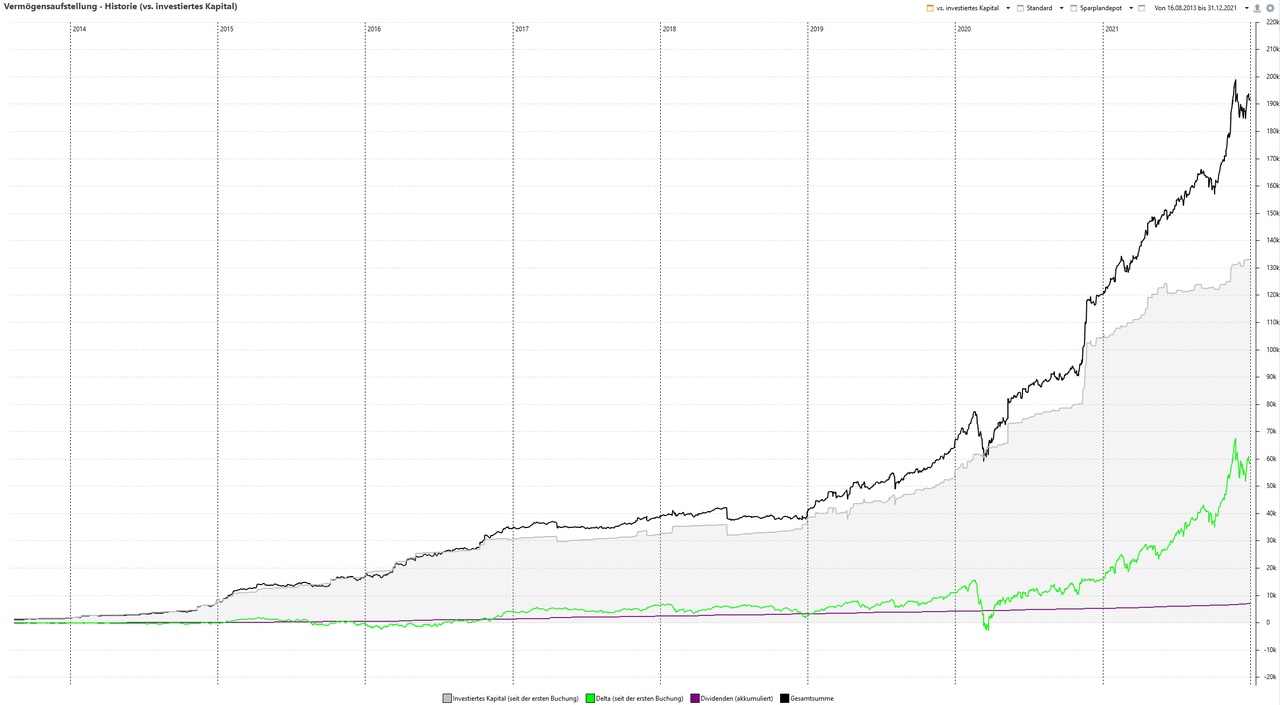
From a portfolio perspective, 2021 was great! In the end, there was a +32% return and a portfolio value of over €190,000, which at times in November 2021 was €199,000.
My top performers were NVIDIA
$NVDA (-4,41%) with over 100% price gains and Pfizer $PFE (+1,7%)
, which was driven by the vaccine hype and at €50 was twice as high as in 2024.
My worst performer was another 80% loss with TAL Education $TAL (-0,53%) . An education company from China. Unfortunately, this was the first time I was able to experience the political arbitrariness in countries like China. Overnight, it was decided that education/tutoring could only be run as a non-profit. Of course, this was almost a death sentence for the company and the share price plummeted by 80%.
Asset development & return:
After the years 2013 to 2018 were forgettable in terms of returns, the years 2019 to 2021 finally delivered:
Year
Deposit value
Yield
2019 67.000€ +19%
2020 121.000€ +5%
2021 193.000€ +34%
Vermögensentwicklung 2019-2021:
Vermögensentwicklung 2013-2021:
Outlook:
Looking back on the hype year 2021, it is almost obvious that 2022 had to be clearly negative.
After the party, however, came the hangover in the form of inflation and the war in Ukraine. Sharply rising interest rates and global economic concerns did the rest.
In the next part, I would therefore like to look at the years 2022 & 2023. I will then combine 2024 with my review of the year in the last part.
53Posições
€ 292.803,30
70,11%

1Ano·
$TDOC (+1,08%) | TelaDoc LAUNCHES AI-ENABLED VIRTUAL SITTER TO IMPROVE PATIENT SAFETY
Teladoc Health has expanded its Virtual Sitter solution with AI-powered features to enhance patient monitoring and reduce hospital falls, which cost $50B annually and affect nearly 1M patients each year.
The upgraded system allows a single remote staff member to monitor 25% more patients, using advanced algorithms for motion detection and pose estimation to detect fall risks and enable quicker interventions. Integrated with Teladoc’s TV Pro devices, the solution ensures secure, efficient operation while reducing burdens on bedside staff.
11
Títulos em alta
Principais criadores desta semana
Dados tempo real da LSX · Dados financeiros e EOD da FactSet