
🏥📉 ResMed and QuidelOrtho both slid double digits after earnings; QuidelOrtho dropped 21.6% on cut FY26 guidance.
Resmed
Ação
Ação
Ticker: RMD
RMD
Price
Discussão sobre RMD
Postos
9
2Mês·
Hits & Misses
I'm on vacation again—this time in Helsinki—and, of course, I'm keeping an eye out for the companies I come across. One that really stood out was $ABBN (-3,32%) . The factory buildings look a bit like Autoteile Unger. Hard to believe that these are—or will be—the AI robotics winners of the coming years. But it doesn’t have to look pretty; all that matters is the money being made. Congratulations to whoever got in early here.
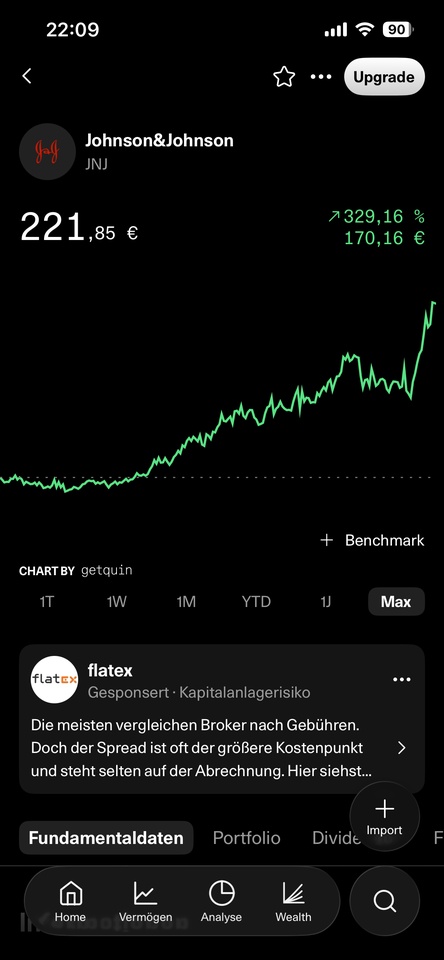
$JNJ (+4,08%) A classic
and
$RMD (+2,94%) also worth considering
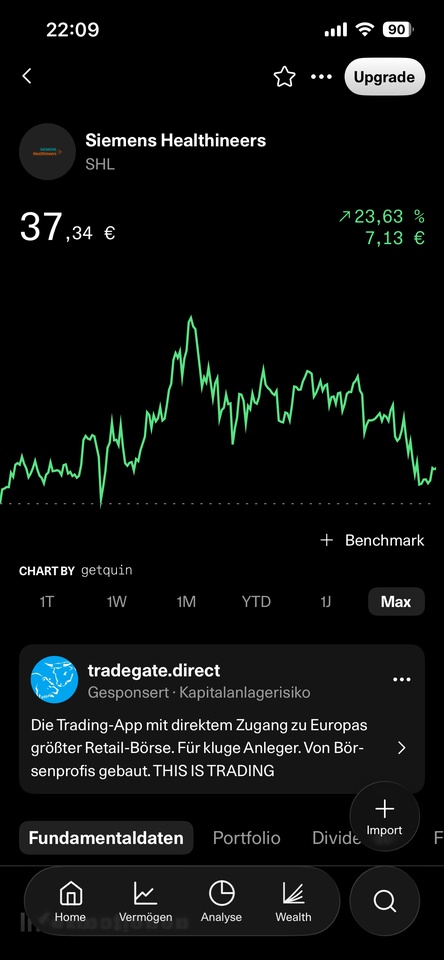
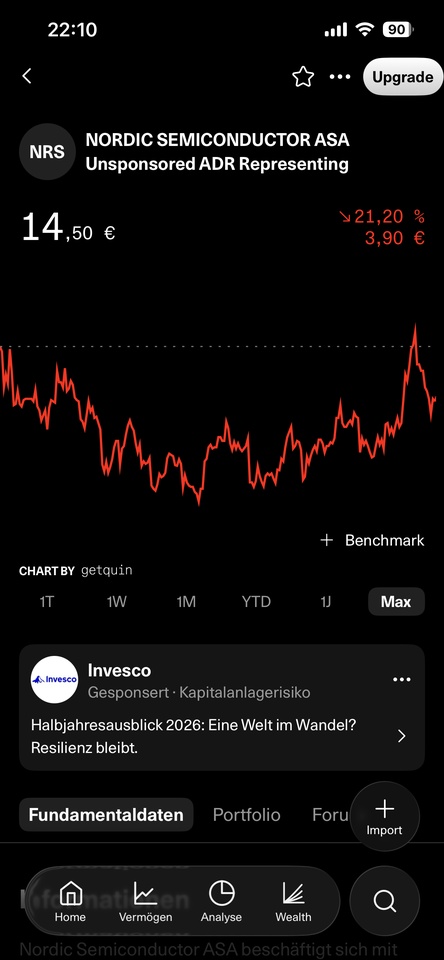
Not so great so far: Nordic Semi and $SHL (+0,31%)
edit: of course, I $CELH forgot that one.
+ 5

1313


1Ano·
HQR Hidden Quality Radar - the silent alternative to the 10B model
Reading time: 9-10 minutes
The 10B model I presented a few days ago looks for small, high-growth companies with the potential to grow tenfold in the long term. The Hidden Quality Radar (HQR) takes a different, complementary approach. While the 10B model targets early, dynamic scaling phases, the HQR focuses on companies with proven operational strength, a high return on capital and a stable balance sheet that have so far been underestimated or overlooked by the market. The aim is to identify quality before it is reflected in the share price - in other words, those companies that are not loud but consistently create value. The HQR thus stands for a down-to-earth approach to investing: less momentum, more substance.
The evaluation model again comprises five dimensions with a total of 100 points:
1. profitability & return on capital (0-20 points) - operating margin, ROIC, free cash flow ratio
2. balance sheet quality & debt (0-15 points) - equity ratio, net cash, working capital efficiency
3. growth & resilience (0-15 points) - organic sales growth, rule of 40, cyclical tolerance
4. management & capital allocation (0-10 points) - investment discipline, buybacks, dividend policy
5. market observance & valuation (0-40 points) - analyst coverage, trading volume, institutional ownership, valuation multiples in peer comparison
The higher the operational quality and the lower the market attention, the stronger the signal. The model thus combines substance analysis with a perception gap - and shows where quality is present but not yet priced by the market. Similar to the 10B model, I use ChatGPT for screening and initial analysis. Potential candidates are identified on the basis of fundamental key figures, margin development and balance sheet strength, which are then analyzed manually in greater depth - with a focus on the business model, capital allocation and structural competitive advantages. The process is therefore data-driven, but deliberately not automated: Each share undergoes a qualitative assessment before it is included in the model.
Below are three current examples that illustrate the approach of the HQR model.
$EKT (-2,26%)
Energiekontor - 87 points (in the portfolio)
Profitability & return on capital (19/20): Energiekontor generates a double-digit operating margin and achieves returns on capital employed in excess of 15%. The integrated business model - from project development to the company's own portfolio - ensures stable cash flows regardless of short-term electricity price movements. Capital turnover is efficient and the return on capital is consistently high.
Balance sheet quality & debt (14/15): The balance sheet is conservatively structured, with a high equity ratio and manageable leverage. Debt remains sustainable even if interest rates rise, and new projects are generally financed without dilution for shareholders.
Growth & resilience (15/15): The company has a solid project pipeline in Germany, the UK and Portugal. The Rule of 40 is regularly above 40%, which underlines the combination of growth and profitability. The business model is largely independent of short-term market cycles and shows that stability and expansion need not be a contradiction in terms.
Management & capital allocation (9/10): The management pursues a long-term, value-oriented strategy with a consistent focus on own holdings and steadily increasing dividends. Capital is only deployed where sustainable returns are possible - a rarity in the renewable energy sector.
Market observation & valuation (30/40): Despite convincing fundamentals, the share is barely represented in international portfolios. Analyst coverage remains low, trading volume moderate. Valuation ratios remain below those of comparable European developers. Energiekontor is therefore a prime example of a high-quality but underestimated stock.
$RMD (+2,94%)
ResMed - 82 points (on the watchlist)
Profitability & return on capital (18/20): ResMed has been generating operating margins above 25% with high free cash flow conversion for years. The business model is capital-light and scaling is high - a combination that enables above-average returns on capital in the long term.
Balance sheet quality & debt (13/15): The company has a solid balance sheet structure, with sufficient liquidity and a moderate level of debt. This allows the company to invest heavily in research and digitalization without having to rely on external funding.
Growth & resilience (14/15): Demand in the area of sleep apnoea is growing structurally, while ResMed is systematically expanding its cloud and monitoring platform. Sales growth remains stable in the high single-digit range and the Rule of 40 is around 45 %. Temporary market fears surrounding GLP-1 drugs have not changed the quality of the business.
Management & capital allocation (9/10): The management acts long-term, focused and with clear priorities. Capital is deployed efficiently, acquisitions are targeted and made from a position of strength.
Market observation & valuation (28/40): Despite global market leadership, ResMed is underrepresented in many portfolios. Valuation multiples are significantly below the large US medtech stocks, although margin and cash flow quality are comparable. The market is currently ignoring the structural strength - a typical HQR case.
$KID (-0,23%)
Kid ASA - 80 points (on the watchlist)
Profitability & Return on Capital (17/20): Kid ASA is the leading supplier of home textiles, interior design and household goods in Scandinavia. The company achieves stable operating margins of between 13% and 15% and has a free cash flow ratio of over 80%. The own-brand ratio is high, which ensures pricing power and stable gross margins.
Balance sheet quality & debt (13/15): The balance sheet is solid, the gearing ratio is moderate and the equity ratio is comfortable. Thanks to the high cash flow, investments and dividends are financed entirely from current funds.
Growth & Resilience (13/15): Kid is growing steadily, driven by store expansion, e-commerce and market share gains in the premium segment. The company remains profitable even in weaker consumer phases - proof of the pricing power and loyalty of its customers. The Rule of 40 is regularly above 40%.
Management & capital allocation (9/10): The management acts in a long-term and disciplined manner, combining growth with continuous dividend increases. Capital allocation is conservative and growth-oriented at the same time - a balance that strengthens the stability of the business model.
Market Observation & Valuation (28/40): Despite a strong market position, Kid is hardly noticed outside Scandinavia. Analyst coverage is limited, institutional ownership is low. The valuation level is below international retail stocks of comparable quality. Kid thus fulfills all HQR criteria: high operating strength, reliable cash flow, low visibility.
The 10B model looks for dynamism, the HQR for substance. While one focuses on early growth phases with higher risk, the other concentrates on consistent value creation and capital discipline. Both models complement each other: the 10B model provides the accelerators, the HQR the foundations. Especially in an environment where market sentiment and narratives change in ever shorter cycles, it is crucial to understand both - when risk is rewarded and when consistency brings returns.
Which strategy convinces you more in the long term - growth through scaling or returns through quality? And which companies would you currently put on the HQR radar yourself?

1616
12 Comentários
Tenbagger-Capital@Tenbagger-Capital
1Ano
•
55
•Ver todas as 9 restantes respostas

1Ano·
Market News
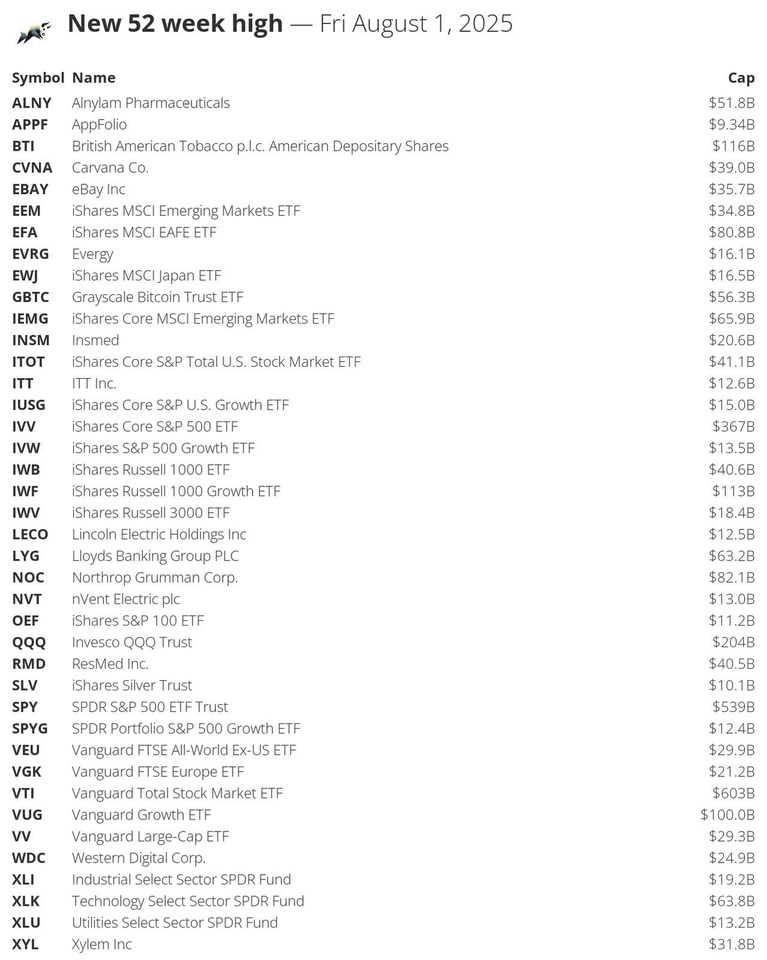
🔝 Stocks that made a new 52-week high today: $VTI (-1,03%)
$SPY (-1,1%)
$IVV (-0,86%)
$QQQ (-2,81%)
$BTI (+2,87%)
$IWF (-2,74%)
$VUG (-2,55%)
$NOC (+2,51%)
$EFA
$IEMG (-2,85%)
$XLK
$LYG
$GBTC
$ALNY (+1,1%)
$ITOT (-1,08%)
$IWB (-1,08%)
$RMD (+2,94%)
$CVNA (-0,89%)
$EBAY (-0,56%)
$EEM
$XYL (+2,89%)
$VEU (-1,38%)
$VV (-1,15%)
$WDC (-13,87%)
$VGK (-0,74%)
$INSM (+0,45%)
$XLI
$IWV (-1,01%)
$EWJ (-1,05%)
$EVRG (+2,02%)
$IUSG
$IVW
$XLU
$NVT
$ITT (-5,89%)
$LECO (-1,72%)
$SPYG
$OEF (-1,43%)
$SLV
$APPF (+1,15%)
#52weekHigh
33

1Ano·
ResMed Quick Analysis
ResMed $RMD (+2,94%)
RMD operates in the healthcare sector and offers devices and software for sleep and respiratory therapies.
The share has recorded a CAGR of 13.5 % since 2001but has fallen by 17 % since the beginning of the year.
Reasons for the attractiveness of RMD:
- 5-year key figures:
- Sales CAGR: 11,84 %
- Free cash flow CAGR: 26,82 %
- Dividend CAGR: 5,85 %
- Gross profit margin: 56,93 %
- Return on invested capital (ROIC): 16,17 %
- Liquidity: 79,41 %
- Payout ratio: 34,38 %
- Share buybacks: -0,54 %
33

1Ano·
Megatrend: Investment opportunities due to an ageing population worldwide
The world's population is getting older and older, an irreversible demographic change with considerable economic consequences.
This article is intended to provide investment ideas and impetus. The stocks mentioned do not, of course, constitute investment advice, but merely serve as examples of potential beneficiaries of demographic change. Historical developments are no guarantee of future returns.
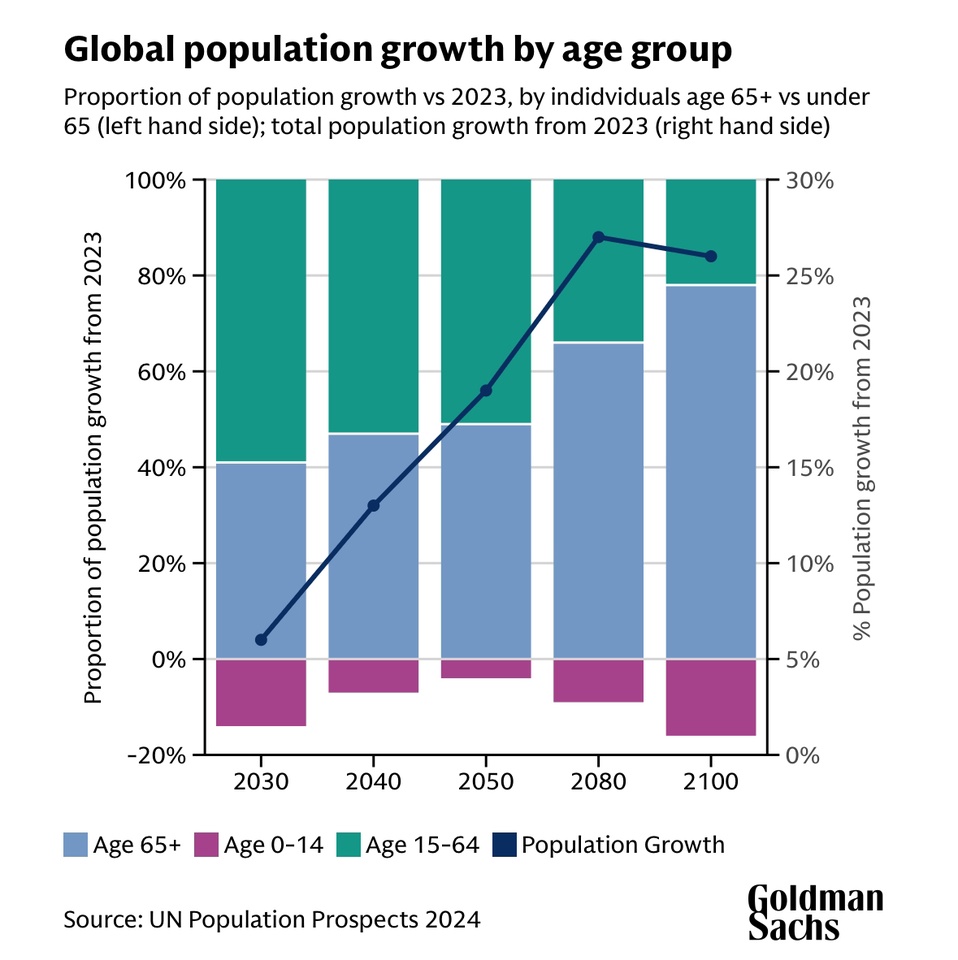
The main source is the short analysis "How to invest as the global population ages" by Goldman Sachs [1], which, however, does not name any specific stocks.
I have also added additional sources and charts.
__________
🌍 Demographic change: growth and ageing of the world's population
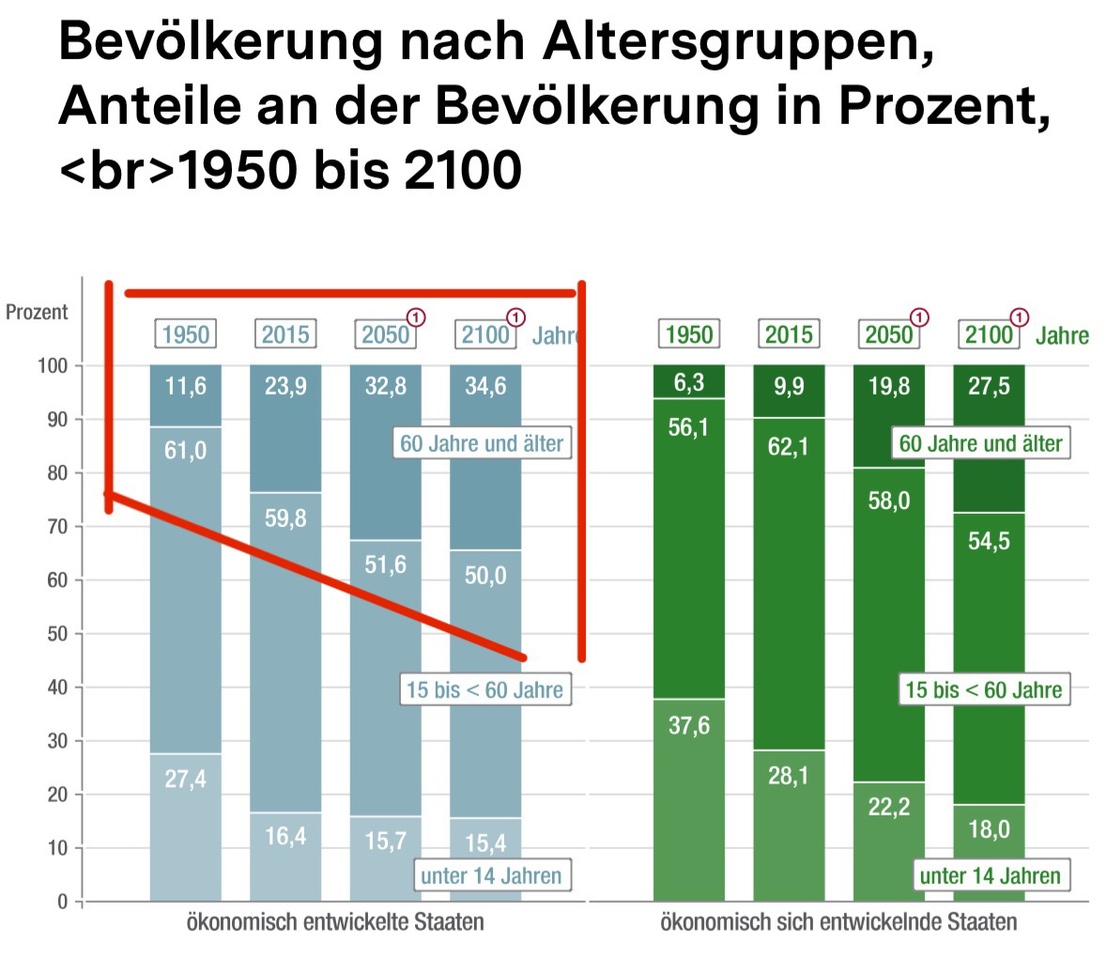
The world's population will grow to almost 10 billion people by 2050. However, it is not just the number of people that is increasing, their age structure is also changing dramatically. [2]
Increase in the older population:
- The proportion of people aged 60 and over is rising from 8% (1950) to 21.5% (2050).
- In 2050, 2.1 billion people will belong to the over-60 age group.
Source: [2]
Regional differences:
Europe & North America have the oldest populations & remain the most affected demographically.
Latin America, the Caribbean & Asia: The proportion of over-60s will more than double between 2015 and 2050, reaching around 25 %.
Africa remains the youngest region: in 2015, there were 21 countries worldwide with a birth rate of 5 children per woman, 19 of which were in Africa. However, it should be noted that current statistics from 2024 show that the birth rate per woman in Africa was already just 4.07 in 2023 and could fall to 2.79 by 2050. [3]
While industrialized countries are struggling with an ageing society, Africa remains the most dynamic and youngest region in the world. This development can also have an economic impact and open up new investment opportunities. [2]
Goldman Sachs also comments in the article with similar figures, according to which the global population is expected to increase by around 20% by 2050 and senior citizens will make up a disproportionate share. The number of people over the age of 65 is expected to double from 800 million to 1.6 billion during this period. [1]
In view of this demographic development, there are opportunities to benefit from precisely this trend. Opportunities lie in targeted investments in sectors that could benefit from the growing proportion of older people.
🚑 Healthcare: A growing market worth billions
Facts:
- In the USA, people over the age of 65 already account for 36% of healthcare expenditure, although they only make up 18% of the population. Age-related diseases such as cardiovascular disease, diabetes and neurological disorders are driving up costs. [1]
- Alzheimer's cases are even expected to double worldwide by 2050.
Possible profiteers:
Medical technology
- Medtronic ($MDT (+3,89%) ) - (cardiac pacemakers, diabetes technology)
- Stryker ($SYK (+3,63%) ) - (orthopaedic implants, surgical devices)
- Siemens Healthineers ($SHL (+0,31%) ) - (imaging, diagnostics)
Pharmaceuticals
- Novo Nordisk ($NOVO B (+0,86%) ) - (Diabetes & Obesity)
- Eli Lilly ($LLY (+2,96%) ) - (Alzheimer's, Diabetes)
- Roche ($ROG (+1,12%) ) - (Oncology, Diagnostics)
🏡 Senior Living & Care: Bottlenecks in nursing homes worldwide
Facts:
The UK has a shortfall of over 30,000 senior units by 2028. [1]
In Germany, France and Italy there is a shortage of nursing home places due to the ageing population. [1]
In the US, only 2% of people over 65 live in nursing homes, leading to an increasing demand for home care and telemedicine. [1]
Potential beneficiaries:
Care providers
- Brookdale Senior Living ($BKD (+1,39%) ) - (senior living, care facilities)
Homecare
- ResMed ($RMD (+2,94%) ) - (sleep apnea, ventilators)
- Fresenius Medical Care ($FME (+3,07%) ) - (dialysis, home therapy)
- Coloplast ($COLO B (+1,25%) ) - (stoma care, incontinence products)
Telemedicine
- Teladoc Health ($TDOC (+1,08%) ) - (virtual doctor visits, digital health solutions)
- Hims & Hers ($HIMS (-1,38%) ) - (telemedicine & e-health)
Anti-Aging
- L'Oréal ($OR (+5,79%) ) - (skin care, cosmetics)
- Estee Lauder ($EL (+4,06%) ) - (luxury cosmetics, skin rejuvenation)
- Revance Therapeutics ($RVNC ) - (Botox alternative, wrinkle treatment)
🚢 Leisure & consumption: The new "silver economy"
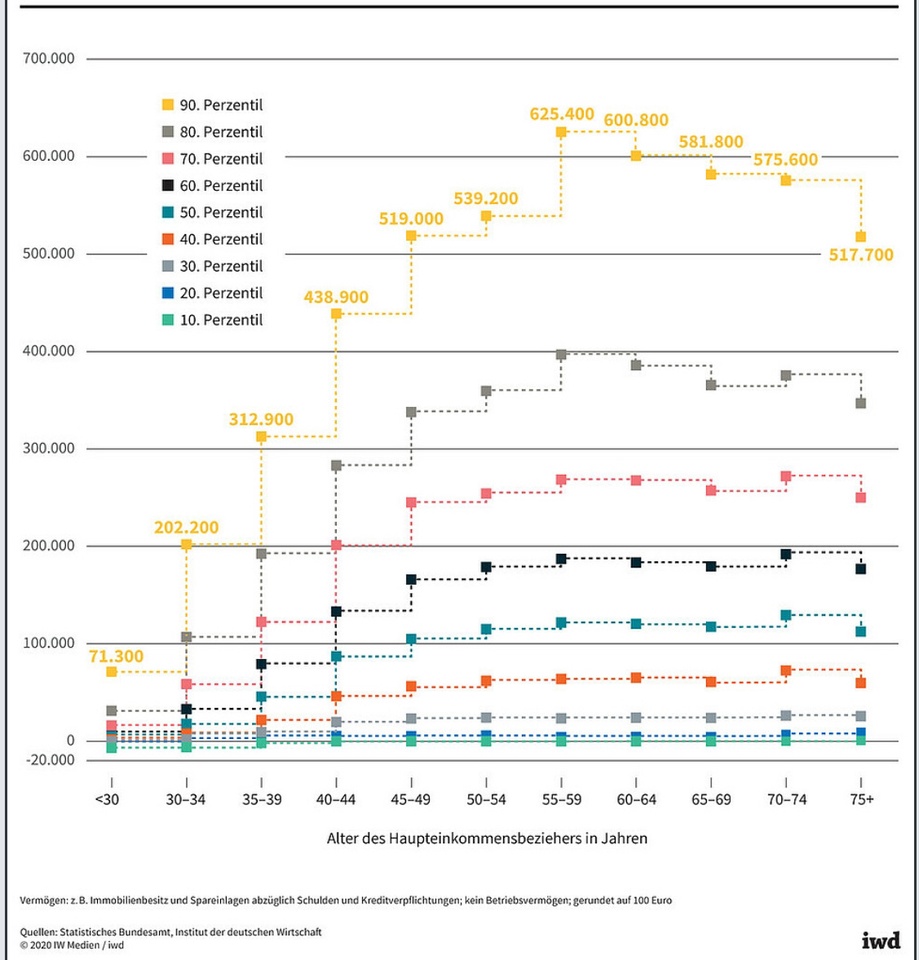
The following chart shows the distribution of wealth in Germany depending on the age of the main income earner. [4]
It is clear that older people tend to have higher wealth than younger age groups. This is reflected in the significantly higher values for the percentiles for age groups aged 50 and over. In particular, the groups aged between 50 and 74 have the highest assets.
The trends are also similar internationally:
- The wealth of older people is 3x that of millennials.
- Over-60s control more than 50% of consumer spending in many developed countries.
- The global silver economy could reach a volume of USD 15 trillion by 2030 (Oxford Economics).
This observation underlines the economic importance of the older generations and their central role in wealth distribution and consumer spending.
Possible beneficiaries:
Luxury
- LVMH ($MC (-0,6%) ) - (fashion, jewelry, wine & spirits)
- Hermès ($RMS (-5,97%) ) - (Exclusive Fashion & Accessories)
- Richemont ($CFR (-1,28%) ) - (Swiss luxury watches & jewelry)
Cruise (Over 60s book a third of all cruises worldwide [1])
- Royal Caribbean ($RCL (-0,12%) ) - (Cruises for seniors & families)
- Carnival ($CCL ) - (mass market cruises)
- Norwegian Cruise Line ($NCLH (-0,43%) ) - (premium cruises)
Motorhome manufacturers/ recreational vehicles (47% of motorhome users are over 55 years old, In the UK, two thirds of over 55s have a motorcycle license, which may indicate a growing market for motorcycles and accessories. [1])
- Thor Industries ($THO (+6,56%) ) - (motorhomes, campers)
- Winnebago ($WGO (+10,76%) ) - (motorhomes & caravans)
- Harley-Davidson ($HOG (+6,41%) ) - (motorcycles and entry-level electric motorcycles)
🤖 Technology & automation: solution to the labor shortage
Facts:
The labor shortage caused by an aging society is becoming a global challenge. Automation, AI and robotics could help close the skills gap. [1]
Profiteers:
- ABB ($ABBNY (-3,5%) ) - (industrial robotics, automation)
- Fanuc ($6954 (-3,57%) ) - (robotics, factory automation)
- Intuitive Surgical ($ISRG (+3,58%) ) - (robot-assisted surgery)
- Siemens ($SIE (-3,62%) )- (automation & also medical technology)
🧠 Conclusion:
Demographic change offers long-term investment opportunities. Early investment in the right sectors can benefit from rising spending on health, care, leisure and technology.
I myself am still looking for one or two individual investments and am a little annoyed that I didn't get into Hims & Hers earlier, although I have been on the verge of doing so several times. Apart from the luxury segment with LVMH, the portfolio also includes Siemens as a conglomerate in the field of automation.
Do you explicitly take demographic change into account in your investments, e.g. in the form of individual shares?
Which shares do you have in your portfolio or do you still see them as an opportunity?
Thanks for reading!
_________
Sources:
[1] https://www.goldmansachs.com/insights/articles/how-to-invest-as-the-global-population-ages
[2] https://www.bpb.de/kurz-knapp/zahlen-und-fakten/globalisierung/52811/demografischer-wandel/
[4]
https://www.iwd.de/artikel/mit-dem-alter-waechst-das-vermoegen-489710/
202202
59 Comentários
1Ano
Thank you for your work 💪😊
•
2626
•1Ano·
Investment decision
During my first year of investing, I bought a lot of shares that I didn't really understand what they were doing. In the course of my restructuring, I would like to reduce my number of shares from almost 30 to 15 in the long term. However, I want to do this over a longer period of time, as these are not bad companies.
Shares that I want to sell
Apple $AAPL (+1,43%)
Medpace $MEDP (+1,27%)
ResMed $RMD (+2,94%)
Shimano $7309 (-0,38%)
LVMH $MC (-0,6%)
Genmab $GMAB (+0,24%)
Pernod Ricard $RI (+4,22%)
Pilbara Minerals $PLS (-5,03%)
Sixt $SIX2 (-1,38%)
McDonald's $MCD (+2,72%)
Domino's Pizza $DPZ (+1,08%)
Crowdstrike $CRWD (-1,03%)
Salesforce $CRM (+2,71%)
Nvidia $NVDA (-4,41%)
Just to clarify, I am not selling these companies because they are bad companies, but because they no longer fit into my investment strategy. I will only invest in companies that are not included in the classic world ETFs, but which I nevertheless understand well.
My question would be what you generally think of this and in which order you would sell the companies listed (as they are listed, this is my preferred order)
32Posições
€ 44.260,42
6,92%
33
13 ComentáriosI would let companies that are still in an uptrend continue to run.
•
44
•
2Ano·
Investing in demographic change: senior boom = portfolio boom?
Hello Community,
Thank you again for your positive feedback on my last article "Climate change - rising temperatures, rising depot".
Today I have a no less relevant topic for you: The megatrend of an ageing society.
Boring. Everyone knows it. Not interesting. Or is it?
There are trends that are omnipresent: AI, climate change, the war in Ukraine, etc.. The trend of an ageing society, on the other hand, is hardly ever heard in everyday life.
Why is that? I suspect that the story of an ageing society was already told many years ago. Every year, the population ages a little more. The frog is sitting in water that is slowly heating up. Only when it is too late does he realize how hot it is getting.
That's why it's interesting for me to look at potential profiteers right now. The hype train hasn't started yet - and perhaps it won't due to the linear development of age cohorts. But hardly any other trend is so certain and predictable - and yet still under the radar.
One request in advance: let's remain objective. Ageing is a sensitive topic that can be emotionally charged. However, in my view, moral or political discussions have no added value here as long as no investments can be derived from them. There are other platforms for that.
Background
For anyone who has not yet heard of demographic change: The baby boomer generation (born between 1946 and 1964) are also known as the "baby boomers". These generations can be found in both the USA and Europe. And this age cohort is gradually retiring. In addition, the proportion of young people in the population is decreasing, as birth rates are steadily declining after the baby boomers.
So there will be more "old people". Which companies could benefit from this development?
To keep things interesting for you, I will focus on less obvious players. Nursing homes, Big Pharma and the like, you probably already know that.
I'm interested in profiteers at second glance. Here we go.
1. tourism
An ageing society does not mean care, immobility and illness. Today's older people are much fitter than they were 20 years ago, for example. Tourism can be one of the beneficiaries here. Where do senior citizens hang out? Presumably on cruise ships 😉
Actually less interesting for me because it's "asset heavy". But cruise companies have been heavily penalized since Corona. They are also not interesting for the ESG community because they are dirty. So maybe interesting after all?
The big players $RCL (-0,12%) Royal Caribbean Cruises, Norwegian Cruise Line and $CCL (-0,9%) Carnival are probably familiar to most people. Caribbean is now also back above the pre-corona rates - in contrast to the other two. It is possible that they will follow suit.
If that's too hot for you, you could take a closer look at $MAR (-1,2%) take a closer look at Marriott. This is the largest hotel chain in the world. It can be classified in the premium segment - which is interesting, as senior citizens can look back on an entire working life. And if they invest their money wisely, they will certainly want to (and be able to) enjoy the last stage of their lives in comfort.
Due to Corona, a look at the development of the key figures is a little distorted. Nevertheless, profits grew by around 13% p.a. over 5 years, while sales growth is estimated at 7.2% p.a..
In addition, there is a dividend yield of just under 1%, although there is still room for improvement with a payout ratio of just under 25% of free cash flow.
In my view, the stock is currently running a little too hot. Definitely something for the watch list if tourism should collapse - that happens regularly.
2. leisure & consumption
Brunswick Corporation
I had never heard of this company before my research. The company is active in the (sports) boat sector and is regarded as a leading manufacturer in this field. They sell boat electronics and drives as well as "finished" boats, from inflatable boats to large yachts.
Sales growth over 5 years: 9.4 % p.a.
Profit growth over 5 years: approx. 14 % p.a.
Plus a dividend yield of currently 2%.
Despite a cyclical industry, profit stability is 0.84.
That is strong. In addition, the share is currently trading at the level of 2022.
The leisure boat market is generally resilient and is also forecast to grow by around 5% p.a. Exciting niche value in my view.
Churchill Downs Incorporated (horse racing tracks)
$CHDN (+2,03%) Churchill Downs operates horse racing tracks, casinos and betting facilities. They host the famous Kentucky Derby at their racetrack. In itself fun for young and old, although the cliché probably focuses more on the older customer. An exciting candidate that can also remain interesting for young customers due to its segments.
The figures are a real treat:
Sales growth over 5 years: approx. 16 % p.a.
Profit growth over 5 years: approx. 22 % p.a.
Despite strong price growth, the share is fundamentally fairly valued according to my research and still offers some potential due to the growth prospects.
If I wasn't already heavily invested in gambling, this would be a hot candidate for me.
Animal welfare is of course a critical point here. But please remember: This is supposed to be about shares and investments, not about moral debates.
Acushnet Holdings Corp
If horse racing is too exciting for you, you can take a look at Acushnet Holdings Corp. $GOLF (+2,81%) . As the ticker says, it's all about golf (products). The company sells everything related to the sport.
And they have an impressive 14/15 points in the Traderfox quality check.
If you ask around in golf, you know how expensive the equipment can be. And the sport can be played well into old age.
Unfortunately, the candidate wasn't included in the share finder, so I haven't included that many key figures for you here. If you are interested, you can research the company in more detail (and perhaps share your findings here?).
3. medical care
Having dealt with two positive areas, we will now turn to the other side of the coin of ageing: the increased need for medical care. There is, of course, a wide range of companies here. I have brought along two candidates that I have repeatedly come across in my research:
Resmed
$RMD (+2,94%) Resmed's main business lies in the treatment of sleeping disorders and respiratory diseases. However, a second - currently small - segment is very exciting for the trend discussed here: software solutions, which include remote monitoring tools to make patient care more efficient. There are not only more old people - there are also fewer young people. There will certainly be resource bottlenecks (shortage of specialists) when it comes to covering the increasing treatment requirements. Efficiency-enhancing options are important here.
Resmed's main business is developing magnificently. Another strong branch could be established with Software Solutions. A very exciting candidate for me.
The figures:
Sales growth over 5 years: 12.6 % p.a.
Profit growth over 5 years: 21 % p.a.
Was still very cheap six months ago. Will be on my watch list. I will get in if there is a setback.
Stryker
I have been looking for alternatives to $SYK (+3,63%) Stryker for a long time, as Stryker is probably not one of the "second glance" profiteers. They are simply too well known for that. But there's no getting around the company. Even when I was specifically looking for specialists in hip and joint implants, no other company could come close to matching the quality of Stryker's figures. In the event of a setback, I would consider buying in. Or do you know of any alternatives?
4. nursing & patient care
Let's move on to the last category: care. Sooner or later, you will need care in old age. Care is not only provided on an inpatient basis, but also on an outpatient basis. You will no doubt have seen various small cars from outpatient care services in cities. There are no monopolistic structures here; there are many small providers on the market. So how can we benefit from care? I looked around for "shovel manufacturers":
Nexus AG
$NXU Nexus AG is a company for software systems for hospitals, care centers and medical practices. They optimize processes there and aim to improve patient care. In my view, this is more exciting than, for example, a player from its US counterpart ($MCK (-0,15%) ), as Europe is more affected by demographic change than the USA. And Nexus AG has not yet performed as strongly as McKesson recently.
Estimated sales growth of just under 13% p.a., estimated earnings growth of 26% p.a.
For me, it is on the watch list alongside McKesson.
Cintas
The company $CTAS (+2,62%) specializes in workwear and textiles. As boring as it sounds, the figures are impressive, as is the performance. Congratulations to all those who got in early.
In my opinion, the company is interesting because everyone involved and the (care) added value requires suitable (clean) workwear. And with blue-collar jobs like these, there is probably little risk that AI will make them obsolete in the next few years. After all, the company is not only active in the care textile industry.
However, despite its high quality, the company is far too expensive in my view. A P/E ratio of 44 with sales growth of <10% p.a. is high.
But: The company is also subject to a certain cyclicality. I will definitely put it on my watch list - I will get in if there is a significant setback.
That was it, my ride through the demographic stocks.
Now it's your turn:
- Which companies do you think will benefit from demographic change?
- What effects do you see?
If you don't have an opinion on this, I would be delighted to receive any feedback on my article:
- Was it too short? Too long?
- Did you miss something?
- How could I make my posts more interesting overall?
I'm looking forward to your comments.
Your Money Man

111111
26 Comentários
Exciting article! I have also looked into this topic and for me $AMP is one of the best demographic stocks.
•
55
•

Títulos em alta
Principais criadores desta semana
Dados tempo real da LSX · Dados financeiros e EOD da FactSet