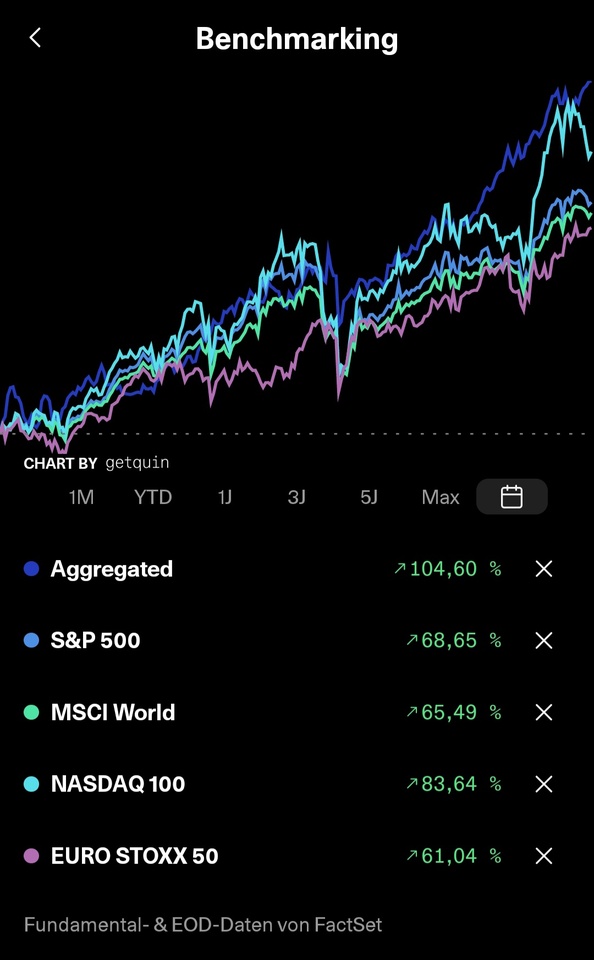
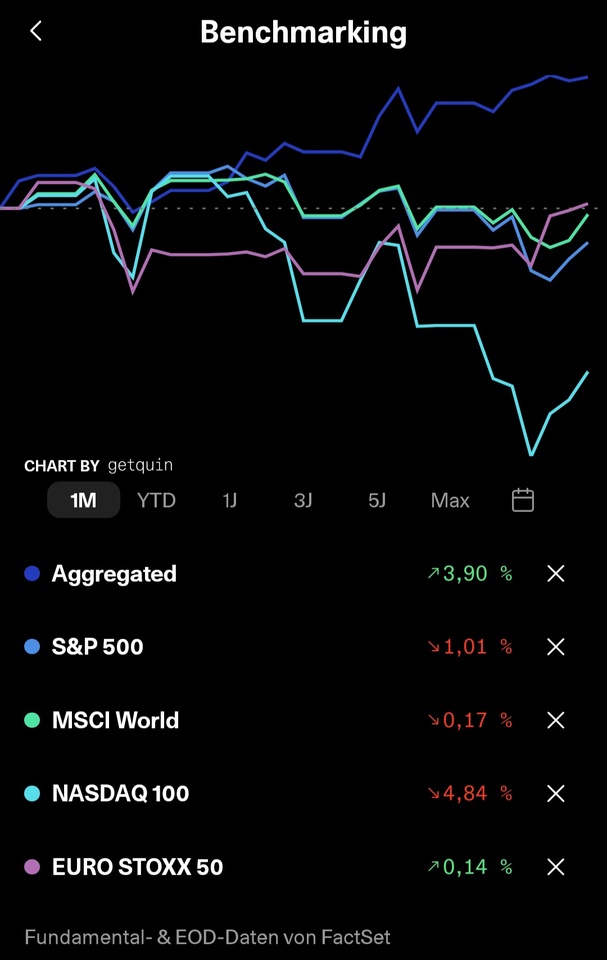
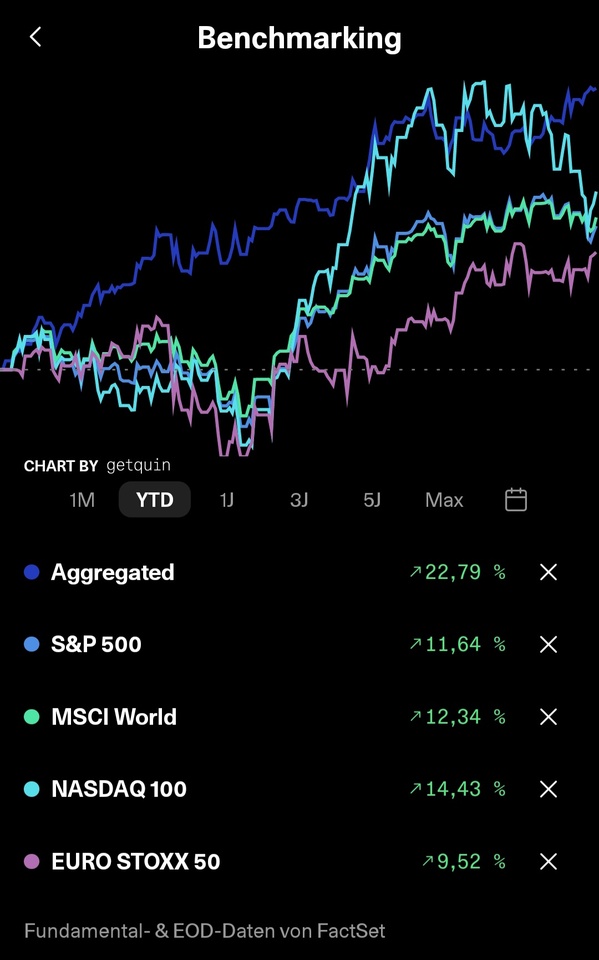
Actual purchase price 519,20€...including fees the price below is realized.

Munich Re
Price
Debate sobre MUV2
Puestos
176Share presentation SKYWARD SPECIALITY INSURANCE
🛡️ Skyward Specialty Insurance $SKWD
- The niche king in the insurance sector
Hello my dears,
There have been a lot of great companies featured here lately like from @Shiya with $DCTH (+1,7 %) or$HROW or stock presentations from dear @Tenbagger2024
Many ideas in the health sector or technologies
Today I would like to introduce you to a company, especially in a sector that not many people think about. The insurance sector 😬 and I have my eye 👀 on this small-cap company. small-cap company thrown.
TODAY IT'S ABOUT SKYWARD SPECIALTY INSURANCE $SKWD
$SKWD Skyward Specialty is not a traditional car or household insurer. The company is active in the Specialty Property & Casualty (P&C) where risks are complex, difficult to assess and often underinsured.
1. the business model: "Rule Our Niche" 🎯
The company pursues a clear strategy: Specialization instead of mass.
* Focus: They insure niches such as renewable energies, media criminal law, life sciences, construction and professional liability.
- Technology focus: Skyward makes extensive use of data analytics and AI (partnering with Sixfold) to price risks more accurately than large, sluggish competitors.
Agility: Due to its smaller size compared to giants like $CB (+0 %) or $AIG (-1,43 %) they can react more quickly to changes in the market.
- The "Apollo Group Holdings Limited" takeover (January 2026)
For the start of the new year 2026, they have acquired "Apollo Group Holdings Limited" for further growth drivers. Apollo (a Lloyd's of London syndicate) for further growth! This means for $SKWD
- Access to the world's most important marketplace for specialty insurance (Lloyd's).
- An immediate global presence instead of being limited to the US market.
The company offers insurance solutions for complex risks that are often avoided by standard insurers. They operate in eight core areas, including:
🏗️Bauwesen & Energy: Specialized solutions for high-risk industries.
🩺👨⚖️👷♂️ Professional liability: For doctors, lawyers and architects.
🌾Special programs: Tailor-made packages for very specific industries (e.g. transportation, agriculture).
- Transactional E&S: "Excess & Surplus" lines, i.e. risks that cannot be insured via the regular market.
👤 Management: who pulls the strings?
The success of an insurer stands and falls with discipline in underwriting (risk assessment). This is where the CEO comes into play:
- CEO: Andrew Robinson
- He took the helm in 2020🤝
- Robinson is an industry heavyweight. He previously held senior positions at The Hanover Insurance Group and as a consultant at Oak HC/FT.
- His strategy: He has radically trimmed Skyward for technology and data analytics. His focus is not on "size at any cost", but on profitability in segments that other insurers find too complicated.
2. the key figures📊
- Market capitalization: Approx. USD 2.1 billion.
- Share price: current share price approx. USD 50.00
- P/E ratio (P/E ratio): approx. 13 - 15 (attractively valued for a growth stock in the insurance sector).
- Combined ratio: Is constant at approx. 91-92 %.
- For information: Anything below 100% means that the insurer is operating profitably (premiums > claims & costs). 91 % is an excellent value.
- Growth: Gross sales (written premiums) recently rose by over 50 % year-on-year (Q3 2025).
🟢 Growth turbo (revenue growth): In the last quarter (Q3 2025), gross premiums rose by a whopping 51,6 % compared to the previous year. This is exceptionally high organic growth for an insurer.
🟢 Profitability (combined ratio): With a value of 89,2 % in Q3 2025, Skyward has set a new company record. As a reminder: the lower this value is below 100%, the more profitable the core business is.
🟢Return on equity (ROE): The annualized return on equity currently stands at 19,3 %. This shows that the management is making highly efficient use of shareholders' capital (the benchmark in the sector is often closer to 12-15%).
🟢Increase in book value: The book value per share increased to September 2025 to 23,75 $ - an increase of 20 % since the beginning of 2025.
🟢Earnings per share (EPS) of 1.10 were massively above analysts' estimates (approx. 0.85). The main drivers were:
1. Strong new business in the areas of agriculture, credit insurance and specialty programs.
2. Higher investment income: Due to the interest rate environment, Skyward earned significantly more on its USD 1.6 billion portfolio (primarily bonds).
3. Lower catastrophe losses: Compared to the previous year, there were fewer claims from severe storms.
3. why is the share exciting? 🚀
1. Enormous profit growth: Analysts expect profit growth of over 35% for 2026. The company regularly beats expectations✅
2.Skyward Speciality is currently delivering a rare combination of hyper-growth (premiums +50%) and operational excellence (combined ratio < 90 %) ✅
3.while established players such as $RLI (-0,97 %) or $KNSL (-0,04 %) , $WRB (-1,13 %) are growing moderately (often in the single-digit or low double-digit range), Skyward is growing at +50 % is an absolute outlier. This shows that $SKWD is gaining massive market share.✅
4. High return on equity (ROE): With an ROE of over 17%, Skyward works very efficiently with shareholders' money.✅
5. Interest profit: As an insurer, Skyward holds billions in fixed-interest securities. The higher interest rate level ensures bubbling investment income.✅
6.Acquisition turbo: The integration of Apollo opens up access to the global Lloyd's market.✅
7.experienced management: Andrew Robinson has transformed the company from a problem child to a high performer in just 4 years.✅
4. risks ⚠️
- Inflation risk: Rising costs for repairs or legal proceedings (loss inflation) could squeeze margins.❗️
- Catastrophe risk: Although Skyward occupies niche markets, extreme weather events can weigh on results.❗️
- Interest rate sensitivity: If interest rates fall extremely quickly, investment returns from the portfolio will fall.❗️
5. conclusion & analyst rating 🧐
$SKWD Skyward Specialty is a classic growth growth story in a conservative sector. The share has significantly outperformed the S&P 500 in recent years.
Analysts' price target: The consensus is approx. 63 - 70 USDwhich corresponds to an upside potential of approx. 25-35 % ⬆️entspricht.
My personal conclusion ?
$SKWD is not a dividend payer like e.g. now a $ALV (-0,17 %) or $MUV2 (+0,54 %) but is $SKWD a highly exciting "quality-growth" stock. If you are looking for growth, this small-cap company could be a very interesting candidate.
Despite the sharp rise in the share price, I think the valuation is $SKWD fair to slightly undervalued, which is why I'm toying with the idea of going in with a tranche🤫
But as far as I know, the share is not tradable with many NeoBrokers 😅
What is your opinion of the company?
Would the share be something for your portfolio?

+ 5
Podcast episode 125 "Buy High. Sell Low." 20 European dividend stocks
Novo Nordisk 3.0% $NOVO B (+8,02 %) NVO
LVMH 2.0% $LVMH
Pernod Ricard 6.35% $RI (-0,21 %)
Imperial Brands 5.5% $IMB (+1,4 %)
BAT 6.2% $BATS (+0,35 %)
Sunrise Communications 8.00%
Nestle 4.05% $NESN (-0,66 %)
Roche 2.85% $ROG (+0,78 %)
Novartis 3.07% $NOVN (+0,77 %)
Shell 4.07% $SHEL (+1,24 %)
German Post 3.86% $DHL (-0,22 %)
Swisscom 3.75% $SCMN (+0,63 %)
German Telekom 3.52% $DTE (-2,41 %)
Strabag 2.72% $STR (+0,85 %)
Vonovia 4.82% $VNA (-0,45 %)
BASF 5.01% $BAS (-2,68 %)
Puma 2.8% $PUMA
Hannover Re 3.62% $HNR1 (+0,95 %)
Munich Re 3.8% $MUV2 (+0,54 %)
Allianz 4.00% $ALV (-0,17 %)
BP 5.76% $BP. (+0,45 %)
Spotify
https://open.spotify.com/episode/1zt05UZlehInr81iaZMdY5?si=e676f0a812014943
YouTube
Appple Podcast
Two depots, one goal: peace, freedom and a predictable transition
Dear Community,
At the end of the year, I would like to share my portfolio and my strategy with you.
I am 38 years old, have been in the stock market since 2024 and am aiming for financial freedom at the age of 58. Time will tell whether that will work out... 😉 I'm not investing to maximize my profits, but to be able to live a relaxed life in the long term. To this end, I have deliberately separated my investments into two portfolios with a clear purpose.
Portfolio 1 - Growth (ING)
$VWCE (-0,07 %) , $XNAS (+0 %) , $WGLD (-0,31 %) and as an admixture some Bitcoin via ETP $IB1T (-0,31 %) .
This portfolio is saved monthly until 58 and then remains more or less untouched.
My savings rates would be:
800€ $VWCE (-0,07 %)
375€ $XNAS (+0 %)
150€ $WGLD (-0,31 %)
0€ $IB1T (-0,31 %) - Position is currently at 10% and should rest for the time being
Portfolio 2 - Cash flow (SC)
Here I am investing via 2 dividend ETFs ($VHYL (+0,1 %) , $TDIV (+0,48 %) ) and selected quality stocks to build up a steadily growing cash flow. All distributions are reinvested equally in the ETFs. Furthermore, a small cushion is built up here via $XEOD (+0,02 %) is built up here.
My savings rates would be
250€ $XEOD (+0,02 %)
200€ $VHYL (+0,1 %) - Start January 26
200€ $TDIV (+0,48 %) - Start January 26
425€ Individual assets (as required, no savings plan, no obligation)
My individual stocks:
Allianz $ALV (-0,17 %)
Munich Re $MUV2 (+0,54 %)
Procter & Gamble $PG (-0,08 %)
PepsiCo $PEP (-0,25 %)
Johnson & Johnson $JNJ (-0,13 %)
Novo Nordisk $NOVO B (+8,02 %)
Lime $LIN (+0,16 %)
ADP $ADP (+0,2 %)
Waste Management $WM (+1,26 %)
Siemens $SIE (+0,31 %)
Accenture $ACN (-0,38 %)
Alphabet $GOOGL (-0,71 %)
Itochu $8001 (+1,85 %)
visas $V (+0,35 %)
No speculation, no trading. For most people here, extremely boring... 😴 But hopefully the selection will bring some stability to the portfolio in turbulent times. 😉
For the time being, we will stick with these stocks and gradually buy more when good opportunities arise. Each individual position will of course be capped later and should make up between 2-3% of the portfolio (including the proportion within the ETFs). Alphabet would be an exception.
The reallocation idea
Nothing is invested from 58. The plan is to reallocate around 5 % annually from custody account 1 to custody account 2. In this way, growth is gradually converted into cash flow - without significant erosion of assets. And in the best-case scenario, my growth portfolio can continue to grow. I consciously accept taxes 😉
Thank you for reading and have a successful 2026.
P.S. My allocation doesn't fit yet because I've been focusing more on my individual stocks in recent weeks. Chart is also not meaningful because of ING Autosync and Itochu split 🥲
Also an exciting strategy.
I've also spent the last few evenings restructuring my portfolio. Simply because I can't keep my feet still and a few individual stocks just spice things up.
I think my portfolio could look similar without the dividend stocks. I will probably increase the core share instead and go for S&P and EU momentum. 👍
Nothing but expenses (dividend)
Hello everyone,
Here is my personal review of the year 2025.
First of all - my target for the year was achieved. I had aimed for 98k in the portfolio. This was clearly exceeded
Unfortunately, this was not due to my return. The bottom line is that only the dividends remained this year.
What happened? Amundi really annoyed me back in January. My Basisinvest was supposed to be merged and a tax event first of all made the German government's coffers full of money - so my exemption order was gone and my portfolio reduced accordingly. Thanks for that Amundi.
Well, what the heck - got a new World and continued to save diligently ;).
The aim this year was to restructure my portfolio somewhat and reduce my dependence on Bitcoin. A few new individual stocks were added to the portfolio for this purpose:
$PEP (-0,25 %) one-time purchase
$MAIN (-0,29 %) one-off purchase and savings plan
$V (+0,35 %) one-off purchase and savings plan
$RR. (+0,13 %) One-off purchase and savings plan
In the meantime I have then $ETH (+0,35 %) my stake and moved it to $BTC (-0,02 %) moved it to
Especially from October onwards, my portfolio suffered due to the high crypto share. But anyone who opts for crypto also has to deal with the volatility.
In Q4, I decided to sell one of my dividend ETFs $ISPA (+0,14 %)
This was followed by
$MUV2 (+0,54 %) and
Into the depot. Last but not least, I have also been saving the $LVWC (-0,05 %) weekly since it was launched.
All in all, I'm still very satisfied with the year. Including dividend reinvestment, I have a savings rate of €1672 per month. Significantly higher than planned. This also compensates for the lack of performance.
I'm aiming for 128k in my portfolio in 2026.
My goal of no longer having to work at the age of 55 - if I want to - remains in focus (16 years to go).
The core of my strategy remains unchanged:
- ETFs as a basis
- Bitcoin
- Solid individual stocks (preferably with dividends)
Yes - my portfolio could be much "simpler" - but I feel comfortable with it.
Nevertheless, I am very happy about your feedback
Partial sale Amkor
Many thanks again to @Tenbagger2024 for introducing the share. After yesterday's figures, I have now decided to $ORCL (+0,75 %) decided to reduce my exposure to the tech sector somewhat and switch to $MUV2 (+0,54 %) and shift into Good run $AMKR (-3,14 %) and a small amount remains after profit taking.
That makes me happy 😘
Munich Re
Munich Re $MUV2 (+0,54 %) intends to steadily increase its profits over the next few years despite crumbling prices in reinsurance and pass most of this on to its shareholders.
The world's second-largest reinsurer has set itself the target of a return on equity of more than 18% by 2030, as it announced in Munich on Wednesday. Previously, the target was 14 to 16 percent, but Munich Re had recently exceeded it. According to "Ambition 2030", earnings per share should increase by an average of more than eight percent per year, whereas the previous target was at least five percent. 80 percent of the profit should be distributed to shareholders via dividends and share buybacks. Most recently, Munich Re had passed on around three quarters.
Munich Re intends to make up for the foreseeable crumbling profits in non-life reinsurance over the next few years with growth in the other three lines. Health reinsurance, the primary insurer Ergo and specialty insurance business are expected to contribute around 60 percent to profits in 2030, as the reinsurer announced. The current figure is around 50 percent. The longstanding trend of rising prices for cover against natural disasters and other major losses is currently threatening to reverse.
Nevertheless, I find it amazing how a mere announcement immediately triggers an upward price movement without any of this announcement having been implemented so far.
Enabling attractive dividend pensions with shares and ETFs
The sensible use of saved capital in retirement requires good planning. Especially if you want money to flow out of it regularly to secure or sweeten the third stage of your life.
Financial brokers then like to offer pension insurance based on a single payment, often called an immediate annuity.
With a normal life expectancy, the return is usually not generous because insurers usually invest very conservatively. In addition, the costs and profit margins of the insurance company further reduce the return. Consumer advocates point out that you usually have to live to be 94 years or older before you receive the investment sum back via guaranteed pensions.
It is often more profitable to park the money in a call money account.
Investments with regular distributions are an alternative. Investors are spoiled for choice between several thousand dividend-paying equity funds.
What are the relevant selection criteria? Quality and cost structure.
For some, the level of distributions may also be an important criterion in the selection process. But caution is advised here: For example, the payout ratio of the Global X Super Dividend ETF $SDIP (+0,55 %) is currently over nine percent. With an investment sum of 100,000 euros, this results in a monthly inflow of around 750 euros before tax.
This is possible because the ETF invests stubbornly in the 100 companies with the highest dividends worldwide, but without any consideration of the sustainability of these distributions and the quality of the companies.
This in turn means that, without the dividends, the ETF generated a return of zero over one year and even minus 14% over three years. Investors therefore received high regular payouts, but the investment capital decreased significantly at the same time.
Savers should therefore always pay attention to how the ETF invests. There are various positive counter-examples, such as the Invesco Euro Stoxx High Dividend Low Volatility ETF $EUHD (+0,13 %). Although this also focuses on high-dividend companies, it also selects according to qualitative criteria. Result: Although the payout ratio is currently "only" 5.1% per year, this amounts to around EUR 425 per month before tax for an investment sum of EUR 100,000.
However, the ETF has also achieved growth of almost 36% over the past three years, and including distributions, the gain was even over 60%. There are similarly good ETFs for various other investment regions or sectors.
Bond ETFs, on the other hand, are rarely a real alternative for private investors. Although distribution rates of four or five percent can be achieved, this is ultimately only possible with high-risk bonds or US securities with a corresponding currency risk. In addition, a positive return can rarely be achieved over and above the distribution.
A (possibly riskier) alternative is to invest in individual shares with high dividends. However, quality is even more important here. "We value companies with a strong balance sheet that are characterized by a high equity ratio and above-average returns on capital and sales," says Franz Kaim from Kidron Vermögensverwaltung in Stuttgart.
Continuity is also important. "The so-called dividend aristocrats are the gold standard for income-oriented investors," says Rainer Laborenz, Managing Partner of Azemos Vermögensverwaltung in Offenburg. "Companies that have increased their dividends for at least 25 consecutive years are included in this select group."
There are currently around 150 dividend aristocrats worldwide, 117 of which are from the USA and 33 from the rest of the world. The best-known names include Coca-Cola $KO (-0,16 %)Procter & Gamble $PG (-0,08 %) and Johnson & Johnson $JNJ (-0,13 %) from the USA, Fresenius from Germany $FRE (+0,31 %) and Unilever $ULVR (+0,43 %) from Great Britain.
Other attractive dividend stocks recommended in a WELT survey of ten leading asset managers in Germany include Allianz $ALV (-0,17 %)BASF $BAS (-2,68 %)Beiersdorf $BEI (+0,55 %)Deutsche Post $DHL (-0,22 %) and Munich Re $MUV2 (+0,54 %).
In other European countries, they rely on BAT $BATS (+0,35 %), BP $BP. (+0,45 %), Nestlé $NESN (-0,66 %), NN Group $NN (-0,03 %)Shell $SHEL (+1,24 %) and Swiss Life $SLHN (+0,11 %).
In the USA, names such as Altria $MO (+0,62 %), Chevron $CVX (-0,09 %)Cisco $CSCO (-0,26 %), Coca-Cola, Kimberly-Clark $KMB (-1,33 %) , McDonald's $MCD (-0,12 %) or Pepsi $PEP (-0,25 %).
Source: Text (excerpt) & table: Welt, 05.12.25
When the Commission puts its (Bärbel Bas) cards on the table at the end of Q2, the Union will slip below 18%.
Munich Re Q3 figures
The reinsurer confirmed its profit target for the year as a whole, but is once again becoming more cautious with regard to turnover.
In the third quarter, Munich Re posted a profit of just under 2 billion euros, compared with 907 million euros in the same period last year, when high losses were incurred for natural catastrophes. Analysts had expected 1.93 billion euros in a consensus published by the company itself.
Munich Re continues to expect a net profit of around 6 billion euros for 2025 after 5.7 billion in the previous year. After nine months, the Group earned 5.18 billion euros.
The Group now expects insurance premium income to be around 61 billion euros, roughly on a par with the previous year. Munich Re had recently lowered its forecast to 62 billion euros.
Meanwhile, Munich Re is becoming more confident about the combined ratio in property and casualty reinsurance. The ratio, which compares expenses and income in the insurance business, is now seen at 74% instead of 79%.
Source: Finanzen.net
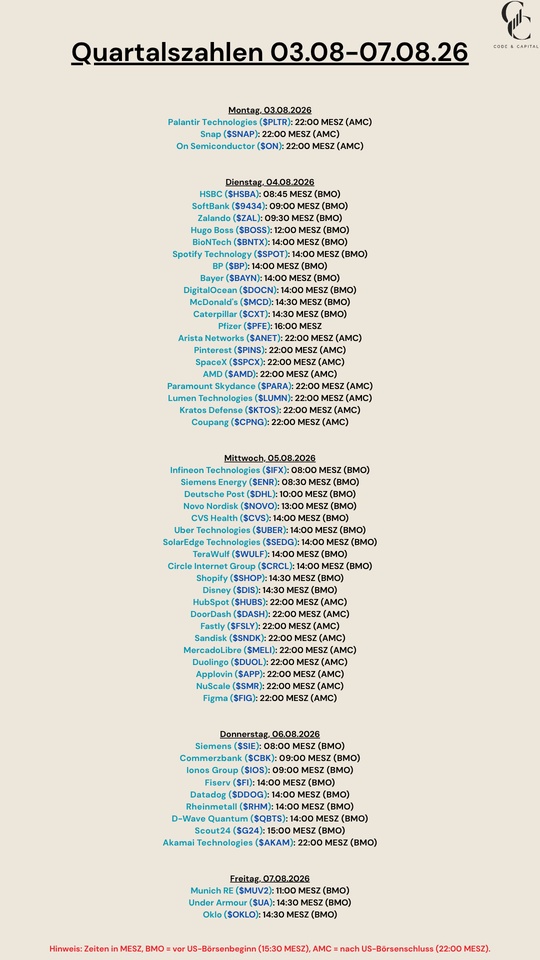
Quarterly figures 10.11-14.11.25
$MNDY (-4,33 %)
$TSN (-0,52 %)
$OXY (-1,21 %)
$WULF (+0,42 %)
$PLUG (+3,57 %)
$RKLB (+7,74 %)
$CRWV (+7,11 %)
$9984 (-0,97 %)
$IOS (-0,27 %)
$MUV2 (+0,54 %)
$SE (-2,1 %)
$NBIS (+4,18 %)
$RGTI (+3,03 %)
$$BYND (-4,55 %)
$OKLO
$IFX (+1,38 %)
$EOAN (+0,99 %)
$TME (+0 %)
$VBK (-1,95 %)
$HDD (+2,81 %)
$ONON (-1,77 %)
$JMIA (-2,04 %)
$MRX (+1,18 %)
$HTG (-1,82 %)
$DTE (-2,41 %)
$R3NK (+1,63 %)
$HLAG (-2,75 %)
$JD (-1,58 %)
$700 (-2,09 %)
$DIS (-1,84 %)
$ENEL (+0,74 %)
$AMAT (+2,5 %)
$NU (+0 %)
$ALV (-0,17 %)
$SREN (-0,71 %)
$BAVA (+0,92 %)
Valores en tendencia
Principales creadores de la semana