
$VZ (-1,27 %)
$P911 (-3,01 %)
$NOVN (-2,72 %)
$PYPL (-0,46 %)
$SOFI (-0,84 %)
$UPS (-0,3 %)
$GLW (+0,23 %)
$KO (-2,47 %)
$RCL (-3,44 %)
$NXPI (-0,3 %)
$V (-0,95 %)
$STX (+3,48 %)
$HOOD (-1,11 %)
$SKHY (+3,4 %)
$MBG (-1,34 %)
$DBK (-0,73 %)
$GEV (-1,14 %)
$TER (+1,66 %)
$ADYEN (-1,55 %)
$WM (+0,14 %)
$AIR (-1,34 %)
$GOOGL (-0,92 %)
$CMG (-1,8 %)
$FTNT (+3,29 %)
$NOW (+1,76 %)
$KLAC (-0,43 %)
$MSFT (+0,62 %)
$CVNA (-1,21 %)
$006400
$VOW3 (-0,07 %)
$BMY (-2,19 %)
$INCY (-1,55 %)
$CAT (-2,11 %)
$N1CL34
$MO (-1,63 %)
$MA (-1,36 %)
$AIXA (-2,2 %)
$LLY (-2,35 %)
$SBUX (-1,16 %)
$RDDT (-3 %)
$RBLX (-0,42 %)
$ILMN (+0,12 %)
$SNDK (+0,91 %)
$INTC (+2,73 %)
$MDLZ (-1,4 %)
$COIN (-2,34 %)
$AMZN (-0,76 %)
$TWLO (+3,5 %)
$PINS (-2,93 %)
$285A (+3,87 %)
$CL (-3,26 %)
$GD (-0,46 %)
$ABBV (+0,16 %)
$PUM (-0,14 %)
$CVX (+2,97 %)
Aixtron
Price
Debate sobre AIXA
Puestos
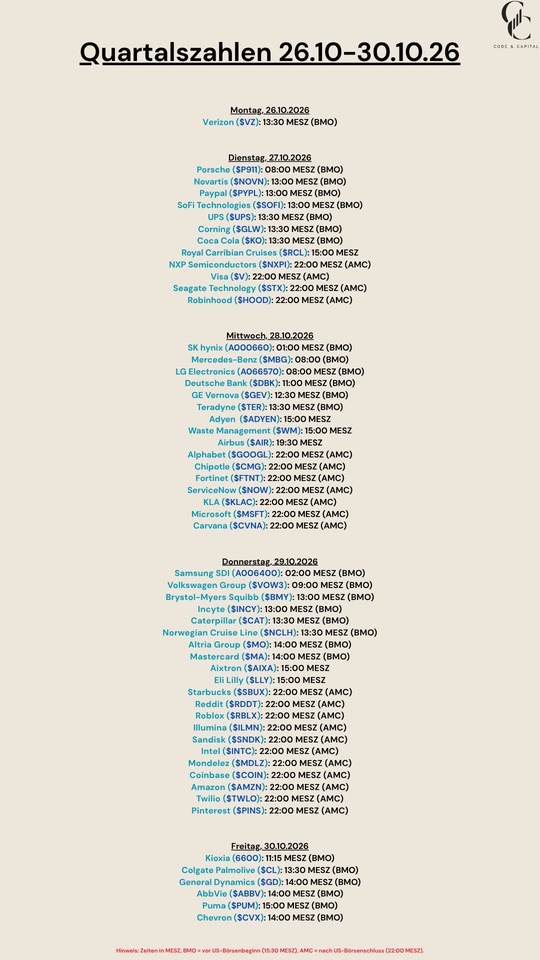
80Quarterly Results: Oct. 26–30, 2016

Sale of Aixtron
Hello, everyone,
Even though it looks like Aixtron has bottomed out, and the estimates for future profit growth look very good,
I don’t see much more upside potential at a P/E ratio of 53 for now.
Perhaps in the coming weeks, I’ll add a more diversified machinery manufacturer—such as $AMAT (+0,68 %) Applied Materials, might find its way into my portfolio.
My friends, what do you think of this rebalancing plan?


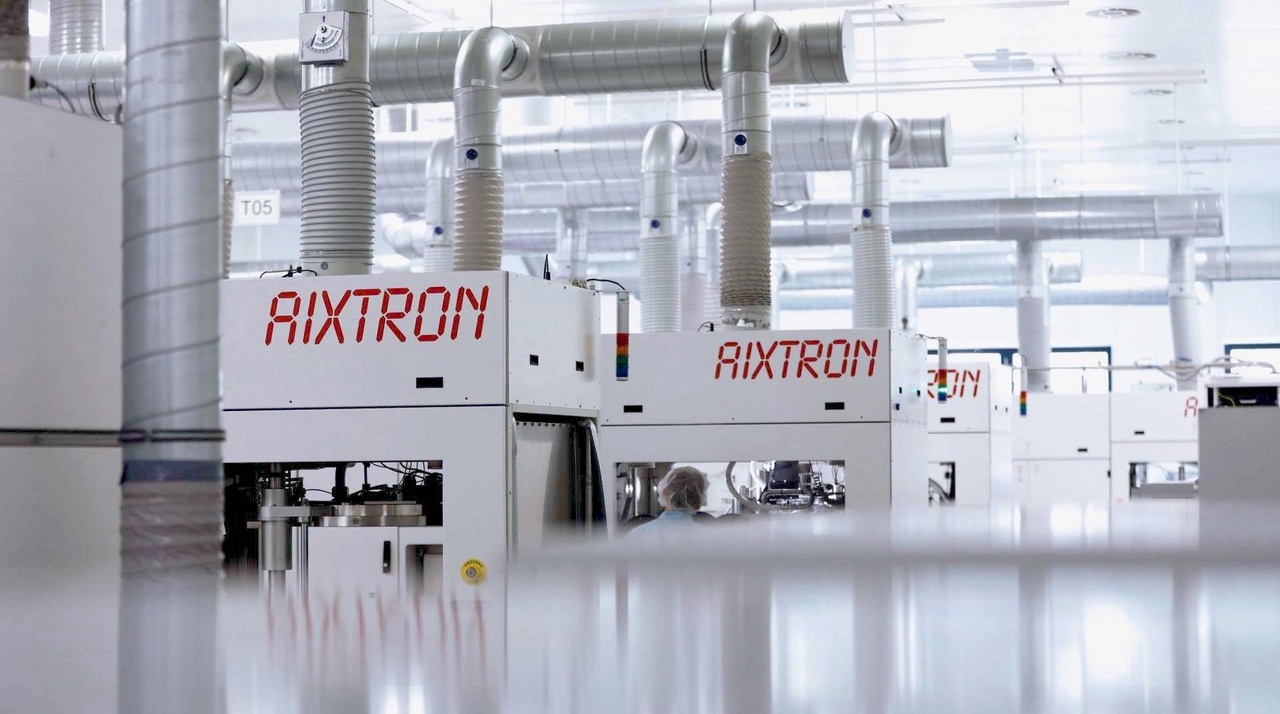
Aixtron's Order Books Are Filling Up Thanks to the Optoelectronics Boom
I'm also staying invested in AIXTRON!
The Aixtron SE benefited from strong order intake in the second quarter of 2026, which rose by 81 percent to 214.5 million euros. Over the first half of the year, orders totaled 386.0 million euros, an increase of 54 percent compared to the 250.7 million euros reported in the previous year. According to the equipment manufacturer, this growth was driven by high demand for systems for optoelectronic applications, which accounted for around 75 percent of equipment orders received in the second quarter. Consequently, the order backlog climbed to 456.9 million euros as of June 30, 2026, up from 284.6 million euros a year earlier and 257.8 million euros at the end of 2025. Larger laser system deliveries are scheduled to begin in the third quarter of 2026.
In contrast, the still-weak first half of the year is reflected in current operations. Revenue fell by 30 percent in the first half to 174.5 million euros, down from 249.9 million euros, but was in line with expectations. Operating income slipped to minus 7.6 million euros, down from plus 26.9 million euros, which Aixtron attributes primarily to lower production volumes, compounded by one-time costs from a workforce reduction in the first quarter. In the second quarter alone, however, EBIT returned to positive territory at 14.7 million euros. Net income for the first half of the year was minus 2.8 million euros, while in the second quarter it was plus 19.1 million euros, supported by deferred tax income from prior-year losses.
“The first half of 2026 marks an important turning point for Aixtron. The strong order momentum in optoelectronics provides high visibility for the upcoming production ramp-up. At the same time, the convertible bond and our planned production site in Malaysia increase our financial and operational flexibility. This has positioned the company well to fully capitalize on the accelerating wave of demand in optoelectronics. At a later stage, power electronics will also pick up again and contribute to revenue growth,” says Felix Grawert, CEO of Aixtron SE.
Cash Flow Figures at Aixtron Significantly Improved
Cash inflows for the Herzogenrath-based company near Aachen have improved significantly. Operating cash flow nearly doubled in the first half of the year to 172.7 million euros, while free cash flow rose to 162.1 million euros, up from 71.1 million euros. This was primarily driven by higher customer prepayments, which are helping to finance the upcoming production ramp-up. In addition, Aixtron placed convertible bondsAnleihen over 450 million euros. As a result, cash and cash equivalents rose to 816.2 million euros, up from 224.6 million euros at year-end, while net financial assets totaled 467.0 million euros. As a result of the bond issuance, the equity ratio fell to 61 percent, down from 88 percent.
Aixtron is sticking to the forecast it raised on April 14, 2026. For the full year, the TecDAXGroup expects revenue of 560 million euros, with a range of plus or minus 30 million euros, a gross margin of around 42 percent, and an EBIT margin of 17 to 20 percent. For the third quarter of 2026, Aixtron forecasts revenue of 180 million euros, with a range of plus or minus 20 million euros. According to the company, this outlook is supported by the robust order book in optoelectronics and the start of major system deliveries in the second half of the year. The production ramp-up is proceeding according to plan, and Aixtron has also begun groundwork for its new site in Penang, Malaysia.
Aixtron füllt die Auftragsbücher dank Optoelektronik-Boom | 4investors.de


🏗️ Introduction: Euro AI Backbone Wikifolio ⚡⚙️
Dear Community,
To kick off the week, I’d like to introduce you to my “Pick-and-Shovel” wikifolio “Euro AI Backbone” (in German: Backbone). More detailed information will follow; for now, this is just a rough overview.
_________________________
Background
The market’s focus is primarily on the U.S., while Europe often plays a more subordinate role. Yet recent years in particular have made it clear just how dependent Europe is on other countries such as the U.S., Russia, and China.
By the time the “Orange Man” began his second term, it had become clear:
Europe must become more independent —not only in the field of defense but also in the field of AI.
For nearly five years, Goldman Sachs has maintained an index called “EU AI Capex,” which consists of 64 European stocks. This served as the blueprint for my wikifolio.
The wikifolio was launched on June 18, 2026. For the wikifolio to receive “Investable” status, it needs, among other things, 10 bookmarks. So I’d really appreciate it if you could click “Add to Watchlist” on the wikifolio—thanks in advance.
_________________________
The “Pick-and-Shovel” Approach
The wikifolio aims to cover as much of the value chain for operating modern artificial intelligence as possible.
The focus here is primarily on five areas:
- The Shovels: Semiconductors and machinery (e.g., lithography systems, wafer deposition, chip assembly)
- The Gas: Electricity and energy generation (e.g., wind power, hydroelectric power, solar power plants)
- Highways: Networks and cables (e.g., transformers, high-voltage undersea cables, power grid infrastructure, transmission lines)
- The brain: Automation and data center cooling (e.g., liquid cooling, power distribution cabinets, data networks, control systems)
- The Physical Foundation: Construction, emergency power, and security (e.g., construction of the facilities, emergency power generators, cybersecurity)
_________________________
Investment Universe
The portfolio includes European large-, mid-, and small-cap stocks.
Focus: Technology (semiconductor equipment), utilities (electricity, grids), and industrials (automation, specialty cables, data center construction, cybersecurity).
The Core: European market leaders with global monopolies and competitive moats.
The Tech Specialists: Profitable second-tier suppliers as yield boosters.
The foundation: Energy producers, grid operators, and construction specialists for stable cash flows and risk hedging.
Regular rebalancing, which typically takes place at the beginning of each month, prevents concentration risk. While the foundation remains unchanged, the weightings of individual securities may be adjusted. The replacement of individual stocks, the addition of new stocks, or the exclusion of individual stocks can also take place at the beginning of the month.
Initially, the portfolio consists of 37 stocks. There is no cash reserve.
The current allocation of holdings is as follows:
By sector:
- Industrial: 44%
- Utilities: 29%
- Technology: 26%
- Consumer Discretionary: 1%
By country:
- Germany: 24%
- United Kingdom: 14%
- Switzerland: 13%
- Netherlands: 12%
- France: 12%
- Spain: 10%
- Italy: 9%
- Denmark: 2%
- Finland: 2%
- Austria: 2%
Investments are made exclusively in European stocks. None ETFs, no investment certificates, no funds, no leveraged products.
_________________________
Initial Holdings
At the start, the portfolio comprises the following 37 securities, sorted by their current weighting:
Infineon $IFX (-2,73 %) , ASML Holding $ASML (+0,71 %) , Siemens $SIE (+0,14 %) , Enel $ENEL (+0,17 %) , Rolls-Royce $RR. (-6,5 %) , Schneider Electric $SU (-2,1 %) , Iberdrola $IBE (+0,53 %) , ABB $ABBN (-1,88 %) , VAT Group $VACN (-1,89 %) , Siemens Energy $ENR (-2,58 %) , Prysmian $PRY (-1,52 %) , ASM International $ASM (-0,95 %) , BE Semiconductor Industries $BESI (-6,48 %) , STMicroelectronics $STM (+0,51 %) , RWE $RWE (-2,33 %) , E.ON $EOAN (+0,57 %) , Legrand $LR (+0,2 %) , National Grid $NG. (-0,05 %) , Nokia $NOKIA (+0,34 %) , SSE $SSE (-0,82 %) , EDP Renovaveis $EDPR (-1,29 %) , Hochtief $HOT (+0,39 %) , Red Eléctrica de España $RED (-0,91 %) , Nexans $NEX (-1,73 %) , United Utilities $UUGRY (-0,28 %) , Enagas $ENG (+0,57 %) , Centric $CENTR (-0,79 %) , Spirax-Sarco Engineering $SPX (-0,29 %) , Soitex $SOI (-1,22 %) , Geberit $GEBN (+0,74 %) , Aixtron $AIXA (-2,2 %) , Orsted $ORSTED (+1,27 %) , Verbund $VER (+2,06 %) , SAFRAN $SAF (-9,6 %) , Thales $THALES (-1,31 %) , NKT $NKT (+2,4 %) , Andritz $ANDR (-0,7 %)
_________________________
Holding Period
Since infrastructure development is likely to continue for several more years, the holding period is clearly geared toward the long term. Short-term trading is avoided.
_________________________
Sources of Information
The following sources of information are primarily used to identify stocks:
Companies’ quarterly reports and financial statements.
Analyst reports and industry studies from global investment banks.
Business media and financial publications.
_________________________
I’m curious to see how the portfolio will perform over the long term. Monthly updates will keep you informed.

🏗️🔋Euro AI Backbone - My Bet on Europe's AI Backbone 🎲
Dear Community,
Throughout last year, I found myself repeatedly wanting to focus on the European market as well. But the same old arguments kept dissuading me: The European market doesn’t deliver; Europe doesn’t meet my desire for a growth-oriented, high-yield portfolio, etc.
I also asked myself: Which sectors and industries do I want to cover? Where do I see enough potential to justify taking the risk? To what extent do I want to align my portfolio with this strategy?
In today’s episode, Alles auf Aktien: Fiese Gewinnwarnung bei BMW und Europas KI-Unabhängigkeitsaktien , something caught my attention:
A basket from Goldman Sachs, consisting of 64 European stocks, with the wonderful name: EU AI Capex.
Performance over the past five years: 17.5 percent annualized, including dividends.
_________________________
And which industries are covered?
- Semiconductors
- Machinery
- Electricity
- Networks
- Cables
- Energy
- Automation
Unfortunately, existing ETFs such as the iShares STOXX Europe 600 Utilities UCITS ETF or the iShares STOXX Europe 600 Technology UCITS ETF do not cover all of these sectors.
"Sounds exactly like what I was looking for," I thought to myself, and used my day off today to create an index tailored to my preferences.
Goldman Sachs has listed 12 of the 64 holdings, including their percentage allocations. The remaining 52 holdings appear to be known only to institutional investors, as the index isn’t publicly available.
So I created my own “Pie” through Trading 212. More specifically, a “Pie” is a personalized investment portfolio in which I can invest in multiple stocks and ETFs according to a percentage allocation I set myself and save toward them simultaneously via a single automated savings plan—with no expense ratio and no order fees.
It would go beyond the scope of this post to write about every individual security, which is why I chose this particular one. I didn’t make these decisions entirely on my own. Gemini helped me with this. In the end, we settled on 37 securities.
_________________________
On Selecting the Holdings
Together, we gradually added European market leaders across the entire value chain. We always kept an eye on the sectors—none should be left out.
_________________________
On the Percentage Allocation
It’s important to note upfront that the “pie” will be funded with 150 euros per month going forward. Since the minimum investment amount at Trading 212 is one euro, the smallest weighting in the “pie” must be at least 0.7%:
1.00 euro / 0.70% = 142.85 euro
The percentage allocation was then based on pricing power and global scalability.
More details on this may follow in a later post.
_________________________
About the Stocks
From EU AI Cortex Basket taken over by Goldman Sachs:
- Infineon ($IFX (-2,73 %)): 7.10%
- ASML ($ASML (+0,71 %)): 6.80%
- Siemens ($SIE (+0,14 %)): 6.00%
- Rolls-Royce ($RR. (-6,5 %)): 5.40%
- Enel ($ENEL (+0,17 %)): 5.40%
- Schneider Electric ($SU (-2,1 %)): 5.40%
- ABB ($ABBN (-1,88 %)): 5.00%
- Iberdrola ($IBE (+0,53 %)): 4.90%
- Siemens Energy ($ENR (-2,58 %)): 4.70%
- ASM International ($ASM (-0,95 %)): 3.70%
- Prysmian ($PRY (-1,52 %)): 3.60%
- BE Semiconductor ($BESI (-6,48 %)): 3.20%
Supplemented by the following stocks:
- VAT Group ($VACN (-1,89 %)): 4.50%
- STMicroelectronics ($STM (+0,51 %)): 2.50%
- Legrand ($LR (+0,2 %)): 2.00%
- RWE ($RWE (-2,33 %)): 1.95%
- Nokia ($NOKIA (+0,34 %)): 1.90%
- E.ON ($EOAN (+0,57 %)): 1.90%
- National Grid ($NG. (-0,05 %)): 1.80%
- SSE plc ($SSE (-0,82 %)): 1.70%
- EDP Renováveis ($EDPR (-1,29 %)): 1.60%
- Red Eléctrica ($RDEIY (-0,34 %)): 1.50%
- Nexans ($NEX (-1,73 %)): 1.50%
- Hochtief ($HOT (+0,39 %)): 1.50%
- Enagás ($ENG (+0,57 %)): 1.40%
- United Utilities ($UU. (-0,14 %)): 1.40%
- Spirax-Sarco ($SPX (-0,29 %)): 1.30%
- Centrica ($CNA (+0 %)): 1.30%
- Aixtron ($AIXA (-2,2 %)): 1.30%
- Orsted ($ORSTED (+1,27 %)): 1.15%
- Verbund AG ($VER (+2,06 %)): 1.10%
- Soitec ($SOI (-1,22 %)): 1.10%
- Safran ($SAF (-9,6 %)): 1.00%
- Thales ($HO (+1,06 %)): 1.00%
- Geberit ($GEBN (+0,74 %)): 0.90%
- NKT A/S ($NKT (+2,4 %)): 0.80%
- Andritz ($ANDR (-0,7 %)): 0.70%
The figures $IG (+0,53 %) , $SRG (+1,41 %) , $TRN (-0,01 %) , $ALFA (-0,51 %) , $ATCO B (-0,49 %) or $AEMMY can unfortunately only be traded via CFDs on Trading 212. Therefore, these securities could not be included.
_________________________
Trading 212 Pie
The Pie now accounts for about 10% of my portfolio, and I’ll be contributing 150 euros to it each month going forward.
I am convinced that Europe will succeed in becoming more independent. However, in my opinion, a self-sufficient Europe without any dependence whatsoever is simply not possible (keyword: globalization).
_________________________
Pie Composition
By country:
- Germany: 24.35%
- France: 15.4%
- Netherlands: 13.7%
- United Kingdom: 12.9%
- Switzerland: 10.4%
- Italy: 9%
- Spain: 7.8%
- Denmark: 1.95%
- Austria: 1.8%
- Portugal: 1.6%
By sector:
- Technology: 32.3%
- Industrial & Capital Goods: 31.5%
- Utilities & Energy Infrastructure: 36.2%
By industry:
- Semiconductors & Data Center Chips: 27.8%
- Energy Equipment & Grid Technology: 25.5%
- Electricity Generators: 16.1%
- Physical Networks & Storage: 10.1%
- Cable Infrastructure: 5.9%
- Vacuum Technology & Components: 6.5%
- Network Technology & Connectivity: 1.9%
- Data Centers & Industrial Construction: 3.1%
- Cyber and Perimeter Security: 3.1%
_________________________
I’m curious to see how the pie chart will develop.
P.S.: You can find the pie chart on Trading 212 under the name Euro AI Backbone GS to copy.


🇪🇺 Has Europe missed the AI boat?
Probably not. Perhaps a European photonics cluster. When people talk about AI, it’s usually about NVIDIA, data centers, or the next language models. At the same time, something exciting has happened in Europe: In the planned Chips Act 2.0 , photonics has been explicitly named for the first time as a strategic field of the future.
This comes as no surprise. After all, modern AI systems need more than just computing power. Above all, they must process ever-larger amounts of data quickly, reliably, and energy-efficiently. This is precisely where a future infrastructure bottleneck could emerge.
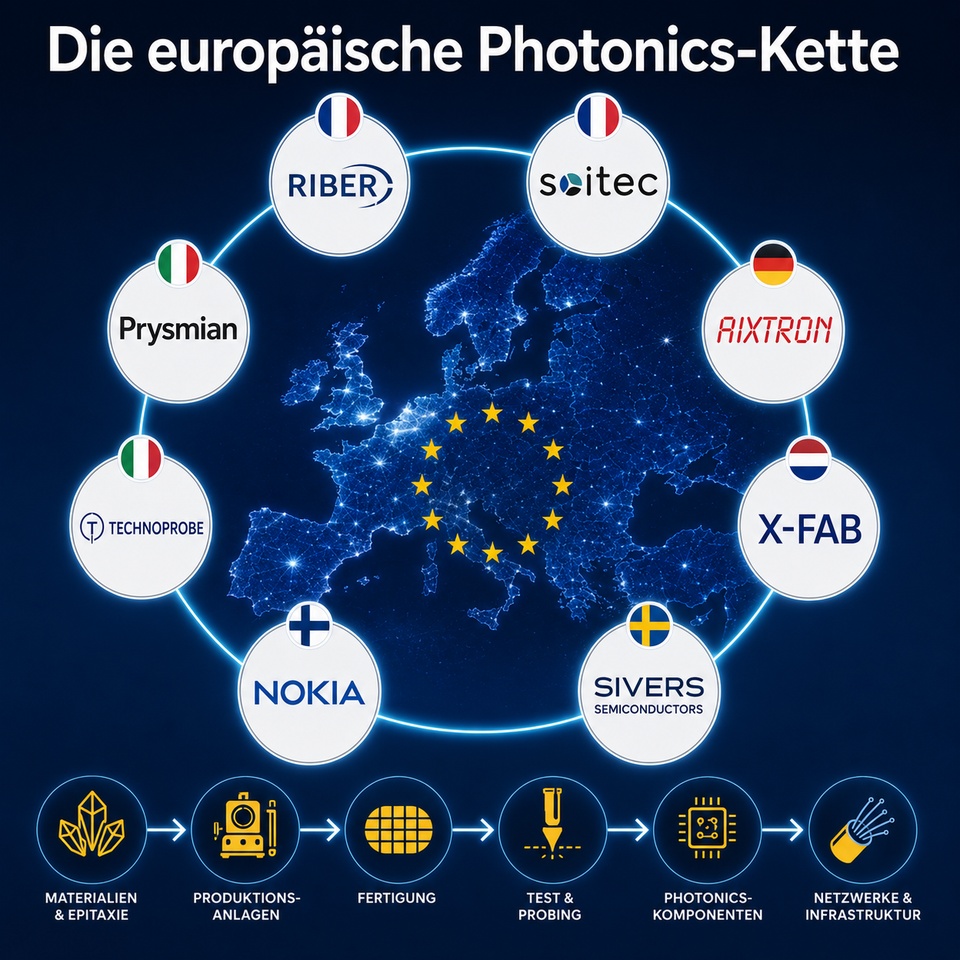
What I find exciting is that (with the exception of X-Fab and Nokia) my own portfolio and, to some extent, the bottleneck wikifolios already include several European companies that together almost form a complete photonics value chain :
🇫🇷 Riber
$ALRIB (-2,33 %)
MBE systems for the production of highly specialized III-V semiconductors.
🇫🇷 Soitec
$SOI (-1,22 %)
Specialty substrates and wafer technologies as the foundation for photonic integration.
🇩🇪 Aixtron
$AIXA (-2,2 %)
Production equipment for InP, GaN, and other photonics applications.
🇳🇱 X-Fab
$XFAB (-2,33 %)
European foundry expertise for sensor technology and photonic applications.
🇸🇪 Sivers Semiconductors
$SIVE (-3,53 %)
Photonics and high-frequency chips for data transmission.
🇮🇹 Technoprobe
$TPRO (-4,16 %)
Probe cards and test solutions for increasingly complex semiconductor structures.
🇫🇮 Nokia
$NOKIA (+0,34 %)
Optical networking technologies for the next generation of data transmission. The acquisition of Infinera makes Nokia an increasingly relevant European player in the field of optical networking.
🇮🇹 Prysmian
$PRY (-1,52 %)
Fiber-optic infrastructure as the physical backbone of digital data transmission.
Taken individually, some of these companies seem rather unremarkable. Taken together, however, they tell a different story. Not that of a continent that has fallen behind. But rather the story of a potential European photonics ecosystem in the making.
Whether this will actually give rise to global champions, no one knows today. But that is exactly where I look for bottlenecks: one level below the obvious winners. Where new technologies are made possible in the first place.
⚠️ Not investment advice.

I also find$NOKIA very interesting… Thanks for your research! I’ll take a look at the other stocks as well. 🙂
Aixtron: AI hunger for electricity catapults share price to a very high target price
Ladies and gentlemen, last year I introduced you to the company from the Rhineland several times. I remain invested.
The analysts at Bank of America have significantly raised their price target for Aixtron. The Herzogenrath-based equipment manufacturer is set to benefit threefold from AI data centers, electric cars and fiber optic networks.
Summarized for you
- BoA raises Aixtron price target sharply to 72 euros
- GaN market share over 90 percent, SiC around 40 percent
- AI, e-cars and fiber optics to drive growth from 2026
The MDAX semiconductor manufacturer is increasingly becoming the focus of Wall Street. On Wednesday, Bank of America reiterated its buy recommendation for the share and raised its price target from EUR 54 to EUR 72, representing upside potential of more than 30%.
The main driver of the new valuation is the rapidly growing demand for electricity in modern AI data centers, which is fueling Aixtron's core business with epitaxial deposition systems from several directions at once.
According to analysts, the market for analog power semiconductors in the AI sector is likely to more than triple from just under eight to almost 27 billion US dollars by 2030. They expect the decisive boost from 2027, when Nvidia launches its next data center architecture in series production. Aixtron will benefit disproportionately because the company has a dominant market position in two of the most important material technologies.
According to the bank, Aixtron has a market share of over 90 percent in gallium nitride systems, which are required for direct current distribution directly to the computing nodes. For 2027 and 2028, analysts expect growth rates of 57% and 27% respectively in this segment.
Incoming orders are expected to pick up as early as the second half of 2026. Aixtron holds around 40% of the market for silicon carbide systems, which are in demand for high-voltage applications in AI systems and increasingly also in 800-volt electric vehicles. After a weak phase, analysts expect a significant recovery here from 2027, with equipment sales almost doubling in the following year.
The third pillar is the business with systems for optoelectronic components, i.e. lasers and components for data transmission in data centers. Here, too, Aixtron has a market share of more than 90 percent. Demand is currently so high that the company has to postpone larger orders until 2027 because customers such as Lumentum and Coherent simply do not have any free production space. Sales in this area are set to more than double in 2026, and growth is currently expected to continue at least into 2027.
Author: Julian Schick, wallstreetONLINE editorial team
The AIXTRON share is trading on Tradegate (May 27, 2026, 12:19 pm) with a plus of +3.61% and a price of EUR 55.14 at the time of publication of the news.


Aixtron profit taking
I have halved my position. The rest can continue to run.
Dear @Tenbagger2024 thank you for your introduction back then 🫶🏽❤️

Photonics bottlenecks: Why I'm betting on both Aixtron and Riber.
Photonics is usually reduced to lasers, transceivers or optical networks. However, the actual value creation begins much earlier. Before light can transmit data, highly highly specialized semiconductor layers have to be produced in the first place. be produced in the first place. This is precisely where companies such as Aixtron and Riber come into play.
$AIXA (-2,2 %) (Aixtron, Germany) develops MOCVD systems for Metal-Organic Chemical Vapor Deposition (MOCVD). In simple terms, this involves the material layers which are later used in lasers, optical components, power semiconductors or other optoelectronic components, for example.
The focus is on industrial scaling. When new technologies make the step from the laboratory to mass production, it is often precisely these kinds of production tools that are needed.
$ALRIB (-2,33 %) (Riber, France) takes a different approach. The company builds systems for molecular beam epitaxy (Molecular Beam Epitaxy, MBE). This process is slower and much more specialized, but allows for exceptionally precise control of individual material layers.
Such systems are used, for example, for advanced laser structures, quantum dots or other sophisticated photonics applications.
From an investor's perspective, the two stocks differ significantly:
- Aixtron looks more like the industrial scaling machine of the topic. Larger, more broadly positioned and with several sales markets. (That's why it's also in my wikifolio TechLimits which focuses on acute bottlenecks).
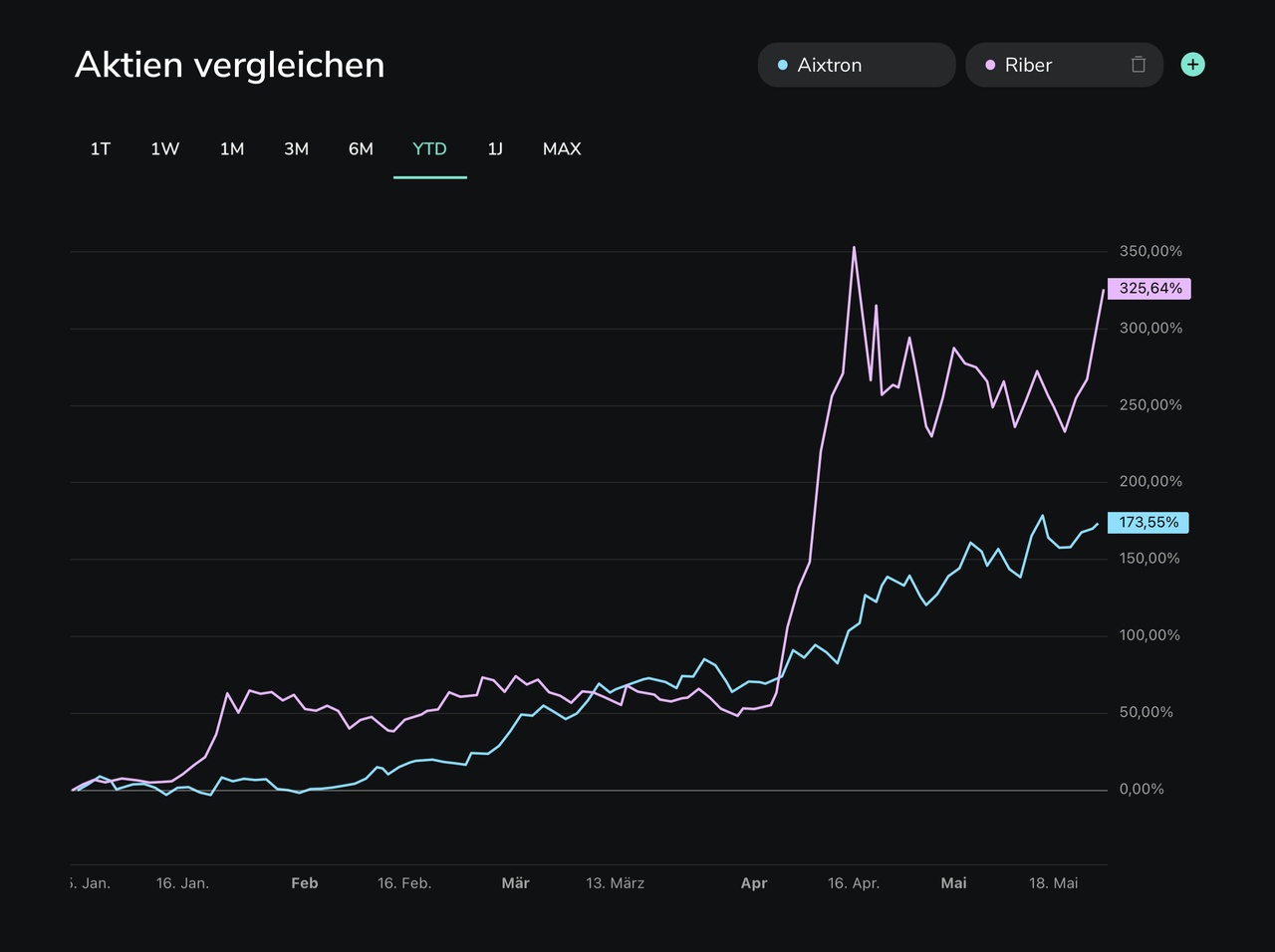
- Riber is closer to the technological frontier. Smaller, more volatile and more dependent on individual projects. On the other hand, technological breakthroughs can have a much greater impact. (I may add Riber as a more speculative stock to my wikifolio soon NextLimits which addresses future bottlenecks).
The interesting point is that the bottleneck is often not in the finished product, but one level below. If you only look at lasers and networks, you may overlook the companies that have the technological prerequisites for this in the first place.


AIXTRON benefits from AI demand and new major order
The chip industry supplier AIXTRON SE $AIXA (-2,2 %) has received a significant order: Lumentum $LITE (+1,94 %) a leading global provider of optical and photonic technologies for artificial intelligence (AI) and cloud data centers, has ordered several G10-AsP MOCVD systems. As the company announced in Herzogenrath on Tuesday, the order reflects the growing demand for indium phosphide (InP)-based lasers and detectors. These components are essential for the rapid growth of large-scale AI data center networks. Financial details of the deal were not disclosed.