
Sandisk +16%. Micron +13%. Lumentum +14%. Coherent +12%. One CoreWeave report reignited the AI chip rally in a single session.
$SNDK (-3,4%)
$MU (-2,18%)
$LITE (-3,97%)
$COHR (-1,17%)
#AI
#Semiconductors

Postos
18Sandisk +16%. Micron +13%. Lumentum +14%. Coherent +12%. One CoreWeave report reignited the AI chip rally in a single session.
$SNDK (-3,4%)
$MU (-2,18%)
$LITE (-3,97%)
$COHR (-1,17%)
#AI
#Semiconductors
⠀
📊 𝐑𝐞𝐬𝐮𝐥𝐭𝐬
• Non-GAAP EPS: $2.09 (Est. $1.97) ✅, +80% YoY.
• Revenue: $2.37B (Est. $2.30B) ✅, +50% YoY.
• GAAP EPS: $1.90 (vs. $1.19 YoY).
• Non-GAAP Gross Margin: 40.6%, +184 bps YoY.
• Non-GAAP Operating Income: $550M, +78% YoY.
• Non-GAAP Operating Margin: 23.2%, +368 bps YoY.
• GAAP Net Income: $385M, +70% YoY.
• Non-GAAP Net Income: $422M, +91% YoY.
⠀
🎯 𝐆𝐮𝐢𝐝𝐚𝐧𝐜𝐞
• Q2 FY2027 Revenue: $2.55B–$2.75B, midpoint $2.65B (Est. $2.54B) ✅.
• Q2 Non-GAAP EPS: $2.28–$2.48, midpoint $2.38 (Est. $2.21) ✅.
• Q2 Non-GAAP Gross Margin: 40%–42%.
• FY2027 Pro Forma Revenue Growth: >60% YoY.
• First $3B Revenue Quarter: By end of FY2027.
• First $4B Revenue Quarter: FY2028.
• Non-GAAP Gross Margin Target: >45% in a quarter before end of 2028.
⠀
📌 𝐊𝐞𝐲 𝐓𝐚𝐤𝐞𝐚𝐰𝐚𝐲𝐬
• Q1 adjusted EPS beat consensus by ~6.1%, while revenue exceeded estimates by ~3.0%.
• Datacenter & Communications revenue surged 79% YoY to $1.95B, representing ~82% of total revenue.
• Industrial revenue declined 15% YoY to $419M.
• Revenue grew 15.9% sequentially, driven by strong demand for optical connectivity in AI infrastructure.
• Non-GAAP operating income increased 78% YoY, significantly outpacing revenue growth.
• Q2 revenue guidance midpoint is ~4.3% above consensus, implying ~11.8% sequential growth.
• Management expects FY2027 pro forma revenue growth above 60%, more than double FY2026's pace.
• Capital expenditures surged to $775.5M from $103.9M YoY as manufacturing capacity expands.
• Operating cash flow turned negative at -$92.7M, compared with +$46M a year earlier.
• Long-term debt increased to $3.98B, with cash of $1.55B at quarter-end.
⠀
💬 𝐌𝐚𝐧𝐚𝐠𝐞𝐦𝐞𝐧𝐭 𝐂𝐨𝐦𝐦𝐞𝐧𝐭𝐚𝐫𝐲
“As AI datacenters transition from copper to optical connectivity, Coherent’s broad photonics platform and manufacturing scale position us to help customers meet rising needs for bandwidth and energy efficiency.”
The photon is the fundamental building block of our universe. See how it is used for generation, modulation, amplification, steering, and detection in the data center, communications, and industrial markets.
Hello, everyone,
Amazon, Alphabet, Microsoft, and Meta are maintaining their high capital expenditures. This continues to play into the hands of infrastructure stocks.
Marvell’s interest in Lumentum shows just how strong the interest in photonics companies is.
I’m going to hold onto Lumentum for now and wait out the next few trading days.
I had already classified Lumentum under the motto “Tenbagger stays in the portfolio.” I won’t abandon this long-term perspective because of short-term takeover rumors.
Should Marvell actually make a very attractive offer, I would reassess the situation.
My main thought: In my 2036 portfolio, I don’t just want to hold takeout speculations—I want companies that will benefit from the wave of investment in AI infrastructure.
And Lumentum could very well be one of them.
But the company I’m introducing to you today could also fit that description.
It’s a company that’s no stranger to many of you, either.
Despite my investment in Lumentum, I don’t rule out buying into Coherent. This would give me a second foothold in the sector in case Lumentum is acquired.
What do you think of my plan?
Before the earnings report on November 4 or after it.
Coherent could benefit from a Lumentum acquisition.
A deal for Marvell to acquire Lumentum would be positive for Coherent, as both companies operate in the same industry. Both manufacture lasers, optical transceivers, and network components that enable data to be transmitted at extremely high speeds using light signals instead of electrical ones.
The main difference between the two is that Coherent has a broader, vertically integrated portfolio, while Lumentum focuses more on specialized optical components, high-power lasers, and optical switching systems. In fact, Lumentum attempted to acquire Coherent some time ago.
Depending on the premium Marvell pays, there is a good chance that investors will use it to value Coherent. In fact, data shows that Coherent is already a more affordable alternative to Lumentum. It has a price-to-earnings ratio of 25, compared to 40 for Lumentum.
Coherent also benefits from Lumentum in other ways. In a recent statement, Lumentum explained that its products are sold out through 2029. Such a move means that many companies will turn to Coherent for these optical solutions.
Coherent’s Business Is Thriving
The latest results showed that Coherent’s revenue rose 34% to $2.05 billion in the fourth quarter, with the gross margin increasing to 38.5%. Net income rose to over $241 million.
The company expects revenue growth to continue accelerating this year. First-quarter revenue is projected to rise 45% to $2.3 billion, while earnings per share are expected to be $1.97. For the year, Coherent’s revenue is expected to rise to $10.6 billion, followed by $14.9 billion in the next fiscal year.
The renowned research firm Bernstein has initiated coverage of Coherent stock with an “Outperform” rating and has set an ambitious price target of $350. Outlook: As an indispensable supplier of photonic solutions and optical networks, the company is benefiting significantly from the structural expansion of modern AI infrastructure. Volume Drivers: A massive profit jump of +74% and revenue and earnings figures that significantly exceeded analyst estimates are currently attracting large institutional capital.
Coherent Unveils New PhotonLink Optics Platform for AI Expansion at ECOC 2026!
The photonics company Coherent is showcasing a broad portfolio of optical technology for AI data centers at the ECOC 2026 trade show and is introducing PhotonLink, a new integrated optics platform. The focus is on increased bandwidth, lower power consumption, and meeting growing cooling requirements. New PhotonLink Platform Coherent is presenting numerous new optical technologies and live demonstrations at the European Conference on Optical Communication (ECOC) 2026 in Málaga, Spain.
To me, Coherent is one of the most compelling suppliers of AI infrastructure, precisely because the company does not rely on a single product. Simply put, Coherent provides the optical technology that enables data centers to transmit massive amounts of data via light—and it is precisely this data traffic that is exploding with every new AI cluster. What particularly impresses me is the vertical integration: Coherent covers the entire supply chain, from raw materials to individual components to complete systems.
Management reports a record-high order backlog with visibility extending into the 2028 calendar year. Central to this is the partnership with NVIDIA concluded in March 2026: a $2 billion equity investment as well as a multi-year supply contract for co-packaged optics components through the end of the decade. As a result, cash reserves rose to $3 billion, and the debt-to-EBITDA ratio fell to 0.5 times.
In July, the company was honored on TIME’s “America’s Best Companies 2026” list. Furthermore, Coherent is the top holding in the new Roundhill Photonics & Optics ETF (LYTE). This ETF offers exposure to a concentrated portfolio of global companies in the photonics and optics sectors. LYTE is an actively managed ETF.
Coherent Corp. is one of the world’s leading manufacturers and marketers of photonic products, lasers, and engineered materials. The revenue breakdown by business segment is as follows:
- Manufacture of optical transmitters and modules (58.9%): transceivers, modules, components, optical devices, and semiconductors for data centers and communications applications;
- Manufacture of lasers and optical systems (24.7%);
- Manufacture of engineering materials and optoelectronic components (16.4%): laser optics, thermoelectric components, ceramic composites, VCSELs, EELs, pump lasers, and high-power lasers for material processing and integrated circuits.
Net revenue is distributed geographically as follows: North America (61.4%), Europe (12%), China (11.7%), Japan (6.7%), and other markets (8.2%).
Number of employees: 51,478
Company: Coherent Corp.
ISIN: US19247G1076
Source: Exclusively MarketScreener – Finanzdaten Coherent
Fiscal year: through June of each year
As of: October 31, 2026
All financial figures in millions of USD, except for earnings per share (USD), percentages, and debt-to-equity ratio. Thousands separated according to German notation.
Date of publication: August 12, 2026
5. My Assessment – Coherent as a Candidate for the 2036 Portfolio
The forecasts indicate a highly interesting trajectory.
Revenue Growth
⭐⭐⭐⭐⭐
EBIT Growth
⭐⭐⭐⭐⭐
Earnings Growth
⭐⭐⭐⭐⭐
Margin Performance
⭐⭐⭐⭐⭐
Cash Flow
⭐⭐⭐⭐
Balance Sheet Performance
⭐⭐⭐⭐⭐
Three particularly interesting points
1. The second growth phase
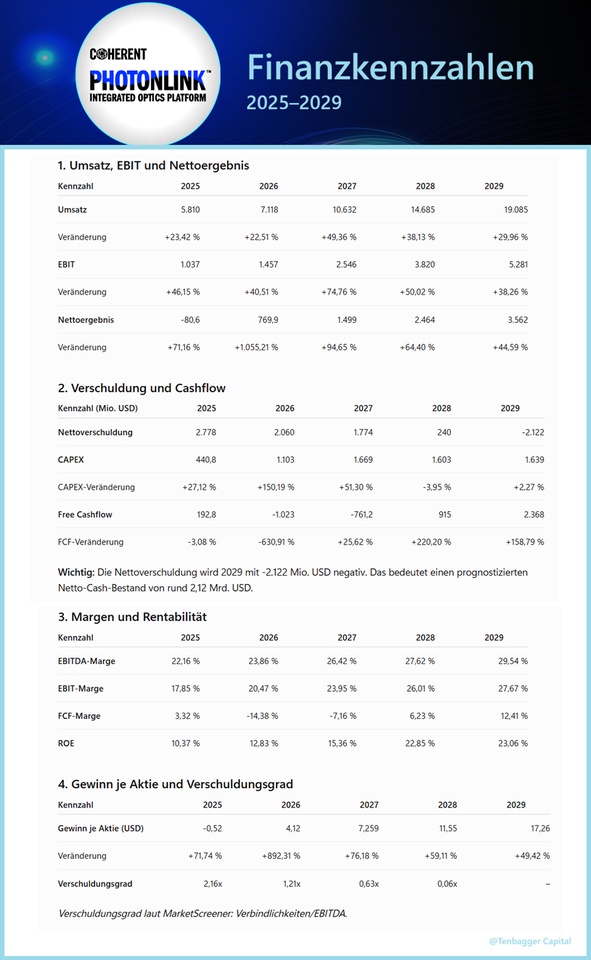
From 2025 to 2029, revenue is expected to rise from $5.81 billion to $19.09 billion. That represents more than a threefold increase.
2. Enormous operating leverage
EBIT is expected to rise from $1.04 billion to $5.28 billion. At the same time, the EBIT margin will improve from 17.85% to 27.67%.
This is a remarkable combination of growth and rising profitability.
3. Cash flow is the decisive test
In 2026 and 2027, high capital expenditures will significantly weigh on free cash flow. In 2028, it is expected to return to a clearly positive level and reach $2.37 billion as early as 2029.
My Conclusion
In my view, Coherent is a highly interesting beneficiary of the AI investment wave.
Particularly exciting is the combination of:
However: The forecasts through 2029 are ambitious. The key factor will be whether Coherent can actually convert this strong growth into sustainable free cash flow.
For the 2036 portfolio, I would therefore definitely continue to monitor Coherent as an interesting AI infrastructure stock.
Note: All figures are taken from the MarketScreener link provided. Figures from 2026 onward are forecasts or estimates, not guaranteed results.
My Assessment for the 2036 Portfolio
Three stocks stand out in particular:
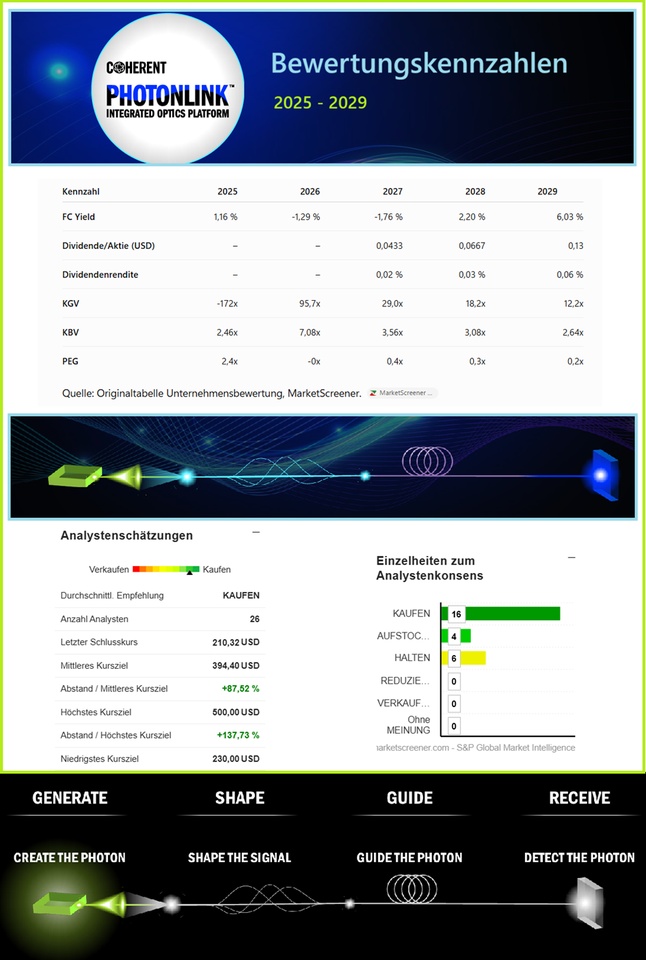
P/E ratio for 2029: 12.2 – significantly lower than the 2026 figure of 95.7.
FC Yield 2029: 6.03% – a substantial improvement over the negative figures in 2026 and 2027.
PEG 2029: 0.2 – very attractive based on the projected earnings growth.
My conclusion: The valuation looks extremely promising for 2028/2029. Coherent could be a major beneficiary of AI investments in optical data transmission and photonics.
Important: The low valuation multiples are forecasts and assume that Coherent will achieve its ambitious earnings targets.
Note: The dividend is stated in USD per share. All other figures are key metrics or multiples and do not require conversion to euros.
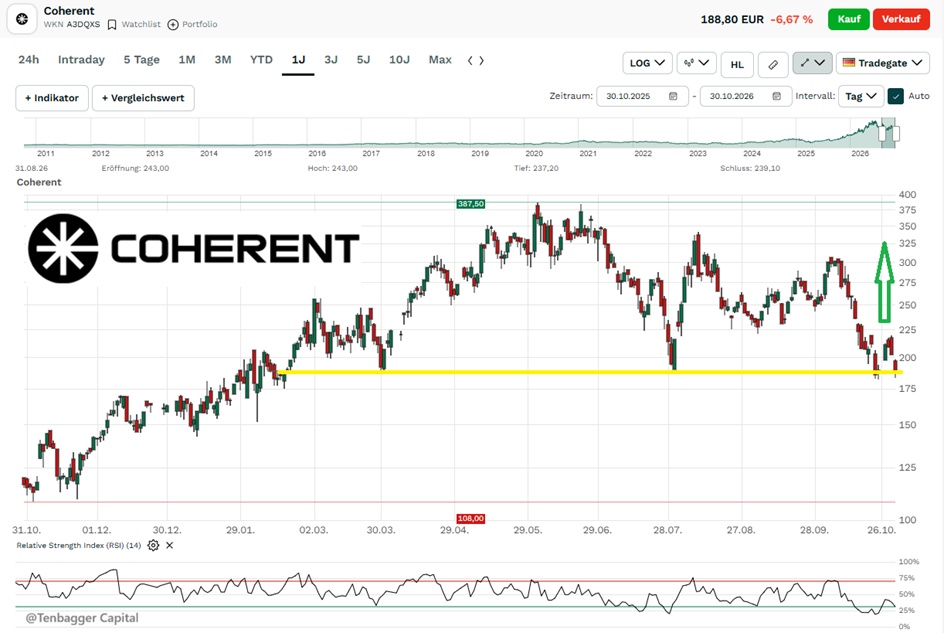
However, there is a risk that technical indicators suggest Coherent shares are on the verge of forming a death cross pattern. This pattern is characterized by the 50-day and 200-day crossover of the exponential moving averages (EMA). If it occurs, it could lead to further declines, potentially down to the psychological level of $200.
The death cross is possible because the AI sector faces significant challenges, as investors fear the bubble will burst. If that happens, the stock could fall further toward the psychological level of $200.
That said, I personally don’t see a bubble.
My friends, the earnings report is coming on November 4. What’s your take—wait, or get in before then?
190.05 EUR -10.85 EUR -5.40%
October 30, 2026
212.60 USD +2.33 USD +1.11%
+ 1


"No fears ~No hide" still get point from oil high level in market position this time after closing bell market index around 7722. What happen next month performance.
• Uptrend or downtrend with curve lines in chart then we have story in 2026 not worst or crash market when everybody look in from early 2026 get market performance
• Still hot topic and lines up with semiconductor sector after $SOXX (+0,46%)
have downward trend to 490 now back climb to around 510.
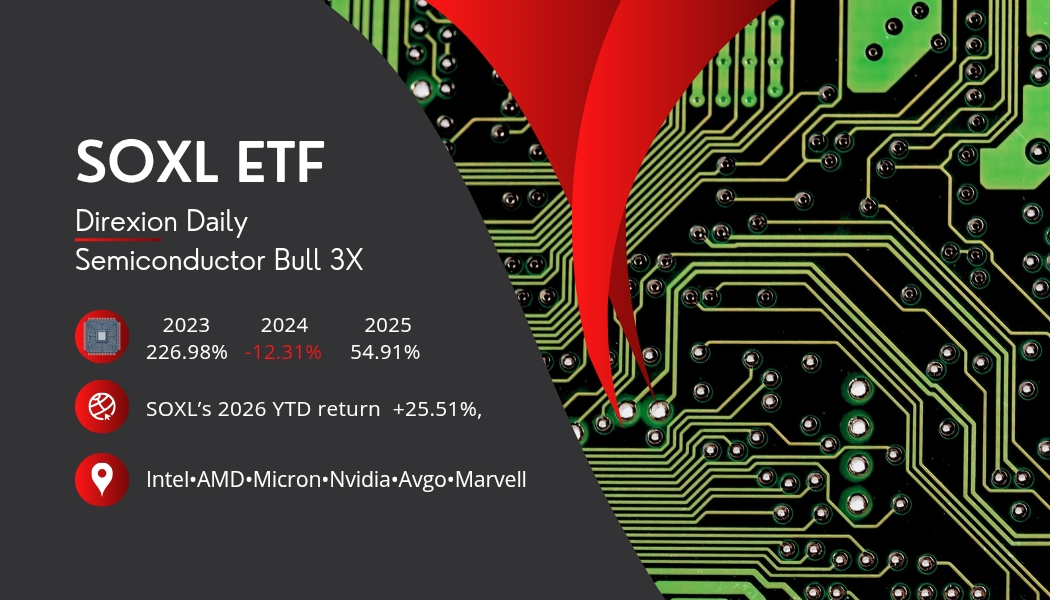
• Get be better performance and run to fast with average monthly returns. Now $SOXL get return YTD 25.51 % posibble still in good on track with stock market have cycle time frame after sell off last weeks.✅️
• $INTC (-0,25%) , $AVGO (+4,76%) , $AMD (+4,01%) ,$NVDA (-2%) , $MRVL (-2,36%) ,$ADI (+0,52%) , $NBIS (-17,23%) ,$CRDO , $COHR (-1,17%) , $SIMO (-1,22%)
■ $MU (-2,18%) , $SNDK (-3,4%) , $STX (-1,6%) , $WDC (-0,58%) , $ALAB (-0,95%) , $ANET (+5,18%) ,$LITE (-3,97%)
✅️ Check point this month and starting with new frame on market for 2029. Its enough when we start get time frame from 2024 to 2026. 💫👍
Dear Community,
In the previous parts of our infrastructure journey, we worked our way from the outside in: First, we saw how data centers disconnect from the public power grid through self-sufficient microgrids (Grid Bypassing). Then we looked one level higher and analyzed how smart semiconductors, superconductors, and protective components safely manage the enormous amounts of energy within the server rack (Power Electronics).
But once the power is flowing steadily and the GPUs are running at full speed, we encounter the next technological challenge: Data transmission.
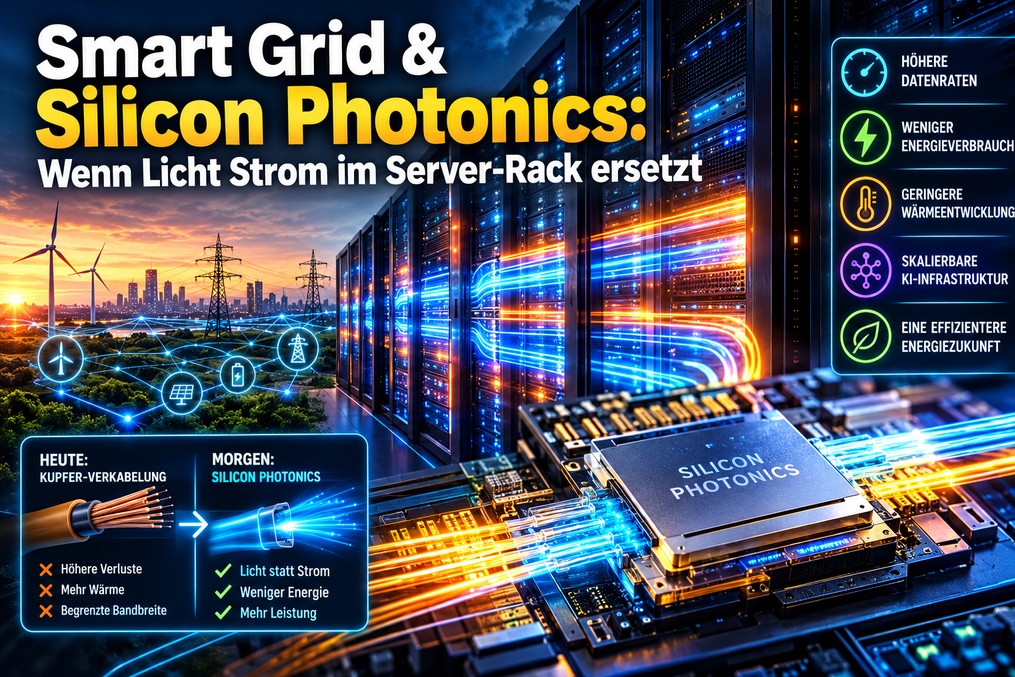
A modern AI cluster does not consist of individual servers, but rather of tens of thousands of GPUs that must exchange gigantic amounts of data with one another in real time during every training step. So far, this has been done via traditional copper cables and electrical circuit board connections. However, with today’s data rates of 800 Gbps—and future rates of 1.6 terabits per second and beyond—electrical connections are increasingly reaching technical and energy-related limits, especially over more demanding transmission paths:
The industry’s response is based on optical interconnect technology, in which three key concepts are intertwined: Silicon Photonics (the integration of photonic functions on silicon-based chips), high-speed optical transceivers (modules for converting electrical signals to optical signals and vice versa), and, increasingly in the future, co-packaged optics (CPO), in which optical engines are placed as close as possible to the switch or accelerator chip.
In this process, electrical data signals are converted into light pulses and transmitted via optical fibers. Especially at high data rates and over suitable transmission distances, this can offer significant advantages over electrical connections in terms of bandwidth, signal quality, and energy efficiency.
After power generation and power electronics, we now ask ourselves: Which companies are building the optical highways for the AI era?
These companies differ significantly: Some supply key optical components, while others integrate complete network platforms or develop the semiconductors that make reliable high-speed communication possible in the first place. The companies I’m introducing to you today are at the heart of this technological turning point:
1. Fabrinet ($FN (-2,94%))
The indispensable precision manufacturer for the optical AI boom
2. Coherent Corp. ($COHR (-1,17%))
The vertically integrated laser and optics giant of the AI era
3. Lumentum Holdings ($LITE (-3,97%))
The specialty laser supplier for hyperscalers’ AI infrastructure
4. Celestica Inc. ($CLS (+5,92%))
From Contract Manufacturer to Architect of Optical AI Networks
5. POET Technologies ($POET (-6,51%))
The disruptive wild card for optical chip-to-chip interfaces
6. Astera Labs Inc. ($ALAB (-0,95%))
The high-speed specialist in signal integrity and AI fabric
My Personal Favorites:
If I had to pick two stocks from this list that offer an exciting combination of different roles in a portfolio, they would be Fabrinet ($FN (-2,94%)) and Astera Labs ($ALAB (-0,95%)):
Now we’d like to hear your thoughts:
Light vs. Copper: Do you think the shift to silicon photonics and CPO in AI racks will happen faster than the market expects—or will optimized copper connections for short distances continue to dominate for even longer?
Which camp are you in? When it comes to such technological shifts, do you prefer a solid, already highly profitable contract manufacturer like Fabrinet , or do you prefer to bet directly on highly dynamic connectivity pioneers like Astera Labs?
Best regards ✌🏼
Anderlé

📉 Cisco Systems and Coherent both fell despite Cisco CEO Chuck Robbins saying "all areas of our business have tailwinds right now."

I haven't written much here in the past few weeks. Not because nothing has been happening in the markets—quite the opposite, actually. But sometimes work just takes up all my time. And things aren't getting any better right now. That makes what's happening at Photonics .
I’ve been following this topic for a while now; I’ve written a few posts about it. The current earnings season is now providing some pretty concrete indications that Photonics, as a bottleneck within AI infrastructure.
1. Demand is outpacing capacity
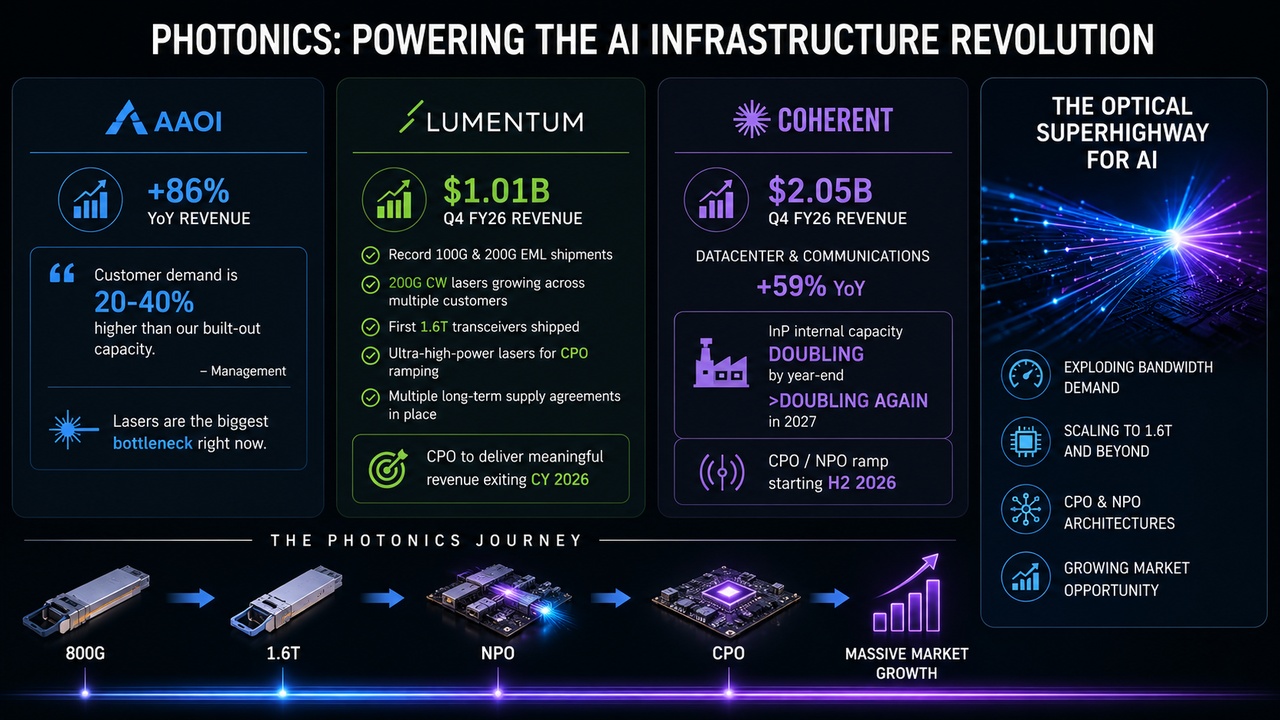
Applied Optoelectronics $AAOI (-4,61%) reported an 86% year-over-year increase in revenue for Q2. Even more interesting, however, were statements made during the earnings call.
Management explained that customer demand is 20–40% above the capacity that has already been expanded. At the same time, CEO Thompson Lin identified lasers as the current biggest bottleneck in the transceiver business. This is noteworthy: The problem isn’t a lack of demand. The problem is being able to produce enough components.
2. 1.6T and CPO are beginning to ramp up
At Lumentum $LITE (-3,97%) , the next phase is already taking shape. The company reported revenue of $1.01 billion for Q4 FY26, up from $808 million in the previous quarter. At the same time, the non-GAAP operating margin rose to 36.6%. Even more important than the numbers themselves are several operational statements:
• Record shipments of 100G and 200G EMLs
• Rising sales of CW lasers to several transceiver customers
• First shipments of 1.6T transceivers
• Increasing shipments of ultra-high-power lasers for CPO
• Several long-term supply contracts in the Scale-Across segment
Lumentum expects CPO to make a significant contribution to revenue as early as the end of calendar year 2026.
3. Manufacturers are massively expanding capacity
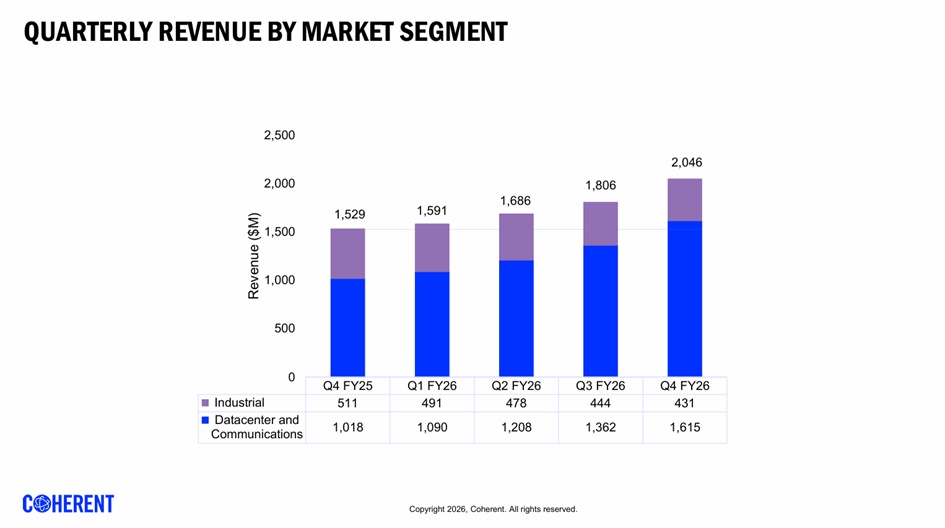
Coherent $COHR (-1,17%) confirms this trend. Revenue in the Datacenter & Communications segment rose from approximately $1.0 billion to $1.6 billion within a year. At the same time, Coherent aims to double its internal InP output by the end of the year and more than double it again by 2027. CPO/NPO is expected to emerge as an additional growth driver starting in the second half of 2026.
This is slowly painting a fairly consistent picture:
800G → 1.6T → NPO → CPO
With each stage, the demand for optical components increases. At the same time, the necessary laser and InP capacity cannot be scaled up as quickly as desired.
That’s why I find the latest quarterly reports so interesting. They don’t just show that photonics could become important at some point. They show that the bottleneck is already becoming apparent today.
And if 1.6T, NPO, and CPO do indeed scale up more significantly in the coming quarters, a market that’s already tight today could turn into an even much bigger bottleneck.
For me, that’s why photonics is currently one of the most exciting areas within AI infrastructure. Because several companies are now independently sending the same signal: Demand is growing faster than the available optical capacity.

$AXTI (-6,63%) 18%
$MP (+1,88%) 19%
$COHR (-1,17%) 24%
All of them sold yesterday.
+20k$
Not bad 👌
$NBIS (-17,23%) already with a stop loss on more 5,5k gains.
I'd also like to send warm greetings from my vacation in Sardinia ☀️🏝️
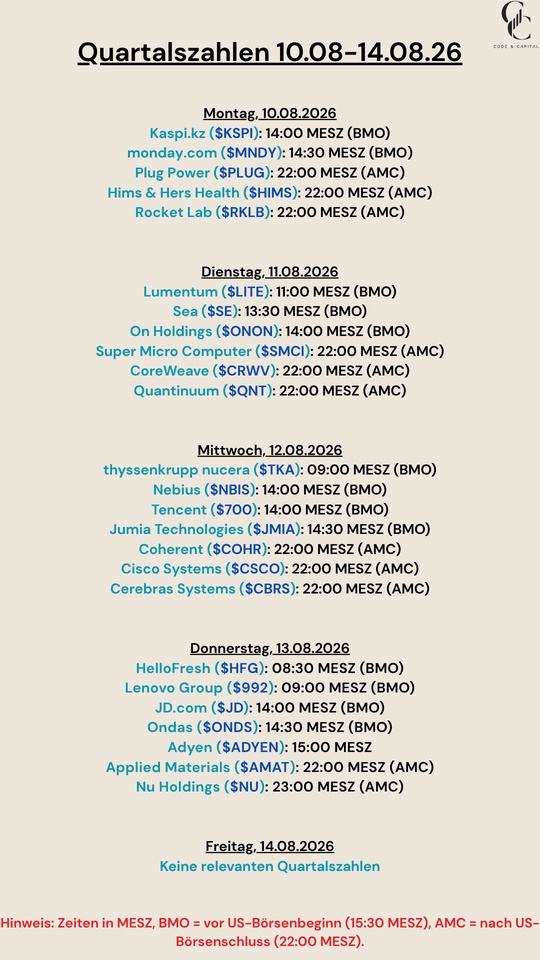
$KSPI (-1,74%)
$MNDY (-0,43%)
$PLUG (-8,2%)
$HIMS (-4,12%)
$RKLB (-1,77%)
$LITE (-3,97%)
$ONON (-3,82%)
$SMCI (-10,28%)
$CRWV (-6,82%)
$QNT (-6,69%)
$TKA (-1,84%)
$NBIS (-17,23%)
$700 (-1,93%)
$JMIA (-1,36%)
$COHR (-1,17%)
$CSCO (+0,92%)
$CBRS
$HFG (-0,36%)
$992 (-4,46%)
$JD (-1,1%)
$ONDS (-8,54%)
$ADYEN (-1,62%)
$AMAT (-3,5%)
$NU (-2,51%)

https://www.aol.com/articles/exclusive-trump-administration-drafting-ban-100549000.html
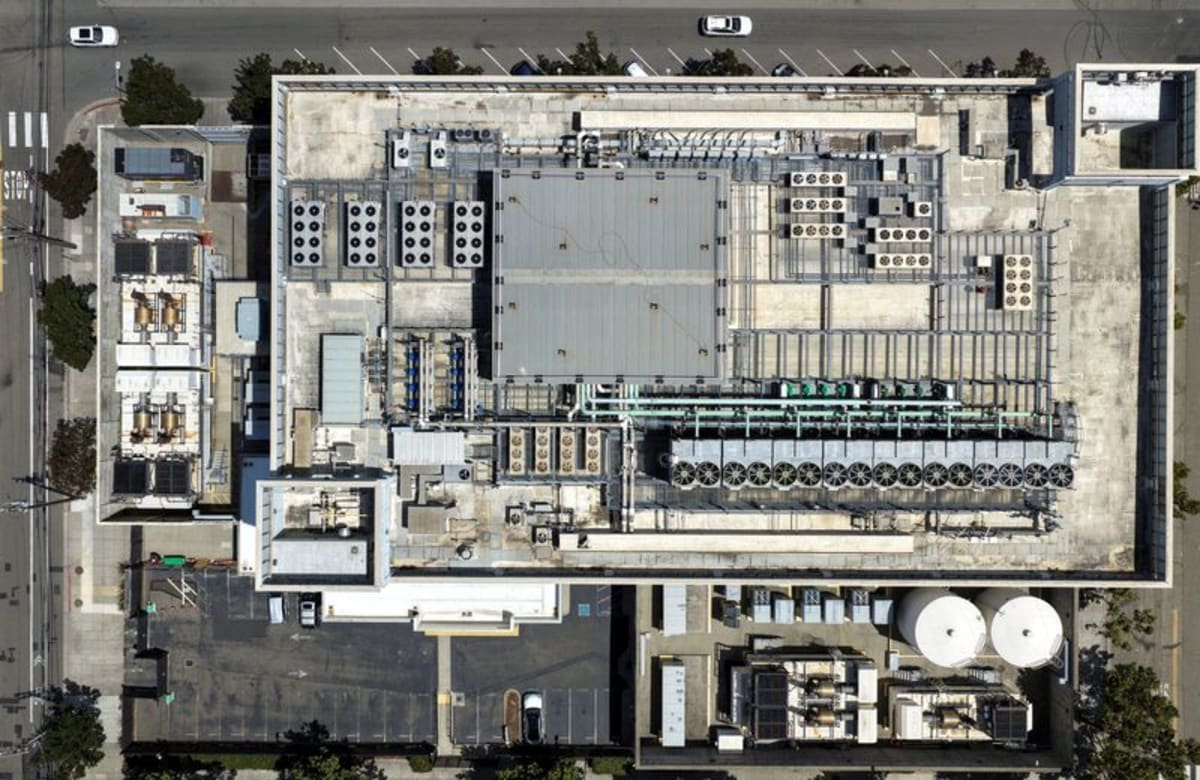
"The Federal Communications Commission, which oversees the U.S. telecom industry, is working on the measure to bar imports of new Chinese optical transceivers, which allow data to travel over fiber-optic cables at the speed of light within data centers. Officials hope to publish it this year, when it would take effect."
Who's affected: $AXTI (-6,63%)
$GLW (-1,43%)
$AAOI (-4,61%)
$COHR (-1,17%) and $SIVE (-10,09%) let's see how this will play out
Principais criadores desta semana


