🟢 🚀
$GOOGL (-3,46 %) +11%
$MC (-0,45 %) +4%
$HNR1 (+0,19 %) +3,4%
$BRK.B (+0,77 %) +3,7%
$8001 (+0,32 %) +2%
🔴🛝
$BTC (-0,05 %) -15%
$MSFT (-0,32 %) -6%
@Tenbagger2024 I have now done it like this

Puestos
49🟢 🚀
$GOOGL (-3,46 %) +11%
$MC (-0,45 %) +4%
$HNR1 (+0,19 %) +3,4%
$BRK.B (+0,77 %) +3,7%
$8001 (+0,32 %) +2%
🔴🛝
$BTC (-0,05 %) -15%
$MSFT (-0,32 %) -6%
@Tenbagger2024 I have now done it like this
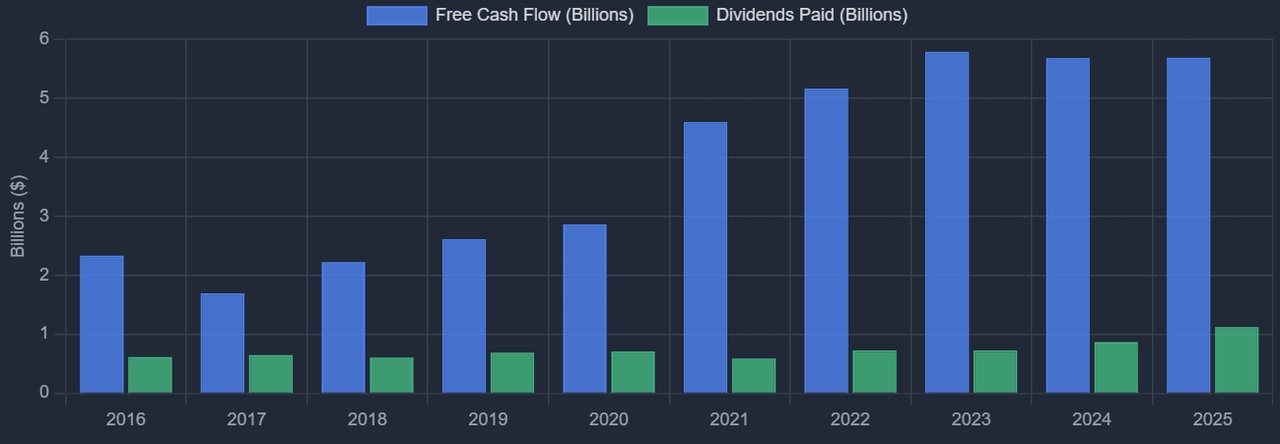
Following a very strong business performance, Hannover Re has raised its profit forecast for 2025 to around EUR 2.6 billion. In the first nine months of the year, net profit rose by 7.7 percent to EUR 2.0 billion, while the return on equity of 22 percent was well above the target figure.
Property and casualty reinsurance in particular developed profitably: the combined ratio improved to 86 percent and major losses remained well below budget at EUR 1.18 billion. Life and health reinsurance also posted stable results, while investments achieved a return of 2.8 percent despite targeted loss realizations.
For 2026 Hannover Re expects a further increase in Group net income to at least EUR 2.7 billion and a return on investment of around 3.5 percent.
At the same time, the dividend policy was adjusted: In future, around 55 percent of net profit is to be distributed, with the aim of a stable or rising dividend. Overall, the reinsurer confirms its strong market position and is ideally positioned for further profitable growth.
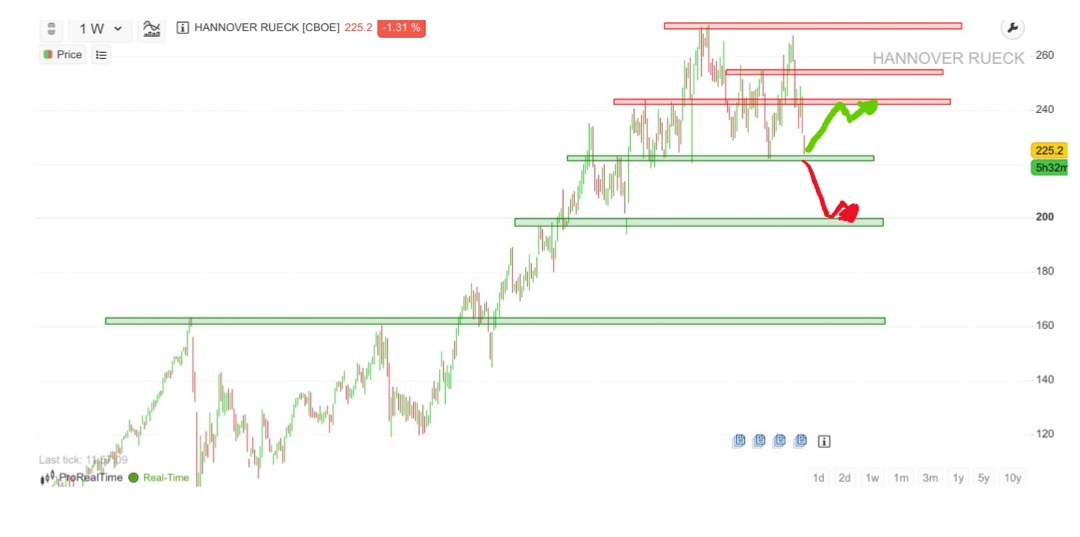
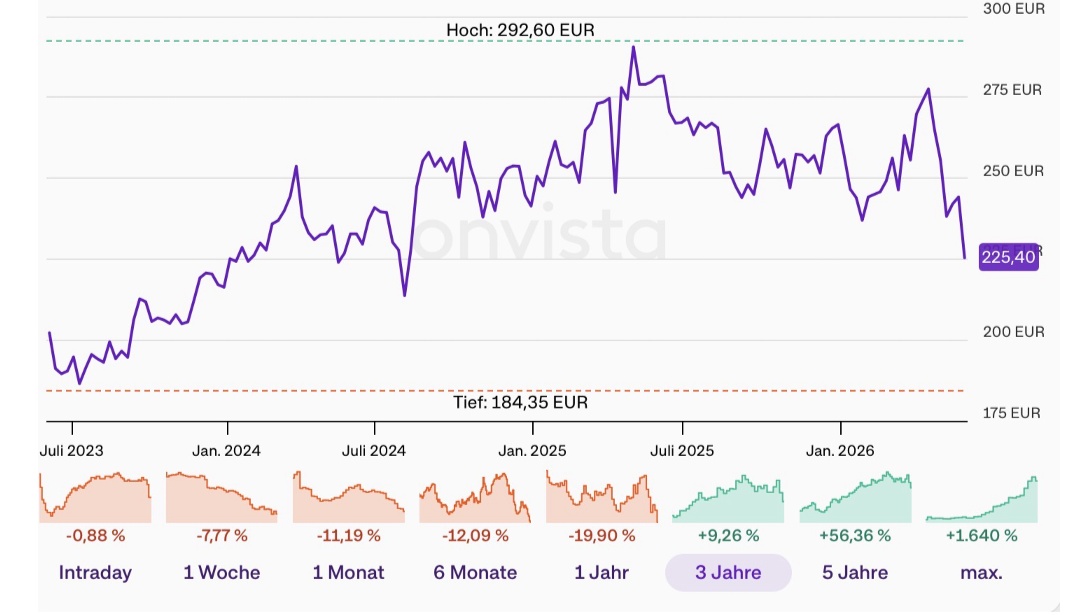
In recent weeks, I have been able to lower my entry prices for individual stocks here and there ( $HNR1 (+0,19 %)
$CNR (-0,1 %)
$NOVO B (-0,2 %)
$DTE (-0,8 %)
$VICI (+1,84 %)
$ADP (+0,54 %) ), but I still think the market as a whole is currently somewhat overvalued. I will therefore be using less of the variable portion of my savings rate to buy individual shares over the next few quarters.
The central banks are a little more reluctant to cut interest rates, so hopefully there will be good opportunities to buy bonds for a few more months, which I would like to finance with the cuts in the savings rate for individual shares.
This month I have already added to my French bonds and will continue to do so, as they are currently trading at historically low levels. Although interest rates are falling, the risk premium for French government bonds is rising due to the budget deficits, which naturally causes the price to fall. However, as I do not believe that the solvency of the state is seriously at risk, I am taking advantage of the low quotation to achieve a price return in addition to the coupon. During the negative interest rate phase, the bond quoted at over 230% at times.
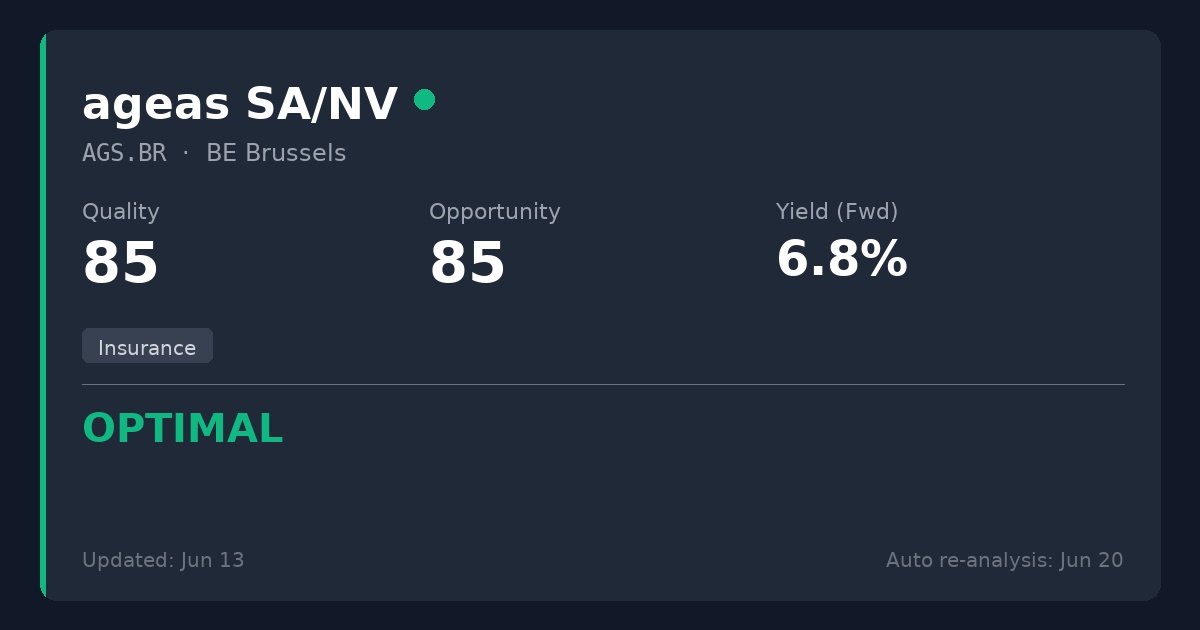
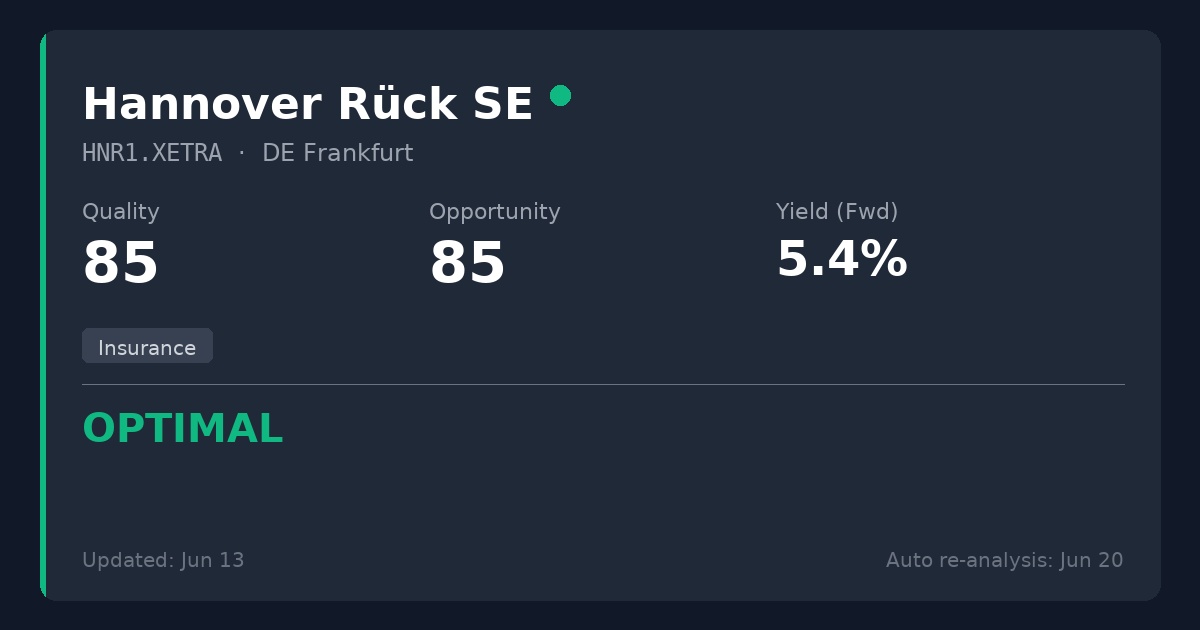
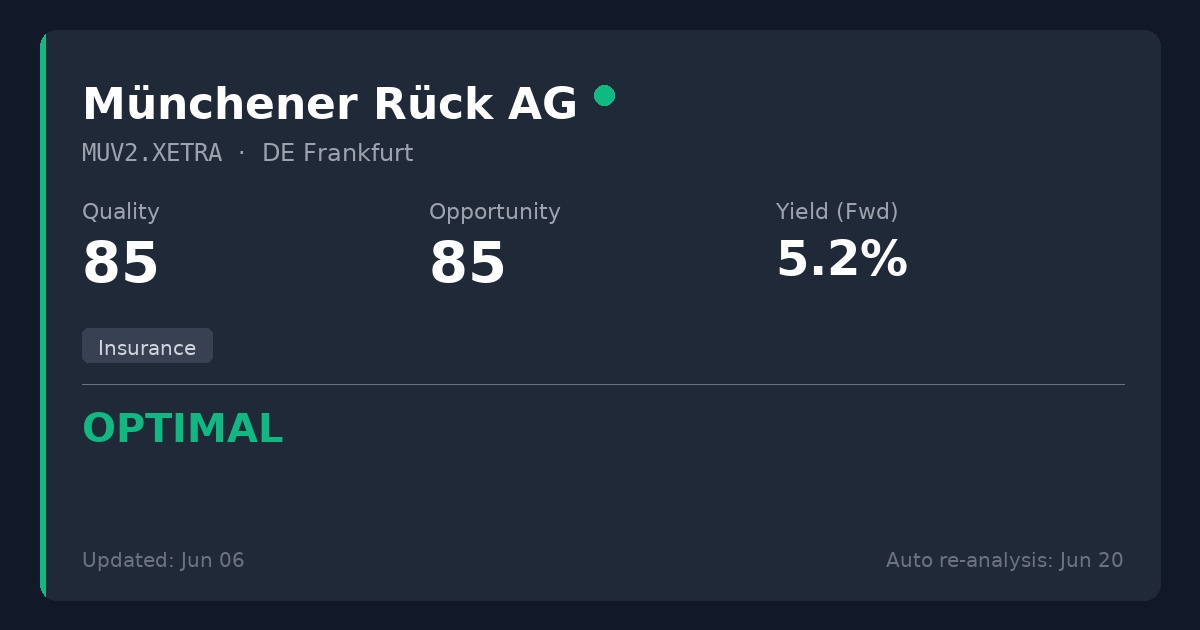
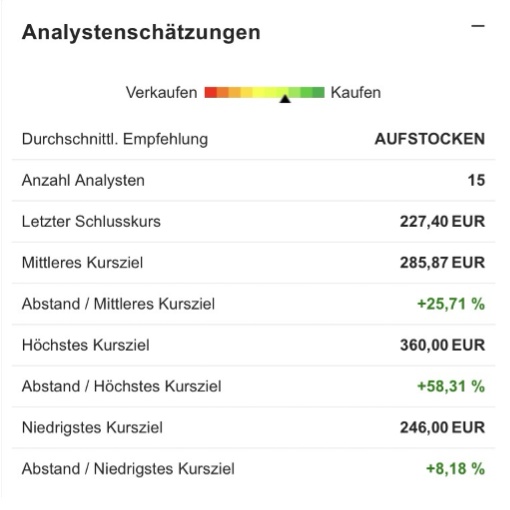
I have decided to add the German reinsurers to my portfolio. Do you prefer $HNR1 (+0,19 %) (or Talanx $TLX (-0,32 %) ) or $MUV2 (+0,12 %) ?
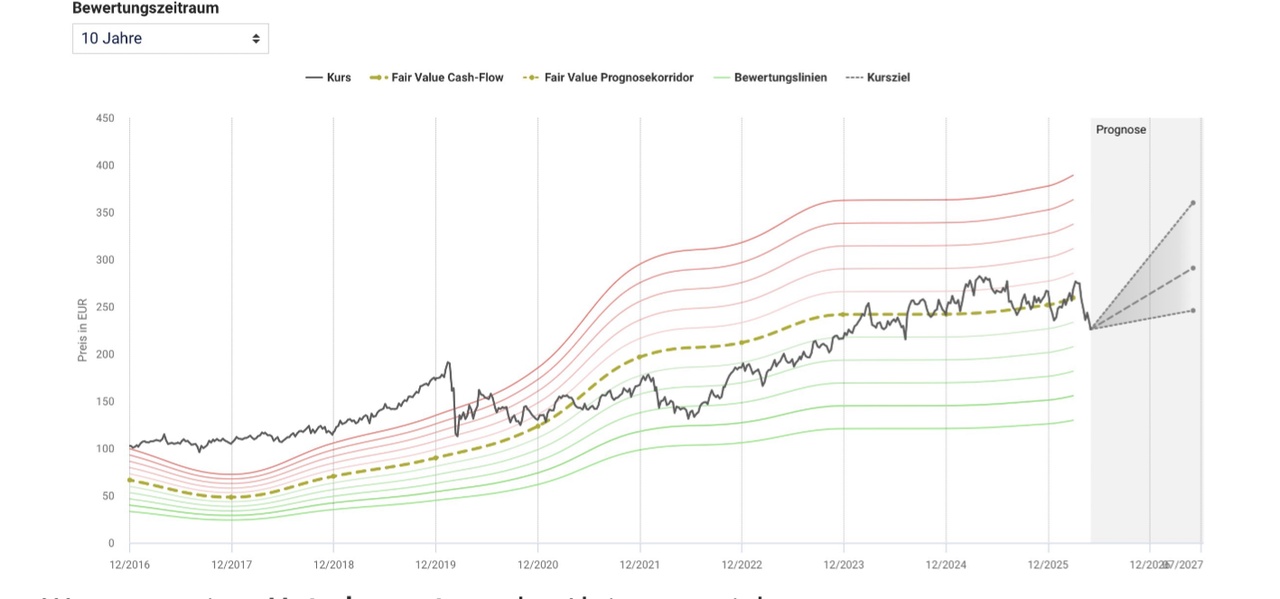
Hannover Re $HNR1 (+0,19 %) is well above its medium-term targets for 2024-2026. The company had set itself a return on equity of over 14% - it already reached 21.2% in 2024 and even 23% in the first half of 2025. The EBIT target of more than 5% growth was also far exceeded.
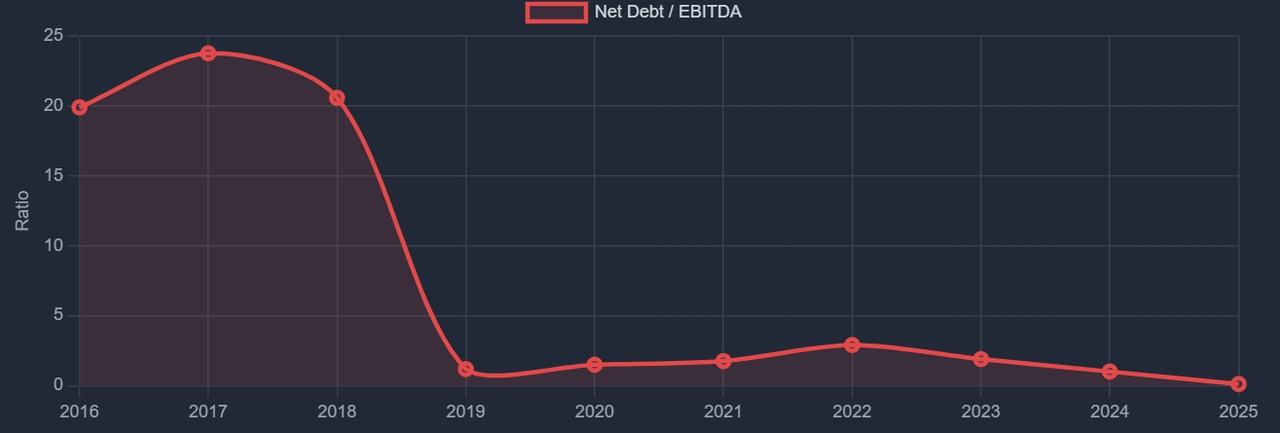
Hannover Re intends to continue this strong development until 2026 and at the same time ensure stability: At over 260%, the solvency ratio remains well above the target of 200%, while the CSM result (underwriting margin) continues to grow. In addition, the dividend is to continue to rise annually in the future; there is no information yet on the amount of the dividend.
$HNR1 (+0,19 %) Hannover Re is increasing the payout ratio for the regular dividend from 46% to 55% of Group net income and integrating the previous special dividend into the regular dividend. This change will take effect for the first time for the 2025 financial year.
I added 4 shares of Hannover Re to my portfolio today and will continue to build on this position.
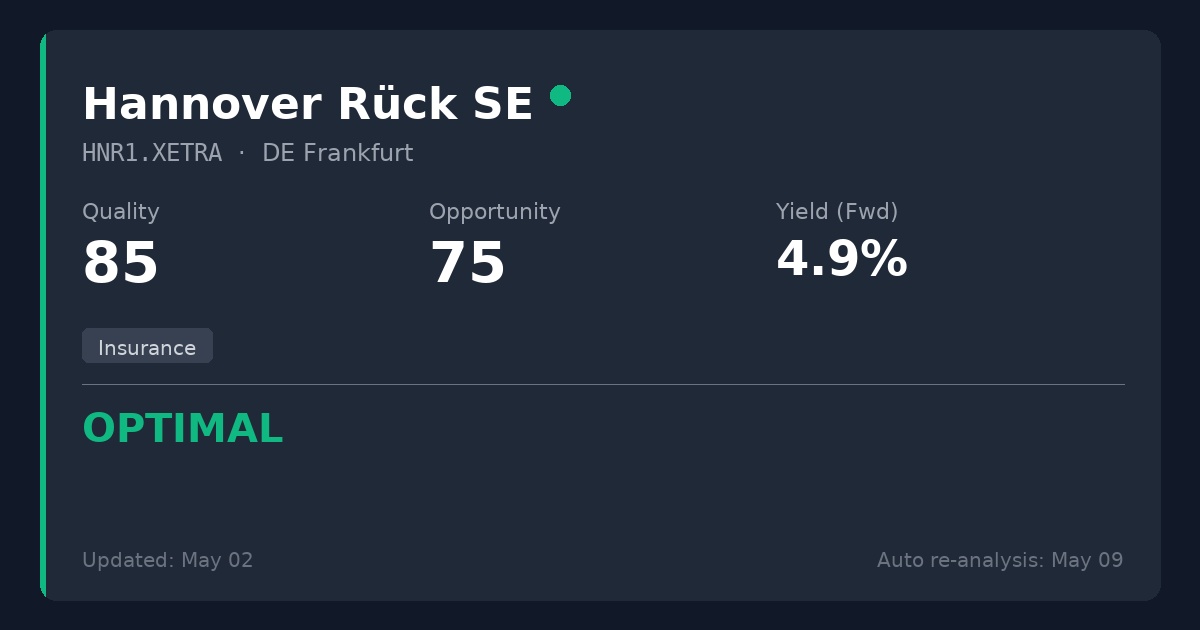
Hannover Re is one of the largest reinsurers in the world and is considered a solid dividend stock.
🔎 Facts about Hannover Re:
💡 Why the buy?
👉 What do you think of reinsurers in your portfolio - boring but stable dividend payers or underestimated growth stocks?
Since the beginning of June, I have been using the Trade Republic card for almost all payments in order to receive 1% cashback in the form of shares "for free". So far I've collected €40. On top of that I get another 100€ through round up. In contrast to Saveback, you pay this part yourself by rounding up card payments.
I have therefore invested a total of €140 in Hannover Re shares ($HNR1 (+0,19 %) ). I would like to use the dividends to finance my vacation in the future :D
With reinsurance capital of over 29 billion euros, Hannover Re is the second largest reinsurer in the world - only Munich Re $MUV2 is larger. Headquartered in Hannover and with branches on almost every continent, the company insures risks that traditional insurers cannot bear alone: Natural disasters, industrial plants, life and health risks. $HNR1 (+0,19 %)
●Market position at a glance:
2nd place worldwide: behind Munich Re $MUV2 (+0,12 %) ahead of Swiss Re. $SREN (+0,31 %)
Munich Re: approx. 13 %
Hannover Re: approx. 9%
Swiss Re: approx. 8%
●Financial figures 2024
Gross premiums written: €26.4 billion (+7.9%)
Group result: € 2.3 billion (+27.6%)
Return on equity: 21.2% (target was >14%)
Combined ratio: 86.6% (anything below 95% is considered very profitable)
Dividend: € 9.00 per share (basis € 7, special dividend € 2)
●Outlook for the future
-The demand for reinsurance is growing:
-Climate change leads to more extreme weather → more need for cover.
-Social inflation (rising claims, especially in the USA) increases risk awareness.
-Digitalization & AI improve risk modelling and claims management.
-Regulation such as Solvency II forces insurers to cede more risk → advantage for reinsurers.
●Risks
-Natural catastrophes: Can weigh heavily on profits (storm, flood, earthquake).
-Capital markets: Falling interest rates reduce investment income.
-Regulation: New EU regulations (e.g. supply chain laws, sustainability guidelines) increase costs.
-Competition: Price war in phases when there is a lot of reinsurance capital on the market.
■Conclusion
Hannover Re is a silent dividend compounder: not spectacular, but steadily growing, with solid payouts and a strong global market position. For long-term investors who are looking for security, stability and rising dividends.
Do you have insurers in your portfolio? If not, why?
That was my last share purchase for the time being, now I'm saving for my future self-employment. 🌳
$LMND (-5,25 %) introduced an independent buildings insurance policy in the UK this week.
Lemonade EU is growing by around 200% year-on-year and customer acquisition costs are less than half those in the US.
"We are delighted to complete our product offering for homeowners in the UK," said Sarvesh Ramachandran, Head of Lemonade UK. "Lemonade has quickly become the preferred choice for the next generation of UK insurance buyers."
https://www.reinsurancene.ws/lemonade-introduces-standalone-buildings-insurance-for-uk-homeowners/
- 7 consecutive quarters of sales growth
- 7 consecutive quarters with improvements in the claims ratio
- No increase in fixed costs
- Car scales quickly
- Rapid international scaling
- EBITDA profitable next year
🚀
$BRO (+2,61 %)
$PGR (+1,9 %)
$ALV (-0,79 %)
$MUV2 (+0,12 %)
$CS (+0,92 %)
$HNR1 (+0,19 %)
$ALL (+0 %)
History:
$LMND (-5,25 %) is an insurance company that was founded as a public benefit corporation and has its headquarters in New York and its European branch in Amsterdam. Lemonade has been traded as a public company on the New York Stock Exchange since July 2020.
$LMND (-5,25 %) Insurance was founded in 2015 by Daniel Schreiber and Shai Wininger with the goal of revolutionizing the insurance industry through technology. The company started by providing home insurance and relies heavily on artificial intelligence and chatbots for claims processing and customer service.
$LMND (-5,25 %) has experienced rapid expansion, including an IPO in 2020 and expansion into Germany
business model:
Lemonade, Inc. offers renters, homeowners, auto, pet and life insurance.
Current market capitalization 3 billion
The company's full-stack, artificial intelligence-powered insurance carriers in the United States and European Union replace brokers and bureaucracy with bots and machine learning. The company's digital substrate enables it to integrate marketing and onboarding with underwriting and claims processing, and to collect and utilize data.
Its technology includes Data Advantage,
AI Maya, AI Jim, CX.AI, Forensic Graph, Blender and Cooper.
AI Maya, the onboarding and customer experience bot, uses natural language to assist customers in the onboarding process.
AI Jim, the claims reporting bot, receives the customer's first claim and pays the claimant or rejects the claim without human intervention.
The company offers pet insurance policies that cover diagnoses, procedures, medication, accidents or illnesses. Even the basic pet insurance covers blood tests, urinalysis, laboratory tests and CT scans.
What is the Lemonade $LMND (-5,25 %)
Giveback?
Giveback is at the heart of Lemonade. This core element of the business model enables customers to use their Lemonade insurance policies to support causes that are close to their hearts.
Since 2017, Lemonade has $LMND (-5,25 %) donated over 10 million US dollars to help build new homes, provide clean water, improve education, promote animal rights and much more.
Here's how it works:
When a customer purchases a $LMND (-5,25 %) renters, homeowners, auto or pet insurance, charges a flat fee to cover $LMND (-5,25 %) a flat fee to support and grow the business. A portion of the premiums goes towards claims settlement and the balance goes directly to one of their Giveback Partners - non-profit organizations selected by our customers.
$LMND (-5,25 %) is a non-profit corporation:
$LMND (-5,25 %) is a Public Benefit Corporation and a certified B Corp, which means they are legally committed to making a positive social impact. B Corp certification is awarded to companies that demonstrate that they balance profit and purpose while putting people and the planet at the center.
Every three years, they undergo a comprehensive assessment of their entire organization.
Number of employees: 1 258 (end of 2024)
Profitability:
$LMND (-5,25 %) Approaching a turning point, possibly offering a promising investment opportunity.
Profitability increases with size, as costs do not rise due to additional premiums, as is normally the case with conventional insurance companies.
Management expects EBITDA profitability in 2026 and net profit profitability in 2027.
They see an extremely clear path to profitability:
They also have a clear path to profitability :
- Loss ratio from 92% to 73
- Net profit margin -123% to -20.2%
- Continued increase in sales growth rates
Growth:
Growth is currently still controlled, but the real growth is yet to come, with sales growth rates continuing to rise in the last two quarters.
They have been able to achieve these growth rates without an expansive expansion (both in existing and additional potential states) of automobile insurance, which represents a huge opportunity for $LMND (-5,25 %) represents a huge opportunity.
Car insurance
$LMND (-5,25 %) currently has around 2.3 million customers who use renters, pet and other insurance products. These customers use $LMND (-5,25 %) for one reason: favorable price and convenience.
The share of car insurance is currently still very small and has a lot of room for expansion, so if we were to assume that only 30% of them become car insurance customers with an average annual turnover of USD 1,800, that would be an additional USD 1.24 billion in turnover per year ... just by cross-selling 30% (without any other new customers)
Pet insurance:
The pet insurance market was a $5 billion market in the US last year. It is expected to reach 6 billion dollars in 2025 and 15.7 billion dollars by 2030, growing by 22% annually.
$LMND (-5,25 %) - Total annual premiums recently surpassed the $1 billion mark. So if you were to capture 50% of the pet insurance market, premiums would increase eightfold in just five years (800% assuming the projected growth above)
Trupanion (green line) has a 25% market share today. $LMND (blue line) is around 5%.
However, the search trend will continue to have a positive effect for $LMND (-5,25 %) especially as it is only just beginning to expand further into all states. (This also applies to the other insurance segments)
Opportunities/long-term potential:
I think the future possibilities and opportunities for $LMND (-5,25 %) a supposedly boring industry are enormous.
The insurance market has one of the largest TAMs of all.
The global insurance market was worth around USD 8 trillion in 2024. The USA and China are the largest insurance markets worldwide, with the USA leading the way with a market share of around 45% and China with around 10%.
$ALV (-0,79 %)
$MUV2 (+0,12 %) , $HNR1 (+0,19 %) , $PGR (+1,9 %) , $GEC , $ALL (+0 %) , $AIG (+4,61 %) , $UNH (+1,45 %) , $CVS (+0,07 %) , $UQA (-0,13 %) , $G (-1,64 %) , $VIG (+4,45 %)


+ 3
Principales creadores de la semana