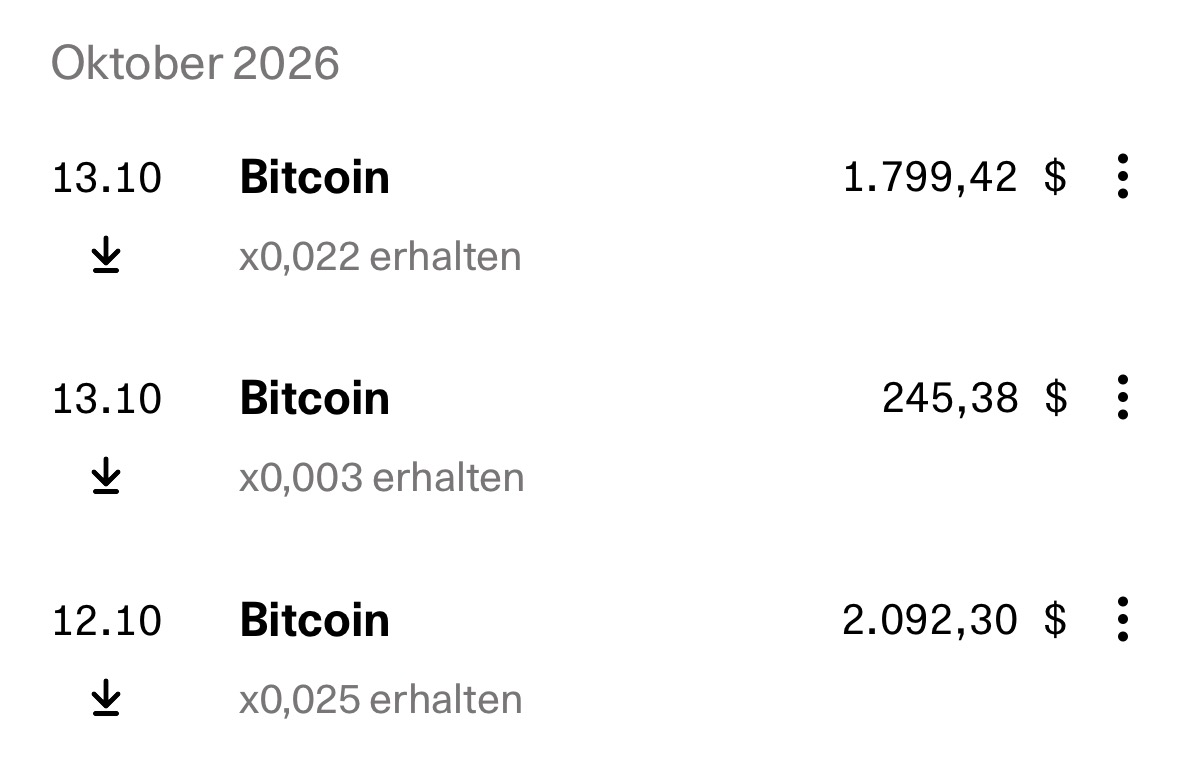
Fewer purchases this month due to internship.... Anyway😅
$TDIV (-0,22 %) 10x
$BTC (-0,6 %) €100
Puestos
3465Fewer purchases this month due to internship.... Anyway😅
$TDIV (-0,22 %) 10x
$BTC (-0,6 %) €100
Bitcoin was created in 2009 as a decentralized, pseudonymous digital money that functions without a central controlling authority. Over the years, a complex ecosystem of wallets, exchanges, payment service providers and regulatory frameworks has developed around Bitcoin. Two central concepts that repeatedly clash are KYC (Know Your Customer) and NoKYC (no identity verification). KYC refers to the procedures used by financial service providers to verify the identity of their customers, usually by presenting identification documents, proof of address and, if necessary, background checks. NoKYC, on the other hand, describes services and ways of using or exchanging Bitcoin without going through such formal identity checks. Both approaches have technical as well as legal, economic and ethical implications, which are discussed in detail below.
What is "KYC-free Bitcoin"?
KYC-free Bitcoin is Bitcoin that is bought, mined or earned without presenting a government-issued ID that binds you to your purchase of Bitcoin. KYC exchanges store your information indefinitely and according to regulation, which could one day be used against you. Buying KYC-free Bitcoin allows your information to be selectively disclosed to the selling party, rather than being forced to disclose everything to anyone with access.
Why should I buy Bitcoin without providing KYC information?
As KYC data is stored on exchanges forever, there is a risk that the data could one day be leaked, as seen with exchange leaks from Gemini, Swan, Unchained Capital, NYDIG, Swan (again) and BlockFi, Coinmama. These can be matched with other leaks such as the Ledger customer data leak and the Celsius customer database to reveal your potential holdings and physical location, a dangerous combination. Governments can target Bitcoin buyers and you have access to a list of who bought how often and how much. Buying without providing KYC information reduces these risks.
What information do I need to disclose if I buy KYC-free?
This may depend on the payment method you choose. Some payment methods only disclose your name and phone number to the other party, others such as a bank transfer would disclose your name, account number and sort code. Cash is best for complete anonymity, either in person or by mail. Take a look at the list of payment methods on Bisq to learn more about each payment method. This is useful even if you are not using Bisq to make a purchase.
How can I run DCA for KYC-free Bitcoin?
The equivalent to the most automated way of "DCAing" KYC-free Bitcoin would be to mine it at home. The Antminer S9 is very affordable (<200 euros, usually comes with power supply) and there are many resources on how to get started with this particular miner. It is also possible to place buy orders on popular KYC-free exchanges such as Bisq and HodlHodl, which help with buying at specific times, but in a less automated way.
Do I need a new wallet for KYC-free Bitcoin?
In the long run, it is safest to completely separate your bitcoins bought with KYC from your bitcoins bought without KYC You can easily do this without buying a new hardware wallet. With Sparrow Wallet (software wallet), for example, you can create multiple wallets that use different derivation paths or accounts (nodes) with the same hardware wallet. Using a different passphrase is also useful to segregate funds with the same physical signature device, as this uses a completely separate set of addresses. Two separate wallets (2x BitBox02) are best of all.
What if there is no P2P liquidity?
This is an unfortunate reality in some places and is only solved by higher demand for P2P trades. You can post buy orders above the market price and wait, but that doesn't guarantee that someone will take your order. What helps is if more people do this and signal the demand for a serious market. With a service like Revolut, you can also get access to the global market. However, Revolut also requires a tax number.
What is a "premium" for buying KYC-free Bitcoin?
When purchasing ATMs or vouchers, the vendor may charge a fee (premium) on the price of Bitcoin you purchase. The amount of the "premium" may depend on the individual vendor. However, if you buy Bitcoin directly from another peer, this is the true market price of what someone is willing to accept to part with their Bitcoin. Consider instead accepting that KYC exchanges will give you a discount to sell you Bitcoin for your personal information.
If I already have KYCed Bitcoin from before, what difference does it make?
It matters because you could stop increasing the amount you (either the government or future potential bad guys who get their hands on the data) know about. Even better would be if you could exchange your Bitcoin back into USD/EUR (fiat money) and sell it back. Then you use this to buy Bitcoin without giving your KYC information. This way you would at least be KYCed for 0 Bitcoin.
What if I use a stablecoin or strike to "pay myself" "KYC-free"?
You should avoid having to KYC for a service that is Bitcoin or crypto related. Using these services, even if you don't buy Bitcoin directly, signals your interest in Bitcoin and puts you in a smaller pool of users.
Don't I already have to do KYC for my bank?
Performing a KYC process for your bank or similar general financial services account (not Bitcoin / crypto related) does not signal your interest or intention to buy and hold Bitcoin. You're in the same customer pool as everyone else using the service, which means: if you use your tactics, you're hiding in a crowd. If you want to avoid all forms of KYC, cash is the best option for buying Bitcoin.
If I buy Bitcoin that someone else is KYCed for, is it still KYCed?
The KYC applies to the customer, not the coins/sats/bitcoin. If you buy Bitcoin without providing your own KYC information to the seller, that Bitcoin is KYC-free for you because the purchase is not tied to your ID. It doesn't matter if the seller performed KYC to buy it in the first place. Could also be a miner who resells it on the P2P platform, for example.
What if I buy Bitcoin from a Fed?
At the moment, buying Bitcoin without KYC is legal. If you want to be as cautious as possible, you should use a payment method that allows you to remain anonymous and not have to meet in person - namely cash by mail. The danger here grows from creating a pattern that allows a single entity to determine the amount of Bitcoin you hold.
If Bitcoin ownership was ever made illegal, could a seller tell me?
Using payment methods that only share a minimal amount of information like a name and phone number will help, but it could still be used to identify you if you're dealing with a focused adversary. The best payment method to maintain the highest level of privacy is cash by mail.
How can I spend Bitcoin without KYC?
If you want to avoid anyone knowing about your Bitcoin holdings, you should use a privacy-friendly wallet like Samourai Wallet, which offers privacy-preserving post-mix spending tools alongside the best implementation of Coinjoins (Whirlpool). If you use Lightning Network, which has good privacy protection, you should be careful with your on-chain UTXOs when opening and closing channels.
What if the receiver blocks UTXOs holding P2P-purchased or coinjoin Bitcoin?
The only entities known to block these types of transactions are exchanges that require KYC in the first place. However, if more entities start doing this, there are still tools like Ricochet that can be used to circumvent such blocking. This is also a good case for the Lightning Network, but be careful about the privacy aspect in the chain and never get it on your node.
If I withdraw from a KYC exchange, I own the Bitcoin. What could they do about it?
Withdrawing does not cancel the KYC at all. The KYC is stored on you, the customer, not on the Bitcoin/Satoshis. Your data is still in the database and acts like a honeypot that hackers can steal, or for your government to use against you one day, like in a 6102 style attack.
What is a 6102-style attack?
In a 6102-style attack, possession or self-custody of Bitcoin becomes illegal. Most likely, the government would KYCed Bitcoin at a discounted price, similar to EO6102 with gold. The main difference, however, is the amount of information available about all KYCed Bitcoin holders today than about individual gold holders in 1933.
Would the government really come and try to take my Bitcoin?
You probably won't have to go to anyone's residence. It is more likely that you would require individuals to voluntarily surrender your Bitcoin and then send notices to those who have not. Since you know exactly how much each KYC buyer has purchased, you know if someone is under-reporting and need proof of sale.
Isn't it just as easy to confiscate KYC-free Bitcoin?
It's not, because to find out if someone bought Bitcoin without KYC, you would have to be approached individually. Then it is still difficult to determine how much Bitcoin that person has, as there are different methods to obtain KYC-free Bitcoin. All KYC buyers have their ownership and amounts known, which makes them the easiest target for a seizure scheme.
Why couldn't I just buy KYC and then leave the country?
You could, but you'd have to (a) be familiar with the laws related to renouncing your citizenship, and (b) get out before any raids start. The US, for example, has an "expatriation tax" on renouncing citizenship and such rules may apply to you.
What if I "lost it in a boating accident"?
If you claim to have lost your Bitcoin and there is a 6102-style attack against Bitcoin owners, expect a "boating accident" statement to be treated as contempt of court. Permanent incarceration may be the result. (see Tommy Thompson, still in prison since 2015). If you claim that it was stolen, you will usually be expected to file a police report documenting the theft at the time of the theft.
Can't I just pick it up and then send it to a different, non-KYCed address?
All KYC exchanges work with a chain analysis company to monitor your on-chain transactions. The two main problems with this are: (1) If you report this transfer as a sale, and (2) if you make a mistake with these UTXOs in the future (e.g. consolidation), the reported or unreported sale (1) is not credible/would be considered fraud.
Can't I just withdraw and then make a coinjoin?
No matter what you do on-chain, and coinjoin is a great way to regain your forward-facing privacy, the KYC record still exists. This record ties your information to a specific amount of Bitcoin ownership. Nothing can undo the KYC because it is a record about you, not the bitcoin/sats.
What if the government never does anything bad to KYC buyers?
Then you've still avoided having your name, address, ID, biometrics and other information added to a database linked to your bitcoin purchases. Such databases can be hacked or compromised at any time. Even if you don't feel threatened by government raids, KYC exchanges are 'honeypots' of data.
Bitcoin is language and math and can't be banned, why should I bother?
If the thesis of Bitcoin's "separation of money and state" is evident, governments will most likely go to drastic and possibly unreasonable lengths to keep the current system running. There have already been discussion points in the EU Parliament in the form of "non-hosted wallets" in relation to self-custody. Think about this point.
Can I buy something big with KYC-free Bitcoin?
You could, especially if you find a seller who is willing to accept payment in Bitcoin directly, even buy a house. This way, you're not relying on a middleman or trusted third party to complete the payment. You can also still report your sale of Bitcoin to your tax authority if you wish, even if you bought P2P, the cost basis is yours.
What you do with it is up to you to decide.
Satoshi Nakamoto said this in his white paper for a reason:
Abstract. A pure peer-to-peer version of electronic cash would allow online payments to be sent directly from one party to another without recourse to a financial institution. Digital signatures provide part of the solution, but the key benefits are lost if a trusted third party is still needed to prevent double spending. We propose a solution to the double-spend problem by using a peer-to-peer network. The network timestamps transactions by hashing them into a continuous chain of hash-based proofs of work, creating a history that cannot be changed without re-providing the proof of work. The longest chain represents not only proof of the sequence of all witnessed events, but also proof that it comes from the largest pool of CPU power. As long as the majority of CPU power comes from nodes that do not cooperate in an attack on the network, they will generate the longest chain and shake off the attackers. The network itself requires a minimal structure. Messages are transmitted on a best-effort basis and nodes can leave or join the network at will, accepting the longest proof-of-work chain as evidence of what happened during their absence.
More on: https://bitcoin.org/files/bitcoin-paper/bitcoin_de.pdf
Conclusion
Ultimately, the question is: do you see Bitcoin as just an investment - or is there more to it? If Bitcoin becomes more to you, it makes sense to take a closer look at it. This article will help you do just that: It provides an overview and makes it easier to get started.
Buying via NoKYC or peer-to-peer is not rocket science. It is usually much simpler and faster than a formal KYC procedure and for many users less cumbersome than going through large trading platforms.
---
Important note
The opinions and information provided by us do not constitute financial advice. They are for informational and educational purposes only and are not intended as a substitute for individual advice from qualified professionals.
---

I think the hours of war are numbered in Iran.
Even if Trump presents himself as the biggest winner, I would argue that he has been put in his place in the eyes of the world! The incentive for Iran to have a nuclear weapon is greater than ever before and the global pressure for cheap energy is too high for a president, even if he is the Greatest President Of All Time!
If things finally calm down again, we will soon see $BRNT (+1,54 %)
$CRUD (+3,45 %)
$3BRL (+4,42 %) soon well below 100$ again ... $CSPX (-0,15 %)
$VUSA (-0,2 %)
$VUAG (-0,21 %)
$CSNDX (-0,42 %)
$IWDA (-0 %)
$BTC (-0,6 %)
$IGLN (+1,06 %)
The Lightning Network is a second layer solution for Bitcoin designed to significantly improve the scalability, transaction speed and cost efficiency of the Bitcoin network. While the Bitcoin blockchain as the base layer (layer 1) provides security and decentralization, Lightning addresses typical limitations of the base layer - especially limited transaction throughput rates and relatively high fees at high utilization - by offloading many microtransactions to off-chain payment channels. The aim is to enable payments in near real time, at low cost and with a low load on the main blockchain, without undermining the security of the underlying Bitcoin architecture.
Basic principles and architecture
The Lightning Network is based on two central ideas: Payment channels and Hash Time-Locked Contracts (HTLCs). A payment channel is opened between two participants by both parties publishing a so-called funding transaction on the Bitcoin blockchain, which locks funds to a multi-signature capable output (multi-sig or comparable constructs such as P2WSH). Within this channel, parties can make any number of balance updates by exchanging mutually signed transaction versions that reflect the current state of funds allocation. These off-chain updates are not immediately written to the Bitcoin blockchain; only when the channel is closed is the final balance verified and distributed on-chain.
HTLCs are the crypto program that enables routing across multiple channels: they allow conditional payments where the recipient must present a secret (pre-image) whose hash has been previously disclosed. HTLCs also contain timelocks, which ensure that funds can be returned if routing fails. By combining several HTLCs in series, a payment can be routed via a network of channels from a sender to a remote recipient without a direct channel between the two.
Routing in the Lightning Network is practical through Decentralized Path-Finding: nodes keep local information about neighbors and channel capacities, and specialized routing algorithms (e.g. source routing with onion routing techniques such as Sphinx) ensure that paths remain hidden and the privacy of participants is protected. Onion routing encrypts the forwarding instructions in stages for each intermediate station so that each node only knows from whom it has received the payment and to whom it must forward it, but not the entire route or the payment amounts over the entire path.
Technical components and protocols
Lightning is not a single monolith, but an ecosystem of specifications and implementations. Well-known implementations are lnd, c-lightning and Eclair. Important technical elements include the management of channels, commitment transactions, watchtowers, routing protocols and extensions such as MPP and AMP. Commitment transactions document current channel states; older states are secured by penalty mechanisms and delayed payout conditions to make fraud attempts unattractive. Watchtowers are external monitoring services that can become active for users when they are offline and a counterparty attempts to submit an outdated commitment transaction. The BOLT specifications define the message formats and behaviors of the network nodes, while onion routing protects the privacy of the paths. Multi-Path Payments allow larger payments to be split across multiple sub-paths to avoid capacity bottlenecks, and Atomic Multipath Payments aim to make such split payments atomic so that they either go through completely or fail completely.
Advantages of the Lightning Network
Off-chain processing of payments leads to very fast, near-instant transactions as well as significantly lower fees, making Lightning particularly suitable for micropayments and everyday purchases. By shifting large parts of the transaction volume to payment channels, Lightning relieves the Bitcoin blockchain and increases the effective throughput of the overall system. The fact that transfers are not directly visible in the public blockchain, as well as the use of onion routing, reduces the amount of information that outsiders can learn about participants and payment flows, which improves privacy. In addition, Lightning opens up new fields of application such as streaming payments, pay-per-use models, micro-payment scenarios for content and IoT applications that would hardly be economically feasible on the base layer.
Limits, risks and challenges
Despite its strengths, Lightning has technical and economic challenges. Liquidity management is key: channels require capital on both sides, and bottlenecks or asymmetric distributions of inbound and outbound liquidity can make it difficult to receive or forward payments. The reliability of routing depends on existing paths and sufficient capacity on the intermediate nodes; if suitable paths are missing, payments will fail or become more expensive. Possible attacks range from DoS attacks on routing nodes to fee manipulation and time-based strategies that put a strain on the network. There is a learning curve for end users: Wallet management, securing channel state information and understanding Watchtower services are not trivial. In addition, Lightning remains somewhat dependent on on-chain infrastructure, as channel opening and closing require on-chain transactions; when the main chain is heavily loaded, these operations can become expensive and slow. Economically, the efficiency of certain large, highly interconnected nodes can lead to the formation of hub-like structures, which could weaken the original decentralization intention. There are also security implications in that users who do not monitor their channels or do not use watchtower services run the risk of suffering losses by submitting old commitment transactions, even if penalty mechanisms are intended to minimize the risk.
Economic mechanisms and fee structure
Routing nodes set fees that typically consist of a fixed base fee and a proportional fee in parts per million. These fees form a market in which node operators adjust their policies, channel sizes and capacities so that routing remains profitable for them. At the same time, fees and liquidity availability influence the routing behavior of broadcasters; high fees or low capacity can lead to alternative, more expensive paths being chosen or multi-path strategies being used, which in turn increases complexity. In the long term, business models will emerge around routing services, watchtower subscriptions, custodial offerings and new micropayment-based services for web ecosystems and IoT.
User experience, wallets and ecosystem
Lightning wallets differ in their security and ease of use. Non-custodial wallets give users complete control over private keys and channel state, but require active management and backup strategies. Custodial wallets simplify the user experience by taking over channel operations and key management, but require trust in third-party providers. Hybrid approaches try to combine the best of both worlds by offering simplified channel management without giving up full custody. Important aspects for a good user experience include easy onboarding, automated channel funding, robust backup and recovery mechanisms, automatic retrying strategies in case of routing failures and integration with point-of-sale and e-commerce solutions. For tech-savvy users, running their own watchtowers or using trusted watchtower services provides additional security against malicious submission of outdated states.
Real applications and areas of use
Lightning is already being used productively in various areas. Media and content platforms use it for pay-per-article or pay-per-second models, retailers integrate Lightning into POS systems for instant payments, international transfers can be processed faster and more cheaply, and gaming platforms use Lightning for small, frequent in-game payments. Tipping systems for creators and micro-donations in social networks are other established use cases. In the world of IoT, applications are opening up in which devices bill each other in real time for services, data usage or energy billing.
Further development, research and standards
The community is continuously working on privacy improvements, more robust liquidity management tools, better routing algorithms and specifications that ensure interoperability between implementations. Research areas include formal security analysis, incentive mechanisms, privacy enhancements such as rendezvous routing and interoperability with other Layer 2 solutions. Standards such as the BOLT specifications are continually being extended and tested as developers experiment with both open and proprietary extensions that may later be incorporated into the standards.
Practical tips for beginners
For beginners, it is advisable to work with small amounts and choose a wallet that corresponds to the desired level of security and convenience. If you want maximum control, use non-custodial solutions and ensure secure, offline seed phrases and, if necessary, your own watchtower setups; if you want to get started quickly and conveniently, you can use custodial or hybrid wallets, but you should be aware of the trust compromises. Understanding channel profiles, fee structures and the importance of liquidity helps to make practical decisions when opening channels. Many modern wallets automate channel management and routing return mechanisms, which significantly reduces the barriers to entry.
Outlook
The Lightning Network is at a point where technical advancements, better user tools and a growing ecosystem can further lower the barriers to widespread adoption. Challenges remain, particularly in terms of liquidity management, user-friendliness and avoiding centralization tendencies. Nevertheless, network growth, increasing integration into payment infrastructure and the diversity of real-world applications are strong indicators that Lightning will play a significant role in the scaling and everyday use of Bitcoin.
Conclusion
Lightning significantly expands Bitcoin's capabilities by enabling fast, low-cost and private off-chain payments. Technically sophisticated and economically versatile, it opens up new business models and fields of application, but at the same time presents users and developers with challenges in terms of liquidity management, security and usability. As development progresses and the ecosystem grows, Lightning remains a central building block for the future of payments.
______
CRITICISM
Cypherpunks like ZuchtBulle and OrangeMike have strongly criticized the Lightning Network for its privacy mechanisms and do not consider it a real alternative. Instead, they prefer Monero, which they see as more of a layer 2 solution.
A critical look at security and the future
Antoine Riard recently left the development of the Lightning Network (LN) for security reasons, and this raises serious questions about the security and efficiency of this system. The Lightning Network was introduced to improve the scalability of Bitcoin, but faces a number of serious issues that cannot be ignored.
Replacement-cycling attacks
One of the biggest threats to the Lightning Network is replacement-cycling attacks. These attacks exploit inconsistencies in payment channels and allow attackers to steal funds from nodes or routing nodes. Although some experts claim that such attacks are unlikely, any way of accessing other users' funds is unacceptable in a financial system. A security breach of this kind is not only a technical failure, but can also result in massive financial losses for users.
Minimizing serious security problems
It is alarming how often the problems of the Lightning Network are downplayed. Many in the Bitcoin community do not want to acknowledge the difficulties that this network brings with it. Instead of seriously fixing the security vulnerabilities, the situation is often glossed over, which calls into question the credibility of the entire system. The willingness to take risks not only jeopardizes their own assets, but also the good reputation of the Bitcoin community.
Criticism of the development of the Lightning Network
Some critics now describe the Lightning Network as a dead end. The initial hopes that LN could revolutionize the future of payment transactions do not seem to have been fulfilled. Instead, there are reports of liquidations and money losses, which increase the more the network is used. These developments could lead to a massive loss of confidence in the technology.
One user commented: "I can't pay with Zeus even though I have enough liquidity." Such experiences show that users are facing technical problems that are unacceptable. Reliability should be a priority in payment transactions, and this means that fundamental problems must be solved quickly.
Comparisons with alternative solutions
Compared to the Monero network, LN lags behind in terms of ease of use and data security. Monero has a clear advantage in terms of privacy, and users report a much smoother experience. The question is whether the Lightning Network really represents the future or whether it would be better to fall back on proven solutions such as Monero or on-chain transactions when the blockchain is less congested.
Impact on the Bitcoin community
Supporting the Lightning Network has implications for companies and individuals who identify strongly with this system. If it turns out that LN is not what it promised to be, many companies could find themselves in trouble. The will to resist improvements or to not seriously address the problems could jeopardize the existence of some projects.
Conclusion: A cautious recommendation
In conclusion, despite its objectives and ambitions, the Lightning Network faces significant challenges that cannot be ignored. The risks posed by replacement-cycling attacks and other operational issues are worrying and increase uncertainty for users. Those who are serious about the security of their transactions may want to consider other options.
It is recommended to temporarily revert to Monero or on-chain transactions until the issues on the Lightning Network are resolved. It is crucial that the community focuses on developing stable and secure solutions to increase trust in the cryptocurrency landscape.
---
Important note
The opinions and information provided by us do not constitute financial advice. They are for informational and educational purposes only and are not intended as a substitute for individual advice from qualified professionals.
---
Dear Community,
Yesterday a user said that Bitcoin had replaced gold as a crisis currency.
(No, it is not @Klein-Anleger meant 🙄)
Justification: Currently rising $BTC (-0,6 %) while $4GLD (+0,67 %) falling.
I have a different (outdated?) opinion on this and would like to explain below why I cannot agree with this statement.
I look forward to your opinions. Because maybe I'm the one living under the moon. 🤷🏼♂️
_________________________
🥇 1. why gold is historically the number one crisis currency
Gold has established itself over decades (actually millennia) as the ultimate store of value.
The reasons:
👉 In real crises (2008 financial crisis, Corona 2020, geopolitical tensions), capital traditionally flows into gold
💡 Important:
Gold is not a "trade", but an anchor of confidence in the global financial system.
_________________________
📉 2. why gold is still falling at the moment
The current decline has nothing to do with a loss of confidence, but is primarily macro-driven:
1️⃣ High interest rates (Fed policy)
👉 Capital moves out of gold in the short term
2️⃣ Strong US dollar
3️⃣ Profit taking after rally
_________________________
🪙 3. why Bitcoin is currently rising
Bitcoin is currently benefiting from other factors:
👉 Important:
Bitcoin is currently more of a risk asset with momentum, not a classic safe haven.
_________________________
⚖️ 4. The crucial difference: gold vs. bitcoin
Gold ($IGLN (+1,06 %) ):
Bitcoin ($BTC (-0,6 %) ):
💡 Observation:
In real stress phases (e.g. liquidity crises), Bitcoin often falls first, while gold remains stable or rises.
_________________________
🧠 5 Why the current decline is not a warning signal
The most important point:
👉 Gold reacts more strongly to interest rates than to crises in the short term
Meaning:
➡️ The current decline is therefore more of a macro effect, not a structural break.
_________________________
📊 6. what would have to happen for gold to rise again
Gold should benefit significantly again if:
👉 Then capital typically returns to traditional safe havens
_________________________
🧠 Conclusion
The current market seems contradictory:
👉 But this is not a paradigm shift.
Gold remains:
Bitcoin is up to date:
📌 In short:
👉 Gold is not losing importance -
👉 it is only overshadowed by macro factors in the short term.
A Bitcoin node is a computer that runs the Bitcoin software and actively participates in the peer-to-peer network. Nodes communicate with each other, exchange blocks and transactions and ensure that every copy of the blockchain follows the same consensus rules. Without these nodes, the decentralized system that makes up Bitcoin would not work.
What types of node are there?
Full node (archival)
It stores the complete blockchain since the genesis block and independently verifies every single transaction and every block using the consensus rules. As a result, it offers the highest level of security and complete independence: every history can be checked, forks can be detected and analyzed independently, and the node can serve as a trustworthy source for other services (block explorer, re-indexing, research). The price for this is very high memory requirements (terabytes), longer initial synchronization times and increased bandwidth and CPU requirements.
Pruned Node
It performs the same complete validation of all blocks during the initial sync as a full node, but then deletes older block data and only retains the last X gigabytes (configurable). This maintains full consensus security for new blocks while greatly reducing memory requirements. Disadvantages are the loss of the ability to deliver any historical blocks or transactions in full - not suitable for archival purposes or certain indexer/analyzer workflows. Ideal for users with limited resources who still want complete validity.
Lightweight / SPV-Node (Simple Payment Verification)
An SPV node primarily loads block headers and checks individual transactions using Merkle proofs provided by full nodes. It does not perform a complete script or UTXO validation. As a result, memory, CPU and bandwidth requirements are very low and synchronization is very fast, which is why SPV clients are popular for mobile wallets. However, independence is limited: SPV nodes must rely on full nodes and are more susceptible to network or peer manipulation; modern approaches such as Neutrino (BIP157/158) reduce some risks.
Bitcoin core node with additional services
This node runs Bitcoin Core (full or pruned) and supplements it with services such as Electrum servers (e.g. Electrs), indexers (Esplora, Esplora backends) or backends for Lightning. This enables fast address/UTXO queries, efficient wallet connection, block/tx indexing and additional APIs for applications. The advantage is the combination of full validity and high utility value for users and services; the disadvantages are additional resource requirements and greater complexity in operation and maintenance.
Lightning Node (Layer-2)
A lightning node manages off-chain payment channels, routes payments and enforces channel policies. Lightning nodes usually require a connection to a Bitcoin Full Node (local or remote) to generate, verify and publish on-chain transactions (open/close channels). Advantages are very fast, low-cost payments and scalability of the payment infrastructure; disadvantages are higher operational complexity (channel management, liquidity management), possible on-chain risks in the event of misconfigurations and the need to have the underlying Bitcoin node trustworthy or accessible.
Most users will be familiar with the Full Node (for full validation and archiving) and the Lightning Node (for fast, low-cost off-chain payments) - Full nodes for maximum independence and security, lightning nodes for everyday payments and scalability.
What exactly does a full node do?
A full node performs several specified tasks at the same time. It loads the entire blockchain history (or the relevant subset history in pruned mode) and verifies each block using the consensus rules: Signature checks, validation of the UTXO set, compliance with coinbase/rewards rules, block weight and SegWit rules, timestamps and proof-of-work. During verification, the node builds a consistent, valid UTXO set, which forms the basis for subsequent outputs. It also acts as a network node, responds to requests (such as getdata, getheaders), forwards valid transactions and blocks, maintains peer connections, manages mempool contents and assists in the distribution of new blocks. In addition, a full node can serve as a basis for wallet backends, offers RPC interfaces for automation and can generate indexes for special queries (if configured). A full node recognizes and discards invalid blocks or forks, thus protecting against fraudulent reorganization attempts and ensuring that the chain used by the node complies with the correct consensus rules.
Your node - your protection
Connecting your wallet to your own full node gives you real sovereignty. Instead of trusting external providers or SPV backends, you check yourself whether a transaction has been confirmed and whether blocks are valid. This reduces attack surfaces such as sophisticated double-spend attacks against you because your node ignores invalid blocks. Data protection is improved because external APIs or wallet servers do not receive any queries about your addresses - this reduces the possibility of transaction patterns or balance profilers being created. A separate node also allows you to implement monitoring and backup strategies: Hardware wallets can be kept offline and only connected to the node for signing; backups of the wallet data set can be stored separately and encrypted; if network attacks are suspected, peer lists can be checked and suspicious connections blocked. Operating the node via Tor also increases censorship and avoidance resistance: your IP address remains hidden, making it harder for authorities or network operators to block your connection, and you retain access to your funds even if local services are restricted.
Every node counts
The decentralization of Bitcoin is not an abstract goal, but a measurable effect: the more independent full nodes exist, the more difficult it becomes for central actors to enforce censorship, manipulation or failures. A large, geographically distributed node base increases network resilience to regulatory pressure on various service providers, reduces single-point-of-failure risks and makes coordinated attacks more difficult. In addition, the diversity of implementations and operating systems increases security: errors or backdoors in a single implementation have less impact if many nodes use different software variants and configurations. In practice, each node also ensures better peer topology, faster propagation of blocks and a more robust distribution of the complete chain.
"Why run one more node, there are already thousands?"
The answer is simple - each additional node strengthens the decentralization and resilience of the network. Bitcoin is a global peer-to-peer system - every node is a peer. If no one takes responsibility, this principle is lost.
What are the benefits of having your own node in everyday life?
Many Bitcoiners know the ideals: decentralization, resistance to censorship, independence. But what do these values mean in everyday life? Why run your own node or generate hashrate at home? Because real control starts on a small scale - in daily decisions and processes where you are no longer dependent on external services.
Your own node provides reliable, independent information on account balance and transaction status. Confirmation figures, accurate fee history and mempool views are based directly on your own view of the chain. When sending payments, you benefit from accurate fee estimates that do not come from third-party APIs and can broadcast transactions directly via your connection. For Lightning users, a full node is a prerequisite for secure channel management: channel openings, closures and disputes require correct on-chain verification. RPC and P2P interfaces give developers and power users full control for automation, monitoring and individual tools. In addition, there is operational independence: you are less susceptible to outages of external wallet providers and can define security guidelines yourself - such as restricted ports, peer whitelisting and regular backups.
Verification of your transactions
With your own node, you can check yourself whether a payment has actually arrived, without any public block explorers or external wallet backends. Example: A payment arrives on your hardware wallet; instead of using an explorer, you query your node directly - privately, without IP leaks, and trustworthy because you carry out the validation yourself.
Your own wallet backends
Modern desktop wallets such as Sparrow or Specter can be connected directly to your node. This prevents addresses, balances or query histories from flowing to third-party servers. You manage your Bitcoin on your own infrastructure, giving you real control over data flow and integrity.
Protection against manipulation and errorsCentralized services can deliver erroneous or selective data and thus distort your view of the blockchain. Your node reflects reality: it rejects invalid blocks, shows forks transparently and makes you immune to misinterpretations caused by faulty providers.
Data protection with Lightning, Mempool & Co.
With complete solutions such as Umbrel or specialized hardware (e.g. LiquidBox V5), you can operate Lightning nodes, analyze Mempool data locally, enforce connections via Tor and even host BTCPay servers. Result: Payment processing, channel management and mempool insights remain completely under your control - without cloud dependencies.
Digital self-sufficiency
Having your own node reduces dependency on external services and political intervention. If explorers are censored or wallet providers suspend services, your access to Bitcoin remains intact. Your node allows you to send, receive and verify transactions - regardless of outages or censorship by third parties.
Having your own node brings tangible benefits in everyday life: it gives you independent verification, protects your privacy, allows full control over wallet backends and lightning operations and makes you less susceptible to outages or manipulation. If you really want to use Bitcoin with confidence, having your own node gives you digital self-sufficiency and strengthens the decentralization of the network at the same time.
Why is a dedicated full node better than many semi-automated solutions?
Many convenience solutions save effort by delegating validation or indexing to third-party services. Although this increases user-friendliness, it creates silent dependencies: API outages, data storage by providers, censorship or proprietary changes can limit your usage. Self-hosted full nodes give you control over software versions, peer selection and data retention, as well as the ability to implement additional layers of security (e.g. air-gapped signing, redundant backups, dedicated hardware such as Raspberry Pi setups with read-only operating systems). Technically, a full node offers the cleanest, most open implementation of consensus rules; direct verification eliminates reliance on third-party providers and reduces attack surfaces that exist with SPV or API-based solutions. For users who regularly manage large amounts or use Lightning intensively, this increased integrity and availability is often crucial.
Practical tips for operation and software selection
The best-known reference implementation is Bitcoin Core; it offers full validation, regular releases and a broad community. Alternatives such as btcd, Bitcoin Knots or consensus-focused implementations exist, offering different features and resource profiles. A typical home node can be operated on an economical single-board computer with at least 500 GB of free memory (for a complete, non-pruned chain); significantly fewer resources are sufficient for pruned nodes. Important operating aspects are: secure network configuration (port forwarding only when required, peer whitelisting), regular backups of wallet files, monitoring of the running status, planned software updates and physical backup of the hardware. If you want to maximize data protection, operate the node behind Tor or use dedicated network interfaces. For Lightning users, it is advisable to run Node and Lightning software on the same machine or at least to link them securely so that on-chain events are reliably detected.
btcd
Is an alternative full node implementation in Go. It fully validates the blockchain, offers a JSON-RPC interface and has a modular structure. Advantage: easy integration into Go environments and containers. Disadvantage: less widespread and limited ecosystem compatibility compared to Bitcoin Core.
DYE Full Node - ready-made solutions for simple operation
DYE Full Node (Do-It-Yourself-Easy) refers to ready-made node images and distributions that greatly reduce the setup effort. Instead of setting up a Linux x86 machine via the command line, you get a bootable image, a web interface and automated update/backup functions so that even less technically experienced users can quickly operate a reliable full node.
StartOS, Umbrel and MyNode are typical examples.
They install Bitcoin Core in advance, often together with Lightning implementations (LND, Core Lightning), Electrum/Neutrino servers, BTCPay servers, mempool explorers and Tor support. The installation usually works like this: Download image, write to SD card or SSD, boot device and configure via web UI. You then manage peers, channels, backups and apps via dashboards instead of a shell. This saves time, reduces configuration errors and makes services such as automatic TLS, Tor onion addresses or scheduled backups immediately usable.
Practical advantages: One-click apps (BTCPay, Electrs, Spark), integrated monitoring views (block sync, mempool, peer status), preconfigured security options (Tor, recommended firewall rules) and automatic update workflows reduce administration effort. Many images are optimized for Raspberry Pi or low-resource systems: conservative I/O settings, pruned options and SSD support protect hardware and enable stable continuous operation.
Limitations: Ready-made solutions abstract system details. Special tuning requests, unusual network setups or highly customized integrations cannot always be mapped via the web UI and require shell access. Update cycles, security patches and community support vary between projects, so choosing a well-maintained image is crucial. Some users combine a DYE image for everyday use with periodic manual checks or command line backups.
Specific differences:
Recommendation: If you want to run a full node including Lightning quickly, securely and with minimal effort, ready-made solutions such as Umbrel are the most practical choice. If you need maximum flexibility, deep system control or special integrations, a manual Linux setup remains the most robust option.
Data protection starts with you
Bitcoin is at a crossroads. Centralization is increasing: exchanges are merging, mining pools are growing, wallets are subject to more regulation. At the same time, the tools for self-determination are more technically sophisticated than ever before.
Now is the time to take responsibility - not tomorrow, not "when the price is right", but now. Sovereignty is not a product you buy, but an ongoing process. Start small: Make Bitcoin your own project.
Install Bitcoin Node ready-made solutions
Umbrel (Raspberry Pi / SSD)
# on Raspberry Pi OS (64-bit) via SSH
curl -L https://umbrel.sh | bash
StartOS / Start9-like distros (minimal / resource-saving)
MyNode
Further documentation / links (for further reading)
Conclusion
A Bitcoin node is the backbone of the Bitcoin infrastructure: it validates, stores and distributes the blockchain. Operating a full node strengthens personal sovereignty, privacy and the decentralization of the network. For users with limited resources, pruned or lightweight nodes offer viable alternatives, while special setups such as Lightning enable additional functions.
---
+2.895% Nvidia 🧠
+2.697% Rheinmetall 🧨
+1.418% Broadcom 💻
+1.392% Ethereum 📈
+1,201% Bitcoin 🚀
+1.059% Mitsubishi Heavy Ind. 🇯🇵
+974% Tesla 🚗
+940% Micron 💾
+933% Crowdstrike 🦅
+828% Commerzbank 🏦
+695% Applied Materials 🪞
+685% Hochtief 🚧
+682% Unicredit 🇮🇹
+646% Axon Enterprise 👮
+626% Caterpillar 👷
+569% Eli Lilly 💊
+521% TSMC 🇹🇼
+433% Silver 🥈
+424% ASML 🇳🇱
+407% Alphabet 🔍
+387% Goldman Sachs 🏦
+376% Société Générale 🇫🇷
+363% AMD 💻
+349% Morgan Stanley 💵
+324% Exxon Mobil 🛢️
+320% Deutsche Bank 💶
+279% Apple 🍏
+270% American Express 💳
+265% Meta 📱
+245% Uber 🚖
+232% Munich Re 🧷
+230% Costco 🛒
+228% Nasdaq 100 🇺🇸
+228% Oracle 👩💻
+222% Eni ⛽️
+209% Shell 🇬🇧
+204% Shopify 🛍️
+202% Walmart 🛒
+201% JPMorgan 💰
+196% TotalEnergies 🇫🇷
+189% BNP Paribas
+187% Gold 🥇
+183% Airbus ✈️
+181% Infineon 🇩🇪
+176% S&P 500 🇺🇸
+174% Chevron ⛽️
+173% Carnival 🛳️
+170% Deutsche Telekom 📞
+169% MSCI World 🌍
+168% STOXX Europe 600 🇪🇺
+165% DAX 🇩🇪
+165% FTSE All-World 🌎
+157% RWE ⚡️
+150% Netflix 🍿
+149% Amazon 📦
+145% IBM 💻
+142% Microsoft 🪟
+127% Dow Jones 🇺🇸
>> Which stocks are you invested in and how have they performed?
$NVDA (+1,26 %)
$RHM (+1,31 %)
$AVGO (-0,24 %)
$ETH (-1,06 %)
$BTC (-0,6 %)
$TSLA (+0,55 %)
$MU (-4,49 %)
$CRWD (-2,06 %)
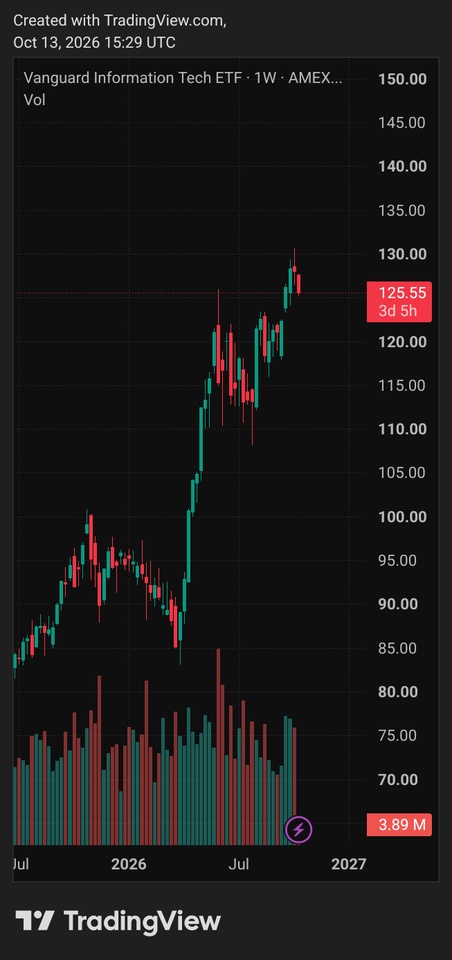
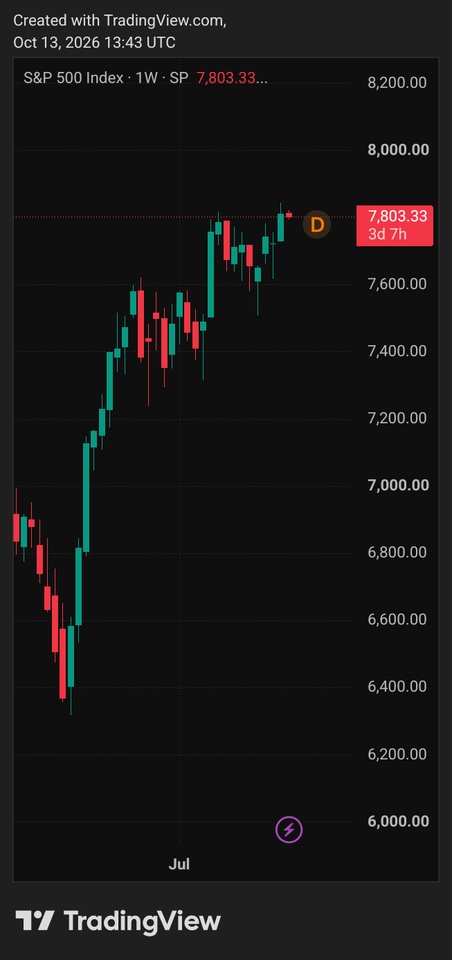
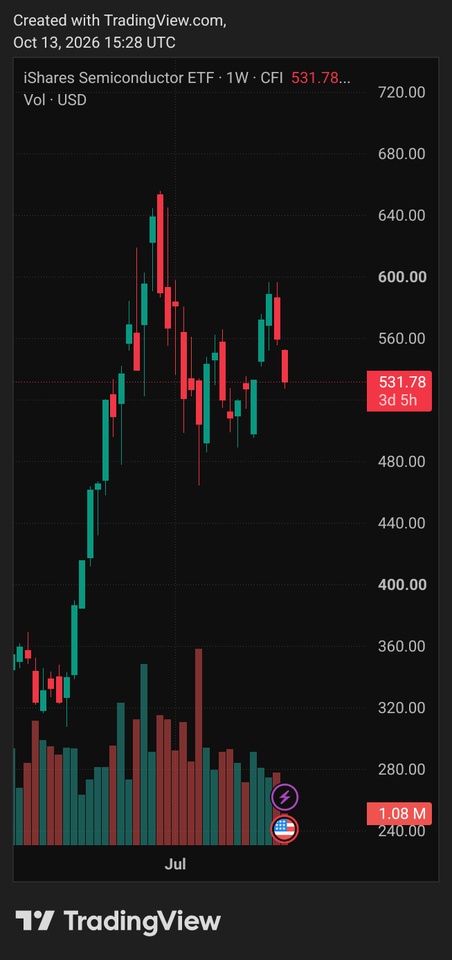
A difficult start to the year for my portfolio, I would say.
$BTC (-0,6 %)
$ACWI
$EXSH (+0,13 %) and much more.
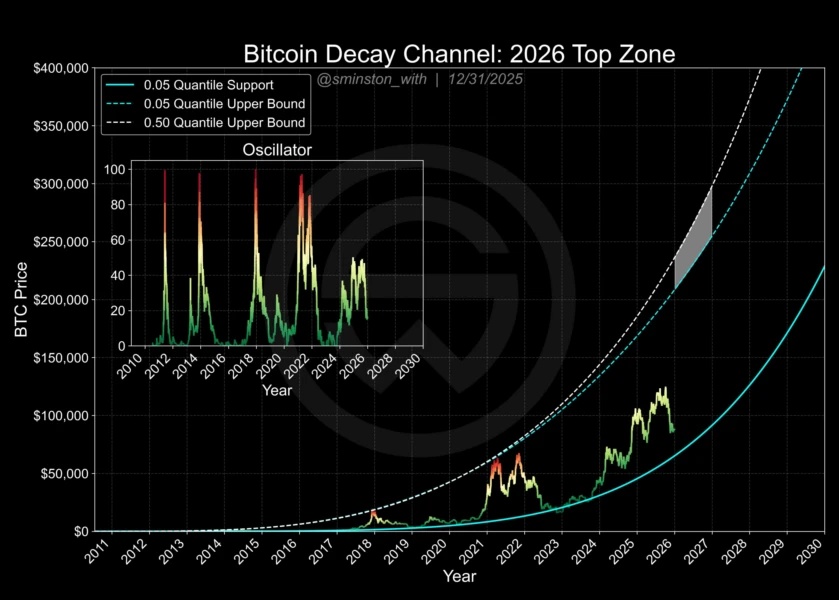
Bitcoin is performing better than many traditional asset classes in the current market environment. Since the beginning of the Iran tensions $BTC (-0,6 %) up around 10.7 percent since the start of the Iran tensions, while the Stoxx 600 and #gold recorded significant losses.
In the short term, price performance was negatively impacted by the unwinding of a short squeeze and restrictive signals from the US Federal Reserve. Around USD 500 million in short positions were liquidated, while at the same time larger sales by so-called whales continue to indicate fragile market sentiment.
Capital flows remain positive overall and are heading for a fourth consecutive week of inflows, but are increasingly sensitive to macroeconomic stimuli. After the FOMC meeting, sentiment turned around in the short term, underlining the high reaction speed of the market.
With significantly lower expectations of interest rate cuts and ongoing geopolitical risks, the environment remains challenging. Nevertheless, the relative strength suggests that Bitcoin is increasingly establishing itself as a macro asset in its own right.
(Text by CoinShares' Head of Research, James Butterfill).
Via the following $CS (+0 %) - ETP you can also invest in Bitcoin: $BTC (-0,6 %)
Principales creadores de la semana