We keep $VHYL (+0,19 %) buy.

Vanguard FTSE All-Wld Hgh Div Yld ETF D
Price
Debate sobre VHYL
Puestos
294Actual Porfolio
Hola,
Tras un tiempo por aquí, leyendo, aprendiendo de cada uno de vosotros (por aquí empecé a conocer el mundo de los ETF) y con solo apenas un par de años invirtiendo el ahorro de toda la vida, me lanzo a dar a conocer mi pequeño y modesto proyecto.
He visto y admirado carteras de auténticos millonarios, jóvenes que apuestan por su futuro con pocos miles de euros... yo empecé tarde a invertir y hoy, con 46 años, creo haber encontrado un punto donde me siento cómodo invirtiendo.
Debo diferenciar entre la parte procedente de mi ahorro vía trabajo (mi cartera en RV, oro y bonos), de la reserva vía herencia tras el fallecimiento reciente de mi padre.
Por eso hoy, muestro modelo dual, con un 30% total RV y un 70 de protección.
Renta variable:
$VWCE (-0,01 %) + $VHYL (+0,19 %) - $SPFE (-0 %) - $IGLN (-0,67 %)
VWCE. Gracias a vosotros, invierto en las 3600 mayores empresas del planeta. Es por supuesto la base que no quiero vender jamás y servirá de legado para mi hija.
Elegí VWCE frente a alternativas como ISAC. En realidad, ambas son fantásticas a largo plazo.
VHYL es un grifo. Gota a gota, cada trimestre, aporta dividendo de distribución a través de empresas consolidadas de todo el mundo. Y ese dividendo, tiene un destino... BTC.
SPFE. Tras mucha lectura, observo que un cuarentón como yo, necesita un aporte de estabilidad vía fondos. Y tras alternativas como VECA, me decanto por fondos de unos 7-8 años de edad, que proteja la parte VWCE/VHYL cuando caiga.
La razón de SPFE vs VECA, es ese goteo semestral de dividendos, también destino... BTC.
IGLN. El oro. Poco más que aportar que no se conozca ya sobre la importancia de ese 8-12% de oro en cualquier cartera a largo plazo.
Y... ahora lo que no suelo ver nunca:
Mi colchón líquido (como digo, procede de una herencia reciente y debo preservarlo al máximo. Ultraconservador. Solo quiero que la inflación apenas muerda céntimos de aqui). Es $XEON (+0,02 %) .
Solo uso XEON cuando la bolsa caiga un 10-15%, y con mucha prudencia, o cuando cualquier incidente importante en la familia me obligue a vender.
Y, mi boleto de lotería. Un 2% (limitado por mi mismo) de $BTC (+1,78 %) . Se financia vía dividendo VHYL y SPFE. Esos fondos de distribución, goteando gratis un activo que puede valer en 20 años x100 su precio actual, o nada.
BTC es lo unico que tengo permitido vender, cada vez que el caballo se desboque, por subir en exceso, reconducir a RV.
Simplemente, si habéis llegado hasta aquí, gracias por leerme. Como digo, no suelo ver carteras como la mía. Y no sé si puedo ayudar a alguien así.

Adding ETF
$LDGL (-0,51 %) purchased 285 pieces for 9.101 euros and
$TDIV (-0,46 %) bought 50 pieces for 52.25 euro.
i keep buying additional in these 2 etf's so i slowly get equal distribution across my 4 etf's.
( $IDVY (-0,24 %) and $VHYL (+0,19 %) are my other etf)
The high share in financials is not really a big problem because the portfolio is less than 25% of my total assets.
VHYL ---> BTC
Hola, voy a comenzar un paso algo diferente en mi cartera.
Voy a probar incrementar posiciones en un ETF de distribución de dividendos $VHYL (+0,19 %) para ir aportando cada ingreso a $BTC (+1,78 %)
Busco una sinergia entre un goteo constante vía dividendo trimestral y la rentabilidad vía DCA a BTC.
¿Como lo veis? De momento solo aporto 1% de cartera.
Payday once again 🙂
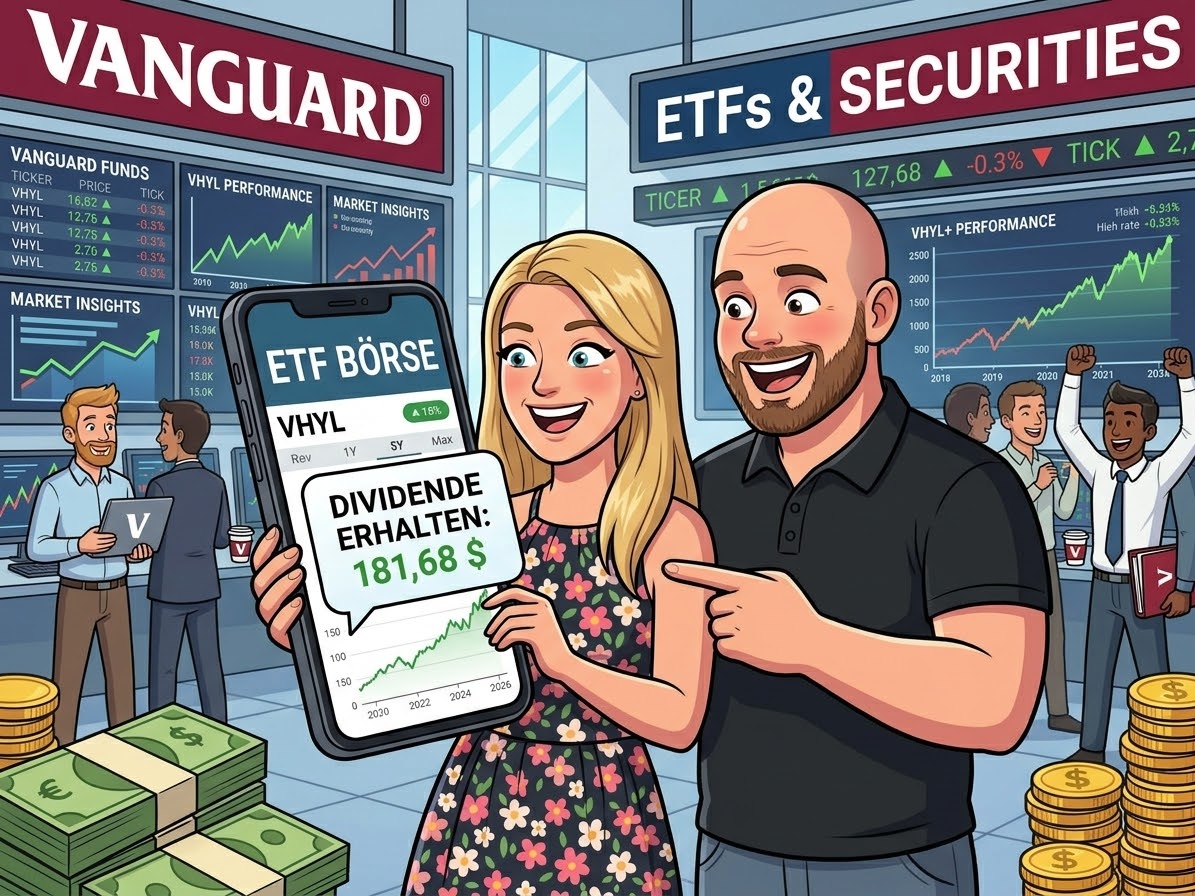
It's always a good feeling when ETFs pay slightly "bigger" dividends!
My favorites here are the $VHYL (+0,19 %) and the $TDIV (-0,46 %)

🏠 Real estate vs. dividend ETF: swap bulk risk for cash flow?
Hello dear community,
I am currently facing a groundbreaking decision in my investment strategy and would appreciate your constructive feedback.
I was very lucky to inherit a condominium in an apartment building. It was actually a blessing, but on closer inspection two points are giving me a headache:
Lack of control: At the owners' meeting, I can easily be outvoted on major investments (e.g. new heating system).
Financial risk: High running costs for property management and potential special levies could blow my budget - reserves that I could not currently afford on an ad hoc basis.
My plan: Sell the apartment and redeploy the equity to generate immediate, passive cash flow to support my ongoing living expenses.
My focus: The Vanguard FTSE All-World High Dividend Yield UCITS ETF (Dist)$VHYL (+0,19 %)
I find the approach attractive as it is globally diversified and offers a solid distribution yield. But is this the best choice for 2026 and more importantly the future?
- What do you think of the Vanguard High Dividend compared to a classic Distributing All-World or more specialized dividend aristocrats?
- Do you have any alternative ETF suggestions (e.g. from iShares or Fidelity) that might offer a better balance between growth and yield?
- Is there anyone here who has already taken the "real estate to ETF" step?
I look forward to your opinions and experiences! Here's to a successful rest of 2026 - hopefully we'll all see more green in our portfolios again soon! 📈🚀
#investing
#dividenden
#etf
#immobilien
#finanziellefreiheit
#vanguard
#portfolio
Although we will then have to pay rent in the house we inherited, we will no longer have any stress and have a higher return.
We will also have to pay less tax.
Which world ETF? Savings plan change?
Hi, I'm in an "ETF conflict" 😅 I've been saving in three ETFs for some time now: $EIMI (+0,25 %) and the distributing $VHYL (+0,19 %) .
However, the largest of the three ETF positions is by far the $IWDA (-0,12 %) - somehow I've not been so happy with it for a while now and I'm wondering whether it makes sense to move everything from this ETF into the $VWRL (+0,03 %) or simply move the savings amount into the $VWRL (+0,03 %) from now on...or just stick with the $IWDA (-0,12 %) because it won't make much difference in the end? 🤔
Depot conversion
depot significantly simplified.
Savings are now only $VWCE (-0,01 %) and $VHYL (+0,19 %)