
$ABBN (-1,67%)
$GE
$RTX (+3,61%)
$HAL (+2,01%)
$MMM (-0,51%)
$NOC (+4,37%)
$MSCI (-1,21%)
$ISRG (-0,56%)
$SPCX (-1,88%)
$NFLX (-2,93%)
$DB1 (+1,05%)
$CME (+0,79%)
$T (-0,24%)
$PM (+1,8%)
$MCO (-0,12%)
$NEE (+1,07%)
$UAL (-5,09%)
$MONC (-2,91%)
$TXN (-0,48%)
$META (-3,46%)
$IBM (-1,11%)
$SAP (-0,79%)
$QS (-4,77%)
$LRCX (-4,43%)
$TSLA (-2,72%)
$RMS (-0,8%)
$NESN (+2,23%)
$BARC (-0,02%)
$ROP (-0,62%)
$DOW (+0,64%)
$SPOT (+0%)
$NDAQ (+1,15%)
$AAL (-3,55%)
$LMT (+3,31%)
$PG (+1,17%)
$BX (-2,81%)
$BESI (-6,52%)
$VLO (-0,65%)
$KER (-1,77%)
$OR (-0,46%)
$VRSN (-0,74%)
$WDC (-6,56%)
$BE (-7,17%)
$NEM (+2,11%)
$TOM (+0,26%)
$AXP (-0,32%)
$FIX (-3,63%)

Hermes International SCA
Azione
Azione
ISIN: FR0000052292
Ticker: RMS
FR0000052292
RMS
Price
Discussione su RMS
Messaggi
898H·
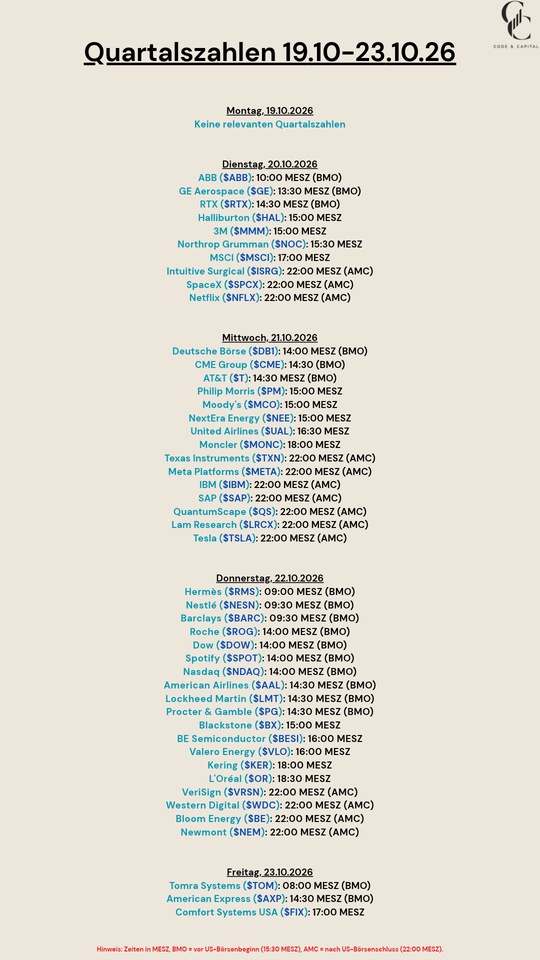
Quarterly Results: Oct. 19–23, 2026
55

1Settimana·
UBS Downgrades Hermès: The Exclusivity Debate and a Reality Check in the Luxury Segment
The major Swiss bank UBS has fundamentally changed its stance on the French luxury goods group Hermès and downgraded the stock from Neutral to Sell. The price target was slashed from 1,695 euros to 1,168 euros. This significant revaluation marks a remarkable turning point for a stock that has long been considered virtually untouchable in the luxury segment.
At the heart of the analysis are concerns about the brand’s long-term exclusivity. According to analysts, Hermès has been steadily expanding production in recent years. Estimates suggest that approximately 65 percent of revenue in the leather goods segment now comes from non-quota or freely available bags. What was once protected by strict, artificial scarcity is gradually shifting toward a more conventional consumer goods model. As a result of this development, the brand is losing some of its absolute exclusivity.
According to UBS, this also has immediate consequences for the company’s business profile. The company is becoming increasingly cyclical and more vulnerable to economic fluctuations in the global luxury market, as the hoped-for rapid market recovery has proven to be premature. Accordingly, financial forecasts have been significantly revised downward. For 2027, the bank lowered its earnings per share estimates by 10 percent to 43.98 euros, which is noticeably below the broad market consensus. For 2028, an even wider gap from analysts’ expectations is forecast.
A key driver of the weaker earnings outlook is the expected pressure on margins. The operating margin is expected to decline to around 38.3 percent in 2027, which is about 100 basis points below the previous year’s level. This is due to lower economies of scale resulting from slower growth, higher spending on communications and marketing, and negative effects from currency hedging. Added to this is a permanently higher effective tax rate, which the bank now factors into its models. For organic revenue growth, UBS now expects only more moderate rates in the mid- to high-single-digit range in the coming years.
Despite this slowdown in growth, the stock continues to trade at a high valuation level. Based on earnings estimates for 2027 and 2028, the price-to-earnings ratio is estimated to be between 27 and 29 times earnings. From the analysts’ perspective, this valuation implies unrealistically high long-term expectations that are likely to be tempered by operational realities. The new price target of 1,168 euros is based on a combination of an adjusted discounted cash flow model and a peer-group valuation and signals further downside potential at the current price level. The bank cites unexpectedly strong product innovations as a potential risk to this pessimistic assessment, as they could still unexpectedly accelerate global growth.
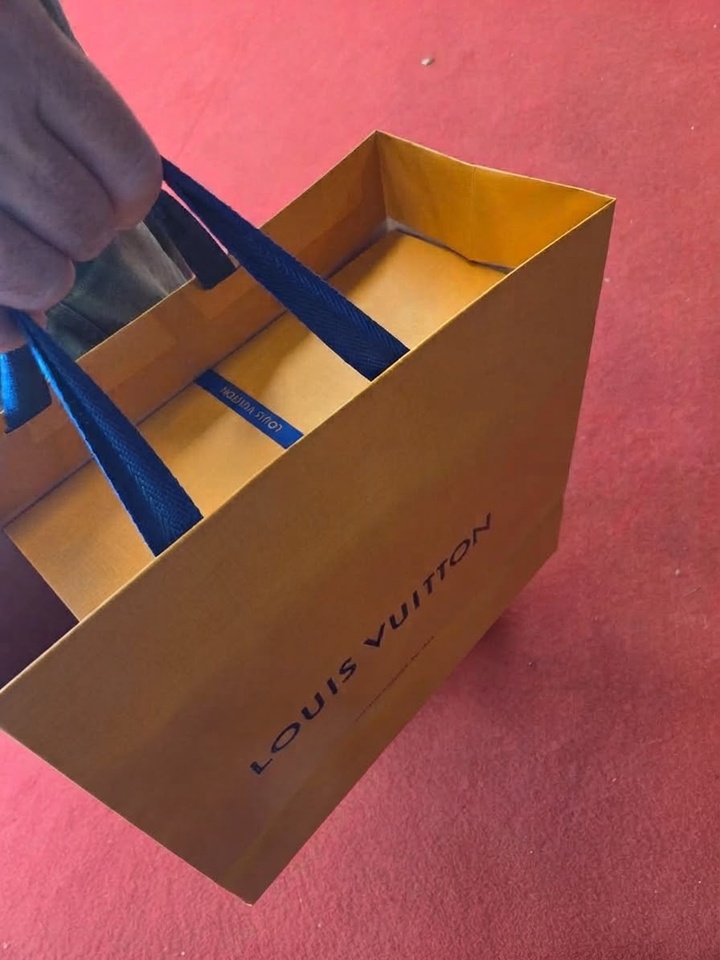
(Note: So much for a lack of exclusivity and waning demand—with the best will in the world, I simply cannot agree with this UBS analysis here in Zurich! After dutifully boosting Asian sales in Hong Kong just last month, I wanted to make my local contribution at the Hermès store in Zurich on Saturday at 5 p.m. The result: A sign on the door read “Closed due to overcrowding”—you simply couldn’t get in anymore! So I had no choice but to leave my hard-earned money with the competition. It was (in parentheses) absolutely packed there, too, but at least they were charming enough to let me in. In any case, there was absolutely no sign of a cooling consumer mood in Zurich at five o’clock sharp in the afternoon!)
Hong Kong:
Zurich:

66
2 Commenti
Basti92@BavarianLion
1Settimana
•
33
•
3Settimana·
Portfolio expanded 💢
I took the plunge today after my paycheck came in and $RMS (-0,8%) bought some more on a contrarian basis.
For me, it’s a tad better than LVMH.
And I entered a mini test position in $ROL (-1,46%) . It’s really just a test position, since I definitely see even worse chart patterns here than with $RMS (-0,8%)
Have a nice weekend 😽
88
6 Commenti
3Settimana
I have to say, I actually see a good risk-reward ratio in both companies. :)
•
33
•1Mes·
Reorder/Price Reduction
At some point, the floor has to show up...
1313
10 Commenti4Settimana
I think that as soon as the first household humanoids become available to the wealthy—and it becomes clear that people will want to dress them in special clothes to make them stand out—Hermès will take off again.
•
55
•

1Mes·
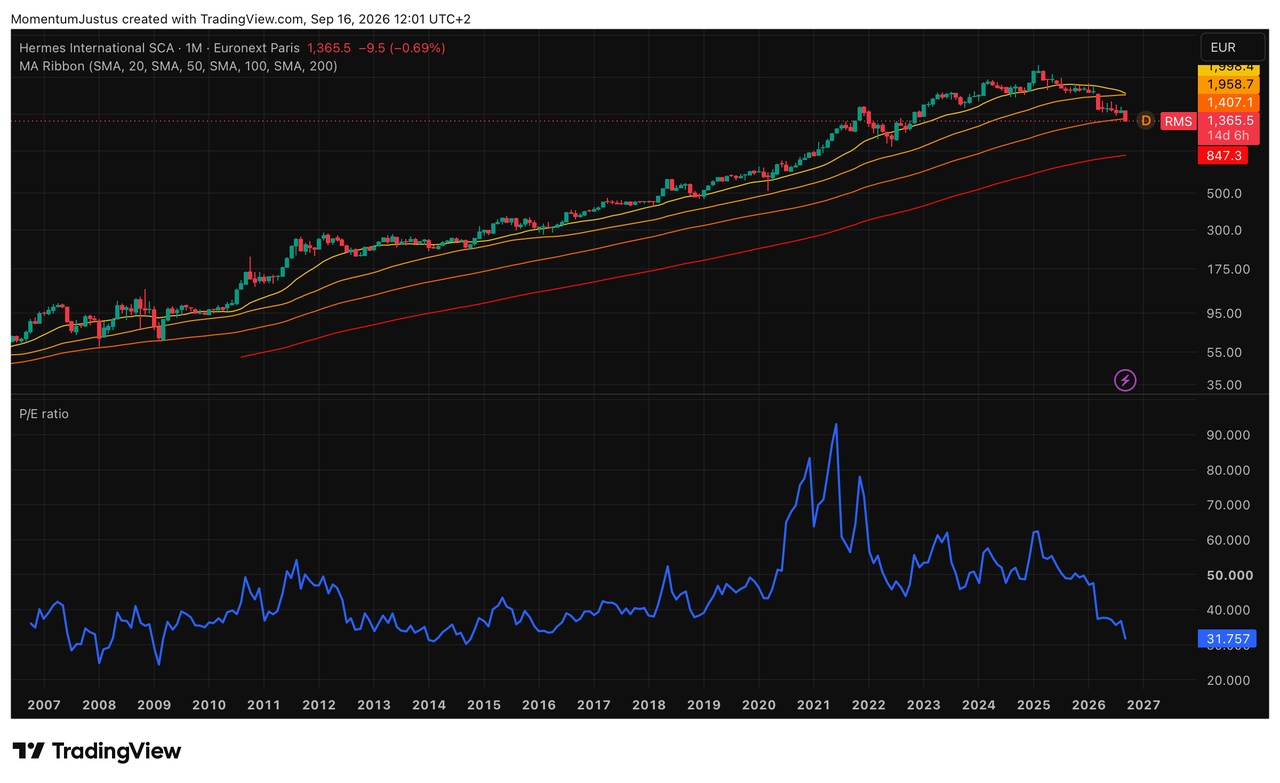
WHEN IN DOUBT… ZOOM OUT. 🔍📈
$RMS (-0,8%) 👜🟠
If you look at the chart we’re entering some pretty interesting technical levels.
Hermes is now even trading below its 1M SMA 100…
Momentum is a bit low atm to be honest… 😂
But look at the historical P/E (blue line).
We’re now back around 2014 valuation lows.
And what was the big fear around 2014? I asked my friend ChatGPT…
CHINA! 🇨🇳
China was slowing down. Luxury spending was weakening. And fears arose around Chinese demand.
Sounds familiar? YES!
Because today we have basically the same discussion again.
This time it’s different?
No. Because as long as $RMS is able to artificially keep demand higher than supply.
They’ve nothing to worry about…
Mr. Market at it again! 🧔🏻♂️🏪📉

1Mes·
Generational buying opportunity?
So one of the things I’m looking into these days is $RMS (-0,8%) because of the extreme low valuation at the moment.
Do you think there’s genuinely something wrong there or is it just Mr. Market overreacting?
Let me know what you think!
1414
7 Commenti
1Mes
Definitely one of the best-managed companies in the world in the long run. Just my opinion.
At the moment they probably have less demand in the Arab region, but in the long run...
At the moment they probably have less demand in the Arab region, but in the long run...
•
33
•1Mes·
📊 My Portfolio Update: August 2026
In July, Tempus AI was my biggest loser, down 25 percent. In August, it was my biggest winner, up 42 percent. I didn’t buy or sell anything in either month.
August had two sides to it. At the beginning of the month, mild inflation data was released, and the S&P 500 hit an all-time high of 7,816 points on August 13. After that, sentiment in the bond markets shifted. The 30-year U.S. Treasury yield rose to its highest level in nearly twenty years, and U.S. gross debt exceeded forty trillion dollars. At the end of the month, Nvidia reported quarterly revenue of 96.2 billion, an increase of 106 percent. The very next day, Fed Chair Warsh signaled a pause in Jackson Hole, and the market priced in an interest rate hike in September.
Following the chip sell-off in July, this was a significantly calmer month for my portfolio:
📊 Monthly performance: +3.15%
📊 Portfolio value: ~€45,506
📊 Max. performance (Jan. 6, 2022): +40.28%
📊 YTD performance: ~+11.88%
Performance & Comparison 🚀
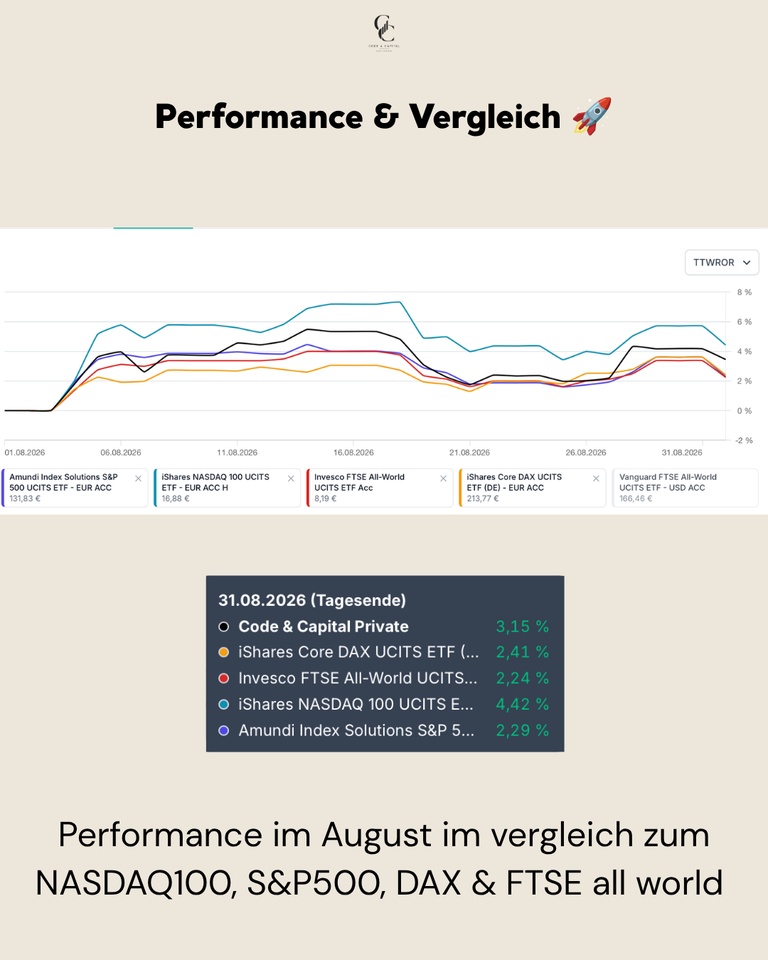
August was a positive month for all major indices, led by the Nasdaq. My portfolio outperformed the DAX, S&P, and FTSE, but lagged behind the Nasdaq.
Performance Comparison (August 1–31, 2026, end of day):
My portfolio: +3.15%
NASDAQ 100: +4.42%
DAX: +2.41%
S&P 500: +2.29%
FTSE All-World: +2.24%
Purchases, Sales & Allocation 💶
None. In July, I reduced my cash position and invested in BE Semiconductor$BESI (-6,52%) , Solaria $SLR (+2,8%) and Hermès $RMS (-0,8%) . I didn’t make any changes in August.
Top Movers in August 🟢
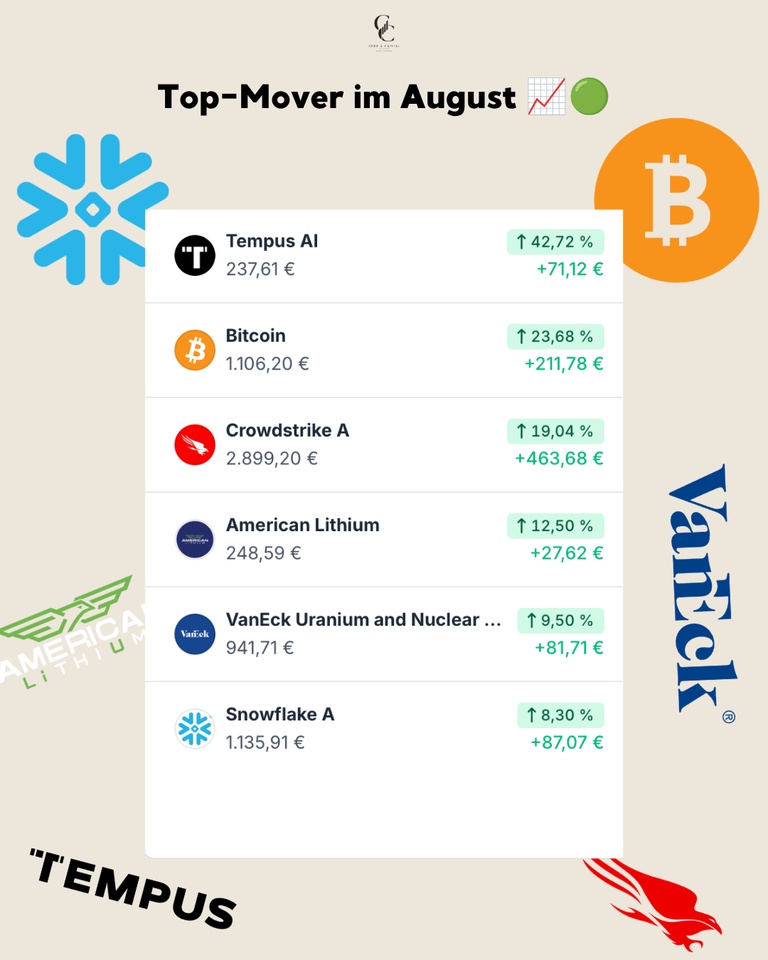
Tempus AI $TEM (-9,52%) posted the strongest gain at +42.72% (+71.12 €), marking a strong rebound following the July slump. Bitcoin $BTC (+1,19%) rose by +23.68% (+€211.78). CrowdStrike $CRWD (-6,72%) rose by +19.04% (+€463.68), making it the biggest euro gain in the portfolio; cybersecurity performed well in August regardless of the chip cycle. American Lithium gained +12.50% (+€27.62), while the VanEck Uranium and Nuclear ETF $NUKL (-0,63%) rose by +9.50% (+81.71 €). Snowflake $SNOW (-8,37%) rounded out the list with a gain of +8.30% (+€87.07).
August’s Worst Performers 🔴
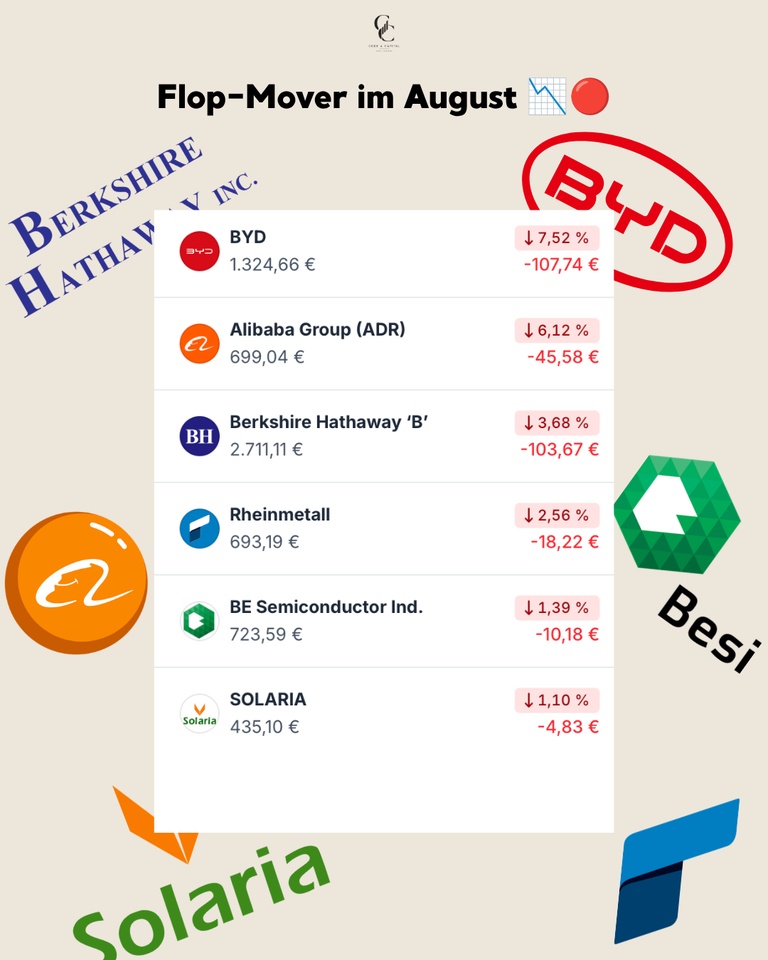
The losses were significantly smaller than in the previous month. BYD $1211 (-0,22%) fell -7.52% (-€107.74), taking a breather after a 27 percent gain in July. Alibaba $BABA (-2,12%) followed with a -6.12% drop (-€45.58); here, too, the China rally from July ran out of steam. Berkshire Hathaway $BRK.B (+0,92%) fell -3.68% (-103.67 €), and Rheinmetall $RHM (+5,29%) -2.56% (-€18.22). BE Semiconductor $BESI (-6,52%) fell by only -1.39% (-€10.18) and has stabilized following the slump in July. Solaria $SLR (+2,8%) closed down 1.10% (-€4.83).
Conclusion 💡
July was a month in which a lot happened. August was the month in which much of that reversed. Tempus AI $TEM (-9,52%) went from the biggest loser to the biggest winner, while BYD $1211 (-0,22%) and Alibaba $BABA (-2,12%) the other way around. Anyone who had sold in a panic in July would have been on the wrong side of the market in August.
❓ Question for the Community
Did the market fluctuations in August make you get cold feet, or did you hold onto your positions? And what was your best buy?
👇 Share your thoughts in the comments!
➡️ Every month, I post a portfolio update here, along with research from my quantitative model in between.
🗞️ Newsletter: codeandcapitalquant.beehiiv.com
📈 Wikifolio: https://www.wikifolio.com/de/de/w/wf0gquant6

+ 1
1111
2Mes·
📊 My Portfolio Update: July 2026
July was a month of contrasts. The Nasdaq slipped into its second correction of 2026, triggered by a sharp sell-off in semiconductor stocks—memory chip manufacturers and chip equipment suppliers saw losses, in some cases in the double digits, and even strong quarterly results were no longer enough to prop up share prices. The DAX, on the other hand, hit new record highs during the same period, driven by software stocks and a rebound at Rheinmetall. At the same time, a significant amount of capital rotated out of AI and chip stocks and into Chinese tech and electric vehicle stocks, which staged a strong comeback after months of decline.
My portfolio benefited from this rotation and is back in the black:
📊 Monthly performance: +1.02%
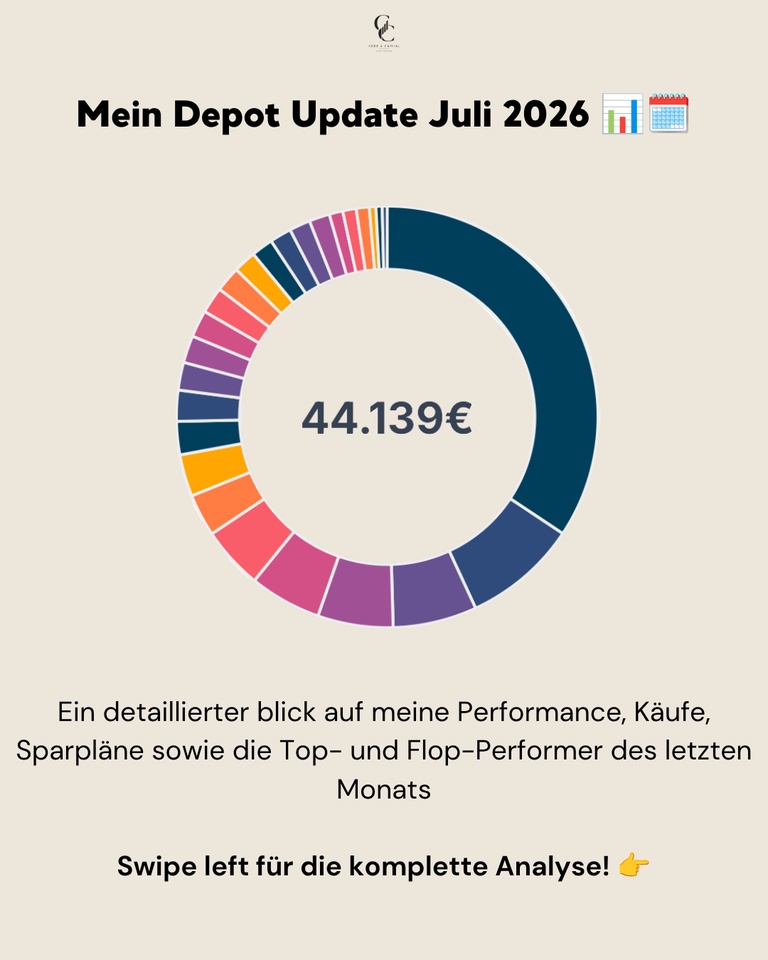
📊 Portfolio value: ~€44,139
📊 Peak performance (Jan. 6, 2022): +43%
📊 YTD performance: ~+14.09%
Performance & Comparison 🚀
July demonstrated how differently the indices could perform depending on their composition. While the Nasdaq suffered from the chip sell-off, the DAX benefited from its lower concentration of semiconductor stocks and the Rheinmetall recovery. My portfolio tracked the DAX more closely than the Nasdaq and ended the month in positive territory.
Performance Comparison (July 1–July 31, 2026, end of day):
My portfolio: +1.02%
DAX: +2.57%
S&P 500: -1.25%
FTSE All-World: -1.47%
NASDAQ 100: -6.97%
Purchases, Sales & Allocation 💶
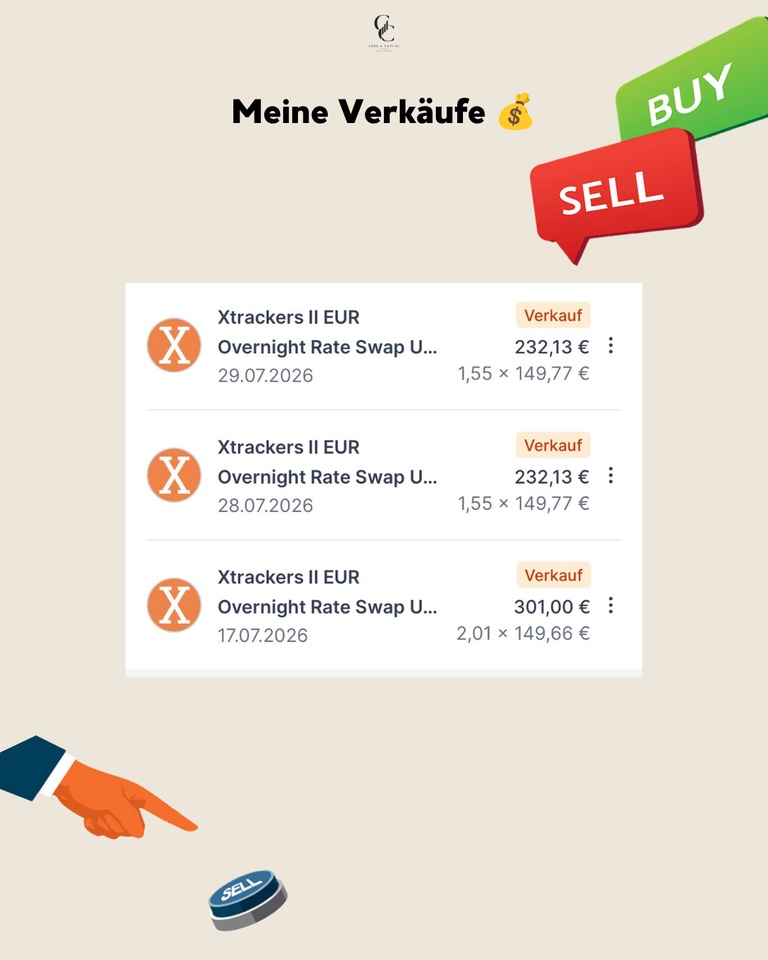
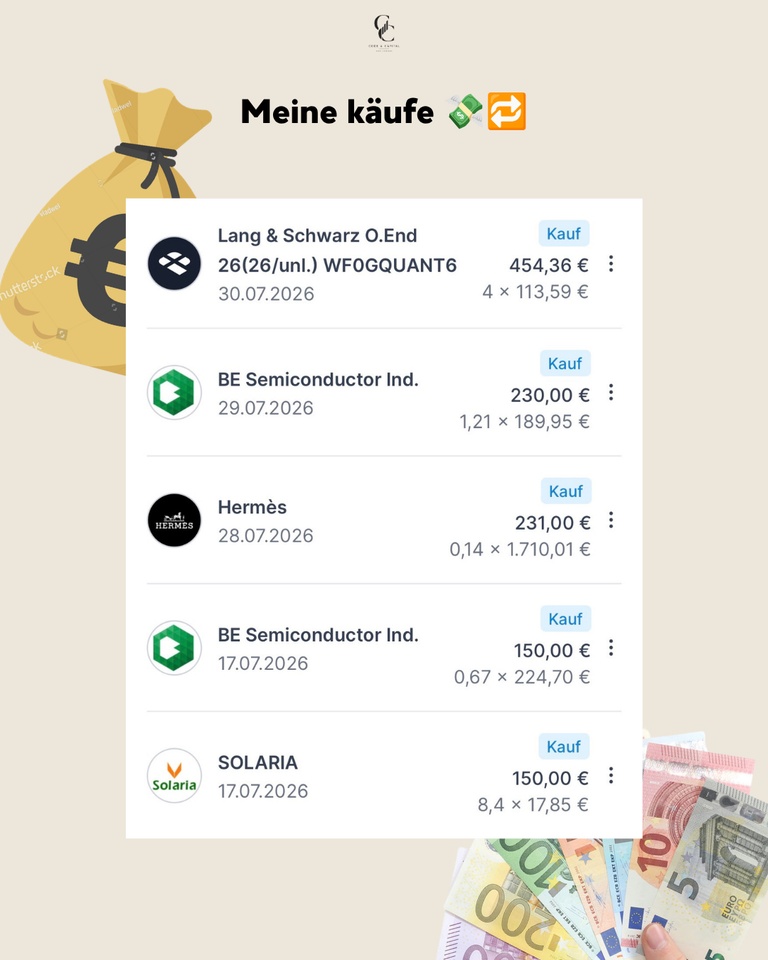
In July, I reduced my cash position. The Xtrackers II EUR Overnight Rate Swap ETF, which I had been using to park liquidity, was sold in three tranches: €301.00 on July 17, and €232.13 each on July 28 and July 29—totaling approximately €765. The freed-up funds were immediately allocated to three positions: BE Semiconductor Ind. $BESI (-6,52%) I increased my position in two steps: €150.00 on July 17 and €230.00 on July 29. For Solaria $SLR (+2,8%) , I added another €150.00 on July 17, and for Hermès $RMS (-0,8%) on July 28. In doing so, I deliberately reallocated cash into stocks rather than injecting new capital.
Additionally, on July 30, I invested €454.36 in my own Wikifolio certificate $DE000LS9V052 (-2,4%) —a private position separate from the rest of my portfolio.
Top Movers in July 🟢
The month clearly belonged to stocks that benefited from the rotation out of U.S. tech.
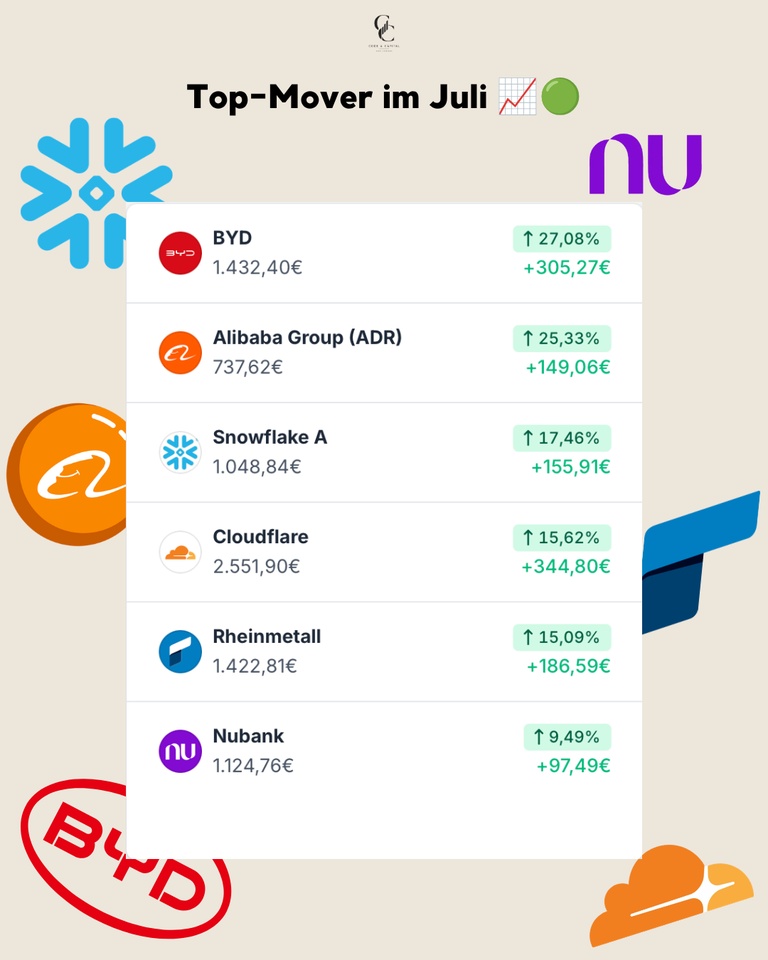
BYD posted the strongest gain at +27.08% (+€305.27). The stock received a double boost: capital flowed from AI and chip stocks into Chinese electric vehicle stocks, and BYD also reported $1211 (-0,22%) reported a nearly 22% jump in sales for July and more than a doubling of overseas deliveries. Alibaba $BABA (-2,12%) followed suit with a gain of +25.33% (+€149.06)—part of the same China-led rally that also swept up Tencent and Xiaomi. Snowflake $SNOW (-8,37%) rose by +17.46% (+€155.91) and Cloudflare $NET (-6,71%) by +15.62% (+344.80 €), the largest euro gain in the portfolio—both software stocks fared significantly better than hardware and chips in the rotation. Rheinmetall $RHM (+5,29%) rebounded by +15.09% (+€186.59) from its 52-week low following the frigate shock in June, supported by full order books and rising defense budgets in Europe. Nubank $NU (-1,67%) rounded out the list with a gain of +9.49% (+€97.49)—here, too, the rotation away from U.S. tech toward other regions played a role.
July’s Big Losers 🔴
On the other hand, the list consisted almost exclusively of stocks that were directly or indirectly hit by the chip sell-off.
Tempus AI $TEM (-9,52%) suffered the biggest loss at -25.08% (-€55.74)—AI-related stocks came under particular pressure during the broad sell-off. IREN $IREN (-11,51%) fell by -20.39% (-€179.15) and has remained weak since the price slump in early summer, still weighed down by the combination of Bitcoin weakness and skepticism regarding its transition to an AI cloud provider. BE Semiconductor Ind. $BESI (-6,52%) fell by -18.77% (-€169.56), directly impacted by the global sell-off among chip equipment manufacturers. TSMC $TSM (-2,13%) lost -15.04% (-€80.55)—despite a strong quarter, the stock was swept up in the general semiconductor correction. Hermès $RMS (-0,8%) dropped -10.27% (-24.26 €), with luxury goods following the downward trend of weaker growth stocks. Solaria $SLR (+2,8%) rounded out the list with a -9.50% (-€46.19) decline—solar and renewable energy stocks remain under pressure.
Conclusion 💡
July showed just how quickly capital flows can shift. While the chip sector underwent one of the sharpest corrections of the year, Chinese tech and electric vehicle stocks found their bottom. For my portfolio, this was a good example of why broad diversification across sectors and regions makes all the difference.
❓ Question for the Community
That was my month in numbers—how did the July chip sell-off affect you? Did you rotate into Chinese stocks, or are you holding onto your U.S. tech positions?
👇 Let us know in the comments!
➡️ Follow @codeandcapital26 for transparent portfolio updates!
🗞️ Newsletter: codeandcapitalquant.beehiiv.com
📈 Wikifolio: https://www.wikifolio.com/de/de/w/wf0gquant6
+ 2


2Mes·
Hermès Trade Position
$RMS (-0,8%) reached yesterday a low of over 50% from its ATH.
I opened a small long position. If it keeps going lower, my next buy price will be at 61,8 % from its ATH.
1515
2Mes·
Hermès and Pork Prices
DOW JONES--Shares of $RMS (-0,8%) fell 11 percent after the luxury group’s sales in China disappointed investors.
To get an indication of when this important market might recover, keep an eye on pork prices.
That’s the advice from Hermès CEO Axel Dumas. He said the commodity, which is currently very cheap, is one of two things he monitors to gauge the health of Chinese consumers—along with real estate.
“Pork is eaten, especially at banquets and in restaurants...so it’s a good indicator of the desire to, you know, celebrate,” Dumas said. “I’m not saying that all our customers react to the price of pork, but I’m waiting for the recovery, which will be a good indicator of optimism.”
Hermès reported a 6.7 percent increase in sales for the second quarter today. However, sales in the Asia-Pacific region—which excludes Japan but includes China—rose by only 2.5 percent, disappointing analysts.
The timing of a recovery in China is a key question for the luxury goods industry, which has relied on spending by Chinese customers both at home and abroad in recent decades.
This article is part of live coverage by The Wall Street Journal.
66
2 Commenti
OK
Current Market Situation in GermanyCost Pressure: Although prices have stabilized at €1.40, reports from agrarheute indicate that they do not currently cover the high production costs (feed, energy).Meat Sales: The grilling season is proceeding as usual, though the high supply of Spanish imported meat is putting pressure on the pan-European market. Piglet market: The nationwide piglet price has also stabilized and stands uniformly at €30.00 per head (based on 25 kg). Regionally, as shown in the listings from the Schleswig-Holstein Chamber of Agriculture, prices of up to 46.50 € are being achieved in spot transactions, depending on lot sizes.
Don’t see anything from Hermes 😂
Current Market Situation in GermanyCost Pressure: Although prices have stabilized at €1.40, reports from agrarheute indicate that they do not currently cover the high production costs (feed, energy).Meat Sales: The grilling season is proceeding as usual, though the high supply of Spanish imported meat is putting pressure on the pan-European market. Piglet market: The nationwide piglet price has also stabilized and stands uniformly at €30.00 per head (based on 25 kg). Regionally, as shown in the listings from the Schleswig-Holstein Chamber of Agriculture, prices of up to 46.50 € are being achieved in spot transactions, depending on lot sizes.
Don’t see anything from Hermes 😂
••