Meta Platforms
Price
Discussione su META
Messaggi
812


Don't press the button!!!
(This is not investment advice!)
$AAPL (+0,91%)
$MSFT (+0,67%)
$NVDA (-1,61%)
$AMZN (+1,83%)
$GOOGL (+0,84%)
$META (+0,83%)
$TSM (-2,27%)
$GEV (-3,14%)

Mag7 Stock Market 2027 | Market Cap
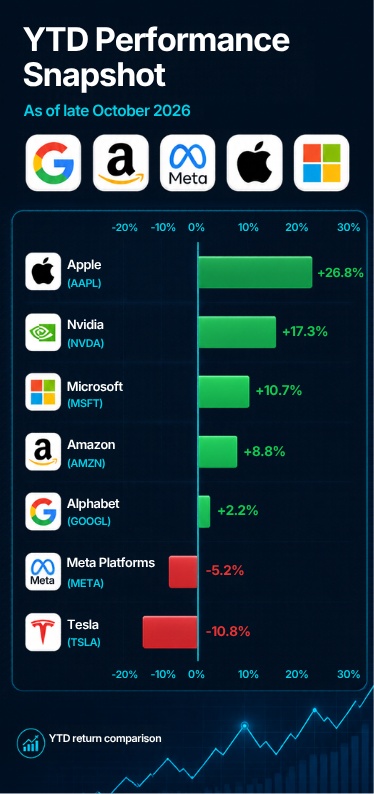
Mag7 in stock market 2026 • $AAPL (+0,91%) , $NVDA (-1,61%) , $MSFT (+0,67%) , $AMZN (+1,83%) , $GOOG (+0,87%) , $META (+0,83%) , $TSLA (-1,45%) still makes more high return performance to get large market cap. Its a reason they have cycle frame time for market position and many time to get split stock season makes be better performance every years.
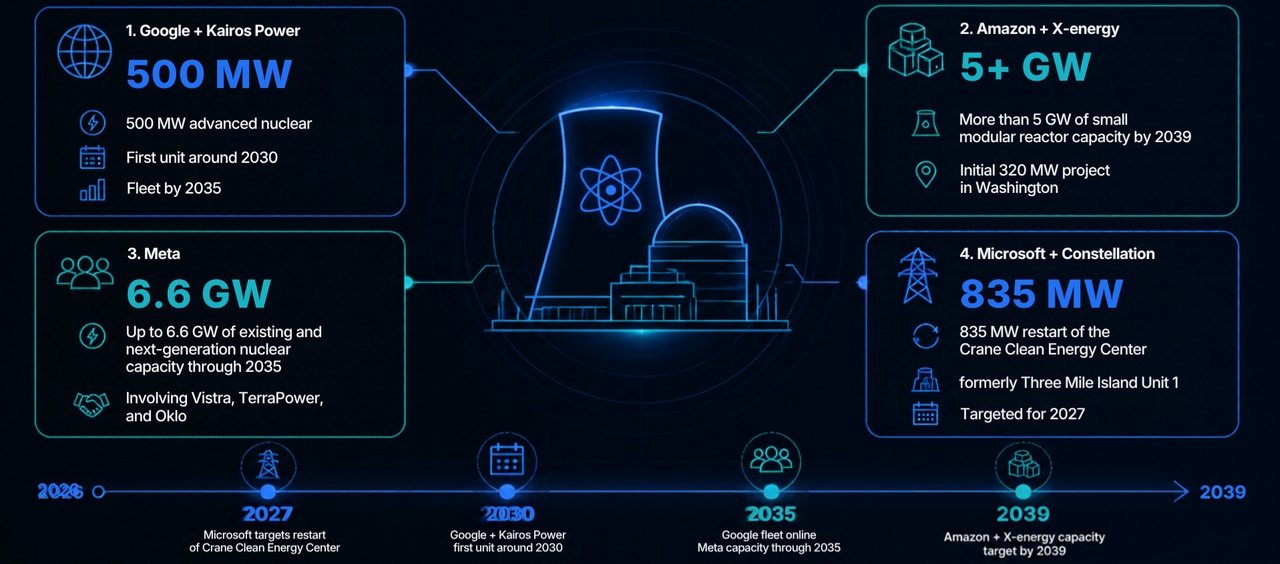
• Energy power and Data center get additional part in new projection for strategy in market business.
• ✅️ check point for S&P 500 market index run to 10,000 high price in position (2.400 point) from now around 7,600. Its momentum get to fast with market trends ■ 2027-2028-2029.


Poor Dad Index - YTD 2026 🦅
No bets or 50/50 odds for the future.
Just boring companies that are there, have always been there, and will hopefully always be there… at least in my generation.
My portfolio has nothing special about it. I just like industries that work and generate recurring revenue. Something where you don’t have to think long and hardwhether you need the products or not. For me, there are two options:
Do I need it? Or don’t I?
If the company isn’t really necessary , then I don’t want it.
The business models of my companies that I particularly like are:
TJX:
$TJX (+0,97%)
(Everyone knows it, and almost everyone has been inside at some point.)
McDonald’s:
$MCD (+1,01%)
(No need to explain.)
CME Group: $CME (+1%)
(A futures exchange—you don’t see it, but the world needs it to function.)
Rollins:
$ROL (+1,38%)
Pest control (yes, there are government regulations for pest control)
Meta:
$META (+0,83%)
The companies mentioned above—and every other company in the world—need to reach their customers somehow. Meta can reach almost everyone.
Actually, I don’t comparisons to the index, because a portfolio can perform poorly for years and suddenly after the fifth bad year, it can sky .
That’s how it was for me… After about 6 years, my portfolio, after underperformed outperformed the All World (on a since-inception basis).
On top of that, there are all gains and dividends... after all, profits should be tangible (just my opinion)
Which industries/companies do you find unique?
Maybe someone can suggest some companies to me— that you don’t see, but that are always there?
That would be cool.
Image generated with AI :)


The funding channel for Neoclouds has been closed
What happens to an industry where demand is skyrocketing but which suddenly can’t get any more money?
This question has been on everyone’s mind since yesterday. Elon Musk wrote on X that the credit markets had AI data center operators. Just a few days earlier, the Nebius CEO himself had admitted that key sources of capital had temporarily dried up.
1. The Statements
- Elon Musk: In recent weeks, the credit markets have cut off all companies without significant revenue outside of AI data centers had almost completely cut off access to funding. $SPCX (-1,06%) I’ve taken on $40 billion in debt for GPUs, but only thanks to investment-grade (= high creditworthiness according to rating agencies) and revenue from Starlink and rocket launches. He predicts a mass extinction and consolidation . He rules out the possibility of SpaceX acquiring any Neoclouds.
- Chamath Palihapitiya: Neoclouds are disorganized and poorly capitalized. By 2027, there will be a lot of partially unused computing capacity, and that year will weed out many bad investments.
- Arkady Volozh, CEO of $NBIS (-4,03%): Asset-backed financing and debt markets have temporarily dried up. Nebius is working with customer prepayments and other instruments that should be sufficient to build at least the one gigawatt planned for this year.
- Gartner: As early as mid-October, the research firm predicted that by 2030, over 80% of neoclouds would no longer be independent.
Context: Musk is a direct competitor to traditional Neoclouds, as he rents out GPU capacity himself—SpaceX could benefit from negative headlines.
2. Why a lack of capital affects the valuation:
Neoclouds build and buy first, but the money doesn’t come back for years.
This results in a simple chain:
1. Growth requires capital.
2. Capital becomes expensive or is no longer provided at all: CoreWeave bonds $CRWV (-4,33%) maturing in 2031 yielded at times nearly 16%. At this price, projects are barely profitable, so this funding channel is largely closed.
3. Valuations factor in high growth: The market has priced in years of capacity expansion.
4. This growth cannot be delivered without capital: What isn’t financed won’t be built. Lower growth → lower stock prices. On top of that, companies are raising capital by issuing new shares at low prices, which dilutes the holdings of existing shareholders dilutes and creates further downward pressure.
5. Valuations are coming under pressure: Growth expectations are falling, while at the same time the interest rate used to discount future earnings is rising.
4. How are different types of financing affected?
Closed channels:
- Unsecured high-yield bonds
- GPU loans without high-credit-quality customers
- Asset-backed financing for Neoclouds
Open, but tighter and more expensive:
- Secured loans with investment-grade borrowers: Nebius received on October 22 $3.5 billion from $C (+1,98%), though with a term of only one year
- Stock sales that dilute shares more significantly when prices are low
Outstanding:
- Customer prepayments
- Bonds for hyperscalers and corporations with other sources of revenue
5. Why isn’t a booming business getting funding?
Investors aren’t short on money. $GOOGL (+0,84%), $AMZN (+1,83%), $META (+0,83%) and $ORCL (-1,28%) have invested over $228 billion in bonds.
The reason lies in the lender’s logic:
- No share in the boom: If GPU rental rates double, the shareholder benefits. The lender receives only the interest, but bears the loss in the event of a crisis.
- Uncertain collateral: Financiers estimate that a GPU’s value after three years will be 10 to 60 percent of the original price. This is a huge range when billions are invested in GPUs.
- Macro: Due to the Fed’s interest rate hike in September and an oil price above $100 caused by the war in Iran, new issuances in the high-yield market plummeted in October.
Has this ever happened before?
- Data Centers in 2001: Exodus Communications, then one of the largest data center operators, went bankrupt, and its facilities were sold off cheaply. Equinix $EQIX (+0,07%) barely survived, $DLR (+0,48%) and was later formed from acquired real estate. Data centers became a huge business—but only for the next owners.
- Fiber Optics 2000–2002: The demand for the Internet was real, but funding dried up. Global Crossing and WorldCom went bankrupt.
- Shale Gas 2015/16: The high-yield energy market dried up; many producers went bankrupt, and the most cost-effective ones took over the rest.
- Crypto Miners 2022: Core Scientific filed for bankruptcy and is now an AI rental provider itself.
The pattern is always the same: When the capital market closes for a capital-intensive industry, the balance sheet, not demand. In these examples, macro-driven freezes lasted weeks to months, while freezes affecting an entire industry lasted about one to three years.
6. Which Neoclouds are affected
The key factor is the business model:
- Landlords with tenants of high creditworthiness:
$CIFR (-3,23%) with Amazon as the direct tenant, $WULF (-1,35%) backed by Google. In the case of $HUT (-2,24%), $CLSK (-1,71%) and $RIOT (-0,65%) investment-grade credit protection is still pending. Banks are primarily reviewing the tenant in these cases, which is why financing continues. They benefit very little from the rise in GPU prices because their rents are locked in for 10–20 years. - Landlords with a large CoreWeave stake: Galaxy $GLXY (+0,05%) and Core Scientific, and to some extent also $APLD (-3,93%), where a hyperscaler now accounts for the majority of tenants. Their risk hinges on the industry’s weak link.
- GPU clouds: $IREN (-4,34%) , $NBIS (-4,03%) , $CRWV (-4,33%) , $USCTF (-3,07%) and $BTDR (-1,42%) . This is exactly the channel Musk is referring to. Nebius relies on contracts with $MSFT (+0,67%) and Meta, while IREN relies on Microsoft; on top of that, there are substantial upfront payments: At Nebius, they cover about 50–60%, and at IREN, about 45% of the respective investments. CoreWeave, on the other hand, contributes about $50 billion in debt and lease obligations.
- Without a signed AI contract:
$MARA (-0,76%) and $KEEL (-1,08%). They need customers and financing in the midst of the lockdown.
7. Conclusion
Overall, Musk’s statement is exaggerated, but essentially correct: For companies that only sell GPU rentals and don’t have customers with high credit ratings, the credit market is currently closed.
However, there’s a contradiction in this situation: What isn’t financed won’t be built, and that further reduces supply further, while Musk himself speaks of exploding demand .
Companies that can finance their capacity are likely to benefit from this.
Customers who urgently need computing power will become more aware of this problem, which could potentially increase prepayments for contracts. In addition, customers could use their own creditworthiness as collateral for their AI computing power providers or become lenders themselves.
In my view, therefore, one question above all else will determine the future of the industry:
Who can secure financing to sustain these growth rates?
The quarterly results in November will provide answers; particular attention should be paid to the financing structure and prepayments.
Sources:
https://x.com/elonmusk/status/2114434646914068862
https://x.com/chamath/status/2114389987563381004
https://www.youtube.com/watch?v=ElxZFG9lfmQ
https://www.sec.gov/Archives/edgar/data/0001513845/000110465926117978/tm2628078d1_ex99-1.htm
https://www.cnbc.com/2026/10/14/coreweave-stock-bond-yields-ai-debt.html
https://www.advisorperspectives.com/articles/2026/10/21/surging-yields-biggest-debt-sale-delay
Neocloud Crash: My Assessment
Last week's Neocloud crash has $CRWV (-4,33%), $NBIS (-4,03%) and $IREN (-4,34%) sent it into a tailspin. What’s behind this, and what has actually changed for the future?
It all starts with the price of oil
Since the attacks on Iran, the price of oil has risen from ~$80 in August to over $106 per barrel. This is having a major impact on U.S. inflation:
- Consumer Price Index (CPI): 3.7% in September, compared to an expected 3.6%. That’s nearly double the Fed’s 2% target
- Core inflation: 2.6%, also above expectations
- Producer prices (PPI): 6.3% year-over-year, more than three times the Fed’s target. Month-over-month: +1.3%, nearly double the expected increase and the sharpest rise since March 2022
The Fed raised interest rates on September 16 for the first time since 2023 raised interest ratesto 3.75–4.00%. The yield on 10-year U.S. Treasury bonds stood at over 5.2% at the end of September, the highest it has been since 2007. Added to this is a U.S. government that is sinking deeper and deeper into debt and must continually issue new bonds.
This is precisely where the problem with Neoclouds lies: The expansion of AI is largely financed by debt and competes for the same investors as the U.S. government. If a government bond yields over 5% with almost no risk, lenders will demand significantly more from a company that is still operating at a loss.
The trigger for the crash: CoreWeave’s bonds
On October 14, a chart went viral showing a CoreWeave bond worth $1.25 billion with a yield of just under 15% . It was issued in June at 9.625%. The credit default swap (CDS) is at a record high of 1,194.5 basis points; on October 6, it was still at 368.
According to standard calculations, this corresponds to a probability of default of over 60% within five years.
On the same day, Gartner added: By 2030, over 80% of Neocloud providers are expected to lose their independence. By then, AI data centers would generate at most $3.6 trillion in revenue, whereas $8.5 trillion would be needed.
Is this fear justified?
In CoreWeave’s case, partly yes. The higher market yield doesn’t affect the interest rate on existing bonds, but each new round of financing becomes more expensive, and CoreWeave’s growth depends on new loans. However, the 60% figure is a market price from a week of panic and not a forecast.
IREN and Nebius are in a different position
IREN has financed the Microsoft project $MSFT (+0,67%) at ~6% with $3.6 billion. Microsoft accepted Horizon 1 in August, and revenue has been generated since then. Horizon 2 through 4 are scheduled to follow in the fourth quarter; contractually, there is a buffer until early Q2 2027.
Information is currently circulating on X that Microsoft $IREN (-4,34%) is said to have provided incorrect network requirements, forcing the current Childress data centers to be have to be . Horizon 2 is reportedly delayed by ~45 days as a result; Horizon 1 will continue to operate and will continue to be paid for by Microsoft during the retrofit. Horizon 3 & 4 are not expected to be affected, as they will be completed directly with the correct network specifications. Thus, all four buildings are expected to generate revenue by the end of the year as planned. None of this has been officially confirmed.
In July, Nebius switched to a more capital-efficient model in which partners finance the data centers. In addition, advance payments from customers already amount to ~40–55% of the contract total, which alleviates a large portion of Neocloud’s financing risk. Added to this is the possibility of asset-backed financing, whereby the data centers themselves can be used as collateral for loans, thereby reducing interest rates. Nevertheless, the market treats the three companies—with their differing financing risks—as a single entity.
Demand points in the opposite direction
The GPU rental prices are rising: As of October 1, Nebius raised the price for B300 GPUs by 21% to $9.50 per hour—the second increase in three months.
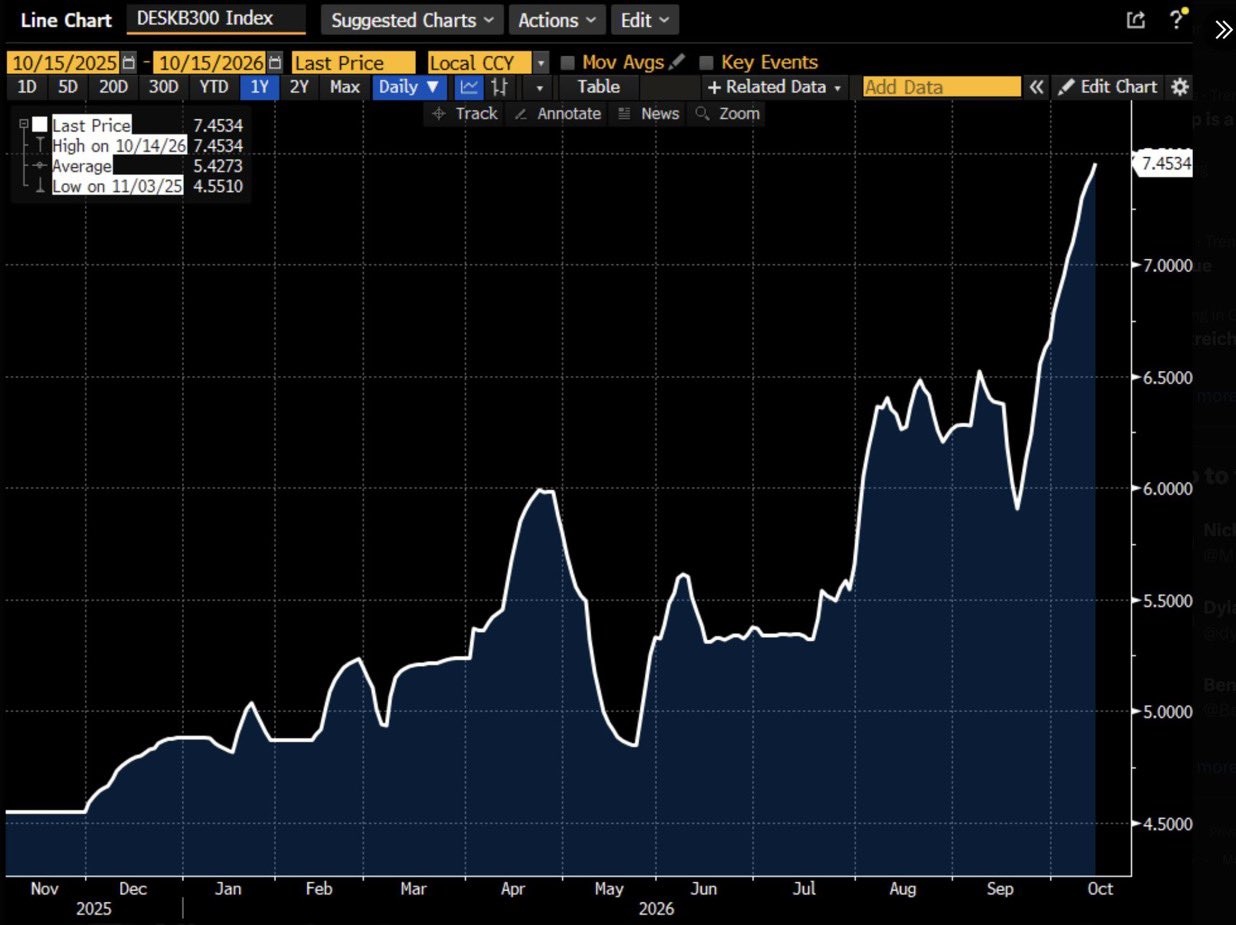
The DESKB300 Rental Index, based on actual rental transactions at U.S. neoclouds, reached a record high in mid-October, driven in part by inference using open-source models. This does not bode well for concerns that GPUs are depreciating too quickly.
GPU rental prices could also be influenced by rising financing costs and thus increase—so overall, this is more of a neutral process.
Jensen Huang told Bloomberg in Berlin on October 16: “All of this is going to pass.” AI will transform every industry, he said, and we’re only at the beginning. According to Huang, CoreWeave’s cost of capital is actually falling. The bond market saw things differently this week.
Time is the real bottleneck
A data center isn’t built in a single quarter. Securing land and a power connection often takes years, and the construction itself is complex. Neocloud stocks are bets on where these companies will be in three to five years, but they’re traded as if they had to deliver every week.
Even with growing demand, not all of them will make it. Some will repeatedly dilute their shareholders, some will be acquired, and some will fail.
What matters is how management finances the expansion and whether it delivers on its promises.
Sharp sell-offs, months of stagnation, and rallies after which everyone suddenly turns bullish again are all part of this sector and should be clear to every investor. A five-year thesis is difficult to gauge based on year-to-date performance.
Overall, the market is pricing in a financing problem—one that is particularly acute for CoreWeave—and applying it to the entire sector. At the same time, demand for computing power shows no signs of weakness—quite the opposite.
High long-term interest rates are the main risk for all players
If government bond yields remain above 5% for the long term, every new round of financing will become more expensive, and that affects all three companies. CoreWeave, Nebius, and IREN are only at the beginning of their expansion and will need to raise many billions more for data centers and GPUs in the coming years. More expensive financing therefore puts direct pressure on future returns. Against this backdrop, the sell-off is understandable, even if demand itself remains intact.
Key events to watch include Nebius’s earnings report, expected on October 22; the Fed meeting in late October; and the acceptance of Horizon 2. Additionally, the course of the conflict (Iran & the U.S.) must be closely monitored, as it will significantly shape future developments.
Not investment advice
Sources:
https://www.bls.gov/news.release/cpi.nr0.htm
https://www.bls.gov/news.release/ppi.nr0.htm
https://www.sec.gov/Archives/edgar/data/0001878848/000187884826000052/iren-20260630.htm
$ORCL (-1,28%)$APLD (-3,93%)$CIFR (-3,23%)$GOOGL (+0,84%)$MSFT (+0,67%)$AVGO (-2,18%)$AMD (-4,14%)$INTC (-2,76%)$HUT (-2,24%)


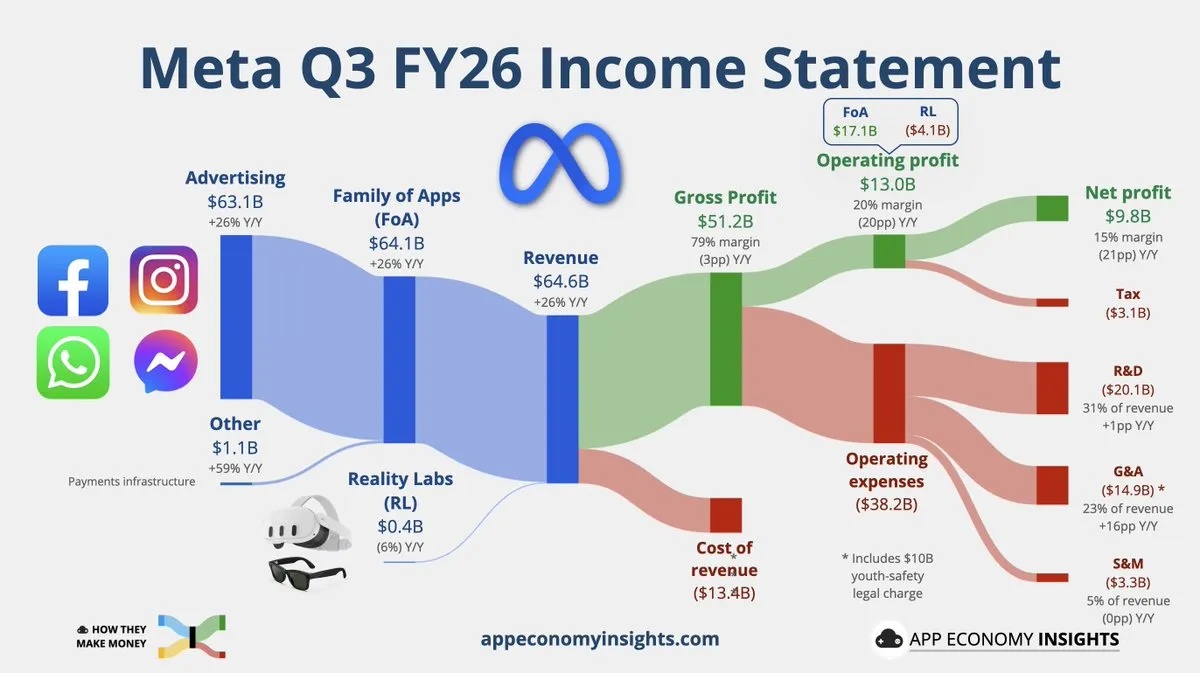
𝐌𝐞𝐭𝐚 𝐏𝐥𝐚𝐭𝐟𝐨𝐫𝐦𝐬: 𝐐𝟑 𝐑𝐞𝐯𝐞𝐧𝐮𝐞 𝐁𝐞𝐚𝐭𝐬 𝐄𝐬𝐭𝐢𝐦𝐚𝐭𝐞𝐬, 𝐛𝐮𝐭 $𝟗.𝟗𝐁 𝐋𝐞𝐠𝐚𝐥 𝐂𝐡𝐚𝐫𝐠𝐞 𝐇𝐢𝐭𝐬 𝐏𝐫𝐨𝐟𝐢
⠀
📊 𝐑𝐞𝐬𝐮𝐥𝐭𝐬
• EPS: $3.83 (Est. $6.80) ❌, +265% YoY.
• EPS Excluding Legal Charge: $7.40 (Est. $6.80) ✅.
• Revenue: $64.60B (Est. $63.41B) ✅, +26% YoY.
• Operating Income: $12.99B, -37% YoY.
• Operating Margin: 20% (vs. 40% YoY).
• Net Income: $9.86B, +264% YoY.
• Operating Cash Flow: $32.79B.
• Free Cash Flow: -$2.12B.
• CapEx: $34.91B.
• Cash & Marketable Securities: $82.45B.
⠀
🎯 𝐆𝐮𝐢𝐝𝐚𝐧𝐜𝐞
• Q4 2026 Revenue: $73B–$76B, midpoint $74.5B (Est. $73.75B) ✅.
• FY2026 CapEx: $135B–$145B (previously $130B–$145B).
• FY2026 Total Expenses: $175B–$179B, including $9.9B legal charge.
• FY2026 Reality Labs Losses: $18B–$19B.
• FY2027 Reality Labs Losses: ~$15B.
• FY2027 Revenue: Strong overall growth expected, no quantitative guidance.
⠀
📌 𝐊𝐞𝐲 𝐓𝐚𝐤𝐞𝐚𝐰𝐚𝐲𝐬
• Q3 revenue beat consensus by ~1.9%, while reported EPS missed by ~44% due to a $9.89B legal settlement charge.
• Excluding the legal charge, EPS reached $7.40, ~8.8% above consensus, and operating income would have been $22.88B.
• Ad impressions increased 10% YoY, while average price per ad rose 14%, supporting 26% revenue growth.
• Meta recorded a $9.89B charge related to an agreement with 52 U.S. attorneys general over teen mental health litigation, with total potential payments of ~$18.59B.
• Q3 CapEx reached $34.91B, resulting in negative free cash flow despite $32.79B in operating cash flow.
• Meta announced a new publicly listed, non-voting Class C stock, with a one-for-one stock dividend to existing Class A and B shareholders, effectively creating a two-for-one stock split.
• Meta launched Muse and Muse Wonder, its first frontier AI model, while continuing aggressive AI infrastructure investment.
• Reality Labs losses are expected to decline to ~$15B in 2027 as Meta reallocates spending toward AI.
⠀
💬 𝐌𝐚𝐧𝐚𝐠𝐞𝐦𝐞𝐧𝐭 𝐂𝐨𝐦𝐦𝐞𝐧𝐭𝐚𝐫𝐲
“Our investments are paying off, the core business is strong, and we're seeing velocity across the board.”
2027 on Frame Time | US story & history
Supercomputer Race get energy power and component in stock market would be fast to makes high performance from demand vs supply ratio in new projection 2027.
• Stock market | Market Index |ETF |Commodity
$META (+0,83%) , $NVDA (-1,61%) , $TSLA (-1,45%) , $INTC (-2,76%) , $AMD (-4,14%) , $MU (-4,17%) , $ASML (-1,91%) ,$SNDK (-4,84%) ,$AVGO (-2,18%) ,$STX (-4,7%) ,$SKHYX (-5,63%)
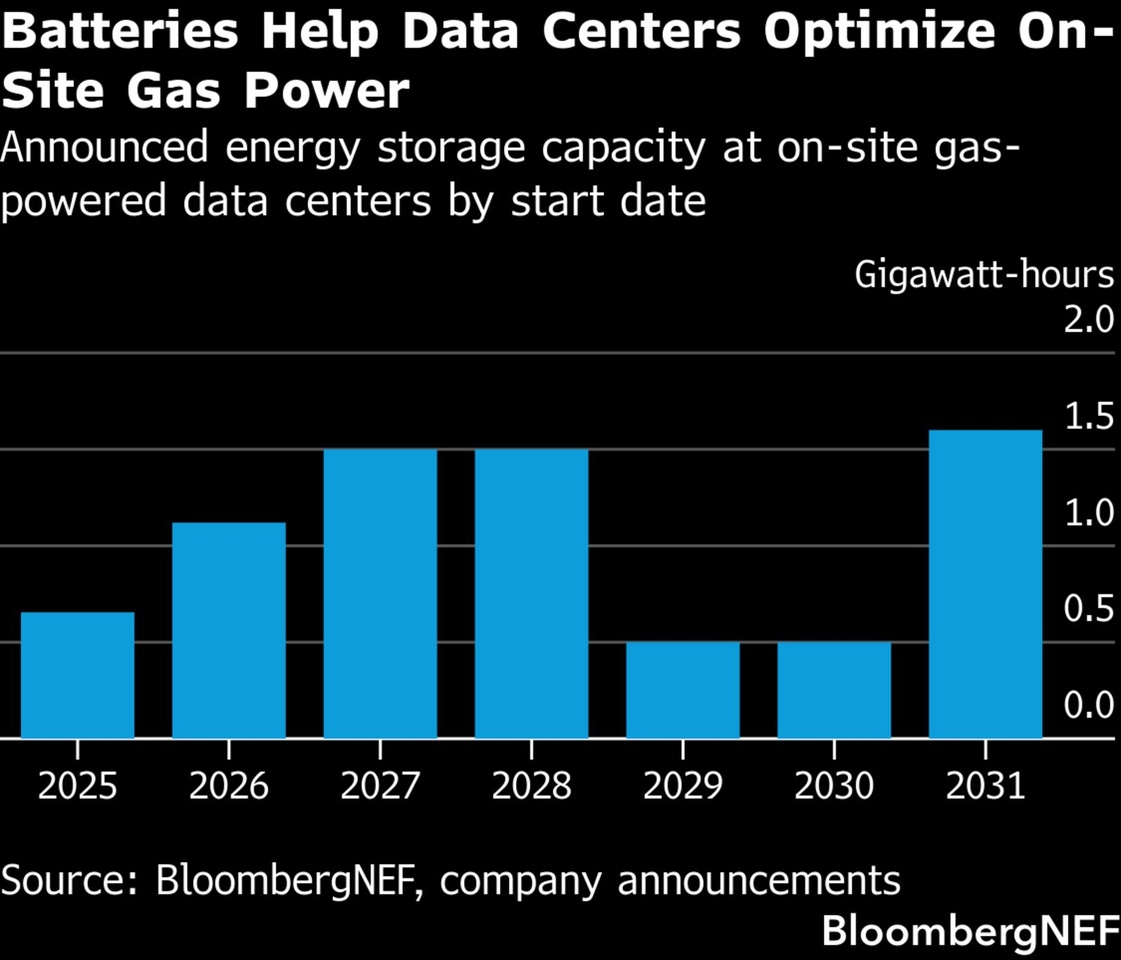
,$• Natural Gas and Battery for supporting energy power.
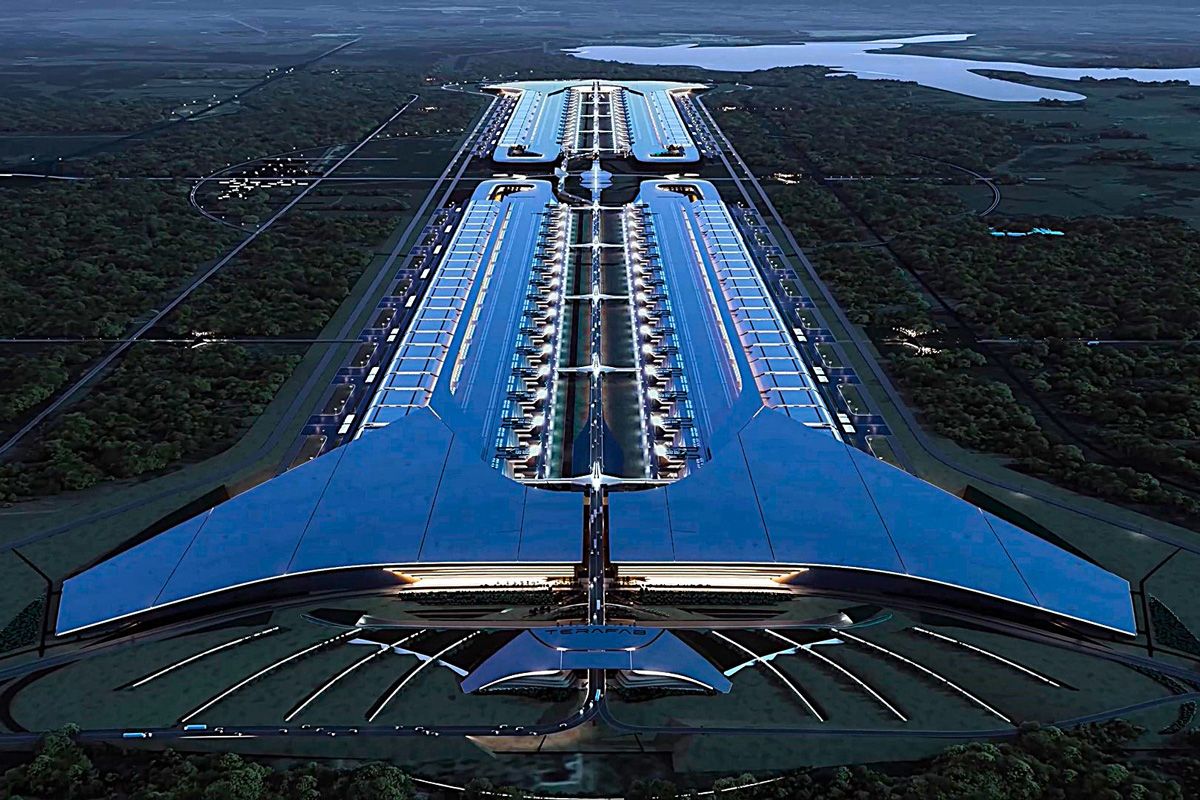
• Tera Fab Projection
+ 1