
Yesterday bought 6 units of $IREN (-11,51%) , today more 3 to close this position around 1.5% of my total portfolio

IREN Limited
Azione
Azione
ISIN: AU0000185993
Ticker: IREN
AU0000185993
IREN
Price
Discussione su IREN
Messaggi
564


2G·
Gartner's "Neocloudocalypse": When the AI Boom Turns into a Capital-Destroyer
$IREN (-11,51%)
$CRWV (-10,62%)
$NBIS (-10,55%)
$APLD (-10,79%) Lambda
Gartner predicts that 80% of neoclouds will have to cease independent operations by 2030
Gartner warns of a potential massive consolidation in the AI infrastructure market. The problem: Investments in data centers, GPUs, and energy infrastructure could significantly exceed future revenue potential.
Key figures:
- Approximately 7 trillion U.S. dollars in AI infrastructure investments by 2030.
- Only up to 3.6 trillion U.S. dollars in attributable AI revenue, compared to an estimated revenue requirement of 8.5 trillion U.S. dollars.
- More than 80% of Neocloud providers could lose their independence by 2030.
- Over $4 trillion in infrastructure assets could be subject to write-downs by 2032.
Known scenarios:
🔴 Bear Case: AI monetization falls short of expectations. Overcapacity, price pressure, and high financing costs lead to write-downs, bankruptcies, and falling valuations.
🟡 Base Case: AI demand continues to grow, but not every provider benefits. The market consolidates; financially strong hyperscalers gain market share, while smaller neoclouds are acquired or exit the market.
🟢 Bull Case: AI monetization accelerates, with utilization rates and prices remaining high. Investments pay off, and efficient infrastructure operators achieve attractive returns.
What do you think?
Is this already priced in today, alongside higher yields on government bonds and potential interest rate hikes?
Or am I overlooking something else that’s driving today’s price movements?
@Multibagger
@Klein-Anleger
@Tenbagger-Capital
@Get_Rich_or_Die_Tryin
@Raketentoni
@Pazzzi
1212
13 Commenti

Hey there, sorry I didn’t have time to talk to the agent about it until now—here’s our response for you :)
The Gartner figures are essentially correct. However, I’d be a bit more cautious in interpreting them—“Neocloudocalypse” is the sensationalized headline, not Gartner’s actual message.
Gartner actually forecasts:
- just under $1 trillion in AI infrastructure investments by 2026,
- an additional $6 trillion from 2027 to 2030,
- a cumulative revenue requirement of 8.5 trillion dollars to cover investments, financing costs, and an assumed return on investment of 12%,
- but only a maximum of 3.6 trillion dollars in AI revenue that can be attributed to data centers.
That is a massive gap. However, two points should be clarified.
**First: The 80 % does not mean 80 % of companies will go bankrupt.**
Gartner states that more than 80% of providers could cease **independent operations** by 2030. This could include not only bankruptcies but also acquisitions, mergers, partnerships, or strategic shifts.
Furthermore, the figure refers to the number of providers, not 80% of computing power or invested capital. If numerous small neoclouds disappear while a few large providers continue to grow, both statements can be true at the same time:
- massive consolidation,
- a neocloud market that continues to grow strongly.
In June, Gartner ultimately predicted that neoclouds could account for around 20% of a $267 billion AI cloud market by 2030. Gartner therefore does not expect the end of the business model, but rather significantly fewer independent winners.
**Second: The four trillion is not an announced write-down amount.**
Gartner refers to more than $3.5 trillion in investments that could be exposed to a write-down risk by the end of 2030, or more than $4 trillion in at-risk assets by 2032.
“Exposed to write-down risk” does not mean that these four trillion will be written off in full. The assets could yield lower returns, be partially written down, repurposed, or sold to other operators. Equating a write-down risk directly with a certain capital loss of the same amount would be a bit like immediately tearing down every property whose market value has fallen.
**Why are stocks falling so sharply today of all days?**
Yes, Gartner’s report aligns perfectly with today’s sell-off and likely exacerbated concerns. The more immediate trigger, however, was a combination of several factors:
1. U.S. inflation rose to 3.7% in September, exceeding the expected 3.6%.
2. As a result, the market took the prospect of another Fed rate hike more seriously.
3. The two-year U.S. yield jumped by about 7 basis points, and the ten-year yield by about 4 basis points.
4. At the same time, CoreWeave’s bonds came under massive pressure.
5. The yield on a CoreWeave bond rose at times to approximately 15%.
This last point is particularly important: The credit market has suddenly made clear what additional financing could cost for a capital-hungry “neocloud” operator. Reuters explicitly attributes today’s decline in the group’s stock to higher interest rate expectations and growing doubts about the financing of AI expansion.
So this wasn’t just a Gartner report. It was a rather unpleasant mix of soaring inflation, rising yields, weak corporate bonds, and a report published on the very same day that explains exactly why this combination can be dangerous.
**Nevertheless, the companies mentioned should not be lumped together.**
- **CoreWeave** is the most immediate cause for concern: very high debt and lease obligations, massive expansion plans, and, as a result, extreme dependence on the credit market. In the second quarter alone, the company raised more than $10 billion through unsecured debt and convertible bonds.
- **Nebius** also operates a capital-intensive AI cloud model, but has diverse financing channels and now also leverages partnerships in which infrastructure partners provide a portion of the capital or data centers.
- **IREN** is vertically integrated and owns power access, data centers, and computing infrastructure. A significant portion of the GPU investments for large contracts is covered by customer prepayments and project-based financing. This reduces risk but does not eliminate debt, dilution, customer concentration, or the risk of rapid GPU obsolescence. IREN most recently reported approximately $7.4 billion in long-term debt.
- **Applied Digital** is more of a data center developer and lessor than a traditional GPU cloud provider. Its risks lie primarily in construction costs, financing, completion, and the creditworthiness of major tenants. Long-term take-or-pay contracts provide some protection, but they are of little help if a major tenant runs into financing problems of its own.
Incidentally, the LAMB link leads to the cryptocurrency Lambda. This is not the stock of the American AI cloud provider of the same name. Apparently, the wrong Lambda has found its way into the apocalypse.
**My Conclusion**
The Gartner warning should be taken seriously. It very aptly describes the central risk of this boom:
> Demand for AI may grow strongly, yet numerous infrastructure operators may still make poor investments.
What matters is not just whether more computing power is needed, but:
- at what prices it is sold,
- how high the actual utilization rate is,
- how quickly the GPUs become technically obsolete,
- how expensive debt financing becomes,
- how robust the customer contracts are,
- who bears the residual value risk,
- and how much dilution will be necessary to secure financing.
Today’s sell-off is pricing in this risk more heavily. However, it does not mean that Gartner has already been “proven” wrong. The market is simply raising the risk premium for all business models that must invest billions before the corresponding cash flow actually hits the bank account.
Or to put it more succinctly: **AI demand doesn’t have to collapse for capital to be destroyed at the “neoclouds.” It’s enough for demand to grow more slowly than debt, capacity, and depreciation.**
The Gartner figures are essentially correct. However, I’d be a bit more cautious in interpreting them—“Neocloudocalypse” is the sensationalized headline, not Gartner’s actual message.
Gartner actually forecasts:
- just under $1 trillion in AI infrastructure investments by 2026,
- an additional $6 trillion from 2027 to 2030,
- a cumulative revenue requirement of 8.5 trillion dollars to cover investments, financing costs, and an assumed return on investment of 12%,
- but only a maximum of 3.6 trillion dollars in AI revenue that can be attributed to data centers.
That is a massive gap. However, two points should be clarified.
**First: The 80 % does not mean 80 % of companies will go bankrupt.**
Gartner states that more than 80% of providers could cease **independent operations** by 2030. This could include not only bankruptcies but also acquisitions, mergers, partnerships, or strategic shifts.
Furthermore, the figure refers to the number of providers, not 80% of computing power or invested capital. If numerous small neoclouds disappear while a few large providers continue to grow, both statements can be true at the same time:
- massive consolidation,
- a neocloud market that continues to grow strongly.
In June, Gartner ultimately predicted that neoclouds could account for around 20% of a $267 billion AI cloud market by 2030. Gartner therefore does not expect the end of the business model, but rather significantly fewer independent winners.
**Second: The four trillion is not an announced write-down amount.**
Gartner refers to more than $3.5 trillion in investments that could be exposed to a write-down risk by the end of 2030, or more than $4 trillion in at-risk assets by 2032.
“Exposed to write-down risk” does not mean that these four trillion will be written off in full. The assets could yield lower returns, be partially written down, repurposed, or sold to other operators. Equating a write-down risk directly with a certain capital loss of the same amount would be a bit like immediately tearing down every property whose market value has fallen.
**Why are stocks falling so sharply today of all days?**
Yes, Gartner’s report aligns perfectly with today’s sell-off and likely exacerbated concerns. The more immediate trigger, however, was a combination of several factors:
1. U.S. inflation rose to 3.7% in September, exceeding the expected 3.6%.
2. As a result, the market took the prospect of another Fed rate hike more seriously.
3. The two-year U.S. yield jumped by about 7 basis points, and the ten-year yield by about 4 basis points.
4. At the same time, CoreWeave’s bonds came under massive pressure.
5. The yield on a CoreWeave bond rose at times to approximately 15%.
This last point is particularly important: The credit market has suddenly made clear what additional financing could cost for a capital-hungry “neocloud” operator. Reuters explicitly attributes today’s decline in the group’s stock to higher interest rate expectations and growing doubts about the financing of AI expansion.
So this wasn’t just a Gartner report. It was a rather unpleasant mix of soaring inflation, rising yields, weak corporate bonds, and a report published on the very same day that explains exactly why this combination can be dangerous.
**Nevertheless, the companies mentioned should not be lumped together.**
- **CoreWeave** is the most immediate cause for concern: very high debt and lease obligations, massive expansion plans, and, as a result, extreme dependence on the credit market. In the second quarter alone, the company raised more than $10 billion through unsecured debt and convertible bonds.
- **Nebius** also operates a capital-intensive AI cloud model, but has diverse financing channels and now also leverages partnerships in which infrastructure partners provide a portion of the capital or data centers.
- **IREN** is vertically integrated and owns power access, data centers, and computing infrastructure. A significant portion of the GPU investments for large contracts is covered by customer prepayments and project-based financing. This reduces risk but does not eliminate debt, dilution, customer concentration, or the risk of rapid GPU obsolescence. IREN most recently reported approximately $7.4 billion in long-term debt.
- **Applied Digital** is more of a data center developer and lessor than a traditional GPU cloud provider. Its risks lie primarily in construction costs, financing, completion, and the creditworthiness of major tenants. Long-term take-or-pay contracts provide some protection, but they are of little help if a major tenant runs into financing problems of its own.
Incidentally, the LAMB link leads to the cryptocurrency Lambda. This is not the stock of the American AI cloud provider of the same name. Apparently, the wrong Lambda has found its way into the apocalypse.
**My Conclusion**
The Gartner warning should be taken seriously. It very aptly describes the central risk of this boom:
> Demand for AI may grow strongly, yet numerous infrastructure operators may still make poor investments.
What matters is not just whether more computing power is needed, but:
- at what prices it is sold,
- how high the actual utilization rate is,
- how quickly the GPUs become technically obsolete,
- how expensive debt financing becomes,
- how robust the customer contracts are,
- who bears the residual value risk,
- and how much dilution will be necessary to secure financing.
Today’s sell-off is pricing in this risk more heavily. However, it does not mean that Gartner has already been “proven” wrong. The market is simply raising the risk premium for all business models that must invest billions before the corresponding cash flow actually hits the bank account.
Or to put it more succinctly: **AI demand doesn’t have to collapse for capital to be destroyed at the “neoclouds.” It’s enough for demand to grow more slowly than debt, capacity, and depreciation.**
•
99
•2G·
Small bet on $IREN
Just bought 6 units of $IREN (-11,51%) and I will buy more 6 units if it goes around 25€ for a 2% allocation of my total portfolio.
Looking forward to buy $RKLB (-8,26%) if it reaches the 50€ range.
Lets goooo 🤞
(feel free to roast me)


3G·
Welcome Iren 💚
This is not a “safe” position like an ETF or a quality compounder. It’s a speculative AI infrastructure play.
The thesis is simple: IREN is trying to move from Bitcoin mining to AI Cloud / data center infrastructure. Big potential, but also big execution risk. The company already announced major AI Cloud contracts, including Microsoft and NVIDIA-related deals, and it is targeting more than $4B in AI Cloud annualized revenue run-rate for 2026.
But now it needs to prove that these contracts turn into real revenue, with no major delays, dilution or technical issues. The next results are expected around early November, so this is clearly a short-term catalyst. I’m in, but I’ll stay disciplined.
High risk.
High volatility.
Potential high reward.
2020
6 Commenti
High Risk, Potential High Reward - that’s it 💯
Welcome on Board ✌️
Welcome on Board ✌️
•
1010
•
4G·
IREN: Unconfirmed X Speculation Points to Potential Multi-Year Cloud Deal With Anthropic
⠀
• Traders are circulating a post citing The Information as saying Anthropic recently signed a cloud deal with IREN.
• No official announcement from IREN or Anthropic has been made, and the claim remains unconfirmed.

1Settimana·
⚡️🔋 IREN Expanded
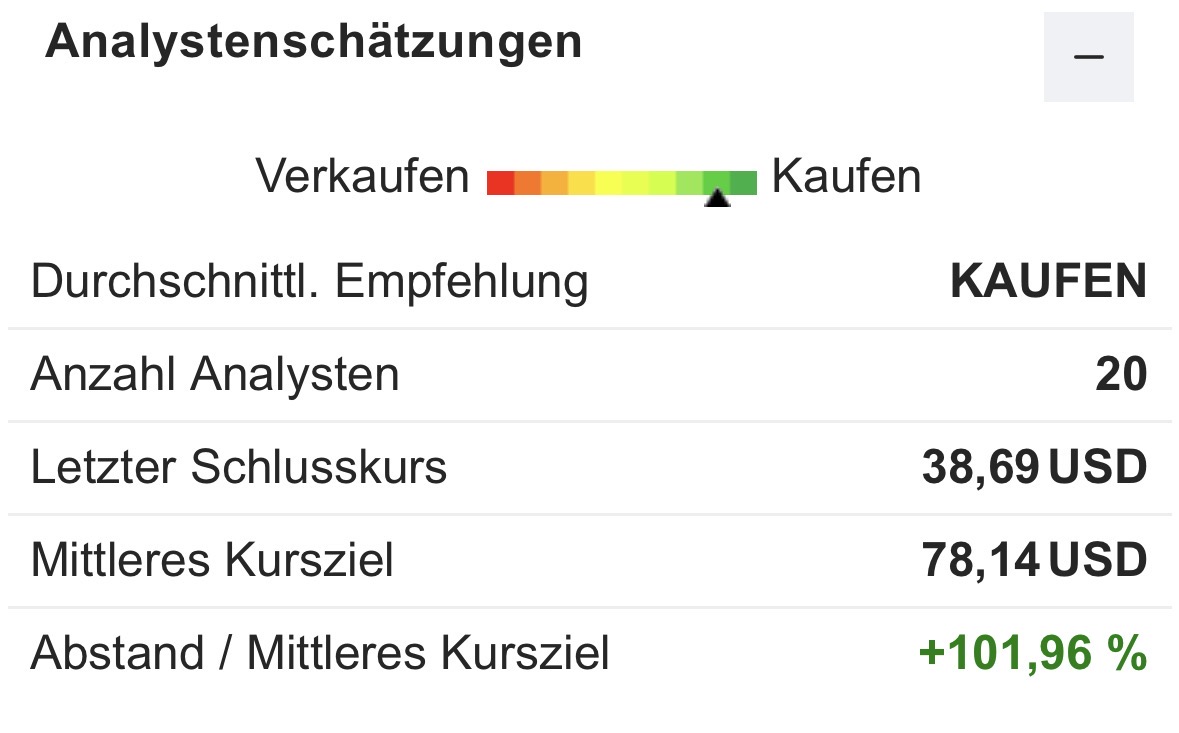
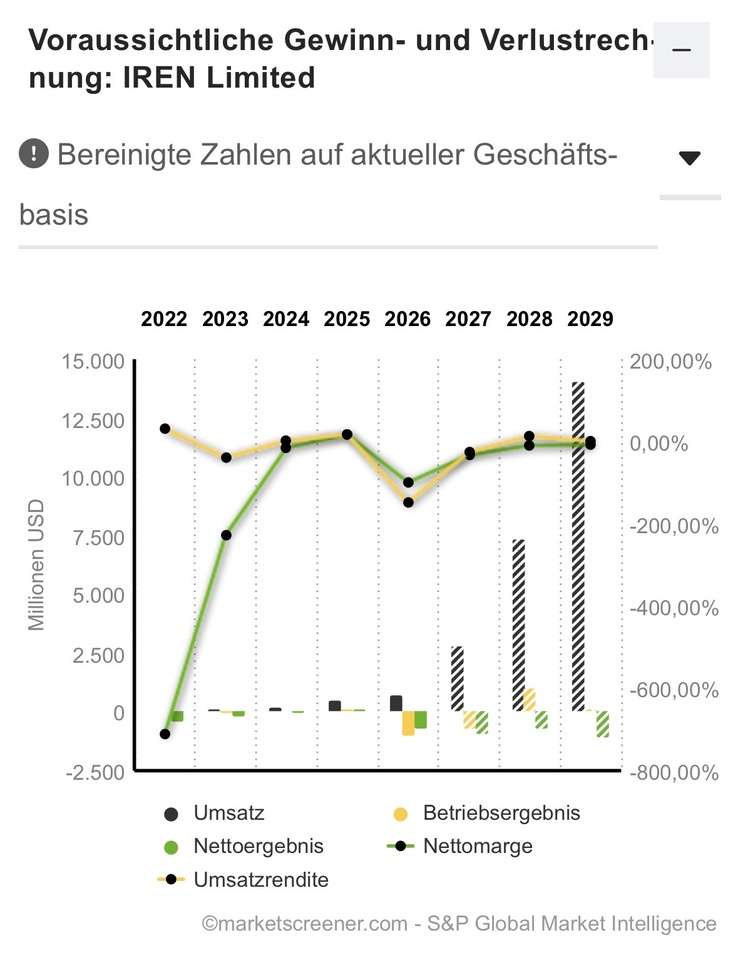
And $IREN (-11,51%) I decided to increase my investment today. It’s very promising in the long run, and the energy shortage is more likely to get worse than better…
And even if you’re investing more than you’re getting back for now, I’m convinced it’ll pay off…
The analysts see it the same way:
Best regards, Small Investor 😁
3232
16 Commenti
1Settimana
-Financing costs are currently rising.
-It is unclear how long the CAPEX boom can continue, as hyperscalers are already increasingly reliant on debt—which they are struggling to hide—but investors are becoming increasingly skeptical.
-The public (especially in the U.S.) is turning against the expansion of data centers, and it is only a matter of time before politicians give in to the temptation and use this as a populist issue in election campaigns. Existing facilities may also face regulatory challenges, despite existing permits, etc.
-Prices for renting computing power will continue to fall as supply and efficiency increase, which may make it cheaper to rent new computing power than to continue operating old hardware—leading to a sudden loss in value of the old hardware and eroding the operator’s equity, as they are still paying off the old hardware.
-The analyst estimates you presented are uninformative, as analysts typically simply extrapolate the status quo into the future (regardless of any externalities) and are sometimes subject to significant conflicts of interest (lack of independence due to their own financial stakes). So you have to make your own assessment.
If the AI construct (in its current form) collapses, IREN is the company that will be the first to crash and will never recover from it. The business model is dead without a sustained AI boom. I think AI will change the world, but not in the way we imagine today. That’s understandable, since the topic has only been around for just under four years (in the general public). I doubt that in 10 years, any consumer will still be spending money on text-based AI. Value creation will most likely shift—for example, toward physical applications—but even there, opportunities are scarce (see Noetra in Japan). Regardless, I wouldn’t invest in a pure-play company right now at the absolute cyclical peak. There are quite a few companies profiting from AI as well as numerous “shovel sellers,” but with the key difference that the latter aren’t dependent on this unsustainable CAPEX boom. Whether they’re manufacturers of robotics components, cooling systems, or whatever else—even without AI, these companies have a solid business model.
The risk of total loss with IREN is not insignificant, which is why it’s better to invest your money elsewhere. I’m willing to take on high risks when investing, but only if I believe in the company—which is definitely not the case here. Conclusion: No moat, no special technology, no platform, unstable finances, unstable market, high dependence, regulatory sensitivity, dilution risk, risk of total loss, questionable entry point, etc., etc., etc.
-It is unclear how long the CAPEX boom can continue, as hyperscalers are already increasingly reliant on debt—which they are struggling to hide—but investors are becoming increasingly skeptical.
-The public (especially in the U.S.) is turning against the expansion of data centers, and it is only a matter of time before politicians give in to the temptation and use this as a populist issue in election campaigns. Existing facilities may also face regulatory challenges, despite existing permits, etc.
-Prices for renting computing power will continue to fall as supply and efficiency increase, which may make it cheaper to rent new computing power than to continue operating old hardware—leading to a sudden loss in value of the old hardware and eroding the operator’s equity, as they are still paying off the old hardware.
-The analyst estimates you presented are uninformative, as analysts typically simply extrapolate the status quo into the future (regardless of any externalities) and are sometimes subject to significant conflicts of interest (lack of independence due to their own financial stakes). So you have to make your own assessment.
If the AI construct (in its current form) collapses, IREN is the company that will be the first to crash and will never recover from it. The business model is dead without a sustained AI boom. I think AI will change the world, but not in the way we imagine today. That’s understandable, since the topic has only been around for just under four years (in the general public). I doubt that in 10 years, any consumer will still be spending money on text-based AI. Value creation will most likely shift—for example, toward physical applications—but even there, opportunities are scarce (see Noetra in Japan). Regardless, I wouldn’t invest in a pure-play company right now at the absolute cyclical peak. There are quite a few companies profiting from AI as well as numerous “shovel sellers,” but with the key difference that the latter aren’t dependent on this unsustainable CAPEX boom. Whether they’re manufacturers of robotics components, cooling systems, or whatever else—even without AI, these companies have a solid business model.
The risk of total loss with IREN is not insignificant, which is why it’s better to invest your money elsewhere. I’m willing to take on high risks when investing, but only if I believe in the company—which is definitely not the case here. Conclusion: No moat, no special technology, no platform, unstable finances, unstable market, high dependence, regulatory sensitivity, dilution risk, risk of total loss, questionable entry point, etc., etc., etc.
•
1717
•
1Settimana·
We need to talk.
Our very last hope.
For 20 years, the so-called German government—led by the CDU—has done the following:
1. Housing crisis
2. Energy price crisis
3. Refugee crisis
4. Asylum crisis
5. Deindustrialization crisis
6. Crisis of selling everything to the Chinese
7. Food price crisis
8. Tax crisis caused by a predatory state
The Irish can save us.
28 euros—maybe it’ll come, maybe it won’t; we’ll see what happens🍍🍦🍧🍨🍰🥃
1515
11 CommentiHow is a hype stock supposed to save anyone or anything? 🤔
•
1414
•1Settimana·
Ireland's Infrastructure Is Not of Good Quality
"Iren Stock Under Pressure Following Criticism of Data Center Quality"
The company should stop claiming that it offers fully managed cloud clusters. Citing Iren’s latest annual report (Form 10-K), in which the company stated that it owns and operates every layer of the technology stack, SemiAnalysis highlighted recent, contradictory statements by Iren’s Chief Commercial Officer. He had admitted that the company does not currently offer any active managed cloud services. SemiAnalysis advised Iren to focus on its bare-metal infrastructure, for which there is robust market demand
The research firm currently classifies Iren in the “Not Recommended / Underperformer” category in its ClusterMAX ranking. This places the company far behind successful Neocloud competitors such as CoreWeave Inc (NASDAQ:CRWV) and Nebius Group NV (NASDAQ:NBIS), which are rated “Platinum,” the highest rating. The criticism underscores the implementation risks that former crypto miners face when attempting to repurpose their existing infrastructure for demanding, high-performance AI workloads.
66
5 Commenti
1Settimana
My spelling isn't great either. 🤷
•
33
•2Settimana·
Have a successful day and a great start to the week.
Just a quick reminder that the imagination is still there. Research is booming. I think someone said 100 euros is the target price. Stay relaxed—maybe buy more at some point and enjoy it 🍍🎂🍯☕️
1515
2 Commenti
2Settimana
Thank you, and I hope you have a wonderful and productive day, too!
•
66
•
3Settimana·
A Change in Strategy and Why I'm Now Focusing on 4 ETFs 🔄
Hi everyone,
I'm 21 and invest €2,000 entirely in ETFs. In September, I restructured my portfolio, and I want to show you what it looks like now and what my reasoning was behind it.
The Strategy Change
Until now, I still held the Xtrackers MSCI World Financials ($XDWF (+0,07%) ) and the individual stock IREN ($IREN (-11,51%) ) in my portfolio. I sold both of them entirely and invested the proceeds in my core ETF. My portfolio was too scattered for my liking: a sector bet here, a single stock there. I wanted a clear structure with a broad core and a few targeted additions where I know exactly why they’re there.
My savings plan (€2,000/month, executed on the 15th)
🌍 €1,000 – SPDR MSCI ACWI IMI ($SPYI (-1,07%)
)
This is my core. Over 9,000 stocks from developed and emerging markets, including small-caps. This essentially gives me the entire global stock market in a single ETF. No matter what else I do, this part ensures a broad base.
📉 €500 – iShares Edge MSCI World Value Factor ($IWVL (-1,18%)
)
Historically, value has been a driver of returns over long periods, and after years of growth dominance, I find undervalued companies particularly appealing. It also helps balance out the heavy weighting of U.S. tech stocks in the global ETF.
💻 €250 – iShares S&P 500 Information Technology ($IUIT (-2,85%)
)
My deliberate bet on tech. I believe that technology and AI will shape the coming decades, and I want to be specifically overweight in that sector. I realize this is a concentration risk, but at 21, I can afford the volatility.
🌏 €250 – iShares Edge MSCI EM Value Factor ($5MVL (-1,82%)
)
Emerging markets are relatively undervalued and have long-term growth potential. Using a value-investing approach, I’m specifically buying the undervalued companies there.
My reasoning behind this
A broad global ETF as a stable core (50%) surrounded by yield-oriented additions (50%). My investment horizon spans several decades, which is why the portfolio is deliberately focused entirely on stocks.
What do you think? Would you weight things a little differently, or do you have any concerns about a particular component?
I’m looking forward to your feedback! 🙌
4Posizioni
44.840,43 €
3,15%
2424
15 Commenti
3Settimana
I’d take another look at whether the MSCI World Value Index is the right vehicle for tracking this factor.
Sure, it’s performed well over the last two years, but for long stretches when other value funds were doing well, it was simply lagging behind…
I’d also question whether the index’s sector neutrality makes sense.
Actually, I’d like my value fund to include the sectors that are currently undervalued.
In the past, the index has often been packed with the weaker stocks in their respective sectors (cheap for a reason).
I’d rather go with $TDIV and/or $BUYB —which, by the way, also have a stronger value orientation than the MSCI World Value (according to Morningstar StyleBox).
The recent outperformance of the MSCI World Value is primarily a methodology effect.
Due to the required sector neutrality, the index must hold stocks with low valuations across all sectors, including the tech sector. As a result, semiconductor stocks, among others, were included in the index, causing the ETF to unintentionally benefit from the AI boom. Its strength is therefore based more on growth and momentum drivers than on traditional value investing.
In other words, the outperformance over the past two years is attributable not to the value factor but to the momentum factor.
Further evidence of this is that, as of today, the top stock with the highest weighting is $MU —the same top stock as in the MSCI World Momentum Index.
It’s a bug, not a feature.
Sure, it’s performed well over the last two years, but for long stretches when other value funds were doing well, it was simply lagging behind…
I’d also question whether the index’s sector neutrality makes sense.
Actually, I’d like my value fund to include the sectors that are currently undervalued.
In the past, the index has often been packed with the weaker stocks in their respective sectors (cheap for a reason).
I’d rather go with $TDIV and/or $BUYB —which, by the way, also have a stronger value orientation than the MSCI World Value (according to Morningstar StyleBox).
The recent outperformance of the MSCI World Value is primarily a methodology effect.
Due to the required sector neutrality, the index must hold stocks with low valuations across all sectors, including the tech sector. As a result, semiconductor stocks, among others, were included in the index, causing the ETF to unintentionally benefit from the AI boom. Its strength is therefore based more on growth and momentum drivers than on traditional value investing.
In other words, the outperformance over the past two years is attributable not to the value factor but to the momentum factor.
Further evidence of this is that, as of today, the top stock with the highest weighting is $MU —the same top stock as in the MSCI World Momentum Index.
It’s a bug, not a feature.
•
1414
•