
GE - General Electric
Price
Discussão sobre GE
Postos
29


𝐆𝐄 𝐀𝐞𝐫𝐨𝐬𝐩𝐚𝐜𝐞: 𝐑𝐚𝐢𝐬𝐞𝐬 𝟐𝟎𝟐𝟔 𝐆𝐮𝐢𝐝𝐚𝐧𝐜𝐞 𝐀𝐟𝐭𝐞𝐫 𝐒𝐭𝐫𝐨𝐧𝐠 𝐐𝟐
📊 𝐑𝐞𝐬𝐮𝐥𝐭𝐬
• Adjusted EPS: $2.02 (Est. $1.86) ✅
• Adjusted revenue: $12.63B (Est. $11.87B) ✅
• GAAP revenue: $13.35B, +21% YoY
• Operating profit: $2.75B, +18% YoY
• Free cash flow: $3.03B, +43% YoY
⠀
🎯 𝐆𝐮𝐢𝐝𝐚𝐧𝐜𝐞
• Raised FY26 adjusted EPS guidance to $7.65–$7.85 (Prev. $7.10–$7.40)
• Raised FY26 operating profit guidance to $10.55B–$10.75B (Prev. $9.85B–$10.25B)
• Raised FY26 free cash flow guidance to $8.9B–$9.2B (Prev. $8.0B–$8.4B)
⠀
📌 𝐊𝐞𝐲 𝐓𝐚𝐤𝐞𝐚𝐰𝐚𝐲𝐬
• Total orders increased 17% to $16.5B, with Commercial Engines & Services revenue up 27% and Defense & Propulsion revenue up 16%
• Commercial services remained the key growth driver, while total engine deliveries increased 31% in the first half, including LEAP deliveries up 41%
• Backlog exceeded $210B as the company continued investing in next-generation propulsion technologies while improving supply chain output
⠀
💬 𝐌𝐚𝐧𝐚𝐠𝐞𝐦𝐞𝐧𝐭 𝐂𝐨𝐦𝐦𝐞𝐧𝐭𝐚𝐫𝐲
CEO Larry Culp said strong commercial services demand and continued operational improvements drove another quarter of revenue and EPS growth above 20%. With strong first-half execution and improved visibility, the company raised guidance across the board while remaining focused on executing its more than $210B backlog and investing in technologies that improve engine durability and customer value.

Apr 15 / Will This Be A Trend-Setting Earnings Season?
Earnings season is fully underway now, and today I want to focus on what actually matters over the coming week. We’ve already had some heavy hitters reporting, most notably large banks like JPMorgan, Goldman Sachs and Citi. Overall, results were solid, with beats across the board.
One of my more recent holdings, BlackRock, also reported earlier this week. There was nothing out of the ordinary, just a strong quarter as expected, and the stock rebounded sharply, which puts my position roughly 10% in the green. The stock had been caught between private credit fears and a possible global energy crisis, but this latest report has reminded investors, once again, of the business’ strength. However, next week is where things get even more interesting for me personally.
The key question is how the so-called “SaaSpocalypse” will actually show up in the numbers. So far, even the seemingly most vulnerable platforms like Adobe are still delivering consistent growth with no real signs of weakness. Let’s see if that can continue, or if the “AI kills software” narrative survives another round.
Big names reporting next week include ServiceNow, Salesforce and SAP, all of which are deeply integrated ecosystems that keep multi-billion-dollar companies running. So as a shareholder, I wouldn’t worry too much. I actually considered adding to my already considerable ServiceNow position at $80, but before I could, the stock spiked again. Better luck next time, I guess.
Another area worth watching next week are brokers and exchanges like IBKR, CME and Nasdaq, which should give a fairly clean read on market activity. And of course, the “real” economy will be a major factor as well. Companies like General Electric, Boeing and D.R. Horton should give a better indication of how things are actually holding up, beyond what certain figures in the White House would like people to believe.
That’s the outlook for the early stages of this current earnings season. The most important reports, especially the ones I’m personally exposed to, will come later in the cycle and I’ll cover those separately.
On a more personal note, and don’t take this too seriously though, there is one company where I wouldn’t mind seeing a bad quarter, and that’s Intuitive Surgical. For a very simple reason: I want to buy it, but the valuation is still at exorbitant levels. Quite similar to Axon actually.
$JPM (+0,13%)
$GS (+0,21%)
$C (-0,04%)
$BLK (+0,25%)
$CRM (+0,14%)
$NOW (+0,19%)
$SAP (+0,21%)
$IBKR (+0,57%)
$CME (+0,16%)
$NDAQ (+0,91%)
$GE (+0,06%)
$BA (+0,29%)
$DHI (+0,04%)
$ISRG (-0,08%)
$AXON (+0,19%)


Morningstar Best Stocks to own 2026
$ (+0,12%)TYL (+0,12%)
$GE (+0,06%)
$GD (+0,22%)
$CHRW (+0,1%)
$ROL (+0,13%)
$TW (+0,26%)
$CSGP (-0,07%)
$RKT (+1,03%)
$CLX (+0,33%)
$ROST (+0,52%)
$FAST (+1,02%)
$CSCO (+0,42%)
$YUMC (+1,25%)
$KOF (+0,24%)
$ORLY (+0,55%)
$KO (+0,23%)
$RY (+0,13%)
$MDLZ (+0,19%)
$IMBBY (+0,6%)
$A (+0,22%)
$IDXX (+0,12%)
$SONY (+0,9%)
$MSCI (+0,16%)
$SYY (+0,14%)
$VLTO WI (+0,14%)
$DPZ (+0,37%)
$IDEX (+0,84%)
$VRSN (+0,18%)
$COST (-0,18%)
$ITT (+0,2%)
$SHW (+0,27%)
$EPD
$SIE (+0,55%)
$CP (-0,04%)
$CTAS (-0,04%)
$ROG (-0,72%)
$BK (+0%)
$CNR (+0,12%)
$PM (-0,6%)
$TSM (+0,13%)
$ITW (+0,14%)
$APD (-0,09%)
$PG (+0,07%)
$AAPL (-0,19%)
$BAC (+0,19%)
$CPB (-0,02%)
$VRSK (-1,77%)
$HSY (+0,12%)
$GWRE (+0,64%)
$HII (+0,1%)
$GSK (+0,27%)
$SBUX (+0,22%)
$ALLE (+0,04%)
$INTU (+0,02%)
$MSI (+0,16%)
$GWW (+0,17%)
$UNP (+0,16%)
$WCN (+0,07%)
$WM (+1,11%)
$NOC (+1,39%)
$CAT (+0,12%)
$PAYX (-0,21%)
$ADP (+0,1%)
$MCO (+0%)
$SPGI (+0,07%)
$NDSN (+0,12%)
$WMT (-0,19%)
$OTIS (+0,64%)
$CL (+0,56%)
Best Companies to Own: Methodology
The companies on this list are covered by Morningstar Research Services’ equity analysts and have shares available to US investors. This means that Morningstar equity analysts have calculated fair value estimates for the shares of the companies that trade on US exchanges. As a result, most of the companies on this list are based in the US.
Within that coverage list, the best companies meet the following criteria:
- Wide Economic Moat. The Morningstar Economic Moat Rating summarizes the length of a company’s competitive advantages. An economic moat is a structural feature allowing a firm to generate excess profits over a long period. If Morningstar Research Services believes that excess returns will persist for 20 years or more, that company earns a wide moat rating.
- Standard or Exemplary Capital Allocation.The stock’s Morningstar Capital Allocation Rating is an assessment of the quality of management’s capital allocation, with particular emphasis on the firm’s balance sheet, investments, and shareholder distributions. Capital allocation is judged from an equity shareholder’s perspective, considering companies’ investment strategy and valuation, balance-sheet management, and dividend and share buyback policies on a forward-looking basis. A company can receive an Exemplary, Standard, or Poor Capital Allocation Rating.
- Low or Medium Fair Value Uncertainty. The fair value Morningstar Uncertainty Ratingrepresents the predictability of a company’s future cash flows and, therefore, the level of certainty in the fair value estimate of that company. The Uncertainty Rating for a company can be Low, Medium, High, Very High, or Extreme. It captures a range of likely potential intrinsic values for a company based on the characteristics of the business underlying the stock, including such things as operating and financial leverage, sales sensitivity to the economy, product concentration, and other factors. The more predictable cash flows, the smaller the range of potential intrinsic values, the lower the uncertainty.
What Gives a Company an Economic Moat?
Companies with moats have one or more of the following characteristics:
- Network Effect. Lots of people are using the service, which then makes the service more valuable to the people who use it.
- Intangible Assets. Patents, brands, regulatory licenses, and other intangible assets can prevent competitors from duplicating a company’s products or allow the company to charge a significant price premium.
- Cost Advantage. Firms with a structural cost advantage can either undercut competitors on price while earning similar margins or charge market-level prices while earning relatively high margins.
- Switching Costs. When it would be too expensive or troublesome to stop using a company’s products, the company often has pricing power.
- Efficient Scale. When a niche market is effectively served by one or a small handful of companies, there is no room or incentive for potential competitors to enter the market.
To maintain analysts’ independence, Morningstar Research Services does not publicly rate its parent company Morningstar Inc. Therefore, Morningstar, Inc. is not on the list of the best companies available to US investors.
https://www.morningstar.com/stocks/best-companies-own-2026-edition

Energy 4.0 - The foundation of a new industry Part 1.2
Good morning, dear getquin community.
I've been looking closely at the CSP hybrid ecosystem from China recently and heard an interesting contribution from futurologist Lars Thomsen. Today I would like to tell you why I think this system is one of the most exciting energy projects of the coming years. I don't want to withhold the results of this research from you.
Before we get into the topic, a quick word about the last post.
Thank you for your strong interaction, support, likes and participation. It was good to see that so many of you sent a clear signal to getquin to finally get things moving. It was just as nice to see that it @Tenbagger2024 motivated you to carry on and give new impetus. It's moments like this that keep the community together.
Speaking of momentum.
Today I'm giving you a new one. Because what is currently being built in China is more than just an energy project. It is a blueprint for an infrastructure that, in my eyes, puts coal and nuclear power plants in the shade.
Before we start, a quick note. I already wrote a first post on this topic. I'm now building on this, but in a much more comprehensive, clearly structured way and with more details so that the connections are easier for you to grasp.
I also @SAUgut777 had already addressed the topic back then, so I would like to mention him here as well. I'm including the link to my earlier article, China is reshaping the sun and Energy 4.0 Part 1. https://getqu.in/OIMCfh/
https://getqu.in/G4f1Tk/
The global energy transition will not be won by individual technologies but by integrative systems that have to fulfill two decisive factors: Scalability and base load capability . What we are currently seeing in China is the construction of the most modern energy infrastructure that radically solves the decades-old problem of solar and wind volatility. Not with wind turbines and solar panels alone, but with a system that supplies base load, integrates storage and enables scaling. The centerpiece is the CSP Hybrid Ecosystemin which solar thermal energy, photovoltaics and gigantic battery storage units are combined to create a continuous 24/7 power source power source.
Technically explained: The new paradigm is the CSP hybrid ecosystem. It combines the rapidly erected photovoltaic (PV) fields with the thermal storage of Concentrated Solar Power (CSP) plants and complements both with massive Battery Energy Storage System (BESS). This intelligent coupling provides stable electricity 24 hours a day, 7 days a week and makes the system a direct and superior competitor to coal and nuclear power.
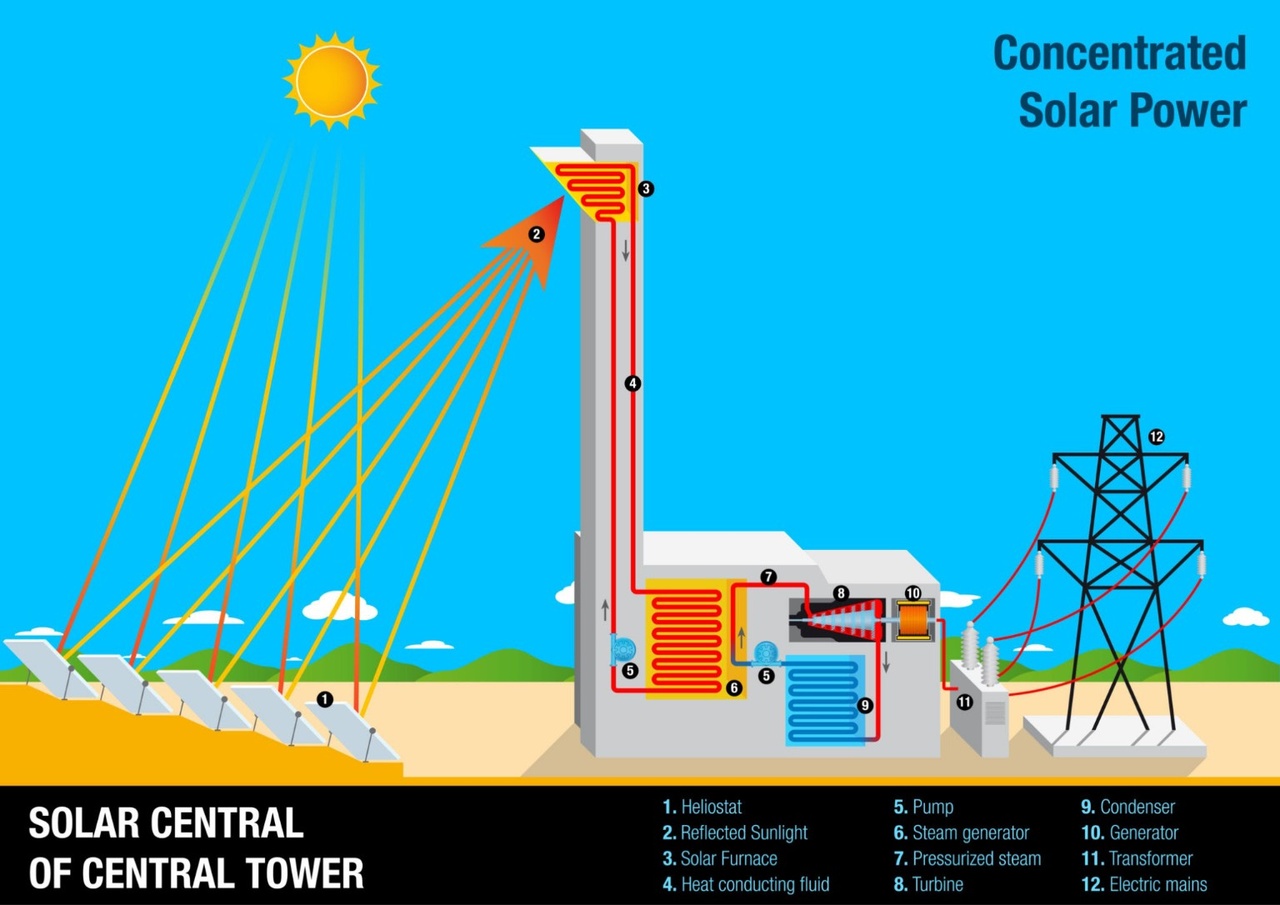
How the system works
1. mirrors collect sunlight
The surface at the bottom left consists of many movable mirrors (heliostats, point 1).
They are constantly aligned with the sun and focus the light onto the top of the tower (reflected sunlight, point 2).
2. the tower heats a heat medium
The solar oven (3) is located at the top of the tower.
There, the concentrated light hits a system of pipes through which a heat-conducting fluid runs (typically molten salts or oil).
This fluid becomes extremely hot, often several hundred degrees (4).
3. heat is converted into vapor
At the bottom of the building, the hot fluid transfers its energy to water in the steam generator (6), turning it into steam under high pressure (7). Pumps (5) keep the cycle going: hot fluid → cooled fluid → back up into the tower.
4. turbine and generator produce electricity
The pressurized steam drives a turbine (8). The turbine is connected to a generator (10), which converts the mechanical energy into electricity.
5. steam is liquefied again
The steam then enters the condenser (9), cools down and becomes water again. Then it goes back into the steam generator.
6. feed into the power grid
The electricity is brought to a higher voltage via a transformer (11) and fed into the grid via the high-voltage lines (12).
The gigawatt comparison and the true added value. A modern nuclear power plant constantly supplies around 1 GW to 1.6 GW of power. This output is continuous but extremely expensive, inflexible and ties up capital for over a decade. A CSP hybrid park in the Chinese desert can achieve a peak output of 5 GW. However, the real added value is the guaranteed base load capacity of 1 GW to 3 GW that can be called up 24/7 thanks to integrated thermal storage and batteries. This intelligent coupling provides stable electricity and makes the plant a direct and superior competitor to coal and nuclear power. This is the disruptive difference: the new generation delivers the same necessary base load but with much higher capital efficiency and 10 years shorter construction time. This makes nuclear power plants an outdated investment model.
The economic key lies in China Speed. It takes ten to 15 years for a nuclear power plant to produce any electricity at all. The Chinese mega bases reach base load capability in 18 to 24 months. This rapid time to market reduces capital costs and raises profitability to a level that is unattainable for traditional power generation.
🌍 Globalization of the Sun Belt: 8 investment pillars
China is exporting the hybrid model to the entire global sunbelt. MENA, North Africa, South America, Australia and Central Asia are among the new core markets. The pipeline is growing every year. The investment opportunities lie in the 8 fundamental pillars that make this infrastructure possible:
1. optics and mirror technology - These companies provide the optical basis for every CSP park
Big players
$SGO (+0,38%) Saint-Gobain (EPA: SGO) - France - World leader in specialty glass and high-tech materials. Supplies glass solutions and coatings for heliostats and CSP mirror systems.
Schott AG - Germany, private - Specialty glass and receiver tubes for many of the existing CSP plants. Key role in collector efficiency and lifetime.
Hidden champions
Rioglass Solar - Spain, private - Market leader for curved mirrors and receiver components especially for CSP parks. Strong in projects in Spain, MENA and Latin America.
Flabeg FE - Germany, private - High-precision mirrors for solar thermal energy. Supplies optics that directly determine the efficiency of power plants.
$000012 CSG Holding - China, Shenzhen - Large Chinese glass manufacturer with a growing focus on solar and CSP glass products.
2. storage chemistry and thermal media - They supply the chemical storage media for molten salt storage and heat transfer
Big player
$NTR (+0,11%) Nutrien (NYSE: NTR / TSX: NTR) - Canada - One of the largest fertilizer and nitrate suppliers in the world. Supplies nitrates for thermal storage and molten salt mixtures.
$YAR (+0,24%) Yara International (OSE: YAR) - Norway - Global fertilizer company. Produces nitrates and nitrogen chemicals that can be used in molten salt storage facilities.
$OCI (+0,24%) OCI N.V. (AMS: OCI) - Netherlands - Produces hydrogen and natural gas-based products, including nitrogen chemicals for thermal storage solutions.
Hidden Champions
$SQM (+0,19%) Sociedad Química y Minera (NYSE: SQM) - Chile - Lithium and specialty chemicals producer. Supplies lithium and nitrate salts for battery and thermal storage.
$MIN (+0,36%) Mineral Resources (ASX: MIN) - Australia - Combines lithium mining and processing. Important for lithium-based storage chains.
$SOLB (+0,28%) Solvay (EBR: SOLB) - Belgium - Specialty chemicals and heat transfer fluids, relevant for CSP and storage applications.
3. battery and energy storage systems (BESS) - The combination of BESS and thermal storage is the real 24/7 engine of CSP parks
Big player
$3750 (-2,11%) CATL - China - World market leader for EV batteries and large-scale storage. Supplies complete BESS systems for grids and CSP hybrid parks.
$1211 (+0,4%) BYD Co Ltd - China - Integrated battery and system provider. Provides energy storage systems for industrial and utility-scale applications.
$373220 LG Energy Solution (KRX: 373220) - South Korea - Global cell supplier with a strong focus on high-performance cells for e-mobility and stationary storage.
$SMSN (-0,82%) Samsung SDI (KRX: 006400) - South Korea - Premium cells and modular storage solutions for grid and industrial applications.
Hidden Champions
$FLNC (+0,96%) Fluence Energy (NASDAQ: FLNC) - USA - Joint venture between Siemens Energy and AES. Market leader in turnkey large-scale storage projects and operating software.
Powin Energy - USA, private - System integrator for utility-scale storage with a strong presence in North America and Asia.
$300274 Sungrow Power Supply (SZSE: 300274) - China - Well-known for inverters, growing strongly in the area of integrated BESS solutions for large-scale projects.
4. HVDC, cables and power transmission - HVDC turns desert power into exportable base load power
Big player
$HTHIY (+2,82%) Hitachi Energy - Switzerland / Japan, part of the Hitachi Group $HTHIY - World leader in HVDC converters, substations and grid control.
$PRY (+1,44%) Prysmian (BIT: PRY) - Italy - Largest manufacturer of high-voltage cables and submarine cables, central role in European HVDC projects.
$NEX (+0,79%) Nexans (EPA: NEX) - France - Specialized in power and submarine cables, important for long-distance transmission of desert electricity to Europe.
$ABBN (+1,04%) ABB (SWX: ABBN) - Switzerland - HVDC converters, switchgear and grid automation for large-scale projects.
Hidden Champions
$NKT (+0,31%) NKT A/S (CPH: NKT) - Denmark - Cable specialist with a focus on high-voltage and offshore wind connections.
Taihan - South Korea, private - Major Asian manufacturer of high-voltage cables with a growing export share.
$ANA (+0,29%) Acciona (BME: ANA) - Spain - Not only EPC, but also active in grid connections and infrastructure for large-scale renewable projects.
5. hydrogen and Power-to-X - Surplus electricity from hybrid parks is processed into green hydrogen
Big player
$LIN (-0,18%) Linde plc (NASDAQ: LIN) - Ireland / global - The world's largest industrial gases group. Plans, builds and operates large-scale electrolysis and liquefaction plants for green hydrogen.
$NCH2 (+0,16%) thyssenkrupp nucera (XETRA: NCH2) - Germany - Specialist for multi-gigawatt scale alkaline electrolyzers, key supplier for industrial H2 projects.
$NEL (-0,26%) Nel ASA (OSE: NEL) - Norway - Pure hydrogen player with focus on electrolyzers and H2 tank infrastructure.
Hidden Champions
$PLUG (+1,2%) Plug Power (NASDAQ: PLUG) - USA - PEM electrolysis, fuel cells and H2 infrastructure, increasingly involved in large-scale projects.
$BE (+0,47%) Bloom Energy (NYSE: BE) - USA - Develops higher efficiency solid oxide electrolyzers for industrial H2 generation.
$ITM (+2,25%) ITM Power (LSE: ITM) - United Kingdom - Focused on utility-scale PEM electrolysis, strong in European project business.
$HPUR (+0,37%) Hexagon Purus (OSL: HPUR) - Norway - Specialist in high-pressure tanks and transportation solutions for compressed hydrogen.
6. EPC, engineering and construction - These companies enable construction in less than two years
Big players
$601669 Power Construction Corporation of China (SSE: 601669) - China - One of the largest engineering and construction groups in the world. Builds dams, large-scale PV and CSP plants, including grid connection.
$601727 Shanghai Electric Group (SSE: 601727) - China - Full-service provider for CSP, turbines, storage integration and EPC services.
$ANA (+0,29%) Acciona (BME: ANA) - Spain - Global EPC player for solar, wind and CSP, strong in MENA and Latin America.
Hidden champions
SEPCO III - China, private - Highly specialized EPC for large power plants and CSP projects, often partner in Saudi Arabia and North Africa.
$WOR (+0,88%) Worley Limited (ASX: WOR) - Australia - Engineering and project services provider for energy infrastructure, including hybrid and storage projects.
$3996 (-1,68%) China Energy Engineering Corp (HKEX: 3996) - China - Large state-owned EPC group, active in the development of solar and grid projects in Asia, Africa and MENA.
7. turbines and power plant technology - CSP Hybrid is ultimately based on modern thermal power technology, only climate neutral
Big player
$ENR (+0,75%) Siemens Energy (XETRA: ENR) - Germany - Turbines, generators, switchgear and grid solutions. Core supplier for the thermal side of CSP hybrids.
$GE (+0,06%) General Electric (NYSE: GE) - USA - Steam turbines and power plant technology used directly in hybrid farms and thermal storage systems.
Hidden champions
$1072 (+2,52%) Dongfang Electric (HKEX: 1072) - China - Major turbine and power plant equipment supplier, strong in domestic market and MENA project.
$1133 (+2,92%) Harbin Electric (HKEX: 1133) - China - Manufacturer of turbines, generators and power plant components, active in large-scale conventional and renewable power plants.
8. blade manufacturers and construction materials for CSP hybrid parks
8.1 Construction and mining equipment
Big Player
$CAT (+0,12%) Caterpillar (USA, NYSE: CAT) - World's largest manufacturer of construction and mining equipment, dozers, excavators, dump trucks, generators. Provides heavy equipment for earthmoving, foundation construction and park infrastructure.
$6301 (+0,23%) Komatsu (Japan, TSE: 6301) - Number two worldwide in construction and mining equipment. Excavators, wheel loaders, large dump trucks and special machines used in desert projects and large construction sites.
$SAND (+0,17%) Sandvik (Sweden, OMX: SAND) - Drilling technology, rock processing, wear parts. Important for foundation construction, cable routes and the raw materials side of the value chain.
$EPI A (-0,49%) Epiroc (Sweden, OMX: EPI A) - Drilling rigs and underground equipment, wherever CSP infrastructure is built on difficult terrain.
Hidden champions
$6305 (+1,41%) Hitachi Construction Machinery (Japan, TSE: 6305) - Strong presence in Asia and MENA, large excavators and wheel loaders for deserts and large construction sites.
$DE (-0,24%) Wirtgen Group / John Deere $DE (USA) - Road construction, milling, compaction. Benefit from the expansion of access roads, platforms and logistics around CSP parks.
8.2 Steel, tubes and sections
Big player
$MT (+0,25%) ArcelorMittal (Luxembourg, NYSE: MT) - Global steel group with flat and long products. Supplies beams, sections and structural steel for tower structures, racks and infrastructure.
$5401 (-0,14%) Nippon Steel (Japan, TSE: 5401) - High-quality steel for energy and infrastructure applications, including heat-resistant steels.
$TEN (+0,16%) Tenaris (Luxembourg/Argentina, NYSE: TS) - Leading manufacturer of seamless steel tubes for energy, pipelines and high-pressure systems. Relevant for heat exchanger circuits, media pipelines and infrastructure in the CSP environment.
$VK (+0,22%) Vallourec (France, EPA: VK) - Specialty tubes and high-performance steels for energy projects, including high-temperature pipelines.
Hidden Champions
$5411 (+0,52%) JFE Holdings (Japan, TSE: 5411) - steels and tubes for large-scale projects, with a focus on Asia.
$TUB (+0,18%) Tubacex (Spain, BME: TUB) - Seamless stainless steel tubes for high temperature and corrosive environments, directly relevant for CSP heat and process piping.
$NXT Nextpower (USA) - Steel-intensive tracker systems for PV fields. Important in hybrid parks where PV and CSP are combined.
$ARRY (-0,75%) Array Technologies (USA) - Similar to Nextracker, focus on utility-scale tracking systems.
8.3 Cement, concrete and construction chemicals
Big player
$HOLN (+0,06%) Holcim (Switzerland, SIX: HOLN) - The world's leading supplier of cement and concrete. Supplies foundation concrete, specialty mortars and infrastructure construction materials for major projects, including desert locations.
$HEI (+0,19%) Heidelberg Materials (Germany, Xetra: HEI) - Strong player in Europe, North Africa and Asia. Cement, concrete and aggregates for foundations, turbine houses, storage blocks.
$CX (+0,28%) Cemex (Mexico, NYSE: CX) - Globally active in cement and concrete, supplier for infrastructure in MENA and the Americas.
$CRH (+0,07%) CRH plc (Ireland, NYSE: CRH) - Building materials group with a focus on infrastructure, road construction and precast concrete products.
Hidden Champions
$ULTRACEMCO UltraTech Cement (India, NSE) - Largest cement manufacturer in India, relevant for CSP projects in the subcontinent and neighboring regions.
Votorantim Cimentos (Brazil, private / regionally listed) - Strong supplier in Latin America with a direct link to infrastructure and energy projects.
8.4 Industrial components, heat exchangers and process equipment
Big player
$ALFA (+0,23%) Alfa Laval (Sweden, OMX: ALFA) - Heat exchangers, pumps and separators. Key components for thermal storage, steam generation and process heat in CSP plants.
$FLS (+0,24%) Flowserve (USA, NYSE: FLS) - Pumps, valves and sealing systems for high-temperature and high-pressure circuits in energy plants.
$SPX (+0,29%) Spirax Group (UK, LSE: SPX) - Steam and condensate technology, control valves and heat exchange systems, important for the fine control of thermal circuits.
Hidden champions
$IMI (+0,28%) IMI plc (UK, LSE: IMI) - Specialty valves and control technology for the energy and process industries, especially for demanding media.
$KSB (+0,12%) KSB SE (Germany, Xetra) - Pumps and valves for the energy, water and process industries. Suitable for cooling water, heat transfer media and storage systems in CSP parks.
🎯 Conclusion and outlook
The CSP hybrid ecosystem eliminates the weaknesses of renewable energies and uses China Speed as an economic lever. This combination creates a capital efficiency that will overtake traditional energy generation in the long term. The investment opportunities range from the Asian battery giants to the European HVDC specialists.
The fundamental question is whether European regulators can adjust the speed of permitting procedures to allow the continent to keep up with the pace of the Sahara projects and the European EPC companies operating there, or whether the continent will be left behind in terms of energy self-sufficiency.
Takeaway
The real investment case lies in the efficiency superiority of the CSP hybrid system. The ability to provide gigawatts of base load within two years, coupled with thermal storage and BESS, makes this infrastructure one of the strongest energy models of the future. This benefits optics, chemistry, BESS, HVDC, hydrogen, EPC and turbine manufacturers.
Sources: own research + IEA, IRENA, NREL, Fraunhofer ISE, SolarPACES, World Bank, Ember Climate, company reports & technical documentation of the companies mentioned.
Image: https://videos.winfuture.de/27754.mp4
Getty Images, Illustrative image - JLStock / Shutterstock.com


Oct 23 / General Electric — The Empire Rebuilt
A dissolved conglomerate stronger than ever before
There was a time in American history when the name General Electric meant everything — light bulbs, trains, finance, jet engines, and a bit of everything in between. Founded by a few of the most notable men of the 19th and 20th centuries, including Thomas Edison and J.P. Morgan, for decades the company stood for American innovation and success. Then came two decades of chaos, overexpansion, and near self-destruction. The GE of today, though, looks nothing like that bloated behemoth. It’s leaner, clearer, and, frankly, one of the most exciting industrial transformations of our time. This post has nothing to do with my portfolio, but GE’s transformation is one of the most exciting stories in U.S. business history.
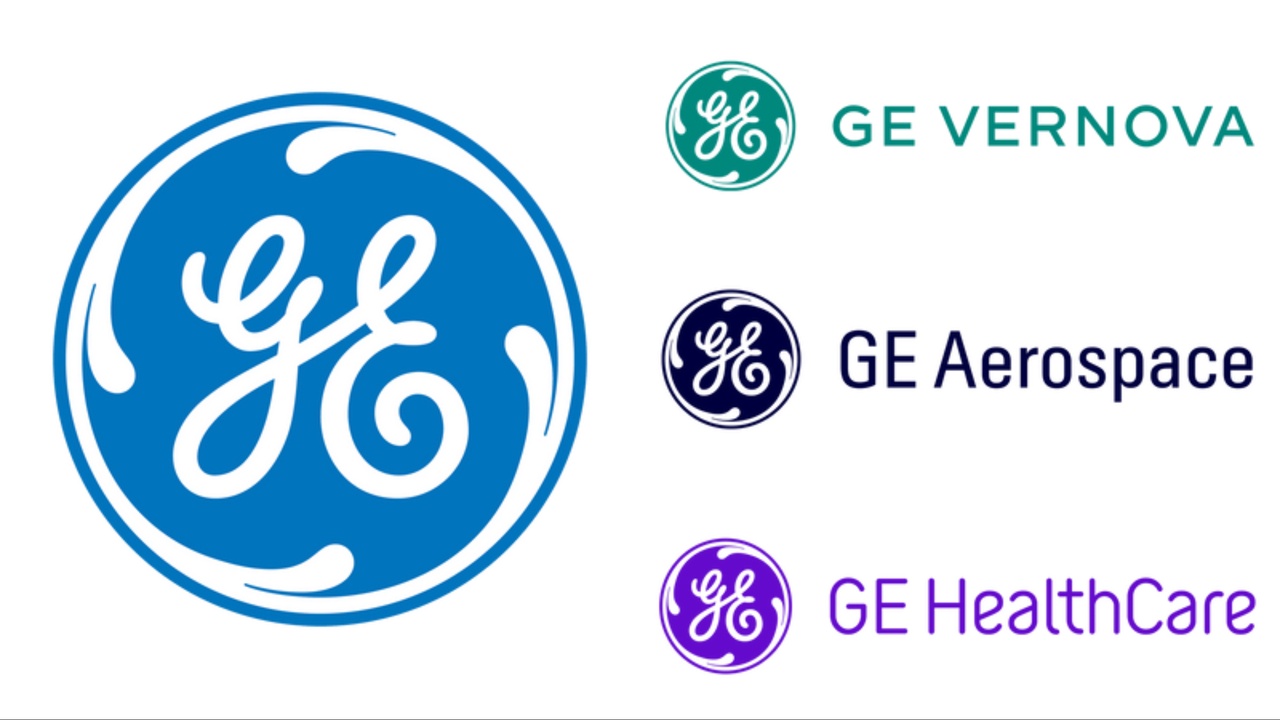
Last year, GE finally completed an inevitable split into three world-class businesses, each strong enough to stand on its own: GE Aerospace, GE Vernova, and GE Healthcare — three independent pillars that together are worth north of half a trillion dollars in market cap. What was once the symbol of American corporate confusion has turned into a showcase of strategic clarity.
Let’s start with the crown jewel and investors’ favorite: GE Aerospace. With a market cap around $315 billion, it’s not just GE’s largest child, it’s the engine room of modern aviation. Literally. It powers most of the world’s commercial fleets through partnerships with Boeing and Airbus and maintains a near-duopoly with Rolls-Royce and Pratt & Whitney. Demand is surging as airlines rebuild capacity post-COVID, and engine replacement cycles stretch for decades. Airbus and Boeing have order books filled for decades, and GE Aerospace profits from every single one of them. But contrary to the two manufacturing behemoths, GE is largely recession-proof. Even if orders slow, GE’s services will always be needed. It’s a compounding machine equipped with long-term contracts, recurring service revenue, and a backlog so large it would make Rheinmetall jealous. Aerospace is not just growing — it’s booming.
Then comes GE Vernova, the newest and arguably most innovative piece. With a valuation around $155 billion, it’s GE’s bet on the energy transition. Vernova covers everything from gas turbines to renewables and grid infrastructure. What makes it fascinating is the dual exposure: it earns cash from legacy energy while scaling renewables at record speed. The world’s massive push toward decarbonization is turning Vernova into an unprecedented industrial growth story. Its mix of predictable cash flow and clean-energy momentum is the kind of combination that gives long-term investors goosebumps. Politics don’t affect Vernova, because it plays both sides and can easily shift depending on the region.
And then there’s GE Healthcare, the quiet one. Valued at around $35 billion, it hasn’t had the same explosive trajectory as its siblings. The business remains solid — MRI, CT, and diagnostic equipment are steady earners — but growth has lagged. Margins are thinner, innovation cycles slower, and competition from Siemens Healthineers and Philips remains tough. The spinoff made sense; it gave investors the option to own steady healthcare profits without the industrial noise. But it seems like investors prefer the noise a lot more than quiet healthcare compounders. And who can blame them? In the end, most of us prefer the excitement of an aerospace pioneer over legacy medical technology.
I think what GE did with this three-way split is ingenious. Investors can now choose what they want to own rather than buying into an opaque conglomerate. There are three distinct paths: an aerospace powerhouse, an energy platform, and a steady healthcare operator.
GE was the ultimate cautionary tale — proof that size and diversification can kill greatness, and concentration is what really excites the crowd.
Sometimes, to rebuild a legend, you first have to dismantle it.

GE Aerospace Q3’25 Earnings Highlights
🔹 Revenue: $11.31B (Est. $10.37B) 🟢; +26% YoY
🔹 Adj EPS: $1.66 (Est. $1.45) 🟢; +44% YoY
🔹 Adj Operating Profit: $2.3B; +26% YoY
FY25 Guidance:
🔹 Adj EPS: $6.00–$6.20 (Est. $5.92) 🟢; Prior $5.60–$5.80
🔹 Adj FCF: $7.1–$7.3B 🟢; Prior $6.5–$6.9B
🔹 Adj Revenue Growth: High-teens % YoY (Prior: Mid-teens)
Q3 Segments:
Commercial Engines & Services (CES):
🔹 Revenue: $8.9B; +27% YoY
🔹 Profit: $2.4B; +35% YoY
🔹 Margin: 27.4% (+170 bps)
Defense & Propulsion Technologies (DPT):
🔹 Revenue: $2.8B; +26% YoY
🔹 Profit: $386M; +75% YoY
🔹 Margin: 13.6% (+380 bps)
Other Key Metrics:
🔹 Orders: $12.8B; +2% YoY
🔹 Free Cash Flow: $2.4B; +30% YoY
🔹 CFOA: $2.6B; +34% YoY
🔹 Operating Margin: 20.3%; Flat YoY
Recent Updates:
🔹 Korean Air and Cathay Pacific placed record engine orders (GEnx, GE9X, LEAP-1B)
🔹 Defense deliveries up 83% YoY; record LEAP engine shipments (+40% YoY)
🔹 Elected Wesley G. Bush (former Northrop Grumman CEO) to Board of Directors
CEO Commentary:
🔸 “GE Aerospace delivered an exceptional quarter with revenue up 26%, EPS up 44%, and over 130% free cash flow conversion.”
🔸 “Our proprietary lean model, FLIGHT DECK, continues to drive strong services and engine output for our customers.”
🔸 “Investments in LEAP durability and the future of flight will position us for sustained growth.”

The miracle engine and why everyone wants it
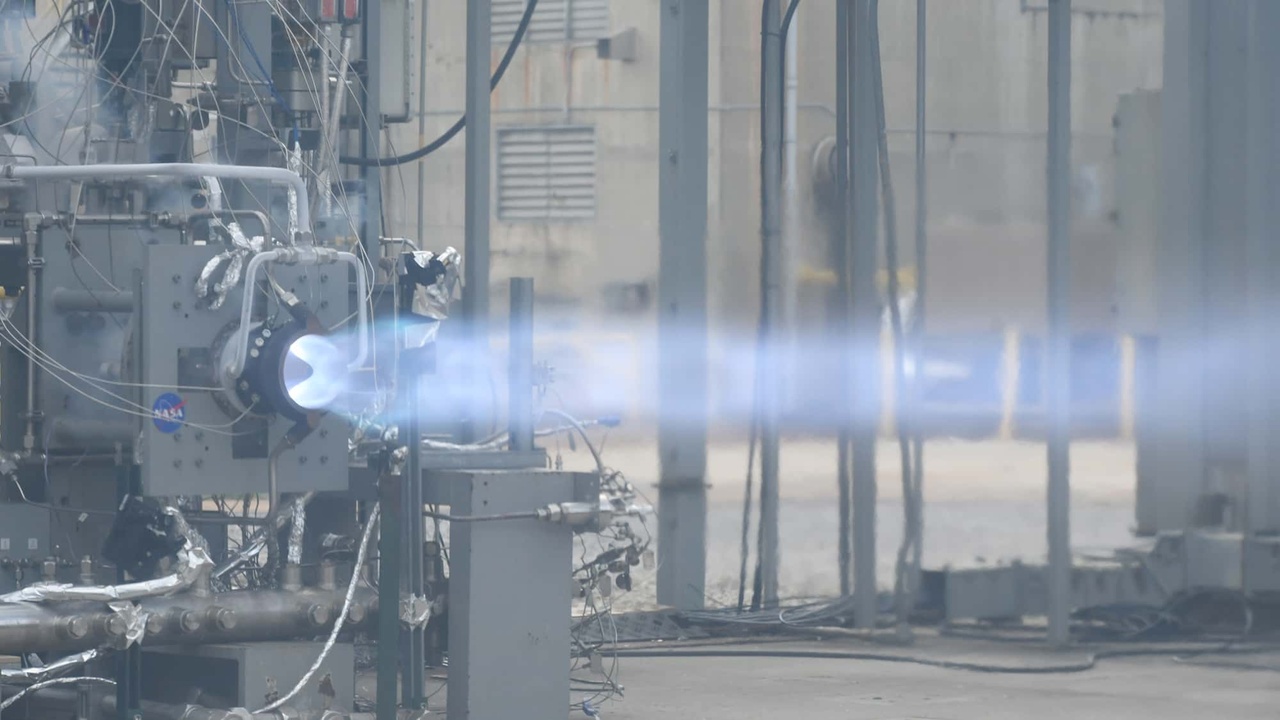
GE Aerospace recently successfully tested two different Rotating Detonation Engines (RDE). We explain what an RDE is and how it differs from conventional jet engines.
It promises high flight speeds, low fuel consumption, long range, low maintenance costs and is small and powerful: the Rotating Detonation Engine (RDE). The military is very interested in this new type of powerhouse, but the technology is also of interest to the aerospace industry and, in the future, possibly also to civil aviation. But what is an RDE and how does it work?
My dears,
Is this the engine of the future, and should we be there early?
You can find details about the engine at ⬇️
https://www.flugrevue.de/flugzeugbau/rotating-detonation-engine-das-wundertriebwerk/
MTU Aero Engines plays a key role in the development and production of Rotating Detonation Engines (RDEs), supported in particular by the German Ministry of Research (BMFT). MTU is part of a German consortium working on the further development of this technology, which is promising for its high efficiency and use in future rockets and hypersonic aircraft.

China is reshaping the sun
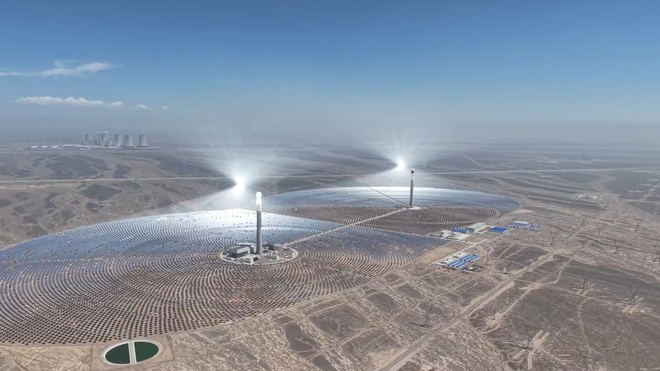
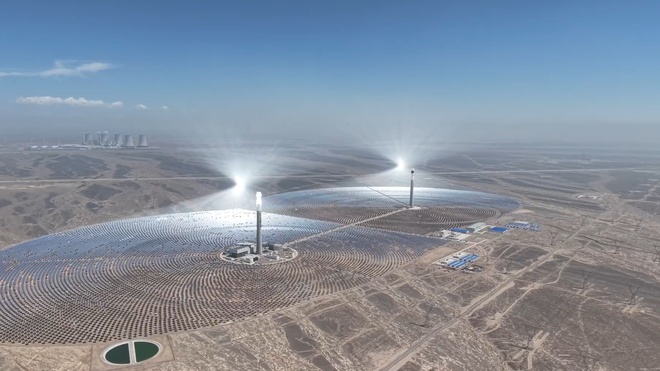
Good morning dear Getquin Community, energy is one of the biggest levers for the transformation of our economy and independence from fossil fuels. Today I would like to introduce you to the exciting solar thermal power (CSP) project from China.
https://videos.winfuture.de/27754.mp4
In the desert, two huge solar towers use thousands of mirrors to concentrate the sun's rays, store the heat in molten salt and use it to reliably generate electricity. The special feature: By storing heat, energy is also provided at night or when it is cloudy. This is a step towards a more stable renewable power supply beyond traditional photovoltaics and wind.
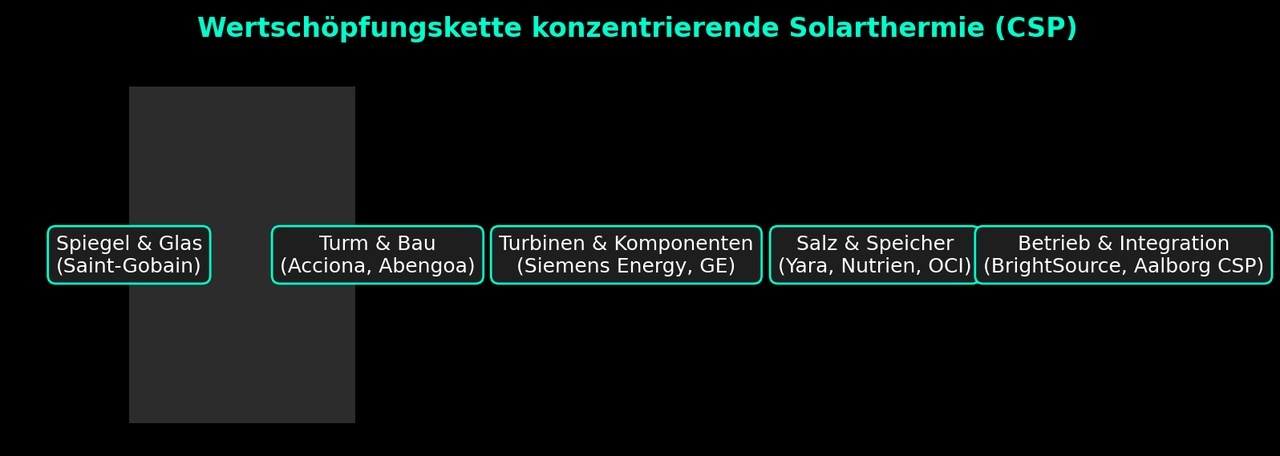
The CSP value chain is broad. The project and turbine side is dominated by $ENR (+0,75%) Siemens Energy (ENR), $ANA (+0,29%) Acciona (ANA) and $GE (+0,06%) General Electric (GE). They supply turbines, engineering and EPC services for the majority of plants worldwide. On the materials and storage side $SGO (+0,38%) Saint-Gobain (SGO) for glass and mirrors and $YAR (+0,24%) Yara (YAR), $NTR (+0,11%) Nutrien (NTR) and $OCI (+0,24%) OCI (OCI) for the provision of salts. These components are essential for thermal storage and therefore for the competitiveness of CSP. In addition, there are developers such as Abengoa Solar, BrightSource and Aalborg CSP, which realize special projects.
Takeaway: While photovoltaics has long since arrived in the mainstream, CSP is opening up new niches through the combination of electricity production and storage. The companies that supply mirrors, turbines, chemicals and engineering - the industry's blade manufacturers - are particularly exciting for investors.
The crucial question is whether CSP will manage to establish itself with these players as a serious pillar in the future energy mix alongside PV and wind.
Source: https://winfuture.de/news,152708.html and own creation


Títulos em alta
Principais criadores desta semana