Why do so many investors sell their winners and hold onto their losers?
Why is a well-told story about a stock often more convincing than the cold, hard numbers?
And why does a loss in your portfolio feel worse than a gain of the same size feels good?
The answers come not from financial theory, but from psychology—more specifically, from Nobel laureate Daniel Kahneman.
His central thesis: The costliest mistakes in the stock market aren’t caused by a lack of information, but by the way our brains process the information we have. This has the strongest impact under conditions of uncertainty, time pressure, and complexity—in other words, precisely under stock market conditions.
Kahneman describes thinking as the interplay of two systems:
System 1 works quickly, automatically, and emotionally
System 2 works slowly, consciously, and critically
Because a complete analysis of all data is practically never possible, System 1 usually takes the lead in market decisions—and relies on heuristics, or simplifying rules of thought—and that is precisely where systematic errors arise:
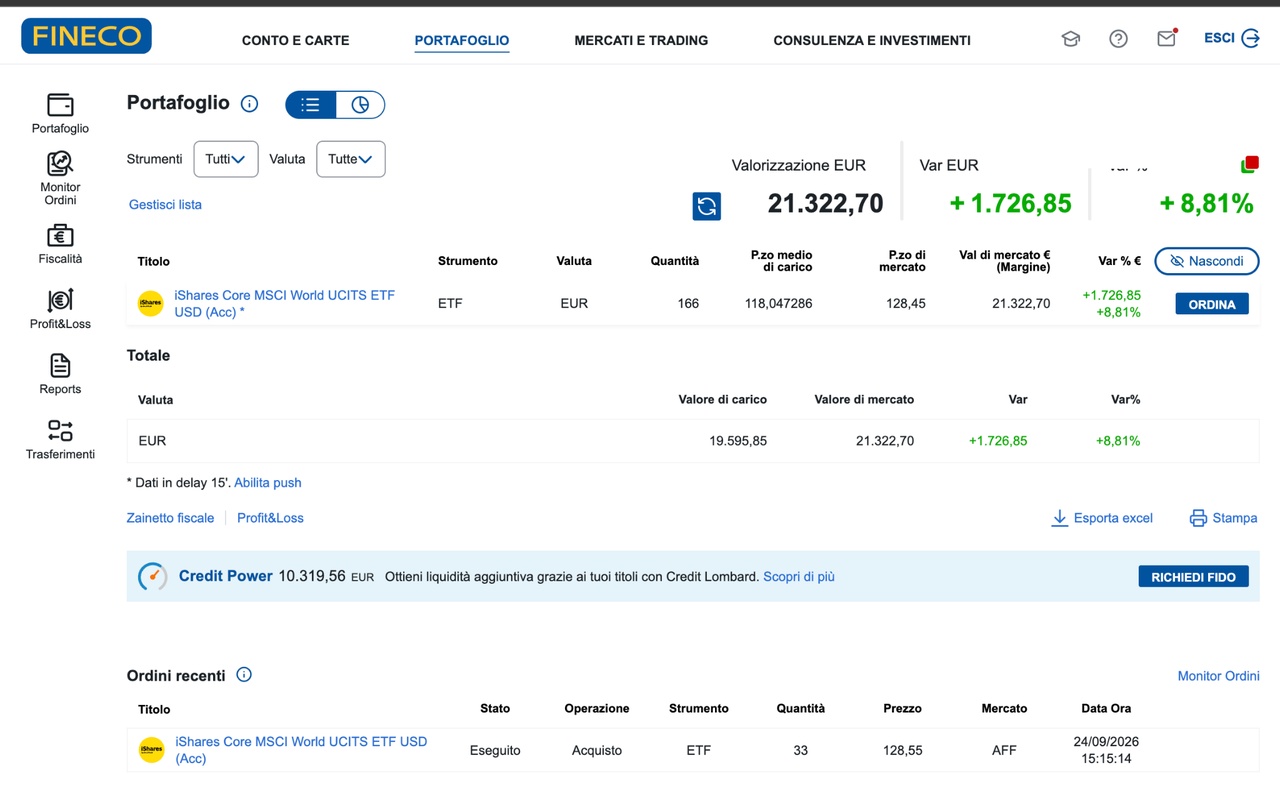
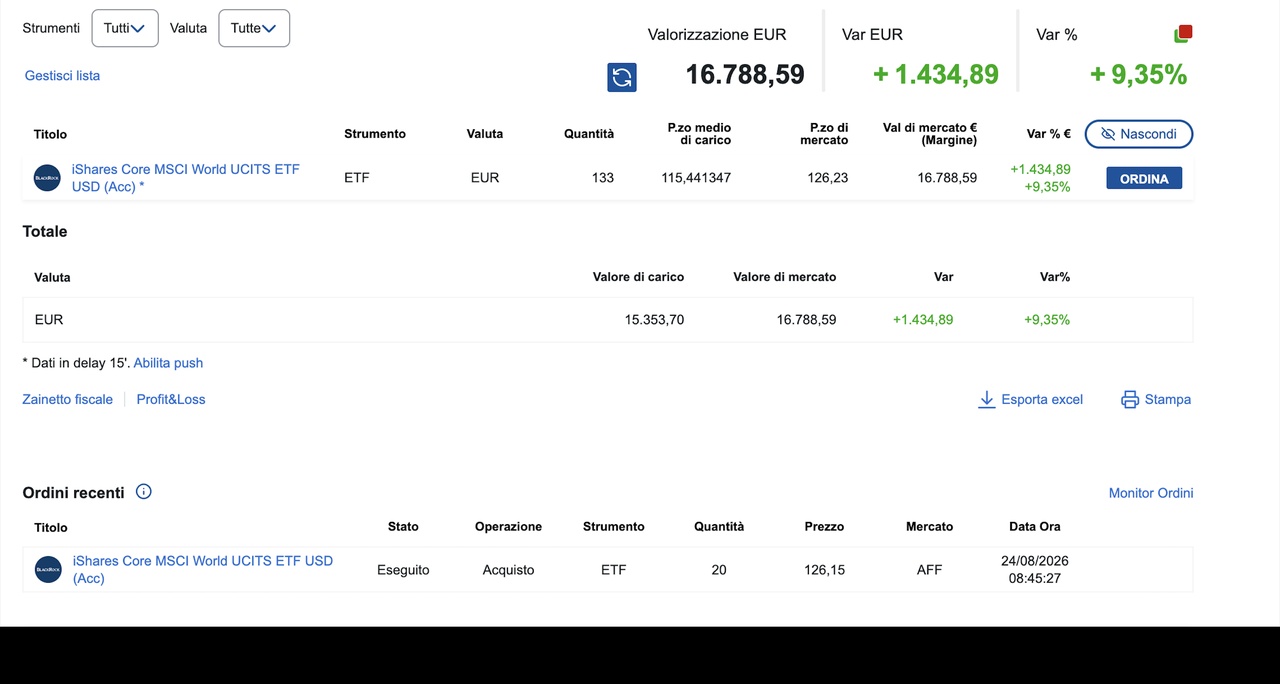
Loss aversion: Psychologically, losses weigh more heavily than gains of the same magnitude. Kahneman and Tversky estimate the ratio to be approximately 2.25 to 1 —a loss of 100 € hurts about as much as a gain of 225 € brings joy. In practice, this leads to the so-called disposition effect: Winners are sold too early (to “lock in” the profit), while losers are held onto too long (to avoid having to realize the loss)—which is exactly the wrong order.
Anchoring effect: A number seen early on—the entry price, an old all-time high, someone else’s price target—becomes an internal reference point and shapes subsequent judgments, even if it has little factual basis. One’s own purchase price is the classic anchor: It is completely irrelevant to the question of whether a company is undervalued or overvalued today—yet almost everyone uses it as a benchmark.
WYSIATI (“What You See Is All There Is”): The information currently visible gives rise to a coherent, seemingly complete judgment—and what is not visible is ignored. A plausible narrative based on three data points is often more convincing than an inconvenient, incomplete set of facts. This explains why a well-told stock story is so seductive.
Overconfidence: Decision-makers overestimate the accuracy of their forecasts and their control over the outcome. This manifests itself in excessive trading frequency, overly large individual positions, and the feeling of being able to “read” the market.
In addition, Prospect Theoryexplains why this is no coincidence:
People do not evaluate outcomes in absolute terms, but rather as gains or losses relative to a reference point —and they weigh probabilities in a biased manner. Certain outcomes are overweighted, as are rare extreme events (the big crash, the tenfold gain), while the likely, unspectacular scenarios
are underestimated
.
Overall, in my view, the real disadvantage for the individual investor rarely lies in access to information, but rather in these predictable reaction patterns. And that is the uncomfortable punchline: The strongest adversary in your portfolio is not the market, but your own System 1.
Sources:
Kahneman, D. (2011): Thinking, Fast and Slow
Kahneman, D. & Tversky, A. (1979): Prospect Theory: An Analysis of Decision under Risk
$IWDA (-0,69 %)
$CSPX (-0,73 %)
$CSPX (-0,73 %)
$EXS1 (-0,14 %)