
Bloom Energy
Price
Debate sobre BE
Puestos
40


The Crazy Trio and a Comparison of Five Energy and Electrification Metrics
Hi, everyone! ☕🍁
When the weather outside gets gloomy and we cozy up in the sunroom with a freshly brewed cup of coffee, that’s when our analysis computers really start to heat up.
As many of you know, I’m working with the lovely @Tenbagger-Capital and our @Dividendenopi put our heads together regularly.
Together with other resourceful sleuths here in the community, we’ve made it our mission to uncover new trends and sectors early on.
Why do we active folks go to all this trouble and spend nights poring over annual reports?
It’s simple: We want to feed this forum with real, well-researched facts, rather than just throwing the latest hype buzzwords at you.
Anyone can shout “AI” or “electricity demand” these days—but who really benefits in the end without their portfolio going up in flames?
That’s exactly why we’ve taken a ruthless look at the current boom sector surrounding energy, electrification, and data centers.
We’ve put five companies—all of which, at first glance, look like the perfect future winners—through our rigorous analysis.
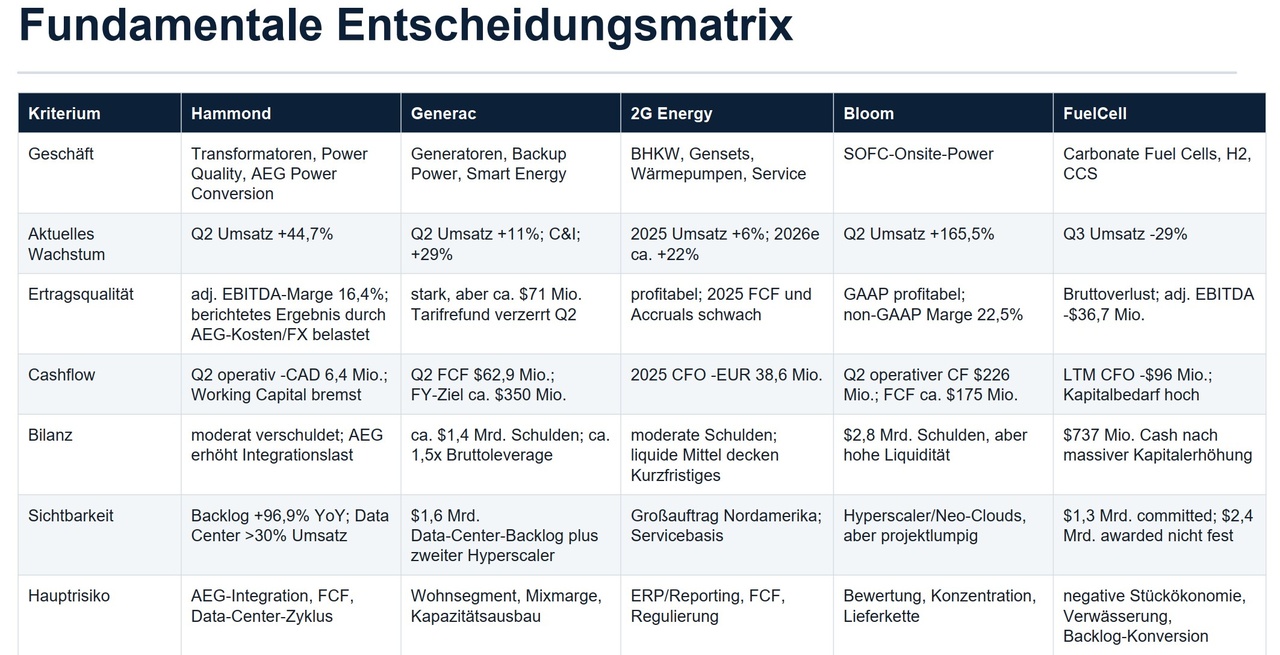
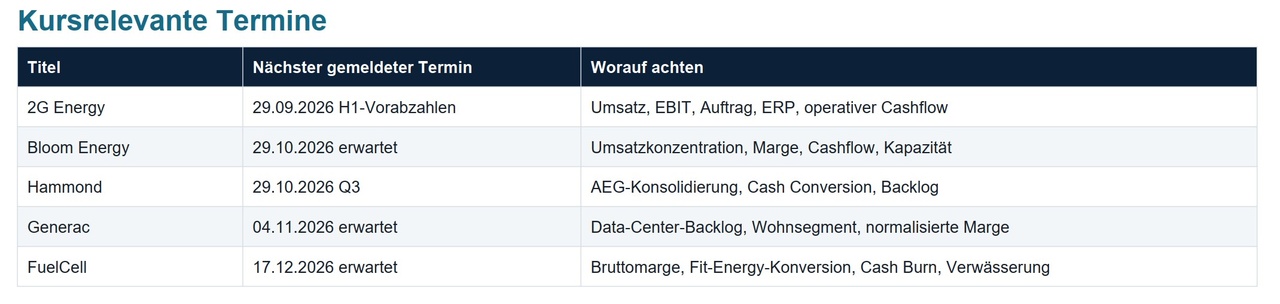
Here’s our showdown of the energy winners—and the result, which shows that revenue growth is by no means everything:
In the end, the ranking turned out as follows:
1. Hammond Power Solutions $HPS.A (-4,32 %)
Hammond delivered the most compelling combination overall. Particularly strong were its high revenue growth, its order backlog that nearly doubled, and its positioning in transformers, power quality, and data centers. At the same time, the company is already profitable and backed by solid results to a much greater extent than some of the more speculative candidates.
However, Hammond is not without its question marks. Operating cash flow has been weak recently, the integration of AEG still needs to run smoothly, and the now-high proportion of the data center business also increases cyclicality. Nevertheless, Hammond was the strongest candidate overall.
2. Generac $GNRC (-3,25 %)
Generac follows closely behind. Particularly positive factors include the rapidly growing commercial and industrial segment, the data center backlog of approximately $1.6 billion, and several hyperscaler contracts.
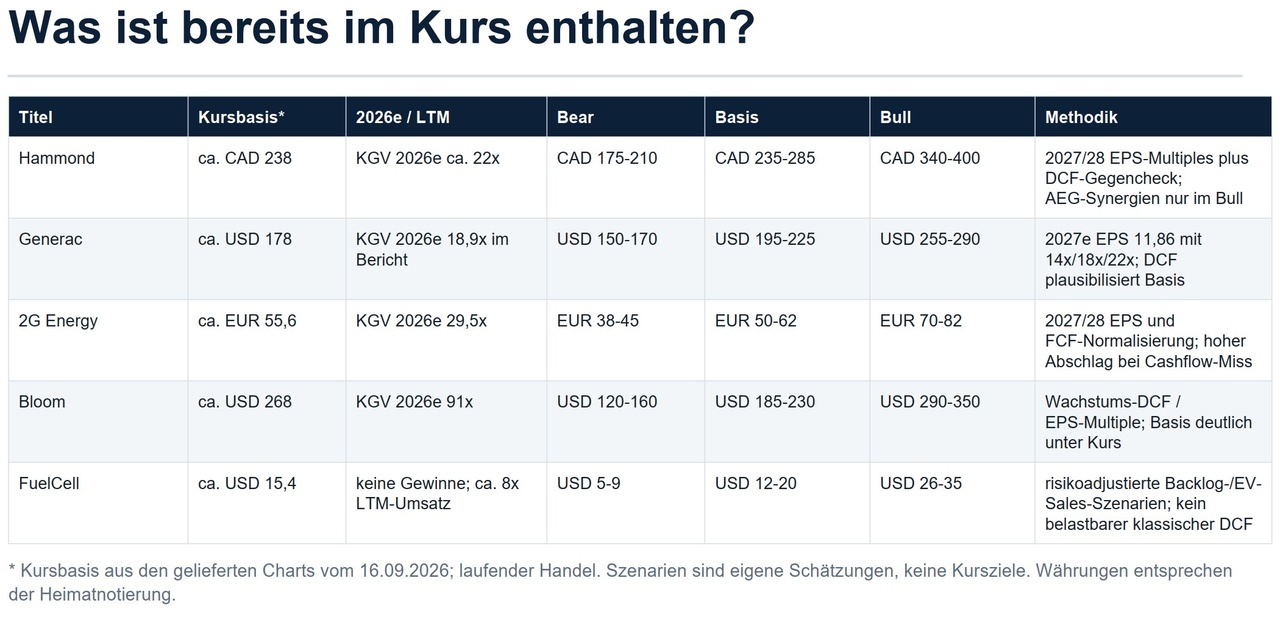
The key advantage over some other candidates is its valuation. Despite improved growth prospects, Generac is valued significantly more reasonably.
However, one had to look more closely at the most recent quarterly figures: Part of the sharp jump in earnings came from a one-time tariff refund. On a normalized basis, the margin looks somewhat less spectacular. Nevertheless, Generac remains a very interesting candidate due to its valuation, order backlog, and multiple revenue streams.
3. 2G Energy $2GB (-1,62 %)
2G Energy comes in third place. Its business model, centered on decentralized energy supply, gensets, combined heat and power (CHP) plants, service, and, increasingly, heat pumps, is fundamentally attractive. Added to this is a major North American data center contract that could drive significant growth in the coming years.
The main reason for its third-place ranking is cash flow. In 2025, operating cash flow was significantly negative, even though the company was profitable. Furthermore, the ERP transition and delayed reporting are currently complicating the valuation. Therefore, 2G remains an interesting prospect but must first confirm the expected jump in earnings and cash flow.
4. Bloom Energy $BE (-7,17 %)
Bloom is likely the most spectacular company of the five from an operational standpoint. Revenue growth recently exceeded 160%; at the same time, the company achieved quarterly revenue of more than $1 billion for the first time, along with positive operating income and strong operating cash flow.
The problem isn’t the business itself, but the valuation. With an expected price-to-earnings ratio of around 91 and a stock that has risen several hundred percent within a year, a great deal of success is already priced in. Added to this are project concentration, supply chain risks, and high expectations for further scaling.
Bloom is therefore fascinating from a technological and operational standpoint, but it has a significantly smaller margin of safety compared to the first three candidates.
5. FuelCell Energy $FCEL (-7,39 %)
FuelCell Energy is clearly bringing up the rear.
The technology is interesting, and the company has relevant partners in Siemens and ExxonMobil. The pipeline and reported backlog also look impressive at first glance.
The problem, however, lies in profitability. Production continues to operate at a loss, capital expenditure is high, and a significant portion of the additional backlog is not yet binding. Added to this is significant dilution resulting from capital increases.
FuelCell must therefore first prove that technological demand can indeed give rise to a sustainably profitable business model.
Our Conclusion from the Comparison
At first glance, all five companies appear to be set to benefit from rising electricity demand, electrification, and the data center boom. However, the comparison shows quite clearly just how different their quality and risk profiles actually are.
Hammond Power Solutions comes out on top in terms of the overall package of growth, profitability, order quality, and long-term electrification demand.
Generac is particularly impressive in terms of the balance between valuation and future order potential and trails only slightly behind.
2G Energy has an interesting industrial growth story, but still needs to prove that the expected growth spurt will translate directly into cash flow.
Bloom Energy currently has the most impressive operational momentum, but at the same time is also the candidate for which the market is already anticipating the most future success.
And as for FuelCell Energy , the story isn’t quite there yet. What’s missing here, above all, are positive unit economics, robust profitability, and lower capital requirements.
So, our final ranking is:
1. Hammond Power Solutions
2. Generac
3. 2G Energy
4. Bloom Energy
5. FuelCell Energy
What I found particularly interesting was that the company with the highest revenue growth rate doesn’t automatically rank first. Once valuation, cash flow, balance sheet, and execution risk are factored in, the picture shifts—in some cases, quite significantly. That’s exactly why the direct comparison of the five companies was quite revealing.



The Crazy Trio
Good morning, everyone,
It’s just amazing how well collaboration between users can work.
Even though there are unfortunately sometimes only a few comments on my presentations, behind the scenes, the exchange with key users is getting better and better.
Yesterday with Generac $GNRC (-3,25 %) you could clearly see that we had already analyzed exciting stocks ahead of a breakout.
With my last stock pick, Hammond $HPS.A (-4,32 %) it could be the same story,
(not an investment recommendation, just my personal opinion)
But the stock I’d like to introduce to you today was also discussed and analyzed among us beforehand. And sure enough, yesterday brought the good news we’d been waiting for.
Thanks to my friend @Raketentoni reminded me once again of this IPO stock, which I’d initially put on my watchlist because the IPO price was too high—and which I’d naturally lost sight of here.
Since the news triggered a great surge yesterday, I naturally brought @Dividendenopi jumped on board. I appreciate his expertise and foresight more and more.
And so it has been—and continues to be—a wonderful collaboration between the three of us.
“The Crazy Trio”
We look forward to plenty of comments on $INIO (-1,7 %) Innio
👉 The INNIO IPO took place in early June 2026, with the official pricing on June 4, 2026.
INNIO Stock: Major Order for U.S. Data Centers and Rating Upgrade Drive Share Price Surge
⚡ INNIO Stock –
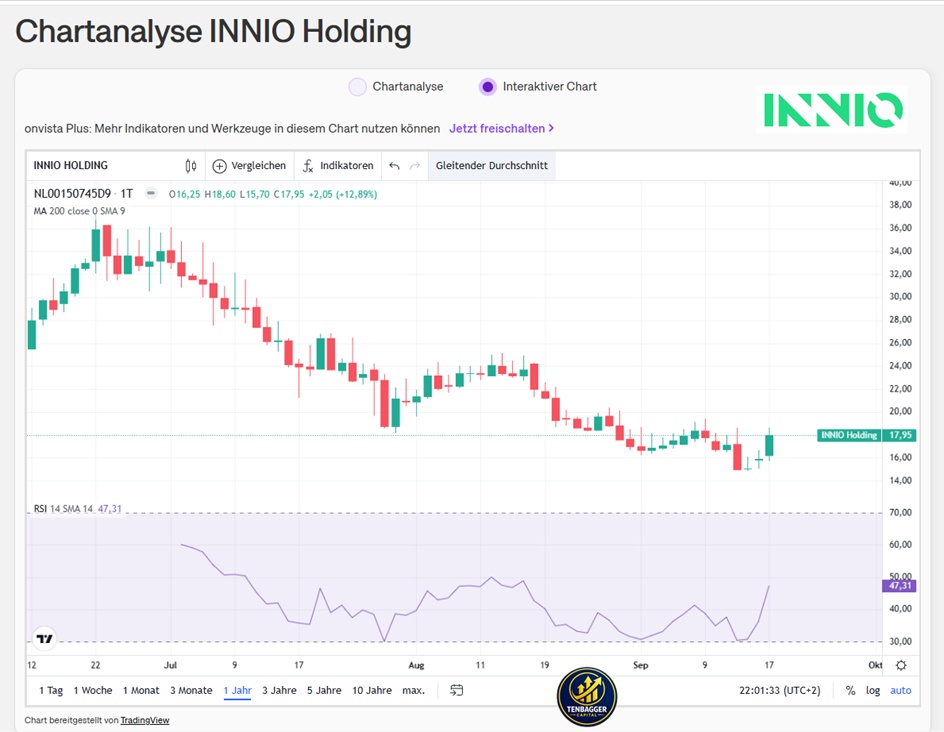
- Date: September 17, 2026
- Key Takeaway: INNIO stock surged by over 12%, triggered by a major contract and a rating upgrade.
🔋 Major order
- INNIO received an order for 450 MW from a U.S. energy provider.
- Application: Containerized Jenbacher J624 gas engines for decentralized power supply to large data centers in North America.
- Delivery period: through 2028 → long-term revenue assurance.
💼 Rating upgrade
- Moody’s raised the company’s rating from B1 to Ba3 , outlook “positive”.
- Reason: conservative financial policy following NASDAQ listing (June 2026) and stable debt-to-equity ratio.
📈 Market Environment
- Positive sentiment on the U.S. stock markets (Nasdaq +1.6%, S&P 500 +1%).
- INNIO is benefiting from the AI boom and the rising energy demand for data centers.
- A combination of a new order, a rating upgrade, and market momentum led to a sharp rise in the stock price.
💡 Conclusion
INNIO is positioning itself as a a leading provider of decentralized energy solutions for AI infrastructure. The report points to sustainable growth potential and improved creditworthiness — a clear boost to investor confidence.
Innio NV is a Germany-based provider of decentralized energy solutions that supplies electricity. The company develops, manufactures, and maintains power systems under the Jenbacher and Waukesha brands. It supplies electricity for applications such as data centers, microgrids, grid stabilization, industrial power supply, and gas compression.
Number of employees: 5,467
As of December 31, 2025, INNIO has a global presence in approximately 100 countries, supported by a resilient, high-margin services business that generates long-term, recurring revenue throughout the entire equipment lifecycle. As demand for electricity accelerates—driven by AI, electrification, and grid constraints—INNIO enables scalable, behind-the-meter power generation with high efficiency, rapid startup capability, strong transient performance, and fuel flexibility, including hydrogen-compatible solutions.
INNIO plans a $300 million expansion of its Wisconsin facility, creating 500 jobs
⚙️ INNIO Expands Wisconsin Facility
- Date: August 19, 2026
- Investment: over $300 million
- New jobs: about 500
🔋 Goals of the expansion
- Expansion of engine assembly capacity in Waukesha, Wisconsinto meet rising U.S. demand.
- Construction of a new engine test facility (≈ 8,000 m²) and renovation of offices and workshops.
- Focus on decentralized energy solutions for data centers, power grids, and industrial facilities.
🏭 Location and Employment
- The campus covers 1.7 million ft², of which 890,000 ft² of production space.
- New jobs are being created in assembly, production, engineering, CNC machining, material handling, and maintenance.
- Waukesha remains the U.S. hub alongside the locations Trenton (NJ) and Waller (TX).
🌍 Company Profile
- INNIO develops and maintains power generation systems under the following brands Jenbacher and Waukesha.
- Headquarters: Munich, Germany
- Number of employees (as of the end of 2025): over 5,000 worldwide
- 💡 Conclusion
- The expansion strengthens INNIO’s U.S. presence and local value creation significantly. It positions the company as a key player in decentralized energy supply in the growing market for data center infrastructure.
INNIO’s First Annual Report: A Test of the Growth Story in the Data Center Market
⭐ INNIO – First Annual Report Following the IPO (Q2 2026)
Date: July 27, 2026 Source: Investing.com
📌 Key Takeaway
INNIO releases its first quarterly report as a publicly traded company . The report is seen as testto see whether the major growth story in the data center market is viable.
📈 Expected Results (Q2 2026)
- Earnings: $0.05 per share
- Revenue: $881.7 million
- Previous Quarter: Loss of $0.01 per share on revenue of $668.6 million → +32% sequential growth, significant operational improvement.
🔋 Strategic positioning
INNIO is benefiting greatly from:
- AI boom
- exploding electricity demand large data centers
- grid bottlenecks, which make decentralized energy generation attractive → Jenbacher & Waukesha engines are considered a readily available alternative to sold-out gas turbines (through 2028).
📦 Order Book & Backlog
- 2025 equipment orders: $3.88 billion (+188% YoY)
- Backlog Q1 2026: $4.8 billion (end of 2024: $1 billion) → Investors want to see whether this massive order backlog translates into revenue and margins .
🏭 Capacity expansion
- Production capacity is set to increase:
- 3.5 GW → 5 GW by the end of the year
- 10 GW by 2030
- Locations: Jenbach, Waukesha, North America (containerization) → Critical: Timelines, investment needs, production bottlenecks.
INNIO Q2 2026 Earnings Presentation
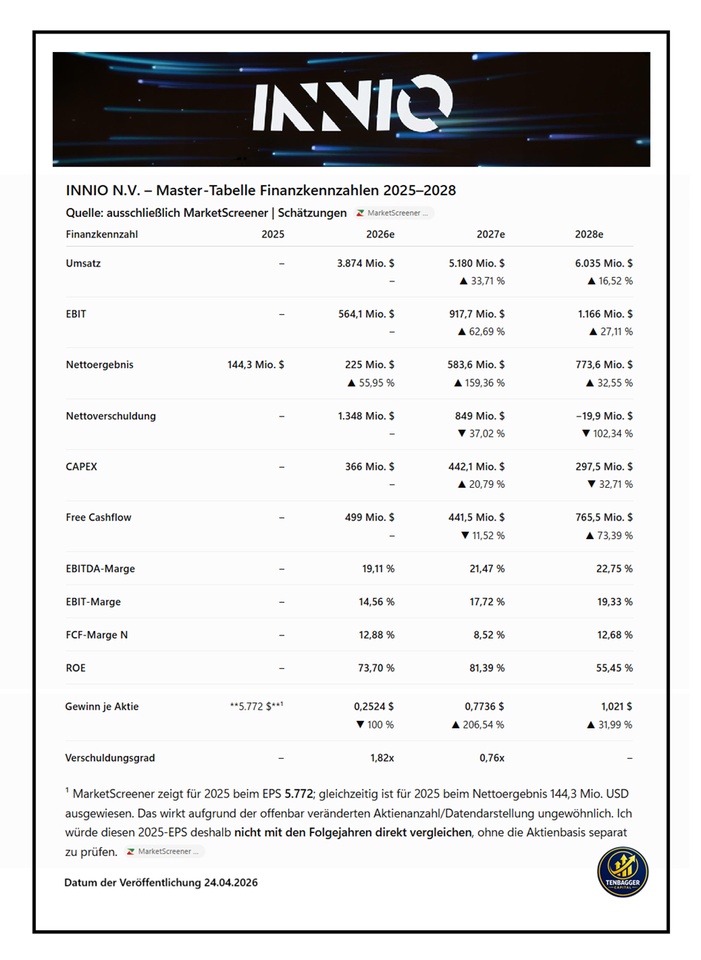
🔎 Development at a Glance
Revenue:
From 2026e to 2028e, revenue is expected to rise from $3.874 billion to $6.035 billion. This represents very dynamic growth, with the growth rate slowing from 33.71% to 16.52% .
Profitability:
The margin trend is particularly striking. The EBIT margin rises from 14.56% (2026) to 19.33% (2028), while the EBITDA margin rises from 19.11% to 22.75% .
Profit:
Net income is expected to rise from $225 million in 2026 to $773.6 million in 2028 . The biggest jump is expected in 2027, with +159.36% .
Debt:
According to the forecast, net debt will decline from $1.348 billion in 2026 to $849 million in 2027 and will even reach −$19.9 million —which would mean that INNIO would, on paper, achieve a net cash position.
Free Cash Flow:
In 2027, there will initially be a decline from $499 million to $441.5 million, before a significant jump to $765.5 million is projected for 2028. At the same time, CAPEX will fall to $297.5 million.
In short: MarketScreener’s estimates paint a scenario for INNIO through 2028 featuring strong revenue growth + significantly rising margins + rapidly growing profits + substantial debt reduction. The key points to watch here are, in particular, the realization of the high profit growth assumptions and the expected jump in FCF for 2028.
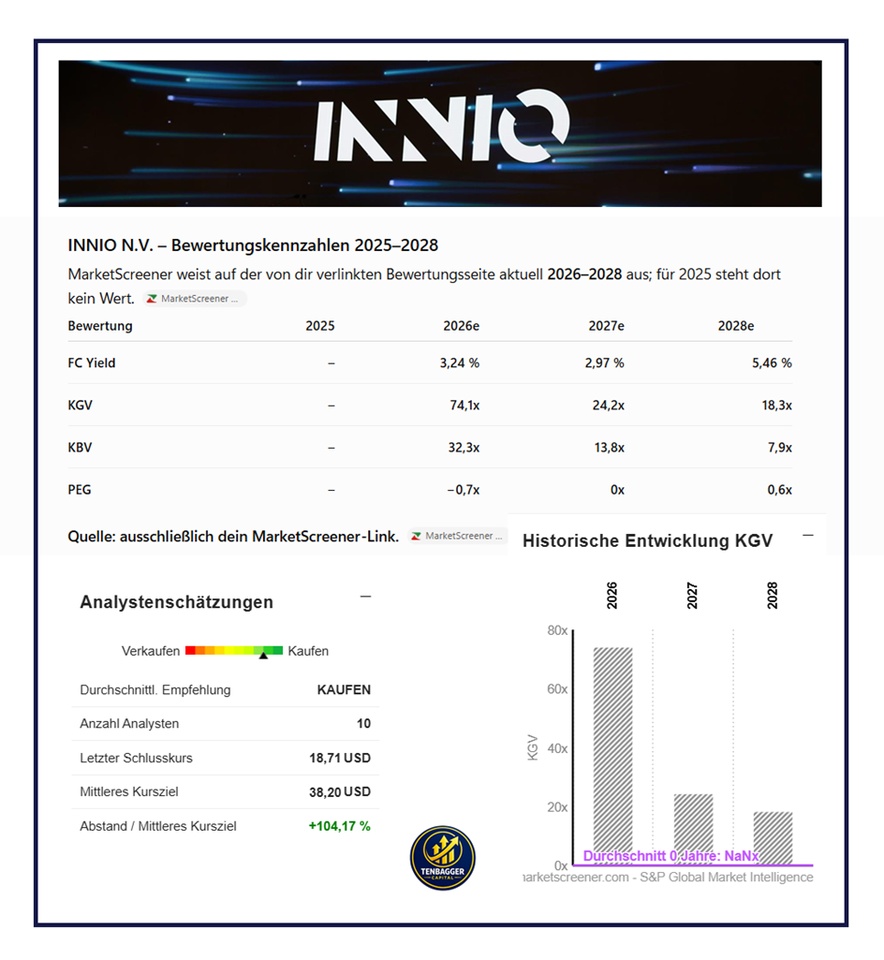
🔎 Performance
- FC Yield: 3.24% → 2.97% → 5.46%
P/E Ratio: 74.1x → 24.2x → 18.3x
P/B ratio: 32.3x → 13.8x → 7.9x
PEG: −0.7x → 0x → 0.6x
September 18, 2026, 8:55:05 a.m. •
Lang & Schwarz (EUR)
17.90 EUR
+ 2


Amodei's call for a "pause" targets the wrong part of the AI value chain
Slows down Dario Amodeis Is the call for a slower pace in AI now hampering the industry’s growth? The Anthropic CEO called for this over the weekend in his essay “We Must Pace the Frontier”—to deliberately slow the advancement of AI model capabilities— OpenAI CEO Sam Altman and xAI CEO Elon Musk publicly agreed within hours.
Amodei’s core argument: Recursive self-improvement and security incidents such as the OpenAI Hugging Face incident showed that the models’ capabilities are growing faster than the ability to control them. His three-step plan begins with independent auditors working directly within the companies. By this, he means not
halt to training, but rather more time for safety work to proceed in parallel with progress.
Why many see this as a brake on growth
Within the community, the call is being interpreted as a warning sign regarding the AI industry’s high growth rates. A slower pace in the release of new models could dampen demand for fresh computing power and thus weigh on the valuations of AI companies and Neoclouds. Coinciding with the announcement, market prices for Anthropic and OpenAI shares fell.
Why this misses the actual driver of growth
Amodei’s appeal targets the training of new models—and it is precisely this part of the AI value chain that is now the smaller and shrinking segment. According to Deloitte, by 2026, around two-thirds of global AI computing power will be directed toward inference (the ongoing operation of already trained models).
And it is precisely this demand for inference that is growing faster than ever before:
- $GOOGL (-2,33 %)-Cloud order backlog: from $240 billion to $460 billion within one quarter
- Tokens processed by Google: 16 billion per minute, an increase of 60% compared to the previous quarter
- $MSFT (-1,82 %): AI order backlog increased more than twelvefold
- GPU rental prices have grown from ~10 million/MW in early 2026 to as much as ~40–50 million/MW today
So the real bottleneck remains computing power itself, not the political will to slow things down. Microsoft and Google each have investment budgets of around $180–190 billion just to meet demand at all. Training pacing is unlikely to make much of a difference to this scarcity as long as current models are already so powerful for users that demand for their use continues to grow.
Overall , the appeal seems more like a shift in priorities—away from a pure race for capabilities and toward greater safety and control. In my opinion, it is wrong to believe that this will act as a brake on the entire AI value chain.
The largest and fastest-growing part of it—inference—remains virtually untouched by the debate.
This announcement could also come at a strategically opportune time: Training new frontier models costs a great deal of money (tens of billions per model). A deliberately slowed pace would alleviate precisely this cost burden and improve the profitability of Anthropic and OpenAI, just before both are set to make potential IPOs . This safety call—which, incidentally, protects their own balance sheets—comes at just the right time for the model providers.
What are your thoughts on this?
$IREN (-11,51 %)$NBIS (-10,55 %)$NVDA (-1,52 %)$AMZN (-1,93 %)$AMD (-5,46 %)$WULF (-7,71 %)$ORCL (-4,36 %)$CSNDX (-2,47 %)$AVGO (-4,04 %)$SPCX (-1,88 %)$PLTR (-7,51 %)$META (-3,46 %)$CRWV (-10,62 %)$DELL (-4,44 %)$BE (-7,17 %)$MU (-5,27 %)
Sources:
https://darioamodei.com/post/we-must-pace-the-frontier
https://www.deloitte.com/global/en/about/press-room/2026-tmt-predictions.html


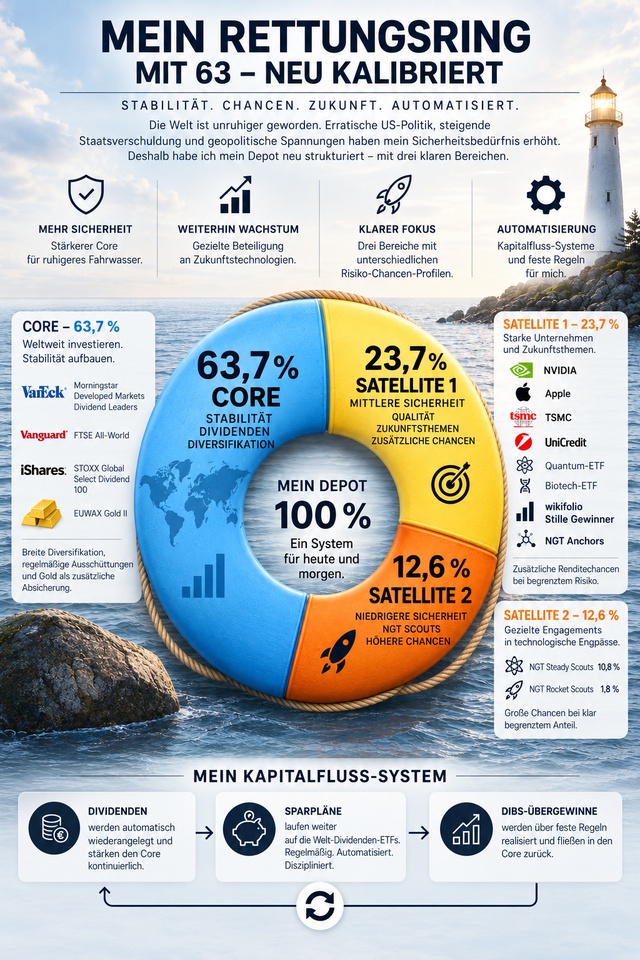
+++ Update on My Portfolio Structure 🛟 +++
At 63, I continue to invest in stocks and future technologies. However, my portfolio looks slightly different today than it did a few months ago, as my need for security has increased.
Erratic U.S. politics, a steadily rising national debt, and increasing geopolitical tensions have changed the landscape for me. The stock market feels less predictable. Political decisions can shake up entire industries within a matter of hours. I’ve responded to this by safety net.
My portfolio now consists of three segments with clearly distinct roles:
The CORE 🥑 63.7% (higher security)
Nearly 64% of my portfolio now makes up the stable core. This includes the VanEck Morningstar Developed Markets Dividend Leaders, the Vanguard FTSE All-World (Dist), the iShares STOXX Global Select Dividend 100, and EUWAX Gold II.
The global equity ETFs provide diversification and regular distributions. Gold complements the Core as an additional hedge. Dividends continue to play an important role for me, accounting for 63%. I want to build up a growing supplemental pension over the coming years while maintaining a core that is as stable as possible.
SATELLITE 1 🛰️ 23.7% (medium risk)
This is where I invest in opportunities with moderate risk. These include established companies such as NVIDIA, TSMC, Apple, and UniCredit. I’ve also added my NGT anchor stocks, such as Lam Research $LRCX (-4,43 %) , ATI $ATI (-1,62 %) , and GE Vernova $GEV (-0,98 %) , two thematic ETFs for quantum computing $QNTM (-2,72 %) and biotechnology $GNOM , as well as the wikifolio “Silent Winners” $STWINNER (-1,98 %). NGT stands for Next-Gen Technologies.
This segment is intended to create additional return opportunities while offering greater stability than my smaller NGT companies. The NGT anchor holdings, in particular, play a key role here. They allow me to maintain targeted exposure to structural technological bottlenecks through companies whose business models are already significantly more established.
SATELLITE 2 🚀 12.6% (lower risk)
This segment can be significantly more speculative. It consists exclusively of my NGT Steady Scouts (e.g., $BE) (-7,17 %) and Rocket Scouts (e.g., $RKLB) (-8,26 %). The Steady Scouts currently account for 10.8% of my total portfolio. The significantly more speculative Rocket Scouts account for just 1.8%. This ensures that this portion remains large enough to make a noticeable contribution in the event of successful investments. At the same time, its impact on my total assets remains limited.
NGT remains ♟️
My conviction in NGT and the DIBS strategy has not fundamentally changed. I continue to invest in technological bottlenecks related to AI infrastructure, photonics, energy supply, advanced packaging, defense, space, and other future-oriented fields. What has changed is their role in my overall portfolio.
The NGT holdings are now spread across two risk levels. The established “Anchors” are in Satellite 1 with moderate certainty. “Steady Scouts” and “Rocket Scouts” make up the smaller, more speculative Satellite 2 segment. Overall, my direct NGT exposure now accounts for less than a quarter of my portfolio.
AUTOMATION ⚙️
My cash flow system also remains in place. Dividends are automatically reinvested. Savings plans continue to run. In the event of exceptionally high price gains, my fixed rules for taking profits kick in. Capital that becomes available can then flow back into the more stable segments of my portfolio.
This is how my safety net continues to evolve alongside my life and the broader economic conditions. At 63, I want to continue participating in the technologies of tomorrow. And I’d like to be able to sleep a little better 😴 while doing so.


Bloom Energy Stock in 2026: On the Verge of Joining the S&P 500 — and Facing a Class-Action Lawsuit
Summary
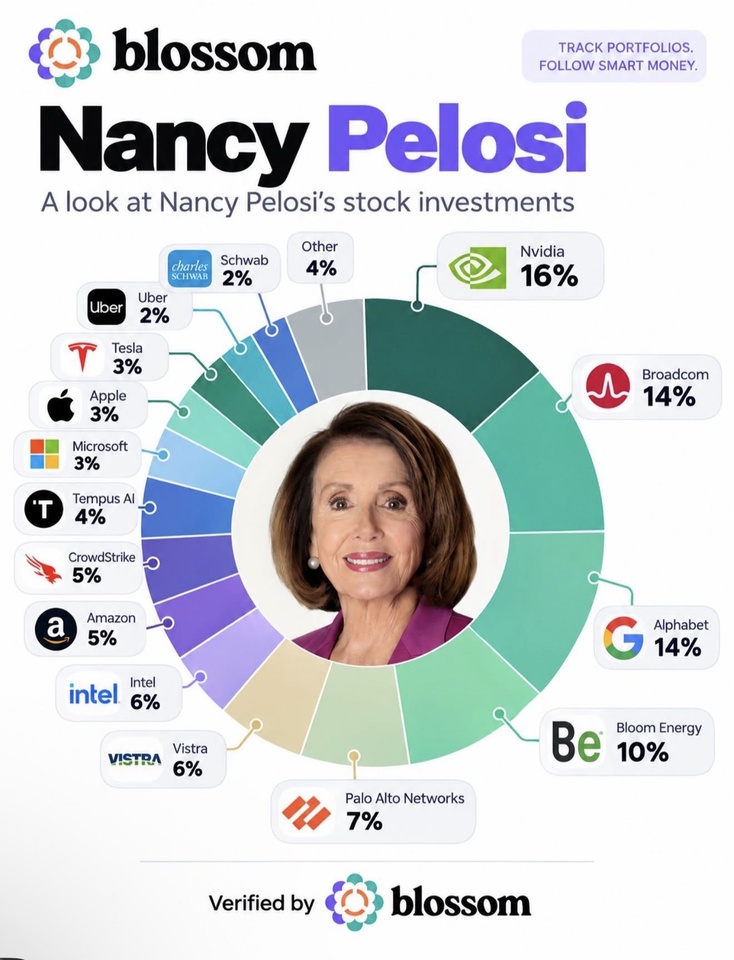
Both stories are true at the same time — and that is exactly what makes Bloom Energy one of the most talked-about stocks on Wall Street right now. On the positive side: According to Stephens analyst Melissa Roberts, Bloom Energy is among the most likely candidates for inclusion in the S&P 500 before the end of the third quarter of 2026—its market capitalization is already well above the required threshold of $22.7 billion. In addition, a belated disclosure caused a stir: Nancy Pelosi’s husband purchased a total of 15,000 shares and 200 call options in two tranches at the end of July, with a total value estimated at between $3 million and $12 million — this only came to light on August 21, driving the stock up by as much as 6.67%. At the same time, a class-action lawsuit filed by several law firms is proceeding in the background, with a deadline of September 28, 2026—the allegation being that management concealed the company’s dependence on Chinese export controls for the rare metal scandium, which is needed for fuel cell production.
Key points:
Stephens sees Bloom Energy as an S&P 500 candidate before the end of Q3 2026; market capitalization is well above the required threshold of $22.7 billion. USD. The Pelosi budget purchased 15,000 shares + 200 call options (value: $3–12 million) in late JulyDisclosure on August 21 triggered a price jump of up to 6.67%Class-action lawsuit filed by several law firms (Rosen Law Firm, Kaplan Fox) — Deadline: September 28, 2026. Allegation: Concealed dependence on China for the raw material scandium. Jefferies raises price target from $207 to $246 but maintains a “Hold” rating. Analyst range is extremely wide: $176 to $350. Current price approx. 208 EUR (converted), 5.3% above the 50-day average. Key point to watch, according to Jefferies: the approval timeline for the AEP project in Wyoming
Current Key Figures — Bloom Energy Stock (as of September 5, 2026)
Key FigureValueAs of
Price (NYSE: BE)
approx. $217–220
September 4, 2026
Deviation from the 50-day average
+5.3%
September 3, 2026
Reference price prior to Pelosi disclosure
$204.02
August 25, 2026
Price reaction to disclosure
+5.6% to +6.67% (at peak)
August 25, 2026
Market Capitalization
well above $22.7 billion (S&P 500 threshold)
Sept. 2026
Revenue Q2 2026
$1.065 billion (+166% YoY) — exceeding $1 billion for the first time
July 28, 2026
Full-Year 2026 Forecast (Revenue)
$3.9–4.2 billion
Confirmed July 28, 2026
Pelosi Purchase: Shares
15,000 shares (July 24 and 28, 2026)
Disclosed August 21, 2026
Pelosi Purchase: Call Options
200 contracts, strike price $100, expiring in June 2027
Disclosed August 21, 2026
Estimated Total Value of Pelosi’s Position
$3–12 million
Disclosed August 21, 2026
Parallel Intel Purchase (same portfolio)
10,000 shares + 50 call options
July 24, 2026
Class-action deadline
September 28, 2026
—
Allegation in the lawsuit
Concealed dependence on China for scandium
—
Jefferies price target
$246 (raised from $207), “Hold” rating
Aug. 2026
Total analyst range
$176–$350
Sept. 2026
WKN / ISIN / Ticker
A2JQTG / US0937121079 / BE
—
Point of Interest (Jefferies)
Approval Timeline for the Wyoming AEP Project
—
Next Full Report (Q3)
approx. October/November 2026
—
Bloom Energy Stock News — All Latest Updates at a Glance
DateNewsDetailsAssessment
September 3, 2026
S&P 500 Inclusion Nears
Stephens analyst Melissa Roberts considers Bloom Energy one of the most likely candidates for inclusion in the index before the end of Q3 2026. Market capitalization is well above the required threshold of $22.7 billion. Inclusion would trigger automatic purchases by ETFs and index funds.
Very Bullish
Aug. 28–Sept. 3, 2026
Class-Action Lawsuit Deadline Approaches
Several law firms (Rosen Law Firm, Kaplan Fox) are reminding investors of the September 28, 2026, deadline for filing a class-action lawsuit. Allegation: Management concealed the company’s dependence on Chinese export controls for the rare metal scandium, which is needed for fuel cell production.
Risk
August 25, 2026
Pelosi Disclosure Triggers Stock Price Surge
Periodic Transaction Report (signed August 21) shows: Nancy Pelosi’s household purchased a total of 15,000 shares and 200 call options (strike price $100, expiring in June 2027) on July 24 and 28. Estimated total value: $3–12 million. The stock reacted with a price jump of up to 6.67%. At the same time, Intel shares were also purchased—Intel is a long-standing customer of Bloom Energy.
Very bullish
Aug. 2026
Jefferies raises price target to $246
Jefferies raises its price target from $207 to $246 but maintains its “Hold” rating—citing a challenging valuation. The research firm cites the approval timeline for the AEP project in Wyoming as a key point to watch.
Mixed
July 28, 2026
Record revenue exceeding $1 billion
Q2 2026 revenue exceeds $1 billion for the first time ($1.065 billion, +166% YoY). Full-year forecast raised to $3.9–4.2 billion—driven by accelerated demand for on-site power supply for AI data centers.
Very bullish
Aug. 2026
Changes in CEO’s Stock Holdings
Reports of changes in CEO KR Sridhar’s stock holdings — details vary by source; should be viewed in the context of regular executive transactions.
Neutral
What Does Bloom Energy Do—and Why Is the Stock Suddenly Politically Relevant?
Company Description
Bloom Energy (ISIN: US0937121079, WKN: A2JQTG), headquartered in San José, California, develops and markets solid-oxide fuel cells that generate electricity directly at the point of use—without a grid connection and installable within a few weeks. The founder, chairman, and CEO is KR Sridhar. The company is listed on the NYSE.
The business model in a nutshell: Traditional data centers often wait years for a grid connection to add capacity—Bloom provides the solution directly on-site. CEO Sridhar reported during the earnings call that Bloom was able to supply power to an Oracle data center within just 55 days of initial contact. According to the company, all major U.S. hyperscalers, as well as over a dozen neoclouds, AI labs, and colocation providers, have now validated Bloom’s solutions.
Why this particular stock is in the political spotlight: Transactions by U.S. members of Congress must be disclosed under the STOCK Act—though often with a delay of several weeks. That’s exactly what happened with Pelosi’s purchases: The shares were bought in late July, but the information wasn’t made public until August 21. This delay does not change the economic reality of the purchase, but it does affect the level of information available to other market participants—and that is precisely why the stock reacted so strongly when the news broke, even though the actual investment had taken place weeks earlier. Similar to the Coinbase Aktie , this illustrates that for stocks receiving high media attention, individual news events can move the price more sharply in the short term than the underlying operating figures.
Fundamental Analysis: Does the Index Opportunity Outweigh the Litigation Risk?
Fundamental Analysis: Bloom Energy (as of September 5, 2026)
In the short term, yes; in the medium term, it depends on the outcome of the class-action lawsuit.
Valuation in the Context of the S&P 500 Story: Inclusion in the S&P 500 is one of the strongest technical catalysts a stock can experience—index funds and ETFs that track the S&P 500 would automatically have to buy the stock, regardless of their own fundamental assessment. This explains why even mere speculation about a possible inclusion is moving the stock price, even though the official decision has not yet been made. At the same time, the extremely wide range of analyst price targets—from $176 to $350—shows just how differently the underlying business model is valued—a pattern we’ve also D-Wave Quantum Aktie , where stocks in future-oriented technology sectors are particularly prone to widely diverging valuation opinions.
Putting the risk of lawsuits into perspective:Class-action lawsuits following sharp price movements are not uncommon in the U.S.—many of them fizzle out or result in relatively small settlement payments. The specific allegation here—concealed dependence on Chinese scandium exports—concerns a genuine structural risk factor in the supply chain that should be taken seriously, regardless of the outcome of the legal dispute itself. This remains an open risk factor until September 28.
Financial Health and Operational Strength: Regardless of the political and legal noise, the company’s operational performance remains exceptionally strong—revenue of over $1 billion in a single quarter, with 166% growth, is a figure that speaks for itself. The annual forecast, raised to $3.9 to $4.2 billion, shows that management itself is confident this momentum will continue.
Segment Analysis: The fact that the Pelosi budget simultaneously purchased shares of Intel—a long-standing Bloom Energy customer—may indicate a thematic bet on the entire AI infrastructure chain, not just a single company. The AEP project in Wyoming, which Jefferies explicitly cites as a point of interest, is likely to be one of the next concrete milestones that will demonstrate Bloom Energy’s operational execution capabilities.
Conclusion of the fundamental analysis: The fundamental story remains intact and is reinforced by two potential catalysts—the possible inclusion in the S&P 500 and the continued interest from well-informed investors. The risk of litigation is real but cannot yet be quantified until the September 28 deadline has passed.
Bloom Energy Stock Revenue Trend for 2026 in the Cash Flow Model—Source: Aktienfinder / Christian Lill
How is the Bloom Energy stock price performing?
Bloom Energy Chart Analysis and Price Targets for 2026 (as of September 5, 2026)
Bloom Energy stock has shown a significant recovery since its record-breaking quarter at the end of July. Prior to the Pelosi disclosure, the stock was trading at a reference price of $204.02—after the transactions became public, it surged toward the $217 mark. Currently, the stock is trading about 5.3% above its 50-day moving average, having thus regained key technical levels. The combination of prominent investor attention, solid fundamentals, and a supportive macroeconomic environment has recently noticeably strengthened buying pressure. A similar pattern of politically and media-driven attention combined with fundamental strength has also recently been evident with Palantir Aktie — both stocks benefit from being in the public spotlight but also carry the risk of correspondingly sharp price swings with every new headline.
Key price levels:
Reference price prior to Pelosi disclosure: $204.02 (August 25, 2026)Price after disclosure: heading toward $217Current price: approx. $217–220 (September 4, 2026)50-day moving average: currently 5.3% below the priceFirst resistance level: $253 (Jefferies price target)Second resistance level: $320–$330 (upper end of the analyst range)Critical downside level: A drop below 175 USD would weaken momentum
Chart Analysis of Bloom Energy Stock:
The stock is right at the first resistance level of 253 USD. A breakout above this level could lead to a price target of at least 320 USD and, in the best-case scenario, a move toward the all-time high of 351.82 USD. The positive news surrounding the company’s inclusion in the S&P 500 index could certainly support this in the coming weeks. However, should selling pressure emerge at the current resistance level, I urge caution in the short term. Genuine sell signals, however, would only emerge below $175. In that case, one would have to expect a downside price target of $120.
Conclusion: Buy, hold, or wait on Bloom Energy stock?
My assessment: Buy
On the verge of joining the S&P 500—and in the midst of a class-action lawsuit: This dual reality cannot be resolved; it must be weighed carefully. The potential inclusion in the index is a real, quantifiable catalyst that would create additional demand through automatic ETF purchases. The Pelosi administration’s investment further amplifies media attention, even if it does not constitute a fundamental buy recommendation in the traditional sense. At the same time, the class-action lawsuit remains a source of uncertainty that should not be underestimated until September 28—the allegation of a concealed supply-chain dependency addresses a genuine structural risk, as the rare material still comes from China. Should shipments be limited or even halted—possibly on a permanent basis—this could, among other things, jeopardize Bloom Energy’s products.
Investors who believe in the thesis of structural AI-driven electricity demand and view the current noise as a manageable risk will find a stock here with several positive catalysts at once. Those who want to play it safe should wait for the expiration of the lawsuit deadline on September 28 and a possible official decision on inclusion in the S&P 500 before building a position.
✅ Opportunities
⚠️ Risks
- S&P 500 inclusion possible before the end of Q3 2026, according to Stephens
- Market capitalization already exceeds the required threshold of $22.7 billion
- Pelosi’s budget allocates millions—a strong signal of interest
- Jefferies significantly raises price target to $246
- Revenue exceeds $1 billion for the quarter, up 166% year-over-year — true operational strength
- Full-year forecast raised to $3.9–4.2 billion
- Class-action lawsuit with a September 28 deadline—outcome still uncertain
- Allegations of concealed dependence on China for scandium must be taken seriously
- Analyst range of $176–$350 reflects extreme valuation uncertainty
- Jefferies maintains a “Hold” rating despite raising the price target — challenging valuation
- AEP’s Wyoming project remains a pending approval factor
- Share price movements are heavily driven by political and media events rather than pure fundamentals
Is $BE (-7,17 %) this a buy for you right now?

A Million with Satellit - MSCI World Momentum Champions - Monthly Closing, August 2026
🚀 Month 8 since launch went very well 🚀
In the middle of the month, it even briefly looked like the 30k mark might be broken again. Overall, though, it was more of a sideways month with an upward trend.
Based on the algorithm, I did well with Western Digital ($WDC (-2,58 %)), Lumentum ($LITE (+1,69 %)), Kioxia ($285A (+3,44 %) ), Micron ($MU (+2,64 %)), and Dell ($DELL (+0,38 %)). In addition, outside the algorithm, I held a position in SanDisk ($SNDK (+5,49 %)).
The starting value was around 25,100 euros. Due to the capital gains tax on the sale of Bloom Energy ($BE (-7,17 %)), 200 euros were lost; however, a capital inflow of 175 euros largely offset the tax.
Overall, the portfolio generated a gain of almost exactly +4% for the satellite portfolio.
+1,200 euros in capital gains 🚀
Who was involved and how it went:
- Western Digital -20% 😭
- Lumentum +26% 🚀🚀
- Kioxia +0% 🐌
- SanDisk +25% 🚀🚀
- Micron +14% 🚀
- Dell +10% 🚀
The overall result was heavily driven by Lumentum. Micron, SanDisk, and Dell followed closely behind. Unfortunately, Western Digital—which has been in the portfolio since the beginning—cost us a significant amount of return this time around. Kioxia didn’t cause any damage. 😍
YTD, the momentum performance now stands at a strong +85% TTWROR. 🤯😍
The analyses will now show whether there will be any changes for September. I’m assuming there will be, at least. The analyses are running...
Edit: As expected, Western Digital is leaving us after an 8-month rocket run with an 80% return, and in its place, two new—hopefully rocket-like—stocks are joining the portfolio: $HPE (-5,68 %) and $6098 (-2,87 %)
Only 38x to go until a million 🥹

Western Digital is being removed, and HP Enterprise and Recruit Holdings are being added.
Both have been updated at the top of the post and are now also visible in the portfolio.

Leopold Aschenbrenner, an AI investor who is just 24 years old, finds himself and his hedge fund facing the ruins of his radical investment strategy
Leopold Aschenbrenner, an AI investor who is just 24 years old, finds himself facing the ruins of his radical investment strategy with his once-extremely-successful hedge fund, Situational Awareness LP, as massive leverage proved to be his undoing during the recent tech sell-off. To meet urgent margin calls from his banks, the fund was forced to liquidate its entire public equity portfolio—which was heavily concentrated in AI infrastructure and software short positions—in a last-ditch effort and sell it off to a competitor. While the massive paper gains from the first half of the year have thus been wiped out, the former wunderkind is now fighting for the very survival of his remaining fund through the hasty sale of lucrative private-equity stakes, such as in the AI startup Anthropic. With his fund, Aschenbrenner was primarily invested in AI infrastructure and energy stocks such as Nebius, SK Hynix, Micron, CoreWeave, and Bloom Energy, while simultaneously maintaining short positions in software stocks like Adobe.
Leopold Aschenbrenner’s hedge fund, “Situational Awareness LP,” was in fact largely forced into liquidation on July 30, 2026, as he had bet heavily on AI infrastructure stocks and Bitcoin miners using a risky 4x leverage. When these sectors plummeted in July and his short positions in software stocks simultaneously backfired, uncovered margin calls forced the fund to dump its entire public equity portfolio in one fell swoop to the market maker Citadel. As a result of this crash, the fund’s assets under management—which had previously grown rapidly to over $20 billion—were halved to approximately $10 billion. What remains now consists almost exclusively of unlisted private-market investments that were spared from the short-term margin calls, including, most notably, a massive stake in the AI company Anthropic valued at around $5 billion.
Leopold Aschenbrenner (born in 2001 or 2002) is a German researcher and investor in the field of artificial intelligence who graduated from Columbia University at the age of 19 as valedictorian. After working for the Global Priorities Initiative in Oxford and the FTX Future Fund, he joined OpenAI’s “Superalignment” team at OpenAI, but was dismissed in April 2024 following internal conflicts over what he considered inadequate security measures and an alleged information leak. He gained international recognition shortly thereafter with his highly acclaimed essay “Situational Awareness,” in which he predicts the development of artificial general intelligence (AGI) by 2027 and the massive global security challenges that would accompany it. In the wake of this success, he founded the AI-focused hedge fund Situational Awareness LP, which is backed by prominent tech investors.
$NBIS (-10,55 %)
$ADBE (-2,65 %)
$000660
$SKHY (-6,9 %)
$SKHY (-6,9 %)
$CRWV (-10,62 %)
$MU (-5,27 %)
$BE (-7,17 %)

Bloom Energy Stock in 2026: Revenue Exceeds 1 Billion for the First Time — Is the Next Rally on the Horizon?
Summary:
Yes, the fundamentals point in that direction—even if the volatility of recent weeks shows how quickly the tide can turn again. Bloom Energy reported a historic quarter on July 28, 2026, after the market closed: For the first time in the company’s history, revenue surpassed the $1 billion mark—specifically, $1.065 billion, a 166% increase from the previous year and about 30% above analysts’ estimates. Adjusted earnings per share of $0.78 exceeded the consensus estimate of $0.40 by 95%. The market reaction was a prime example of the roller-coaster ride that has characterized this stock in 2026: In regular trading, the stock had fallen by 11.34% to $166.84 ahead of the earnings release—but in after-hours trading, it then jumped by over 11% to approximately $186. Management significantly raised its full-year forecast: The 2026 revenue outlook has increased from the previous range of $3.4–3.8 billion to the current range of $3.9–4.2 billion.
Key highlights:
- Q2 2026: Revenue of $1.065 billion (+166% YoY) — exceeding $1 billion in a single quarter for the first time
- Adjusted EPS of $0.78 beats the consensus ($0.40) by 95%
- Operating income (non-GAAP) rose to approximately $240 million (previous year: $28.6 million)
- Adjusted EBITDA: $253 million (approx. 24% margin)
- 2026 full-year guidance raised: Revenue $3.9–4.2 billion, operating income $800–900 million
- Stock: −11.3% in regular trading, then +11–12% in after-hours trading to approximately $186
- Before the earnings release: −43% drop in share price in just 30 days — RSI at 36.1, oversold
- Brookfield partnership (up to $25 billion) confirmed as a financing framework in the background
What are your thoughts on $BE (-7,17 %) ?


Still, I don’t think the rally will simply continue in a straight line from here. After such a strong reaction, there could be another pullback in the short term—so I definitely think prices around €160 are possible.
In the long term, however, I remain optimistic. With the first billion-euro quarter, the significantly raised full-year forecast, and strong profitability, I believe the story remains intact. After the typically quieter summer period, the stock could regain momentum in October/November.

𝐁𝐥𝐨𝐨𝐦 𝐄𝐧𝐞𝐫𝐠𝐲: 𝐅𝐢𝐫𝐬𝐭 $𝟏𝐁+ 𝐐𝐮𝐚𝐫𝐭𝐞𝐫 𝐃𝐫𝐢𝐯𝐞𝐧 𝐛𝐲 𝐒𝐮𝐫𝐠𝐢𝐧𝐠 𝐀𝐈 𝐏𝐨𝐰𝐞𝐫 𝐃𝐞𝐦𝐚𝐧𝐝
⠀
📊 𝐑𝐞𝐬𝐮𝐥𝐭𝐬
• EPS: $0.78 (Est. $0.41) ✅
• Revenue: $1.07B (Est. $827.0M) ✅
• Revenue +166% YoY; product revenue +215% YoY.
• Non-GAAP gross margin: 34.3% (+604 bps YoY).
• Operating cash flow: $226.4M; non-GAAP operating income: $239.6M.
⠀
🎯 𝐆𝐮𝐢𝐝𝐚𝐧𝐜𝐞
• FY2026 revenue: $3.9B–$4.2B (Est. $3.74B) ✅
• Non-GAAP gross margin: ~34%.
• Non-GAAP operating income: $800M–$900M.
• Non-GAAP EPS: $2.55–$2.85 (Est. $2.17) ✅
⠀
📌 𝐊𝐞𝐲 𝐓𝐚𝐤𝐞𝐚𝐰𝐚𝐲𝐬
• Delivered its first-ever $1B+ revenue quarter, driven by accelerating AI data center demand.
• Returned to strong profitability with GAAP operating income of $182.2M versus a loss a year ago.
• All major U.S. hyperscalers and more than a dozen AI labs, neoclouds and colocation operators have now approved Bloom's onsite power solutions.
⠀
💬 𝐌𝐚𝐧𝐚𝐠𝐞𝐦𝐞𝐧𝐭 𝐂𝐨𝐦𝐦𝐞𝐧𝐭𝐚𝐫𝐲
CEO KR Sridhar said demand continues to accelerate as customers increasingly choose Bloom's power systems over traditional combustion technologies, making Bloom a standard power solution for AI infrastructure.

Quarterly Results: July 27–July 31, 26
$MC (-1,51 %)
$MBG (+1,91 %)
$ULVR (+1,85 %)
$PYPL (-0,42 %)
$NBIS (-10,55 %)
$SPGI (+0,53 %)
$UPS (-0,29 %)
$KO (+2,07 %)
$GLW (-4,99 %)
$BA (+0,57 %)
$KER (-1,77 %)
$ENPH (+0,85 %)
$NXPI (-0,92 %)
$STX (-6,28 %)
$BE (-7,17 %)
$V (+0,58 %)
$MDLZ (+1,66 %)
$000660
$P911 (+1,07 %)
$BN (-0,42 %)
$RMS (-0,8 %)
$BAS (+0,72 %)
$AG1 (+2,89 %)
$LMND (-2,77 %)
$SOFI (-3,5 %)
$NDX1 (+4,28 %)
$TER (-5,27 %)
$GD (+2,17 %)
$APH (-1,91 %)
$AIR (+0,9 %)
$SBUX (+0,65 %)
$CMG (-2,66 %)
$META (-3,46 %)
$FTNT (-7,17 %)
$QCOM (-2,78 %)
$LRCX (-4,43 %)
$HOOD (-4,18 %)
$ARM (-6,21 %)
$MSFT (-1,82 %)
$CVNA (-2,9 %)
$005930
$SU (-3,1 %)
$INGA (+0,17 %)
$OR (-0,46 %)
$BMW (+2,37 %)
$BATS (+2,89 %)
$MA (-0,13 %)
$ADS (-0,47 %)
$SHEL (+2,49 %)
$RACE (-0,39 %)
$RDDT (-2,12 %)
$TEM (-9,52 %)
$COIN (-4,73 %)
$AAPL (+0,25 %)
$AMZN (-1,93 %)
$CCO (-2,21 %)
$LIN (+0,86 %)
$ABBV (+0,71 %)
$PUM (-1,65 %)
$HAG (+5,8 %)
$XOM (+2,39 %)
$CVX (+2,14 %)