$800
$ZM (+0,12%)
$08X (+0,41%)
$9866 (-5,47%)
$BABA (-2,17%)
$DELL (-2,35%)
$ZS (+0,29%)
$HPQ (+2,16%)
$LI (-3,54%)
$EH
$DE (+2,17%)
Discussão sobre 9866
Postos
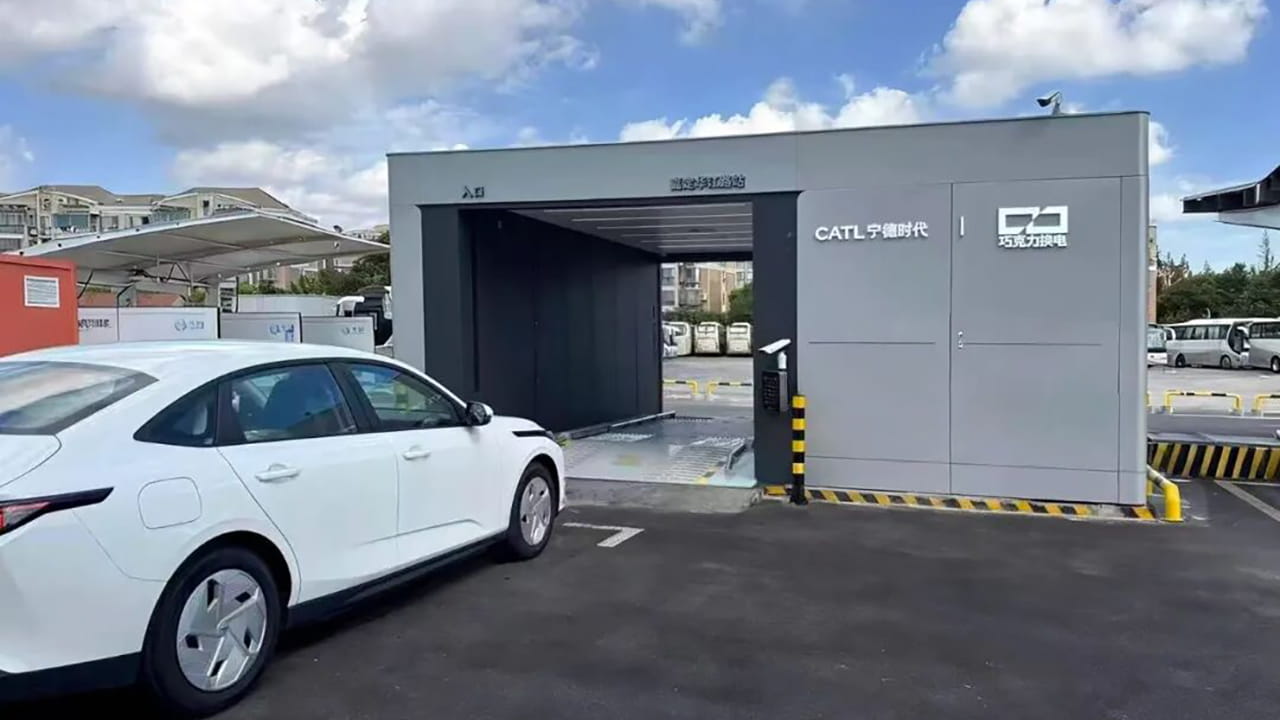
28CATL plans to build over 2,500 battery exchange stations by the end of 2026
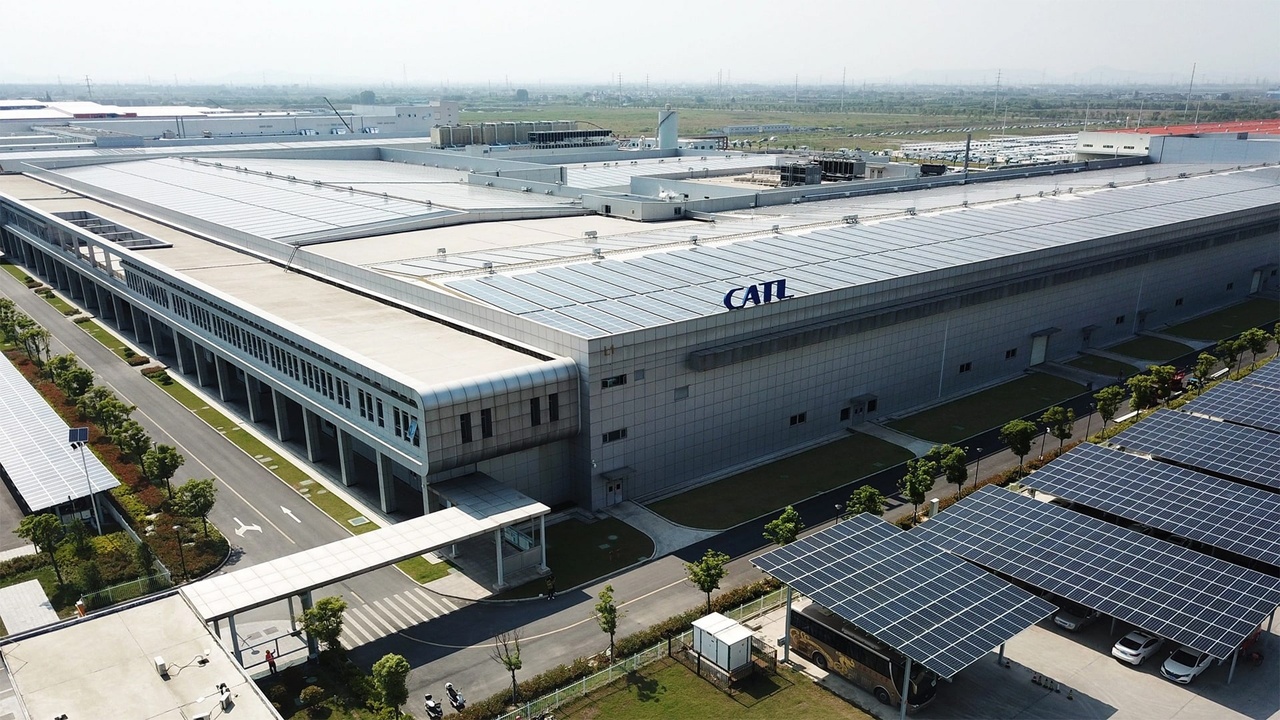
CATL $3750 (-0,19%) intends to increase the number of its battery changing stations by a factor of 1.5 next year, bringing it closer to its current annual target.
The Chinese battery giant plans to operate over 2,500 battery exchange stations in more than 120 Chinese cities by 2026, as its subsidiary Contemporary Amperex Energy Service Technology (CAES) announced today.
The number of battery exchange stations operated by CAES rose to 700 today (target 1000 in 2025), covering 39 Chinese cities.
In the fourth quarter, CATL is aiming to reach its target of operating 1,000 battery swap stations by the end of 2025, according to CAES.
CATL officially entered the battery swap sector on January 18, 2022 with the launch of its CAES-operated battery swap brand EVOGO. Previously, Nio$9866 (-5,47%) was the leading provider in this sector.
On December 18, 2024, CATL presented standardized battery packs for passenger cars at a Choco-SEB (Swapping Electric Block) conference and announced an ambitious infrastructure expansion plan.
The company aimed to have 1,000 battery swapping stations by 2025 and 10,000 in the medium term.
CATL announced last December that the first 1,000 stations will be built by CAES, while stations 1,001 to 10,000 will be built jointly by CAES and partners.
CATL's long-term goal is to expand its battery swap network to 30,000 stations. The 20,000th to 30,000th station is to be built in cooperation.
Last December, two new standardized Choco-SEB battery packs named No. 20 and No. 25 were introduced - similar to the gasoline grades in China named No. 92, No. 95 and No. 98.
By 2030, battery swapping, home charging and public charging will each meet one-third of the energy needs of electric vehicle owners, said Robin Zeng, founder, chairman and CEO of CATL.
How CATL wants to dominate the global battery replacement market
CATL $3750 (-0,19%)the world's largest battery manufacturer, is betting big on battery swapping as the next challenge in electric vehicle infrastructure, challenging the leadership position of carmaker Nio and reviving a concept once rejected by Tesla.
At a demonstration in Shanghai last week, the Ningde-based company showed how its "Choco Swap" stations can automatically swap out a dead battery in 70 to 80 seconds, with official specifications calling for a 99.99% success rate.
In contrast, a battery change on Nio's latest fourth-generation stations usually takes around three minutes.
With pilot trials of the fifth-generation stations due to begin in December, the company is expected to further reduce swap times, continuing the trend seen with each new generation.
CATL's strategy is based on standardized, universal battery packs that are suitable for different brands and vehicle classes.
The first two product families, launched last December, include 42 kWh and 56 kWh lithium iron phosphate (LFP) packs and 52 kWh and 70 kWh nickel cobalt manganese (NCM) packs with a range of 400 to 600 km.
The batteries are modular and can be rented, exchanged or upgraded so that car buyers can purchase a vehicle without a battery, reducing the purchase costs by up to a third.
The stations store 14 batteries depending on the configuration and are compatible with vehicles with a wheelbase of 2.55 m to 3.10 m - from compact saloons to larger mid-size cars.
In future generations, CATL is aiming to store 30 batteries in each station.
Each system also integrates charging functions and is designed to enable battery-to-grid services, so that energy can be stored and redistributed at times of low demand.
CATL has already installed more than 500 exchange stations in 34 Chinese cities, 105 of which were installed in August alone.
The company is targeting 1,000 stations by the end of this year, another 2,500 in 2026 and more than 2,000 new stations in 2027, covering more than 100 cities.
By comparison, Nio opened its first station at the beginning of 2018 and has since built around 3,500 stations in seven and a half years.
The battery manufacturer is aiming for a network so dense that a station is available every 3 to 5 km in urban areas, with each station able to handle 500 to 700 changes per day once private vehicles are added to the current taxi-focused operations.
The roll-out was deliberately fast. CATL says it can select, approve and build a new station within a month, although the process is expected to take longer in overseas markets - particularly in Europe.
Unlike Nio $9866 (-5,47%)which initially built a network around its own vehicles, CATL is working with multiple car manufacturers from the outset to ensure wider compatibility.
The first Choco Swap-enabled models are expected to hit the market from 2025, including the Aion S sedan from GAC, the E-QM5 from Hongqi and the Roewe D7 from SAIC.
Further vehicles from BAIC, Chang'an, Wuling and SAIC's Rising brand are expected from 2026.
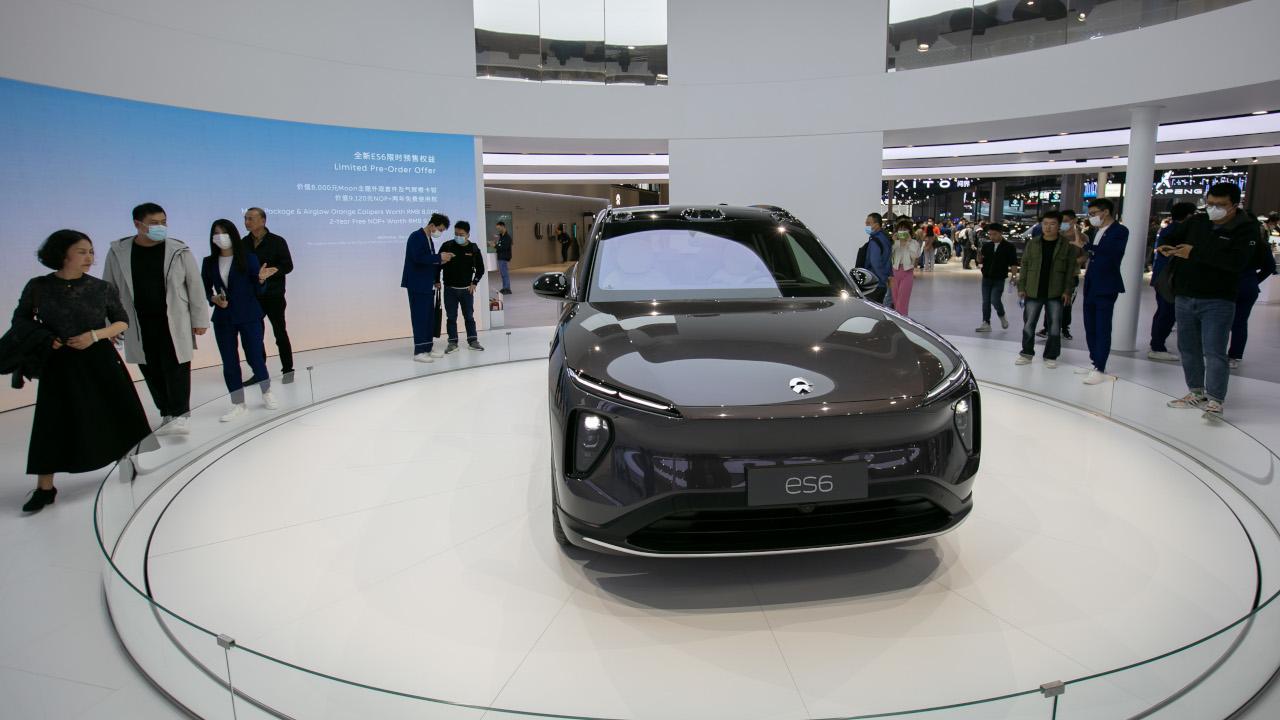
Nio, which pioneered this technology in China, operates more than 3,500 exchange stations in its home market and 61 in Europe, mainly in Germany and Norway.
The fifth-generation stations, scheduled to go into operation in 2026, will increase storage capacity beyond the current 23 batteries per site, a spokesperson for the EV battery swap division said.
However, expansion in Europe has slowed: earlier this year, Nio Power's team on the continent was reduced to just five employees, delaying further rollout.
The company has deepened its relationship with CATL, agreeing to a 2.5 billion yuan (US$345 million) investment in Nio Power from the battery company in March.
The two companies are also supporting Weilan, a battery start-up whose share capital tripled in May, as part of a joint research and development initiative.
CATL has said it will eventually launch the system in Europe, but executives said last week that the focus remains on China for now as there are "many challenges" overseas.
Vice president Jiang Li told the Financial Times earlier this year that the business model could be "copied" overseas once the domestic rollout is mature.
The company's relationships with Ford $F (+0,63%), Tesla $TSLA (+3,68%), BMW $BMW (-0,35%), Volkswagen $VOW (+1,96%) and Stellantis - all current customers of CATL batteries - could pave the way.
Stellantis $STLAM (+4,79%)which is building a €4.1 billion battery factory in Spain in partnership with CATL, has already started testing Fiat 500e vehicles with swappable batteries in Madrid through its Free2move mobility service, using technology from Californian start-up Ample.
For CATL, battery swapping offers both a hedge against slowing growth in demand for EV batteries and an opportunity to enter the consumer-facing infrastructure.
Unfortunately, it will remain a dream for a very long time to come.
Vehicle manufacturers use various different types of batteries. Be it the chemical composition, the design or the performance.
Therefore, a standardized system will unfortunately not work for at least the next 10 years.
The comeback of CATL's 8-series batteries signals an effort to regain supremacy in ternary cells.
Contemporary Amperex Technology $3750 (-0,19%) is reportedly preparing to launch a new 8-series of high-nickel batteries on the market in 2026. The batteries are to be installed in range-extending vehicles from leading electric vehicle manufacturers.
The high-nickel 8-series battery is a type of ternary lithium battery. Its cathode materials contain around 80% nickel, with the remainder made up of cobalt and manganese, which gives the battery its name.
》This chemistry was once in the spotlight《
A few years ago, dozens of models from more than ten brands, including Aion $AION (+0,07%), Nio $9866 (-5,47%) and Xpeng $9868 (-4,18%)were powered by 8-series batteries. However, the technology was still at an early stage, verification was incomplete and thermal management solutions were underdeveloped. Reports of thermal runaway effects were commonplace.
For a while, the industry treated the "8-series" label with caution. However, CATL insisted on not abandoning the development, arguing that abandoning 8-Series batteries would mean abandoning the premium market.
》Batteries with a high nickel content offer higher energy density and lower weight, but thermal stability and costs remain obstacles《
The trend towards larger batteries in plug-in hybrid cars, including range-extending models, has created an opportunity for the return of this technology.
Some of the extended-range models launched this year already have batteries with a capacity of over 60 kilowatt hours. According to 36Kr, plug-in hybrid vehicles, including those with extended range, will have batteries with a capacity of almost 80 kWh by next year.
Preliminary research by 36Kr suggests that at least four models with a capacity of around 80 kWh are already in the pipeline. These include the upcoming D-Series from Leapmotor $9863 and Xiaomi's range-extending model planned for next year $1810 (-0,99%).
While not all of these vehicles will be equipped with CATL's 8-series batteries, the race for larger batteries and longer range in pure electric mode creates a clear opportunity for high-nickel chemicals.
Compared to lithium iron phosphate (LFP) batteries, 8-series batteries offer higher energy density per unit mass and better overall performance. This allows vehicles with smaller batteries to achieve greater range, reducing overall weight while maintaining performance.
According to an industry insider, initial assessments indicate that the performance increase over mid-nickel batteries in terms of energy density at the system level is not dramatic.
Nevertheless, it is worth testing this technology for platforms that have already reached the limits of their technical capabilities.
》Cars are being equipped with larger batteries《
In recent years, the quest for greater all-electric range has led car manufacturers to install larger batteries in plug-in hybrid and range extender models.
Some of the vehicles launched on the market this year already have batteries with a rated output of over 60 kWh.
For example, the range-extended LS6 version from IM Motors is equipped with CATL's "Super Xiaoyao Max" battery, which delivers 66 kWh and offers a CLTC-certified range of more than 450 kilometers, outperforming some all-electric models.
》CLTC stands for "China Light-Duty Vehicle Test Cycle" and refers to a standard introduced by the Chinese government to measure energy consumption, range and emissions《
Another example is the S800 "Xinghui Executive" edition from Maextro, which is equipped with a Qilin battery from CATL and achieves a CLTC range of 400 km.
Almost half of all range-extended vehicles currently on the market offer a purely electric range of more than 200 km.
This trend will become even stronger next year.
Leapmotor's D platform will support 80 kWh batteries for several vehicles, including the D19 SUV and an MPV. Both are expected to achieve an all-electric range of 500 km.
Xiaomi's upcoming range-extended vehicle will also use a battery with a capacity of almost 80 kWh, while Great Wall Motor has confirmed plans for a plug-in hybrid model with an 80 kWh battery and a pure electric range of more than 400 km.
In addition, a range of 400 kilometers with an 80 kWh battery is a poor value with lousy efficiency. This means 20 kWh/100 km. Modern electric vehicles achieve more efficient values of approx. 25% below the values mentioned.
Battery manufacturers' technology will change significantly in the next 5-10 years. Rare earths will no longer be needed and the energy density per kilo will multiply.
Ranges of around 1000 kilometers, equal to diesel, will become feasible without increasing the size of the battery compared to today's batteries.
August 2025 Recap - And the winners are...
August was another outstanding month for my portfolio at eToro, closing with +14.19% growth.
S&P 500: +3.56% in August
Nasdaq 100: +2.86% in August
Looking at the bigger picture, my YTD performance is now +56.63%, while the:
S&P 500 is up around +10.80%
Nasdaq 100 is up around +11.63%
This clear gap shows that my investment formula – Fundamentals + Algorithm + Patience – is delivering results.
📈 Top performers in August:
Jumia ($DE000A2TSMN4 )
NIO ($9866 (-5,47%) )
Crypto.com ($CRO (-0%) )
PepsiCo ($PEP (-1,36%) )
StoneCo ($STNE (-10,73%) )
For September, my focus is on protecting the portfolio by diversifying further:
Expanding into Hong Kong
Adding exposure in Europe
Entering the UAE markets
This multi-market approach helps reduce risk while keeping opportunities open in different geographies.
👉 My strategy remains consistent: patience, fundamentals, and letting my algorithm highlight the right buying moments.
𝗧𝗵𝗶𝘀 𝗶𝘀 𝘁𝗵𝗲 𝗽𝗲𝗿𝗳𝗲𝗰𝘁 𝘁𝗶𝗺𝗲 𝘁𝗼 𝗰𝗼𝗽𝘆 𝗺𝗲 𝗼𝗻 𝗲𝗧𝗼𝗿𝗼—𝗱𝗼𝗻’𝘁 𝗺𝗶𝘀𝘀 𝘁𝗵𝗶𝘀 𝗼𝗽𝗽𝗼𝗿𝘁𝘂𝗻𝗶𝘁𝘆 𝘁𝗼 𝗴𝗿𝗼𝘄 𝗮𝗹𝗼𝗻𝗴𝘀𝗶𝗱𝗲 𝗺𝘆 𝘀𝘁𝗿𝗮𝘁𝗲𝗴𝘆.
😎 𝗗𝗶𝘀𝗰𝗹𝗮𝗶𝗺𝗲𝗿: This is my personal opinion and is for informational purposes only. You should not interpret this information as financial or investment advice.
Once again 212
So 1.5 weeks have now passed. The first gimmicks are over and my Watchlist Pie has returned a total of 4.5% in one week. This has now been sold and I have built up a pie to save for the next 8-10 years. I'm starting with 50€ a week until I've completed the broker's test phase. After that I'll ramp it up to about 1k per month.
There are still a few stocks missing, but the big ones will be scaled down a bit. Among others $IREN (+7,21%) ....
What do you think of the selection?
$NVDA (-0,54%)
$GOOGL (+0,68%)
$MSFT (-2,77%)
$AVGO (-1,12%)
$005930
$AMD (-1,66%)
$TSLA (+3,68%)
$IBM (-1,81%)
$RKLB (+6,08%)
$NU (-1,19%)
$SMCI (+1,69%)
$HIMS (+1,73%)
$ENR (-1,54%)
$HOOD (+5,54%)
$PLTR (+4,44%)
$CSCO (+1,89%)
$MTX (+1,54%)
$TTD (-2,96%)
$QBTS (+11,46%)
$9866 (-5,47%)
$CRWV (+3,66%)
And what of course should not be missing is $SIKA (-0,59%) These are still weighted at 2% 😉 As a craftsman, I really enjoy using the products myself. The technological progress compared to other products such as StoCretec or others is already enormous, but it would go beyond the scope of this article.
However, I see Tesla as doomed🙈🫡
Nevertheless, I wish everyone (who doesn't push Tesla as the most valuable company in the world) good luck :)
💥 15 top trades vs. 15 flop trades - full transparency!
Today I'm going to show you my best and worst trades since the start of my investment journey. No show, no excuses - just real numbers and learnings.
🟢 My top 15 trades
📈 From Rheinmetall to Palantir to Ferrari - some positions really took off.
Biggest single gain: +131 % for Rheinmetall💪
→ The majority came from strategically placed opportunities, not luck.
🔴 My flop 15 trades
📉 Nvidia put, Mainz Biomed, BrainChip... The biggest flop?
-99.76 % with a warrant on Nvidia 😬
→ The lesson: highly speculative bets quickly go against you - especially without a plan.
📘 My most important learning
I learned this lesson in my first year of investing:
Short-term trading may work from time to time - but not in the long term.
Today I have a clear strategy:
✅ Core-satellite
✅ Focus on quality
✅ Discipline & long-termism
🧠 Why am I sharing this?
Transparency is not a buzzword for me - it's a duty.
Losses are part of it. If you only talk about your profits, you're only telling half the truth.
#Trading
#Fehler
#Investieren
#Transparenz
#Learnings
#DepotEinblick
#DerSpekulant
#Getquin
$RHM (+2,1%)
$NVDA (-0,54%)
$MC (-0,37%)
$MYNZ
$BRN (+2,97%)
$COIN (+4,72%)
$RACE (+2,04%)
$TSLA (+3,68%)
$WDL1 (+9,83%)
$PLTR (+4,44%)
$PTON (+1,62%)
$9866 (-5,47%)
$MULN
$MRNA (+4,15%)
$VBK (+2,71%)
$JKS (-6,24%)
$TPE (-0,59%)
$PFIZER
$SLI (+2,73%)
So hopefully you're now keeping your hands off, wait, what does the basic information for securities say about "derivative financial instruments"?😅🤷🏼♂️
GreenMoneyDepot
2020 started with tr to gain first experience on the financial markets with manageable funds. 600€
many shares with very small amounts...
naaaja...
With $9626 (-2,25%) and $9866 (-5,47%) had large short-term gains in the portfolio during Corona. But just as quickly accumulated losses again due to overpriced speculative assets.
2024 strategy Switch to etf savings plan and diversification of countries and sectors as well as $BTC (+0,21%) admixture.
long-term investment idea:
Energy sector should be a safe bet, as global consumption is increasing annually, not decreasing.
then generally modern technologies
ETF
$ISAC (-0,1%) - Main position 50%
$EXXT (-0,25%) - usa technology boost distributing 30%
$EXSH (-0,44%) - Europe hedge (finance and insurance) distributing 20%
I will continue to buy or sell shares from time to time, depending on whether it is worthwhile or not.
Now you...
Any suggestions?
ADAC finds clear words on cars "Made in China"
$1211 (-1,45%)
$1810 (-0,99%)
$9866 (-5,47%)
They are appearing more and more frequently on German roads: Vehicles with sometimes unfamiliar logos and car models that may look familiar, but which many people cannot identify with any brand. They are often made by young Chinese manufacturers such as Nio, BYD, Aiways and others. The ADAC has a clear opinion on this.
ADAC: Chinese cars are showing many European brands the ropes.
Cars from Chinese manufacturers are no longer an unfamiliar sight in Germany. "Chinese vehicles are serious competitors and are convincing in many of the test categories," is one of the conclusions of the ADAC experts who have tested 13 models from Chinese manufacturers over the past three years. Of these, only two models failed to achieve a five-star rating in the EuroNCAP crash test. All others achieved top marks.
In the evasion test, the Chinese models - the majority of which are electric cars - were also convincing. According to the ADAC, "many vehicles from European manufacturers" performed worse here. In terms of the general quality of materials and workmanship, it is also acknowledged that "made in China" should now enjoy a good reputation.
"Our tests show: Chinese manufacturers have caught up considerably in recent years and can now keep up with established brands," says ADAC Technical President Karsten Schulze.
There is no doubt that the Chinese can build cars. According to the ADAC, however, it is the software that is lacking. Assistance systems from European manufacturers are more sophisticated. Traffic sign recognition, for example, as well as lane and distance control systems are even more reliable. However, the example of Nio shows that Chinese brands can catch up extremely quickly here.
The ADAC also draws attention to problems with operation, which can occur due to the frequently installed touchscreens, for example - this is by no means a problem that is unique to Chinese brands. Difficulties in translating the system languages, on the other hand, would also cause obstacles in operation.
ADAC sees no "flood" of e-cars from China
The ADAC already sees advantages in Chinese cars, particularly in terms of price. The models from the Far East often undercut the European competition by several thousand euros. However, this advantage can be negated by spare parts that are more difficult to obtain or a low residual value when reselling.
Despite growing interest, the proportion of Chinese cars is still low: "In terms of total sales, Chinese cars currently account for less than two percent in Germany," says Florian Hördegen from the ADAC Technical Center in Landsberg.
https://www.giga.de/tech/adac-findet-klare-worte-zu-autos-made-in-china--01J4SCZQNDJ1W2QF0VFEXJGZXY
Títulos em alta
Principais criadores desta semana