Billionaire Stanley Druckenmiller says the global payment system will run on crypto stablecoins within 15 years because they are more efficient.
Discussion about SOL
Posts
374📊 Binance analysis: US midterms could trigger rally in Bitcoin and equities
According to a new analysis by Binance Research, the upcoming US midterm elections could be an important catalyst for a new upward movement in risk assets such as Bitcoin ($BTC (+0.04%) ) and equities. Historical data shows that political uncertainty around elections often leads to increased volatility - followed by a sharp rebound in markets.
_________________________
📈 1. historical pattern after midterm elections
Binance analysts point to recurring market cycles:
- The S&P 500 averaged +19% returns in the 12 months following midterm elections.
- There has not been a negative year for the index in this period since 1939.
- Bitcoin ($BTC) even gained around +54% on average after midterm cycles.
💡 Interpretation:
As soon as political uncertainty about the composition of the US Congress disappears, investors often return more strongly to risk assets.
_________________________
📉 2. why midterm years are often weak at first
Historically, midterm years themselves are often volatile or weak:
- S&P 500 average drawdown: around -16 %
- Bitcoin average decline: about -56% during midterm years
This phase is often characterized by several factors:
- political uncertainty
- restrictive monetary policy
- macroeconomic risks
The situation often only stabilizes after the elections.
_________________________
⚙️ 3. Why the election is relevant for the crypto market
US politics plays a central role for:
- Crypto regulation
- stablecoin laws
- institutional capital flows
A clearer political environment after the elections could enable more institutional investment in cryptocurrencies, analysts say
_________________________
🧠 4 Classification for investors
The analysis indicates a possible scenario:
In the short term
- high volatility
- Political uncertainty
Medium term (after the elections)
- Possible risk-on phase
- Rising demand for equities and cryptocurrencies
However, this does not mean that a rally is guaranteed - geopolitical risks, inflation or interest rate policy may continue to play a major role.
_________________________
🧠 Conclusion
The data suggests that US midterm elections are historically often a turning point for markets.
If the pattern repeats itself, Bitcoin ($BTC (+0.04%) ) and equities could see a stronger rally after the election period.
The post-election period could therefore be particularly interesting for investors.
_________________________
🔗 Source
Ground News: Binance US midterms could spark Bitcoin and stock rallies
$ETH (-0.57%)
$SOL (-1.13%)
$USDT (+0%)
$BNB (-0.27%)
$XRP (-0.2%)
$DOGE (-0.94%)
Crypto continues to stabilize
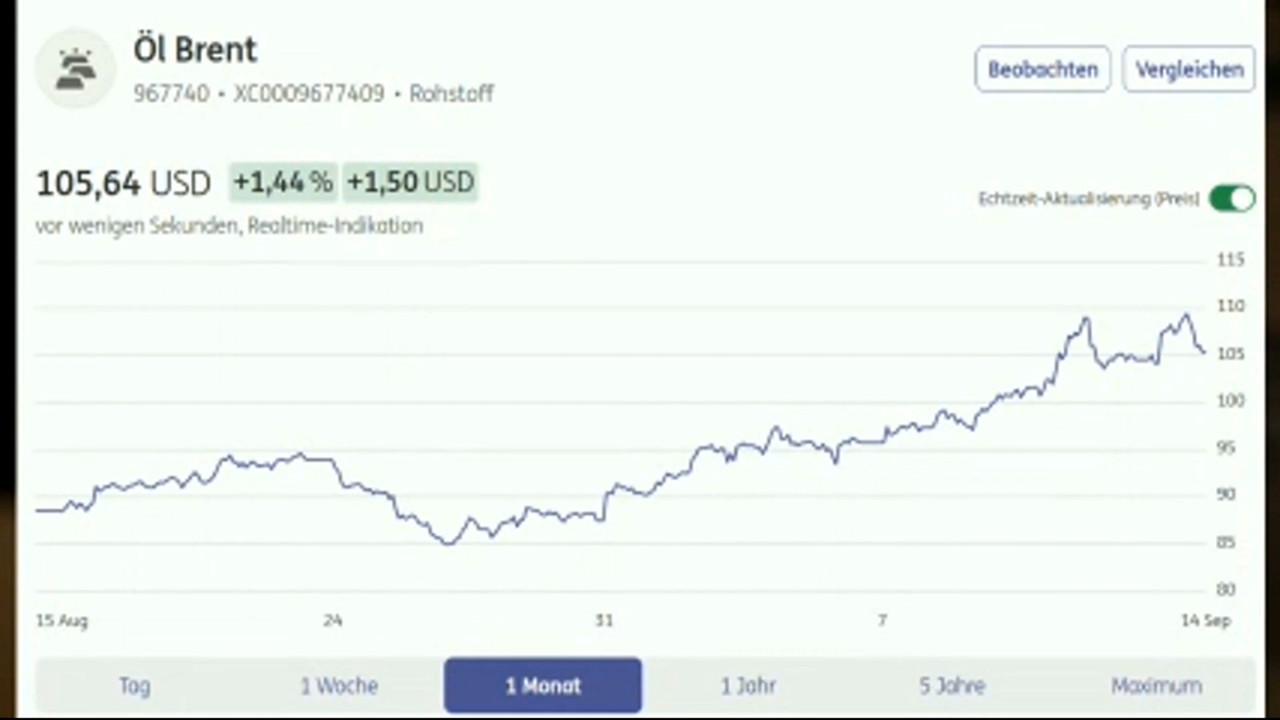
Digital asset investment products saw inflows of USD 619 million last week, indicating that the initial market reaction to the Iran crisis is supportive for this asset class. Early optimism is particularly evident, with an impressive USD 1.44 billion flowing into these products in the first three days of the week. However, investor sentiment weakened noticeably later in the week, which is reflected in outflows totaling USD 829 million on Thursday and Friday, even though the published labour market data was significantly weaker than expected. This decline in inflows indicates that investors are acting more cautiously in the short term and are taking possible economic uncertainties into account. Nevertheless, rising oil prices are offsetting potential declines in inflation that could result from the weak labor market figures, meaning that the general market optimism is not completely interrupted. Overall, capital flows show that despite geopolitical tensions and short-term volatility, an overwhelmingly positive attitude towards digital asset investment products prevails, with investors continuing to see opportunities in this emerging asset class and willing to accept the risk.
$BTC (+0.04%)
$ETH (-0.57%)
$SOL (-1.13%)
$XRP (-0.2%)
How to invest in crypto:
What is my real Bitcoin entry price? 🤔
I'm having a discussion with friends and would like to hear what you think.
I currently hold around 0.208 BTC. Some of it was bought over the years, but some of it also came as a gift from family (birthday, Christmas, etc.).
The total amount of money I have invested in Bitcoin is around €5,536.
If I do the simple math:
€5,536 / 0.208 BTC = about €26,600 per BTC.
For me, that honestly feels like my "real" entry price, because that's the money I actually put in myself.
But now comes the point where the discussion started.
I exchanged some altcoins for Bitcoin in November 2024, when the price was already relatively high. As a result, some people say that my average price should actually be much higher, in some cases closer to 70k, because this exchange practically counts as a new purchase.
Others say the same thing:
The Bitcoins I received as a gift shouldn't actually be included in the average because I didn't pay anything for them.
In the end - depending on how you do the math - I end up with completely different "entry prices".
Once around 26k,
sometimes significantly higher due to the trades,
or theoretically even lower if you look at the gifts differently.
So I'll just ask around:
How would you calculate your entry?
- Just your own invested money?
- Include every trade at the price at the time?
- Or are donated coins simply a bonus without an entry price?
I just realized that the "average entry" is much less clear than I always thought.
😂😆😂😆
$BTC (+0.04%)
$ETH (-0.57%)
$SOL (-1.13%)
$XRP (-0.2%)
$PEPE (-0.59%)
$ADA (-1.7%)
#crypto

GQ Community - please explain crypto to me
For a long time I looked at the crypto market and saw nothing but a digital casino.
Between the 10,000% "to the moon" pumps and the endless sea of meme coins, it’s hard not to feel like the whole thing is just a giant game of bulls***.
I’ve spent the last few weeks watching YouTube videos and I have to admit that the Bitcoin ecosystem is an absolute masterpiece. Seeing it explained as a decentralized, self-sustaining machine changed my perspective from " bulls*** " to "speculative innovation."
Very good videos:
https://www.youtube.com/watch?v=vclZlAFXpEI
https://www.youtube.com/watch?v=-D3ChoNtlX8
Please recommend more!
My Current Setup (Noob)
I’ve decided to start small. A low allocation just to start playing the game. Currently, I’m running a 90/10 split: (100€ monthly)
- 90% Bitcoin ($BTC (+0.04%)): It’s the king for a reason I guess.
- 10% Binance Coin ($BNB (-0.27%)): Just because of the 25% discount on trading fees on binance and it is too good to ignore.
I’m fully aware I’m still "uneducated" in this space. I love the idea of decentralized tokens, but I’m struggling to understand the utility of other altcoins without them feeling like a roll of the dice.
Is a 90/10 BTC/BNB split too "safe," or is it the smartest way to start?
Are there other "beautiful machines" (actual utility projects) I should look into that are not just hype and noise? Because when I look at $ETH (-0.57%) for example isn't it just Bitcoin but worst?
The 100€ montlhy deposit on binance is all automated but is it the best? I transfer to binance and then it auto converts 25€ each week to btc and bnb. I feel that I am paying more in spread for than I usually pay on spot trading for some reason. Please help
$BTC (+0.04%) , $ETH (-0.57%) , $SOL (-1.13%) , $USDT (-0.13%) , $USDC (+0.5%) , $XRP (-0.2%) , $AVAX (+2.41%) , $BNB (-0.27%) , $ADA (-1.7%) , $SHIB (-1.01%) , $DOT (-1.78%) , $DOGE (-0.94%) , $LUNA (-2.99%) , $ASML (+0.72%) , $NVDA (-0.69%) , $NVO (+0.76%) , $NOVO B (+0.66%) , $V (+0.84%) , $PLTR (-0.22%) , $MSFT (-1.06%) , $NFLX (+1.97%) , $IREN (+1.51%) , $NBIS (+5.33%) , $DAPP (+1.84%) , $CIFR (+3.81%) , $DUOL , $MCD (+1.65%) , $MA (+0.71%) , $MARA (+7.65%) , $SE (+1.35%) , $OSCR (+2.22%) , $UNH (+2.48%) , $CRM (-1.56%) , $NOW (+1.99%)
Inflows of one billion US dollars mark shift in sentiment for digital assets
Investment products on digital assets recorded inflows of USD 1 billion last week, ending a five-week period of outflows that totaled USD 4 billion. From a macroeconomic perspective, it is difficult to attribute the change in sentiment to a single trigger. However, the previously weak price performance, the break of important technical support levels and renewed accumulation by large $BTC (+0.04%)-holders are likely to have contributed to the trend reversal. Anecdotally, it can also be observed that recent client discussions are almost exclusively about attractive entry levels and no longer about reducing the allocation to this asset class.
Bitcoin was the main beneficiary, attracting USD 881 million. At the same time, inflows into short Bitcoin products amounting to USD 3.7 million illustrate that opinions continue to diverge. Ethereum also saw inflows totaling USD 117 million - the highest since mid-January. Both $ETH (-0.57%) and #bitcoin are still net negative since the beginning of the year.
$SOL (-1.13%) In contrast, inflows of USD 53.8 million were recorded last week and total USD 156 million since the start of the year. At $LINK (-0.29%) (Chainlink) saw inflows of a moderate USD 3.4 million, while there were no significant outflows.
You can invest in Bitcoin, Ethereum, Solana and Chainlink via the following vehicles:
My BTC strategy 💸
Hello folks 💁♂️
I wanted to introduce myself again
The last time was almost three years ago.
Since then I've been reading along and have learned a lot, even though I'm currently pursuing a slightly different strategy... I've learned a lot about dividends and many interesting companies that I would concentrate on if my strategy doesn't work out. And since the topic often came up here in recent weeks that there is too little added value and always the same posts, I sat down and summarized my strategy. But let's start with the background :)
Background:
I've been invested in BTC since I was 15 and took part in my first full cycle. At that time I observed the phases, but never touched my BTC position according to the classic HODL HODL principle.
(I am now 19)
In advance:
In the strategy I explain how I want to approach the coming cycle.
I am aware of the risk but am prepared to take it as I am still young and hope you can take something away from the following description ;)
1 Portfolio architecture
Core BTC
- 40-60% of my BTC position
- No rotation
- Always stay in the market
Why?
As a hedge in case the 4 year cycle is broken and we have a "supercycle"
Growth Layer
- Remaining $BTC (+0.04%) Position
- Satellites (e.g. MSTR, Solana) max. 10-15 % of the portfolio value
- Source of return for later rotation
Why?
Historically outperformed $MSTR (+2.41%) and $SOL (-1.13%) from bear market bottom to ATH Btc (i.e. as a small booster)
However, this layer will be fully reallocated to the value layer (as described later)
Value Layer
- Cash position/ call money account
- Gold
Why?
Mainly as a store of value in hype phases and long-term risk minimization
2 How do I want to time the market?
I have looked at the following indicators to make it easier to assess which market phase you are in.
- Distance to the 200WMA
- Funding rates
- Open interest
- BTC dominance
- Weekly RSI
- Fear & Greed Inedx
- Drawdown from last major high
(Since it would be time-consuming to re-evaluate the data every week, I have commissioned a Ki agent to evaluate the data for me on a weekly basis. And then use the data to divide the current price into the following phases)
Phase 1 - Accumulation phase
Signs:
- Price 0-30 % above 200WMA
- Fear & Greed low
- Funding neutral or negative
- Dominance stable or rising
- Drawdown 30-50 % from last ATH
Action?
In this phase, I am buying more BTC and place a monthly limit order 5% below the price at the beginning of the month
But since it can go lower, I continue to build up the FTSE position at the same time in order to be liquid in the event of another drawdown...
Phase 2 - Possible bottom phase
Signs would be:
- 55% drawdown
- Price close to or below 200WMA
- Negative funding
- And you hear "BTC is dead" again 🤡
Action:
- Savings plan completely on BTC
- Additional staggered limit orders
- Partial rotation from FTSE into $MSTR and $BTC
Phase 3 - Recovery
Typical:
- 30-100 % above 200WMA
- RSI >60
- Funding moderately positive
- High volatility
When?
Mostly before halving 2028 and post halving
Action:
- Reduce BTC savings plan slightly
- Savings rate on $VWCE higher again
- No capital rotation yet
Phase 4 - Overheating
Typical:
- 100% over 200WMA
- Funding high
- Open interest rising sharply
- Fear & Greed >75
- Dominance begins to fall
Action:
- First tranche Growth → Value Layer
- Reduce $MSTR first
3 Capital rotation rules (hit ATH)
Trigger 1
- 3-4 parabolic weekly candles
- High funding rates
- Retail hype (Google Trends etc.)
Action:
→ Rotate 15% growth layer into value layer
→ whereby $MSTR is reduced first
Trigger 2
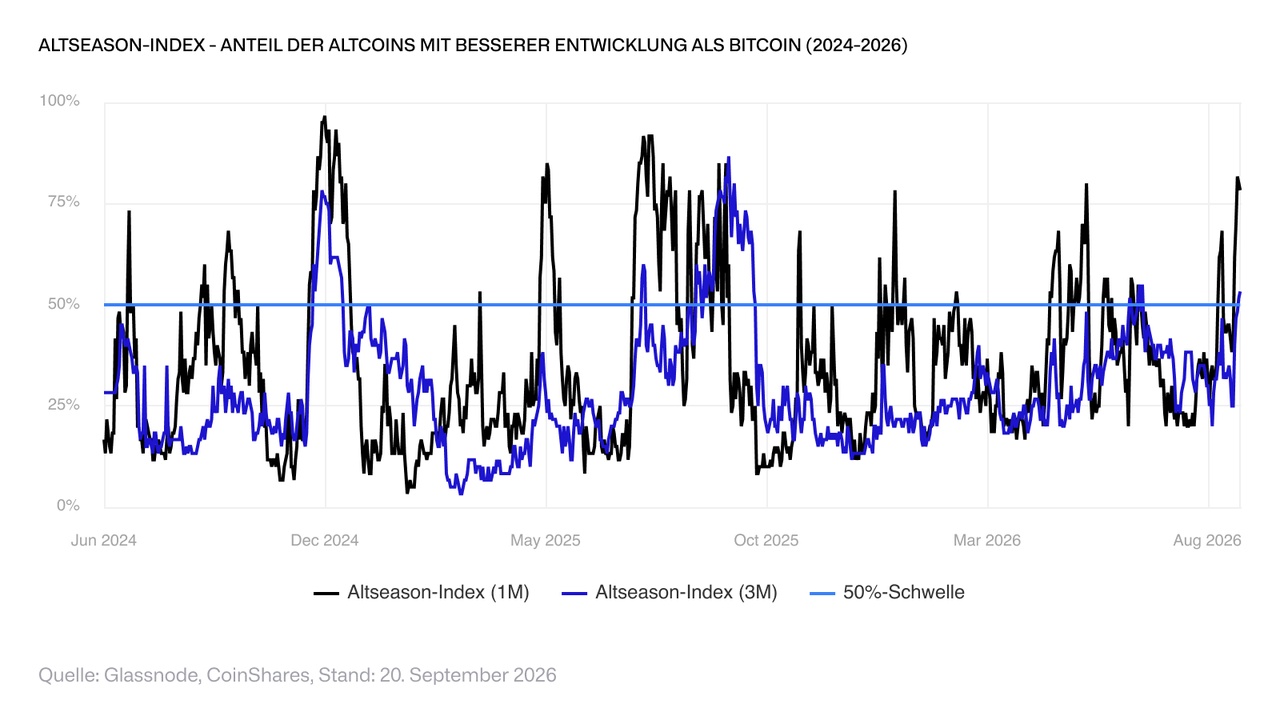
- BTC dominance falls sharply (historically close to ATH as capital is rotated into ALTs)
Action:
→ further 20% rotation into value layer
Trigger 3 - Euphoria phase
- Supercycle narrative
- Strong media presence
- Exuberance in the market
Action:
→ Rest from growth layer to value layer
Reload system (bear market 2031+)
Drawdown measured from new major high.
-30 % → first tranche back in $BTC (+0.04%)
-45 % → second tranche
- close to / below 200WMA → third tranche
And then the whole thing from the beginning :)
Conclusion
Core position remains in any case if we really suddenly break out of the cycle...
@stefan_21 presented an exciting opportunity for this yesterday ;)
I hope it has somehow become comprehensible, I am not yet so experienced in writing...
I'm looking forward to your opinion 😉
Bitcoin & Ethereum or co?
Hello everyone,
I would like to hear your opinions. Of course there's a lot on the Internet, but I would be more than happy to have an exchange here in the community.
What are your current thoughts on the chewing of $BTC (+0.04%) or perhaps $ETH (-0.57%) .
The price has halved in the last few months.
What do you think about the other coins like $SOL (-1.13%) , $ADA (-1.7%) or also $XRP (-0.2%)
Looking forward to your opinions.
Transatlantic divergence: Germany takes advantage of price weakness, while US capital flows turn negative
Investment products for digital assets recorded outflows of 288 million US dollars last week. This was the fifth consecutive week of net outflows, bringing the total to USD 4.0 billion - still below the USD 6 billion reached in the same period last year. After several weeks of record activity, trading volumes in ETPs slumped significantly to USD 17 billion, the lowest level since July 2025, indicating waning investor interest.
The regional picture is divergent: In the US, outflows totaled USD 347 million, while other regions saw inflows totaling USD 59 million. This was led by Switzerland with USD 19.5 million, Canada with USD 16.8 million and Germany with USD 16.2 million.
$BTC (+0.04%) The US dollar dominated the negative sentiment with outflows of USD 215 million, while short bitcoin products saw inflows of USD 5.5 million - the highest figure among all asset classes. $ETH (-0.57%) The short bitcoin fund recorded outflows of USD 36.5 million, followed by multi-asset products with USD 32.5 million and $TRX (+1.67%) (Tron) with 18.9 million US dollars. Low inflows were recorded for XRP (USD 3.5 million), $SOL (-1.13%) (3.3 million US dollars) and $LINK (-0.29%) (Chainlink) (USD 1.2 million), but not enough to offset the net outflows from altcoins.