$BTC (-2.81%) is the only area with negative investor sentiment and recorded capital outflows of USD 264 million. In contrast $XRP (-2.73%), $SOL (-2.05%) and $ETH (-3.51%) lead inflows, with USD 63.1 million, USD 8.2 million and USD 5.3 million respectively. XRP thus remains the most successful asset since the beginning of the year, with cumulative capital inflows of USD 109 million.
- Markets
- ETFs
- CoinShares Bitcoin ETP
- Forum Discussion

CoinShares Bitcoin ETP
Price
Discussion about BITC
Posts
34The Bitcoin price falls: reasons and background
Bitcoin's recent price action once again shows that markets have decoupled from fundamentals and overshot them - a pattern typical of sharp corrections in digital assets. When sentiment becomes disorderly and price becomes detached from underlying signals, it is often more useful to focus on positioning, capital flows and structural stress indicators to assess whether the downward pressure is nearing its end.
Several of these signals are now beginning to synchronize. Global crypto ETPs recorded their highest ever daily trading volume yesterday at USD 18.5 billion. Such volume spikes during price declines have historically signaled capitulation rather than renewed conviction selling. While net outflows from funds have slowed, in previous cycles it was often the lows in the rate of change of flows, rather than the outflows themselves, that marked local lows.
The on-chain behavior also supports this assessment. Addresses with holdings of more than 10,000 Bitcoin had sold around USD 28 billion worth of Bitcoin since October 2025 during the sell-off, but these sales have recently come to a halt. In the past two weeks, these large holders have bought around USD 4.7 billion worth of Bitcoin. Sustainable bottoms have rarely occurred without a stabilization and subsequent reversal in the positioning of the so-called whales. This turning point has not yet been definitively confirmed, but is an encouraging signal.
The $BTC (-2.81%)-price is currently below the estimated average production costs. From a production perspective, Bitcoin is trading well below the estimated average production costs of listed miners, which we estimate at around USD 74,600. Historically, phases in which the spot price is noticeably below production costs have usually been short-lived, as the pressure on miners' balance sheets, their capital expenditure and marginal supply increases rapidly.
Behavioral indicators also point to a late stress phase. In the past, reports that private investors were temporarily unable to access trading platforms due to a sharp increase in trading volumes often coincided with phases of maximum selling pressure - and not with the start of longer downtrends.
The macroeconomic environment is becoming more supportive at the margin. Yesterday's JOLTS report was significantly weaker than expected; the number of job vacancies fell to a multi-year low. This led to a noticeable increase in the market's implied probabilities of a rate cut in June - despite the uncertainty surrounding the future leadership of the US Federal Reserve. Although a more hawkish chairman could limit the scope for monetary policy, weaker labor market data reduces the possibility of maintaining restrictive interest rates without political and institutional tensions.
Concerns about quantum computing have also re-emerged in the wake of the decline, but these are significantly overestimated. The risks posed by quantum computing are theoretical, distant and only affect a small proportion of older addresses. The core monetary properties of Bitcoin remain intact, and the protocol has sufficient time and clearly defined pathways to implement post-quantum cryptography if required. This is an engineering issue, not a factor that fundamentally challenges the investment thesis.
As the downward pressure appears to be easing, it is worth returning to the fundamental investment thesis of Bitcoin. Bitcoin remains a scarce, non-governmental monetary asset with a fixed supply and no dependence on institutional credibility. In an environment of increasing fiscal dominance, politicized monetary policy and dwindling confidence in traditional stores of value, this central investment thesis remains unchanged.
(Author: James Butterfill, Head of Research at CoinShares)
Gold is not winning the debate on currency devaluation. It (still) wins the demographic lottery.
Baby boomers hold over 70 percent of investable assets. This one figure explains more about #gold the year 2024 than any macroeconomic thesis.
Here is the frame of reference that most analysts overlook:
When fear of currency devaluation rises, capital flows to where capital holders have confidence. And right now, this is not a philosophical question, but an actuarial one.
Gold = boomer capital. The generation with accumulated wealth, a wealth of institutional experience and fifty years of coinage according to the motto: "Gold = security". They don't need to be convinced. They simply allocate.
$BITC (-4.89%) = Capital of the millennials and Generation X. Growing conviction, but wealth accumulation is still in progress. Smaller aggregated pools of capital. Many are convinced - but convinced with mortgages.
Altcoins = Generation Z capital. Venture-like risk appetite meets the smallest capital base. High conviction, low firepower.
The demonetization thesis is not wrong. Capital just hasn't changed its address yet.
It's not about which asset is the "better" hedge. Gold and #bitcoin can both fulfill this function. The simpler question is: who has the capital to invest - and what do they trust?
Today, the answer is in favor of gold. But wealth does not stand still. The largest intergenerational transfer of wealth in history is underway: over 70 trillion US dollars will pass from boomers to younger generations in the coming decades.
The real question for allocators is: what happens when the demonetization trade meets demographic change?
Why Bitcoin is currently underperforming, but is currently undervalued
First, capital flows remain unfavorable. Since October, large Bitcoin holders have sold around USD 29 trillion, which is in line with historical patterns in the middle of the Halving cycle, where the distribution phase typically lasts six to nine months. Although smaller investors have accumulated, this has so far not been enough to fully absorb the selling pressure. At the same time, institutional inflows into digital asset ETPs remain subdued, with outflows of USD 440 billion recorded since the beginning of the year.
Secondly #bitcoin increasingly decoupled from the growth of the global M2 money supply - a relationship that has historically been close. Either investors have fundamentally misjudged this relationship or global liquidity is on the verge of a significant contraction. Given the current monetary conditions, the latter seems unlikely, suggesting that Bitcoin is undervalued relative to the prevailing monetary conditions.
Geopolitical risks also play a role. Bitcoin's hybrid identity as a risk asset and store of value tends to have a negative impact in periods of acute geopolitical tensions. Rising oil prices and increasing tensions in the Middle East, including maritime troop deployments towards Iran, have dampened general risk sentiment and favored traditional safe havens such as gold.
Political dynamics in the US are also limiting short-term catalysts. The Trump administration's aggressive stance towards the Federal Reserve has limited its own influence; legal action against incumbent central bankers is unlikely to be successful and the scope to reshape the power structure within the Fed is limited. Accordingly, a significant, politically driven boost for Bitcoin seems unlikely before mid-2026.
Looking ahead, we expect a volatile, sideways market environment with limited upside potential above USD 100,000 over the next three to six months. However, the medium-term outlook remains constructive. Monetary conditions remain loose, concerns over currency devaluation persist, selling by major market participants is likely to come to an end by mid-2026 and historical liquidity relationships suggest significant catch-up potential.
Paradoxically, this could make Bitcoin the most compelling devaluation trade at present. Precious metals have already largely priced in the change in monetary policy, whereas Bitcoin has not. For patient investors, this discrepancy could be more of an opportunity than a risk. (Author: James Butterfill, CoinShares' Head of Research)
What Luke Nolan (CoinShares Research Associate) would include in his crypto portfolio in 2026
$BTC (-2.81%)
#bitcoin is an indispensable store of value for any crypto portfolio, but at the same time offers a growth component that other typical stores of value do not. In my view, a crypto portfolio should therefore be built around Bitcoin. Institutional adoption via ETFs and allocations to corporate treasuries is an important narrative, but in reality we are still very early in some segments of the market. While there is some saturation in digital asset tokens, there is significant potential for additional inflows as more allocators develop a better understanding of the asset class - such as more conservative investment committees or even governments.
#ethereum remains the leading smart contract platform in terms of total value locked (TVL) and developer activity. The Layer 2 ecosystem, including Arbitrum, Optimism and Base, continues to scale the network and bring in new users. Most importantly, Ethereum is well positioned to benefit from the growth of stablecoins and tokenization infrastructures. Regulatory advances through legislation such as the GENIUS Act could significantly accelerate this trend. Scott Bessent expects stablecoins to be worth three trillion by 2030, and we believe Ethereum is well positioned to absorb a significant share of this.
#solana Ethereum follows a similar value proposition to Ethereum, but offers high throughput rates and low fees. Owning both assets therefore allows for broad coverage of the smart contract segment. Tokenized equities are likely to become more established on Solana and with spot ETFs now available, significant capital inflows could follow in 2026. ETH and SOL are generally well covered in the smart contract platform market, and with prices largely depressed, they offer attractive entry points without the speculative overheating of past highs.
Which crypto assets are you betting on this year?
Brian Armstrong (Coinbase) and the French Central Bank: a new divide in Davos
On the sidelines of the World Economic Forum in Davos, Coinbase CEO Brian Armstrong corrected the governor of the Banque de France on a fundamental point about Bitcoin's architecture: Bitcoin has no issuer and functions as a truly decentralized protocol that is not dependent on any single entity. François Villeroy de Galhau's remark that he trusts "independent central banks (...) more than private issuers of #bitcoin" revealed a conceptual blind spot - one that goes deeper than mere semantics and points to a larger problem in the traditional financial world.
This exchange is symptomatic of an "old growth sector" that, despite decades of experience in the #geldpolitik Bitcoin does not look at its own technological foundations. In Bitcoin's architecture, miners are not issuers: Their function in distributing the coins does not allow them to set the rules. Bitcoin is a network secured by cryptographic consensus, whose rules are public, verifiable and immutable - by design. To confuse it with a privately issued claim reveals a fundamental misunderstanding of the actual innovation of the protocol.
The reluctance (or inability?) of some high-level decision-makers or otherwise savvy commentators to acknowledge this technological difference reflects not only regulatory caution, but also a gap in the conceptual foundation. Bitcoin therefore represents a break with the gold standard monetary order because it embeds independent verification in the source code rather than relying on discretionary policy. When influential voices equate decentralization with private issuance, or view the technology with suspicion for that reason, it stifles constructive engagement and substantive policy work. (Author: Jérémy Le Bescont, Editorial Manager at CoinShares)
Positive crypto turnaround for crypto assets
Digital investment products recorded inflows of USD 2.17 billion last week - the highest weekly figure since October 10, 2025, just before the market collapse. Inflows were stronger at the start of the week, but sentiment turned negative on Friday: diplomatic tensions over Greenland and renewed threats of additional tariffs led to outflows of USD 378 million. In addition, speculation that Kevin Hassett - a leading candidate for the chairmanship of the US Federal Reserve and well-known monetary policy dove - is likely to remain in his current post weighed on the market.
#bitcoin led the inflows with 1.55 billion US dollars. Despite a push by the US Senate Banking Committee under the CLARITY Act, which could restrict stablecoins from paying interest, Ethereum and #solana saw inflows of USD 496 million and USD 45.5 million respectively.
A wide range of altcoins saw inflows, most notably #xrp (USD 69.5 million), Sui (USD 5.7 million), LIDO (USD 3.7 million) and Hedera (USD 2.6 million).
$BITC (-4.89%)
$CETH (-7.82%)
$SLNC (-7.14%)
$XRRL (-5.77%)
$GB00BMY36D37 (-5.32%)
Is there a four-year crypto cycle?
The notion of a four-year crypto cycle is usually associated with Bitcoin halving, a protocol event that reduces new supply at regular intervals. While this mechanism remains important, its direct influence has diminished over time as market liquidity has grown and become increasingly embedded in global capital markets. #bitcoin increasingly embedded in the global capital markets. Today, halving acts less as a mechanical shock and more as a structural reference point for investor behavior.
Positioning and psychology play an important role here. In recent months, strong selling pressure from large holders has weighed on price performance and contributed to a feeling of late-cycle fatigue. This pattern has existed before: A period of distribution typically transitions into a tighter supply environment once the selling pressure subsides. In this sense, halving can continue to coordinate expectations rather than dictate outcomes.
The current cycle also reflects significant changes. Spot Bitcoin ETFs have created a new demand channel, and prices reached new highs for the first time in 2024 ahead of a halving. This change alone suggests that the cycle is evolving rather than disappearing.
Ultimately, the four-year cycle remains a useful framework, but not a rule. Liquidity, positioning and macroeconomic conditions are becoming increasingly crucial and should be considered in conjunction with the halving, not subordinate to it.
Would you advise an investor who has not yet invested in $BTC to wait until around the middle of the year before investing? ✌🏻
Early 2026 fights for balance
#bitcoin started 2026 on a more solid footing, recovering strongly after a difficult end to last year. Prices rose back above USD 93,000 last week, reflecting a combination of improved macro sentiment and a renewed increase in institutional inflows. After a late 2025 characterized by consolidation, ETF outflows and positioning fatigue, the reversal at the start of the year suggests fresh capital is flowing back into the market as investors rebalance portfolios and adjust to a potentially more supportive policy environment.
After a strong start, Bitcoin ETFs see a new wave of outflows
Inflows into US spot Bitcoin ETFs have turned positive, at one point exceeding $1.5 billion year to date, including a single day inflow of $825 million early last week. This reinforced the view that allocator demand remains intact despite the recent volatility. However, inflows reversed sharply on Wednesday and Thursday, with outflows in excess of $1 billion. This appears to have been triggered by concerns over a potential supply overhang after vague reports suggested Venezuela was holding up to USD 60 billion worth of Bitcoin. We believe this scenario is unlikely, based on a closer assessment of the underlying sources and on-chain data. In addition, macroeconomic data has generally been stronger than expected, slightly reducing the likelihood of a rate cut in March and likely putting further near-term pressure on prices. (Author: James Butterfill, CoinShares' Head of Research)
Bitcoin with negative annual result, but 2026 could be much better
Overall, 2025 was a good year for risky assets and a historic year for precious metals. It is striking that in this environment of a weaker US dollar, falling interest rates and the search for a store of value, Bitcoin stands out with a negative performance. The reason for this is less macroeconomic and more intrinsic: in 2025, many very long-term investors took the opportunity to realize their capital gains. The macroeconomic environment is likely to remain supportive in 2026. In addition, the defining themes of 2025 could intensify further with the change at the helm of the US Federal Reserve, as growth is likely to be prioritized more strongly than combating inflation in the future.
Against this backdrop, Bitcoin currently appears very favorably valued. This is also indicated by several common ratios, including the so-called yardstick ratio shown in the image. The Bitcoin yardstick valuation is a valuation ratio that sets the market value of #bitcoin in relation to its hashrate. It is used to assess whether Bitcoin is valued rather expensively or favorably in a historical comparison. In view of the strong performance of gold in 2025 and the differences in market size, it is likely that Bitcoin could catch up significantly in 2026 - provided the macroeconomic environment does not deviate significantly from its previous price.
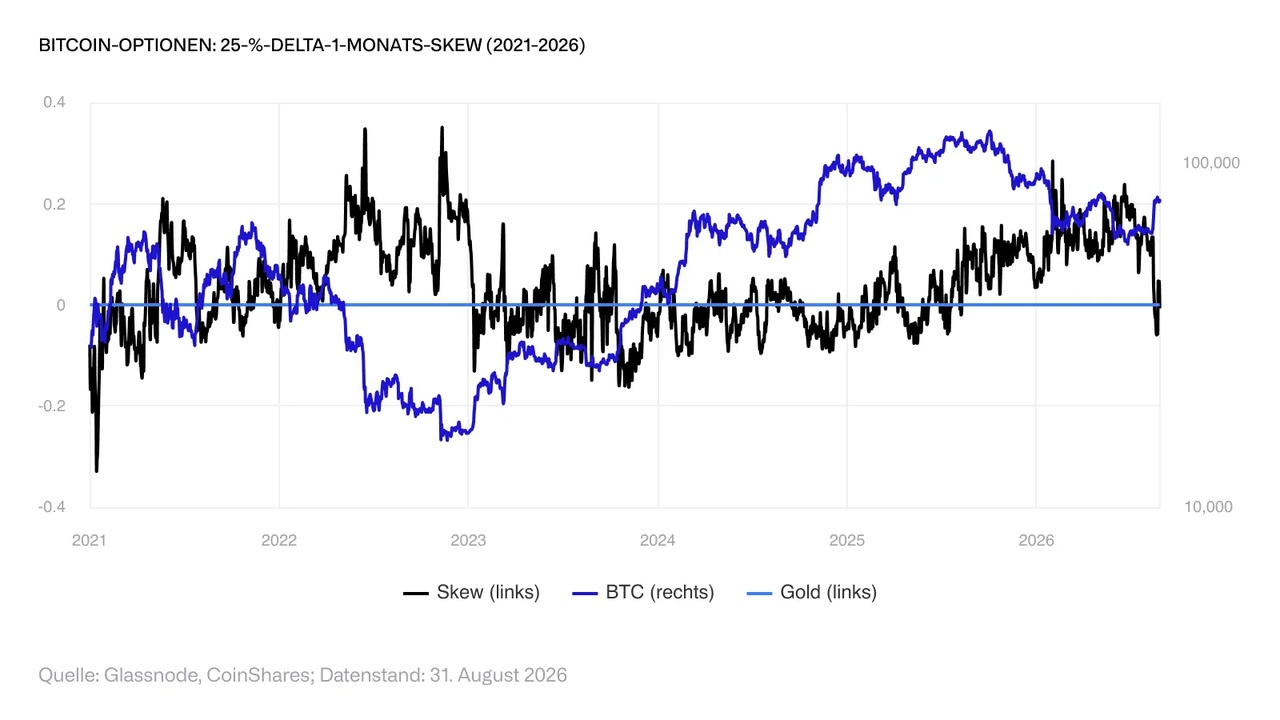
Conditions at the end of the year were characterized by high volatility due to low liquidity. Nevertheless, the last few days of the year showed the first signs of stabilization, particularly on the derivatives markets, where financing rates turned positive again.
Trending Securities
Top creators this week