

Analysis & Comparison: LVMH vs. EssilorLuxottica
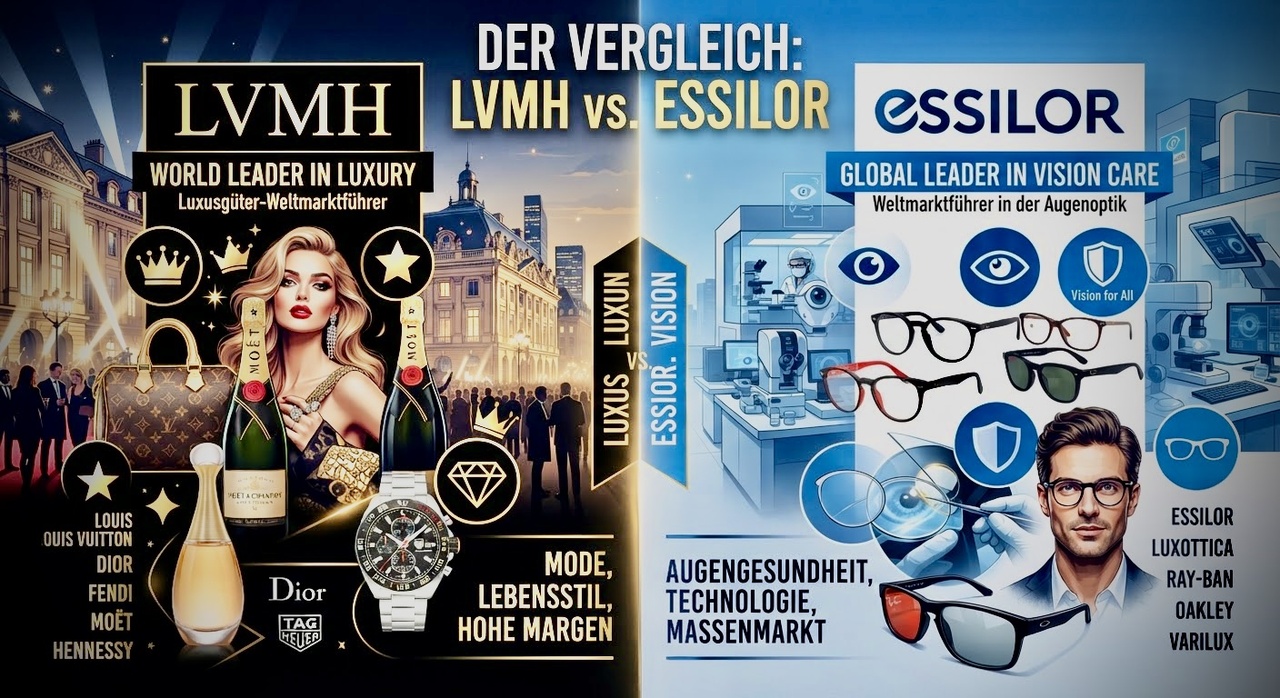
Both companies are absolute heavyweights in the European (particularly French) stock market and global giants, but they serve completely different consumer sectors: LVMH (luxury goods & lifestyle) and EssilorLuxottica (eyewear & optical products).
Here is a detailed comparison of the two business models, their growth drivers, and their investment profiles:
1. Business Model & Brand Portfolio
LVMH (Moët Hennessy Louis Vuitton):
Focus: A diversified luxury goods empire across five main segments: Fashion & Leather Goods (including Louis Vuitton, Dior), Watches & Jewelry (Tiffany & Co., Bulgari), Perfumes & Cosmetics (Sephora, Guerlain), Wines & Spirits (Moët & Chandon, Hennessy), and Selective Retailing.
Strength: Extremely strong, emotional brands with high pricing power. LVMH benefits from the global desire for status, exclusivity, and experiential consumption.
EssilorLuxottica:
Focus: Vertically integrated global market leader in eyewear. The portfolio ranges from world-renowned eyeglass frames and sunglasses (brands such as Ray-Ban, Oakley, and Persol as well as licensed brands such as Prada, Chanel, Armani) to high-precision eyeglass lenses (Essilor, Varilux) and major optical retail chains (GrandVision, LensCrafters).
Strength: “Best-of-both-worlds” integration. They control the entire value chain, from design and production to end-customer sales.
2. Megatrends & Growth Drivers
LVMH:
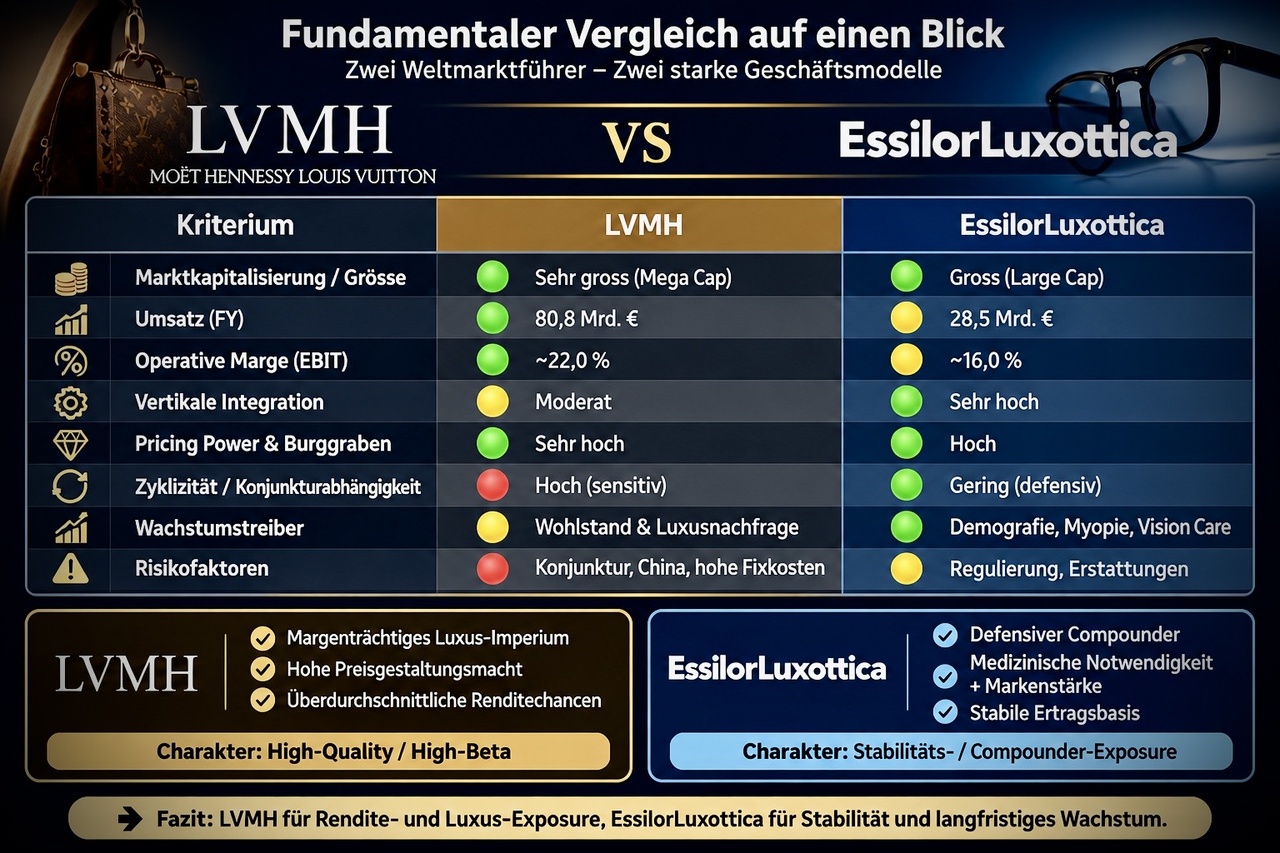
Key drivers: Growing global prosperity, particularly in emerging markets, as well as the rise of younger consumers (Millennials, Gen Z) who invest in luxury brands at an early age.
Cyclicality: Higher. In times of economic uncertainty or a weakening consumer climate in China, the luxury segment may come under short-term pressure.
EssilorLuxottica:
Key Drivers: Demographic change (aging societies with increasing vision needs) and the megatrend of screen-based work and digital media (rising rates of nearsightedness, or myopia, particularly among young people). Additionally, eyeglasses are viewed as a fashion accessory.
Cyclicality: Lower (more defensive nature). Eyeglasses and vision aids are medically necessary or essential for daily life, which is why demand remains more stable through crises.
3. Margins and Financial Profile
LVMH:
Known for industry-leading operating margins, particularly in the leather goods and fashion sectors. High return on investment, solid free cash flow, and strong brand loyalty typically allow the company to pass on inflation through price increases without difficulty.
EssilorLuxottica:
A profitable and steadily growing business with solid margins. The integration of GrandVision and the expansion of the direct-to-consumer channel (e-commerce and company-owned stores) are further driving efficiency and profitability.
4. Conclusion & Investment Profile: Which Stock Is Right for What?
Choose LVMH if you:
Want to invest in the ultimate, broadly diversified luxury ecosystem.
Are looking for a company that benefits from strong global brand loyalty and pricing power.
Are willing to deal with slightly higher cyclicality (e.g., economic fluctuations in China).
Choose EssilorLuxottica if you:
Are looking for a more stable, defensive business model with a strong foundation in medical and consumer-equivalent products.
Want to capitalize on the indispensable combination of vision health and global lifestyle brands (Ray-Ban & Co.).
Want to benefit in the long term from megatrends such as the aging population and the digital lifestyle.