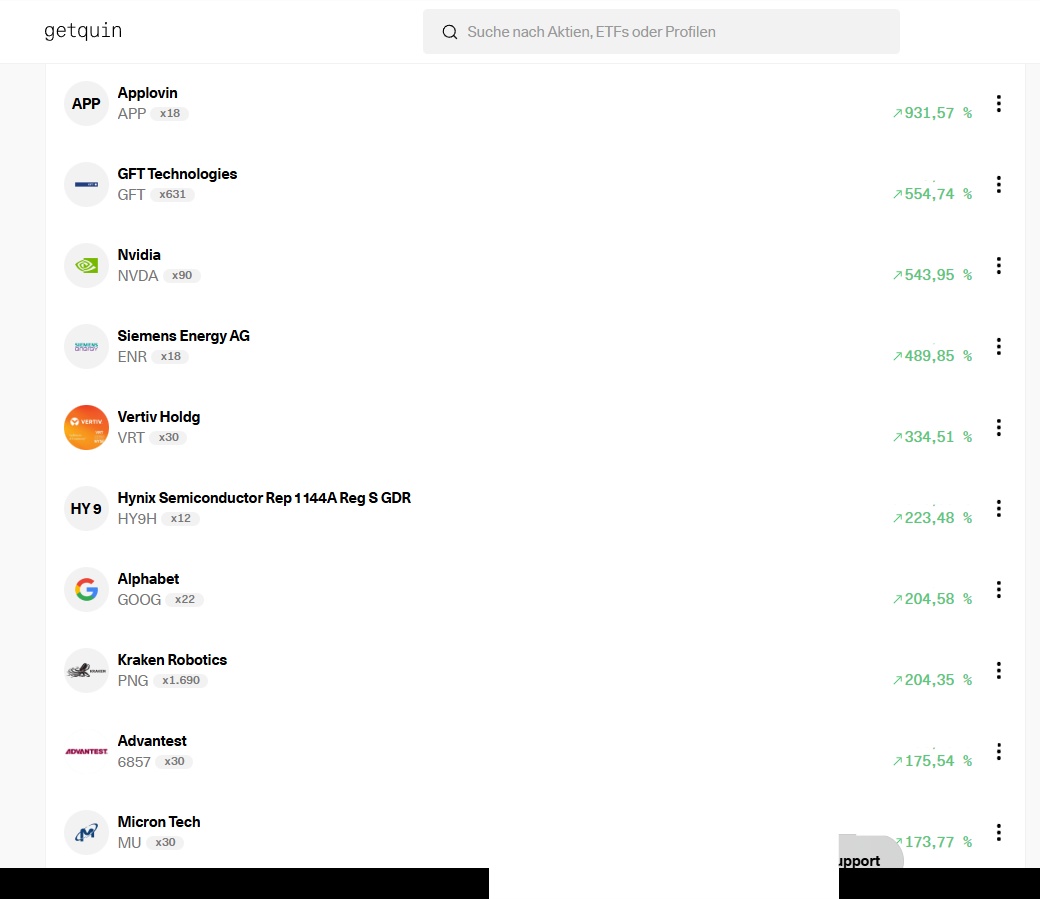
I lead the way with 8 multibaggers đ
$APP (+2,38%)
$NVDA (-0,09%)
$GFT (+0,24%)
$ENR (+0,78%)
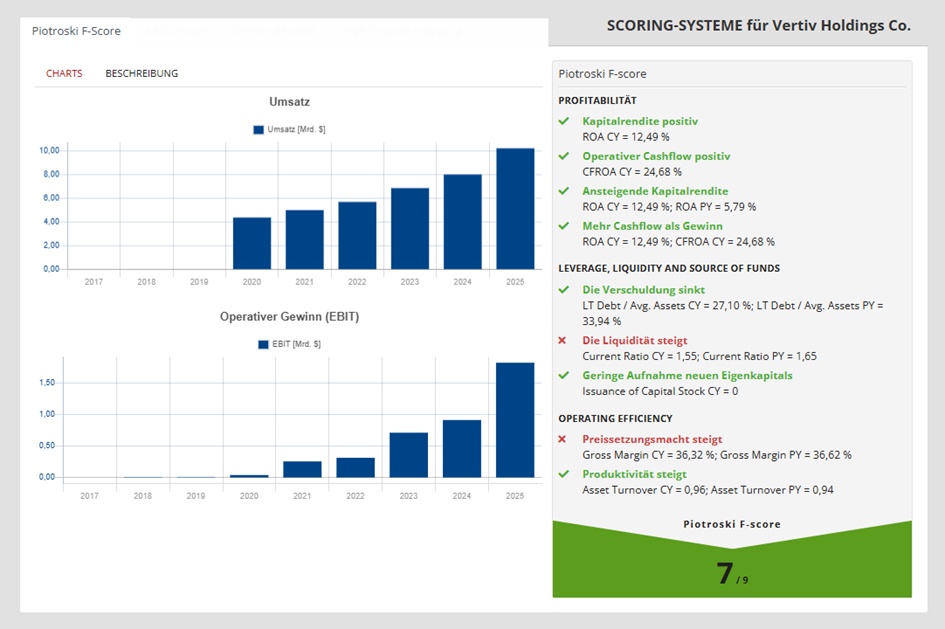
$VRT (+2,7%)
$HY9H (-5,39%)
$GOOGL (+1,61%)
$PNG (+5,4%)

Messaggi
47I lead the way with 8 multibaggers đ
$APP (+2,38%)
$NVDA (-0,09%)
$GFT (+0,24%)
$ENR (+0,78%)
$VRT (+2,7%)
$HY9H (-5,39%)
$GOOGL (+1,61%)
$PNG (+5,4%)
Sooooo it's time for another portfolio update.
Over the last few years, I have noticed that my long therm target of 20% pa is becoming increasingly difficult to achieve as the size of my portfolio increases, because more and more money is flowing into "safe" ETFs. Nevertheless, with my top picks 2025 $RKLB (+1,67%)
$KSB (+1,75%)
$NU (-2,9%) and $GOOGL (+1,61%) very satisfied. However, all 4 are at ATH or just below, which could make things a bit volatile in the short term. Nevertheless, I assume that all 4 will be higher at the end of the year than they are now.
My aim this year is to increase my exposure to small/mid caps. I already made a start last year, $KSB (+1,75%) has already done quite well, stocks like $P4O (+0,49%)
$GFT (+0,24%)
$SBMO (+0,99%) and $OSIS (+3,04%) are to be held, but no major additional purchases are planned there for the time being.
The downward positions in Samsung are all part of my 212 trading pies, divided into 3 different pies. Since mid-August, the pies have gained 21.6%. Meanwhile the total value of my 212 investments is 9600âŹ. These are saved monthly with a total of âŹ500 plus one-off payments from time to time.
Apart from that, there are only 2 three-month savings plans with 1.5k each on the $VWRL (-0,15%) and $TDIV (-0,26%)
In addition, there are still around 60k in various orders, but these are all turnaround bets with short-term targets of between 8% and 12%
In the long term, I will keep my eyes and ears open to find new pearls.
My dears, I remain invested in both companies.
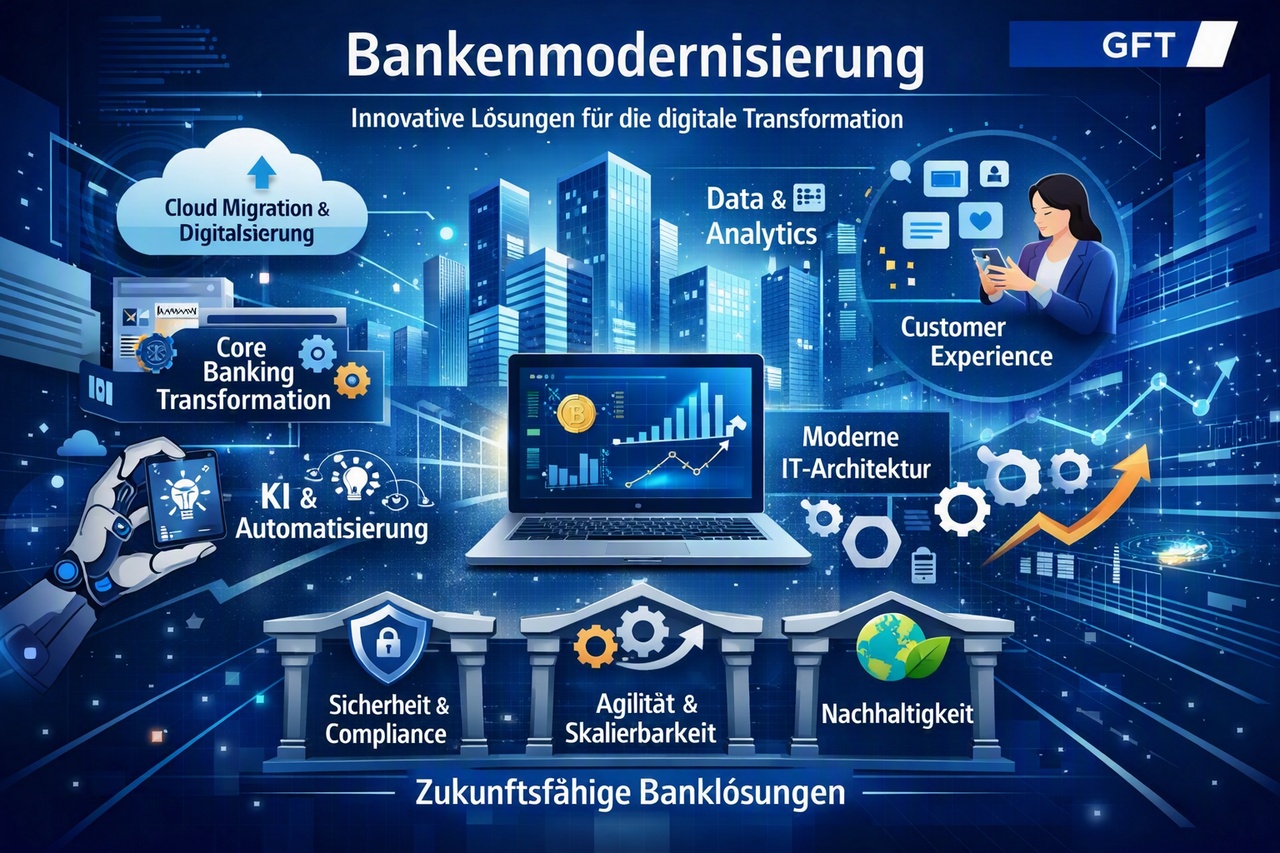
GFT Technologies and FICO launch a global alliance to empower banks with AI solutions against digital fraud and revolutionize risk management.
GFT Technologies and FICO have launched a global smart finance partnership to help banks fight digital fraud and improve risk management.
The partnership uses AI-based solutions to improve onboarding, risk management and real-time decision-making for banks worldwide.
The first successful projects have been implemented in Asia and Latin America, including real-time analytics for fast decision-making and a demand management system for insurance companies.
The alliance combines GFT's expertise in cloud, data and digital banking with FICO's fraud detection and decision management solutions to provide an integrated platform for banks and FinTechs.
A key element of the partnership is the integration of GFT's GenAI product Wynxx, which automates the software development cycle and enables in-depth data analytics.
GFT has established a Center of Excellence for FICO technologies to train specialized teams and support standardized rollouts across various industries.

Automotive supplier Schaeffler manufactures parts for humanoid robots from Neura Robotics. They are also used in production and supply data.
The German automotive and industrial supplier Schaeffler will increasingly supply robot parts to the German robotics company Neura Robotics in the future. Schaeffler announced this on Tuesday. To this end, the two companies have entered into a partnership that also provides for Schaeffler to integrate a "medium four-digit number" of humanoid robots into its own production by 2035.
Together, Schaeffler and Neura Robotics want to develop and manufacture key components for humanoid robots. These include, for example, robot actuators that move the joints of the robots. Schaeffler already has some expertise in the field of planetary actuators, which enable precise rotary movements with high torque. In addition, these actuators are lightweight and robust and therefore designed for continuous operation.
Schaeffler already has robot actuators of various performance classes in its range that can deliver up to 250 Nm of torque. The current humanoid robot 4NE1 from Neura Robotics is equipped with such actuators so that it is also able to lift heavy weights. In the future, Neura Robotics wants Schaeffler to cover its demand for lightweight and powerful actuators.
Neura robots work for Schaeffler
The agreement also provides for Schaeffler to use a larger number of humanoid robots from Neura Robotics in its own production. Neither company has disclosed the exact number. Schaeffler's announcement speaks somewhat cryptically of a mid-four-figure number. Both companies are also keeping a low profile on the costs. According to industry sources, the order value for Neura Robotics is said to be 300 million euros. However, this cannot be substantiated at present.
During the use of the robots in real production environments, application data is collected, which in turn is to be used for AI training of the humanoid robots. The aim is for the robots to develop further by continuously learning specific skills.
GFT and NEURA Robotics enter into strategic partnership to develop pioneering software for physical AI

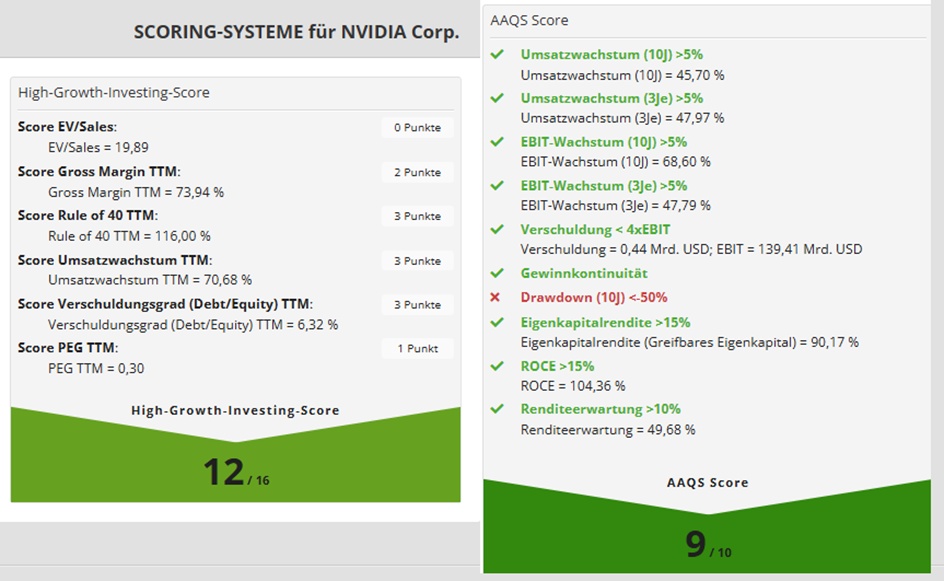
$GFT (+0,24%) Growth stock with a good dividend yield at a good valuation.
I therefore remain invested and expect the stock to break above the 200-day line soon.
Stuttgart / SĂŁo Paulo, September 30, 2025 - GFT Technologies has already completed the acquisition of the Brazilian SAP specialist Megawork in September. Closing was originally scheduled for the fourth quarter of 2025.
The acquisition strengthens GFT's market position in the high-margin SAP Cloud ERP segment and expands its portfolio to include highly specialized services in the areas of migration, support and integration. Megawork is one of the leading SAP partners in Brazil, has more than 20 years of experience and serves over 400 clients - a strong foundation for further growth in a dynamic market environment.
Another strategic advantage is the integration of Wynxx, GFT's GenAI product, into Megawork's SAP services. This increases automation, accelerates implementations and shortens the time to value for customers. In addition, the two companies' complementary client portfolios open up significant cross-selling opportunities - enabling GFT to enter new industries such as healthcare, the public sector and utilities.
"This fast closing is a strong signal of our ability to execute our strategy and grow our business with high-margin, high value-added services in partnership with global ISVs such as SAP," said Marco Santos, Global CEO of GFT. "It will enable us to drive the integration forward quickly and provide our clients with an enhanced service offering at an early stage. Given the continued high global demand for SAP services, we see significant potential for further revenue and profitability growth.
The acquisition is part of GFT's growth strategy, which focuses on high-margin, high value-added services.
Use the full potential of AI - for measurable success.
Many AI initiatives remain stuck in pilot mode - held back by incomplete data, unclear use cases and concerns about security, governance and risk. GFT helps companies accelerate AI transformation from start to finish: We consistently align strategies with outcomes, develop modern data platforms and bring AI into practical use with robust engineering and MLOps. We focus on Responsible AI by Design - solutions that are secure, controlled, explainable and ready to scale across the enterprise. Find out how leading banks, insurers and machine builders are successfully putting AI into practice with GFT - and turning their visions into measurable results.
https://www.gft.com/de/de/insights/accelerate-your-ai-transformation

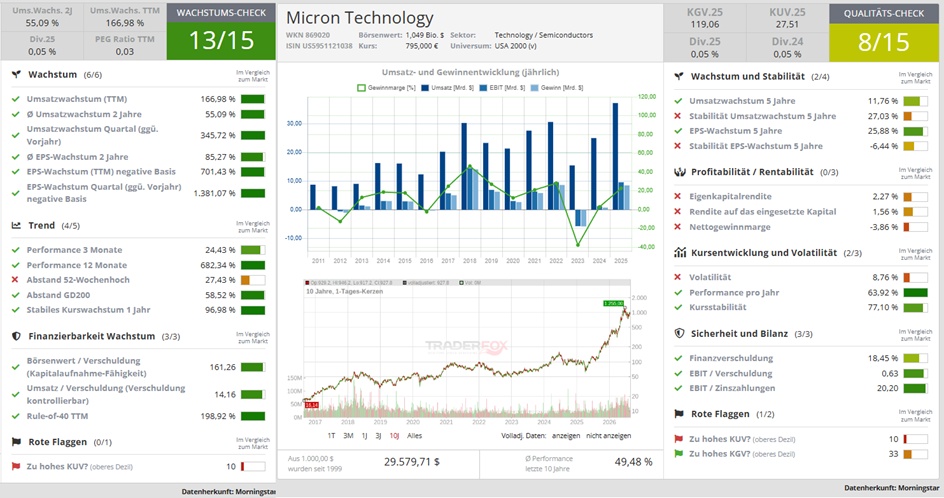
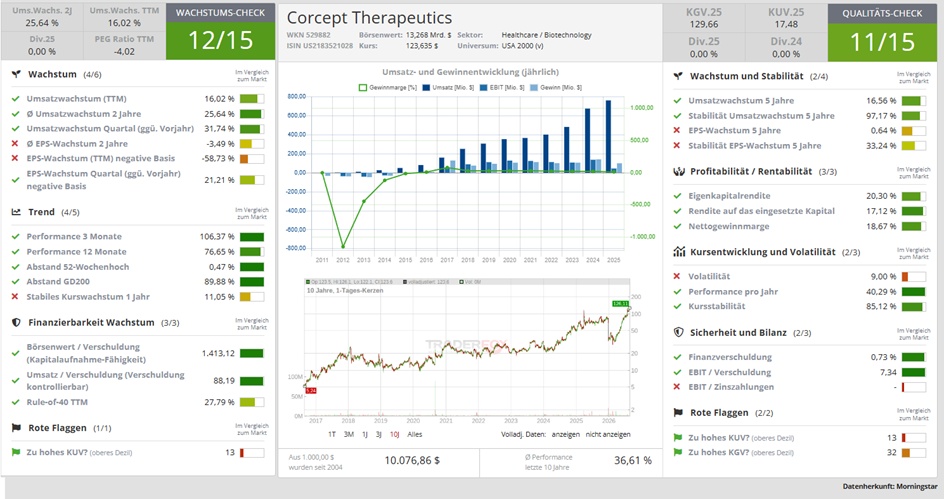
From buy the dip to short the winner, everything was there again today. Almost 10k were pumped into the market again today. Somehow I can't get my Tr account updated again, so make do with the screenshots
$SBMO (+0,99%)
$GFT (+0,24%)
$AMD (+7,03%)
$INTC (+9,15%)
$3350 (-0,5%)
+ 2
Ladies and gentlemen, I remain invested in this growth stock with a great dividend yield. Because I am now expecting a breakout on the way to the old high.
On September 15, 2025, GFT Technologies SE announced that it had acquired a total of 30,341 shares in the second tranche of its share buyback program. The buyback took place between September 8 and 12, 2025, with the shares being purchased at a volume-weighted average price of EUR 16.4496 per share. The total amount for these transactions amounted to EUR 499,097.72, excluding incidental acquisition costs. Since the start of the buyback program on 15 April 2025, GFT has bought back a total of 652,571 shares. The purchases were carried out via the Frankfurt Stock Exchange (Xetra) by a commissioned bank.
In parallel to the buyback activities, GFT Technologies was recognized as a leader in the SPARK Matrix 2025 for Digital Banking Services in a report by the QKS Group. This award highlights the company's high service quality and innovative strength, particularly in the combination of artificial intelligence (AI) and modern banking solutions. GFT is praised for its customized solutions based on platforms such as Thought Machine and Mambu. These solutions include end-to-end delivery models covering design, configuration, testing and support.
Akhilesh Vundavalli, Principal Analyst at QKS Group, emphasizes that GFT's approach to reshaping digital banking is characterized by a combination of engineering depth and AI-centric methodologies. GFT is helping banks to unlock new revenue streams and improve the customer experience. Marco Santos, CEO of GFT, sees the award as a confirmation of GFT's achievements to date and an incentive for the future, in which GFT aims to continue developing innovative solutions for banking.
The SPARK Matrix 2025 confirms GFT's role as a transformation driver in the financial sector, particularly through the use of AI and modern delivery approaches. With a global presence and extensive regulatory expertise, GFT is well positioned to successfully implement major transformation projects. The combination of technological know-how and high delivery and cost efficiency makes GFT a reliable partner for companies that want to succeed in the digital age.
Overall, GFT Technologies SE's buyback measures and recognition in the SPARK Matrix demonstrate that it is both financially stable and able to offer innovative solutions in the field of digital transformation.

Hello my dears, @Klein-Anleger1
after the great performance in the previous months
August was unfortunately not so successful.
But September is going well again so far. And so I am YTD with + 5.04 % better than the
NASDAQ 100 + 0.16% World+ 1.14 %.
Reasons for the underperformance in August are earnings at my large position GFT and negative news at Defi Technologie.
The tariffs weighed on Embraer, and the correction in defense weighed on Kitron and AeroVironment.
Vertex's earnings were also the fly in the ointment.
Negative position: (month of August)
Defi Technology - 25.61%. $DEFI (-0,48%)
Innodata - 23.64%. $INOD (+4,61%)
Tokyo Electron - 20.95%. $8035 (+0,89%)
Vertex. - 16,38% $VRTX (-1,29%)
Aixtron. -15,53%. $AIXA (-2,03%)
Transdigm. -15,13%. $TDG (+0,72%)
Vertiv. -14,72%. $VRT (+2,7%)
Coinbase. -13,01%. $COIN (+4,2%)
AeroVironment. -11,91%. $AVAV (-1,32%)
Kitron. -7,79%. $KIT (-0,68%)
Microsoft. -7,64%. $MSFT (-1,98%)
Embraer. -4,75%. $ERJ (-0,8%)
Nvidia. -4,33%. $NVDA (-0,09%)
GFT Technology -3.67%. $GFT (+0,24%)
With so many negative positions, I am glad that I got off lightly due to my positive positions.
Plus positions: (month of August)
Gilat Satellite. +22,14%. $GILT (+0,34%)
Applovin. +18,69%. $APP (+2,38%)
NU Holdings +17.88%. $NU (-2,9%)
SoFi. +12,24%. $SOFI (+1,22%)
Alphabet. +8,95%. $GOOGL (+1,61%)
Fortescue. +8,90%. $FSUGY (+0%)
GFT and NEURA Robotics form strategic partnership to develop cutting-edge software for physical AI.
Robots are still mainly found in industry. In the future, they will help us around the house: tidying up, taking out the garbage, making breakfast. Science fiction? David Reger, CEO of Neura Robotics, believes this will be possible in just a few years.
By Ingmar Höhmann
To mark t3n's 20th anniversary (click here for our anniversary hub), we asked experts which trends and technologies will shape the future. One of them is David Reger, founder and CEO of Neura Robotics. The Metzingen-based company develops AI-controlled robots for industry and the home. This report from the lAutomatica trade fair explains what the devices can - and cannot - do so far.
t3n: How will robots change the way we work and live in the next 20 years?
David Reger: Fundamentally. Robots will enable us to lead a more self-determined life by taking over everyday tasks such as taking out the garbage, tidying up or putting away the dishwasher. They can even prepare breakfast - if we want them to.
Will these robots look like humans?
Not at first, at least. They will be more functional devices - for example, a "smartphone on wheels" with arms, sensors and AI. Our service robot MiPA looks like this. It can detect a heartbeat without touching people and react in an emergency. I no longer have to drive an hour and a half to see my mother. Instead, I can play chess with her remotely via the display on the robot or just have a quick look to see if everything is OK.
We will soon see the greatest benefits of household robots in the care sector. There are more and more people who need help, and at the same time there is a shortage of care workers. Robots can already help with many tasks here. This leaves carers more time for personal contact.
When will such household robots become part of everyday life?
Very soon. In two to three years, everyone will be able to buy a domestic robot. Technologically, we are on the verge of this: robots can now analyze rooms well, remember their original state and recognize changes - an important prerequisite for tidying up, for example.
This is not a distant future: a rocket that flies into space and lands on a floating platform is technically more complex than a robot that tidies a room. The greater challenge is the natural interaction with humans.
What is the problem?
For safety reasons, robots slow down their movements as soon as humans are nearby. But if simple movements take too long, acceptance suffers. Nobody has the patience to watch a robot spend minutes trying to pour a cup of coffee. It's too slow and seems unnatural.
A human can accidentally touch something without it being perceived as a risk - robots lack this trust. That is why we are developing a sensory skin that recognizes where people are before they come into contact. If it does, the robot stops or brakes in time to avoid any danger.
When robots stand on two legs, the risk of falling is higher. If a humanoid robot falls on a person, it can seriously injure them.
In industry, this can be controlled well because we can design the environment in a targeted manner. Humanoid robots move at a reduced speed, work with safe electronics and simply switch off in an emergency. If a fall does occur, the robot falls away from the human in a controlled manner.
This is more difficult in the home. The environment is constantly changing, people or pets often move unpredictably. This is why we see humanoid robots first in industry, where safety requirements are easier to implement
Where will we see the greatest technological progress?
The biggest breakthrough will not be a technical detail, but access to data from the physical world. With voice models such as ChatGPT, the basis was a huge amount of text data. This has accelerated development. In robotics, there are no comparable data sets from the real world: about movement, material behavior or human reactions. That is the bottleneck.
Instead of each robot manufacturer collecting its own training data, a common basis is needed. We have developed our Neuraverse platform for this purpose, which works like an app store: Developers contribute applications, for example for care, household or industrial tasks. These can be used independently of the manufacturer so that different robots can access the same knowledge. This creates physical intelligence that enables robots to continuously improve.
The start-up wants to raise at least half a billion euros soon. This should ensure its international success. Company boss David Reger wants to be able to compete with Tesla.
Nadine Schimroszik
04.09.2025 - 09:25 am
Berlin. The German robotics start-up Neura Robotics wants to become a global market leader with its robots. "Our goal is to become the next internationally successful multi-billion corporation after SAP that comes from Germany," explains CEO David Reger in an interview with Handelsblatt.
However, there is still a long way to go. The company is not disclosing how many robots Neura has already produced and sold. Reger only reveals that the order backlog currently stands at more than one billion euros.
In order to keep up with the US provider Figure AI and the "Optimus" robots from Tesla and to be able to scale further, the Metzingen-based company first needs more money. "It's clear that we need to raise new capital," says Reger, at least a "mid three-digit million amount". This would make Neura Robotics the second robotics unicorn in Germany - after its competitor Agile Robots from Munich - and value it at well over one billion euros.
However, Reger does not want to stop there and adds: "The next round will certainly be one of the biggest that Europe has ever seen." For comparison: AI defense start-up Helsing has already raised 600 million euros this year. And Wayve, the British specialist for autonomous driving, even received more than one billion dollars last year.
But first Reger wants to convince the public of the capabilities of his robots. At the Ifa technology and industry trade fair in Berlin, which starts on Friday, Neura Robotics wants to present its two most important products, the household robot "Mipa" and the humanoid robot "4NE1". And unlike at the Automatica trade fair in Munich in June, the 4NE1 will also be running.
Ladies and gentlemen, can GFT also benefit from this?
Neura Robotics' new software partner is GFT
I migliori creatori della settimana