So from now on, I'll be keeping an eye on things too. KO had been sitting around for a while and was bought today.
To balance out the portfolio, I also $SIE (-1,74 %) and set up DCA on $SU (-1,37 %) . Not that it’s getting too speculative.
English
Puestos
222So from now on, I'll be keeping an eye on things too. KO had been sitting around for a while and was bought today.
To balance out the portfolio, I also $SIE (-1,74 %) and set up DCA on $SU (-1,37 %) . Not that it’s getting too speculative.


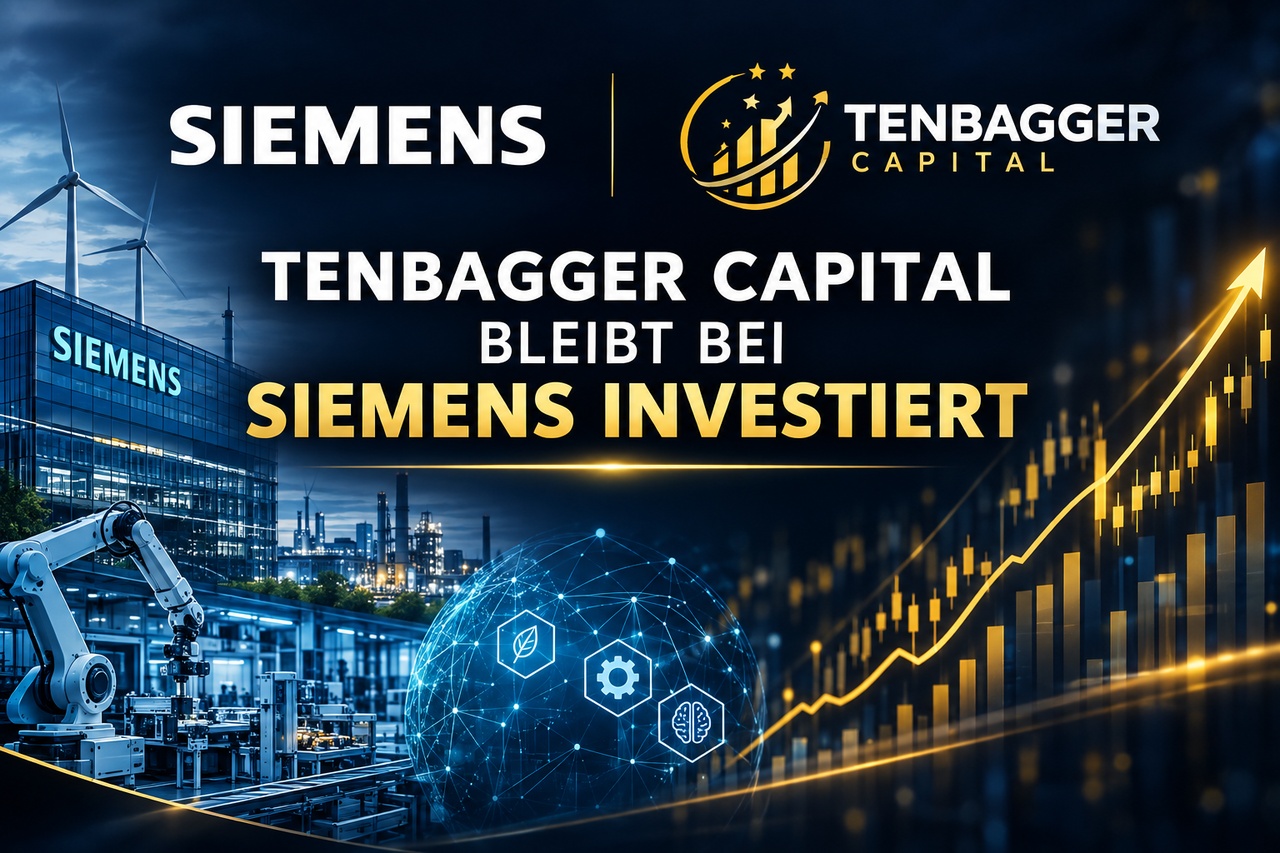
Well, it looks like we’re staying invested in Siemens after all.
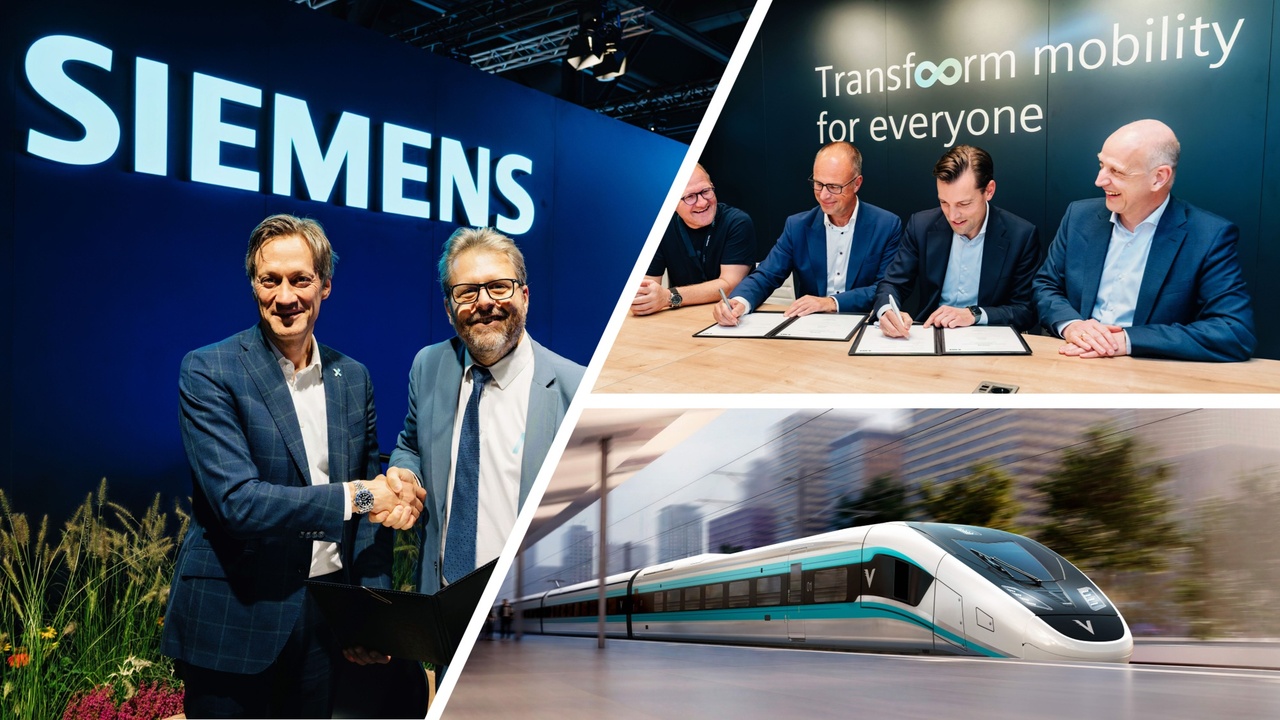
BeNEX has ordered 56 new regional trains for Mainfranken. Siemens is delivering ten Velaro Novo trains to Vietnam for two planned high-speed rail lines. Siemens and Infrabel have agreed on an 11-year framework contract for the modernization of Belgium’s digital operations control system.

Humanoid robots are entering mass production: Ubtech plans to produce more than 10,000 units per year. Siemens is supplying the digital factory behind the operation—and could thus become the quiet winner of the robotics boom.
FRANKFURT (dpa-AFX Analyser) — DZ Bank has maintained its “Buy” rating for Siemens with a fair value of 330 euros. Despite existing risks, analyst Alexander Hauenstein takes a slightly optimistic view of the fourth fiscal quarter in a report released Monday. In his view, the Digital Industries division should continue to improve both operationally and structurally. The expert believes the spin-off process for Siemens Healthineers is on track. For the fiscal year coming to a close, he expects the company to slightly exceed its recently raised outlook. For the new fiscal year, he anticipates conservative but slightly optimistic targets./rob/tih/edh
dpa-AFX-Analyser

Hi everyone,
I often read posts here where people ask for feedback, but the story behind them is missing. That’s why today I’d like to share my own portfolio—and my story—in a completely transparent way.
A little about me:
I’m 31 years old and have been active on GQ for quite some time. My current net worth of just under 1.28 million euros is the result of my own hard work. Even as a child, I would occasionally try out potentially profitable business ideas on the side to earn some money—and six years ago, I took the plunge into self-employment.
I now have two companies in different industries. It became clear to me quite early on that I needed a high, recurring active income if I wanted to build up a certain level of wealth, so I left my full-time job fairly early on.
For the next 12 months, I’m planning on a monthly income of approximately 30,000 euros. In addition, I naturally have recurring income, which can fluctuate up or down over the long term.
My goal is to continue growing this wealth prudently so that I can eventually live entirely off the dividends. Currently, for tax reasons, I hold portions of two stocks ($MSFT (+0,92 %) and $NOVO B (+3,08 %) ) are held as individual positions in my holding account, and the rest is held in my personal account.
My Strategy and the Core of the Portfolio
I follow a classic core-satellite approach. The core—which I intend to use later as a kind of pension substitute—consists of two ETFs: the $HMWO (-0,1 %) and the $QQQ. (-0,77 %) I’m aware that these two holdings overlap; I continue to contribute to both monthly via a savings plan.
The individual stocks and my problem children
When it comes to individual stocks, I look for a combination of long-term trends and reliable cash flow. On the one hand, I deliberately overweight tech stocks and future classics such as $MSFT (+0,92 %) , $GOOGL (+0,46 %) , $NVDA (-2,02 %) , $META (+0,22 %) , $AMZN (-0,13 %) and $AAPL (-0,03 %) , because I am firmly convinced that these industries will continue to perform well in the coming years.
For my dividend strategy and the necessary cash flow, I’ve invested in quality stocks such as $ALV (+1,42 %) , $MUV2, $NOVO B (+3,08 %) and $UNH (+3,65 %) in my portfolio. This is complemented by classic dividend-paying stocks such as $BATS (+1,86 %) , $SIE (-1,74 %) , $ARCC (+1,44 %) and $O (+0,51 %).
But let’s be honest: values like $MPW (+0,81 %)
$PYPL (+1,17 %) , $BAYN (-1,13 %) or gambling $LILM aren’t performing at all as once hoped.
In the crypto sector, $BTC (+0,36 %) as the largest holding, along with a small amount of $SOL (+0,88 %) and $XRP (+0,19 %) the whole thing—in the future, I’ll consolidate everything into the position $BTC (+0,36 %) and add a little $4GLD (+0,51 %) to it.
What’s Next
At the end of this month, I’m expecting a large incoming payment of around 50,000 euros. I’d like to split the amount and invest it both in the $HMWO (-0,1 %) as well as specifically into my dividend stocks to further strengthen the foundation.
The goal is to reach a portfolio value of 1.5 million by the end of the year.
Feel free to share your thoughts—I look forward to the discussion :-)

I was happy to receive the $TDIV (+0,67 %) dividend. Unfortunately, it wasn't the €500 yet, but what isn't there yet might still come. I took advantage of the opportunity and immediately added to my position to strengthen my core portfolio.
In addition, I bought 2 shares $SIE (-1,74 %) for €265. I’m planning to add quite a bit more to these holdings over the long term as well.
As described earlier, I'm currently taking advantage of this relative weakness to $SIE (-1,74 %) and am strengthening my core. I haven’t reached my target yet, but the journey is the destination.

$DSRT (+14,21 %)
$SIE (-1,74 %)
Norwegian Company Turns Desert Into Farmland.
Future food production will surpass the total of the past 500 years in just 3–4 decades. A Norwegian innovation is transforming deserts into farmland, which is currently thriving in parks in the U.S. and the Middle East and will soon be part of the UN World Food Programme.
— Nearly 2,000 soccer fields disappear every hour. Twelve million hectares of farmland are turning into desert at a rate of 210 kilometers per hour. That’s equivalent to the distance between Stavanger and Kristiansand, says Tor Mæhlum Karlsen, Chief Technology Officer at Desert Control.
He explains that the top layer of soil—the one we walk and stand on, the one where we grow grain—is getting thinner and thinner. It’s disappearing from below.
“Out of sight, out of mind,” says Karlsen.
But this can’t go on. The world’s population is growing, and we need more food. To produce more food, we need more water. Seventy percent of water consumption is accounted for by agriculture, and according to Desert Control, this share is rising.
The Garage Lab
The solution exists. It is liquid clay, known as LNC (Liquid Natural Clay), produced by the Norwegian company Desert Control. After a phase of developing and digitizing the product and the process, the technology is now ready for scaling.
The idea for LNC was conceived in the mid-2000s and developed in a garage in Stavanger by Kristian P. Olesen and his son Ole Morten Olesen, who still work for the company. In 2019, the two brought in an outside executive and raised the initial capital to build a prototype.
Since then, the company has been steadily moving closer to its goal.
The special clay produced by Desert Control works by being added to the topsoil, transforming desert sand into farmland. It can also be added to already cultivated land, reducing the need for irrigation.
This has now been tested on various soil types under different conditions.
“We’ve conducted many pilot projects. It seemed too good to be true, so we needed academic validation,” says Karlsen.
The pilot projects were successful. Both the clay mixture and the mobile units used to produce clay on-site, as well as the distribution of LNC over large areas, were thoroughly tested, and Desert Control is now ready to expand its business.
To succeed in this, more than just advanced laboratory work is required; high-tech solutions are also necessary.
“Alongside all the practical work being done, a lot is happening digitally. We’re collecting data from various sensors in the ground as well as from the production units that manufacture LNC,” he explains further.
The data is used to monitor the effects of the floating clay and to control LNC production at the local production units.
— “With Siemens systems, we can process the data we collect,” adds CTO Karlsen.
Scaling Up with Technology
The clay formula was developed in a laboratory in Sandnes. It is produced and shipped in one-metric-ton bags to the areas where the clay is added to the soil. There are mobile production units that mix dry clay with water before it is distributed.
This entire process has been tested time and time again. The warehouse, the production units, and the distribution of clay over large areas are now at the level required for scaling up. We and Desert Control are in the process of doing just that.
We provide data collection and automation solutions for the company that won the special award for Norway’s smartest industrial company in 2022.
— For Desert Control to become a data-driven organization, it is crucial that data and automation systems are closely integrated. That’s where we at Siemens come in, says Ståle Våga.
He is the account manager for Desert Control at Siemens and was involved in providing the technology that enables Desert Control to use IT-based tools and work processes, develop its own software, and benefit from Siemens’ extensive product and software portfolio.
In the future, it will be possible to use technology to control production anywhere in the world from the office in Norway.
“With a single keystroke, you can commission new equipment or send updates to multiple production units simultaneously,” says Våga.
The goal is to be able to control most of the process in this way, with just one operator on site. The operator does not need to have any special knowledge of machines, data, or programming, but must be able to operate the machine.
— The operator brings a tablet and receives instructions for the various steps via a user-friendly interface. The machine then carries out the tasks sent from the office in Norway, he explains further.
It’s been four years since the collaboration began, and Våga finds it exciting and meaningful to be part of something that has the potential to save the world.
— It’s always nice to come here. You can see that they’re making progress; everyone believes in the project, he says as he enters the courtyard between Desert Control’s offices in the FOMO office community in Sandnes and the lab.
Save the World
In the lab, four people are deeply focused. All around them are tubes and bottles filled with sand, soil, and green plants.
— It’s a far cry from the garage where it all began, says Karlsen, greeting Rosalia Garcia Teijeiro, the company’s head of research and development.
Teijeiro gives a tour of the lab and explains how the researchers here are currently studying how plants absorb nutrients with the help of LNC.
— With LNC, the nutrients stay in the soil longer, giving the roots more time to absorb them. That makes the plants stronger.
She is also in the process of setting up a lab in the U.S., where much of the work takes place. The company also has many clients and projects in the Middle East. They use LNC to keep parks, resorts, and golf courses green, but the real reward for their efforts is coming soon.
The product is being used in the Iraqi desert by the United Nations World Food Programme.
The UN organization is working to combat hunger and improve global food security, and there is no doubt that this is also Desert Control’s vision: to save the world. But it must be funded, and development is made possible by selling the product to those who can afford it and who, without LNC, would consume even greater amounts of water.
Freshwater is a limited resource, Karlsen reminds us, adding that the Earth has a finite amount of stable freshwater resources. To ensure they last, we cannot use more than is available.
But that’s exactly what we’re doing right now.
— How is that possible, you’re probably wondering? It’s because we’re living on credit!
This is a huge problem that Karlsen and his colleagues want to solve.
We’re pumping more groundwater than is being replenished. We’re doing this, among other things, to feed the growing global population.
— Over the next 30 to 40 years, we’ll have to grow more food than we have in the last 500 years.
Source:
https://www.siemens.com/de-de/company/insights/desert-control-software-defined-automation/

Today’s newsletter from “WELT | Alles auf Aktien” presents a bold thesis $SIE (-1,74 %) that I’d like to share and quote here.
The authors put forward the bold thesis that Siemens is capable of joining the “trillion-Club” in the foreseeable future. That would be nearly five times its current value. While there’s still a long way to go, Siemens is already Germany’s most valuable publicly traded company. And in a few weeks, a decision could be made that will help determine whether this long-established industrial conglomerate will indeed one day become a global tech champion of this magnitude.
On October 1, Siemens plans to officially present itself as “One Tech Company.” From that moment on, CEO Roland Busch will massively ramp up his big bet on AI. Is now the right time to get on board?
Siemens underwent a radical transformation under Joe Kaeser. Siemens Energy
$ENR (-1,54 %) and Siemens Healthineers
$SHL (+1,83 %) were spun off. This met with fierce resistance at the time. Today, one can at least say that the remaining group is performing exceptionally well. Siemens posted a record profit of more than ten billion euros and margins exceeding 17 percent.
Siemens CEO Roland Busch now aims to build on this success. His program is called “One Tech Company.” The three major divisions—Digital Industries, Smart Infrastructure, and Mobility—will remain in place. Under this structure, Siemens aims to become leaner: less hierarchy, larger units, and clearer responsibilities.
The real stock market story is artificial intelligence (AI). Siemens aims to make industrial AI the connecting element of the group. Siemens operates where AI meets the real world: in factories, power grids, buildings, and infrastructure. It’s about machines that produce more efficiently, grids that are controlled more intelligently, and factories that operate with greater automation.
Our bullish thesis is therefore this: Siemens could increasingly evolve from a traditional industrial conglomerate into a technology and software company. That would also be decisive for its valuation. Industrial companies typically receive lower multiples on the stock market than tech conglomerates.
If Siemens proves that software, data, and AI can be monetized at scale, the market could eventually grant the company a higher valuation. This represents a potential path to a trillion. The catch: there is no such proof yet.
That is the central weakness of the narrative. Siemens still talks a lot about industrial AI, but does not report separately how much revenue and order intake it actually generates from it. So investors do not yet know exactly through what mechanism AI increases profits.
That is precisely why October 1 is so important. On that day, Busch must explain whether “One Tech Company” is more than just a new corporate slide and how it will specifically lead to more growth, higher margins, and stronger customer loyalty.
Even if the AI strategy pays off, there’s still a risk that Siemens has become more dependent on the AI cycle than one might assume at first glance. Data centers, semiconductors, electrification, and automation are all driven by the same investment boom. Should the AI euphoria fizzle out, it could hit several of Siemens’ businesses at once.
With medical technology and energy, Siemens has divested two stabilizing pillars. Siemens Energy, in particular, has since become a star on the German stock market. The works council openly states that Siemens would be even more valuable today if it still owned Siemens Energy and Siemens Healthineers. On the other hand, the record margins might not have been possible at all without this focus.
For investors, it’s the future that counts. Siemens must maintain high growth and margins; the restructuring must actually make everything more efficient; and the company must demonstrate that AI works not only technologically but also financially. To that end, concrete results must be evident by October 1.
If it succeeds, Siemens could become a European industrial conglomerate with an increasingly technology-driven valuation.
Source: WELT | Alles auf Aktien, August 19, 2026

$SIE (-1,74 %) It did me the favor of falling back down to around my entry price, so I took advantage of the opportunity and added to my position.
In addition, I added to my savings plans for $WINC (-0,98 %)
$WIRE (-1,29 %) and $XDG7 (-1,73 %)
Edit: The text disappeared again, but now I copy it before posting and then paste it back in. It’s really a hassle…
I remain invested.
High demand for software and the data center boom are driving Siemens’ business. Its two future core businesses are growing at double-digit rates.
Munich. Siemens is entering its corporate restructuring on a stronger footing. In the past quarter, the technology conglomerate posted record results in earnings and order intake. “Our technological leadership across all businesses, our clear focus on industrial AI, and our strong positioning in attractive markets are driving our profitable growth,” said CEO Roland Busch on Thursday, raising the profit forecast.
Siemens is currently in a sensitive phase of corporate development. The new structure is set to be implemented on October 1 as part of the “One Tech Company” strategy. However, there is still uncertainty within the company because thousands of employees do not know what titles and responsibilities they will have in the future.
It helps that business is going well. On a comparable basis, revenue rose by 8 percent to 20.8 billion euros in the third quarter of 2025/26, i.e., from April to June. Order intake increased by 13 percent to 27.9 billion euros for the first time. Operating profit in the industrial business improved by 25 percent to 3.5 billion euros, corresponding to a margin of 17.3 percent.
As a result, the group—listed on Germany’s leading stock index, the DAX—exceeded capital market expectations. Analysts had forecast, on average, revenue of 20.6 billion euros and an operating profit of 3.2 billion euros.
With its new strategy, Siemens aims to evolve even more strongly into an integrated technology group. To this end, the divisions are to collaborate more closely—for example, on technology platforms—and present a unified front to customers. In sales, more employees are to be assigned to direct customer contact, and CEO Busch also plans to improve marketing.
Automation Technology in the Spotlight for Investors
Siemens is deliberately restructuring now that business is going well. “We are clearly acting from a position of strength,” Busch told the Handelsblatt. He said companies should change when things are going well—“not wait until things get worse.”
For the full fiscal year (ending September 30), Siemens continues to expect revenue growth of six to eight percent on a comparable basis. The Smart Infrastructure division is expected to grow slightly faster than previously forecast. In terms of profit after taxes, the company now expects earnings of 11.20 to 11.50 euros before special items (previously: 10.70 to 11.10 euros).
Investors are paying particularly close attention to the Digital Industries (DI) division, which focuses on automation technology and industrial software. Siemens is the global market leader in both fields—but disruptions are on the horizon due to advances in artificial intelligence.
In the third quarter, DI’s revenue rose by 10 percent on a comparable basis to 4.9 billion euros. The software business grew disproportionately by 15 percent to 1.8 billion euros. Earnings improved by 44 percent to 923 million euros, corresponding to a margin of 18.7 percent.
By way of comparison: U.S. competitor Rockwell Automation, which the company in Munich is keeping a close eye on, increased its revenue in the third quarter of 2025/26 (also ending September 30) by $2.3 billion on a comparable basis. Operating income improved by 23 percent to $516 million. The margin improved to 22.3 percent. However, operating margins are only comparable to a limited extent.
A Test for a Potential CEO Successor
The second core division of the future Siemens Group is Smart Infrastructure, which encompasses smart building technology and energy management. Here, revenue rose by 13 percent to 6.4 billion euros, primarily thanks to the boom in new data centers. Order intake even rose by 42 percent to 8 billion euros. Earnings improved by 19 percent to 1.3 billion euros, with a margin of 20 percent.
SI has recently been led by Peter Körte, Head of Technology and Strategy. Industry sources say it will be a challenge for him to continue the success story of his predecessor, Matthias Rebelius, who had consistently expanded the company’s market position and profitability over the years.
Everyone realizes that this business is also cyclical and that the boom in orders will eventually come to an end, says an insider. So far, however, business continues to go well.
Körte is expected to prove himself operationally at the helm of SI. Like DI CEO Cedrik Neike, he is considered a potential successor to CEO Busch, whose contract runs until mid-2030. So far, however, Körte has lacked experience in leading a large business. According to information from the *Handelsblatt* sourced from supervisory board circles, Körte may have to relinquish his title as Chief Technology Officer, as he currently holds too many leadership positions.