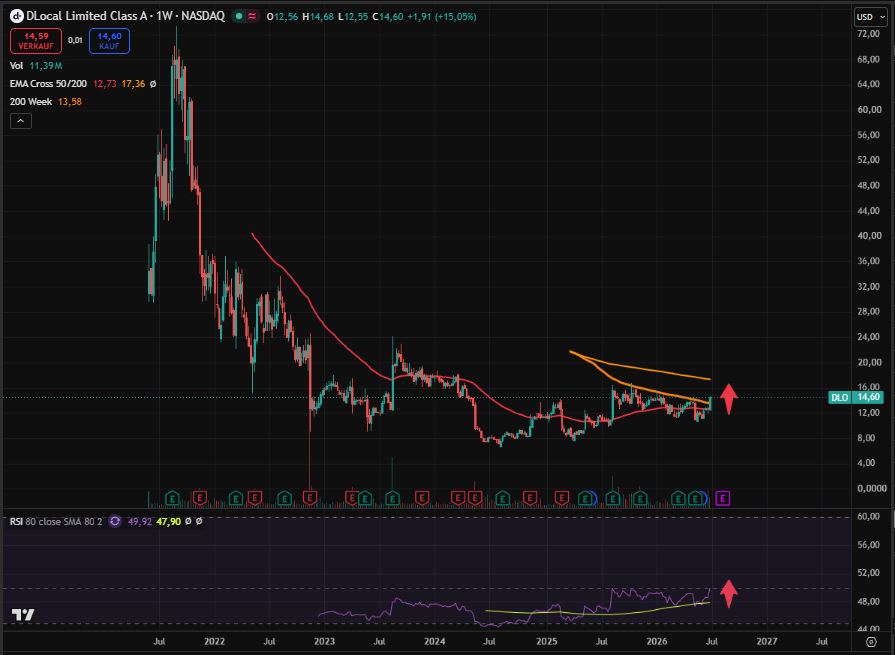
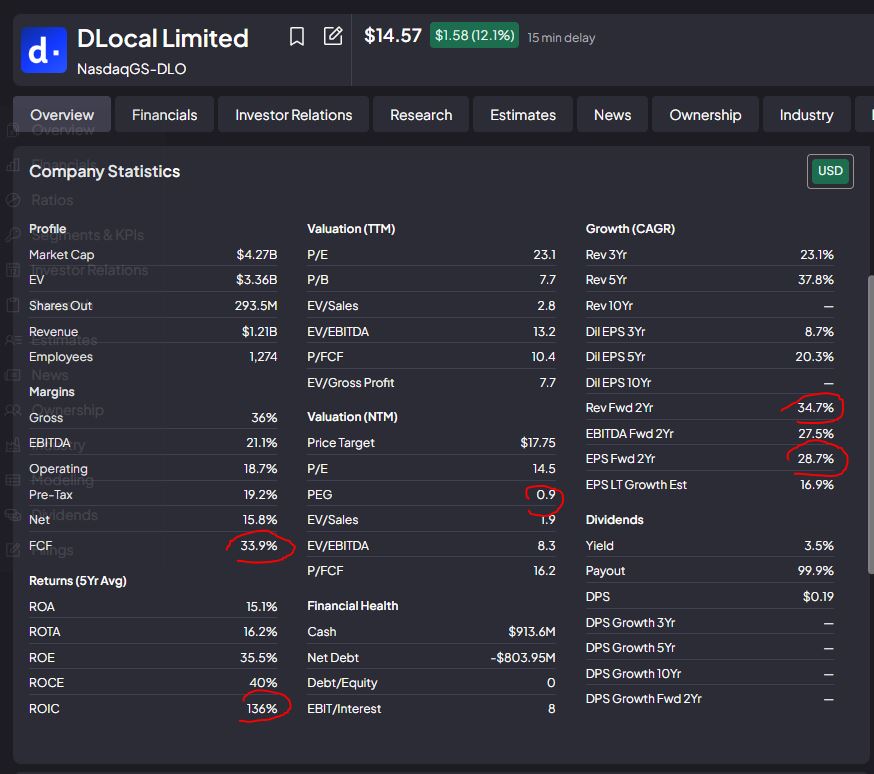
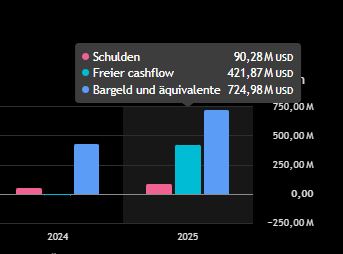
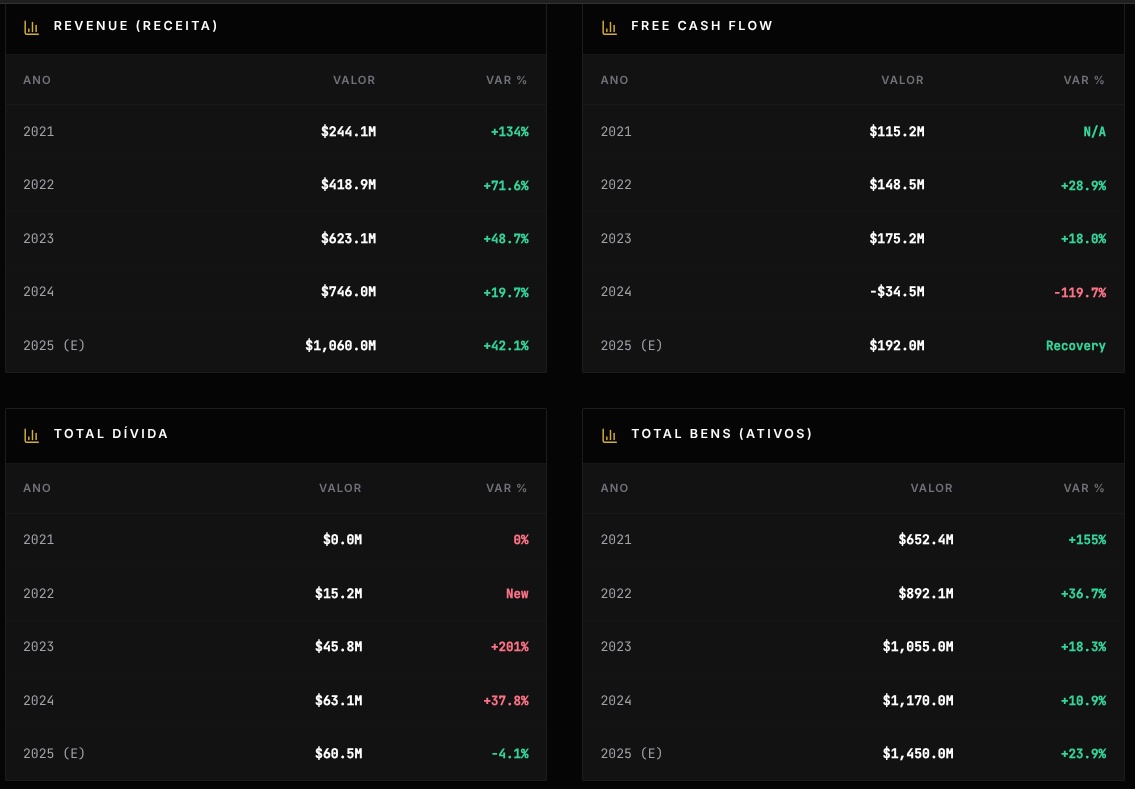
Financials look pretty solid to me?
Total Revenue +46.6% YoY
Net Income +63.43% YoY
Diluted EPS +58.2% YoY
Anyone else covered $DLO?
Postes
19Financials look pretty solid to me?
Total Revenue +46.6% YoY
Net Income +63.43% YoY
Diluted EPS +58.2% YoY
Anyone else covered $DLO?

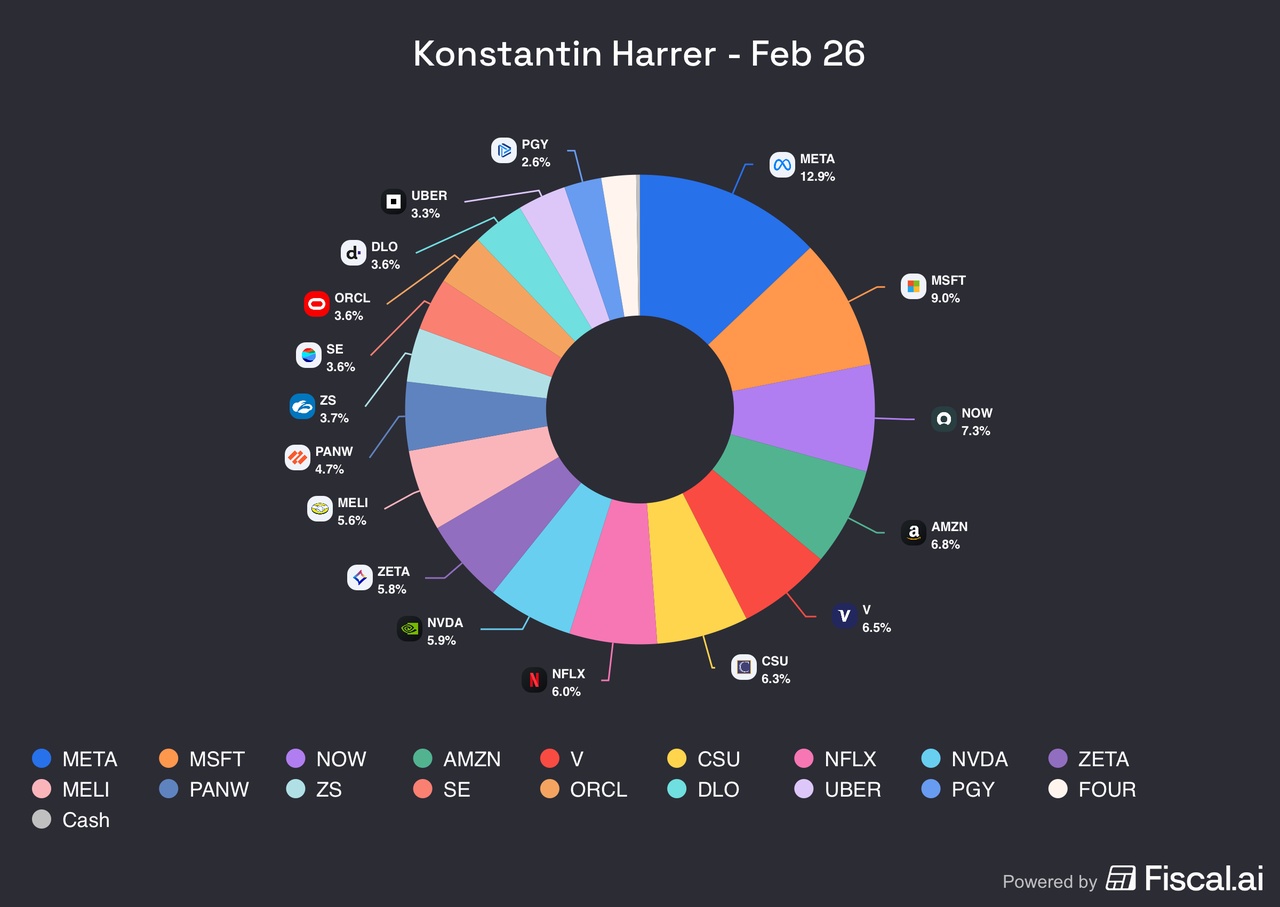
Second recap this year, performance even worse. I know that headline doesn’t sound great, but you have to look a bit deeper and understand my investment philosophy before judging the result.
The portfolio was down almost 9% in February, which mainly comes down to a few factors. First, some of my previous winners erased their gains entirely or even drifted into the red. Nvidia, Visa and MercadoLibre are good examples. I don’t use stop-losses because I assess companies holistically and don’t base sell decisions purely on price movements.
I generally sell for two reasons. The first is when the investment case I originally signed up for is no longer intact. That’s why I sold Fiserv a few months ago after they slashed guidance and effectively reset the company by pushing out management. It’s also why I sold Novo Nordisk when the story shifted from a slower-growing but still dominant player to something far less attractive: declining revenue, margins and free cash flow.
The second reason is when I believe there are simply better opportunities elsewhere in the market. That happened this month when I sold my T-Mobile US position to double down on some of my higher conviction and higher upside names like Microsoft, Zeta and ServiceNow.
Another reason my portfolio didn’t perform well last month is that I don’t use technical analysis. I don’t mind buying into a falling knife because I evaluate companies based on their fundamentals. Nobody knows whether a stock rebounds the day after a 30% drawdown or moves sideways for two years. But if I believe a company is a strong long-term compounder with clear upside, I’m not going to avoid it just because it could drop another 10%. In some cases I’ll even add more.
And that’s exactly what I did last month. I bought quite a few stocks, particularly in software and cybersecurity, because I think the market is mispricing some, though certainly not all, of those businesses. I added to Microsoft, ServiceNow, Palo Alto, Zscaler, Oracle and Amazon when they reached levels I considered attractive. And no, I didn’t always buy the exact bottom. That was a conscious decision.
A good example is Amazon. I bought the first half of my position before earnings at around $210 because I thought it was already an attractive entry. Then the stock sold off towards $200 and I added again. If I had waited for $190, I might never own the stock and would be kicking myself two years from now if it’s up 50%.
So yes, February doesn’t look great if you only look at the performance number. But what I actually did during the month was add to some exceptional long-term compounders. Some of them are so obvious that you almost want to call them no-brainers, even though you’re technically not supposed to say that.
But let’s be honest. Google was a no-brainer last year. Meta was, and arguably still is, a no-brainer at around 20x forward earnings while growing revenue at 20%. Microsoft might be the highest quality business in the world and trades at roughly 23x forward earnings.
My cash position is practically zero right now. While I do think the broader market has run fairly hot over the past year, there are still some extraordinary opportunities out there.
February Performance: -9%
Performance since inception: -2.8%
$META (+0,64 %)
$AMZN (+0,21 %)
$MSFT (-0,26 %)
$NOW (+0,18 %)
$V (+0,14 %)
$CSU (+0,32 %)
$NFLX (-0,7 %)
$NVDA (-1,88 %)
$ZETA (+3,65 %)
$MELI (-0,62 %)
$PANW (+3,24 %)
$ZS (+6,87 %)
$SE (-1,7 %)
$ORCL (+1,36 %)
$DLO
$UBER (-2,38 %)
$PGY
$FOUR
$TMUS (+1,2 %)
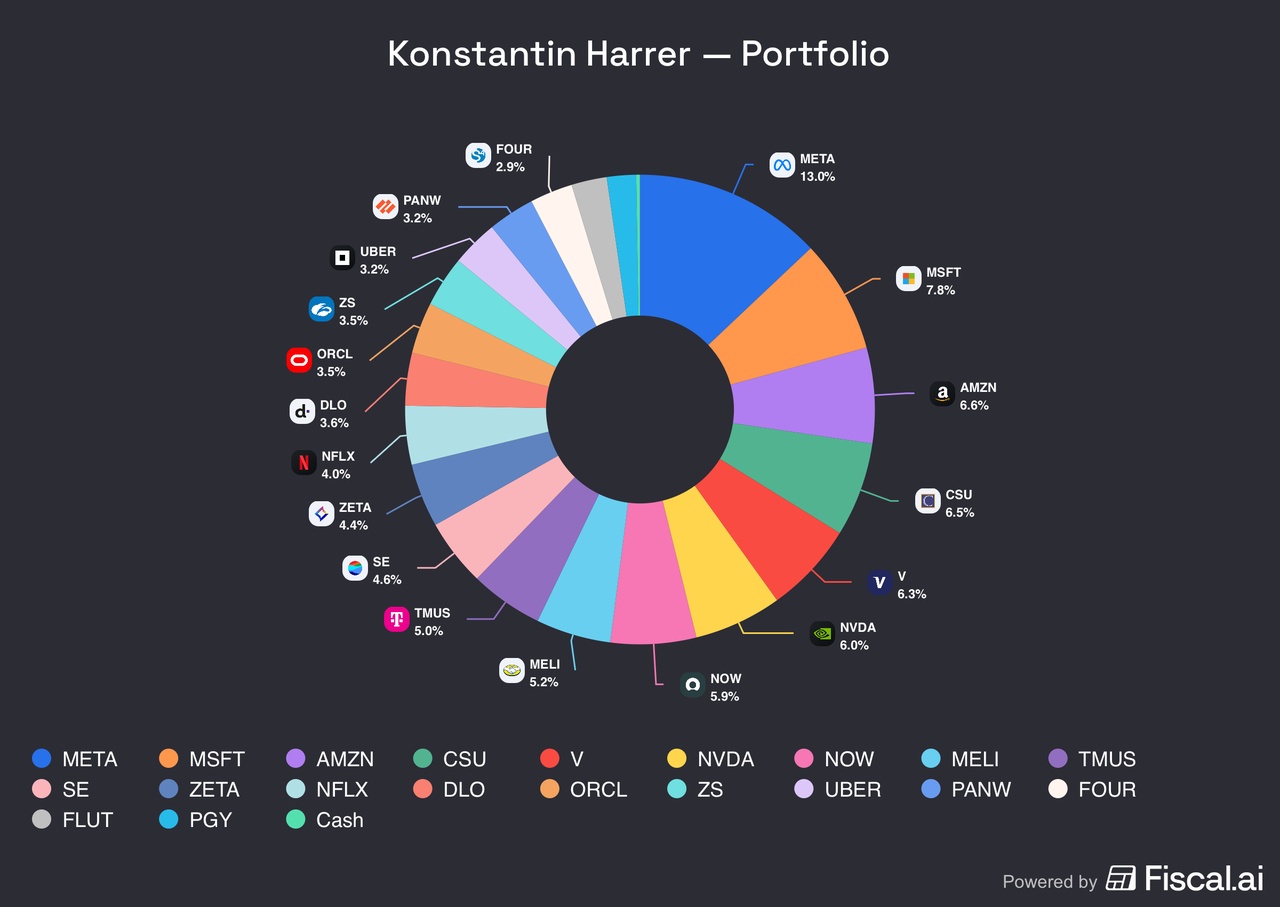
Okay, this is the first portfolio update of the year and let’s just say it was not a great month in terms of performance. That said, I made some quality additions that I feel very comfortable holding for the long term.
The first half of January was strong. My portfolio reached a new all-time high on January 6. Since then, performance deteriorated, mainly due to two almost contradictory AI narratives hitting the market at the same time.
The first one was the idea that AI is about to destroy the entire SaaS industry. I have shared my thoughts on that before, and I do think there is some truth to it. Seat-based pricing models, like those used by Atlassian, Adobe, and even Salesforce, could face pressure if AI meaningfully changes workflows and reduces headcount. That is a legitimate risk.
What is not legitimate is selling off every single software company indiscriminately. ServiceNow, Microsoft, cybersecurity names, anything remotely connected to software got punished. That reaction, in my view, was irrational. Have people actually looked at the moats of these businesses? Their margins? Their retention rates? Their growth? Their role inside enterprises?
I did. And I bought.
Throughout the month, I added mainly to ServiceNow and Microsoft. At the same time, I reduced my Atlassian position and reallocated that capital into those two names. ServiceNow and Microsoft are clear AI beneficiaries in my opinion, not victims. Atlassian might still work out, but the investment case is less straightforward, and I prefer clarity in uncertain environments.
The second headwind was the cooling AI infrastructure narrative. On the one hand, the market claims AI will wipe out multi-trillion dollar industries. On the other hand, it suddenly treats AI infrastructure as if it were a short-lived flu. The contradiction is obvious.
In that segment, I did not make major moves. I re-evaluated my Nvidia position thoroughly and came to the conclusion that there is no reason to panic right now. Hyperscaler spending remains strong, demand indicators are intact, and nothing material has changed in the fundamental story.
Lastly, I bought Netflix twice, once at the beginning of January and once toward the end of the month. I am very confident in that position. The business is executing extremely well, and the potential Warner Bros acquisition looks increasingly realistic. As I mentioned before, that deal would significantly strengthen Netflix’s content ecosystem, and the cost could easily be offset through modest price increases of one or two dollars per subscription. Regardless of whether the acquisition ultimately closes, Netflix remains the dominant force in streaming.
Overall, January was not a great month in terms of headline performance, but it was productive. I increased my exposure to core positions like Microsoft, re-tested multiple investment theses under pressure, and was forced to reassess certain assumptions. That process is uncomfortable, but necessary.
Looking forward to the rest of 2026.
January Performance: -4%
Performance since inception: +7%
$META (+0,64 %)
$MSFT (-0,26 %)
$AMZN (+0,21 %)
$CSU (+0,32 %)
$V (+0,14 %)
$NVDA (-1,88 %)
$NOW (+0,18 %)
$MELI (-0,62 %)
$TMUS (+1,2 %)
$SE (-1,7 %)
$ZETA (+3,65 %)
$NFLX (-0,7 %)
$DLO
$ORCL (+1,36 %)
$ZS (+6,87 %)
$UBER (-2,38 %)
$PANW (+3,24 %)
$FLTR (+1,2 %)
$PGY
$TEAM (+0 %)
$ADBE (-0,55 %)
$CRM (+0,45 %)
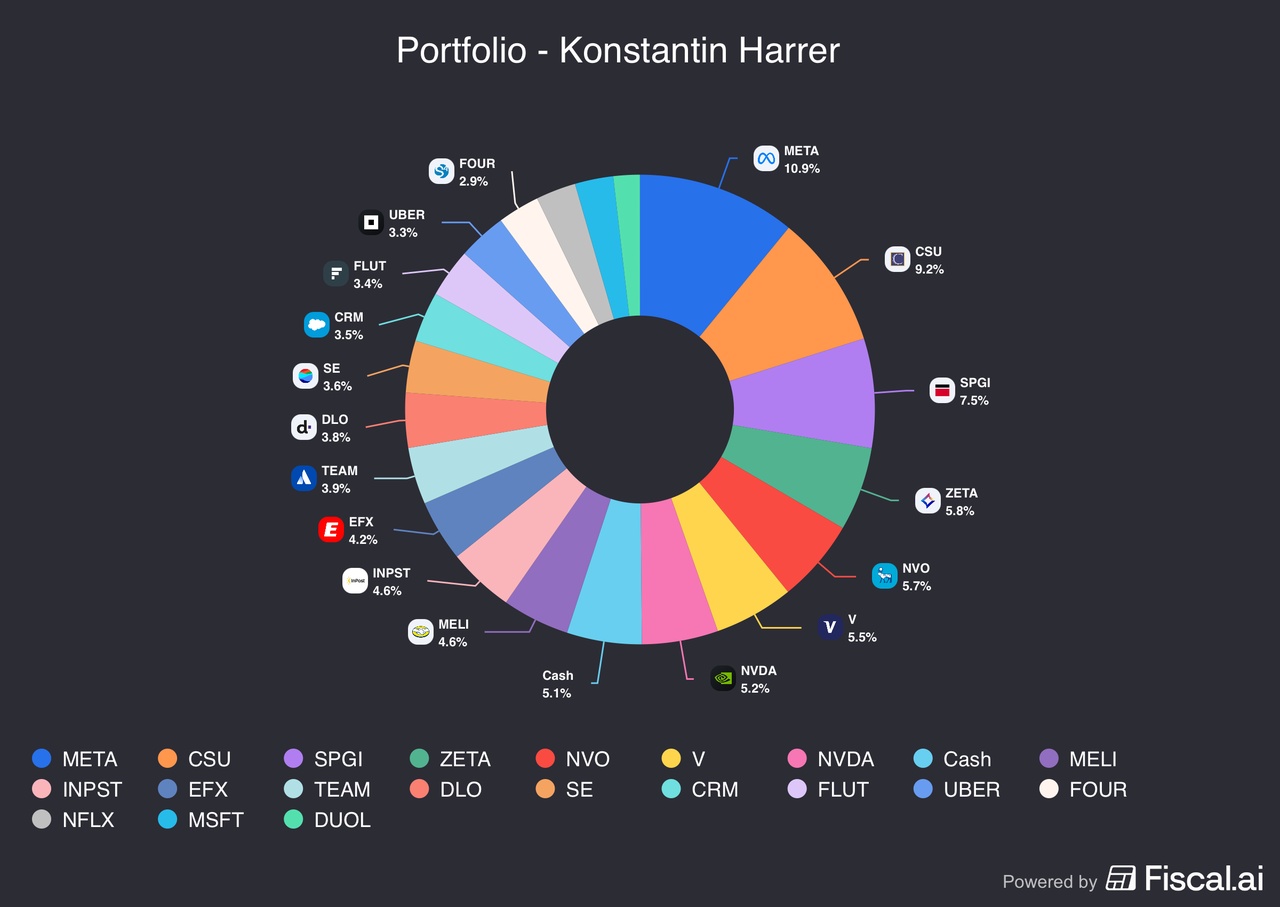
Back from my two-week winter break, I’ll start with a brief portfolio recap of last month. December was a much quieter month for me compared to previous ones, fitting with the holiday season. Portfolio activity was limited, with only a handful of buys and a lot more observation than execution. The only real macro event was the widely expected 25bp rate cut at the beginning of the month, followed by a slow but constructive Santa rally. Overall, December was about positioning and re-evaluating conviction, not trading.
Testament to that is the fact that my first trade was only executed on December 10th, when I opened a position in Sea around $125. I won’t go into too much detail here, as I’ve covered the company extensively over the past months. In short, Sea offers one of the cleanest growth setups in global e-commerce right now. The company benefits from rising income levels and improving infrastructure across Southeast Asia — a far more favorable backdrop than mature markets like South Korea. Revenue growth is projected north of 20–30% annually through 2027, cash flow is expanding at a similar pace, the balance sheet holds nearly $8B in cash with no debt, and the stock was down close to 40% from its YTD highs. At a ~5% FCF yield, it’s not dirt cheap, but more than fair given the growth. I’m very comfortable with Sea here, alongside MercadoLibre as my emerging markets exposure.
The next addition was Microsoft. I bought 10 shares at $475, making it a relatively small position below 3% of my portfolio. Microsoft is not a screaming buy, but it’s the kind of company I’d happily hold for a decade without even looking at the stock price. You could call it a typical “Buffett buy”: a wonderful company at a fair price. The forward P/E sits around 30, dropping into the mid-20s on FY27 estimates. Free cash flow is temporarily distorted by heavy and necessary AI CapEx, but the underlying business remains close to perfect: deeply entrenched ecosystems, massive switching costs, recurring revenue streams, and Azure as the rapidly growing #2 player in the cloud market. Still, while Microsoft is an incredible business, it isn’t my favorite Mag7 right now. That crown still belongs to Meta, and second place, in my view, goes to the stock I bought a week later.
That stock was Nvidia, which I added around $170. Nvidia puts me in a dilemma. Long term, I do see risks: extreme customer concentration, hyperscalers with the resources to build their own chips, and early cracks showing as companies like Meta explore alternatives. But in the short to medium term, the setup was simply too compelling to ignore. The stock was down 15–20% from ATHs, AI demand fears were eased after Micron’s blowout earnings, and on FY27 earnings Nvidia trades at a P/E of roughly 25. I’m highly confident Nvidia will rebound from these levels and make new highs in the coming months, even if I’m less convinced about its dominance five to ten years out.
On the same day, I also bought Uber. Similar story: not a forever-hold in my view given advances in autonomy (Waymo in particular), but at ~20% below ATHs and trading at a P/E of ~10, the risk/reward looked asymmetric. Cooler inflation, a stabilizing macro backdrop, and renewed confidence in the broader market created a favorable short-term setup. Adding to that, recent readings from the Atlanta Fed’s GDPNow model pointed to surprisingly strong U.S. growth momentum into Q4, which supports a more constructive outlook beyond just the AI narrative. I can easily see 30–50% upside from these levels, even if Uber isn’t a core long-term conviction.
December was also strong relative to my benchmark. The MSCI World was essentially flat for the month, while my portfolio gained around 5.6%. I started this portfolio in July 2025, and performance has been broadly in line with the MSCI World so far. For 2026, however, my goal is clear: visible outperformance through deliberate stock picking, generally focusing on quality-growth compounders. Alongside my core holdings (e.g. Meta, Visa, S&P Global), I’ll mix in selective high-risk, high-reward satellite positions where I see significant upside potential over the next few years (e.g. Zeta, Duolingo, Shift4).
Return since inception: +13%
$SE (-1,7 %)
$MSFT (-0,26 %)
$NVDA (-1,88 %)
$UBER (-2,38 %)
$META (+0,64 %)
$CSU (+0,32 %)
$SPGI (+0,63 %)
$ZETA (+3,65 %)
$NVO (+1,36 %)
$NOVO B (+1,04 %)
$V (+0,14 %)
$MELI (-0,62 %)
$INPST (-0,26 %)
$EFX (+0,89 %)
$TEAM (+0 %)
$DLO
$CRM (+0,45 %)
$FLTR (+1,2 %)
$FOUR (-0,12 %)
$NFLX (-0,7 %)
$DUOL
Investment Thesis
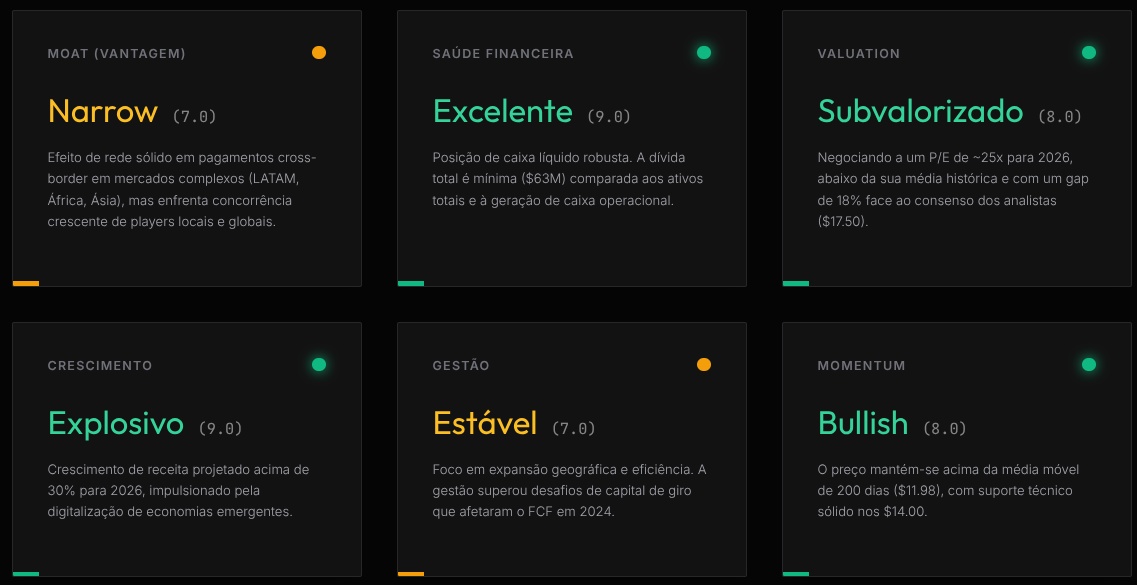
dLocal ($DLO ) has established itself as the critical infrastructure for global giants (Amazon, Google, Meta) to operate in highly complex markets. The competitive edge lies in the ability to manage local and cross-border payments with regulatory compliance in more than 40 countries.
Valuation and market gap
The PEG (Price/Earnings to Growth) ratio below 1.0 suggests that the market has not yet fully priced in the resilience of operating margins, which remain healthy at over 20%.
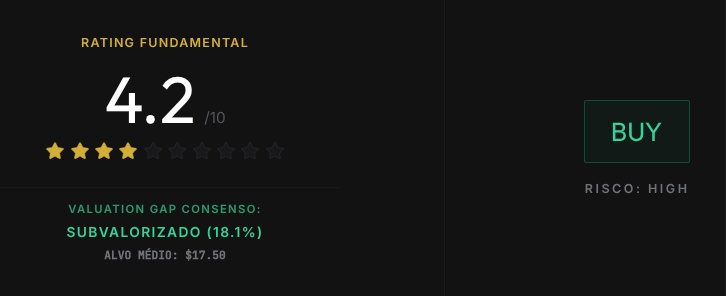
dLocal (DLO) has an aggressive growth profile in emerging markets, trading at an attractive discount to its intrinsic value. Despite operational volatility in 2024, the recovery of margins and the expansion of revenue to the $1B level in 2025 consolidate the undervaluation thesis.
Now, thanks to your blatant ideas of the last few days, you have actually persuaded me to feed the last of the dry powder to the market.😂 @Multibagger
@Shiya
@MrSchnitzel
All joking aside: I have read your analyses, dear @Shiya un@MrSchnitzel to $DLO and $OMDA (+0,35 %) and fortunately had some time for intensive research in the last few days. What can I say, I think both are good in many respects and see corresponding potential.
As a result, both have also found their way into my portfolio today in my usual entry size.
But that's really it until the next savings plan is executed at the beginning of February 😂
Thank you very much for your great work and the super discussions that have arisen around your ideas.🙏🏻
From now on, please no more ideas until I have investable cash ready again.😜🤣 *irony off*
Please keep up the good work, the community lives from dedicated content creators like you and the many others who have already been mentioned here countless times.🫶🏻
Two fintech stars, legacy winner vs risky challenger, both with a fair risk/reward?
Latin America is the place to be right now for fintech startups, as it has produced some of the most impressive stories over the last decade, and Nu and Inter sit right at the center of that narrative. The continent is on an upward trajectory, by any metric: whether it’s quality of life, income, healthcare, democracy, etc. In an era of rising globalization, the emerging markets are arguably the largest beneficiaries. And if you play it nicely as a founder and CEO, ruthless execution can lead to exorbitant success.
I’ve followed Nu’s rise ever since I started investing a few years ago, and even owned it twice before, both times walking away with roughly 50% profits. Nu has capitalized perfectly on Latin America’s winning streak, showing only minimal signs of weakness, especially self-inflicted. But more recently, I’ve also delved deeper into Inter. So, here are my thoughts on both:
Let’s start with Nu, the “legacy” player, as much as you can call a neobank legacy. It dominates large parts of Brazil (over 60% of adults use it regularly), keeps expanding across LatAm, and benefits massively from smartphone adoption and financial inclusion. Management has shown that relentless execution is the only thing that works in a more volatile environment. Expansion, yes, but thoughtful, so as not to trip over your own feet. This led to outstanding growth, and there’s no debate about it: projected top-line growth north of 30% annually for the next three years, with net income expected to grow closer to 50%. That’s elite, and the market knows it by now.
The stock is already up more than 60% this year and trades at a forward P/E of around 29. Yes, that drops to roughly 15 on 2027 estimates, but those numbers still need to be delivered in a region where currency risk, governance issues, corruption, macro instability, and geopolitics are very real. I’m not saying Nu can’t do it, just that the risk/reward no longer screams bargain.
Inter is the smaller, less established player. It shows similar growth dynamics to Nu but operates with less scale, less brand power, and more execution risk. That’s why it trades much cheaper: forward P/E around 14, and closer to 8 on 2027 earnings if everything goes right. On paper, that’s tempting (really tempting for me, actually). But in reality, the risks are meaningfully higher. Cheaper doesn’t always mean better.
For now, I’m happy with my emerging market fintech exposure through dLocal, MercadoLibre, and Sea. All three are significantly cheaper and/or enjoy stronger market positions, in my view. Nu and Inter remain fascinating stories, and I’ll keep watching closely, but at current prices, this feels more like a fair bet than a great one.

Bull Market Stock Portfolio Management.
Screenshot day.
$RKLB (+7 %)
$NBIS (-2,61 %)
$HIMS (-1,35 %)
$OSCR (+2,18 %)
$SOFI (-0,22 %)
$AMD (+4,14 %)
$DLO
$TMDX (+0,92 %)
$AMZN (+0,21 %)
$GOOGL (+0,01 %)
$ISP (-0,76 %)
$UNH (+0,33 %)
$OPEN (-0,76 %)
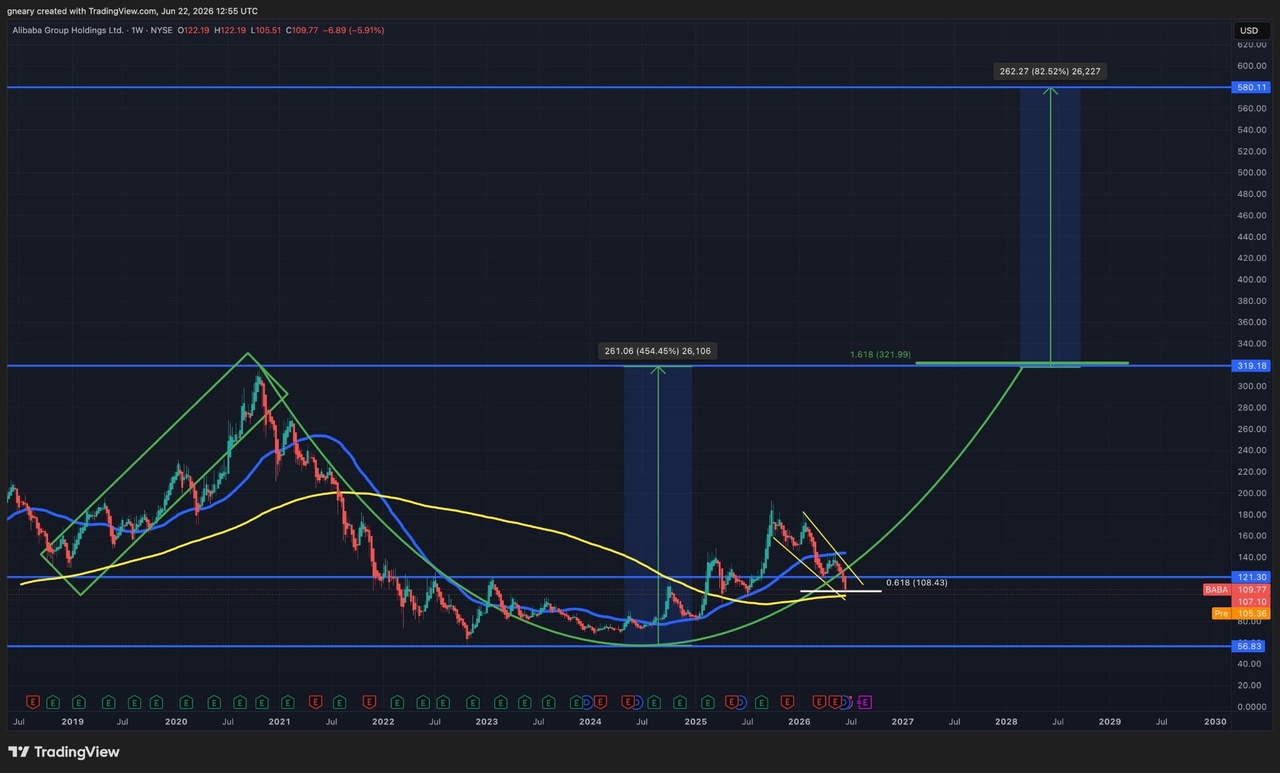
China is pumping $BIDU (-2,65 %)
$BABA (-0,53 %)
$JD (-2,86 %)
Cripto, waiting for altcoin season
$AVAX (-0,41 %)
$BTC (-0,19 %)
$ETH (-0,38 %)
$SOL (-0,3 %)
$RENDER (-1,01 %)
$KAS (-0,29 %)
Fantastic YTD.
We are in ghe last months of bull market.
Follow the pump, follow $BTC (-0,19 %)
$ETH (-0,38 %)
$SOL (-0,3 %)
$AVAX (-0,41 %) like pump bull signal.
Be ready to trim your high beta stock.
$HIMS (-1,35 %)
$OSCR (+2,18 %)
$SOFI (-0,22 %)
$NBIS (-2,61 %)
$RKLB (+7 %)
$BABA (-0,53 %)
$BIDU (-2,65 %)
$UNH (+0,33 %)
$DLO
$TMDX (+0,92 %)
$ISP (-0,76 %)
$AMZN (+0,21 %)
$GOOG (-0,05 %)
$AMD (+4,14 %)
$NU (-2,73 %)
Meilleurs créateurs cette semaine