Deutsche Bank
Price
Debate sobre DBK
Puestos
122Basic knowledge - Price-to-book ratio (P/B ratio) - why it hardly matters anymore
Reading time: approx. 5-6 minutes
Many of my recent posts have focused on metrics that have been with investors for decades: EV/EBITDA, free cash flow yield, ROIC, margins. The price-to-book ratio also belongs in this category - but more as a historical relic than as a central management tool. Hardly any other key figure shows so clearly how far capital markets and business models have diverged.
The P/B ratio compares the stock market value of a company with its balance sheet equity. The logic behind this is simple: what do I pay on the market for what is "there" according to the balance sheet? In a world of factories, machines and warehouses, this was plausible for a long time. In a world of software, platforms, brands and data, it is becoming increasingly misleading.
Formally, the calculation is quickly explained. Price times number of shares equals market capitalization. This is set in relation to the equity from the balance sheet. A P/B ratio of 1 means that the market values the company exactly at its balance sheet book value. Below 1 was traditionally regarded as "intrinsic value", above 1 as a premium.
This is exactly where the problem begins: the book value is not an economic value, but an accounting residual item. It results from historical acquisition costs less depreciation - not from a company's ability to generate future cash flows. The more intangible, scalable and knowledge-based business models are, the less this residual item says about the economic reality.
This worked comparatively well in the industrial economy. Steelworks, energy suppliers, banks and insurance companies had large, clearly measurable assets. Machinery, real estate, loan portfolios - they all appeared on the balance sheet. Those who bought below book value were often actually buying substance with a margin of safety. Benjamin Graham and early value investors built entire strategies on this.
Today, this logic is only viable in niches. A modern software company invests massively in research, development, employees and marketing. As a rule, these expenses are immediately booked as costs. Equity capital barely shrinks or grows, even though enormous economic value is created: proprietary software, network effects, customer data, brand trust. The result is an extremely low book value - and therefore an astronomically high P/B ratio. Not because the company is "expensive", but because the denominator is structurally distorted.
A look at $MSFT (Microsoft) makes this devaluation particularly tangible. Despite decades of profitability, enormous free cash flows and very high returns on capital, equity is comparatively low in relation to market capitalization. Research, software development and cloud infrastructure largely appear as expenses in the income statement. The economic value arises off the balance sheet. The double-digit P/B ratio is therefore not a warning signal, but an accounting artifact.
A similar picture can be seen at $V (Visa). The company operates a global payment network, requires hardly any physical capital and still achieves exceptionally stable margins. At the same time, continuous share buybacks reduce equity, although they increase the shareholders' stake in the company. The P/B ratio rises - although neither the competitive position nor the cash flow stability deteriorate. Anyone focusing on the book value here is completely missing the point of the business model.
Conversely, a high book value can be misleading. A classic industrial group such as $TKA (Thyssenkrupp) has large property, plant and equipment, long depreciation cycles and therefore a high balance sheet equity. At times, this results in very low P/B ratios, which appear favorable at first glance. In practice, however, they often reflect structural challenges: cyclical demand, low returns on capital and limited pricing power. The book value is there - the economic quality often is not.
At $GOOGL (Alphabet), the discrepancy between book value and economic value is clear. Despite enormous cash flows, high ROIC values and one of the strongest brands in the world, equity is only growing moderately. Data, algorithms and network effects form the core of value creation, but hardly appear on the balance sheet. A P/B ratio comparison with traditional media or industrial companies is therefore meaningless.
Banks such as $DBK (Deutsche Bank). Here, equity is central for regulatory purposes, the assets consist mainly of financial items and value adjustments have a direct impact on profitability. A P/B ratio below 1 can actually indicate undervaluation - or doubts about the quality of the assets. In this segment, the P/B ratio is not obsolete, but highly context-dependent. Without a deep understanding of the balance sheet risks, the multiple alone remains inadequate here too.
All these examples lead back to the core message: the P/B ratio does not measure value creation, but capital commitment. This is precisely why it has lost its explanatory power in the digital economy. It is backward-looking, while markets price in expectations about future cash flows, growth and risks.
This effect has become particularly apparent in recent years. Companies with high returns on capital and scalable models received valuation premiums - regardless of their book value. With rising interest rates, the focus shifted more towards profitability and cash flow quality, but not back to the book value. The benchmark changed, the P/B ratio remained marginal.
Does this mean that the P/B ratio is worthless? No. But its field of application is narrow. It can be useful for banks, insurance companies or genuine asset-heavy turnaround cases where substance can actually be liquidated. It is unsuitable for platforms, software and data-driven business models and is not suitable as the sole selling point.
Modern analyses therefore focus on something else: returns on capital such as ROIC, free cash flow yield, margin stability and growth. These key figures measure how efficiently capital is deployed - not how much of it is historically tied up.
This also closes the meta-circle of this series. Many traditional balance sheet ratios date back to a time when value creation was physical, linear and capital-intensive. Today, value is increasingly created through knowledge, software, networks and scaling. These values defy traditional balance sheet logic.
As a result, book value is not only becoming less important - it often tells the wrong story. Those who use it uncritically run the risk of confusing substance with quality or growth with overvaluation.
The decisive thought at the end: good investors do not ask what is on the balance sheet, but what a company will earn in the future - and at what risk. The KBV looks back. The market looks forward. That is precisely why it hardly counts any more.
In the end, the question is less about the "right" key figure and more about the right analysis tool. Which key figures do you primarily use today to classify the quality and valuation of a company? Where do traditional balance sheet figures still provide you with real added value - and where do you consciously turn to cash flow, return or growth figures? And more specifically: which key figures or correlations would you like to see more in-depth coverage of in the series?
Deutsche Telekom invests more than one billion euros in AI factory
Deutsche Telekom $DTE wants to enter the construction and operation of data centers for artificial intelligence (AI) on a large scale. Group CEO Timotheus Höttges announced in Berlin the launch of a joint project with the US chip company Nvidia $NVDA (+2,51 %) in which a so-called AI factory is to be built in Munich at a cost of over one billion euros.
"Without AI, you can forget about industry," said Höttges. "Without AI, you can forget about Germany as a business location." The Deutsche Telekom CEO pointed out that only five percent of high-performance AI chips are currently used in Europe, compared to 70 percent in the USA.
Höttges emphasized that the data in the Munich AI cloud should remain entirely in Germany. Only employees from Germany and Europe would be used to handle the data. And the technology comes from Germany and the USA. This means that there are no longer any excuses for German and European companies not to use AI on a large scale.
》Great day for Germany and Europe《
Federal Digital Minister Karsten Wildberger (CDU) spoke of "a great day for Germany and for Europe". "We are celebrating an investment with a signal effect: more than one billion euros for an AI factory with the most modern chips in the world." But this is more than just an AI factory for industry. "It is a signal of new beginnings. A further step on Germany's path to resolutely exploiting the opportunities offered by artificial intelligence."
In Berlin, Nvidia CEO Jensen Huang recalled that the concept of Industry 4.0 was developed in Germany. "Germany had this vision of connecting the digital world with the physical world.
With AI, we can now bring a super version of Industry 4.0 to life. And this is a new era, namely industrial AI." Nvidia is the world's leading provider of high-performance chips that are essential for training and using AI.
Deutsche Telekom is already a provider of conventional cloud services and operates over 180 data centers worldwide. At the same time, the Group cooperates with large platforms such as Google Cloud, Amazon AWS $AMZN or Microsoft Azure in the cloud business.
However, Deutsche Telekom's economic success is driven by its core business with telco services in Europe and the business success of its US subsidiary T-Mobile $TMUS business success.
》Part of a larger AI strategy《
The AI data center in Munich's Tucherpark is just the start of a larger-scale AI strategy at Deutsche Telekom. The Group hopes to be considered for a major European Union funding program for so-called AI Gigafactories.
The EU defines a gigafactory as a data center with 100,000 or more special AI chips (GPUs) - the facility in Munich will only run with 10,000 GPUs.
In order not to lose touch with the future topic of AI and at the same time remain independent of US companies such as Open AI, Google $GOOGLMicrosoft $MSFT and Meta $META Brussels is planning to promote the construction of four to five such large data centers.
The interested parties from Germany were unable to agree on a uniform application. Therefore, in addition to Telekom, the Schwarz Group, which is behind Lidl and Kaufland, the cloud provider Ionos $IOS and other consortia.
Federal Research Minister Dorothee Bär (CSU) emphasized the importance of this initiative. At least one AI Gigafactory must come to Germany.
With the Bavarian AI factory, Deutsche Telekom is primarily targeting users in industry.
The first customers include Agile Robots $AGL (+0 %)a leading German high-tech company that specializes in AI-controlled automation solutions and intelligent robotics.
In addition to Nvidia, other cooperation partners include Europe's largest software company SAP $SAPDeutsche Bank $DBK and the AI provider Perplexity.

Take out the risk? I'm probably not a role model😁✌️
Used the price slide to take an inliner 👌
If Deutsche Bank $DBK does not fall below € 27 and does not exceed € 35 by November 21 of this year, there will be a return of almost 200%...
I need your heads...
I am currently of the opinion that I am in a good position with my investments for the current status. (approx. 1 year of investing)
Now to the individual stocks! 🧐
My main ETF $IWRD :
Currently, the iShares MSCI World is my biggest stock - but also my biggest problem (at least in my opinion). It's currently too much of a cluster risk for me, as I'm invested in North America with around 55%. 😣
My second ETF $XMME :
I try to minimize this cluster risk with this ETF. 70/30 strategy... 😛
The China giant $1810 :
As I really like the current status of the company, I am following developments with interest and the purchase price was very attractive for my financial means, I bought it. With satisfaction. Of course, I also did it to further minimize the cluster risk. So... hopefully I'll be able to sell at a profit at some point! 😇
A bigger gamble $TTWO :
Well... what can you say... GTA 6 will probably blow everyone away. Of course, I'm aware it's only a small percentage, so either pay the lesson or get lucky. ☘️
My first solid stock with dividend prospects $KO :
Everyone knows it, everyone has bought it. There's nothing to say about CocaCola. 🥤
My second solid div. stock $SHEL :
I was able to get in cheap, the company is huge and stable. ⛽️
The bank share $DBK :
I'm with DB, extremely happy with it and was able to strike it cheap at the time. So far it's done quite well and there are always a few dividends! 💰
And finally... the more or less ugly duckling $SLI :
The little gamble that turned into my first doubling. One can only hope. Stability is not exactly the hobbyhorse. 🦆
And now for my future thoughts!
I am currently interested in $DTE (approx. worth €300-400) and letting them run with a savings plan. On the one hand, of course, to further balance out the cluster risk and on the other hand, to somewhat delimit the Asian theme.
My next consideration is $CL as it currently has an interesting entry price.
First 100%
First hundred percent on a share, would have happened much earlier if I hadn't $RHM sold so early 😅😅
fifth share I had ever bought.
Good morning dear GQ Community
With the forecast of 40 degrees here in Cologne today, you should concentrate on trading in the early hours before your head gets muddy.
Today I would like to show you in several posts what happened in my portfolio yesterday. Regardless of savings plans, there were 6 trades yesterday, 4 triggered by trailing SLs and 2 new purchases.
The first one to leave my portfolio was a call on the $DBK . As it was not that profitable, I chose the SL quite far away. When the DAX fell briefly yesterday, the call was gone. But since many people would also like to have posted losses, here you go
Depot review May 2025: Tariffs, Trump - was there something?
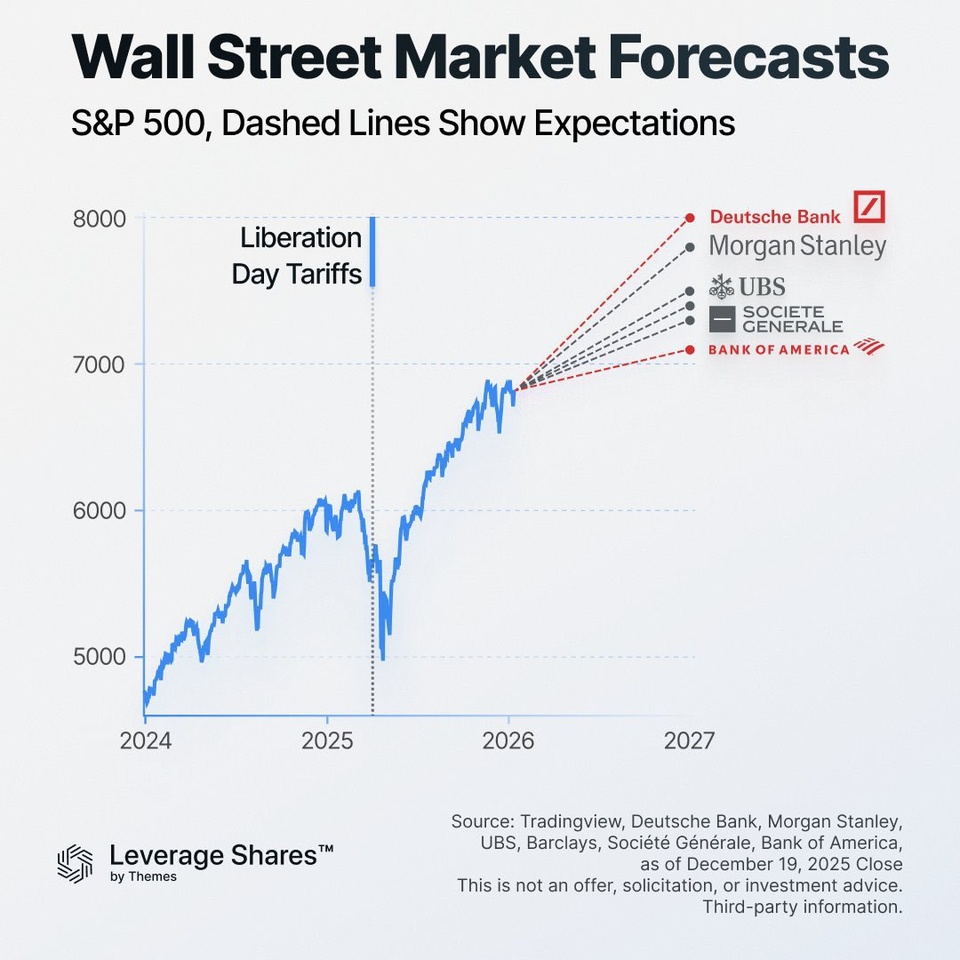
Liberation Day on April 2, 2025 was just two months ago, but it feels more like two years ago on the stock markets.
The markets have become accustomed to Trump's mood swings and the old adage is proving true once again: political stock markets have short legs
Monthly view:
My portfolio saw a massive rise in May and May 2025 is the second best month in the last 5 years with +8.1%. Only November 2021 was marginally better at +8.5%.
This corresponds to price gains of ~20.000€.
The MSCI World (benchmark) was +3.6% and the S&P 500 +6.1%.
Winners & losers:
A look at the winners and losers shows a completely different picture in May than in the last 2 months - Suddenly everything is green again.
On the winners is mainly made up of the stocks that have fallen in recent months: US tech
In 1st place is NVIDIA $NVDA (+2,51 %) with price gains of almost €5,000. This is followed in 2nd & 3rd place by Microsoft $MSFT
and Meta $META with price gains of just under €2,000 each. 4th place goes to Ethereum
$ETH (-0 %) with ~€1,400 price gains, finally making up some ground on Bitcoin $BTC (-0,38 %) . In 5th place is another tech stock with TSMC $TSM and +1,300€.
On the losers' side looked very relaxed in May. The biggest loser was Apple $AAPL with just under €300 in share price losses. In 4th place was Allianz $ALV with -120€, although this also corresponds to the dividend discount after the payout. So it's really significant when the dividend discount leads to a share ending up on the flop list of the month.
The performance-neutral movements in April were ~€500 - these are still lower at the moment due to the house building issue.
current year:
In the YTD my portfolio was still at -12,4% clearly in the red. Thanks to the strong May, it is now only -4.3%, although the MSCI World is still slightly better off at -3.3%.
In total, my portfolio currently stands at ~273.000€. This corresponds to an absolute decline of ~€12,000 in the current year 2025. -14.000€ of this comes from exchange rate losses, slightly offset by ~1.700€ from dividends / interest and ~3.200€ from additional investments.
Dividend:
- Dividends in May were +22% above the previous year at ~465€
- German equities were in the lead with Allianz $ALV and Deutsche Bank $DBK - Both with ~€120 (gross) dividend
- In the current year, dividends after 5 months are +25% over the first 5 months of 2025 at ~1.620€
I have reached another milestone with regard to the rolling 12-month view. For the second time, I have received over €3,000 in gross dividends for the last 12 months. This figure has now risen to over €3,100- However, the fall in the US dollar is still having an impact on my dividend forecast - unfortunately, the growth rates in the second half of the year do not look very good compared to the previous year
Buying & selling:
- I bought in May for 885€
- 520€ shares
- 265€ ETFs
- 100€ crypto
- Sales There were none in May
Adjustment of savings plans for the second half of the year:
After a long time, there will be adjustments to my savings plans for the second half of the year. With Starbucks $SBUX Apple $AAPL and Hershey $HSY
three shares will be removed from the savings plans. Starbucks and Apple will remain in the portfolio, Hershey is still open.
I will be adding Allianz $ALV
which I have held in my portfolio for many years and bought individually in 2020.
In addition, the London Stock Exchange $LSEG and Iberdrola $IBE
will be added to the portfolio.
I go into these adjustments in detail in the YouTube video (see next section).
YouTube:
My portfolio update for May can be seen there again in the usual form.
Unfortunately, things are a little quieter there and here on getquin at the moment.
There are some private and professional issues at the moment that are taking up a lot of time.
Video: https://youtu.be/Pe59Z287-Zs
Goal 2025
I haven't really set myself any goals for 2025 due to the topic of building a house. A fixed savings rate is difficult to implement due to the issue (unforeseen costs and the like).
A dividend target will also be very difficult due to the high volatility of the US dollar.
That's why I'm focusing on other topics this year, especially building a house and possibly one or two successes in terms of YouTube.
How did May look in your portfolio?
+ 1
Valores en tendencia
Principales creadores de la semana