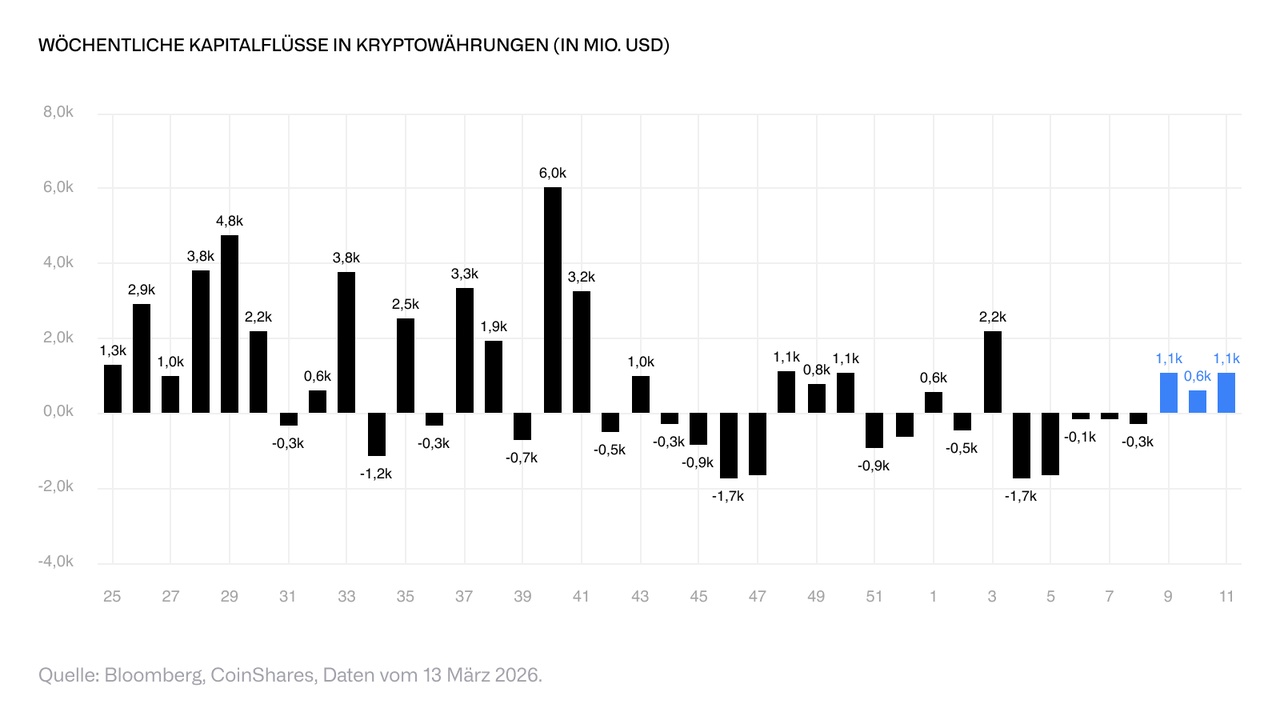
$BTC (-2,69%) is the only area with negative investor sentiment and recorded capital outflows of USD 264 million. In contrast $XRP (-2,41%), $SOL (-2,13%) and $ETH (-3,54%) lead inflows, with USD 63.1 million, USD 8.2 million and USD 5.3 million respectively. XRP thus remains the most successful asset since the beginning of the year, with cumulative capital inflows of USD 109 million.
CoinShares Ethereum Staking ETP
Price
Discussione su CETH
Messaggi
14What Luke Nolan (CoinShares Research Associate) would include in his crypto portfolio in 2026
$BTC (-2,69%)
#bitcoin is an indispensable store of value for any crypto portfolio, but at the same time offers a growth component that other typical stores of value do not. In my view, a crypto portfolio should therefore be built around Bitcoin. Institutional adoption via ETFs and allocations to corporate treasuries is an important narrative, but in reality we are still very early in some segments of the market. While there is some saturation in digital asset tokens, there is significant potential for additional inflows as more allocators develop a better understanding of the asset class - such as more conservative investment committees or even governments.
#ethereum remains the leading smart contract platform in terms of total value locked (TVL) and developer activity. The Layer 2 ecosystem, including Arbitrum, Optimism and Base, continues to scale the network and bring in new users. Most importantly, Ethereum is well positioned to benefit from the growth of stablecoins and tokenization infrastructures. Regulatory advances through legislation such as the GENIUS Act could significantly accelerate this trend. Scott Bessent expects stablecoins to be worth three trillion by 2030, and we believe Ethereum is well positioned to absorb a significant share of this.
#solana Ethereum follows a similar value proposition to Ethereum, but offers high throughput rates and low fees. Owning both assets therefore allows for broad coverage of the smart contract segment. Tokenized equities are likely to become more established on Solana and with spot ETFs now available, significant capital inflows could follow in 2026. ETH and SOL are generally well covered in the smart contract platform market, and with prices largely depressed, they offer attractive entry points without the speculative overheating of past highs.
Which crypto assets are you betting on this year?
Gold on the blockchain: the underestimated investment case for Ethereum
Today, gold can no longer only be acquired physically or via traditional financial products, but can also be tokenized on the blockchain - usually on Ethereum. In this model, a provider stores the physical #gold in a vault and issues ERC-20 tokens, which represent a fixed weight such as one ounce or one gram. These tokens can be traded globally, purchased in small denominations, transferred around the clock and used in various financial services within the Ethereum ecosystem.
The best-known examples are PAX Gold (PAXG) and Tether Gold (XAUT), both of which are issued on Ethereum. They make access to gold much more flexible, enable faster transfers and allow trading in smaller units than on traditional markets. Tokenized precious metals outside of gold have so far achieved hardly any significant traction.
Positive crypto turnaround for crypto assets
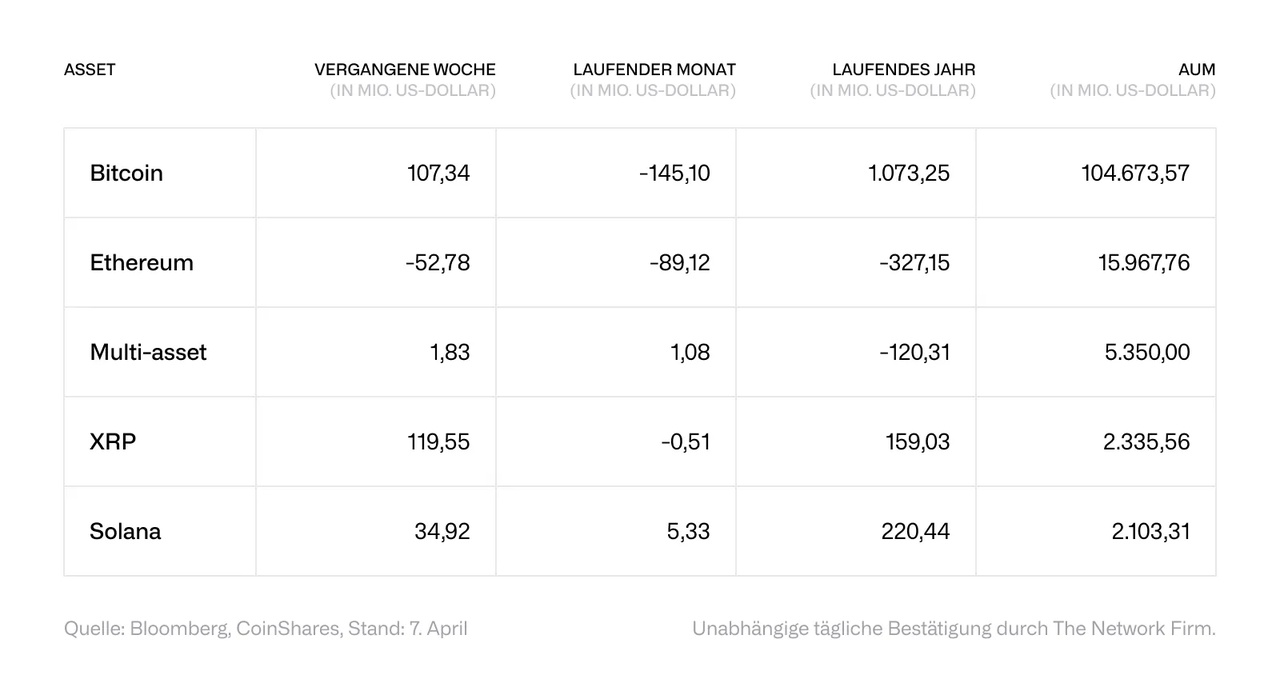
Digital investment products recorded inflows of USD 2.17 billion last week - the highest weekly figure since October 10, 2025, just before the market collapse. Inflows were stronger at the start of the week, but sentiment turned negative on Friday: diplomatic tensions over Greenland and renewed threats of additional tariffs led to outflows of USD 378 million. In addition, speculation that Kevin Hassett - a leading candidate for the chairmanship of the US Federal Reserve and well-known monetary policy dove - is likely to remain in his current post weighed on the market.
#bitcoin led the inflows with 1.55 billion US dollars. Despite a push by the US Senate Banking Committee under the CLARITY Act, which could restrict stablecoins from paying interest, Ethereum and #solana saw inflows of USD 496 million and USD 45.5 million respectively.
A wide range of altcoins saw inflows, most notably #xrp (USD 69.5 million), Sui (USD 5.7 million), LIDO (USD 3.7 million) and Hedera (USD 2.6 million).
$BITC (-2,78%)
$CETH (-3,22%)
$SLNC (-2,07%)
$XRRL (-2,21%)
$GB00BMY36D37 (-2,68%)
Why the US Clarity Act would be bullish for ETH, SOL, and XRP
Regulatory developments in Washington took center stage this week as the US Senate Banking Committee continued its work on the Digital Asset Market CLARITY Act - a crucial piece of legislation for the further development of the stablecoin industry. Originally conceived as a market structure bill, the bill has expanded into a broader crypto regulatory framework that includes #stablecoins, #deficonsumer protection and illegal financial activities. In all draft versions, regulation consistently revolves around control and custody, with obligations linked to who actually exercises decision-making power - rather than whether an activity is designated as centralized or decentralized. This approach forms the basis for dealing with DeFi and stablecoins, where legislators seek to differentiate non-custodial software and payment infrastructure from intermediaries and yield-based financial products. A markup session of the Senate Banking Committee scheduled for January fifteenth has been postponed. With a view to the finalization phase of the Clarity Act, a possible dynamic in #ethereum,
#solana, #xrp and other altcoins.
Crypto assets have historically faced higher regulatory risks outside of #bitcoin historically faced higher regulatory risks, and the CLARITY Act would mitigate these risks by clearly defining which authorities regulate what and what obligations apply to tokens and trading venues. Such codified and permanent regulation can unlock institutional interest through greater legal resilience and more certainty in due diligence. The end result should be more product and service offerings, lower liquidity and an overall reduction in risk perception. We expect this to support the market development of altcoins. (Author: James Butterfill, CoinShares Head of Research)
$GB00BMY36D37 (-2,68%)
$SLNC (-2,07%)
$XRRL (-2,21%)
$CETH (-3,22%)
From fringe phenomenon to foundation: crypto after 2025
2025 has finally shown that crypto is no longer a parallel universe. Digital assets have grown out of the experimental phase and arrived at the core of the global financial markets. Bitcoin has grown up with ETFs, options markets and the first steps towards corporate adoption. Stablecoins have quietly developed into a global settlement infrastructure, tokenization has advanced from pilot projects to real volumes - especially in private credit and US government bonds. At the same time, decentralized applications are generating real cash flows for the first time, and venture capital is returning, more disciplined and fundamental than in previous cycles. In short, 2025 was the year crypto stopped justifying itself.
2026: Ethereum and Solana in focus
2026 is not about the next hype narrative, but about integration. Macro factors such as liquidity, real yields and monetary policy will continue to set the pace, while major shifts take place in the background: an increasingly multipolar monetary system, growing geopolitical relevance of non-state stores of value and more regulatory clarity. #ethereum is growing into its role as an institutional infrastructure, #solana dominates performance- and volume-intensive applications, specialized platforms are replacing broad all-rounders. For companies, the question is shifting from "whether crypto" to "how much efficiency can be gained". The financial system is not rebuilding itself loudly, but quietly - and 2026 will be the year in which this new architecture becomes visibly resilient.
(Author: James Butterfill, CoinShares, Head of Research)
Delay in passing the US Clarity Act causes outflows - Ethereum most affected
Digital asset investment products saw outflows of USD 952 million for the first time in four weeks. For James Butterfill, CoinShares' Head of Research, this reflects a negative market reaction to delays in the passage of the US Clarity Act, which have prolonged regulatory uncertainty for this asset class. Added to this were concerns about continued selling by so-called whale investors. As a result, it now seems extremely unlikely that exchange-traded products will exceed last year's inflows. Total assets under management currently stand at USD 46.7 billion, compared to USD 48.7 billion in 2024.
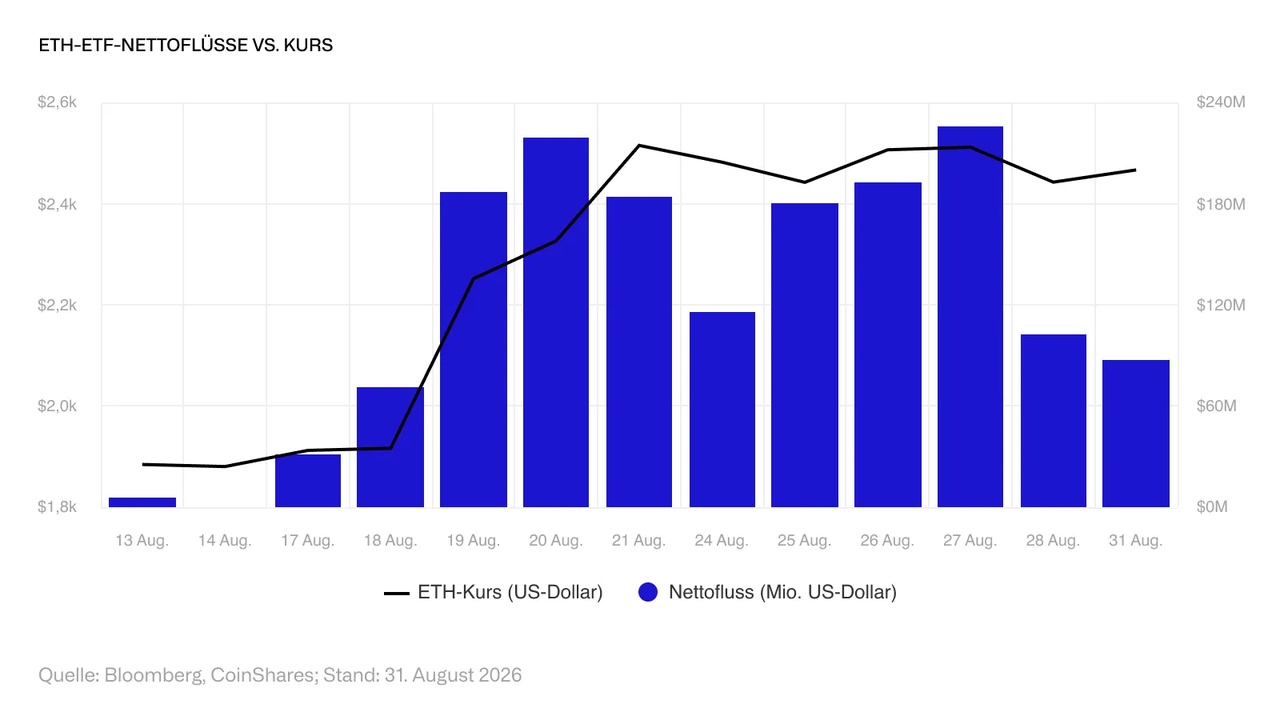
#ethereum recorded the largest outflows totaling USD 555 million. This is understandable, as Ethereum has the most to gain or lose from the Clarity Act. It is important to note that inflows this year have significantly exceeded the previous year's level: They amount to USD 12.7 billion so far, compared to USD 5.3 billion last year.
Third week in a row with moderate inflows
#bitcoin attracted inflows of USD 522 million, while short bitcoin investment products continued to record outflows totaling USD 1.8 million. This indicates a recovery in sentiment. Despite this, Bitcoin remains a relative laggard this year, with year-to-date inflows totaling USD 27.7 billion, compared to USD 41 billion in 2024.
#ethereum Bitcoin recorded inflows of USD 338 million last week, bringing year-to-date inflows to USD 13.3 billion. This represents an increase of 148% compared to 2024.
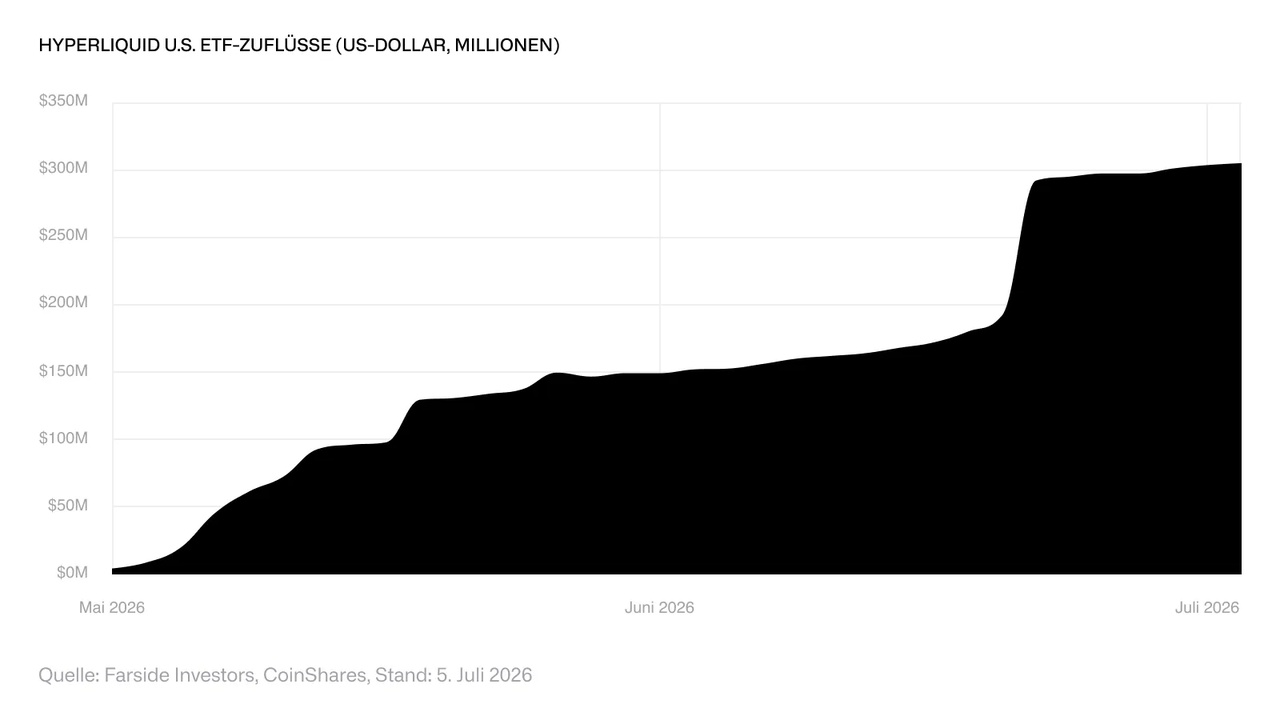
The inflows at #solana remain lower at USD 3.5 billion since the beginning of the year, but still represent a tenfold increase compared to 2024. Aave and Chainlink saw inflows of USD 5.9 million and USD 4.1 million respectively last week, while Hyperliquid saw outflows of USD 14.1 million.
$BITC (-2,78%)
$CETH (-3,22%)
$SLNC (-2,07%)
$GB00BMY36D37 (-2,68%)
Institutional capital flows now have a greater influence on price trends than annual cycles.
James Butterfill, CoinShares' Head of Research, explains this using the example of #btc and #eth.
Some long-term investors seem to believe in the four-year cycle narrative - a self-reinforcing pattern that we don't share, but can't ignore either. Followers of this model realize gains, convinced that the cycle peak is approaching. The current price and momentum patterns more closely resemble the moderate trajectory of the 2021 cycle than the parabolic peaks of previous phases - which explains the ongoing sell-off by large investors: over 100 wallets with more than 1,000 Bitcoin have reduced their holdings since July, indicating continued profit-taking. Ethereum on the other hand, is experiencing silent accumulation - the number of wallets with over 10,000 ETH has risen from 877 to 1,250 since June. We believe that institutional capital flows, ETF activity and global liquidity trends are now having a far greater impact on market behavior than the simple four-year pattern of previous cycles.
Titoli di tendenza
I migliori creatori della settimana