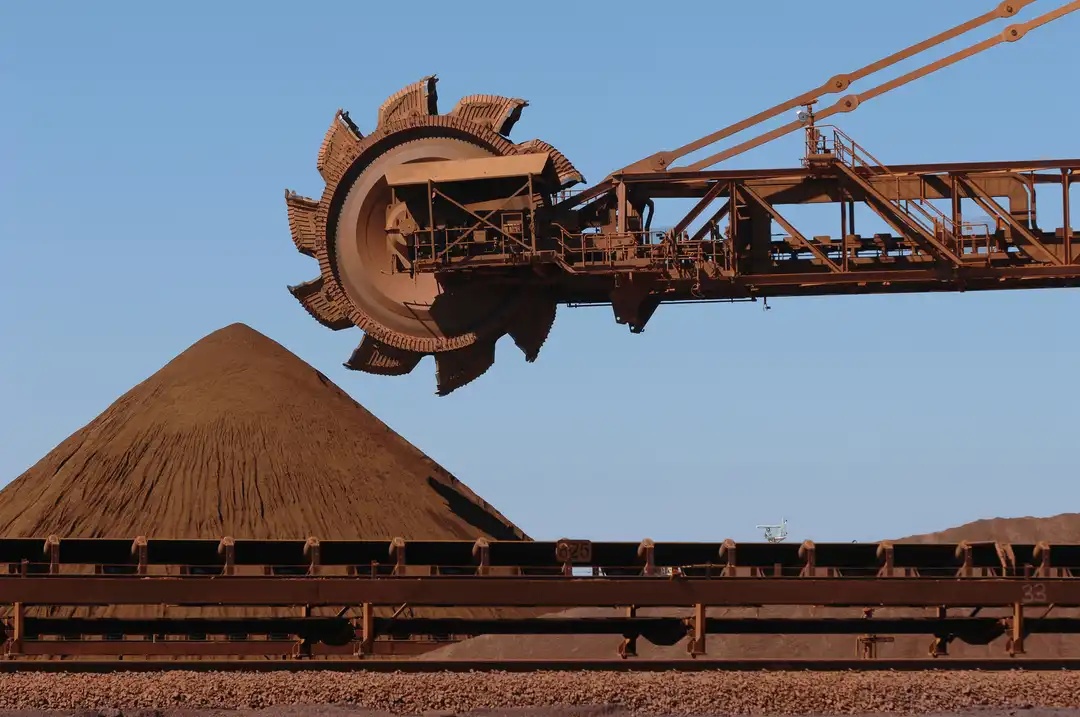
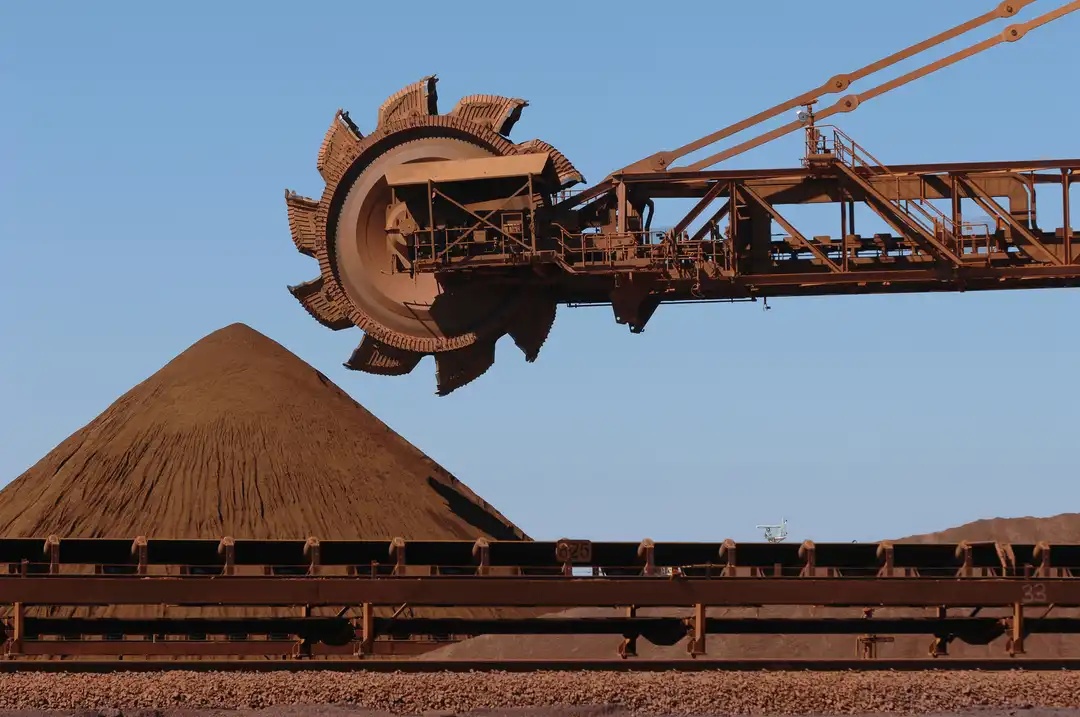
Mhh yummy yummy 😋
So far I have not regretted investing in $BHP (-1,42%) to have invested.

Messaggi
29Mhh yummy yummy 😋
So far I have not regretted investing in $BHP (-1,42%) to have invested.
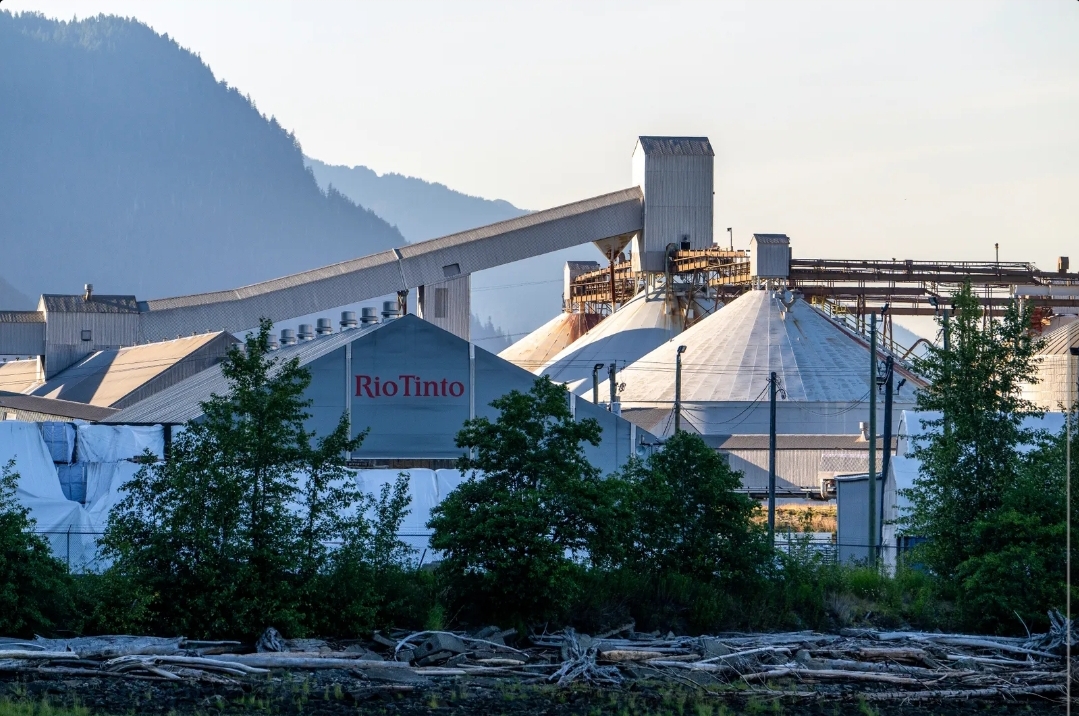
Rio Tinto $RIO (-2,8%)
$RIO (-1,39%) and BHP $BHP (-1,42%) have agreed to jointly mine up to 200 million tons of iron ore at their neighboring Yandicoogina and Yandi iron ore operations in Pilbara.
Under two non-binding Memoranda of Understanding (MOUs), the companies will explore the potential for the following collaborations:
Collaborate on the development of Rio Tinto's Wunbye deposit; and supply ore from BHP's Yandi Lower Channel deposit to Rio Tinto for processing at its existing wet plants on agreed commercial terms.
These new opportunities build on a 2023 agreement between Rio Tinto and BHP to mine the Mungadoo Pillar, which allowed ore to be mined from the previously inaccessible joint tenure area.
Matthew Holcz, Chief Executive of Rio Tinto Iron Ore, said: "By working smarter, we can better utilize existing infrastructure to unlock additional production capacity with minimal capital expenditure."
"Together we will extend the life of these operations, create additional value and further support jobs and local communities in Western Australia."
Tim Day, President of BHP WA Iron Ore Asset, said: "This is a clear example of how productivity unlocks new opportunities by making the most of our existing assets.
By sharing our expertise and infrastructure, we will create new value and deliver benefits to our employees, partners, customers and communities."
Rio Tinto $RIO (-2,8%)
$RIO (-1,39%) has reportedly set a new quarterly record for deliveries, shipping an estimated 90.8 million tons of material in the December quarter. This would have surpassed the company's previous high of 90 million tons from 2017.
The successful year-end 2025 brought Rio Tinto's total annual output to around 326 million tons, meeting its forecast of 323 to 338 million tons, The West Australian newspaper reported today (Monday).
The iron ore industry in Western Australia is running at full speed, led by Rio Tinto, which broke its quarterly shipment record, winning a "tight race" and BHP $BHP (-1,42%)which accelerated production despite a dispute with China, the report added.
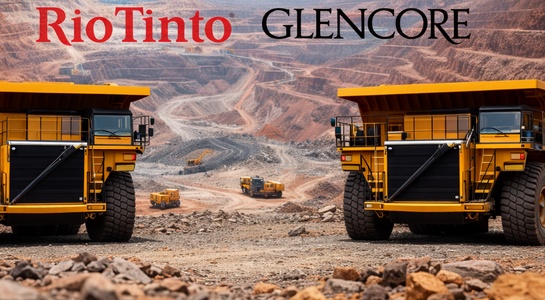
The international mining industry may be facing a tectonic shift due to a Rio Tinto $RIO (-2,8%)
$RIO (-1,39%) Glencore $GLEN (-2,76%) merger.
Talks are taking place behind the scenes that could permanently change the ranking of the world's largest commodity groups.
Nothing has been decided yet, but the dimensions are huge - and the consequences would extend far beyond copper and iron ore.
A closer look is also worthwhile for gold investors.
》Talks about a new industry giant《
Rio Tinto and Glencore have confirmed that they are once again in talks about a possible merger.
A transaction is under discussion which - depending on the structure - would lead to the creation of the world's largest mining group.
With a combined market capitalization of around 207 billion US dollars and an enterprise value of over 260 billion US dollars, the new heavyweight could even overtake industry leader BHP $BHP (-1,42%) and also overtake Newmont $NEM (-1,37%) the top position among mining companies.
It would be the second attempt in just over a year. Glencore first approached Rio Tinto at the end of 2024, without success at the time. Now, at the end of 2025, the environment seems to have changed significantly - both strategically and in terms of personnel.
》New CEO, new openness for major deals《
One key difference to the first round of talks is at Rio Tinto itself. Simon Trott has been the new CEO since August and is considered to be much more open to large-volume transactions than his predecessor. Trott is pursuing the goal of streamlining the Group, disposing of non-strategic peripheral activities and focusing the portfolio more clearly on future raw materials.
This is precisely where the strategic direction of both companies coincides: Copper.
Both Rio Tinto and Glencore see the metal as one of the key bottleneck factors in the coming decades - driven by the energy transition, electromobility, AI data centers and rising defence spending.
》Rio Tinto and Glencore focus on copper《
While gold is the emotional and strategic focus for many private investors, copper is currently the commodity that is driving merger fantasies in the sector.
Analysts believe that global demand for copper could increase by around 50% by 2040.
At the same time, a structural supply deficit of more than ten million tons per year is looming without massive new investments.
Glencore has already clearly positioned itself as a "copper growth stock" and is aiming to double its production to 1.6 million tons per year by 2035.
Rio Tinto, on the other hand, has a strong project pipeline, but is under pressure to realize growth faster than would be possible organically.
A merger could provide precisely this leverage.
》Old hurdles partially cleared out of the way《
A major stumbling block in earlier talks was Glencore's coal business. Rio Tinto already exited coal mining completely in 2018 and did not want to be burdened with the CO₂-intensive segment again.
This hurdle has now been removed: Glencore has spun off its coal activities into an independent Australian unit. This would make a spin-off or separate sale much easier - and makes a merger more politically and strategically viable.
However, it remains to be seen whether Glencore's extensive trading business would be part of a deal. This area in particular is high-margin, but culturally difficult to integrate with Rio Tinto.
》Market reactions and risks for shareholders《
The stock market reacted promptly to the news. Glencore shares rose by around 6% at times, while Rio Tinto shares came under noticeable pressure. Investors fear that Rio Tinto could pay too high a price in the event of a share swap. Analysts warn of possible value destruction if the premium is too high or the integration fails.
》In addition, there are cultural differences《
Glencore is seen as opportunistic, trade-driven and strongly focused on results, while Rio Tinto traditionally focuses more on operational stability and long-term projects. It remains to be seen whether this will result in a productive mix or a conflict.
And what would the Rio Tinto Glencore merger mean for gold - or for Newmont?
Even if gold is not at the center of the merger logic, the indirect consequences would be considerable. A new megacorporation would reorganize the balance of power in the commodities sector.
For Newmont Corp., currently the world's largest gold producer, this could be at least symbolically relevant: In public perception and among institutional investors, Newmont could lose its place at the top of the global mining giants - even if the focus of the new group is primarily on base metals.

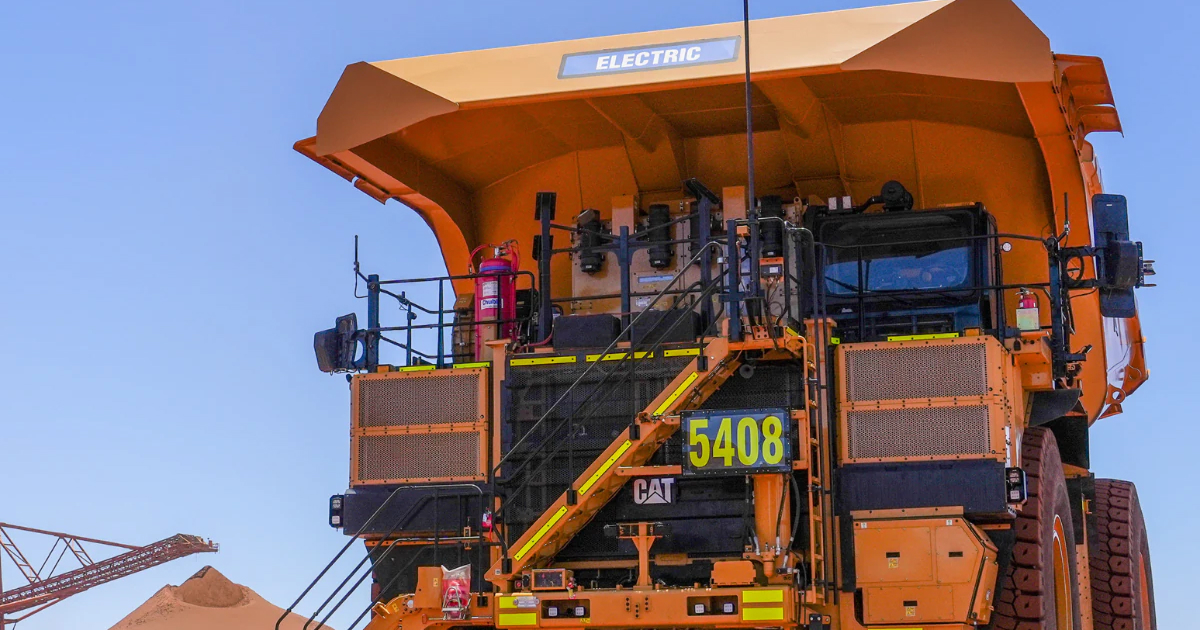
Australia's first battery-powered Cat 793 XE Early Learner electric dump trucks have arrived at the Jimblebar iron ore mine in the Pilbara region of Western Australia, marking the start of large-scale testing of zero-emission heavy mining equipment.
The project is part of a unique collaboration between BHP$BHP (-1,42%)Rio Tinto $RIO (-2,8%)
$RIO (-1,39%) and Caterpillar $CAT (-2,01%) and aims to test the viability of electric drives as an alternative to diesel fuel in large iron ore mines.
Once the safe commissioning phase has been completed, the machines will be put into operation under real production conditions. As part of the tests, the companies will not only evaluate the technical characteristics of the dump trucks, but also the readiness of the associated infrastructure: charging systems, energy management, stability of the power supply and component supply logistics. The data obtained will form the basis for planning future mines with low greenhouse gas emissions.
According to the companies, the decarbonization of mining in Pilbara is only possible with technological breakthroughs and accelerated investment in research and development. For this reason, BHP and Rio Tinto are working with Caterpillar and the support of WesTrac to prepare their fleets for a large-scale transition as quickly as possible.
Based on the results of joint testing, each company will decide separately on the transition to extended testing and commercial implementation of the technology. The project is part of BHP and Rio Tinto's long-term strategy to achieve zero operational greenhouse gas emissions by 2050, making it one of the most important steps in the green transformation of the mining industry.
》A reminder《
BHP Group increased its iron ore production by 1% year-on-year to 263 million tons in financial year 2024/2025 (ending June 30). The production forecast for the 2025/2026 financial year is estimated at 258 to 269 million tons.
Rio Tinto reduced ore production at its Pilbara operations by 1% year-on-year to 328 million tons in 2024. For 2025, the company expects to ship 323 to 338 million tons of raw materials.

US President Donald Trump has once again reversed a regulation introduced by his predecessor Joe Biden. This means that the copper producers Freeport-McMoRan and Rio Tinto will no longer be subject to key environmental regulations.
》It is another step backwards for environmental policy《
On Friday, US President Donald Trump lifted a requirement for copper smelters introduced by his predecessor Joe Biden. The new order means that the two affected plants of Freeport-McMoRan and Rio Tinto will not have to comply with central environmental regulations for the next two years. Copper smelters produce, process and purify material from various raw materials.
The White House justified the move with the aim of promoting the security of the American mineral supply and freeing domestic copper producers from regulatory burdens.
"Imposing these requirements on such a limited and already strained domestic industry risks accelerating further closures," the US government stated.
Both Freeport-McMoRan and Rio Tinto did not initially respond to a request for comment.
The Biden administration's rule, finalized in May 2024, had required the two copper companies to reduce emissions of pollutants such as lead, arsenic, mercury and benzene. Trump had already classified copper as a strategically important raw material for defense, infrastructure and new technologies by decree at the beginning of the year.
As I am only a co-author of this article, I would like to take this opportunity to thank @Tenbagger2024 for the great research 👍🏻

Subscribe to the podcast to make buying dip worthwhile.
00:00:00 Market environment & FED
00:25:00 Novo Nordisk & Viking Therapeutics $NVO (+0,48%)
$VKTX (+3,5%)
00:45:00 BYD $1211 (-2,64%)
01:18:30 BHP Group $BHP (-1,42%)
01:39:30 Rio Tinto $RIO (-2,8%)
$RIO (-1,39%)
01:49:15 Palantir & Data Protection $PLTR (-4,08%)
Spotify
https://open.spotify.com/episode/0jDbLBebz6PuMalm2BAB79?si=q1TLdAP9RHiDVdse_LR9tQ
YouTube
https://www.youtube.com/watch?v=Kg9xD1t0NzE
Apple Podcast
>> Like, if you want a list like this every week.
MondayAugust 18, 2025:
- 08:00: Germany: Building permits (June) - indicator for construction activity.
- 11:00: Eurozone: Trade Balance (June) - Impact on EUR.
- 12:00: Germany: Bundesbank Monthly Report (August) - Monetary policy assessments.
- 16:00: USA: NAHB Housing Market Index (August) - leading indicator for the real estate sector.
- Corporate figures:
- Australia: BHP Group, annual figures (approx. 22:00).
- USA: Palo Alto Networks, Q4 figures (approx. 22:00).
TuesdayAugust 19, 2025:
- 08:00: Germany: Manufacturing order backlog/reach (June) - industrial activity.
- 10:00: Eurozone: ECB Current Account (June) - impact on EUR.
- 14:30: USA: Building Permits and Housing Starts (July) - housing market and economic sentiment.
- Corporate figures:
- Germany: Ceconomy, Hannover Re, K+S (approx. 07:00-08:00).
- USA: Home Depot, Q2 figures (approx. 12:00).
WednesdayAugust 20, 2025:
- 01:50: Japan: Trade Balance (July) - impact on JPY.
- 08:00: Germany: Producer prices (July) - inflationary pressure.
- 08:00: UK: Consumer prices (July) - signal for BoE policy.
- 16:30: USA: Crude Oil Inventories (week) - impact on oil prices.
- 20:00: USA: FOMC meeting minutes (July 29/30) - Fed interest rate policy.
- Corporate figures:
- Germany: Brenntag, E.ON, Porsche Automobil Holding (approx. 07:00-08:00).
ThursdayAugust 21, 2025:
- 09:15: France: Manufacturing/Services PMI (August, preliminary) - economic activity.
- 09:30: Germany: PMI Manufacturing/Services (August, preliminary) - Economic activity.
- 10:00: Eurozone: PMI Manufacturing/Services (August, preliminary) - Economic activity.
- 10:30: UK: PMI Manufacturing/Services (August, preliminary) - Economic Activity.
- 14:30: USA: Initial Jobless Claims (week) - Labor Market Health.
- 14:30: USA: Philadelphia Fed Business Outlook (August) - Regional Economic Indicator.
- 16:00: USA: Existing Home Sales (July) - Real Estate Market.
- 16:00: Eurozone: Consumer Confidence (August, preliminary) - Consumer Sentiment.
- Corporate figures:
- Germany: Hapag-Lloyd, LANXESS, HHLA (approx. 07:00-08:00).
- UK: Aviva, H1 figures (approx. 08:00).
- USA: Walmart, Q2 figures (approx. 13:00); Intuit, Q4 figures (approx. 22:00).
FridayAugust 22, 2025:
- 02:30: Japan: Jibun Bank PMI Manufacturing/Services (August, preliminary) - economic activity.
- 08:00: Germany: GDP (Q2, 2nd release) - economic activity.
- 08:00: UK: Retail Sales (July) - Consumer Behavior.
- 16:00-18:00 (expected): USA: Fed Chair Powell, speech at Jackson Hole - monetary policy.
- Corporate figures:
- Finland: Fortum, Q2 figures (approx. 08:00).
- Germany: H&R, mobilezone (approx. 07:00-08:00).
#FinX
$BHP (-1,42%)
$HD (-0,81%)
$WMT (-0,36%)
$HLAG (-4,79%)
$PAH3 (-2,81%)
$FORTUM (+0,31%)
$FOJCY
$LXS (+2,68%)
$AV. (-5,74%)
The U.S. Supreme Court has refused to hear an appeal by Apache Stronghold seeking to block the development of the Resolution Copper Mine in Arizona.
The mine is a joint venture between Rio Tinto $RIO (-2,8%) and BHP $BHP (-1,42%).
The advocacy group, made up of members of the San Carlos Apache tribe in southeastern Arizona and conservationists, has challenged a 2024 lower court decision that allowed a federal land swap that allowed mining companies to acquire land considered sacred by the Apache people for the mine project.
A federal judge in Arizona temporarily halted the land swap on May 9 pending the outcome of the appeal to the Supreme Court.
The Resolution Copper project is 55% owned by Rio Tinto and 45% owned by BHP, with Rio acting as operator.

A US federal judge said he will decide by May 14 whether to stop the Trump administration from selling land in Arizona to Rio Tinto $RIO (-2,8%) and BHP $BHP (-1,42%) to build a large copper mine that is opposed by Native Americans.
The lengthy and complex legal battle is about the religious rights of the San Carlos Apache people in Arizona, the increasing demand for copper for the energy transition and the geopolitical significance of China's extensive control over the important minerals industry.
The dispute centers on the federally owned Oak Flat Campground, where many Apache worship their deities. The site sits on a reserve of more than 40 billion pounds (18.1 million tons) of copper, a key ingredient in electric vehicles and nearly all electronic devices.
Rio and BHP's Resolution Copper project, if built, would create a crater 3 kilometers wide and 304 meters deep that would slowly engulf this place of worship.
U.S. District Judge Steven Logan, who ruled in favor of the land transfer in 2021, held a nearly two-hour hearing Wednesday to consider a renewed request to temporarily block the land transfer while the U.S. Supreme Court deliberates.
Logan, who was appointed by former U.S. President Barack Obama, gave little indication of how he would rule in the week he announced, but asked pointed questions about what harm the Apaches might suffer if the transfer were to take place before the Supreme Court's decision.
He also asked for details on Rio's maintenance costs for the resolution's existing facilities, which one Rio executive estimated at $11 million per month.
Since 2021, the courts have denied a request by Apache Stronghold - a nonprofit group that includes Apaches - to block the land transfer needed for the mine. The rulings referred to a 2014 decision by the US Congress and then-President Obama.
President Donald Trump initiated the land transfer in his first term, a move that was reversed by his successor Joe Biden as the issue wound its way through the courts.
The US Supreme Court is now considering whether to take up the case. The Supreme Court has said at least 13 times that it will continue to consider the appeal - an unusually long time frame.
Meanwhile, Trump resumed the land transfer process last month, with his administration aiming to complete it by June 16.
The U.S. Department of Justice, which has opposed the Apaches' application under both Biden and Trump, argued that Logan should stand by his 2021 decision.
"There is no basis for this court to reach a different result here," said Erika Danielle Norman, an attorney for the Justice Department.
Apache Stronghold and its attorneys from the Becket Fund for Religious Liberty said they were encouraged by the hearing.
"All the Apaches are asking for is to put the land transfer on hold while the Supreme Court considers it," said Joseph Davis of Becket.
Rio Tinto thanked the court for its time and said the resolution is critical to securing America's energy future, infrastructure and national defense.
BHP, which owns 45% and Rio 55% of the project, did not immediately respond to a request for comment.

I migliori creatori della settimana