$BTC (+0,54%)
$ETH (+0,27%)
$XRP (-0,29%)
$SOL (+0,63%)
$TRX (+0,31%)
$BTC (+0,54%)
$ETH (+0,27%)
$XRP (-0,29%)
$SOL (+0,63%)
$TRX (+0,31%)
Investable via:
$BITC (+0,06%)
$CETH (+0,42%)
$XRRL (+1,16%)
$SLNC (+2,41%)
$CTEN (+1,78%)
Postos
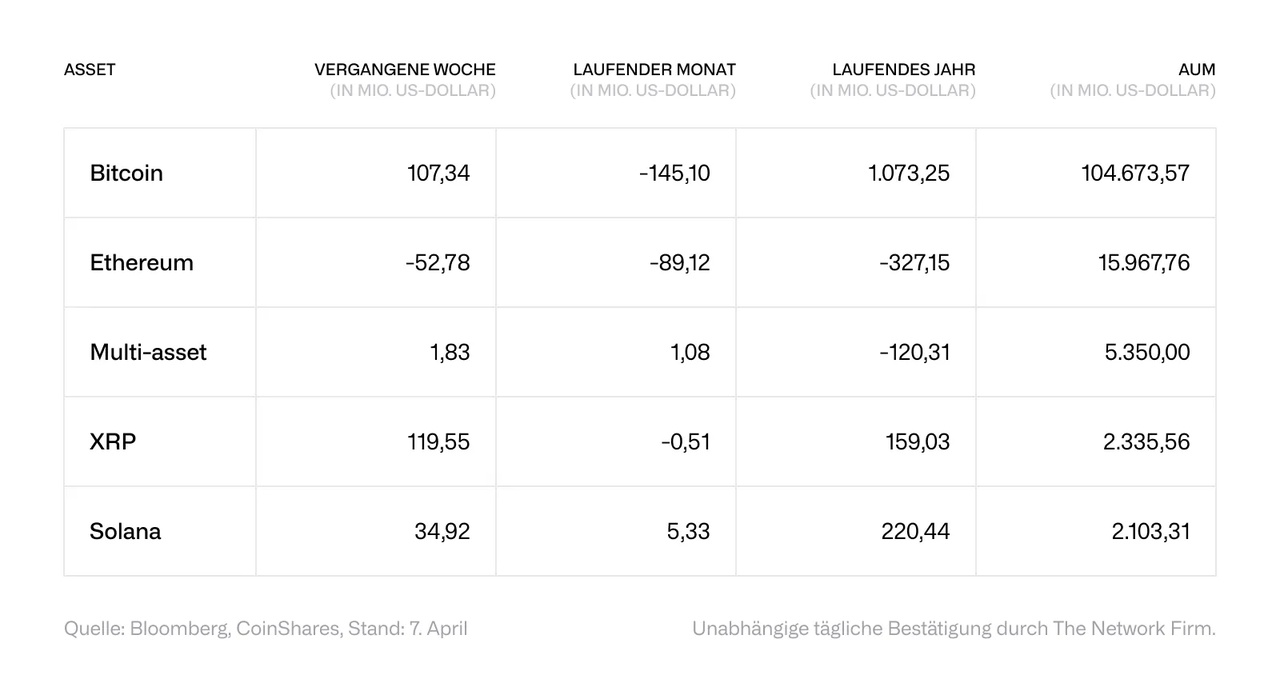
19$XRP (-0,29%) recorded the largest inflows of all assets, attracting USD 119.6 million - the highest figure since mid-December 2025.
Digital asset investment products recorded inflows totaling USD 224 million last week.
While #xrp led the market, the downward $ETH (+0,27%) the downward trend continued with further outflows, and sentiment towards digital asset $BTC (+0,54%) remained mixed - with moderate inflows coupled with continued interest in short Bitcoin products.
Also $SOL (+0,63%) registered inflows, reflecting continued stable investor demand.
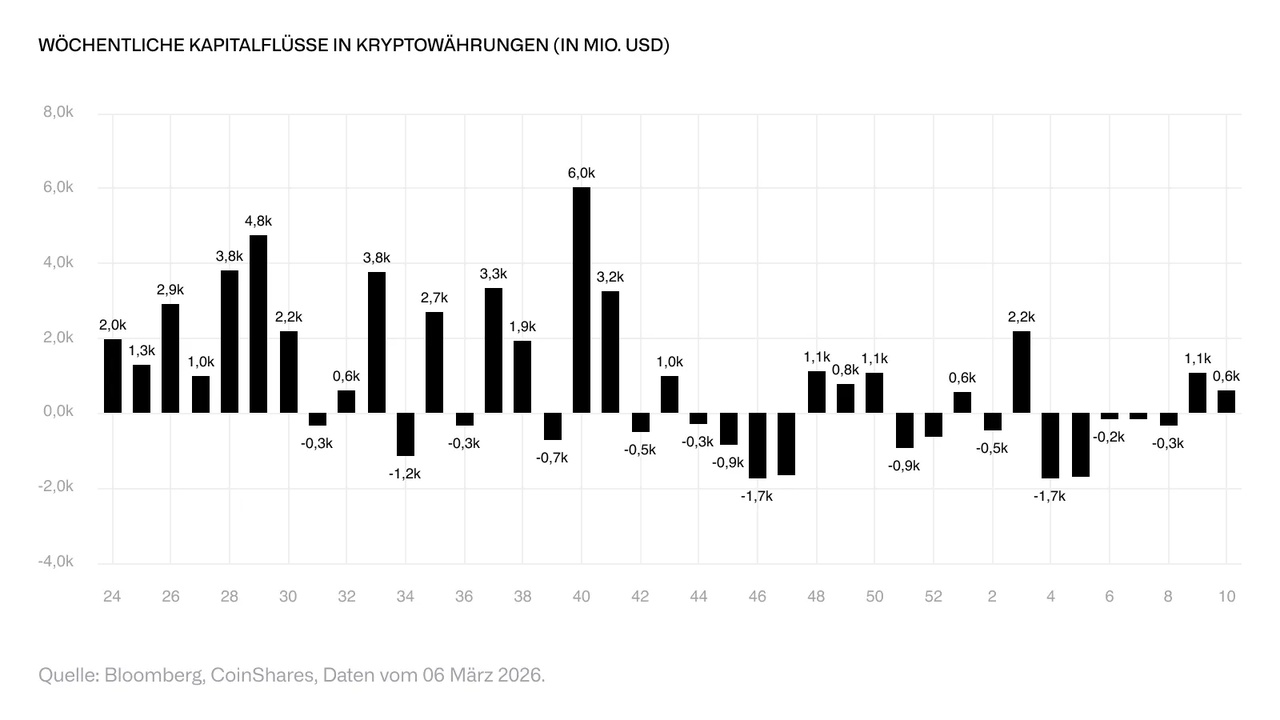
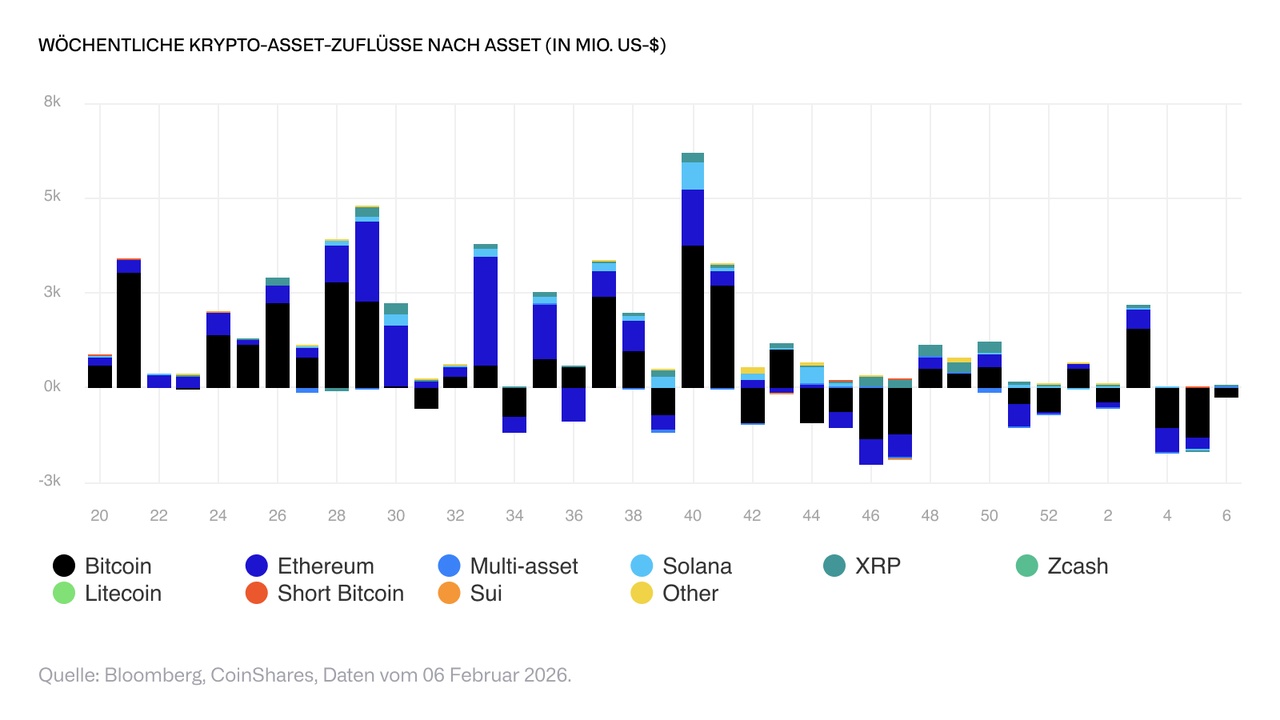
Digital asset investment products saw inflows of USD 619 million last week, indicating that the initial market reaction to the Iran crisis is supportive for this asset class. Early optimism is particularly evident, with an impressive USD 1.44 billion flowing into these products in the first three days of the week. However, investor sentiment weakened noticeably later in the week, which is reflected in outflows totaling USD 829 million on Thursday and Friday, even though the published labour market data was significantly weaker than expected. This decline in inflows indicates that investors are acting more cautiously in the short term and are taking possible economic uncertainties into account. Nevertheless, rising oil prices are offsetting potential declines in inflation that could result from the weak labor market figures, meaning that the general market optimism is not completely interrupted. Overall, capital flows show that despite geopolitical tensions and short-term volatility, an overwhelmingly positive attitude towards digital asset investment products prevails, with investors continuing to see opportunities in this emerging asset class and willing to accept the risk.
$BTC (+0,54%)
$ETH (+0,27%)
$SOL (+0,63%)
$XRP (-0,29%)
How to invest in crypto:
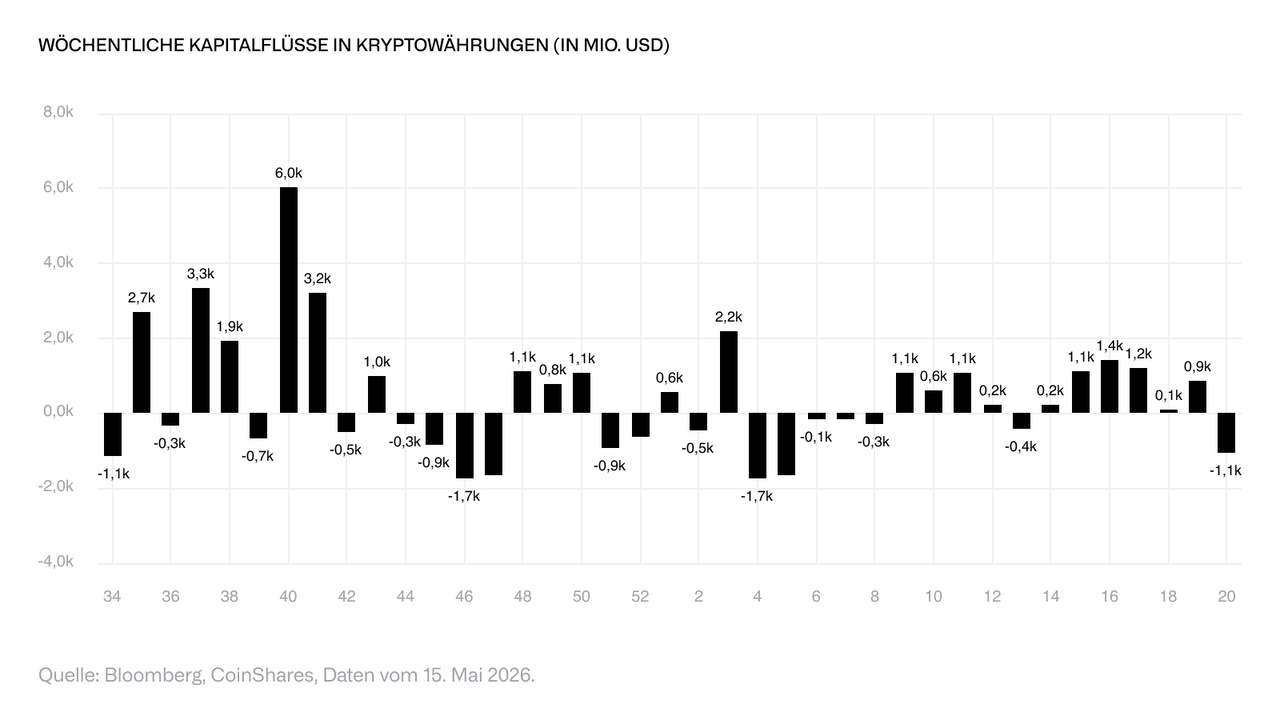
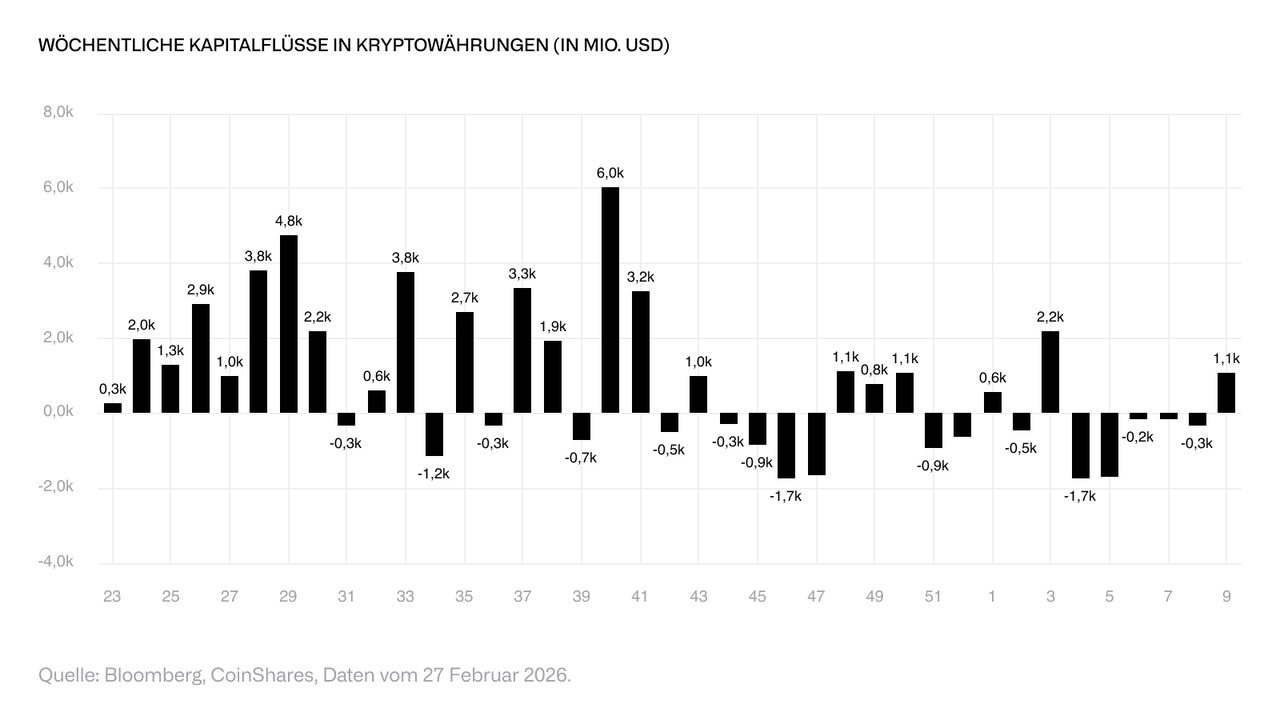
Investment products on digital assets recorded inflows of USD 1 billion last week, ending a five-week period of outflows that totaled USD 4 billion. From a macroeconomic perspective, it is difficult to attribute the change in sentiment to a single trigger. However, the previously weak price performance, the break of important technical support levels and renewed accumulation by large $BTC (+0,54%)-holders are likely to have contributed to the trend reversal. Anecdotally, it can also be observed that recent client discussions are almost exclusively about attractive entry levels and no longer about reducing the allocation to this asset class.
Bitcoin was the main beneficiary, attracting USD 881 million. At the same time, inflows into short Bitcoin products amounting to USD 3.7 million illustrate that opinions continue to diverge. Ethereum also saw inflows totaling USD 117 million - the highest since mid-January. Both $ETH (+0,27%) and #bitcoin are still net negative since the beginning of the year.
$SOL (+0,63%) In contrast, inflows of USD 53.8 million were recorded last week and total USD 156 million since the start of the year. At $LINK (-0,21%) (Chainlink) saw inflows of a moderate USD 3.4 million, while there were no significant outflows.
You can invest in Bitcoin, Ethereum, Solana and Chainlink via the following vehicles:
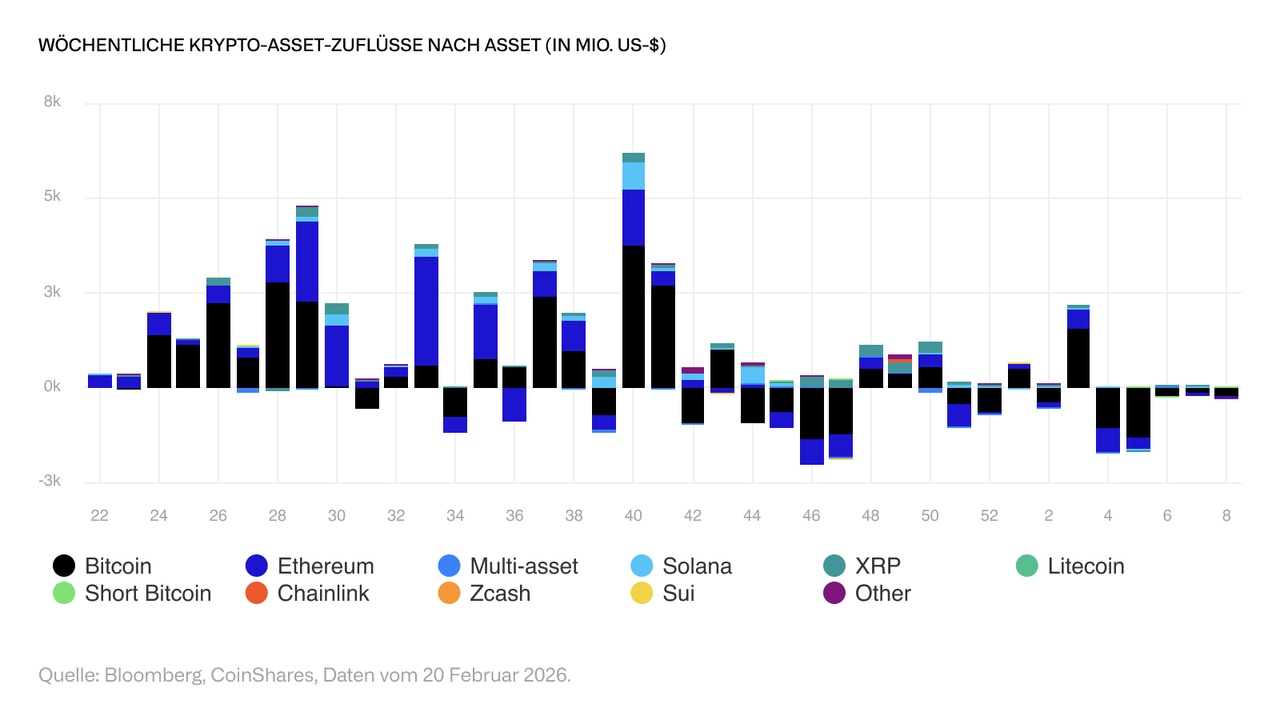
Investment products for digital assets recorded outflows of 288 million US dollars last week. This was the fifth consecutive week of net outflows, bringing the total to USD 4.0 billion - still below the USD 6 billion reached in the same period last year. After several weeks of record activity, trading volumes in ETPs slumped significantly to USD 17 billion, the lowest level since July 2025, indicating waning investor interest.
The regional picture is divergent: In the US, outflows totaled USD 347 million, while other regions saw inflows totaling USD 59 million. This was led by Switzerland with USD 19.5 million, Canada with USD 16.8 million and Germany with USD 16.2 million.
$BTC (+0,54%) The US dollar dominated the negative sentiment with outflows of USD 215 million, while short bitcoin products saw inflows of USD 5.5 million - the highest figure among all asset classes. $ETH (+0,27%) The short bitcoin fund recorded outflows of USD 36.5 million, followed by multi-asset products with USD 32.5 million and $TRX (+0,31%) (Tron) with 18.9 million US dollars. Low inflows were recorded for XRP (USD 3.5 million), $SOL (+0,63%) (3.3 million US dollars) and $LINK (-0,21%) (Chainlink) (USD 1.2 million), but not enough to offset the net outflows from altcoins.
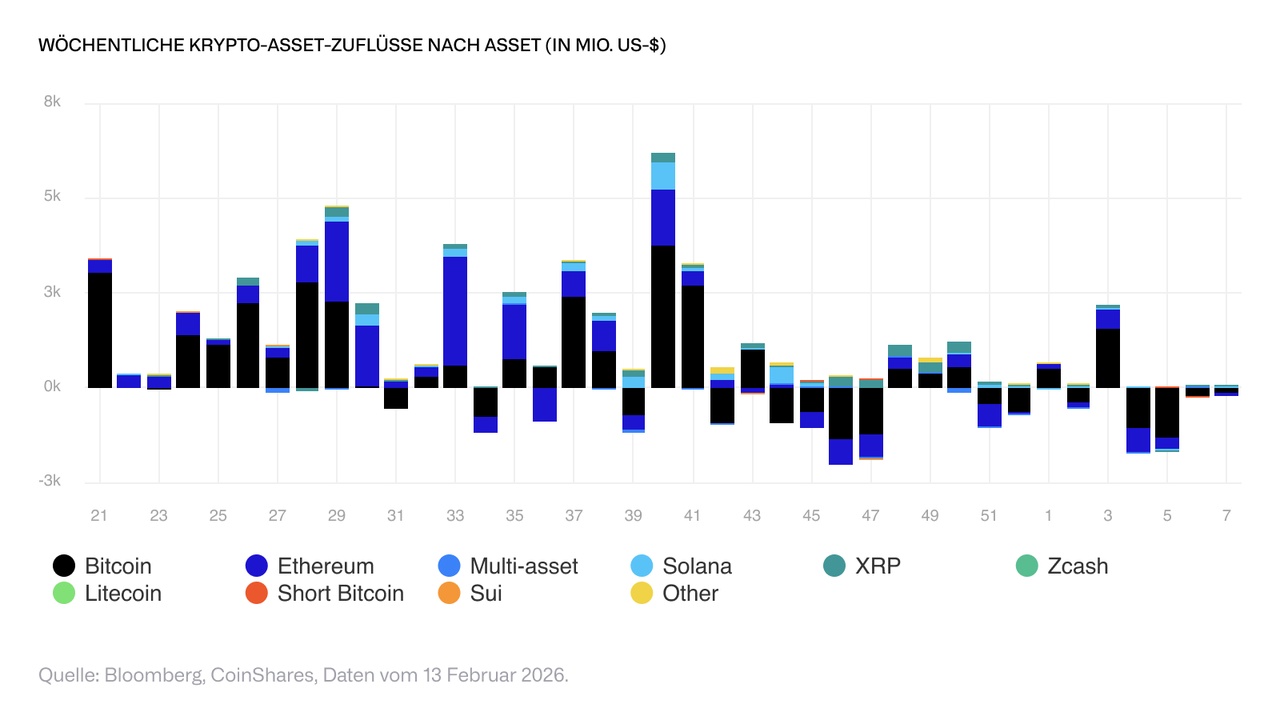
$BTC (+0,54%) recorded the weakest investor sentiment last week. A total of USD 133 million flowed out of corresponding investment products. At the same time, there were also outflows from short Bitcoin products, totaling USD 15.4 million over the past two weeks - a pattern that has historically often been observed near local lows.
Also $ETH (+0,27%) was also affected by outflows, with withdrawals totaling USD 85.1 million. $HYPE (-0,26%) The US dollar market also saw outflows, albeit at a much lower level of USD 1 million.
In contrast, sentiment towards $XRP (-0,29%), $SOL (+0,63%) and $LINK (-0,21%) remained constructive. These assets recorded inflows of USD 33.4 million, USD 31 million and USD 1.1 million respectively in the past week.
$XRRL (+1,16%)
$SLNC (+2,41%)
$CTEN (+1,78%)
$GB00BMY36D37 (+1,73%)
$BTC (+0,54%) is the only area with negative investor sentiment and recorded capital outflows of USD 264 million. In contrast $XRP (-0,29%), $SOL (+0,63%) and $ETH (+0,27%) lead inflows, with USD 63.1 million, USD 8.2 million and USD 5.3 million respectively. XRP thus remains the most successful asset since the beginning of the year, with cumulative capital inflows of USD 109 million.
$BTC (+0,54%)
#bitcoin is an indispensable store of value for any crypto portfolio, but at the same time offers a growth component that other typical stores of value do not. In my view, a crypto portfolio should therefore be built around Bitcoin. Institutional adoption via ETFs and allocations to corporate treasuries is an important narrative, but in reality we are still very early in some segments of the market. While there is some saturation in digital asset tokens, there is significant potential for additional inflows as more allocators develop a better understanding of the asset class - such as more conservative investment committees or even governments.
#ethereum remains the leading smart contract platform in terms of total value locked (TVL) and developer activity. The Layer 2 ecosystem, including Arbitrum, Optimism and Base, continues to scale the network and bring in new users. Most importantly, Ethereum is well positioned to benefit from the growth of stablecoins and tokenization infrastructures. Regulatory advances through legislation such as the GENIUS Act could significantly accelerate this trend. Scott Bessent expects stablecoins to be worth three trillion by 2030, and we believe Ethereum is well positioned to absorb a significant share of this.
#solana Ethereum follows a similar value proposition to Ethereum, but offers high throughput rates and low fees. Owning both assets therefore allows for broad coverage of the smart contract segment. Tokenized equities are likely to become more established on Solana and with spot ETFs now available, significant capital inflows could follow in 2026. ETH and SOL are generally well covered in the smart contract platform market, and with prices largely depressed, they offer attractive entry points without the speculative overheating of past highs.
Which crypto assets are you betting on this year?
Digital asset products saw the largest outflows since mid-November 2025, totaling USD 1.73 billion, reflecting a similar bearish sentiment typically seen in market downturns. Diminishing expectations of interest rate cuts, negative price momentum and disappointment that digital assets have not yet participated in the "debasement trade" movement are likely to have further fueled these outflows.
$BTC (+0,54%) The market recorded outflows of USD 1.09 billion, the largest since mid-November 2025, while there were small inflows into short Bitcoin products totaling USD 0.5 million. Overall, however, it is clear that sentiment has not yet improved since the price collapse on October 10, 2025.
$ETH (+0,27%) and $XRP (-0,29%) recorded outflows of USD 630 million and USD 18.2 million respectively, which shows that the negative sentiment was broad-based. $SOL (+0,63%) The fund "The World" bucked this trend and saw inflows of USD 17.1 million. Other assets saw smaller inflows, particularly Binance (USD 4.6 million) and Chainlink (USD 3.8 million).
Digital investment products recorded inflows of USD 2.17 billion last week - the highest weekly figure since October 10, 2025, just before the market collapse. Inflows were stronger at the start of the week, but sentiment turned negative on Friday: diplomatic tensions over Greenland and renewed threats of additional tariffs led to outflows of USD 378 million. In addition, speculation that Kevin Hassett - a leading candidate for the chairmanship of the US Federal Reserve and well-known monetary policy dove - is likely to remain in his current post weighed on the market.
#bitcoin led the inflows with 1.55 billion US dollars. Despite a push by the US Senate Banking Committee under the CLARITY Act, which could restrict stablecoins from paying interest, Ethereum and #solana saw inflows of USD 496 million and USD 45.5 million respectively.
A wide range of altcoins saw inflows, most notably #xrp (USD 69.5 million), Sui (USD 5.7 million), LIDO (USD 3.7 million) and Hedera (USD 2.6 million).
$BITC (+0,06%)
$CETH (+0,42%)
$SLNC (+2,41%)
$XRRL (+1,16%)
$GB00BMY36D37 (+1,73%)
Principais criadores desta semana