$BTC (+0,58%)
$ETH (+0,66%)
$XRP (+0,01%)
$SOL (+0,91%)
$TRX (+0,06%)
$BTC (+0,58%)
$ETH (+0,66%)
$XRP (+0,01%)
$SOL (+0,91%)
$TRX (+0,06%)
Investable via:
$BITC (+0,06%)
$CETH (+0,42%)
$XRRL (+1,16%)
$SLNC (+2,41%)
$CTEN (+1,78%)
Postos
25The CLARITY Act has been stuck in the Senate for months - now things could move quickly. A vote in the Banking Committee is scheduled for May, but the tight schedule (Memorial Day, summer break, election campaign) is putting the project under massive pressure.
What does this mean for the market?
- $ETH (+0,66%) & Altcoins: biggest winners if passed, as regulatory clarity (especially for staking and DeFi)
- $BTC (+0,58%): hardly any additional effect, status already largely clarified
If the law fails or is postponed to 2027, there is a clear risk-off for altcoins (-15 to -25% vs. BTC).
Macro situation remains tense:
- Outflows from crypto ETPs (USD 605 million this week)
- At the same time, strong inflows into #bitcoin & blockchain stocks (USD 624 million in four weeks)
Interpretation:
Investors reduce direct crypto exposure but build structural positions via equities (e.g. beneficiaries of stablecoins and AI)
Conclusion:
Caution in the short term - clear capital rotation into the sector continues in the long term.
(Text: James Butterfill, CoinShares' Head of Research)
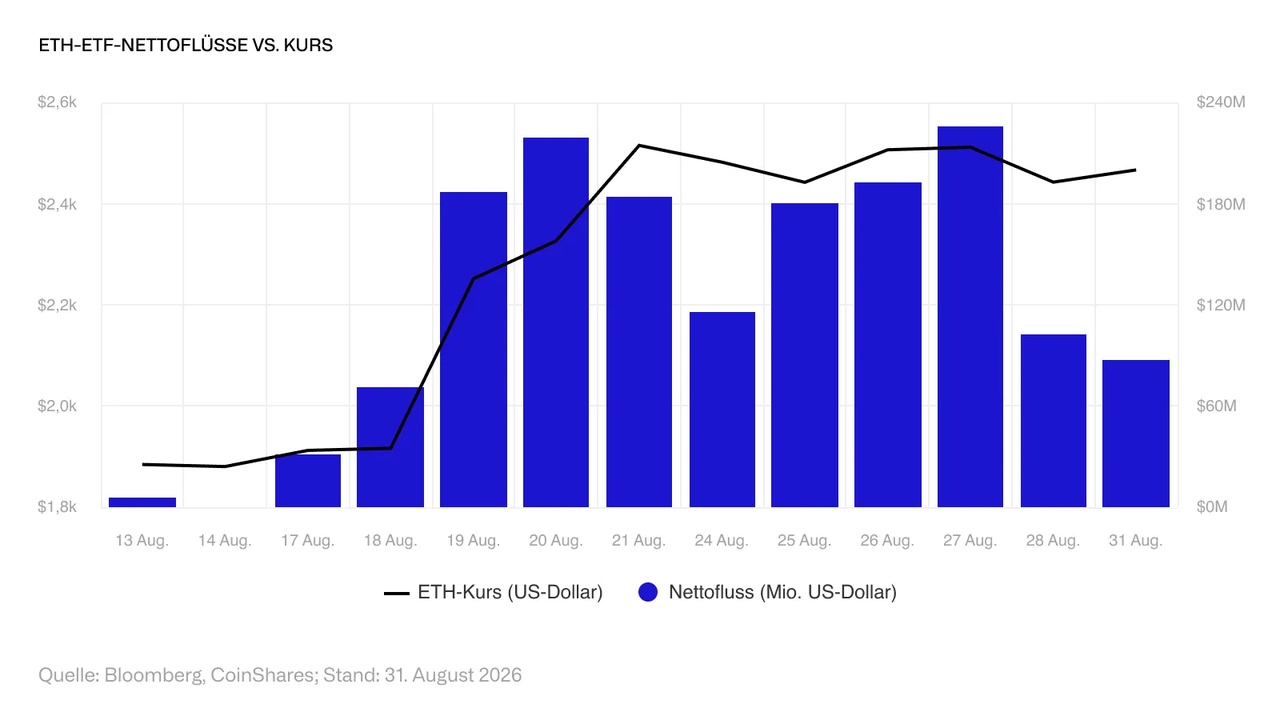
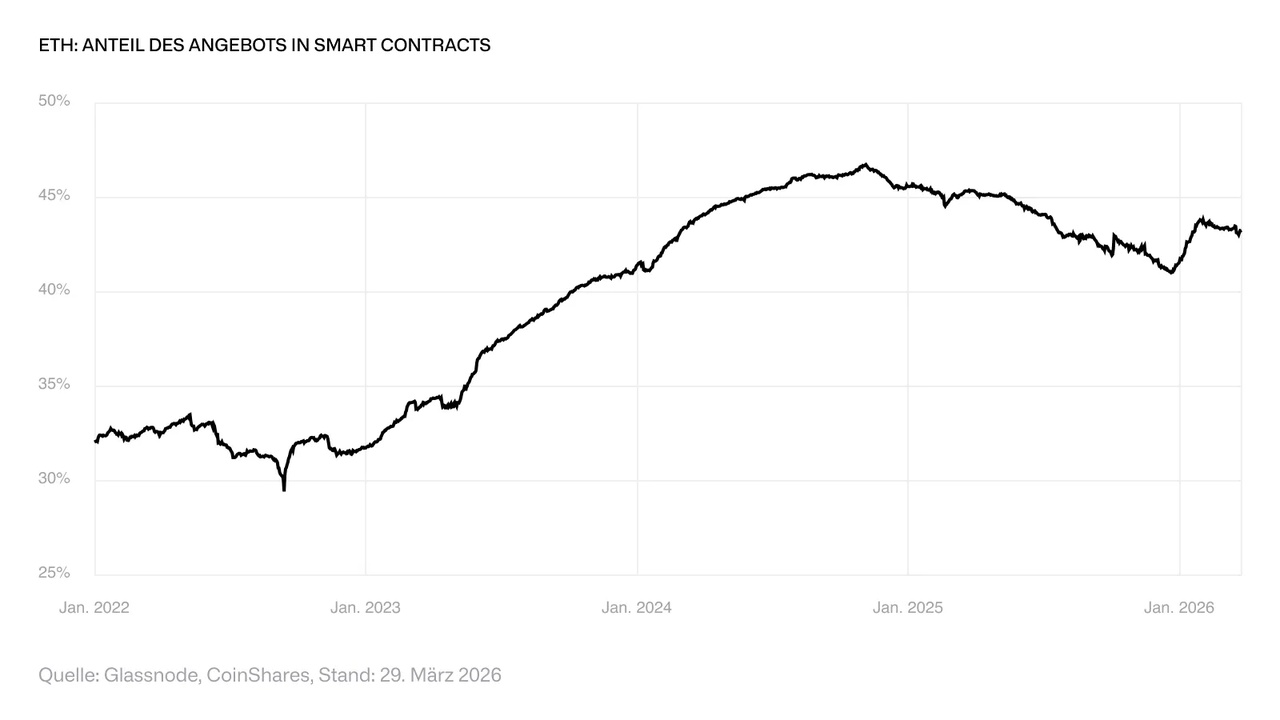
The majority of $ETHs (+0,66%) circulating supply is no longer freely tradable. Around 30 % of the total #ethereum are in validator contracts - a record figure. A further 5.8% is on the balance sheets of listed digital asset treasury companies, led by Bitmine with 4.98 million tokens - this corresponds to around 4.1% of the total supply and is therefore within reach of the 5% target. US spot$ETH (+0,66%)-ETFs hold a further 5%. Net inflows into these products amounted to around USD 560 million in the first three weeks of April, led by BlackRock's ETHA and the staggered ETHB. Taking into account the overlap between staking and DAT pools, the actual tradable free float on the exchanges is at its lowest level since the merger.
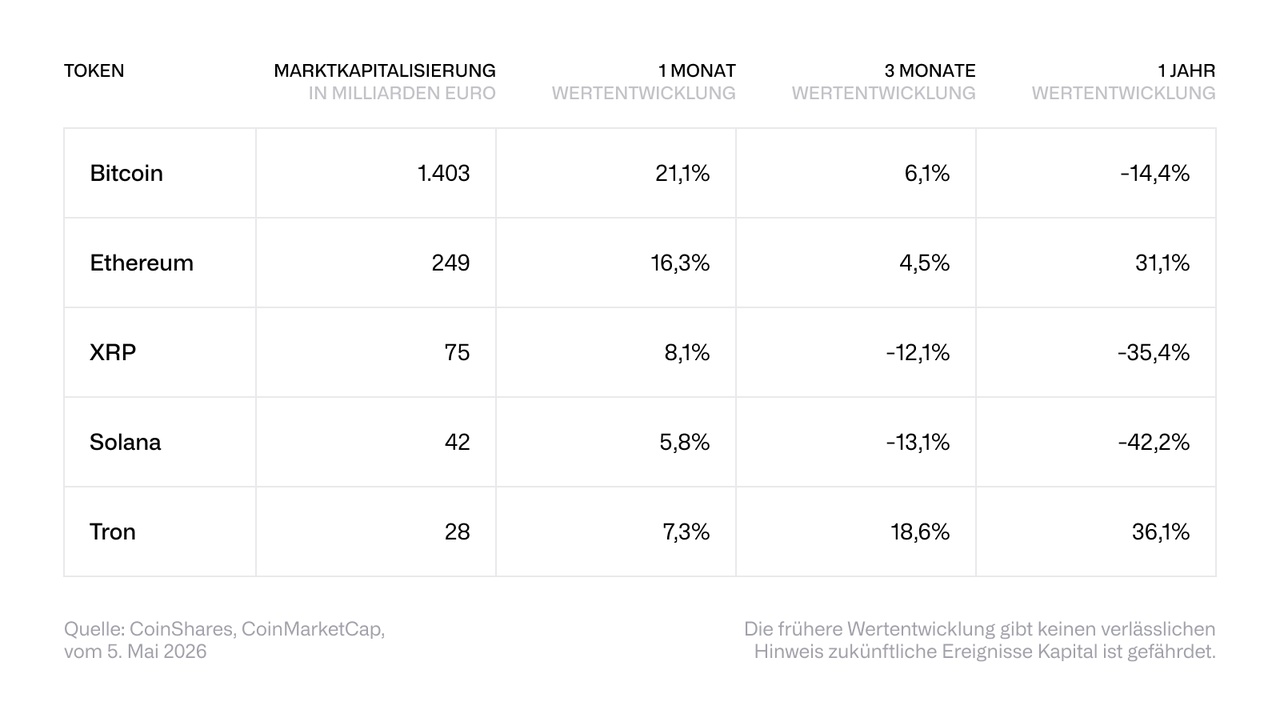
This has not yet been reflected in the share price. $ETH (+0,66%) DAT is still trading 52 % below its August high of $ 4,950. But the $ETH (+0,66%)/$BTC (+0,58%)-ratio has started to slowly work its way up from the February low - a first indication that capital is rotating back into $ALT (+5,27%) - beta again. If this rotation gains momentum, there will be less supply to absorb it than in any previous cycle.
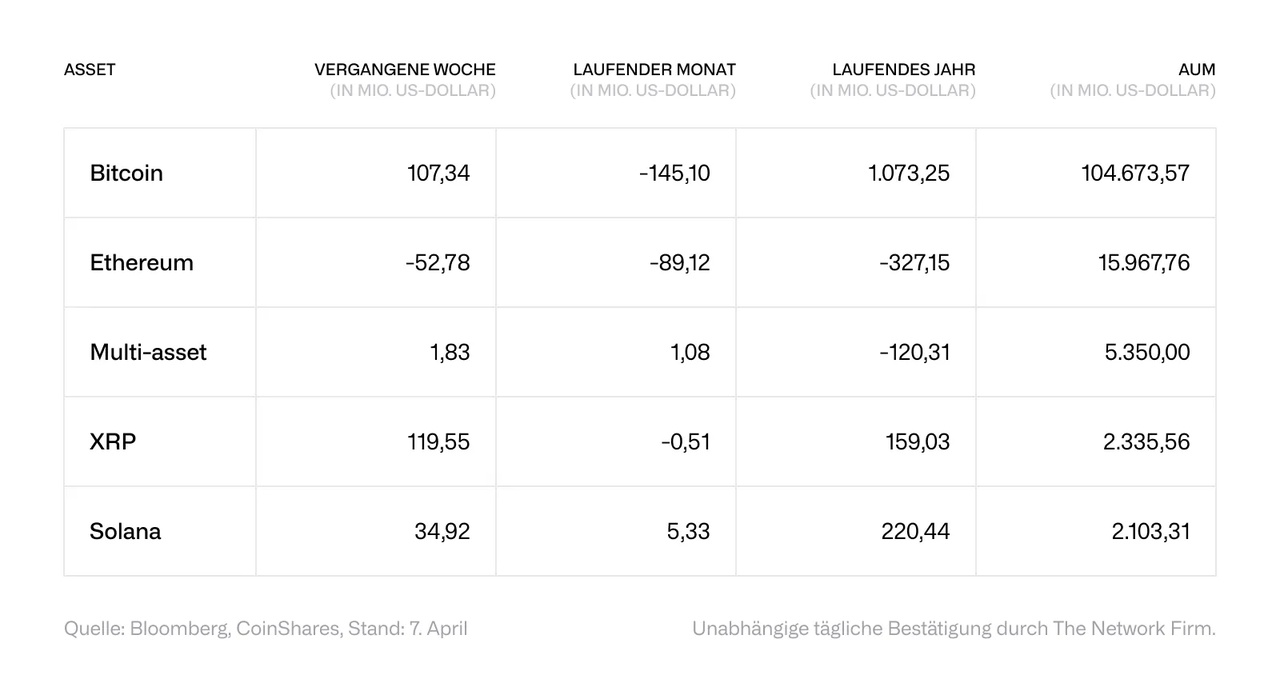
$XRP (+0,01%) recorded the largest inflows of all assets, attracting USD 119.6 million - the highest figure since mid-December 2025.
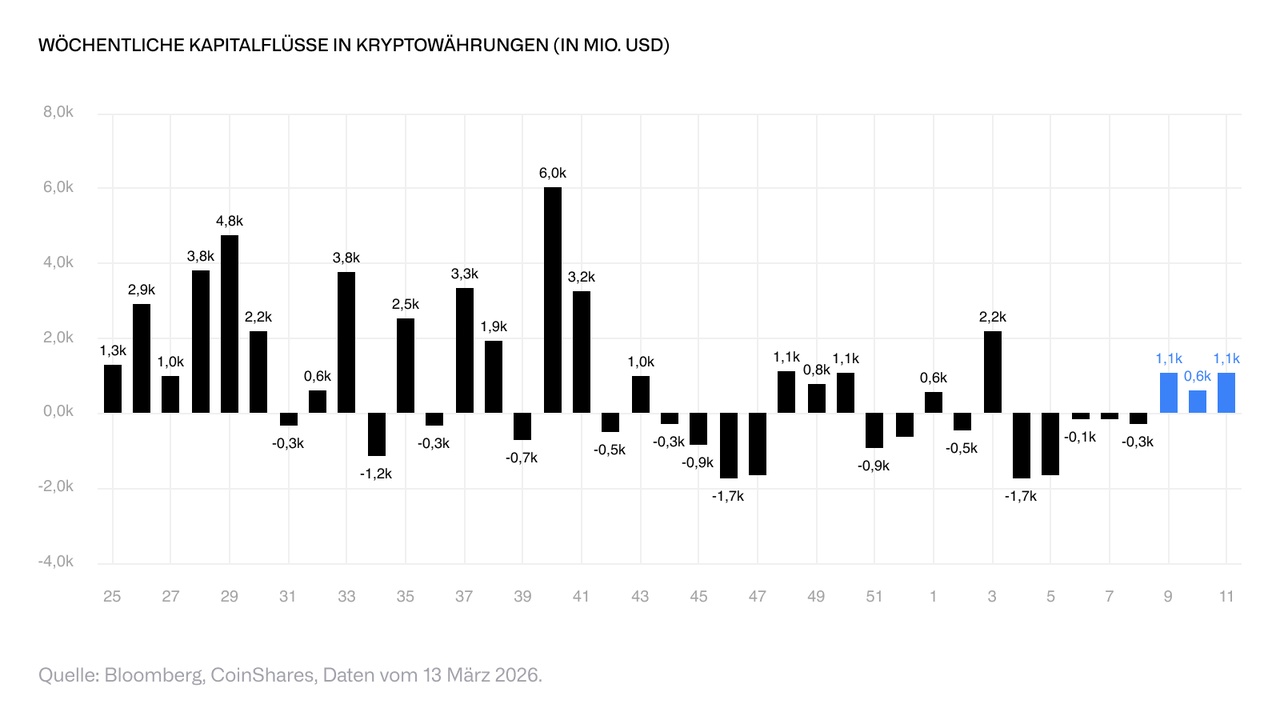
Digital asset investment products recorded inflows totaling USD 224 million last week.
While #xrp led the market, the downward $ETH (+0,66%) the downward trend continued with further outflows, and sentiment towards digital asset $BTC (+0,58%) remained mixed - with moderate inflows coupled with continued interest in short Bitcoin products.
Also $SOL (+0,91%) registered inflows, reflecting continued stable investor demand.
Digital investment products for cryptocurrencies recorded inflows of USD 1.06 billion last week. This marks the third consecutive week of net inflows amid significant geopolitical tensions that have strengthened digital assets, particularly $BTC (+0,58%)as a relative safe haven compared to other asset classes. Since the start of the Iran crisis, total assets under management (AuM) in crypto ETPs have risen by 9.4 percent to USD 140 billion. Bitcoin accounted for 75 percent of total inflows, which corresponds to USD 793 million. This brings the total inflows over the past three weeks to USD 2.2 billion, approaching the previous five-week period with outflows totaling USD 3.0 billion. Short Bitcoin products also saw inflows of USD 8.1 million last week, indicating that market sentiment remains somewhat divided. Also $ETH (+0,66%) also saw significant inflows of 315 million US dollars. This brings year-to-date flows back towards a broadly balanced net position, driven in part by the introduction of new staking ETF listings in the US.
You can invest in Bitcoin and Ethereum through these vehicles: $BITC (+0,06%)
$CETH (+0,42%)
Digital asset investment products saw inflows of USD 619 million last week, indicating that the initial market reaction to the Iran crisis is supportive for this asset class. Early optimism is particularly evident, with an impressive USD 1.44 billion flowing into these products in the first three days of the week. However, investor sentiment weakened noticeably later in the week, which is reflected in outflows totaling USD 829 million on Thursday and Friday, even though the published labour market data was significantly weaker than expected. This decline in inflows indicates that investors are acting more cautiously in the short term and are taking possible economic uncertainties into account. Nevertheless, rising oil prices are offsetting potential declines in inflation that could result from the weak labor market figures, meaning that the general market optimism is not completely interrupted. Overall, capital flows show that despite geopolitical tensions and short-term volatility, an overwhelmingly positive attitude towards digital asset investment products prevails, with investors continuing to see opportunities in this emerging asset class and willing to accept the risk.
$BTC (+0,58%)
$ETH (+0,66%)
$SOL (+0,91%)
$XRP (+0,01%)
How to invest in crypto:
Investment products on digital assets recorded inflows of USD 1 billion last week, ending a five-week period of outflows that totaled USD 4 billion. From a macroeconomic perspective, it is difficult to attribute the change in sentiment to a single trigger. However, the previously weak price performance, the break of important technical support levels and renewed accumulation by large $BTC (+0,58%)-holders are likely to have contributed to the trend reversal. Anecdotally, it can also be observed that recent client discussions are almost exclusively about attractive entry levels and no longer about reducing the allocation to this asset class.
Bitcoin was the main beneficiary, attracting USD 881 million. At the same time, inflows into short Bitcoin products amounting to USD 3.7 million illustrate that opinions continue to diverge. Ethereum also saw inflows totaling USD 117 million - the highest since mid-January. Both $ETH (+0,66%) and #bitcoin are still net negative since the beginning of the year.
$SOL (+0,91%) In contrast, inflows of USD 53.8 million were recorded last week and total USD 156 million since the start of the year. At $LINK (+0,3%) (Chainlink) saw inflows of a moderate USD 3.4 million, while there were no significant outflows.
You can invest in Bitcoin, Ethereum, Solana and Chainlink via the following vehicles:
Digital assets remain in consolidation. $BTC (+0,58%) has been fluctuating between USD 67,000 and 70,000 for weeks, while major market participants continue to sell: an estimated USD 30 billion has flowed out of so-called whales since October 2025. At 64%, their share of exchange deposits is at its highest level since 2015 - a clear supply overhang.
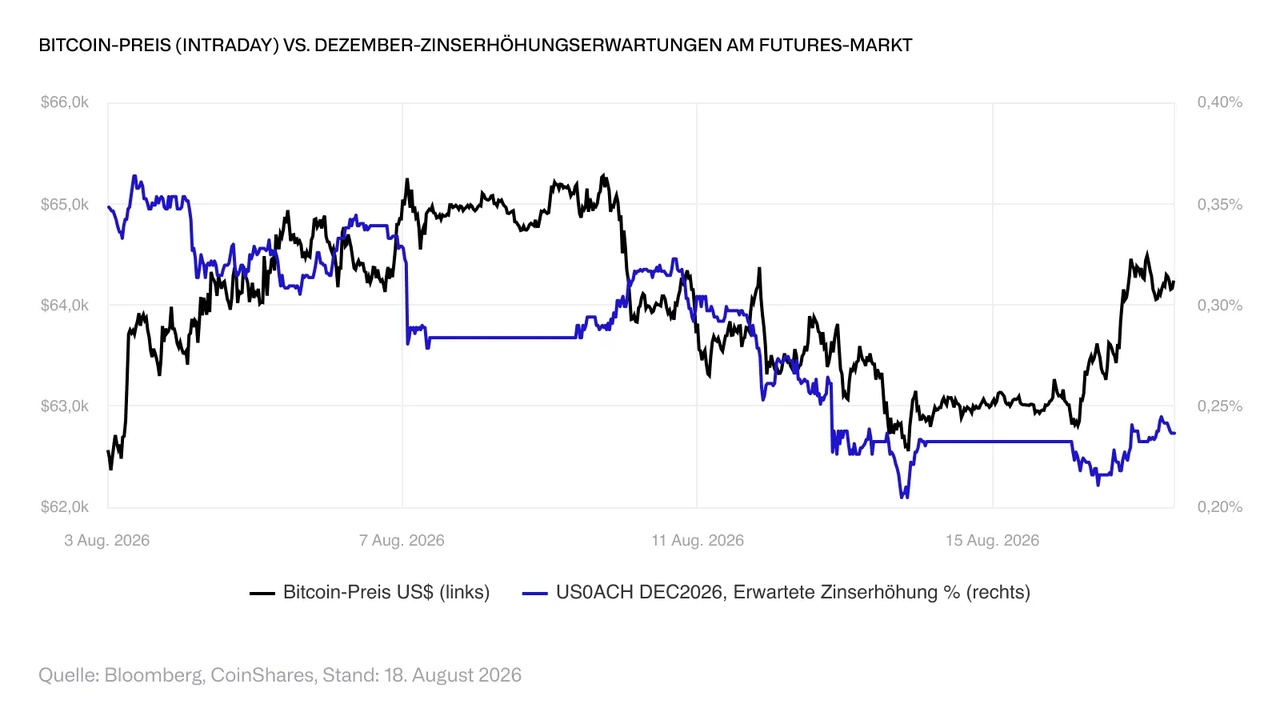
Macroeconomic headwinds also remain: a more restrictive tone from the US Federal Reserve and dampened expectations of interest rate cuts are putting pressure on risk appetite. Spot Bitcoin and $ETH (+0,66%)-ETFs recorded outflows of USD 4.3 billion for five weeks in a row.
And yet: the first signs of a bottom are becoming visible. Bitcoin's relative strength index fell to 16 - historically an extreme value in oversold territory. Leverage ratios have fallen significantly, valuation ratios are normalizing and inflows of around USD 1 billion have returned for the first time this week.
The environment remains fragile in the short term. But structurally, the conditions for the next phase of expansion could slowly emerge. (Text by James Butterfill, CoinShares' Head of Research)
Investment products for digital assets recorded outflows of 288 million US dollars last week. This was the fifth consecutive week of net outflows, bringing the total to USD 4.0 billion - still below the USD 6 billion reached in the same period last year. After several weeks of record activity, trading volumes in ETPs slumped significantly to USD 17 billion, the lowest level since July 2025, indicating waning investor interest.
The regional picture is divergent: In the US, outflows totaled USD 347 million, while other regions saw inflows totaling USD 59 million. This was led by Switzerland with USD 19.5 million, Canada with USD 16.8 million and Germany with USD 16.2 million.
$BTC (+0,58%) The US dollar dominated the negative sentiment with outflows of USD 215 million, while short bitcoin products saw inflows of USD 5.5 million - the highest figure among all asset classes. $ETH (+0,66%) The short bitcoin fund recorded outflows of USD 36.5 million, followed by multi-asset products with USD 32.5 million and $TRX (+0,06%) (Tron) with 18.9 million US dollars. Low inflows were recorded for XRP (USD 3.5 million), $SOL (+0,91%) (3.3 million US dollars) and $LINK (+0,3%) (Chainlink) (USD 1.2 million), but not enough to offset the net outflows from altcoins.
A few days ago, Bloomberg analyst Mike McGlone pointed out that Tether's stablecoin $USDT (-0,01%) is not far behind Ethereum in terms of market capitalization. The gap is still around 50 billion US dollars - but it is shrinking. Should there be a further decline on the crypto market, Ether could lose its second place in the ranking.
However, this would not be the "death of Ethereum", but an expression of a structural shift. $ETH (+0,66%) Ethereum is stable, has the largest developer base in the ecosystem and remains the center of the smart contract economy.
The real story is stablecoins. They have long been the most widely used instrument in the crypto market and have $V (-1,21%) (Visa) and $MA (-1,5%) (Mastercard) in terms of transaction volume. According to Accenture, they could process payments worth over USD 13 trillion by 2030 - with potentially billions in fees lost to the traditional banking system.
The question is therefore not so much whether USDT will "flip" Ethereum, but rather: Are we witnessing the quiet dominance of the digital dollar infrastructure? (Author: Jérémy Le Bescont, Editor-in-Chief of CoinShares)
Principais criadores desta semana