Spotify
https://open.spotify.com/episode/0w9Aff2JUG2emrUcXw3bQ2?si=OVHXR8ifRkCRc_1U7fYVQg
YouTube:
https://openyoutu.be/s7TBA0TxFLo
Apple Podcasts
Postos
278Spotify
https://open.spotify.com/episode/0w9Aff2JUG2emrUcXw3bQ2?si=OVHXR8ifRkCRc_1U7fYVQg
YouTube:
https://openyoutu.be/s7TBA0TxFLo
Apple Podcasts
$BTC (-0,47%)
$ETH (-0,52%)
$SOL (-0,13%)
$XRP (-0,69%)
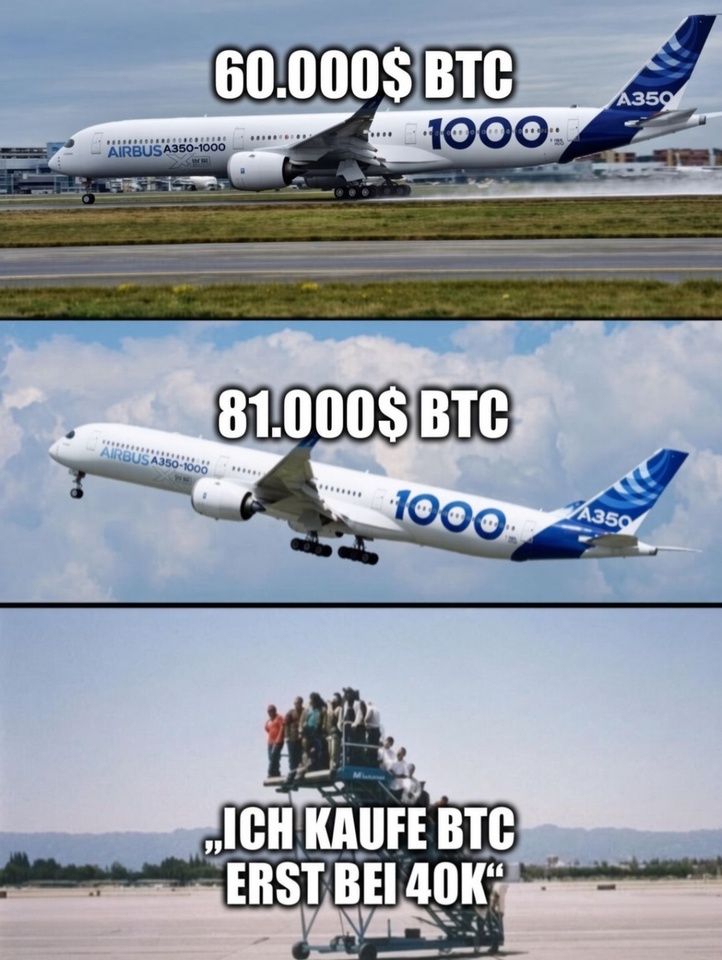
🚨 Everyone wanted to buy at 120,000 dollars.
Then at 110,000 dollars.
Then at 100,000 dollars.
Then at 80,000 dollars.
And now?
Where are the Bitcoin buyers? 👀
Where are those who were brave in red days?
Where are those who don't just talk, but buy when fear dominates the market?
Get in touch! 👇
Who bought during the last setbacks?
Who is still holding on?
Who believes that today's prices will have been a gift in 1-2 years' time?
Let's see who is really thinking long-term and who is just waiting for the perfect entry point.
📈 Bitcoin rewards patience.
📉 Fear creates opportunities.
Who else is in - and what is your price target for the next few years? 🚀

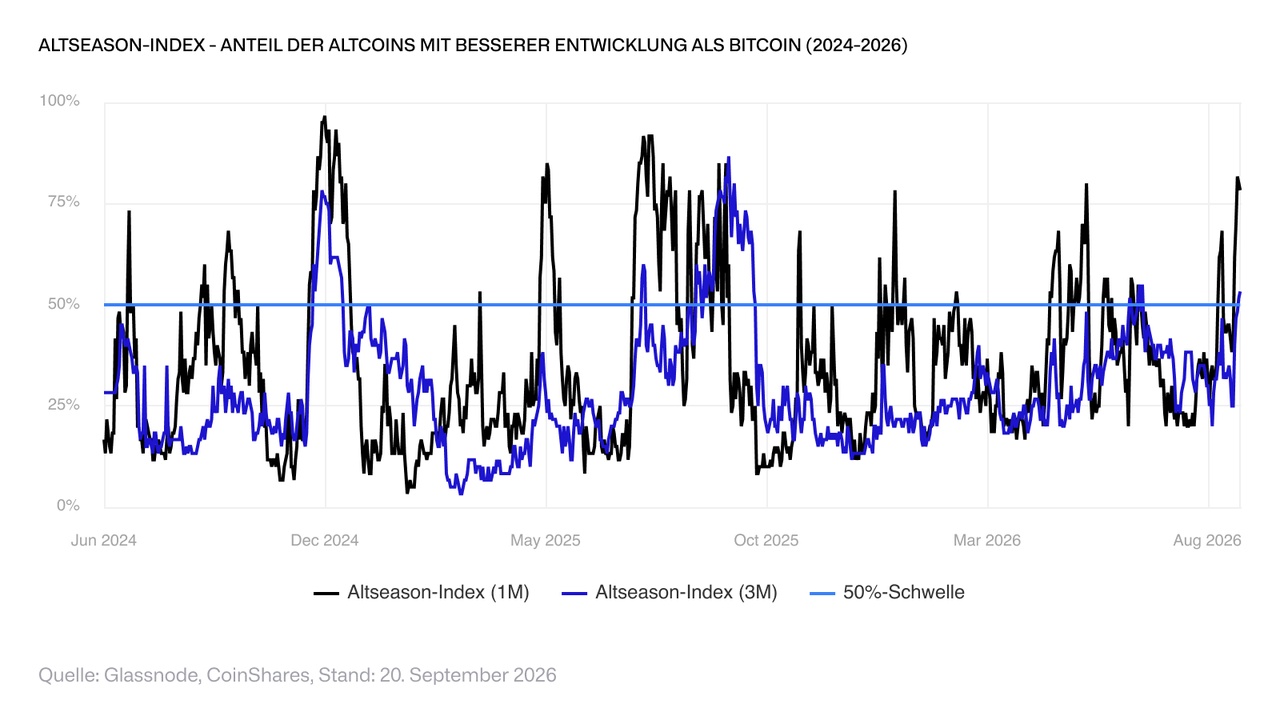
Digital investment products saw outflows of USD 1.07 billion - the first negative week in seven weeks and the third largest weekly outflow of 2026, surpassed only by two weeks at the end of January. This likely reflects renewed geopolitical risk-off sentiment related to developments around Iran, with outflows concentrated mainly in $BTC (-0,47%).
The news surrounding the CLARITY Act appears to have improved sentiment at the margin: Eleven assets continued to see notable inflows, and Thursday was positive with inflows of $174 million. Altcoins held up remarkably well. $XRP (-0,69%) The largest asset class, the cryptocurrency, saw inflows of 67.6 million US dollars, $SOL (-0,13%) The inflow of USD 55.1 million - for both, the momentum accelerated compared to the previous weeks.
With the prolongation of the fall during this few months, is this topic already dead? Or is it just a matter of time until this assets skyrocket?
Here is what I think of the top 4 that I personally own.
——————————————————————————
Executive Summary
This report provides a detailed utility analysis of four cryptocurrency projects selected for current and emerging use cases. Each project is evaluated on real-world adoption, technological advantages, and risks—excluding price predictions or investment recommendations.
——————————————————————————
Methodology
Each project is assessed across four dimensions:
1. Real Use Cases – Demonstrated, current applications
2. Strengths – Technological or adoption advantages
3. Risks – Technical, regulatory, or design vulnerabilities
4. Reality Check – Gap between promise and execution
——————————————————————————
Project Analysis
Advantages:
1. 3M daily XRPL transactions; proven real volume
2. Clear regulation (SEC settlement 2025 + OCC bank charter approval)
3. 50+ financial institutions adopting (SBI, PNC, American Express)
4. Rakuten: 44M users; live retail integration
5. 3-5 second settlement; specific use cases working
Disadvantages:
1. Competes against established stablecoins (USDT, USDC)
2. Ripple partially controls supply and governance
3. Slow adoption compared to initial blockchain promises
4. Niche market in payments; not a general solution
5. Other tokens compete in institutional payments
Long-Term Outlook ( 7-10 years)
• Base Case (60%): Established niche utility in institutional payments; 5-10% of cross-border payment market captured; ODL corridors normalized globally
• Bull Case (25%): Regulatory clarity spreads; RLUSD becomes settlement standard; 15-20%+ market penetration
• Bear Case (15%): Stablecoins + CBDCs dominate; XRP remains retail/speculative asset
• Regulatory Evolution: Key factor—further legal clarity accelerates or regulatory restriction suppresses
——————————————————————————
Advantages:
1. $3B+ TVL by April 2026; growth from $40M in 2023
2. Market leader in Treasury tokenization (17% market share)
3. Major institutions deploying: WisdomTree, Invesco, Apollo Global
4. Proxy voting for 250+ stocks/ETFs; TradFi experience on-chain
5. $700M in tokenized equities; real use cases live
Disadvantages:
1. ONDO token lacks direct protocol revenue
2. Tokenized securities regulation still evolving
3. Competes with BlackRock BUIDL (greater institutional backing)
4. RWA market saw $14.6M exploits in H1 2025; operational risks
5. Dependent on custodians and traditional finance intermediaries
Long-Term Outlook ( 7-10 years)
• Base Case (55%): RWA tokenization becomes standard for institutional yield and equity products; Ondo maintains 15-25% market share; $500B+ TVL
• Bull Case (30%): Traditional asset custodians adopt blockchain settlement; DTC/DTCC models deployed; Ondo becomes primary RWA infrastructure layer
• Bear Case (15%): Regulatory restrictions; traditional finance rejects on-chain settlement; confined to crypto-native institutions
• Key Factor: Regulatory clarity on tokenized securities and DTC adoption timeline (currently expected 2028+)
——————————————————————————
Advantages:
1. 1000+ integrations; 58.6% market share in oracles
2. $33B TVL in DeFi dependent on Chainlink feeds
3. SWIFT partnership; expansion into institutional finance
4. SVR captures 99% oracle-related MEV ($8.3M in Q1 2026)
5. Staking attracted $500M+; incentive alignment with network
Disadvantages:
1. Competes with Pyth and API3; gradual dominance erosion
2. Centralized model despite decentralization claims
3. Bottleneck: oracles necessary but not a differentiator
4. Systemic risk if validators compromised
5. Profit margin compressible; commoditization possible
Long-Term Outlook ( 7-10 years)
• Base Case (50%): Maintains oracle dominance but with 40-50% market share; CCIP expands institutional use; faces gradual erosion from competitors
• Bull Case (35%): Enterprise adoption accelerates; oracle market consolidation favors Chainlink; $100B+ TVL across DeFi + institutional
• Bear Case (15%): Oracle standardization/consolidation results in commodity pricing; margin compression forces business model evolution
• Key Factor: Execution on CCIP institutional roadmap and competitive response to Pyth/API3
——————————————————————————
Advantages:
1. SEC-registered transfer agent (October 2025); regulatory legitimacy
2. 280K+ RWA holders; largest on-chain RWA user base
3. $645M in managed assets; WisdomTree, Invesco, Apollo real deployments
4. Mainnet June 2025; specialized infrastructure for RWAs (not generic L2)
5. ADGM license + Mastercard Start Path; regulatory + corporate validation
Disadvantages:
1. PLUME token down 95% from ATH (March 2025); token/utility disconnect
2. RWA market still emerging; slow adoption vs potential
3. Competes with generic L2s (Arbitrum, Optimism) + RWA-specific chains
4. Centralization: <5 actors can submit challenges and data availability
5. Total dependence on DTC/DTCC adoption for institutional scale
Long-Term Outlook ( 7-10 years)
• Base Case (50%): Becomes leading RWA settlement infrastructure; $1-2T TVL of tokenized assets; 30-40% market share in RWA layer
• Bull Case (30%): Emerges as primary financial settlement layer; traditional finance custody models shift on-chain; becomes “RWA L1” standard
• Bear Case (20%): Generic L2s commoditize; institutional RWA adoption slower than projected; confined to specific asset classes
• Key Factor: TradFi custodian/settlement adoption (DTC, DTCC, Euroclear partnerships)
What do you guys think of crypto?
It may not itch you, as you are not invested anyway. But after that comes gold & silver. Then comes real estate (10 years). Finally come watches, art, vintage cars, spirits, wines and everything else.
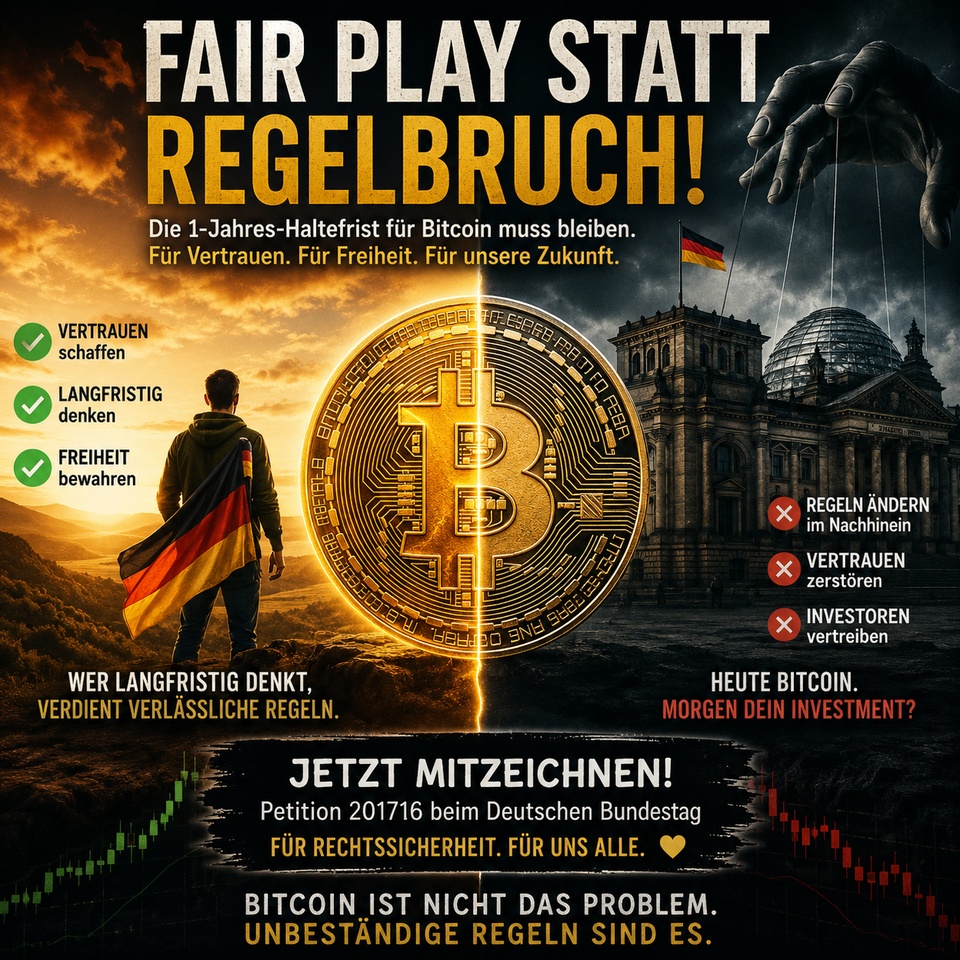
In 1999, the speculation period for securities was extended from 6 to 12 months by the SPD and the Greens. In 2009, it was completely abolished by the CDU and SPD and replaced by today's flat-rate withholding tax + solidarity surcharge. More than 14 million small investors and savers are affected by this today. The greedy state is hindering your prosperity and private pension provision.
$BTC (-0,47%)
$ETH (-0,52%)
$XRP (-0,69%)
$SOL (-0,13%)
$BNB (-0,08%)
$DOGE (-0,89%)
$HYPE (-0,31%)
$AAVE (+0,63%)
$ZEC (-1,81%)
$WLFI (+0,17%)
$ADA (-0,43%)
$DOT (-0,45%)$TRX (-0,25%)
$XMR (-0,55%)$LINK (-0,48%)
$XLM (-0,72%)
$DAI (+0,05%)
$PAXG (-0,1%)
$LTC (-0,74%)
$AVAX (-0,82%)
$SUI (-0,82%)
$HBAR (-1,35%)
$SHIBA (-0%)
$TAO (+1,67%)
$CRO (-0,43%)
Spotify
https://open.spotify.com/episode/3FhLyIa4kkOtCXt1weC4ot?si=CxtZ40r8S5S5BfoH9HIi_g
YouTube
https://www.youtube.com/watch?v=Ol3QdWM-JIY
Apple Podcast
https://podcasts.apple.com/de/podcast/142-alphabet-tesla-bitcoin/id1695869891?i=1000765739984
$TSLA (+3,27%)
$GOOG (-0,89%)
$GOOGL (-1,03%)
$BTC (-0,47%)
$ETH (-0,52%)
$SOL (-0,13%)
$XRP (-0,69%)
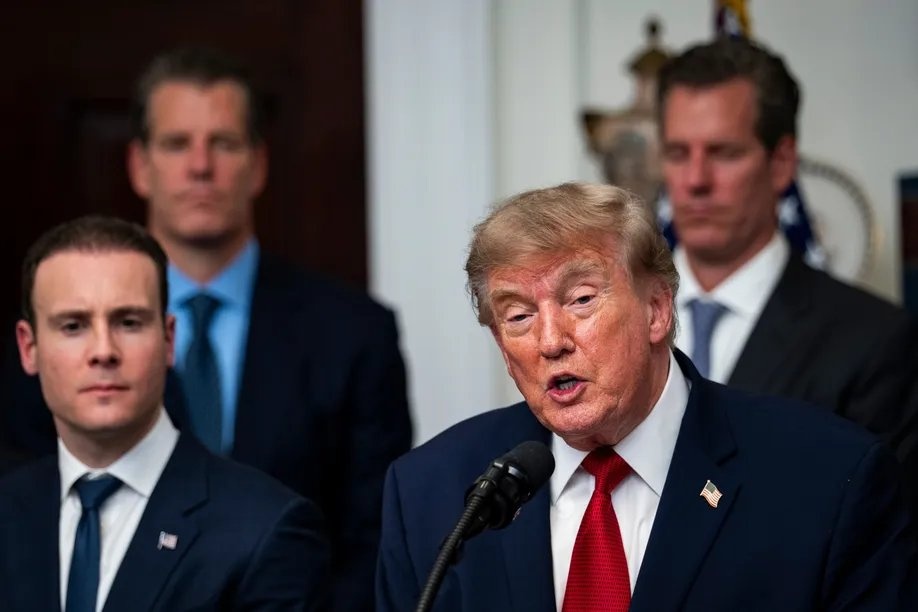
so that he can give away and burn even more money. Old-age provision is to be made more difficult. Poverty in old age is encouraged. 11 million people own BTC / cryptos in Germany. SPD = They are plundering Germany .
Austria collected exactly EUR 33.84 million in 2024 as a result of the abolition of the one-year holding period and the introduction of the flat-rate crypto tax (27.5% capital gains tax), which corresponds to just 0.57% of total capital gains tax revenue. This means that the actual tax revenue falls massively short of the government's initial expectations, which had originally hoped for new revenue of up to 300 million euros; the hoped-for big windfall for the state budget by putting cryptocurrencies on an equal footing with traditional shares has therefore definitely failed to materialize.
$BTC (-0,47%)
$ETH (-0,52%)
$XRP (-0,69%)
$SOL (-0,13%)
#krypto
#crypto
Link to the video: https://youtu.be/EijNrsRfPbU
$XRP (-0,69%) recorded the largest inflows of all assets, attracting USD 119.6 million - the highest figure since mid-December 2025.
Digital asset investment products recorded inflows totaling USD 224 million last week.
While #xrp led the market, the downward $ETH (-0,52%) the downward trend continued with further outflows, and sentiment towards digital asset $BTC (-0,47%) remained mixed - with moderate inflows coupled with continued interest in short Bitcoin products.
Also $SOL (-0,13%) registered inflows, reflecting continued stable investor demand.